WooCommerce vs Magento: A No-Nonsense Comparison for Growing Businesses
.avif)
WooCommerce vs Magento: A No-Nonsense Comparison for Growing Businesses
If you're choosing between WooCommerce and Magento, the answer depends entirely on your business size, budget and technical resources.
WooCommerce works well for small to mid-size stores that need speed, simplicity, and lower overhead. Magento is built for businesses that have outgrown simpler platforms and need scalability, complex catalog management, and enterprise-grade features.
This blog breaks down both platforms across cost, performance and real-world use cases so you can make the right call before you build.
Quick Comparison: WooCommerce vs Magento
Here is how the two platforms stack up across the metrics that actually affect your build decision.
What Is WooCommerce?
WooCommerce is not a standalone platform. It is a plugin built on top of WordPress, the world's most widely used content management system.
That distinction matters when you're evaluating it, because everything WooCommerce does and every limitation it has flows from that relationship with WordPress.
How WooCommerce Works as a WordPress Plugin
WooCommerce converts a standard WordPress site into a functioning online store. According to BuiltWith, it powers roughly 39% of all online stores globally, making it the single most-used ecommerce solution on the internet.
The plugin itself is free to download from WordPress.org. The costs come from everything around it: hosting, themes, extensions, payment gateway fees, and developer time.
Because it runs inside WordPress, every WooCommerce store inherits the WordPress admin interface, the WordPress plugin ecosystem and the WordPress security surface. That is both its biggest strength and its biggest vulnerability.
Who WooCommerce Is Built For
If your store is lean, your team is small and speed to market matters, WooCommerce is likely your platform. It makes the most sense for:
- Small to medium businesses with straightforward product catalogs
- Businesses already running on WordPress who want to add ecommerce
- Stores with fewer than 5,000 SKUs
- Teams without in-house developers who need to manage the store themselves
- Brands where content marketing drives traffic blogs, editorial content and SEO-heavy strategies all benefit from WordPress's content infrastructure
What Is Magento?
Magento is an open-source ecommerce platform built specifically for online stores. Adobe acquired it in 2018, and since then the product has split into two distinct offerings that buyers frequently confuse.
Magento Open Source vs Adobe Commerce
Understanding this split is critical before you evaluate the platform:
Magento Open Source is the free, community-supported version. You can download and install it at no cost. But it comes with no enterprise features, no official support, and no SLA. You own the infrastructure, the updates, and every integration.
Adobe Commerce is the paid, enterprise tier. It includes B2B features like quote management, shared catalogs and custom pricing rules.
It also includes cloud hosting options, official support contracts, and a guaranteed upgrade path. The licensing starts at approximately $22,000/year for smaller enterprises and scales significantly from there.
When people in the UAE market say "Magento," they are typically referring to Magento Open Source for mid-size builds or Adobe Commerce for enterprise projects. Make sure you know which one you're actually evaluating.
Who Magento Is Built For
Magento becomes the right tool when your requirements go beyond what WooCommerce can handle cleanly:
- Mid-market to enterprise businesses with complex operations
- Stores managing 10,000+ SKUs, multiple warehouses, or frequent inventory changes
- Multi-store, multi-currency, and multi-language operations from a single backend
- B2B businesses that need tiered pricing, custom catalogs, and quote workflows
- Businesses with in-house or agency development teams Magento is not something you self-manage without technical expertise
WooCommerce vs Magento: Real Cost Comparison
Most platform comparisons avoid putting actual numbers in front of you. This section does not. The total cost of ownership (TCO) gap between these two platforms is one of the biggest factors in the decision, and it's larger than most buyers expect.
WooCommerce Total Cost of Ownership
For a startup or small business launching in the UAE, WooCommerce is manageable. A basic functional store can go live for under $5,000 in Year 1 if you make careful plugin choices and use managed WordPress hosting.
Magento Total Cost of Ownership
A custom Magento Open Source build in the UAE typically costs AED 80,000 – 300,000 depending on complexity.
Adobe Commerce projects often exceed AED 500,000 in Year 1 when you include licensing, hosting, and agency development fees.
WooCommerce projects in the UAE range from AED 15,000 for a basic store to AED 100,000+ for a fully custom build.
Hidden Costs Both Platforms Don't Advertise
Before you finalise your budget, account for:
- SSL certificates and CDN setup (Cloudflare is standard; costs vary)
- Security audits, especially for stores handling payment data
- Payment gateway transaction fees (these accumulate fast at volume)
- Developer maintenance retainers both platforms require ongoing technical attention
- Extension conflict resolution after major updates
- Migration costs if you outgrow the platform and need to switch
Performance and Scalability
Performance is not just a user experience metric. It directly affects your Google rankings through Core Web Vitals and it affects your conversion rate. A 1-second delay in page load reduces conversions by approximately 7% (Akamai research).
WooCommerce Performance at Scale
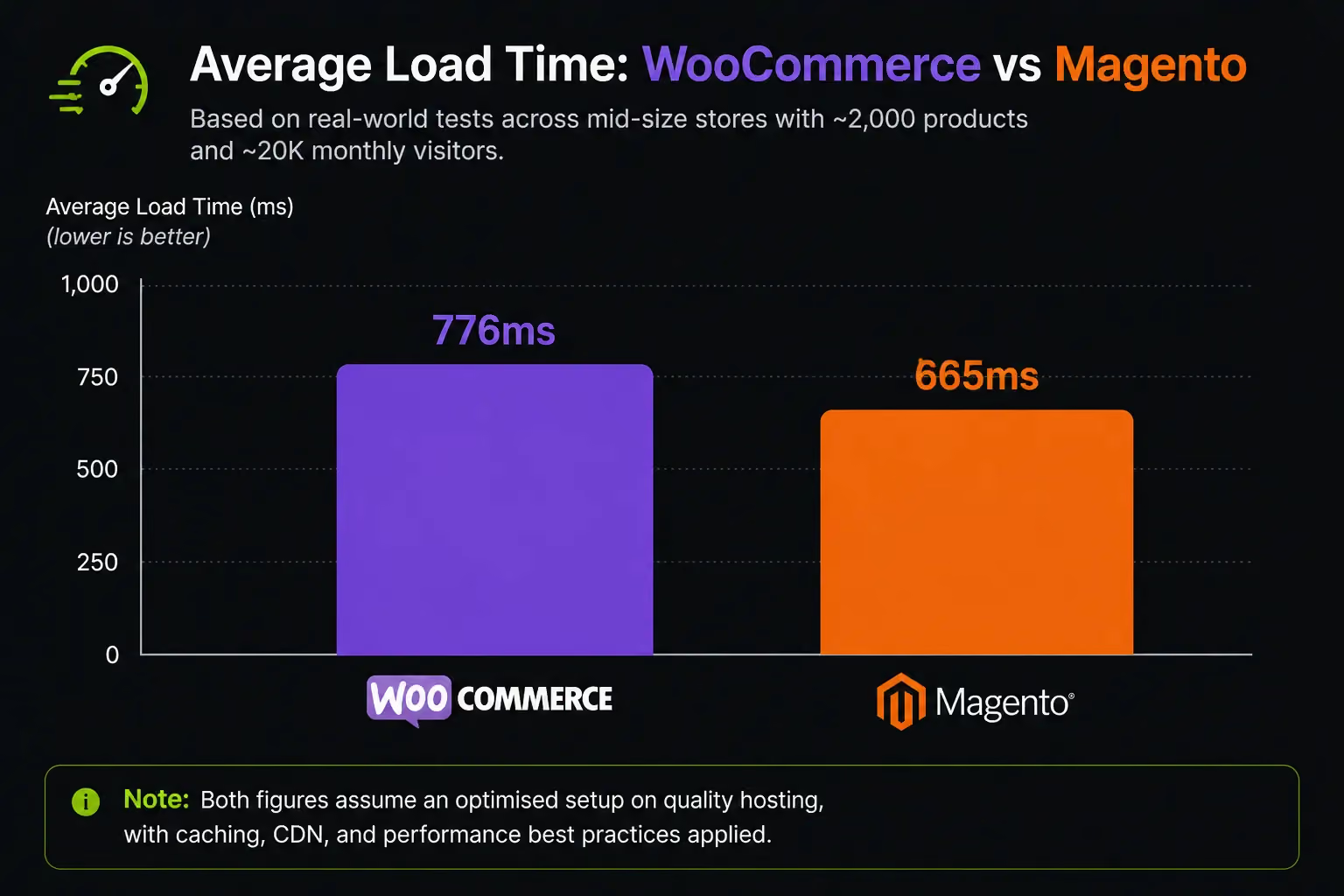
Out of the box, an optimised WooCommerce store averages around 776ms page load time. With proper caching (WP Rocket, Cloudflare), a quality hosting environment and a lightweight theme, it can handle moderate traffic comfortably.
The problem appears at scale. Beyond 50,000 orders per month, WooCommerce starts to strain without expensive infrastructure upgrades. Plugin bloat is the most common culprit every additional plugin adds database queries and HTTP requests.
A store running 30+ plugins on shared hosting will perform poorly regardless of how good the individual plugins are.
Scaling WooCommerce is possible. It is just expensive and architectural. You are adding money and infrastructure to compensate for platform limitations, not scaling because the platform was designed for it.
Magento Performance and Enterprise Scalability
Magento's average page load on an optimised setup is approximately 665ms. More meaningfully, Magento is built for high-traffic, high-SKU environments.
Full-page caching, Elasticsearch for product search and Varnish cache are part of the core architecture not afterthoughts bolted on via plugins.
Adobe Commerce Cloud scales automatically. You are not manually provisioning servers ahead of a Black Friday sale. That built-in infrastructure is part of why enterprise retailers choose Magento despite the cost.
What Scalability Means in Practice
Here is the real-world version: many UAE retailers outgrow WooCommerce somewhere in the AED 5 – 10 million gross merchandise value (GMV) range. At that point, they face a choice: spend heavily on WooCommerce infrastructure and optimization or migrate to a platform that was built for that load.
Magento is scalable by architecture. WooCommerce is scalable by spending. That distinction matters as you model your growth.
Ease of Use and Developer Dependency
How much technical expertise does your team have? This question more than any feature comparison often decides which platform is actually right for you.
Managing a WooCommerce Store Day-to-Day
The WordPress admin interface is one of the most familiar interfaces on the internet. Non-technical team members can manage products, update content, process orders, and run promotions without developer support. That accessibility is one of WooCommerce's core advantages.
The complication comes with customisation. Any significant change beyond what your theme and plugins provide custom checkout flows, modified product pages, API integrations will require a developer.
And as your plugin count grows, the update cycle becomes a management task in itself. Plugin conflicts after WordPress core updates are a real operational issue.
Magento's Learning Curve and Developer Dependency
Magento has a steep learning curve, and that is not an exaggeration. Even basic store operations creating custom product attributes, modifying checkout behaviour or changing URL structures often require developer involvement.
The admin panel is powerful but complex, and it rewards familiarity built over months, not days.
The global Magento developer pool is contracting as Adobe has shifted focus toward Commerce Cloud, which means developer day rates in the region are higher and availability is lower. Budget AED 300 – 700 per hour for experienced Magento developers in Dubai.
Adobe Commerce includes training resources and partner programmes, but these add cost and time before your team is self-sufficient.
Time to Launch: WooCommerce vs Magento
If you need to be live in 6 weeks for a product launch or seasonal campaign, Magento Open Source and Adobe Commerce are not realistic options unless significant development work is already underway.
WooCommerce vs Magento for the UAE and Gulf Market
This is the section that most platform comparison articles skip entirely. Platform selection in the UAE is not identical to platform selection in the UK or the US.
Consumer behaviour, payment infrastructure, language requirements, and regulatory context all affect which platform will serve you better.
Payment Gateway Support in the UAE
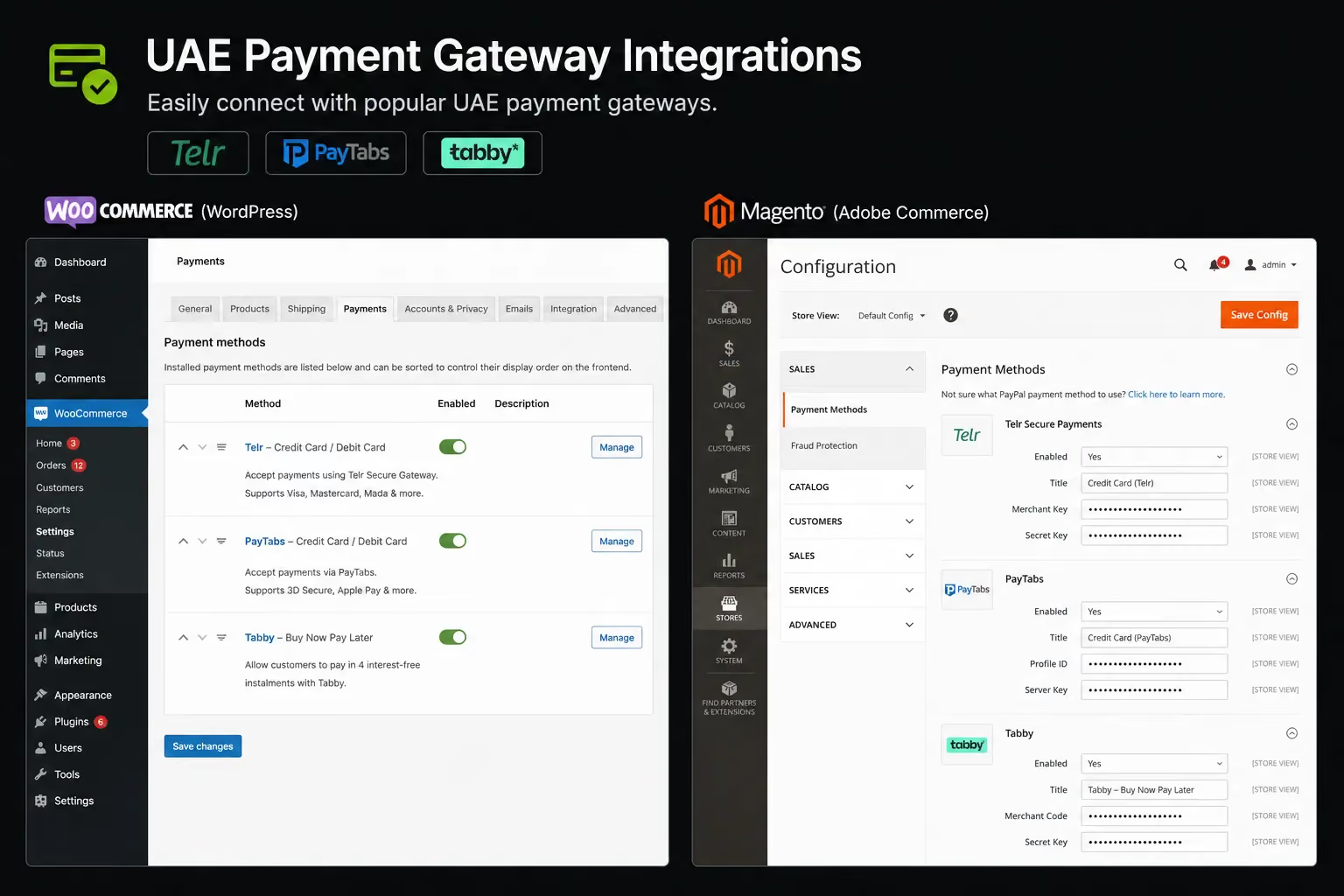
Both platforms support the major UAE payment gateways, including Telr, PayTabs, Network International, and HyperPay. The differences appear at the edges:
BNPL (Buy Now Pay Later): Tabby and Tamara are the dominant BNPL providers in the UAE and Saudi Arabia. Magento has better native integration support for both. WooCommerce integrations exist but often require custom development or third-party plugins that vary in quality.
Cash on Delivery (COD): Standard on both platforms. COD remains a significant payment method in the GCC, particularly for first-time buyers and in markets outside Dubai and Abu Dhabi.
UAE VAT (5%): WooCommerce handles VAT through its WooCommerce Tax extension. Magento manages it natively with better support for multi-tax configurations across GCC countries relevant if you are selling across UAE, Saudi Arabia, Bahrain, and Kuwait simultaneously.
Arabic Language and RTL Support
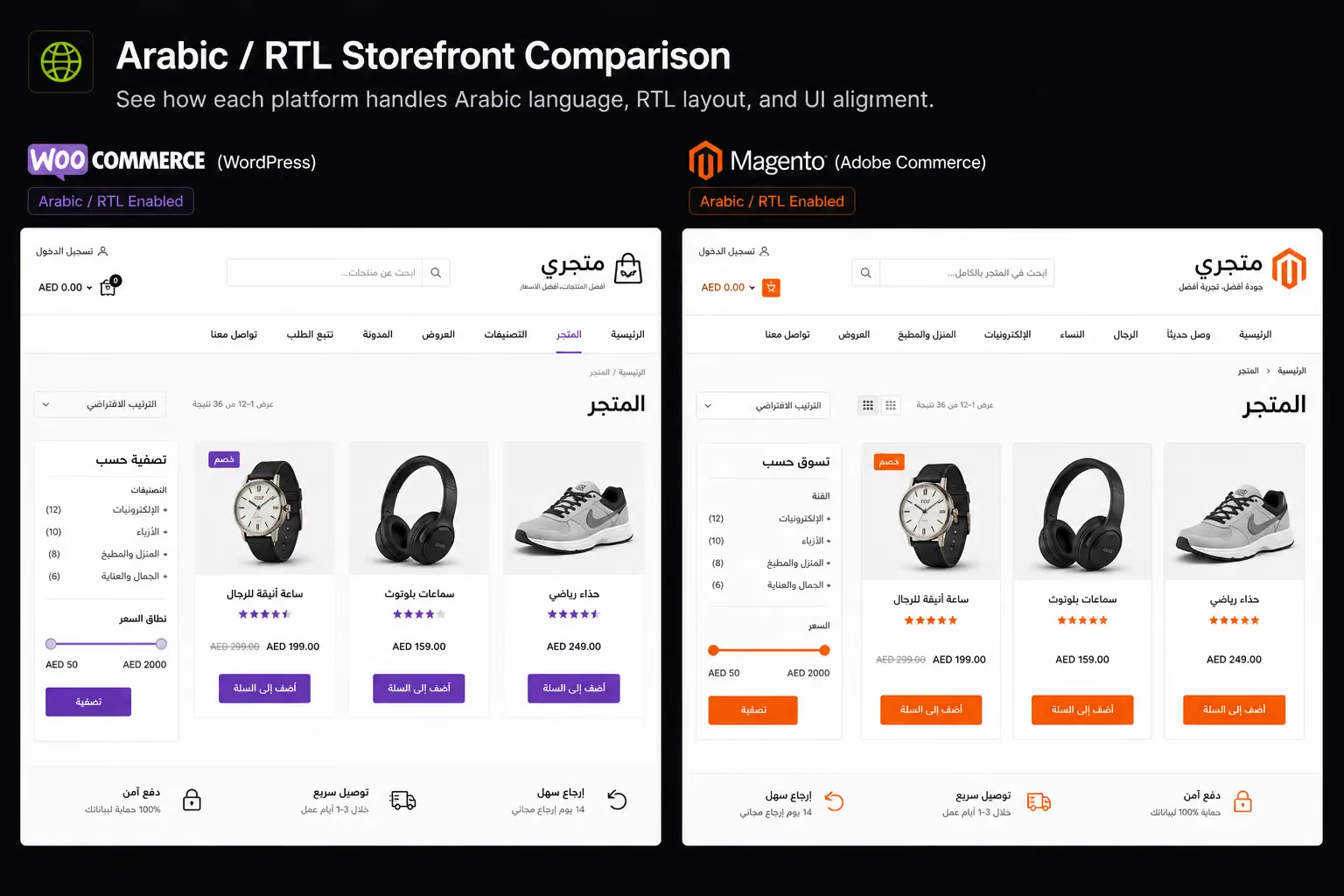
Right-to-left layout is non-negotiable for any store targeting Arabic-speaking customers in the UAE. Here is how the platforms compare:
WooCommerce: RTL support is plugin-dependent. Several RTL plugins exist, but consistent behaviour across all theme elements and extensions is not guaranteed. If your theme was not designed with RTL in mind, you will face rendering issues that require custom CSS work to fix.
Magento / Adobe Commerce: Has stronger native RTL and Arabic language support, particularly in the Adobe Commerce edition. For bilingual stores English and Arabic targeting UAE nationals and Arab expats, Magento has a clear advantage out of the box.
If Arabic-language UX is critical to your brand, factor in the additional development cost on WooCommerce versus the native support you get from Magento.
Hosting Infrastructure in the UAE
WooCommerce can run on any hosting provider. UAE-region servers are available through AWS Middle East (Bahrain), Azure, and managed WordPress hosts like Kinsta and WP Engine. Getting your WooCommerce store within 50ms of Dubai is straightforward.
Magento requires more robust infrastructure. Adobe Commerce Cloud does not have a UAE-specific region. The closest data centres are Mumbai and Frankfurt. Latency becomes a real SEO and UX consideration.
A well-configured CDN (Cloudflare or Akamai) is essential for any Magento store serving UAE customers to compensate for the geographic distance.
For either platform, if you are serious about performance in the UAE market, a CDN with edge nodes in the Middle East is not optional. It is a baseline requirement.
UAE Ecommerce Regulations and GCC Compliance
UAE's Federal Decree-Law No. 14 of 2023 on Electronic Commerce sets requirements around consumer protection, transparent pricing, clear return policies, and data handling for online stores operating in the UAE.
Both platforms can be configured for compliance, but this is not automatic on either. You need to implement:
- Clear terms and conditions and return policies displayed at checkout
- VAT-inclusive pricing display
- Secure customer data handling (relevant if you are dealing with government or semi-government buyers who have data residency requirements)
- Consumer rights disclosures
Neither WooCommerce nor Magento gives you these out of the box; they require configuration and, in some cases, custom development.
Security: WooCommerce vs Magento
Ecommerce security failures are expensive. Not just financially a breach destroys customer trust in a market like the UAE where trust drives repeat purchase behaviour.
WooCommerce Security Risks
WooCommerce inherits WordPress's security surface. WordPress powers roughly 43% of the internet, which makes it the most attacked CMS in the world. The plugin ecosystem is the primary risk vector: abandoned plugins, poorly coded extensions, and outdated installations create vulnerabilities.
PCI DSS compliance is achievable on WooCommerce but requires deliberate configuration, the right hosting environment, SSL, no cardholder data stored on your server, and a vetted payment gateway handling the actual transaction. It does not come configured out of the box.
Security on WooCommerce is directly proportional to how disciplined you are with updates, plugin selection, and hosting quality.
Magento Security Architecture
Magento runs fewer third-party plugins than a typical WooCommerce store, which reduces the attack surface. Adobe runs a dedicated security patch programme for Magento, and there is a free Magento Security Scan Tool that checks your installation against known vulnerabilities.
Adobe Commerce Cloud handles much of the infrastructure security for you server hardening, patching, and PCI DSS compliance at the infrastructure level. For Magento Open Source, security is still your responsibility, but the architecture is more predictable than WordPress's plugin-driven model.
Plugins and Extensions: Flexibility vs Complexity
Both platforms are extensible. The nature of that extensibility is different, and the risk profile that comes with it is different.
WooCommerce Plugin Ecosystem
WooCommerce has 800+ official extensions and access to tens of thousands of compatible WordPress plugins. Almost every major marketing platform Klaviyo, Mailchimp, Meta Pixel, Google Ads has a native WooCommerce connector.
The downside is quality control. Anyone can publish a WordPress plugin. Abandoned plugins that stop receiving security updates are a persistent problem.
Every plugin you add is a potential conflict point after a WordPress core update and managing that update cycle is a real operational overhead as your store matures.
Magento Extension Marketplace
Adobe Commerce Marketplace lists 4,000+ extensions. They are more rigorously vetted than WordPress plugins which matters when you are running an enterprise store at scale.
Extensions are significantly more expensive, often $500 – $3,000 for a single quality extension. Enterprise integrations ERP systems, CRM platforms and PIM tools frequently have Magento-first support and better integration depth than their WooCommerce equivalents.
SEO Capabilities: Which Platform Ranks Better?
Neither platform ranks better by default. Rankings come from execution technical setup, content quality, and link authority. Both platforms give you the tools to build an SEO-capable store.
WooCommerce SEO Features
WooCommerce runs inside WordPress, which gives it access to the most mature SEO plugin ecosystem available: Yoast SEO, Rank Math, and others. URL customisation, schema markup, breadcrumb navigation, XML sitemaps all manageable without writing code.
Where WooCommerce excels is content-driven ecommerce. If your strategy involves building a blog, creating buyer guides, and targeting informational keywords alongside product pages, the WordPress editorial infrastructure makes that straightforward.
Core Web Vitals performance which affects search rankings depends heavily on your hosting environment and theme choice. A WooCommerce store on fast managed hosting with a lightweight theme can outperform a poorly optimised Magento build.
Magento SEO Capabilities
Magento handles the technical SEO architecture of large catalogs better than WooCommerce. Canonical URLs, meta templates for product category pages, XML sitemaps, and rich snippets are built into the platform. Faceted navigation the filtering system on category pages is handled more cleanly at scale without creating duplicate content issues.
The tradeoff: advanced SEO configuration on Magento typically requires developer involvement. Implementing structured data, optimising crawl budget, or modifying URL patterns requires coding knowledge, not just a settings panel.
A well-structured platform is the starting point. Your actual rankings depend on on-page execution, technical audits, content strategy, and building topical authority over time. Both platforms are capable.
Industry Use Cases: When Each Platform Makes Sense
Features only tell half the story. How each platform performs in real business scenarios is what actually guides the right decision.
When WooCommerce Is the Right Choice
- Fashion boutiques and lifestyle brands with curated product ranges
- B2C stores with under 2,000 SKUs and a single storefront
- Businesses with active content marketing programmes where the WordPress CMS adds value
- UAE startups that need to launch quickly and validate before scaling
- Businesses with no dedicated development team who need to self-manage day-to-day operations
When Magento Is the Right Choice
- Multi-branch retail chains operating across GCC countries with different pricing and inventory
- B2B distributors with complex pricing rules, tiered discounts, and custom catalog requirements
- Electronics, home goods, or FMCG retailers managing large inventories with frequent stock changes
- Businesses planning to run multiple storefronts from a single backend for example, an English store and an Arabic store for different customer segments
- Operations that require ERP or CRM integration at depth
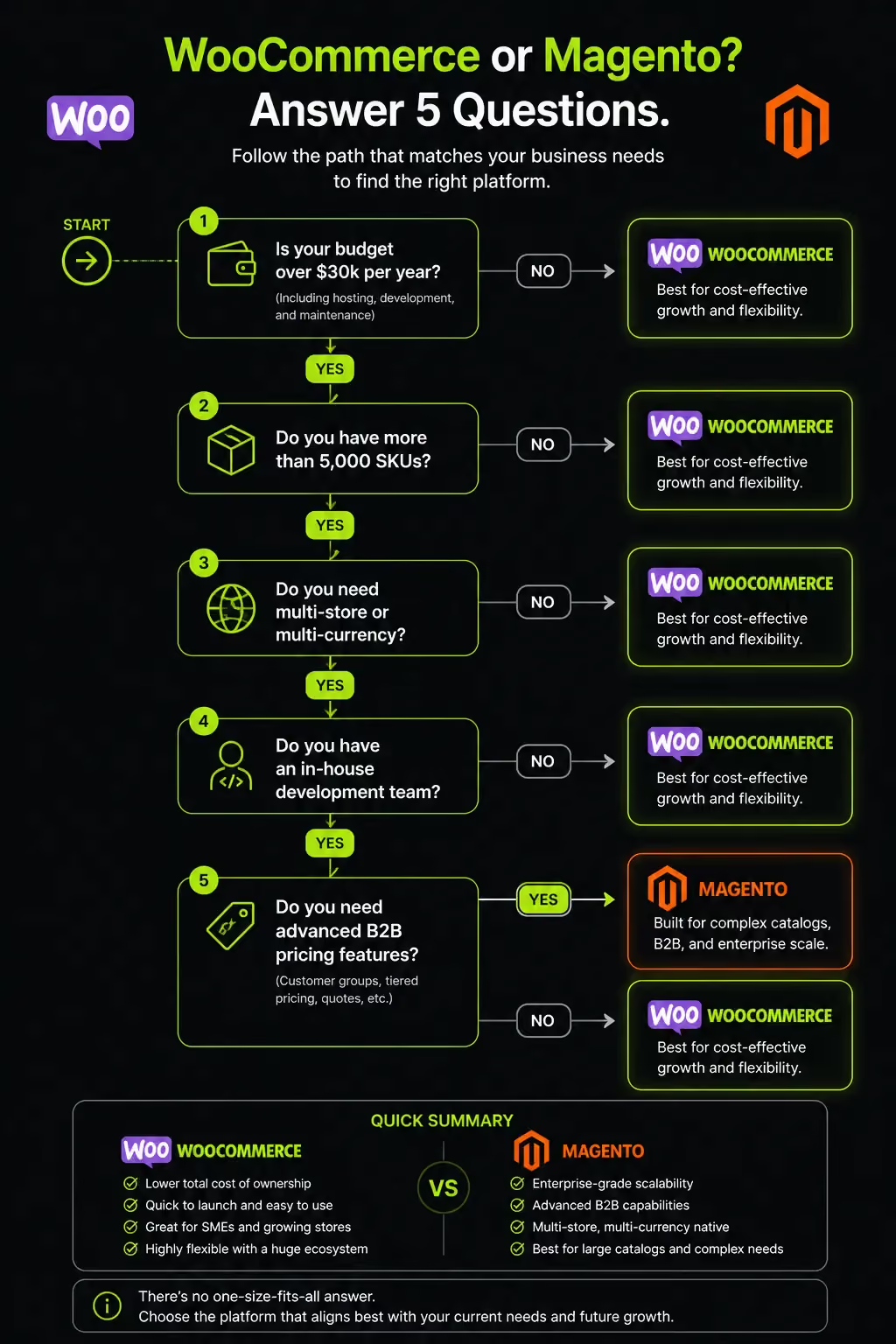
WooCommerce vs Magento: Which Should You Choose?
Use these criteria as a checklist against your current business reality, not your aspirations.
Choose WooCommerce If:
- Your annual ecommerce budget is under $15,000
- Your team manages the site without full-time developers
- You are already on WordPress and integrating ecommerce into an existing content site
- You need to launch within 8 weeks
- Your product catalog is under 5,000 items
- You are testing a new market or validating a product concept
Choose Magento If:
- You need enterprise-grade scalability and plan to exceed AED 20M+ GMV
- You manage 10,000+ SKUs or run multiple storefronts
- You have a development team or an agency on retainer who knows Magento
- You need advanced B2B features: quote management, tiered pricing, shared catalogs
- You are operating across multiple GCC countries with different currencies, tax rules, and languages
- Your business requires deep ERP, CRM, or PIM integration
How Suplex Approaches Ecommerce Platform Selection
Choosing the right ecommerce platform is not a technical decision. It is a business decision with technical implications, and getting it wrong costs far more than the initial build in developer fees, migration costs, and revenue lost from poor performance.
At Suplex, we work with brands across the UAE and GCC to evaluate platform fit before any development begins. We have built ecommerce experiences on WooCommerce, Magento, Shopify, and headless architectures and the honest answer is that the right platform depends on where your business is now and where it needs to be in three years.
Our process maps your current operations, product catalog complexity, team capabilities, and budget against what each platform actually requires. We have seen businesses waste AED 200,000+ on a Magento build they did not need, and we have seen businesses launch on WooCommerce when they needed Magento and face a painful migration 18 months later.
If you are evaluating platforms for a new build or wondering whether your current setup can handle your growth targets, talking to the team at Suplex before you commit to a platform is worth the conversation.
Frequently Asked Questions
Is WooCommerce better than Magento for small businesses?
For most small businesses, yes. WooCommerce is free to install, integrates directly with WordPress, and has a large community of affordable developers.
Magento's total cost of ownership including hosting, extensions and specialist development typically starts at $30,000/year, which is difficult to justify at small-business scale.
Can WooCommerce handle 10,000+ products?
Technically yes, but with caveats. Performance at that scale requires managed WordPress hosting, aggressive caching, and a well-optimised database.
Magento is architecturally better suited for large catalogs; it handles complex product attributes, inventory management, and search via Elasticsearch more efficiently out of the box.
Does Magento support Arabic and RTL for UAE stores?
Magento particularly Adobe Commerce has stronger native support for Arabic language and right-to-left layouts than WooCommerce. WooCommerce can achieve RTL through plugins, but consistency across themes and extensions is not guaranteed, which creates UX issues for bilingual UAE stores.
What is the cost of building a Magento store in the UAE?
A custom Magento Open Source build in the UAE typically costs AED 80,000 – 300,000 depending on complexity. Adobe Commerce projects often exceed AED 500,000 in Year 1, including licensing, hosting, and agency development. WooCommerce builds range from AED 15,000 for a basic store to AED 100,000+ for a fully custom project.
Is Magento still worth it in 2026?
For the right business profile, yes. Adobe Commerce is one of the most capable B2B ecommerce platforms available. However, Adobe has shifted focus toward Commerce Cloud, and the pool of Magento specialists globally is shrinking.
Businesses starting fresh should compare Magento against Shopify Plus and modern headless commerce architectures before committing, particularly if the primary use case is B2C.
Which platform is better for SEO WooCommerce or Magento?
Both support strong SEO when configured correctly. WooCommerce benefits from the WordPress content ecosystem, making it well-suited for content-driven SEO strategies.
Magento has better native architecture for large-catalog technical SEO handling canonical tags, faceted navigation, and XML sitemaps more cleanly at scale. Platform choice alone does not determine rankings. Execution does.
Can I migrate from WooCommerce to Magento?
Yes, but it is not simple. Migration requires transferring product data, customer records, order history, and URLs, the last one being critical for preserving SEO equity.
A migration from WooCommerce to Magento typically takes 4 – 12 weeks depending on catalog size and complexity, and requires specialist involvement. Tools like LitExtension and Cart2Cart automate parts of the process, but they do not replace a qualified developer validating the output.
Hi, I’m Rishabh Jain
I believe great design has the power to shape perception, build trust, and move businesses forward. That belief is what led me to found Suplex Design Studio, a global branding and packaging studio working with FMCG and D2C brands across markets.I started suplex at 25 with a clear intent, to create design that is strategic, thoughtful, and commercially meaningful. By 28, the studio had scaled globally, guided by a strong foundation in Integrated Design that I developed during my academic journey in London, where I was honoured with the Dean’s Award.
Over the years, I’ve had the opportunity to work with 100+ brands, from Fortune 500 organizations to family-run businesses, helping them build packaging and brand systems that create recall, relevance, and long-term value.
Suplex’s work has been recognized internationally, including the Manifest Award (2024), the Clutch Global Award (2025), and features on platforms such as Packaging of the World, The Dieline, and the World Brand Design Society.
None of this would be possible without the people behind the work. I’m deeply grateful to the suplex team, whose commitment, creativity, and attention to detail turn ideas into meaningful brand experiences every day.
At the heart of my work is a simple philosophy, design should be intentional, honest, and built to last, and that continues to guide everything we create at suplex.






































Let’s Make It Happen
E-Commerce Success Stories
%201.avif)






.avif)

.avif)
Build Your D2C Business The Right Way
Build It With Suplex.


