Android Apps
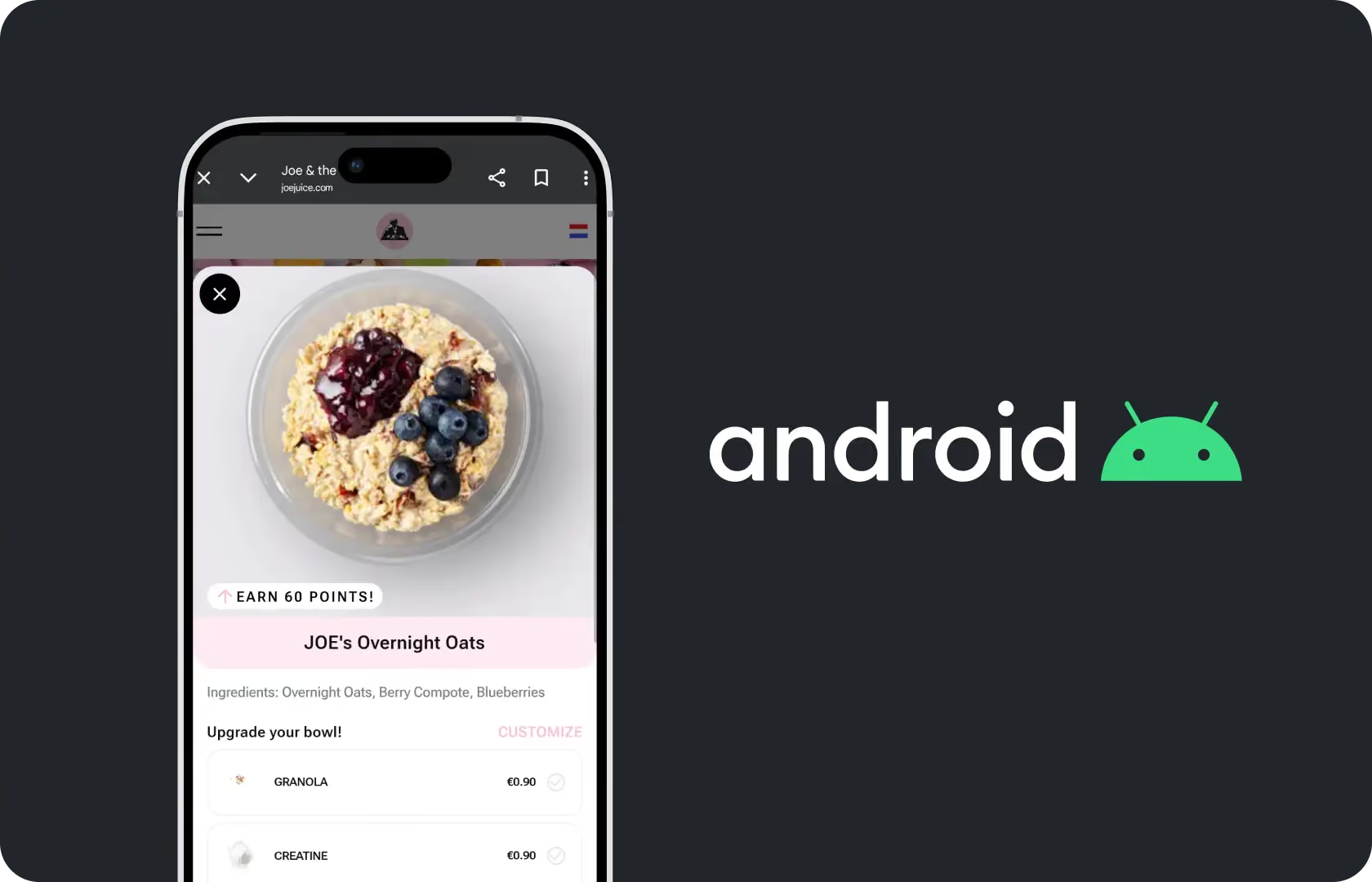
Android Development in Web Development
In India, Android is over 95 percent of smartphones in use. In the UAE it sits around 75 percent. For most D2C brands targeting these markets, Android is not a secondary mobile platform. It is the primary one. And yet most brands that invest in a mobile app start with iOS. Sometimes that is right. For brands targeting premium audiences in the UK or the US, iOS users represent a disproportionate share of purchasing power. But for brands where the audience is in India, Southeast Asia, or mid-to-lower income segments of any market, starting with iOS means building for the minority first.
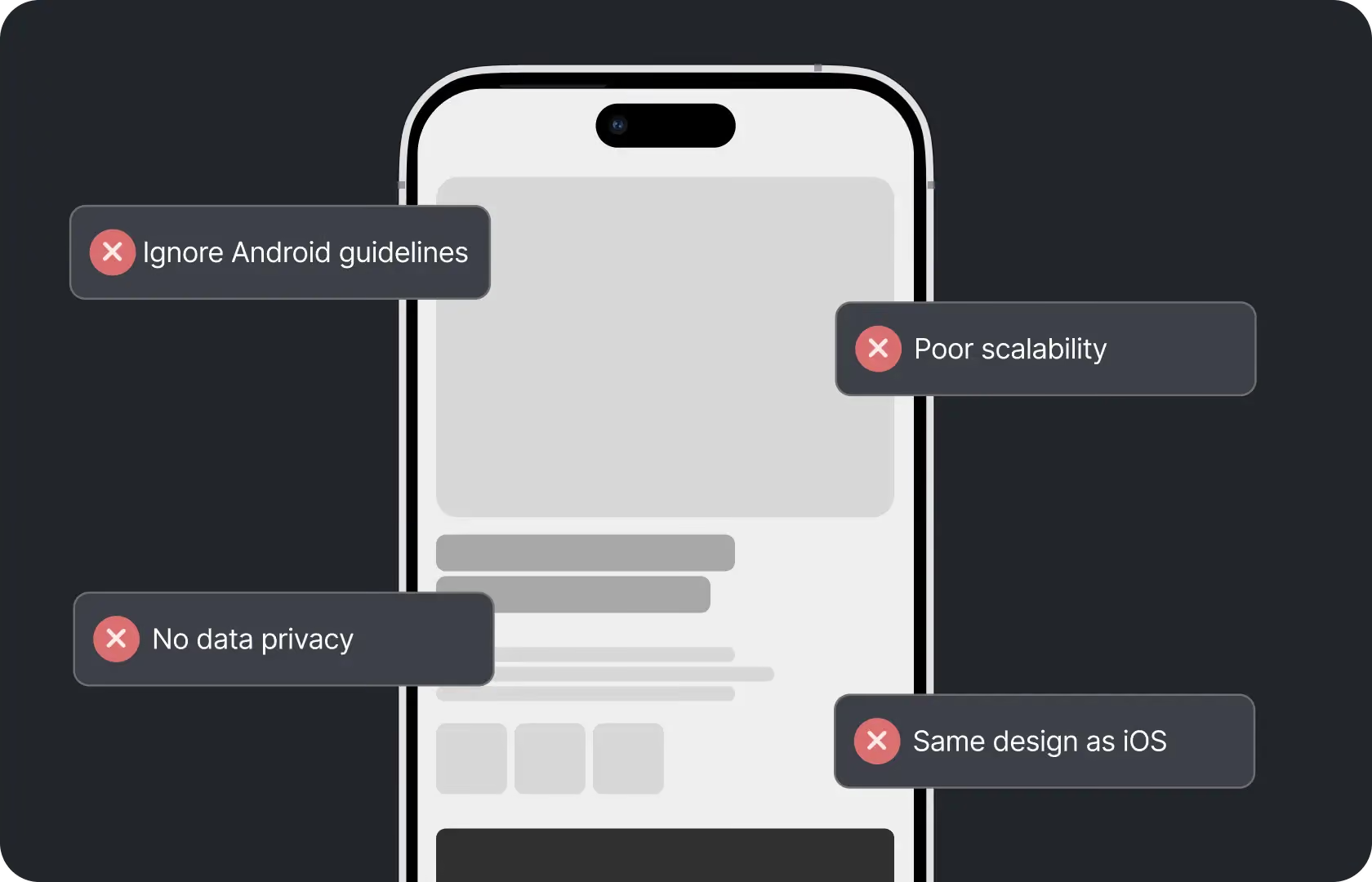
Android done properly is not iOS done cheaply. Different platform. Different conventions. Different fragmentation challenges. A brand that builds Android by porting an iOS design to a different codebase ends up with something that works but feels wrong. Android users notice. They cannot always say why. But they feel it.
At Suplex Design, Android is built natively in Kotlin using Jetpack Compose. Design and development together. Not handed off between teams.
What Makes Android Different
Material Design, Google's design system for Android, has its own component set, its own motion principles, and its own conventions around navigation, density, and typography. Android users have been trained by years of Material to expect certain things. The back gesture is handled by the OS, not the app. That single difference changes how navigation stacks are structured. The range of screen sizes and densities across Android devices is far wider than iOS. A layout that looks clean on a Galaxy S24 can break on a Realme C51. Designing without this in mind is designing for a version of the audience that does not reflect the actual audience.
How Suplex Design Approaches Android Development
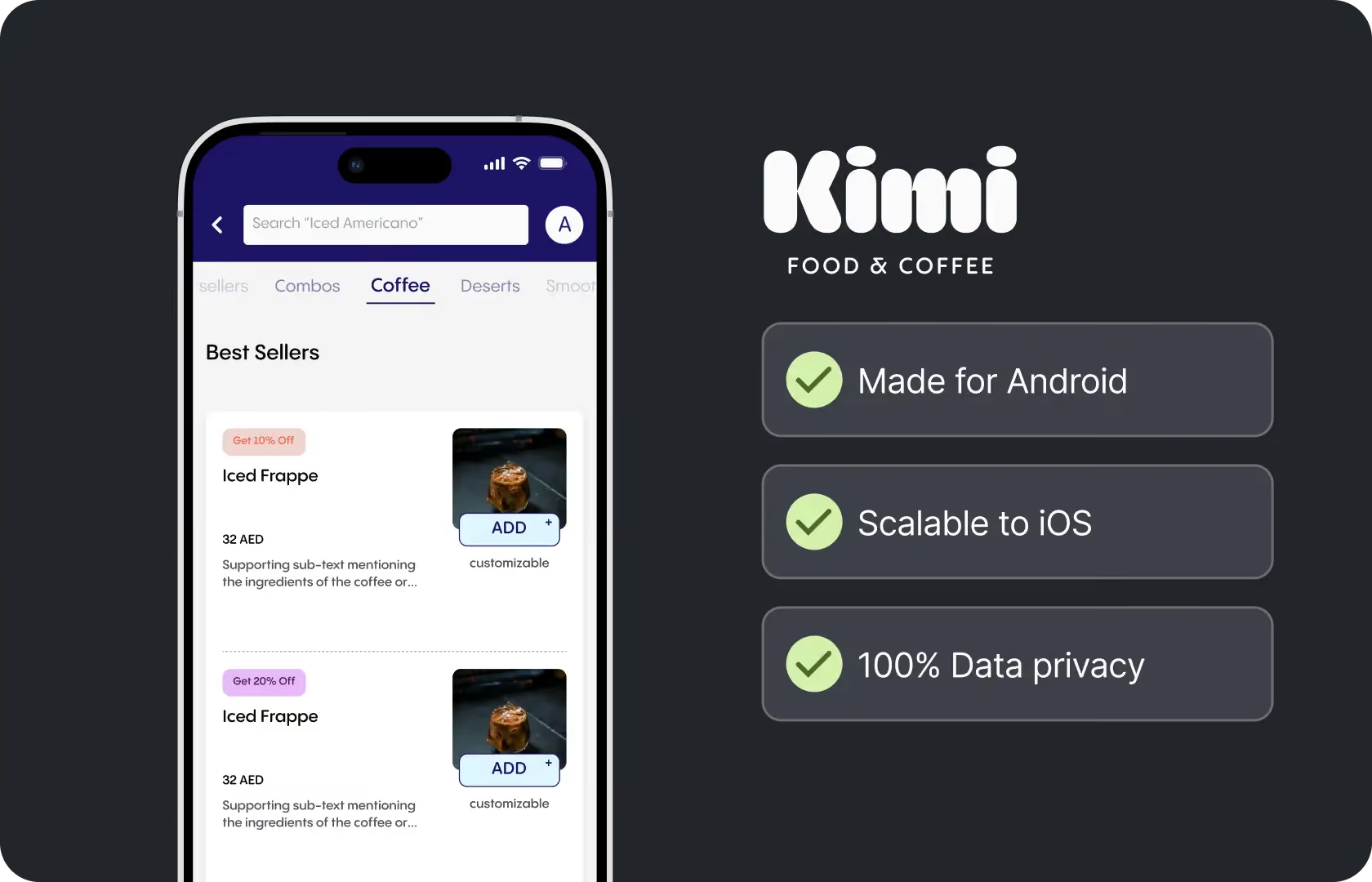
Android-native from the start. Not adapted from the iOS design. When a brand is building both platforms, the two apps share a design system and a visual identity. They do not share a layout. The iOS app uses iOS conventions. The Android app uses Material Design conventions. Same brand. Different execution. Because that is what each platform requires.
Kotlin and Jetpack Compose
Kotlin is the primary Android development language. Google made it official in 2017 and the ecosystem followed. Jetpack Compose is Google's modern declarative UI framework. Similar in concept to SwiftUI on iOS. It produces code that is more concise and easier to maintain than the older View-based system. It integrates cleanly with the Jetpack library ecosystem that handles navigation, lifecycle, data persistence, and background work. For new Android projects at Suplex Design, Compose is the default. The older View-based system is still used where a third-party library requires it or where the project needs to support older API levels. Our team makes this call at the architecture stage based on what the project actually needs.
Device Fragmentation
The most consistently underestimated challenge in Android development. There are thousands of distinct Android devices in active use. Screen sizes from 4 inches to over 7. Densities from ldpi to xxxhdpi. Android versions from 8.0 upwards still in meaningful circulation. An app that performs correctly on a Galaxy S24 can have layout issues on a Realme C51, interaction problems on a device with a non-standard gesture navigation system, or performance problems on a lower-powered processor.
At Suplex Design, we test on real Android devices across the key profiles for the brand's target market. For India, that means mid-range Realme, Xiaomi, and Samsung devices as the primary testing targets. For the UAE, the mix shifts somewhat toward newer flagships, though mid-range is still the majority. Emulator testing alone is not enough. We have found problems on physical devices that emulators never surfaced.
Commerce Integration
For Shopify-backed brands, the Storefront API provides the same GraphQL interface on Android as on iOS. The checkout experience on Android uses Shopify's checkout sheet or a custom checkout flow depending on the plan. Google Pay is the equivalent of Apple Pay for frictionless checkout. Integrated via the Google Pay API rather than the wallet system Apple uses. Payment preferences differ significantly by market. UPI is critical for India-facing apps and needs to be prominently surfaced in the checkout flow, not buried under card options that most Indian buyers are less likely to use. Our team configures payment methods for the specific markets being served rather than applying a default global payment setup.
Push Notifications
Push notifications work differently on Android than iOS. Worth understanding before planning the notification strategy. On iOS, users must grant notification permission and the default is to deny. On Android prior to version 13, notifications are permitted by default. Android 13 introduced an explicit permission request similar to iOS. For brands targeting markets where Android 12 and below still has meaningful usage, the permission barrier is lower. That changes the strategy for how notifications are presented within the app.
Firebase Cloud Messaging is the standard backend for Android push. Well-integrated with Jetpack Compose. Provides the delivery guarantees and targeting needed for a commercially meaningful push programme. At Suplex Design, FCM is configured as part of every Android engagement that includes push, with the architecture designed for triggered and personalised messages rather than mass broadcasts.
Play Store Submission
Faster and less variable than Apple's App Store review. But not instant, and not without requirements. Google requires a target API level within two years of the current Android release. Apps that fall below the minimum become ineligible for new installs on the Play Store without the brand necessarily realising it. This is why ongoing Android maintenance is not optional. It is built into the commercial reality of running an Android app.
At Suplex Design, Play Store submission is included in every Android engagement. Store listing, screenshots, metadata. Internal testing track, closed testing for beta users, production rollout. And handling of any policy violations or review feedback, which are less common than with Apple but do come up.

Tools and Technology
Suplex Design builds Android in Kotlin using Jetpack Compose and the Jetpack library ecosystem for navigation, lifecycle, data persistence, and background work. Commerce uses the Shopify Storefront API for Shopify-backed brands. Push notifications via Firebase Cloud Messaging. Analytics through Firebase or Mixpanel depending on the brand's existing setup. Version control via GitHub. Testing on real Android devices covering the key device profiles for the target market, alongside emulator testing for edge case API level compatibility.
Is an Android App the Right Investment Right Now?
Depends on the audience and the timing. For brands targeting India, Southeast Asia, or budget-to-mid-market segments anywhere Android dominates, an Android app is the right first mobile investment. Or at minimum a simultaneous one alongside iOS. Building iOS-first in these markets is building for the minority first. For brands targeting premium audiences in the UK, the US, or high-income segments globally, iOS-first is more common. Android follows when the audience data supports it. Timing matters in the same way it does for iOS. The app earns its investment when there is an established customer base, meaningful repeat purchase behaviour, and a product that benefits from the ongoing engagement a native app enables. Not before.
Common Mistakes in Android Development
Some are Android-specific while the others are universal.
- Treating Android as an iOS port. Layouts, navigation patterns, and interaction models that work on iOS feel wrong on Android because they do not match the platform conventions Android users expect.
- Testing only on emulators or flagship devices. Mid-range Android devices, the actual primary device for most buyers in India and similar markets, surface layout and performance issues that never appear in premium device testing.
- Not maintaining the target API level. The Play Store's minimum API requirement means annual maintenance is not optional if the app is to remain available to new users.
- Not configuring UPI for India-facing apps. Surfacing card options first in a market where UPI dominates reduces checkout completion rates in a way that is entirely avoidable.
- Underinvesting in font scaling support. Android users who have increased their system font size, a common accessibility setting, encounter broken layouts in apps built without accounting for it.
At Suplex Design, all of these are handled in the development process and the testing programme rather than discovered after launch.
Why Android Development Quality Matters
For brands in markets where Android dominates, the quality of the Android experience is the quality of the mobile experience. Full stop. An iOS-first strategy with Android as an afterthought builds a premium experience for the minority and a mediocre one for the majority. A poorly built Android app does not generate the return that justified building it. The push notification channel underperforms because the notification experience is frustrating. Checkout abandonment is high because payment is not optimised for the platform. App Store ratings stay low because the experience on mid-range devices is materially worse than on the flagship used for development. Getting it right is not more expensive than getting it wrong. It just requires building Android as Android from the start.
How Suplex Design Approaches Android Development for Your Brand
Every Android project at Suplex Design is designed for Android from the start, tested on the real device profile of the target audience, and built with ongoing maintenance in mind. Design and development together. Commerce configured for the specific markets. Play Store submission included. Post-launch support available.
Targeting India, the UAE, or any market where Android is the dominant device? Want to build both platforms efficiently at the same time? Not sure whether Android or iOS should come first? Get in touch with Suplex Design.

Frequently Asked Questions
What Android development services does Suplex Design offer?
Native Android in Kotlin and Jetpack Compose, Shopify Storefront API integration, custom API integration for brands with their own backends, Firebase Cloud Messaging for push, Google Pay integration, UPI and market-specific payment configuration, Play Store submission and review management, and post-launch support. Design and development are handled together, not sequentially.
How much does Android development cost at Suplex Design?
A focused Android app with core commerce, push, and Shopify integration typically starts from around $10,000 at Suplex Design. More complex feature sets cost more. Building Android and iOS together is more efficient than building them sequentially and the combined cost is lower than doing both as separate projects end to end. We scope clearly before starting.
How long does an Android app take to build and launch?
Nine to fourteen weeks from discovery to Play Store availability for a focused build. The Play Store review is faster than Apple's, but proper device testing across the target device profile takes time. Building alongside iOS adds some time to the project but is considerably more efficient than doing them one after the other.
Should we build Android and iOS together or one after the other?
Together if the budget allows. The discovery, architecture, and design system work overlaps significantly. Building them sequentially means repeating that foundation twice. If the budget requires a sequence, India-focused or Android-dominant market brands should build Android first. UK, US, or premium audience brands often build iOS first. Your audience data should decide, not convention.
Do you provide ongoing support after launch?
Yes, absolutely. Android apps require ongoing maintenance to meet Google's evolving Play Store API level requirements and to stay compatible with new Android OS versions. Skipping annual maintenance eventually means the app stops being available to new users on the Play Store. Suplex Design offers ongoing Android support so that does not happen quietly without anyone noticing.
Let’s Make It Happen
Shopify Success Stories
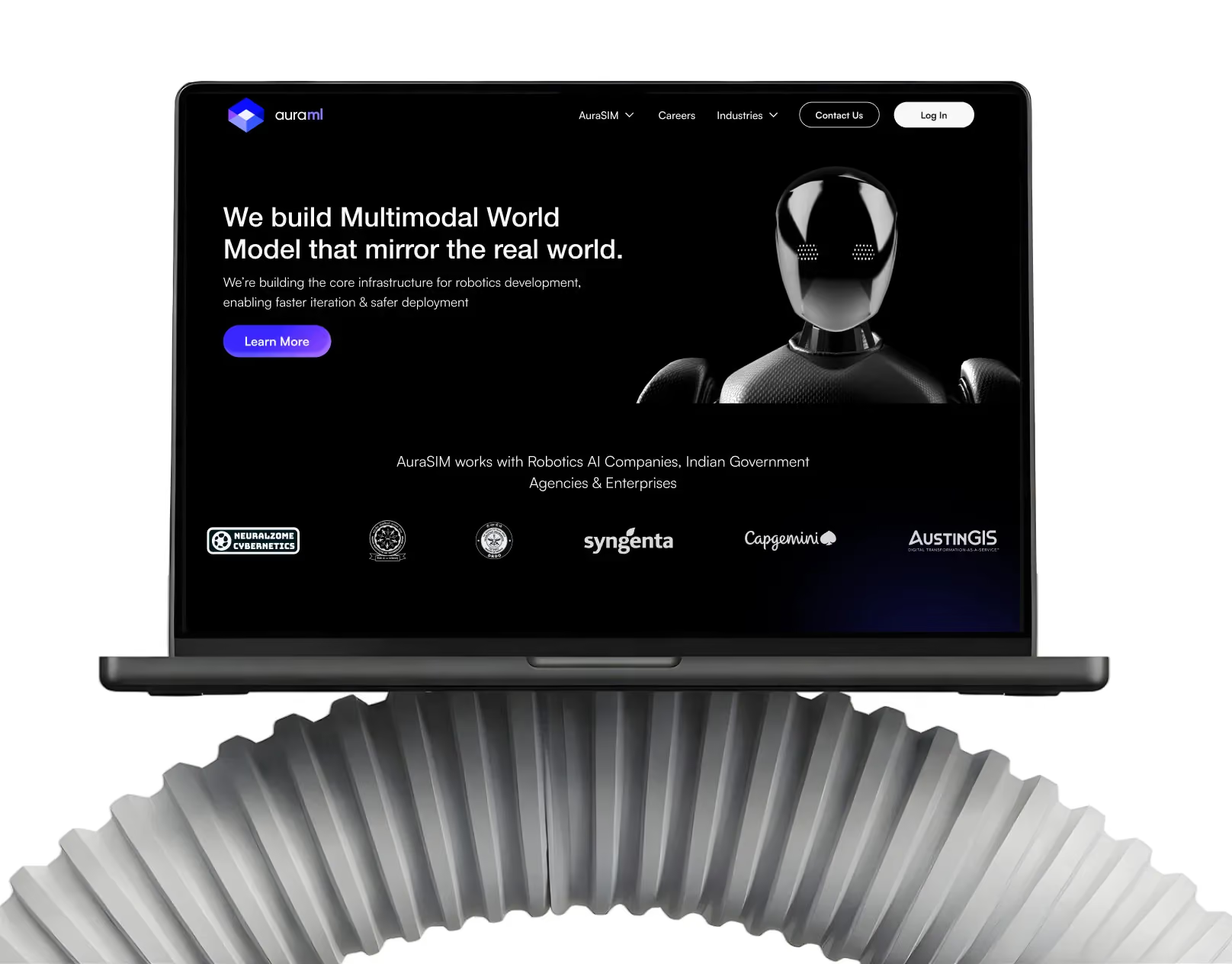
AuraML
How Suplex helped AuraSIM shift from a simulation tool to the brand that makes physical AI feel ready for the real world.

Tea Culture of the World
How Suplex made 120 teas from across the world feel like a discovery rather than a decision.

Great Lakes
How Suplex built a full stack website for a Midwest tequila brand with a real production story.
Why Suplex?
World Class Aesthetics
.webp)
Profitable E-Commerce
.webp)
Build A Brand
.webp)
Build Your D2C Business The Right Way
Build It With Suplex.


