Brand Building For E-Commerce
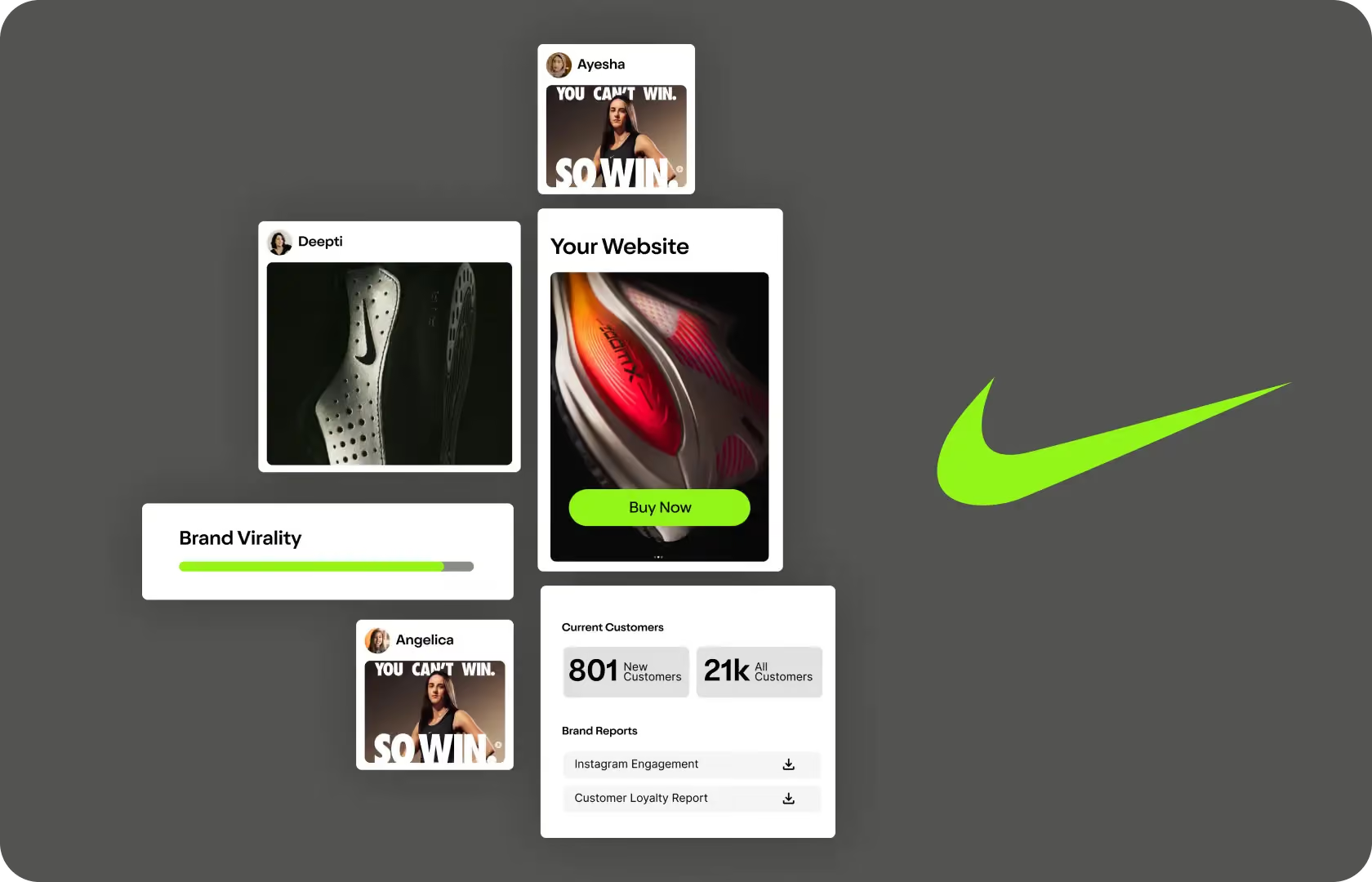
Brand Building for E-Commerce in UI Design
A brand identity that works in print does not automatically work on screen.
The logo holds up. But the colour palette that looks rich in a brand book often renders differently on screens calibrated for digital rather than print. The typography that feels right in an editorial context needs a different scale and weight hierarchy when it is being read on a 375px phone. The visual language that communicates luxury in a packaging context can feel heavy and slow in a digital product where buyers are scanning rather than studying.
Brand building for e-commerce is the work of translating a brand identity into a digital design system that works at the speed and scale of online shopping. Not diluting the brand. Not starting again from scratch. Translating it, deliberately and with full understanding of what digital surfaces ask for that print and packaging do not.
At Suplex Design, our team does this translation for D2C brands across India, the UAE, the UK, the US, and Singapore. The output is not a style guide. It is a working design system that the team can use to build new pages, new campaigns, and new product releases without having to reinvent the visual language every time.
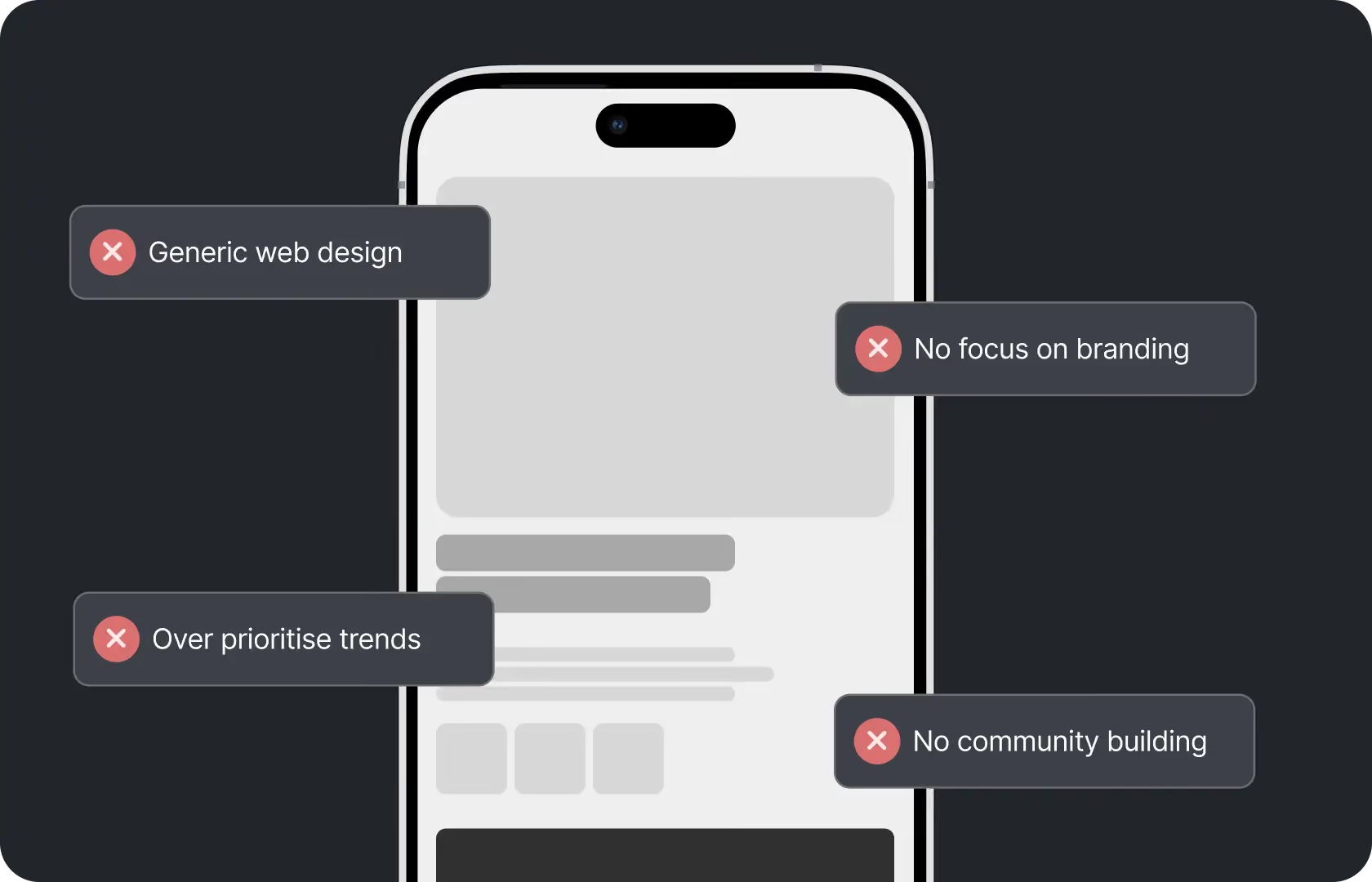
What Brand Building for E-Commerce Actually Produces
Not a logo. Not a colour palette document. A system.
A digital design system for e-commerce covers the colour tokens that define how the brand palette is applied across every surface. The typographic scale that works from small body text on a mobile product page to large display headings on a campaign landing page. The component library that gives the brand a consistent visual language across product cards, navigation, forms, modals, badges, and every other recurring interface element. The imagery and photography direction that tells the team what visual content looks like in this brand. The iconography style. The spacing system. And the documentation that ties all of it together so it can be applied without the original designer in the room.
Research by Lucidpress, now Marq, found that consistent brand presentation across all platforms can increase revenue by up to 33 percent. That number compounds over time because consistent presentation builds recognition, and recognition builds trust, and trust reduces the friction between a buyer encountering the brand and a buyer committing to a purchase. The design system is what makes consistency possible at scale.

How Suplex Design Approaches Brand Building for E-Commerce
The process starts with the existing brand identity and ends with a digital design system built to serve the specific surfaces the brand operates on. There is no default template and no recycled component set from a previous project. The system reflects this brand, this product, and this audience.
Brand Audit and Digital Translation Brief
Before building anything, we read what already exists.
For brands that have an existing identity, we audit how it is currently being applied digitally and identify the gaps. Where the colour usage has drifted from the brand palette. Where the typography is being applied inconsistently across page types. Where the photography style has evolved without the direction being updated. Where UI components have been created ad hoc by different people at different times and no longer feel like they belong to the same product.
From this audit, we build a digital translation brief that defines what the brand needs from its design system, what existing elements are correct and should be carried forward, and what needs to be established properly before the system can be built. This brief is the foundation. Everything that follows comes from it.
Colour System for Digital
Colour in a digital product is not the same as colour in print.
Print uses CMYK. Screens use RGB and, increasingly, display-p3 for wide-gamut monitors. A colour that matches the brand Pantone reference in print may need to be adjusted for digital to achieve the same visual effect. More fundamentally, a brand palette designed for print typically has three to five colours. A digital product needs a colour system with considerably more specificity: primary and secondary colours, semantic colours for success, error, warning, and information states, neutral greys for text and surfaces at multiple tonal levels, and background colours for different surface contexts.
At Suplex Design, we build the colour system as design tokens, named variables that carry both the value and the intent. A primary button is not blue. It is the primary-action colour, and that colour is defined in one place so that changing it updates every component that uses it simultaneously. This is not a theoretical distinction. It is what makes a brand colour consistent across a product that grows over time rather than accumulating variations that nobody can audit.
Typographic Scale for E-Commerce
Typography in a D2C e-commerce context has to work across an enormous range of scenarios.
Display headings on campaign pages. Product titles at three different sizes depending on whether they appear on a product page, a collection grid, or a search result. Body text for product descriptions at a length that can range from two lines to twenty. Microcopy on form fields, error states, and checkout confirmations. Navigation labels. Badge text. CTA button text at different sizes.
A typographic scale for e-commerce defines all of these explicitly. Which font, which size, which weight, which line height, which letter spacing, and at which screen sizes. The scale is mobile-first because that is the primary context, and it adapts at the breakpoints where the content requires it. Our team of UI designers at Suplex Design builds typographic scales that are both visually consistent with the brand and practically legible at the sizes they will actually be read.
Component Library
Components are the repeating building blocks of a digital product.
Buttons in their states: default, hover, active, disabled, loading. Form inputs in their states: empty, focused, filled, error, success. Product cards at different aspect ratios and content configurations. Navigation at mobile and desktop. Modals and drawers. Toast notifications and banners. Breadcrumbs. Pagination. All of these appear across multiple pages and contexts, and all of them need to be visually consistent with each other and with the brand.
A component library built in Figma gives every person working on the product access to the same building blocks. When a designer builds a new landing page, they use the components from the library rather than creating new ones. When a developer builds a new feature, they reference the component documentation rather than interpreting a design file. The consistency that results is not a coincidence. It is a system producing a predictable output.
Photography and Imagery Direction
Product photography direction is often the missing piece in a digital brand system.
Most brands have a brand book that talks about brand photography in general terms: aspirational, authentic, human. These words do not help the photographer who is briefed for the next product shoot or the designer who is selecting imagery for a campaign page. What helps is specific: the background treatment and whether products are shot on white, on colour, or in context. The lighting style. Whether models are included and if so how they are styled and directed. The colour temperature and editing approach that makes new images feel like they belong with existing ones. The do-nots, the specific visual choices that are out of scope for the brand regardless of how they look in isolation.
At Suplex Design, photography and imagery direction is included as part of the brand system for e-commerce rather than treated as a separate project. Because a colour system and a component library are only half the picture if the imagery populating those components is inconsistent or misaligned with the brand.
Documentation and Governance
A design system without documentation is a collection of files. Documentation is what makes it a system.
The documentation covers how to use each component, when to use which variant, what the colour tokens mean and when each is appropriate, how the typographic scale maps to content types, and what the photography direction means in practical terms. It is written for the people who will use the system after the designers who built it have moved on to the next project. Which is everyone who will ever work on the product from the point the system is delivered.
We also establish governance guidelines: a process for how new components are added to the system, how the system is updated when the brand evolves, and who is responsible for maintaining consistency as the product grows. Without governance, a design system starts drifting from the day after it is delivered.

Tools Used in Brand Building for E-Commerce
Suplex Design builds digital brand systems in Figma with design tokens implemented as Figma variables for direct handoff to development. For development implementation, tokens are exported as CSS custom properties or in formats compatible with the project's specific tech stack. Photography direction is documented as a visual reference guide alongside written guidelines. Component documentation is built as annotated Figma frames and supplemented with written usage notes where interaction states or edge cases require additional explanation.
Is Brand Building for E-Commerce What You Need?
A few signals.
Different pages of the store feel like they were built by different teams. That is a system problem. The brand has evolved since the store was designed and the visual language is now inconsistent with how the brand looks everywhere else. New marketing content looks different from the store and there is no clear rule about why. The team spends time on every new campaign reinventing visual decisions that should already be resolved. These are all signs that a design system would help.
If the store is visually consistent, the team has clear guidelines for how to apply the brand digitally, and new content is produced quickly and consistently, the system is probably already working even if it is not formally documented. A light audit to check the foundations are solid might be appropriate. A full system build probably is not.
Common Mistakes in Digital Brand Building
The same gaps. In almost every brand we have audited.
- Building a style guide instead of a design system. A style guide documents the brand. A design system enables people to build with it. The difference is that a style guide gets referenced occasionally and ignored when deadlines are tight. A design system is the thing people are building with on a daily basis.
- Defining brand colours but not defining how they are used. Knowing the hex code for the primary colour is not the same as knowing whether it belongs on a button, a background, a text element, or all three. Tokens define the intent, not just the value.
- Treating photography direction as a marketing consideration rather than a design system component. The imagery that fills the design system's components is half of what makes the visual language coherent. Inconsistent photography undermines a consistent design system.
- Building a Figma component library without documenting how to use it. Components that are not documented are components that will be used incorrectly, overridden, or rebuilt from scratch by every designer who encounters them without understanding what they are for.
- Not establishing governance for how the system evolves. A design system that does not have a process for updates starts drifting from the day it is delivered, and within a year looks as inconsistent as the thing it replaced.
At Suplex Design, the system we deliver is built to be used by teams who were not in the room when it was made. That is the standard we design to.
Why Brand Building Matters for D2C E-Commerce
For a D2C brand, the digital product is the brand experience. There is no physical retail environment, no sales associate, no tactile quality cue from holding the product in a store. The visual design of the store, the consistency of the experience across every page and every device, is doing the work that all of those physical touchpoints do in a traditional retail context.
Talking about the commercial stakes, the research from Lucidpress puts the revenue impact of consistent branding at up to 33 percent. That is not a design metric. It is a commercial one. And it compounds. A brand that is visually consistent builds recognition faster. Recognition reduces the cognitive effort required to trust the brand. Lower effort means higher conversion. Higher conversion means better return on every unit of acquisition spend.
For brands expanding across markets, a digital design system is also an operational lever. It allows teams in different geographies to produce brand-consistent content without centralised approval for every asset. The system does the quality control by constraining what is possible within it.
How Suplex Design Approaches Brand Building for Your Brand
Every brand system at Suplex Design starts from the existing brand identity and the specific digital surfaces that need to be served. There is ideally no default approach and no recycled template. The colour tokens, the typographic scale, the component library, and the photography direction are all built for this brand at this stage of its development.
Store looking inconsistent and the team is not sure why? Building something new and want the digital visual language established before development begins? Existing system that has drifted and needs rebuilding? Get in touch with Suplex Design.

Frequently Asked Questions
What does brand building for e-commerce from Suplex Design include?
A brand audit and digital translation brief, colour system built as design tokens, typographic scale for e-commerce contexts, a Figma component library with documented usage, photography and imagery direction, and governance guidelines for how the system is maintained and extended. The deliverable is a working design system, not a style guide.
How much does a digital brand design system cost at Suplex Design?
Honestly it depends on scope. A focused design system for a single-market D2C store covering the key components typically starts from around $2,500 at Suplex Design. A comprehensive system for a brand with multiple product categories, multiple market variants, and a component library that spans web and app surfaces costs more. We scope clearly before starting.
Do you need an existing brand identity to work from?
Not necessarily. If the brand identity does not yet exist, Suplex Design can develop it alongside the digital design system rather than treating them as sequential projects. The advantage of doing both together is that the identity is developed with the digital context in mind from the start, rather than being translated to digital after the fact. We can scope either approach depending on what the brand actually needs.
How long does building a digital brand design system take?
A focused design system for a D2C store with a defined product range typically takes four to seven weeks at Suplex Design, from the initial brand audit through to a documented and annotated Figma deliverable. More complex projects, or those that include developing the brand identity alongside the digital system, take longer. We confirm the timeline during scoping.
Do you provide support after the design system is delivered?
Yes, absolutely. Design systems need ongoing maintenance as the brand evolves, new components are needed, and the product grows. Suplex Design offers ongoing design system support including component additions, system updates when the brand visual identity changes, and governance reviews to check whether the system is being applied consistently. A system that is not maintained drifts. We stay involved to prevent that.
Let’s Make It Happen
Shopify Success Stories
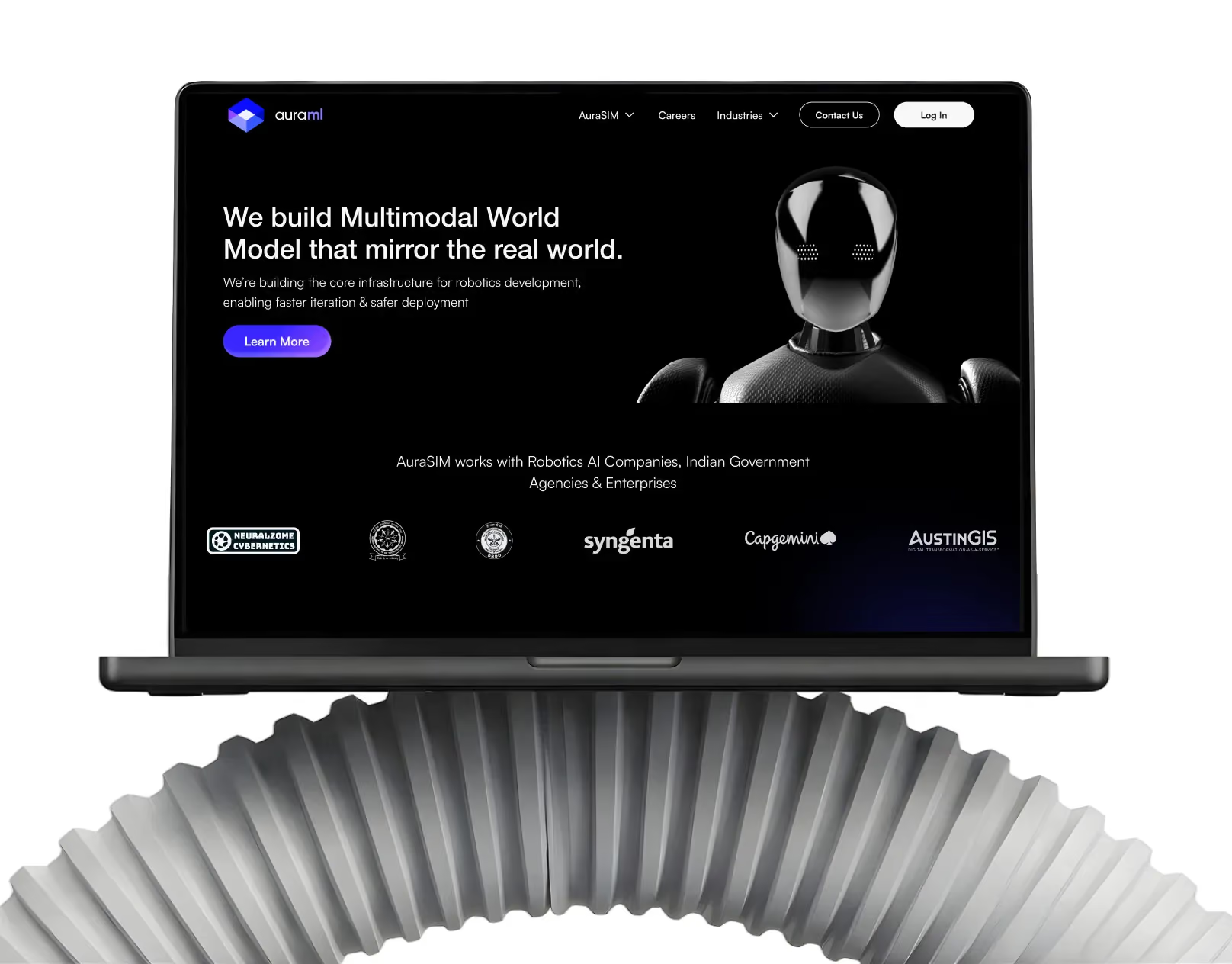
AuraML
How Suplex helped AuraSIM shift from a simulation tool to the brand that makes physical AI feel ready for the real world.

Tea Culture of the World
How Suplex made 120 teas from across the world feel like a discovery rather than a decision.

Great Lakes
How Suplex built a full stack website for a Midwest tequila brand with a real production story.
Why Suplex?
World Class Aesthetics
.webp)
Profitable E-Commerce
.webp)
Build A Brand
.webp)
Build Your D2C Business The Right Way
Build It With Suplex.


