CRO (Conversion Rate Optimisation)
CRO in UX Design
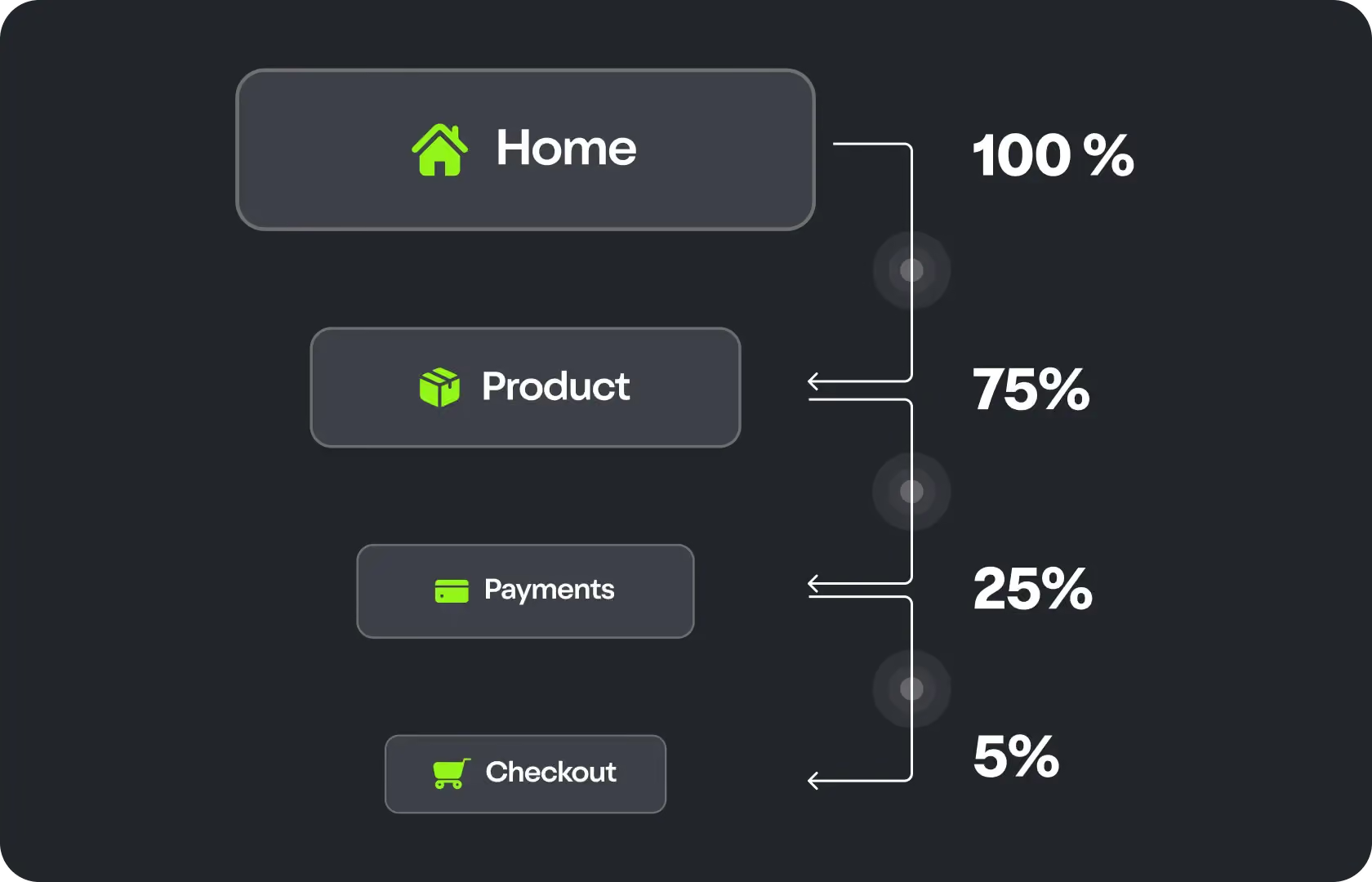
There are two versions of CRO. One starts with a test. The other starts with a question. The version that starts with a test goes like this. Conversion rate is low. Someone on the team suggests changing the button colour or moving the CTA higher on the page. A test is set up. It runs for two weeks. The variant wins by a small margin. The change is implemented. The conversion rate moves slightly or not at all, and three months later nobody is sure whether it made a difference or whether something else moved in the same period.
The version that starts with a question goes differently. Conversion rate is low. Before any test is designed, the question is asked: why? Session recordings are watched. Heatmaps are read. Funnel data is segmented by device and traffic source. Exit surveys are reviewed. A specific behavioural pattern is identified. A hypothesis is formed about what is causing that pattern. A test is designed to address that specific cause. The test runs to statistical significance. If it confirms the hypothesis, the change is implemented. If it does not, the data from the failed test informs the next hypothesis.
The second version is what UX-led CRO looks like. At Suplex Design, it is the only version we do.
What Makes UX CRO Different
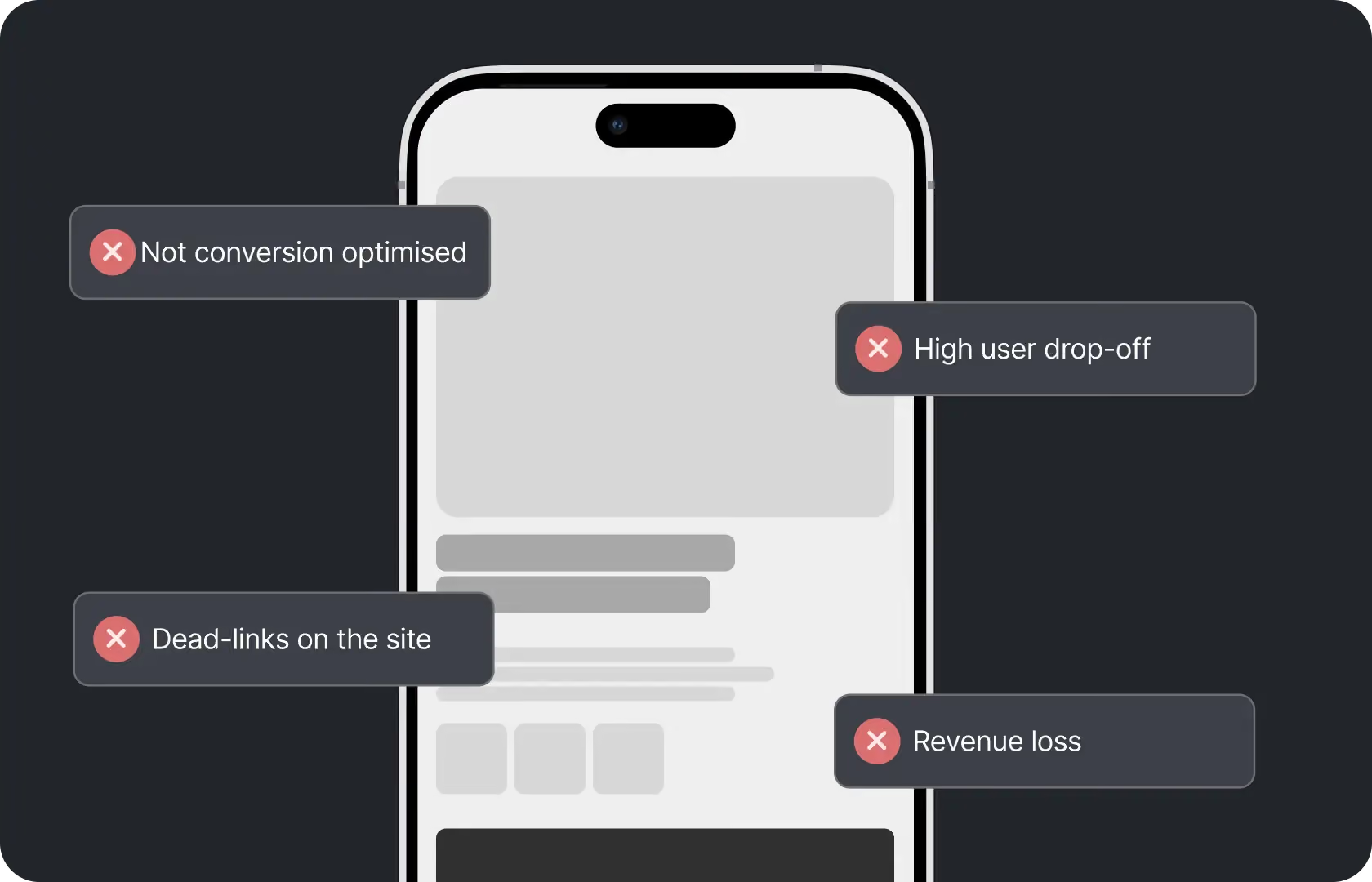
Most CRO agencies lead with the test. UX-led CRO leads with the behaviour. The difference is not just philosophical. It produces different results commercially. A/B tests designed around gut feel produce small, inconsistent improvements. Tests designed around specific behavioural evidence, a pattern in the session recordings, a consistent drop-off point in the funnel, a trust signal that is being ignored according to the heatmap, produce larger improvements because they are addressing something real rather than something assumed.
The research Forrester published on this is worth knowing. Every dollar invested in UX design delivers an average return of 100 dollars. That is a 9,900 percent ROI. The reason the return is that high is that UX-led work finds and fixes the specific friction points that are blocking conversions, rather than making general improvements and hoping something sticks.
The other thing that distinguishes UX CRO from e-commerce CRO is the angle. E-commerce CRO often focuses on commercial levers. Price anchoring, urgency signals, social proof quantity. UX CRO focuses on the experience underneath those levers. Whether the buyer can find the information they need at the moment they need it. Whether the journey makes sense. Whether the product page is structured around how a buyer makes a decision or around how the brand wants to present itself.
How Suplex Design Approaches UX CRO
- Research
- Hypothesis
- Test
- Implementation
That is the exact sequence we follow at Suplex Design and it does not move.
Behavioural Research
This is the part most CRO processes skip because it takes time. Behavioural research at Suplex Design means reading heatmaps and session recordings to understand what buyers are actually doing on the pages being optimised. Not what the team thinks they are doing. What they are actually doing. These are usually different things, and the gap between them is where most conversion problems live.
On a typical product page review, we watch thirty to fifty session recordings of buyers who visited the page but did not add to cart. We are looking for patterns. Do they scroll past the size guide without clicking it? Do they spend time on the reviews section but not find what they are looking for? Do they repeatedly tap something that is not interactive? Do they spend time looking at the shipping information area and then leave? Each of these is a specific UX problem with a specific fix.
We also run exit surveys on high-exit pages where the traffic volume supports it. A single open-ended question: what stopped you completing your order today? The answers are frequently direct, specific, and actionable in ways that quantitative data alone is not. "I could not find the return policy" is something a heatmap confirms but cannot explain, an exit survey can.
Forming the Hypothesis
A hypothesis is not a test idea. It is a specific, falsifiable claim about why a UX problem is affecting conversion, and what changing would fix it. "If we move the return policy link above the fold on the product page, buyers who are currently leaving to look for it will find it at the right moment in their decision process, reducing product page exit rate for first-time visitors." That is a hypothesis. It names the problem, the proposed fix, the mechanism, and the expected outcome. A test can confirm or deny it.
"Let's try a different button colour" is not a hypothesis. It is a guess. Tests built on guesses produce noisy data and teams that are not sure what they learned from them. Our team of UX designers and CRO specialists at Suplex Design documents hypotheses in this specific form before any test is designed. It forces precision. And precision is what makes test results interpretable rather than ambiguous.
Designing and Running the Test
Once a hypothesis is formed, the test is designed around it. The variant changes exactly what the hypothesis says to change, and nothing else. Tests that change multiple things simultaneously cannot tell you which change caused the result. They are useful for speed, not for learning.
We calculate the required sample size before the test starts based on the current conversion rate, the minimum detectable effect worth caring about commercially, and the statistical confidence threshold. This calculation determines how long the test needs to run. Tests called before reaching the required sample size are not tests. They are early impressions. Calling a test early at 70 percent confidence is equivalent to flipping a coin and claiming it is conclusive.
Test implementation uses Optimizely or VWO depending on the store's setup and traffic volume. For Shopify Plus stores, we also explore whether Checkout Extensibility enables the change to be tested natively. Every test has a single primary metric, the one the hypothesis predicts will move. Secondary metrics are tracked but do not determine the outcome.
Learning From the Result
A test that confirms the hypothesis produces a change to implement. A test that does not is not a failure, it is information. A failed test tells you that the proposed fix did not address the actual cause of the problem. That is useful because it eliminates one possible explanation and points the research toward what else might be causing the behaviour. Brands that treat failed tests as failures stop running them. Brands that treat them as information run more, learn faster, and compound improvements over time.
At Suplex Design, every test result, positive or negative, is documented with the hypothesis, the result, the interpretation, and the implication for the next research cycle. This builds a body of knowledge about the product and its buyers that compounds in value over time. A year of systematic UX CRO produces a brand that genuinely understands why its buyers behave the way they do.
What Gets Tested
Not everything is worth testing. Some things are obvious enough that the behavioural research confirms them without a test being necessary.
The things worth testing are changes with high commercial impact and genuine uncertainty about the outcome. Product page hierarchy changes. Trust signal placement. Checkout flow adjustments on Shopify Plus. Collection page filter configuration. Category page layout changes that affect how many products are visible before scroll.
The things that do not need testing are small changes with clear directional evidence from the behavioural research. A return policy link that fifty percent of buyers are clearly looking for and cannot find does not need an A/B test to confirm that adding it above the fold will help. The session recordings have already confirmed that the information is being sought and not found. Just fix it.

Tools Used in UX CRO
Suplex Design uses Hotjar and Microsoft Clarity for heatmaps and session recordings, GA4 for funnel analysis and segmentation, Optimizely and VWO for A/B testing, and Maze for moderated user testing where deeper qualitative research is needed. Exit surveys are configured through Hotjar where traffic volume supports meaningful sample sizes. For Shopify Plus stores, Checkout Extensibility is used where checkout-level changes are being tested.
Is UX CRO the Right Engagement for You?
Depends on where the problem is and how big the traffic is. UX CRO works best on products that have real traffic and a conversion rate that is below where it should be. If the product has under 10,000 monthly visitors, A/B tests will take a long time to reach statistical significance. In that situation, the behavioural research and direct UX fixes without formal testing often produce more value faster than a testing programme.
If the product has meaningful traffic and the team genuinely does not know why the conversion rate is where it is, or suspects the UX is the problem but has not confirmed it, UX CRO is the right engagement. It will identify the specific causes and address them with evidence behind every change.
If the product is already converting well and the team is looking for incremental improvements, a focused UX CRO cycle on a specific section, the checkout, the product page, the collection page, will find the next layer of gains without requiring a comprehensive review of everything.
Common Mistakes in UX CRO
Almost universal. Largely avoidable.
- Testing without behavioural research first. Tests designed around assumptions rather than observed behaviour produce small, inconsistent results and teams that are not sure what they learned.
- Calling tests early. Statistical significance is not optional. A test called at 65 percent confidence will produce the wrong winner approximately 35 percent of the time. Over many tests, this compounds into a product shaped by incorrect conclusions.
- Changing multiple things in a single test. Multi-variable tests can be run, but they cannot tell you which specific change caused the result. For UX CRO where learning is as important as winning, isolating variables is what makes results interpretable.
- Treating failed tests as failures rather than as information. The most useful thing a failed test can tell you is that your hypothesis about the cause was wrong, which narrows the field of what to investigate next.
- Optimising only on desktop when the majority of traffic and an increasing share of purchases happen on mobile. Mobile UX problems are consistently underrepresented in test programmes that were designed with desktop as the primary surface.
- Running CRO as a project with a start and end date rather than as an ongoing practice. The compounding value of UX CRO comes from the systematic accumulation of knowledge about buyer behaviour over time. A single sprint produces improvements. A sustained programme changes how the product is made.
Why UX CRO Matters for D2C Brands
Every unconverted visitor is a cost the brand has already paid. The acquisition happened. The click happened. The landing happened. What did not happen is the conversion. And the gap between landing and converting is shaped almost entirely by the UX. Whether the buyer found the information they needed. Whether the journey made sense. Whether the friction at the decision point was low enough that committing felt easy rather than risky.
For D2C brands where acquisition costs are rising, this matters more each year. Improving conversion rate is the only lever that increases revenue without increasing spend. A brand converting at 1.5 percent that moves to 2 percent has increased revenue from the same traffic by 33 percent. That number does not come from more ads. It comes from a better product experience.
The brands that understand this treat UX CRO as a core commercial function rather than a design project. They have someone responsible for it. They run it continuously. And over time, the compound effect of systematically removing friction from the buyer experience is visible in the numbers in a way that individual redesigns rarely are.
How Suplex Design Approaches UX CRO for Your Brand
Every UX CRO engagement at Suplex Design starts with the behaviour and ends with implemented changes that have evidence behind them. There is ideally no standard test list and no default set of things we always try first. The research tells us what to test. The tests tell us what to implement. The results tell us what to research next.
Conversion rate lower than it should be? Not sure whether it is a UX problem or something else? Want tests designed around actual buyer behaviour rather than the team's assumptions? Get in touch with Suplex Design.

Frequently Asked Questions
What does UX CRO from Suplex Design include?
Behavioural research through heatmaps, session recordings, funnel analysis, and exit surveys. Hypothesis formation for the specific UX problems identified. A/B test design and execution through Optimizely or VWO. Implementation of confirmed improvements. And documentation of what was learned from each test, positive or negative, to inform the next research cycle.
How much does UX CRO cost at Suplex Design?
A focused UX CRO engagement covering behavioural research, hypothesis formation, and one to two test cycles typically starts from around $1,500 at Suplex Design. Ongoing retainers where we run the full research-hypothesis-test-implement cycle continuously are scoped separately. We scope clearly before starting so the cost reflects what is actually being delivered.
How is UX CRO different from the CRO that e-commerce agencies do?
Most e-commerce CRO leads with the test. UX CRO leads with the behavioural research. The difference is that our hypotheses come from specific observed behaviour, session recordings, heatmap patterns, funnel drop-off data, rather than from general best practice lists or the team's intuition about what might help. Tests built on observed behaviour produce larger, more consistent improvements.
How much traffic does a store need before UX CRO makes sense?
At least 10,000 monthly visitors for A/B testing to reach statistical significance within a reasonable timeframe. Below that, the behavioural research and direct UX fixes without formal testing usually produce more value faster. We will tell you honestly which approach makes more sense for your current traffic level, and we will not recommend a testing programme that will take six months to produce a single result.
Do you provide ongoing UX CRO support?
Yes, absolutely. The compounding value of UX CRO comes from running the research-hypothesis-test-implement cycle consistently over time, not from a single sprint. Suplex Design offers ongoing UX CRO support for brands that want to treat this as a continuous commercial function rather than a one-off project. The brands that do this consistently are the ones that see conversion rate shift meaningfully over twelve months.
Let’s Make It Happen
Shopify Success Stories
AuraML
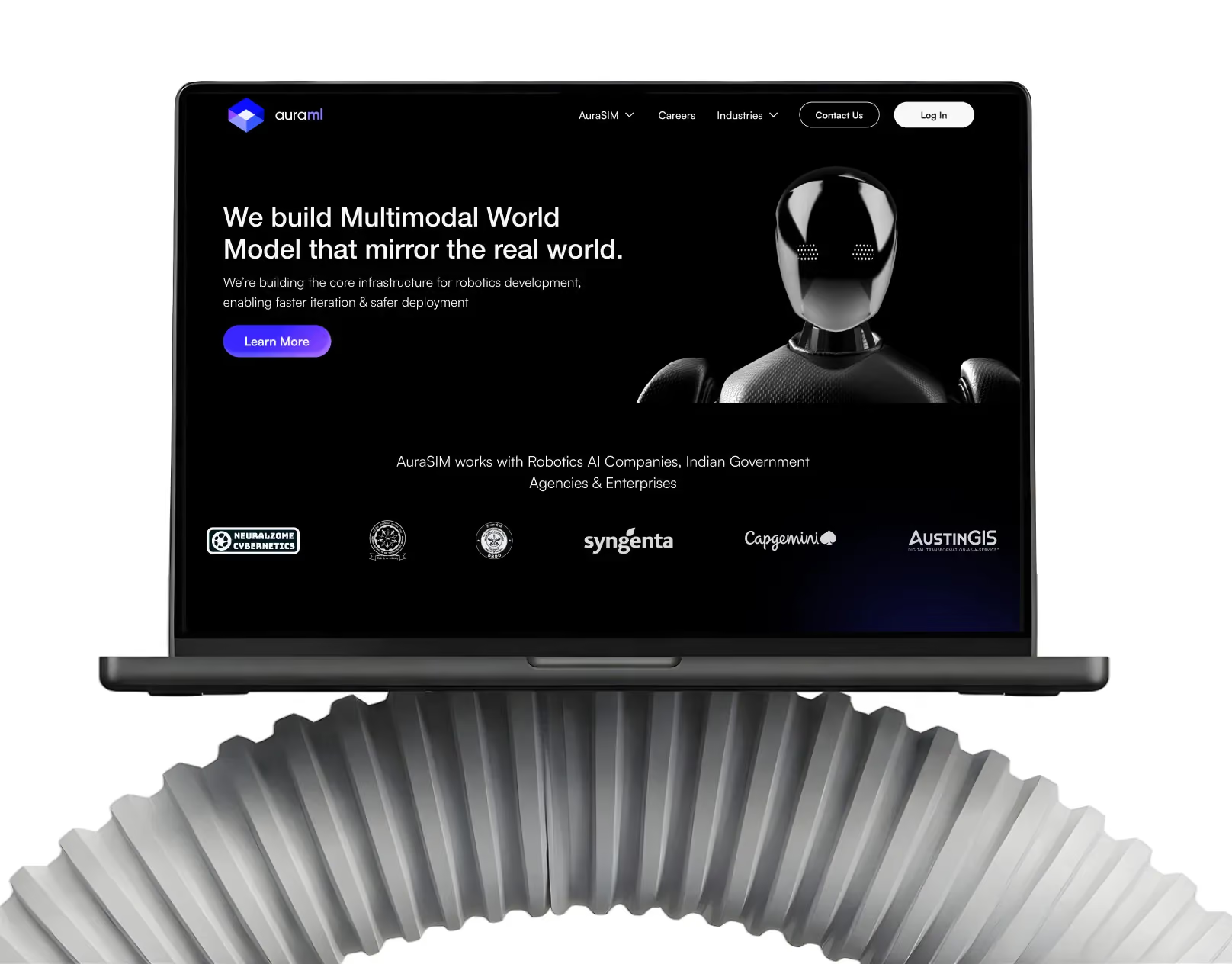
How Suplex helped AuraSIM shift from a simulation tool to the brand that makes physical AI feel ready for the real world.

Tea Culture of the World
How Suplex made 120 teas from across the world feel like a discovery rather than a decision.

Great Lakes
How Suplex built a full stack website for a Midwest tequila brand with a real production story.
Why Suplex?
World Class Aesthetics
.webp)
Profitable E-Commerce
.webp)
Build A Brand
.webp)
Build Your D2C Business The Right Way
Build It With Suplex.


