Custom Shopify Themes
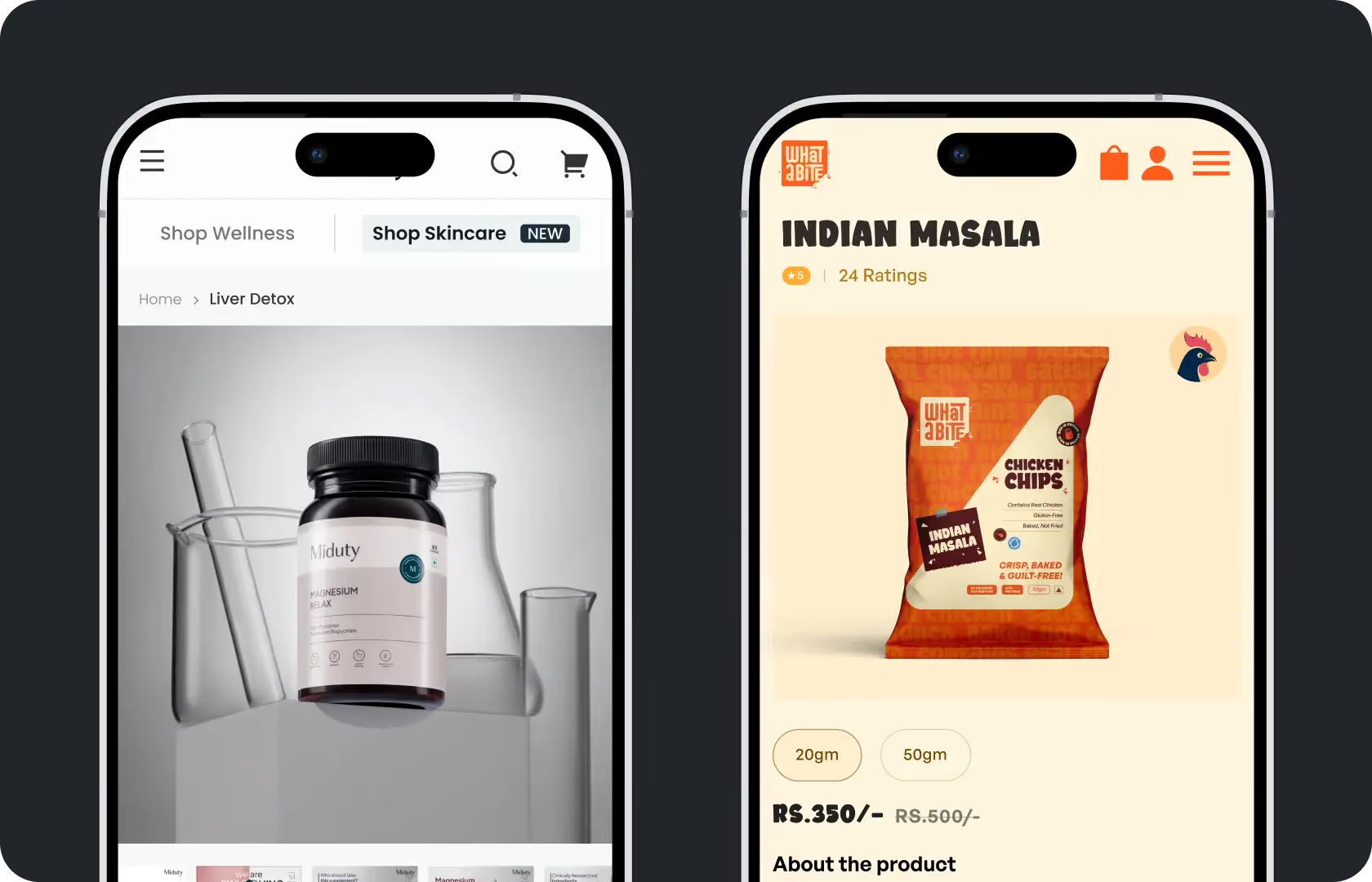
Custom Shopify Themes in E-Commerce Development
An off-the-shelf Shopify theme is built to work for every kind of store, so basically that means it is optimised for none of them in reality. The navigation hierarchy, the product page layout, the collection structure, the checkout flow, all of it is designed around the usual e-commerce behaviour over how your buyer shops, decides, and commits.
A lot of well renowned brands like Gymshark, Allbirds, and Glossier did not build stores that seem unique by using themes from the Shopify theme store and customising their way to something different. They have actually built from the ground up, which is the only way to get a store that truly reflects how the brand operates and what the buyer needs at each step. Talking about some Indian D2C brands like boAt and The Souled Store, they have invested in custom-built Shopify experiences. This is so because they understood early that a shopify template, however well styled, signals "we set this up quickly" to anyone who has seen enough e-commerce stores. At Suplex Design, we ensure that custom Shopify theme development starts from a blank slate and ends at a store built specifically for your product, your buyer, and your market.
What Is Custom Shopify Theme Development?
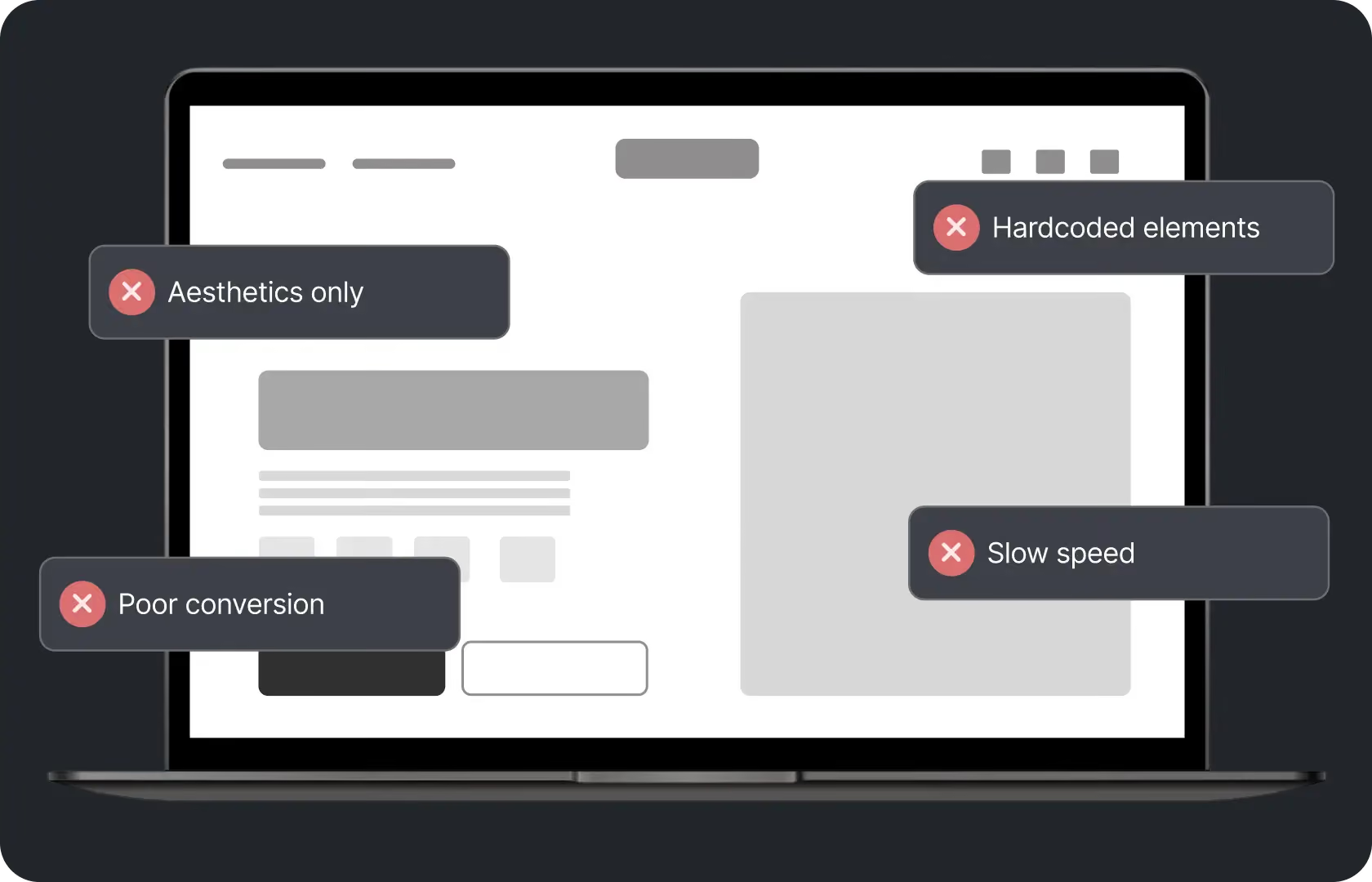
Custom Shopify theme development is the process of building a Shopify storefront from scratch using Liquid, Shopify's templating language, alongside HTML, CSS, and JavaScript, rather than adapting an existing theme. And in return you get a store where every element, from the way products are displayed to how collections are filtered, how the cart behaves, and how the checkout is introduced, is designed around what your buyers want.
Customising a theme means ideally working within the constraints of someone else's code. You can change colours, fonts, and some layout elements, but the underlying architecture, section structure, data logic, page hierarchy, stays as the same as how the developer had intended. A custom theme has no such constraints as every section, component, interaction is purpose-built.
How Suplex Design Approaches Custom Shopify Themes
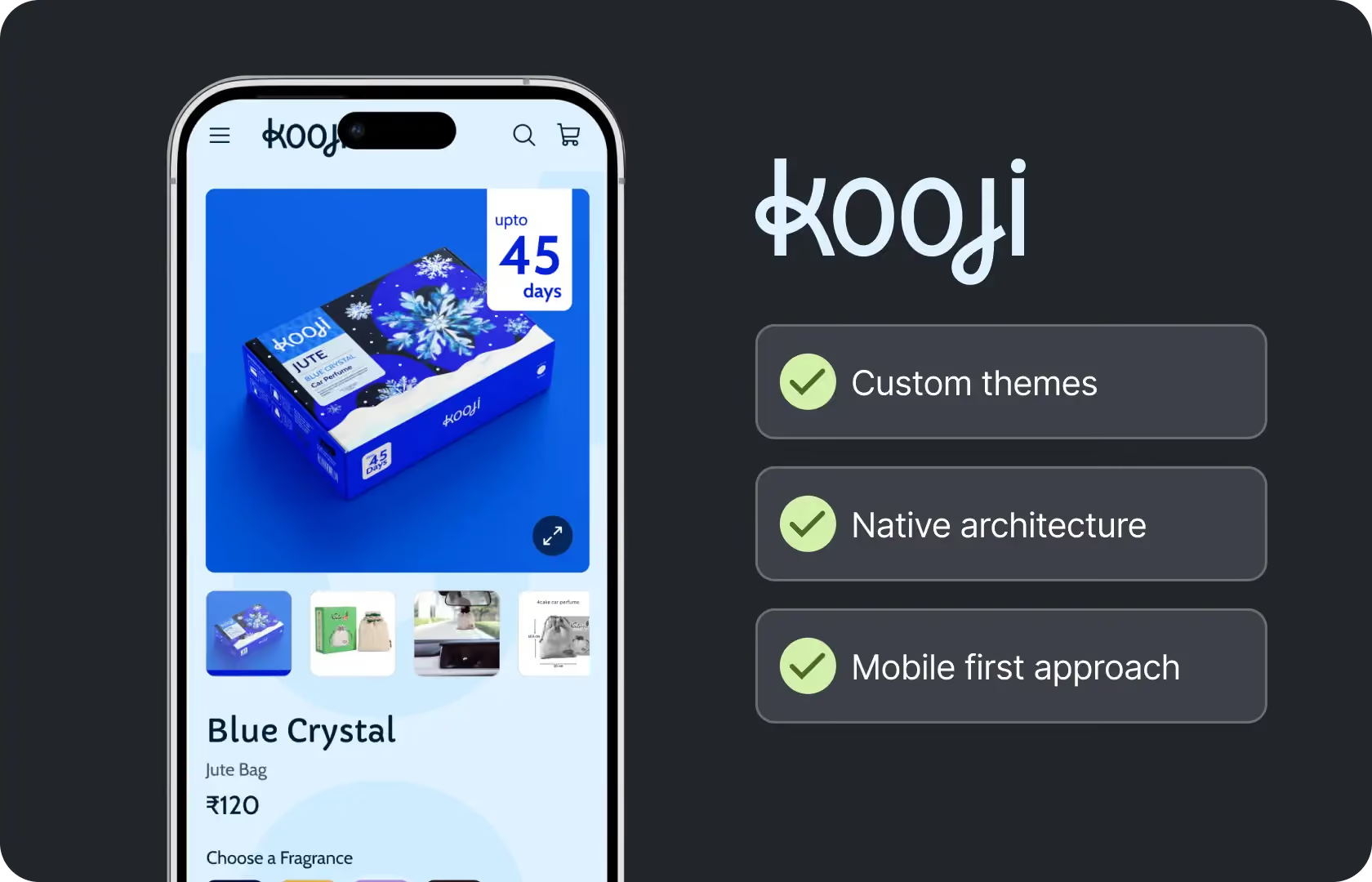
At Suplex Design, custom theme development is not a development task that follows a design brief. We look at it as a process that starts with how the buyer behaves and works backwards from there to every technical decision. We at Sulpex, believe that this sequencing is the difference between a store that looks like the brand and a store that actually converts for the brand.
Discovery and Buyer Journey Mapping
Before anything is designed or coded, our team of experts spend time understanding who the buyer is, how they discover the product, what questions they have before they commit, and where they typically drop off in a generic Shopify experience. This shapes everything from which information appears above the fold on a product page, how the navigation is structured, whether the collection page needs filtering by use case or by specification, and how much the brand can rely on imagery versus copy to do the persuasion work. We intend to do this before touching design tools because a beautiful page built on the wrong assumptions about buyer behaviour will underperform a less polished one built on the right ones.
Design System Before Page Design
We build the design system first, the colour tokens, typography scale, spacing rules, component library, and grid logic, before designing individual pages. This is not how most agencies work, because it takes longer upfront. So the reason we insist on it is that a design system is what makes a custom theme feel coherent across every page. If this step isn’t taken care of then your brand’s website ends up looking like a collection of individually designed screens that just happen to share the same colour palette and font. So for D2C brands with multiple product categories, campaign landing pages, blog content, and promotional pages, this is what makes the store feel like a brand and not like a mere website.
Shopify 2.0 Architecture and Section Everything
Every custom theme Suplex Design builds uses Shopify 2.0 architecture with JSON templates and full section everywhere support. What this means practically is that your team can edit page layouts, reorder sections, add promotional blocks, and create landing pages without needing a developer every time. This matters because most brands that commission a custom theme end up back-dependent on their developer for changes that should take minutes, because the theme was not architected for editorial flexibility. We build with your internal team's day-to-day usage in mind, not just with the launch in mind.
Performance-First Development
A custom theme built without attention to performance will load slower than a well-configured standard theme, which is a trade-off most brands do not realise they are making until after launch. At Suplex Design, performance is a constraint we design to from the beginning, not something we attempt to fix at the end. Images are lazy-loaded and served in next-generation formats. JavaScript is deferred where it does not need to block rendering. Third-party scripts are loaded in an unsynchronised manner. And hence the result is a Core Web Vitals score that supports, rather than undermines, organic search visibility. Shopify stores that load in under two seconds convert a lot better than those that do not. Hence at Sulpex Design, we make sure they have a faster loading speed.
Mobile-First and Cross-Device Testing
More than 70 percent of e-commerce traffic globally comes from mobile devices. And frankly speaking, that number is higher in markets like India and the UAE where smartphone browsing usually dominates. Custom theme development at Suplex Design starts on mobile and scales up to desktop, not the other way around. We test on real mid-range Android devices, not just desktop Chrome with a responsive inspector, because a layout that looks fine in a browser tool can be frustrating in practice on a device with a slower processor and a smaller screen. Every interactive element, every tap target, every form input is reviewed on actual devices before the theme is signed off.
Handoff, Documentation, and Training
When the theme is delivered, it comes with component documentation, usage guidelines for the section library, and a training session for whoever will be managing the store day to day. We have seen too many custom Shopify builds handed over without any of this, leaving the client with a store they cannot confidently manage and a growing dependency on the agency for changes that the theme was built to support independently. That is not a good outcome for anyone. Handoff is part of the project scope at Suplex Design, not an afterthought.

Tools and Technology Behind Custom Shopify Theme Development
Suplex Design builds custom Shopify themes using Shopify 2.0, Liquid, HTML, CSS, and JavaScript, with JSON templates for flexible page architecture. Our website designers do all the design work in Figma. We use Shopify CLI for local development, GitHub for version control, and Shopify's Theme Check tooling for code quality review before deployment. Performance is monitored using Google PageSpeed Insights and Lighthouse. Post-launch, we connect Google Analytics 4 and the relevant ad platform pixels as part of the standard handoff.
Common Mistakes in Custom Shopify Theme Development
Most custom theme projects that underperform do so because of decisions made early in the process, often before development has even started.
- Starting with design before understanding buyer behaviour, which produces pages that look like the brand but are not structured around how buyers actually decide. Good-looking pages built on wrong assumptions convert poorly.
- Building a custom theme on Shopify 1.0 architecture, which locks the client into developer dependency for any content changes because sections are not available on non-template pages.
- Treating performance as a post-development concern and not design constraint. This produces beautiful themes that load slowly and hurt both conversion rate and search visibility.
- Testing only on desktop during development and leaving mobile experience until the final QA phase.
- Delivering a custom theme without documentation or training. This leaves the client being unable to make routine updates without raising a developer ticket for every change.
- Skipping the design system in favour of designing pages directly, which produces visual inconsistency across the store that compounds over time as new pages are added.
At Suplex Design, the process is structured to address all of these before they become problems rather than after launch when the cost of fixing them is higher.
Why Custom Shopify Themes Matter for D2C Brands
For a brand at the early stages of finding its audience, that is often the right call. But as a D2C brand matures and the competitive pressure in its category increases, a template starts to work against it. The navigation logic that works for a generic clothing store is not the right logic for a skincare brand whose buyers make decisions based on ingredient transparency. The product page layout that works for a single-SKU brand is not the right layout for a brand with a complex range across multiple categories.
A custom theme is also a performance investment. Because the code is written specifically for the brand rather than adapted from a general-purpose starting point, there is no unused code sitting in the background slowing down every page load. There are no CSS rules written for components the theme does not use. The result is a simpler version of codebase that performs better, which matters for both user experience and search visibility.
For brands operating across multiple markets, a custom theme is the cleanest way to handle localisation requirements without patching together apps and workarounds. Currency switching, language localisation, market-specific content blocks, and regional checkout configurations can all be built natively into the theme architecture rather than added on top of it.
How Suplex Design Approaches Custom Shopify Themes for Your Brand
Every custom theme Suplex Design builds is shaped by the specific brand, the product range, the buyer, and the markets the store needs to serve. There is no starting template, no recycled section library from a previous project, and no design decisions made before the discovery work is done. What we bring is a process that moves from buyer behaviour to design system to Shopify 2.0 architecture to performance-tested, documented code.
So in case you are launching a new D2C store and want to start with something that is just built for your brand, or if your current theme is holding back the experience your customers deserve, then just get in touch with Suplex Design to talk about custom Shopify theme development for your brand.

Frequently Asked Questions
What custom Shopify theme services does Suplex Design offer?
We at Suplex Design offer full custom Shopify theme development from scratch. This includes buyer journey mapping, design system creation, Shopify 2.0 architecture, mobile-first development, performance optimisation, and handoff documentation. We also handle theme migration from older Shopify versions and build on top of existing custom themes where the architecture supports it.
How long does custom Shopify theme development take at Suplex Design?
Ideally speaking, making a full custom theme at Suplex Design typically takes six to ten weeks from discovery to handoff. This depends on the number of page templates, the complexity of the product range, and whether multi-market configuration is required. We mention this in our scope clearly before commencing any new project so that there are no surprises on the timelines for our clients.
How is Suplex Design's approach different from agencies that customise existing themes?
Ideally speaking, customising an existing theme means being restricted by someone else's code. At Suplex Design, our team of website developers start from scratch using Shopify 2.0 and Liquid. We make sure that every section, layout, and interaction is purposeful for your brand. There is no inherited code slowing the store down or limiting what your team can edit independently after launch.
Will our team be able to manage the store after the theme is delivered?
Yes absolutely 100%! This is something we build for deliberately. Every theme Suplex Design delivers uses Shopify 2.0's section everywhere architecture, which means your team can edit layouts, add content blocks, and build landing pages without needing a developer. We also provide documentation and a training session as part of every handoff to all our clients.
Do you provide ongoing support after the theme launches?
Yes, we at Suplex Design offer ongoing support after launch covering bug fixes, performance monitoring, iterative design improvements, and new feature development as the store scales. We stay engaged past handoff because the most useful work often surfaces once real buyers start using the store and the data starts telling a clearer story.
Let’s Make It Happen
Shopify Success Stories
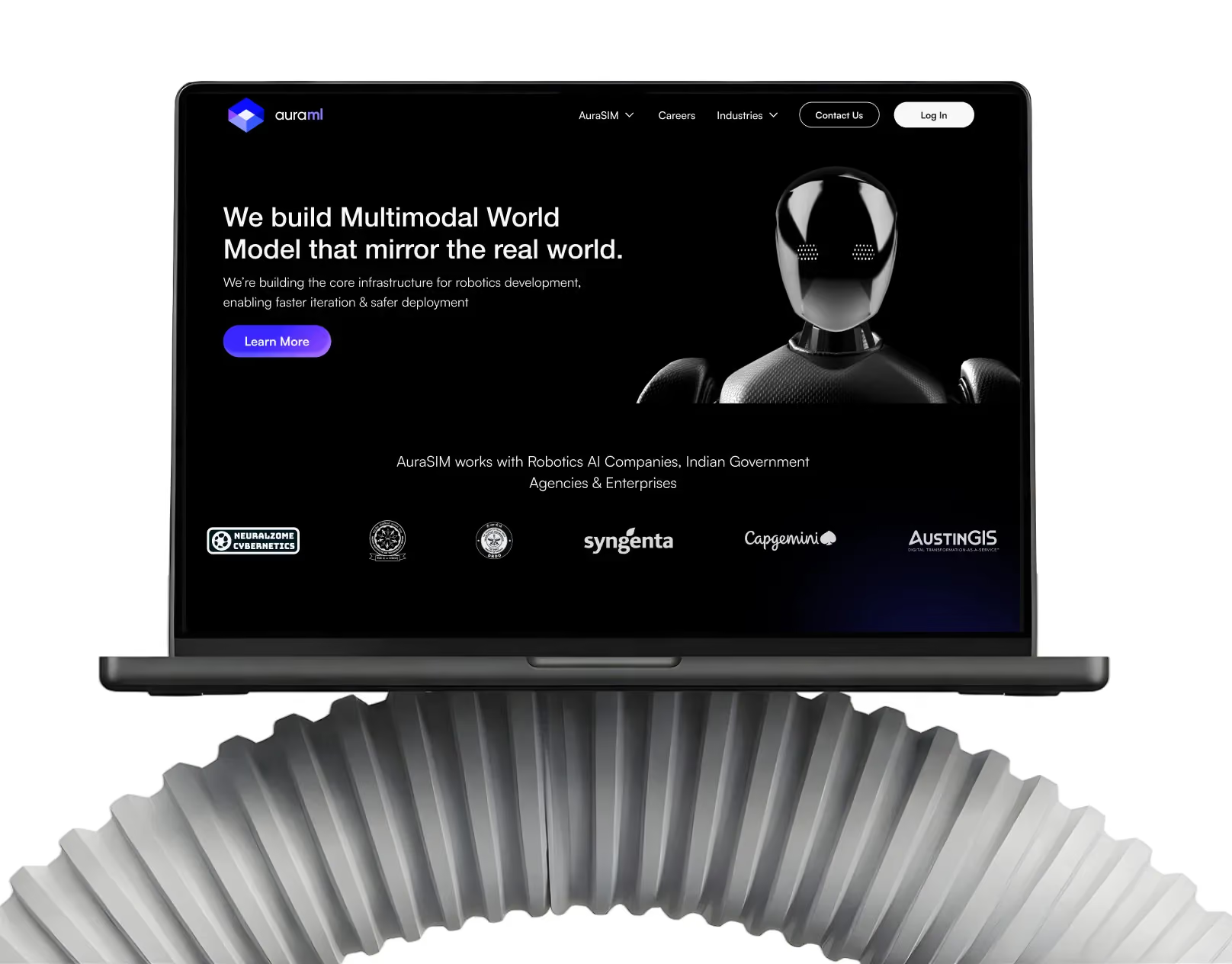
AuraML
How Suplex helped AuraSIM shift from a simulation tool to the brand that makes physical AI feel ready for the real world.

Tea Culture of the World
How Suplex made 120 teas from across the world feel like a discovery rather than a decision.

Great Lakes
How Suplex built a full stack website for a Midwest tequila brand with a real production story.
Why Suplex?
World Class Aesthetics
.webp)
Profitable E-Commerce
.webp)
Build A Brand
.webp)
Build Your D2C Business The Right Way
Build It With Suplex.


