Custom Web Development

Custom Web Development in Web Development
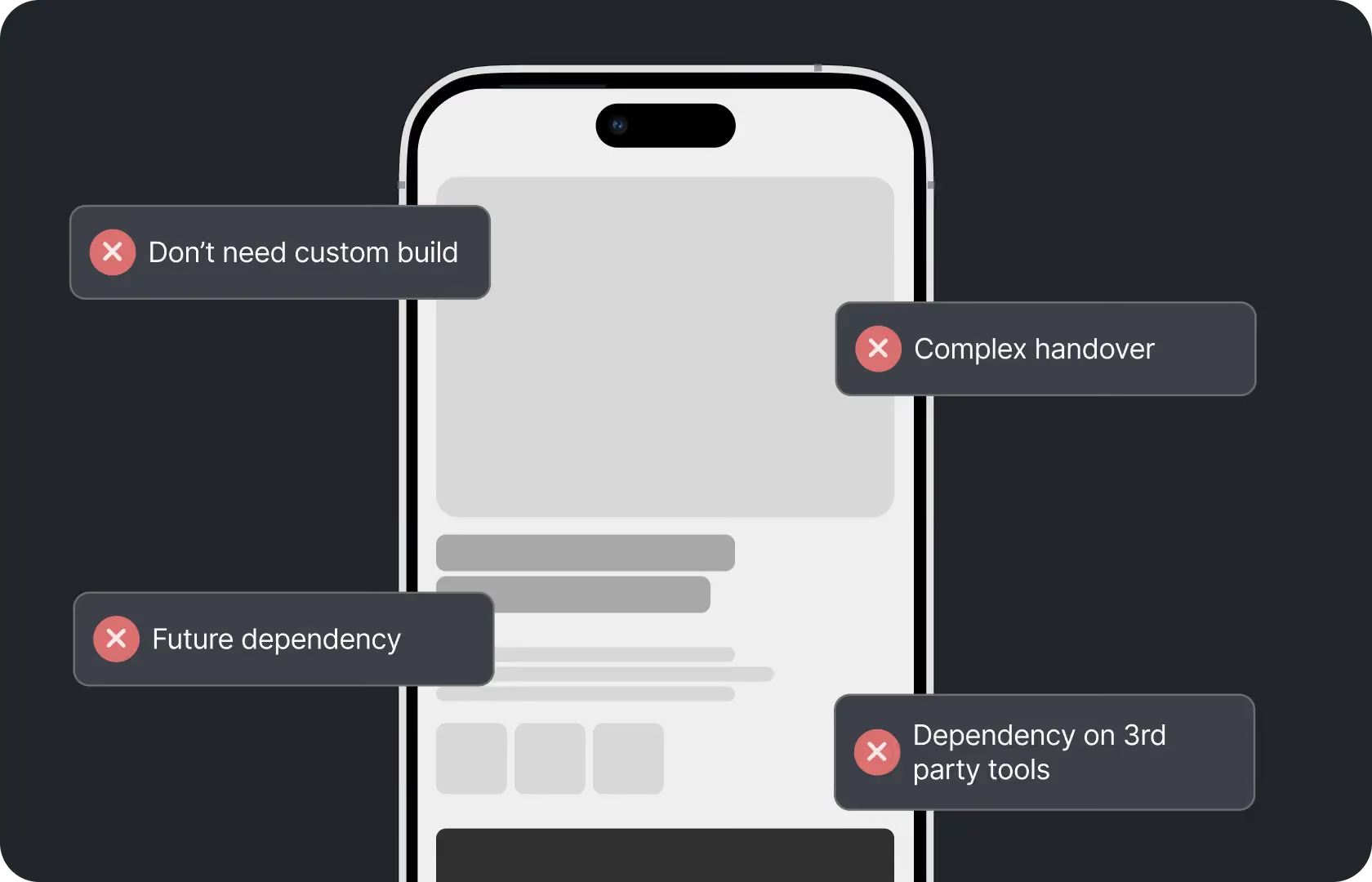
Most D2C brands do not need custom web development. Most of them need a well-built Shopify store, or a Webflow site, or a WordPress setup with WooCommerce. Platforms exist for a reason and for most use cases they are the right answer.
But some products genuinely cannot be built on a platform. A subscription model with conditional pricing logic that varies based on the customer's purchase history and their location, combined with a member-only content layer that shows different content to different subscription tiers. A product configurator that lets buyers assemble a custom item from component parts, calculates pricing in real time, and generates a production specification for the fulfilment team. A headless commerce experience where a Shopify backend powers a completely custom frontend built for a performance and design standard that Shopify's native rendering cannot achieve.
These are not hypothetical requirements. They are the kinds of things brands come to Suplex Design with when they have already tried to make a platform work and discovered that the workarounds required are more complex and more fragile than building the thing properly. Custom web development at Suplex Design is for those brands. Not as a default, and not because custom is more prestigious than a platform. Because sometimes it is the right tool.
What Custom Web Development Actually Means
No platform constraints, theme architecture to work within or plugin ecosystem to depend on. The frontend is built from scratch using the right technologies for the specific requirements. The backend is whatever the product actually needs, not whatever a platform's API exposes.
In practice, most custom web development at Suplex Design uses React and Next.js for the frontend. React because the component model maps well to how digital products are designed and maintained. Next.js because it handles server-side rendering, static generation, and client-side routing in a way that produces fast, SEO-friendly applications without significant infrastructure overhead.
The backend depends on the requirements. For brands with commerce at the core, Shopify Hydrogen uses React on the frontend and connects natively to Shopify's Storefront API, giving complete frontend freedom with Shopify handling the commerce infrastructure. For products that need a completely custom backend, we work with Node.js and appropriate database choices depending on the data model. For products that primarily need a headless CMS and a fast frontend, we connect Next.js to Contentful, Sanity, or a similar headless CMS.
How Suplex Design Approaches Custom Web Development
Architecture before code. Every time. Custom development that starts without a clear architecture decision is custom development that will be expensively rebuilt. The choices made at the architecture stage, which rendering strategy, which data layer, how state is managed, how the codebase is structured for long-term maintainability, shape everything that follows. Getting them right at the start costs a few weeks of careful thinking. Getting them wrong costs months of rework.
Discovery and Technical Scoping
The first question in every custom build at Suplex Design is whether the requirements actually justify custom development. We have had discovery conversations where a brand came in convinced they needed a custom build and left with a recommendation for a well-configured Shopify Plus store, because the requirements that seemed to demand custom were achievable on the platform with the right implementation. The opposite is also true. Brands that arrive with a Shopify brief sometimes have requirements, typically around complex pricing logic or deeply integrated third-party systems, that Shopify's architecture makes unnecessarily difficult. Custom is the right call in those cases.
Technical scoping at Suplex Design maps the specific requirements, identifies which of them can be handled by a platform and which genuinely cannot, and makes the architecture recommendation from that analysis rather than from a preference for a particular technology stack.
Headless Commerce with Shopify Hydrogen
Shopify Hydrogen is worth understanding as an architecture option before defaulting to a fully custom build. Hydrogen uses React on the frontend and Remix as the web framework, connecting to Shopify's Storefront API for commerce data. The result is a fully custom frontend, with no Liquid, no theme architecture constraints, and no compromise on design or performance, while Shopify handles the commerce infrastructure, the checkout, the order management, and the payment processing. For brands that need a completely custom frontend experience but do not want to build and maintain commerce infrastructure from scratch, Hydrogen is often the right architecture.
Our team at Suplex Design has built on Hydrogen for brands where the design requirements or the performance requirements exceeded what Shopify's native rendering could deliver. The trade-off is higher initial development cost and more complex ongoing maintenance than a standard Shopify theme. For brands where the commercial case justifies it, it is the right choice.
Custom Application Development
Beyond headless commerce, some D2C products are genuinely application-like rather than e-commerce-like. A product configurator where buyers build a custom item from components, see a live render, get real-time pricing, and submit a production specification. A subscription management portal where customers can pause, modify, swap, and manage their subscription in ways that go beyond what Recharge or similar tools handle. A loyalty programme with custom tiers, rewards logic, and member-facing dashboards that do not fit within the constraints of existing loyalty apps.
These are application development problems, not website development problems. They require a different approach to architecture, state management, data modelling, and user experience design. At Suplex Design, we treat them as such, designing the data model and the application architecture before the UI, and building with the assumption that the application will need to evolve as the brand learns what the actual usage patterns are.
Performance Architecture
Custom builds are where performance architecture matters most, because there is no platform handling it by default. Static generation for pages that do not change frequently. Server-side rendering for pages that need fresh data on every request. Incremental static regeneration for pages that change occasionally and where the build time of full static generation would be prohibitive. Edge functions for personalisation logic that needs to run close to the user rather than in a central data centre. Image optimisation through Next.js's Image component with appropriate formats and sizes for each breakpoint.
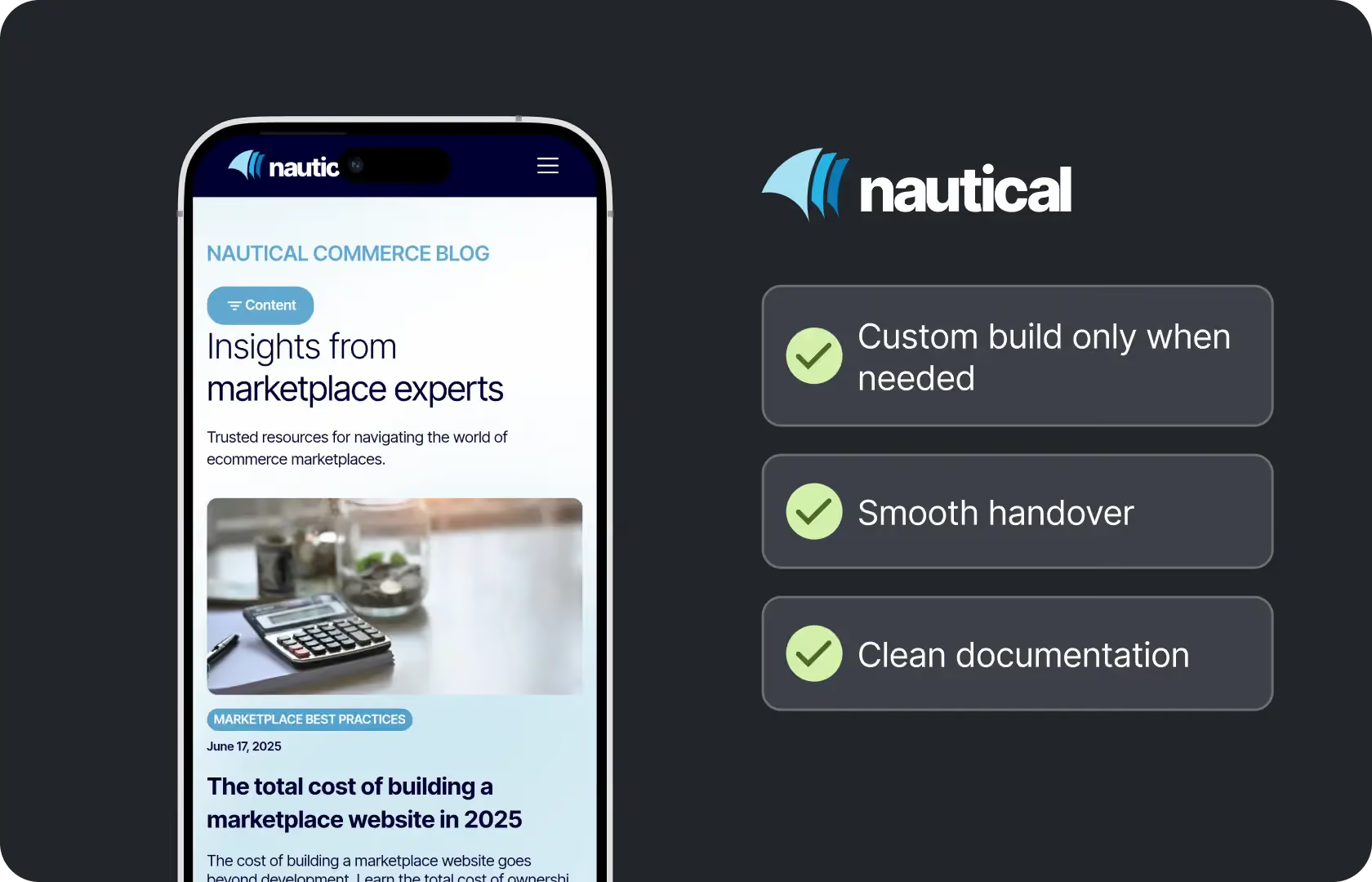
These decisions are made at the architecture stage and documented clearly enough that the team maintaining the codebase after Suplex Design hands it over understands what choices were made and why. A custom build that performs well at launch and degrades over time because the team did not understand why it was built the way it was is not a successful project.
Code Quality and Maintainability
Custom builds are the context where code quality matters most commercially. A platform like Shopify handles a significant amount of the underlying complexity. The platform is maintained by Shopify. Security patches are applied automatically. The infrastructure scales automatically. A custom build has none of this. The team inheriting the codebase is responsible for it. If the codebase is not well-structured, well-documented, and built with maintainability in mind, the ongoing cost of ownership rises rapidly.
At Suplex Design, custom builds follow consistent code conventions, are version-controlled through GitHub, include inline documentation for non-obvious architectural decisions, and are handed over with a codebase walkthrough so the team taking ownership understands what they have been given. We also advise on the ongoing maintenance requirements so the technical team is not discovering them for the first time after we have moved on.

Tools and Technology
Suplex Design builds custom web products with React and Next.js for the frontend. Commerce backends use Shopify Hydrogen and the Storefront API for brands keeping Shopify as the commerce layer. Headless CMS backends use Contentful, Sanity, or Strapi depending on the content model and team preference. Databases are chosen based on the data model, typically PostgreSQL for relational data or a document store for more flexible schemas. Version control is through GitHub. Deployment infrastructure uses Vercel for Next.js applications, with other infrastructure choices depending on the backend requirements.
When Does Custom Web Development Make Sense?
A clear question. The answer is not always custom. Custom makes sense when the product has commerce or content requirements that platforms cannot handle without workarounds that are more complex and fragile than a purpose-built solution. When the performance requirements for the frontend exceed what platform-rendered pages can deliver. When the design requirements demand frontend freedom that a theme architecture cannot provide. Or when the product is genuinely an application rather than a website.
Custom does not make sense when a platform would serve the requirements equally well at lower cost and lower ongoing maintenance overhead. The premium of a custom build needs to be justified by specific requirements that cannot be met otherwise. At Suplex Design, we say this clearly in discovery conversations rather than recommending custom because it is more technically interesting.
Common Mistakes in Custom Web Development
Expensive ones. Almost always architectural.
- Choosing custom development because a platform feels limiting without fully exploring whether the limitation is real or whether it is a configuration and implementation problem that a better platform setup would resolve.
- Starting development before the architecture is settled, building features on top of structural assumptions that turn out to be wrong and requiring expensive refactoring to correct.
- Under-investing in documentation and code structure, handing over a codebase that the technical team inheriting it cannot effectively maintain without significant reverse-engineering work.
- Not planning for the ongoing maintenance overhead of a custom build from the outset, discovering after launch that the team's capacity to maintain a custom codebase is lower than anticipated.
- Optimising for initial delivery speed at the expense of architecture quality, producing a codebase that launches on time and accumulates technical debt that makes every subsequent change more expensive than the last.
At Suplex Design, the discovery and architecture phase of every custom build is non-negotiable. It is where these problems are prevented rather than managed.
Why Custom Web Development Matters When It Is the Right Choice
For the brands that genuinely need it, a well-built custom web product is a competitive advantage that a platform-based competitor cannot easily replicate. The product configurator that a platform cannot accommodate. The performance of a headless frontend that a platform-rendered page cannot match. The application logic that makes the product genuinely more useful than anything a standard implementation could produce.
These advantages are only available if the build quality is high enough to sustain them. A custom build that is slow, fragile, or expensive to maintain is not a competitive advantage. It is a liability that grows over time. The quality of the initial architecture and the code that follows from it is what determines whether the custom investment pays back.
How Suplex Design Approaches Custom Web Development for Your Brand
Every custom build at Suplex Design starts with a discovery phase that honestly assesses whether custom is the right answer before any development begins. If it is, the architecture is settled before code is written. The technology choices follow the requirements rather than the team's preferences. And the handover includes documentation, a codebase walkthrough, and clear guidance on the ongoing maintenance requirements.
Product that cannot be built on a platform? Requirements that have broken every platform workaround attempted so far? Want an honest view on whether custom is actually what you need? Get in touch with Suplex Design.

Frequently Asked Questions
What custom web development services does Suplex Design offer?
Custom frontend development with React and Next.js, Shopify Hydrogen builds for headless commerce, custom application development for configurators, subscription management, and loyalty programmes, headless CMS integrations with Contentful and Sanity, and full-stack development for products that need a custom backend as well as a custom frontend. Discovery and architecture planning is included in every custom engagement.
How much does custom web development cost at Suplex Design?
Honestly it depends significantly on scope. A focused headless commerce build on Shopify Hydrogen with a defined feature set is a different project from a fully custom application with its own backend and data model. Custom builds at Suplex Design typically start from around $8,000 and scale with complexity. We scope carefully before starting so the estimate is based on actual requirements rather than a round number.
How long does a custom web development project take?
A focused headless commerce build or a custom application with a defined feature set typically takes eight to fourteen weeks from discovery to launch. More complex projects take longer. We do not start writing code until the architecture is agreed, which adds time upfront but consistently reduces the total time to a well-functioning product.
How do we know if we actually need custom development or if a platform would work?
This is actually the most useful conversation to have before committing to either option. At Suplex Design, we run platform consultation engagements specifically to answer this question. We have told brands they need custom when they came in expecting a Shopify build, and told brands they do not need custom when they came in expecting a React application. The answer comes from the requirements, and we would rather give you the honest answer than the more expensive one.
Do you provide ongoing support after a custom build launches?
Yes, absolutely. Custom builds require more ongoing attention than platform-based sites because the codebase is the brand's responsibility rather than the platform's. Suplex Design offers ongoing development support covering bug fixes, feature additions, dependency updates, performance monitoring, and architectural guidance as the product evolves. We stay involved because a custom build without ongoing development support degrades in security, performance, and maintainability faster than most teams expect.
Let’s Make It Happen
Shopify Success Stories
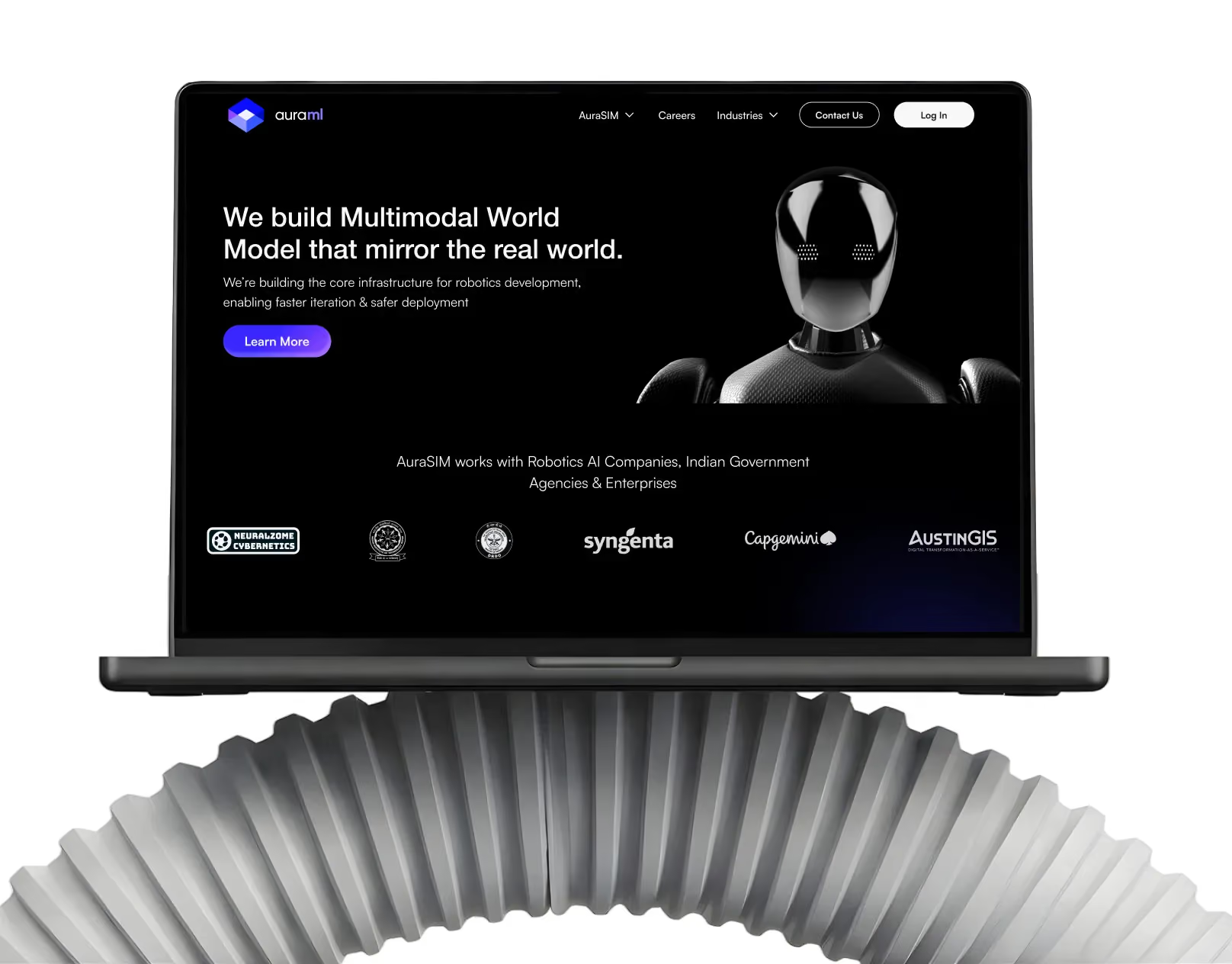
AuraML
How Suplex helped AuraSIM shift from a simulation tool to the brand that makes physical AI feel ready for the real world.

Tea Culture of the World
How Suplex made 120 teas from across the world feel like a discovery rather than a decision.

Great Lakes
How Suplex built a full stack website for a Midwest tequila brand with a real production story.
Why Suplex?
World Class Aesthetics
.webp)
Profitable E-Commerce
.webp)
Build A Brand
.webp)
Build Your D2C Business The Right Way
Build It With Suplex.


