Dropshipping

Dropshipping in E-Commerce Growth
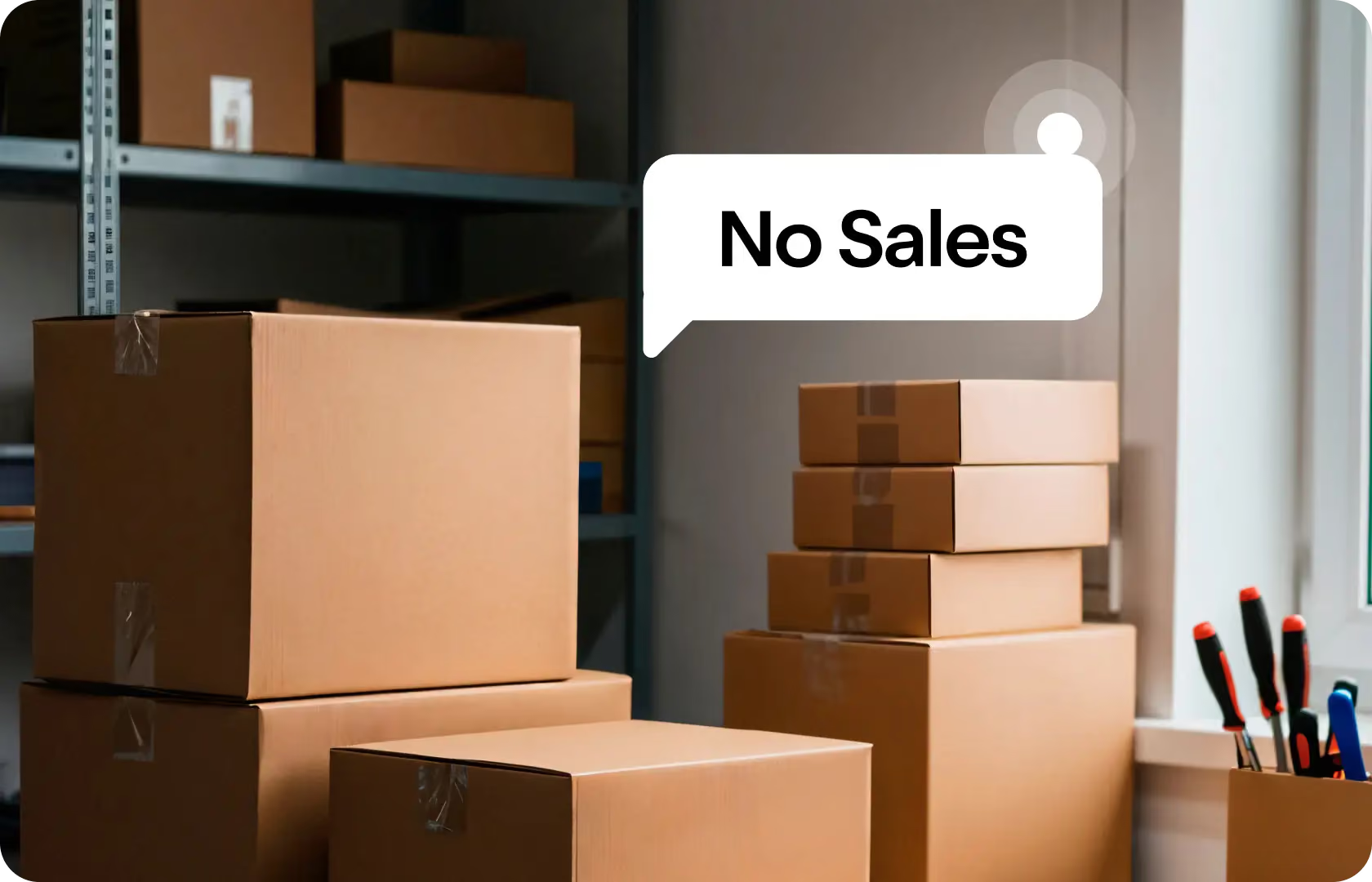
Most dropshipping stores fail within the first year. Not because the model is broken but because of how they are set up. Wrong suppliers. No brand identity. Shipping promises nobody can keep. And when the refunds start, there is no margin left to absorb them.
Talking about what actually works, dropshipping done properly is a legitimate way to test demand without tying up capital in stock. Gymshark ran lean before it scaled. Plenty of wellness and lifestyle brands across India and the UAE have used the model to validate products before committing to inventory. The model itself is fine. The execution is almost always the problem.
At Suplex Design, our team of e-commerce specialists sets up dropshipping operations that are built to run properly, not just to launch.
What Dropshipping Actually Involves
The basic idea is simple enough. A customer orders from the brand. The supplier ships directly to that customer. The brand never touches the stock. What makes it complicated is that the brand owns the customer relationship even though it controls almost none of the fulfilment. Supplier delays? Brand's problem. Quality drops? Brand's reviews. Stock runs out on a bestseller? Brand's listings go dark. All of this is manageable with the right setup. Almost none of it is manageable with a bad one.
How Suplex Design Sets Up Dropshipping
Most agencies treat dropshipping as a store build. Pick a theme, connect a supplier app, go live. Our team of Shopify developers at Suplex Design starts somewhere else entirely. Supplier relationships first. Fulfilment logic second. Store build third. This is so because every operational problem we have ever seen in a dropshipping store traces back to something that should have been sorted before the first product went live.

Supplier Vetting
Supplier reliability is the number one reason dropshipping businesses fail. Not the ads. Not the store design. Most dropshipping suppliers come through platforms like DSers, Spocket, or AliExpress. These make it easy to add products. What they do not tell you is which suppliers actually ship on time, which ones communicate when something goes wrong, and which ones quietly reduce quality after the first few orders. We have seen this play out more times than we can count at Suplex Design.
Our team vets suppliers before recommending them. Shipping times to the target market. Return and dispute track records. Sample orders. For brands that need local fulfilment, like faster delivery within India or across the Gulf, we identify the right supplier network for those geographies specifically. A supplier that works for US-bound orders often falls apart for UAE or Indian customers.
Store Architecture
A dropshipping store has different requirements from a standard e-commerce store. The catalogue is dynamic. Prices shift when supplier costs move. Stock availability is controlled by someone else. The store needs to handle all of this without the customer ever noticing.
We build on Shopify because it integrates cleanly with the tools that make this manageable. DSers or AutoDS for order automation. Inventory sync apps that update availability in real time when a supplier sells out. Price buffer rules so margins stay intact when supplier costs move within a range.
And the store is built as a brand, not just a product catalogue. Dropshipping stores with no identity compete on price and lose. Dropshipping stores that look and feel like a real brand can build a loyal customer base even without holding stock. This distinction matters enormously in how the store is designed and how it communicates.
Fulfilment Logic and Customer Communication
Here is something most dropshipping setups get wrong. They treat fulfilment as the supplier's job. It is not. The customer bought from the brand. Any delay, quality issue, or tracking problem is the brand's problem.
Our team at Suplex Design sets up order confirmation flows that set realistic delivery expectations from the moment the purchase is made. Automated shipping notifications so customers are not left wondering where their order is. Return and dispute processes that are handled at the brand level first, rather than bouncing a customer between the brand and a supplier they have never heard of.
For brands selling into multiple markets, we set up supplier routing logic so orders go to the closest appropriate supplier. A flat single-supplier setup that works fine for one market often produces slow, expensive fulfilment in another.
Inventory and Pricing Automation
Dropshipping inventory belongs to someone else. It changes without warning. A product in stock yesterday might not be today. Supplier cost prices shift after currency moves or supply chain changes.
We set up inventory sync automations that update availability in real time. Price buffer rules so retail prices stay profitable even when supplier costs move within a defined range. And threshold alerts so the team knows when supplier stock is running low before the customers find out.
None of this is complicated. But it almost never comes set up correctly out of the box, and every gap in this setup eventually shows up as a customer complaint or a margin problem.
Tools and Technology
Suplex Design builds dropshipping operations on Shopify, using DSers or AutoDS for order automation and supplier management, Spocket for curated supplier catalogues with faster shipping options, and inventory sync tools that keep availability accurate in real time. Klaviyo handles shipping notifications and post-purchase flows. Gorgias or a similar tool covers support ticket management. Everything is tested against real order flows before the store goes live.
Common Mistakes in Dropshipping Setup
Same mistakes. Every time. Almost always avoidable.
- Choosing suppliers based on product availability alone, without checking reliability, shipping times, or how they handle disputes. A supplier with 10,000 SKUs who ships late and goes quiet is worse than one with 200 SKUs who is consistent.
- Building a store with no brand identity. Customers have no reason to buy from an unbranded dropshipping store when the same product is available cheaper elsewhere. Brand is what justifies the margin.
- Setting shipping expectations based on the supplier's best-case scenario. Customers who expect five days and receive fourteen do not come back.
- Not setting up inventory sync from day one. A customer who buys an out-of-stock item and receives a cancellation has had a bad brand experience before the relationship has started.
- Using one supplier for all markets without considering whether that supplier's fulfilment actually reaches those markets at acceptable speed and cost.
- Treating setup as a one-time project. Dropshipping operations need ongoing supplier review, pricing monitoring, and iterative improvement. The brands that set and forget are the ones that eventually break.
At Suplex Design, the setup process catches these before launch. Not after the first wave of complaints.
Why This Model Works When It Is Done Right
For early-stage D2C brands, a properly run dropshipping operation removes the capital risk of holding inventory before demand is proven. It lets the brand test multiple product lines, understand what customers actually want, and build operational muscle without committing to stock that might not sell.
Brands that use dropshipping well treat it as a phase. They validate with it. They learn from it. Then they use what they learned to make better inventory decisions when they do start holding stock. The ones that get stuck in badly executed dropshipping use it as a shortcut and discover the cost is just deferred to returns and lost customers.
For more established brands, dropshipping can also extend a catalogue strategically. Test a new market before committing to local inventory. Keep slower-moving SKUs available without tying up working capital. Offer complementary products without the minimum order quantities.
How Suplex Design Approaches Dropshipping for Your Brand
Every dropshipping project at Suplex Design starts with the brand, the target market, and the category. Ideally there is no generic supplier list and no standard store template. The supplier vetting, the store build, the fulfilment logic, and the automation are all specific to what the brand actually needs.
Launching dropshipping for the first time? Current setup underperforming and you are not sure if it is the model or the execution? Either way, get in touch with Suplex Design.

Frequently Asked Questions
What dropshipping services does Suplex Design offer?
Supplier vetting and sourcing, store setup and architecture, fulfilment logic configuration, inventory and pricing automation, and the customer communication flows that keep buyers informed through delivery. We also work with brands that are already live and running into operational problems, supplier reliability issues, margin erosion, or poor customer experience. Not just new launches.
How much does a dropshipping setup cost at Suplex Design?
Honestly it depends on scope. A standard setup covering store build, one supplier integration, and core automation typically starts from around $1,000. Multi-supplier setups, multi-market fulfilment routing, or integrations with existing tools cost more. We scope clearly before starting so the number is not a surprise.
Do you help with supplier sourcing or just the store?
Both. The store without the right supplier behind it is not a real business, so supplier vetting and sourcing is part of every dropshipping engagement at Suplex Design. For brands that need specific supplier types, faster local fulfilment in India or the UAE for example, we help identify and vet the right options before the integration work begins.
How long does setup take?
Three to five weeks for a standard setup, from discovery to go-live. More complex setups involving multiple suppliers, multi-market routing, or larger catalogues take longer. We confirm the timeline during scoping so there are no surprises on either side.
Do you provide support after launch?
Yes, absolutely. Dropshipping operations need ongoing attention. Supplier relationships shift. Inventory sync needs monitoring. Pricing rules need adjusting when costs move. Suplex Design offers ongoing support after launch so the operation keeps running cleanly rather than accumulating small problems that eventually become big ones.
Let’s Make It Happen
Shopify Success Stories
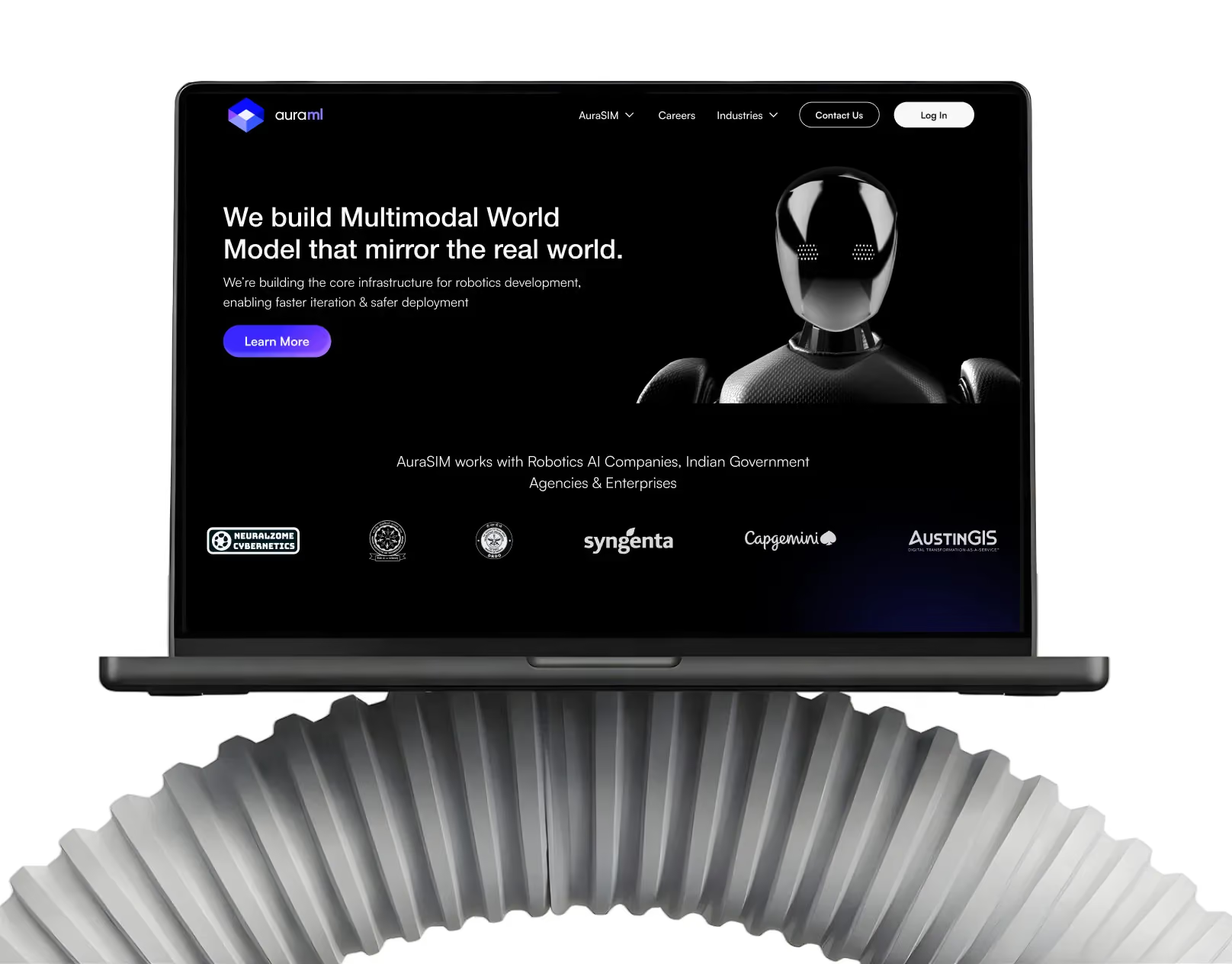
AuraML
How Suplex helped AuraSIM shift from a simulation tool to the brand that makes physical AI feel ready for the real world.

Tea Culture of the World
How Suplex made 120 teas from across the world feel like a discovery rather than a decision.

Great Lakes
How Suplex built a full stack website for a Midwest tequila brand with a real production story.
Why Suplex?
World Class Aesthetics
.webp)
Profitable E-Commerce
.webp)
Build A Brand
.webp)
Build Your D2C Business The Right Way
Build It With Suplex.


