E-Commerce Store Setup
E-Commerce Store Setup in E-Commerce Growth
Getting a store live is the easy part. Anyone can get a store live. What is harder, and what most brands underestimate when they start, is getting a store live that actually works.
A store that works converts visitors. It processes payments without friction. It handles logistics cleanly. It does not fall over when traffic spikes. And it does not require a developer for every routine content update. These things are not complicated to get right if they are thought through at the start. They are very complicated to fix after launch when the store is already live and losing sales.
The global D2C e-commerce market was valued at around USD 200 billion in 2024 and is projected to reach USD 350 billion by 2033. Most of the brands contributing to that number did not get there by launching quickly and hoping for the best. They got there by building stores that were ready to earn their traffic from day one.
At Suplex Design, our team of Shopify developers and UX specialists treats store setup as a commercial architecture problem. Not a design task.
What E-Commerce Store Setup Actually Involves
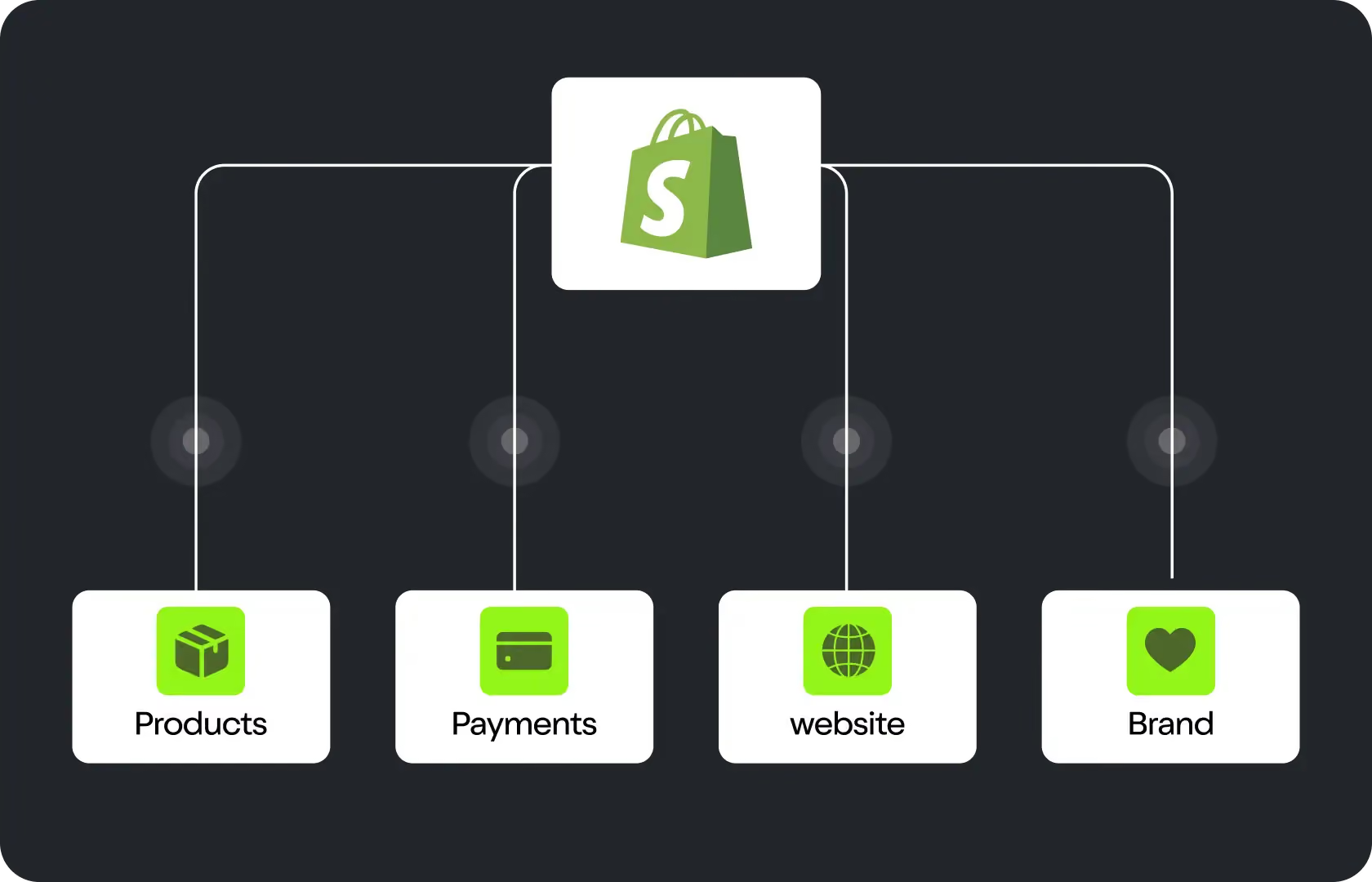
Most founders think store setup means choosing a theme, adding products, and connecting a payment method. That is the surface. Underneath it is a set of decisions that shape everything.
Information architecture. How the navigation is structured. How collections are organised. How products relate to each other and how buyers move between them. Get this wrong and visitors cannot find what they are looking for. They leave. And they do not come back.
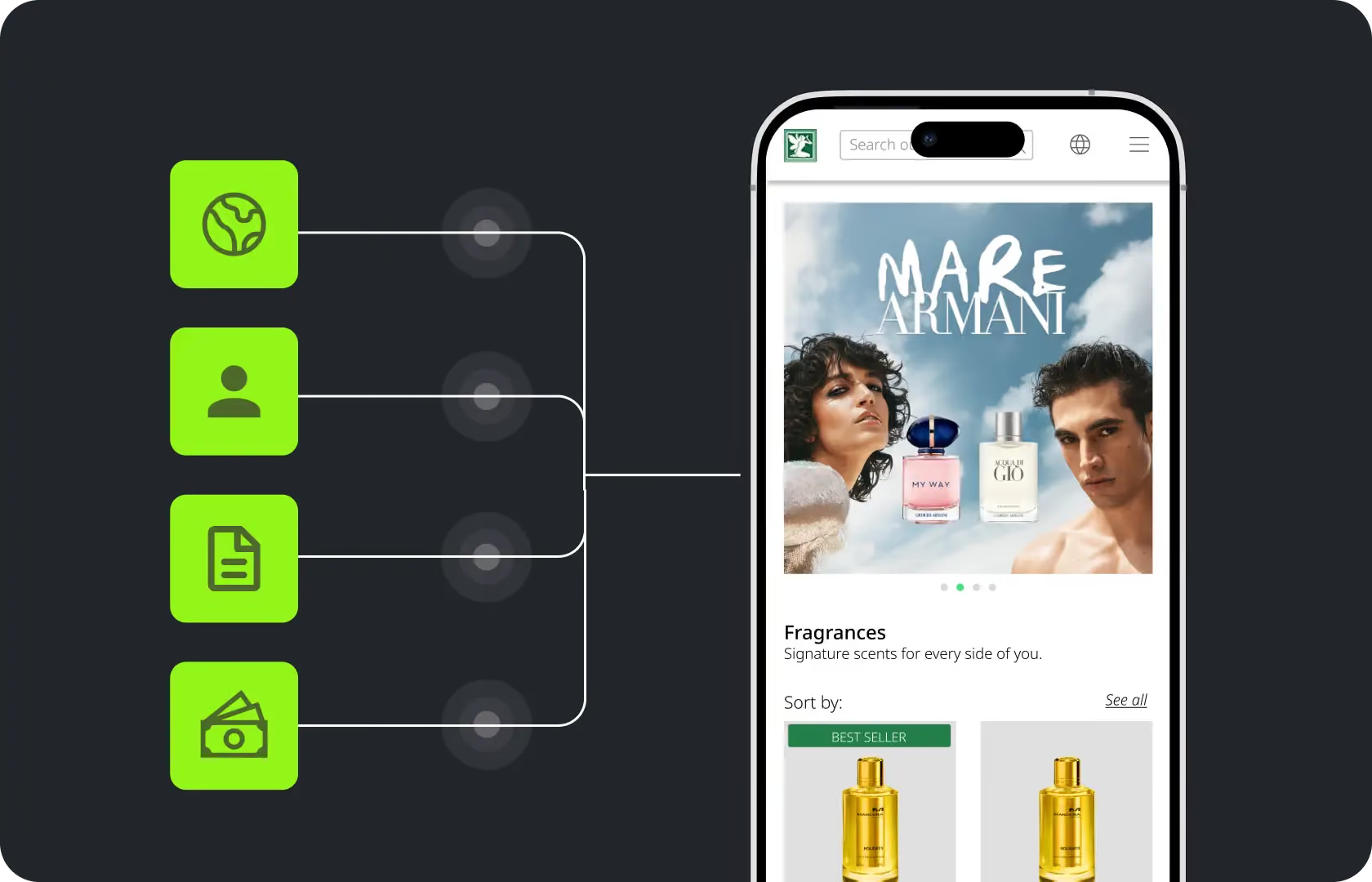
Payment configuration. Which gateways are available. Which local payment methods your target market actually uses. How the checkout is sequenced. Whether the flow has been tested on a real phone in the target market, not just in a Chrome developer tool on a MacBook.
Logistics setup. Shipping zones, carrier integrations, calculated versus flat rates, and how duties are handled for cross-border orders. Every unexpected cost that appears late in checkout is a potential abandoned cart.
App stack. Which apps are genuinely necessary, and which add load time and operational complexity without adding commercial value. We have seen stores with thirty apps installed where twelve of them were doing nothing. Each one added script weight. Each one slowed the store down.
All of this is store setup. Theme selection is maybe ten percent of it.
How Suplex Design Approaches E-Commerce Store Setup
You will find that most agencies start with the theme. At Suplex Design, our team starts with discovery. Before a single template is chosen, we need to understand the brand, the product range, the buyer, the markets, and the commercial model. These things determine the architecture. The architecture determines the theme requirements. The theme comes last.
Discovery and Architecture First
A single-SKU supplement brand and a fashion brand with 300 SKUs across five categories have nothing in common in terms of how their stores should be structured. Same platform, completely different architecture. Navigation logic, collection hierarchy, product page template design, filtering, search, cart behaviour. All of it needs to be thought through before anything is built.
Our team maps the store's information architecture before touching the admin. We look at how the target buyer shops in the category, not how the brand wants to present its range. Those are usually two different things. And the store should be built for the buyer, not the brand.
Platform and Theme Selection
We work primarily on Shopify because for most D2C brands it is genuinely the right platform. Fast time to market. A clean ecosystem of apps and integrations. Shopify 2.0 architecture that gives the internal team editorial flexibility after launch. And a checkout that, while locked for standard plans, is highly configurable on Plus.
Theme selection at Suplex Design is not based on how something looks in a demo. It is based on how the theme's Liquid code is structured, how it performs under load, and whether its default information hierarchy matches the store's conversion priorities. A beautiful theme on bloated code consistently underperforms a simpler one that renders quickly on a mid-range phone in Jaipur or Dubai.
Payment Configuration
This varies by market and it is where generic setup guides fall short. For international stores, Stripe is the most widely used gateway and covers most markets cleanly. For UAE and MENA operations, Checkout.com is often preferred. For India, Razorpay handles UPI, cards, net banking, and wallets through a single integration. Getting this wrong, or not testing the full checkout flow in the target market before launch, is one of the most expensive mistakes a store can make.
We test every payment method configured before the store goes live. On real devices. In the actual markets the store is targeting. Because a checkout that breaks on a specific combination of device and payment method is invisible in testing and very visible when a real customer hits it.
Logistics and Shipping Setup
Shipping configuration connects the store to whatever logistics infrastructure the brand is working with. Global carriers like DHL, FedEx, or Aramex for international fulfilment. Regional providers or third-party logistics platforms for domestic operations. Calculated rates rather than flat rates where the order profile justifies it, because unexpected shipping costs appearing late in checkout are one of the most consistent drivers of cart abandonment.
For brands shipping across borders, we also configure duties and import tax handling so buyers know the full cost before they commit. Nobody who gets hit with unexpected duties at delivery comes back for a second order.
App Stack and Retention Foundation
We help brands build a lean app stack. Not a comprehensive one. There is an important difference.
Every app installed adds scripts. Scripts add load time. Load time hurts conversion and Core Web Vitals. A store with thirty apps is almost never a well-performing store. Our team identifies the apps that genuinely earn their place, email and SMS automation through Klaviyo, review collection through Judge.me or Loox, analytics through Google Analytics 4 and the relevant ad pixels, and nothing else until the store has validated what it actually needs.
Pre-Launch Testing
Before anything goes live, our team runs a structured pre-launch checklist. Payment flows across every configured method. Mobile checkout on real devices across Android and iOS. Page speed benchmarking. Order notification verification. Legal pages, return policy, privacy policy, shipping terms. Tax and invoice generation.
A store that goes live with an untested checkout is a store that loses its first customers before it has had a chance to retain them. We treat pre-launch testing as non-negotiable.

Tools and Technology
Suplex Design builds primarily on Shopify 2.0 using JSON templates and Liquid, with Shopify CLI for local development and GitHub for version control. Payments are configured through Stripe for international markets, Checkout.com for UAE and MENA, and Razorpay or market-specific providers elsewhere. Klaviyo handles email and SMS from day one. Google Analytics 4 and the relevant ad platform pixels are configured before launch, not retrofitted afterwards.
Common Mistakes in E-Commerce Store Setup
We see these consistently. They are almost always avoidable.
- Starting with the theme before the architecture. The result is navigation and page structure built around what the theme supports, not around how the buyer shops. Fixing this after launch is a redesign project.
- Configuring payment gateways without testing the full checkout flow in the target market. Failures that are invisible in testing become very visible to real buyers.
- Setting flat shipping rates without checking how they appear at checkout. A shipping cost that feels reasonable in the brand's internal testing often feels like a surprise to a buyer who encounters it on the final screen.
- Installing too many apps at launch. Every additional script degrades performance. A lean app stack that is added to deliberately is almost always better than a comprehensive one assembled at setup.
- Building the store for the brand's internal product taxonomy rather than the buyer's mental model. A navigation that makes sense to the team who built the range often does not make sense to someone discovering it for the first time.
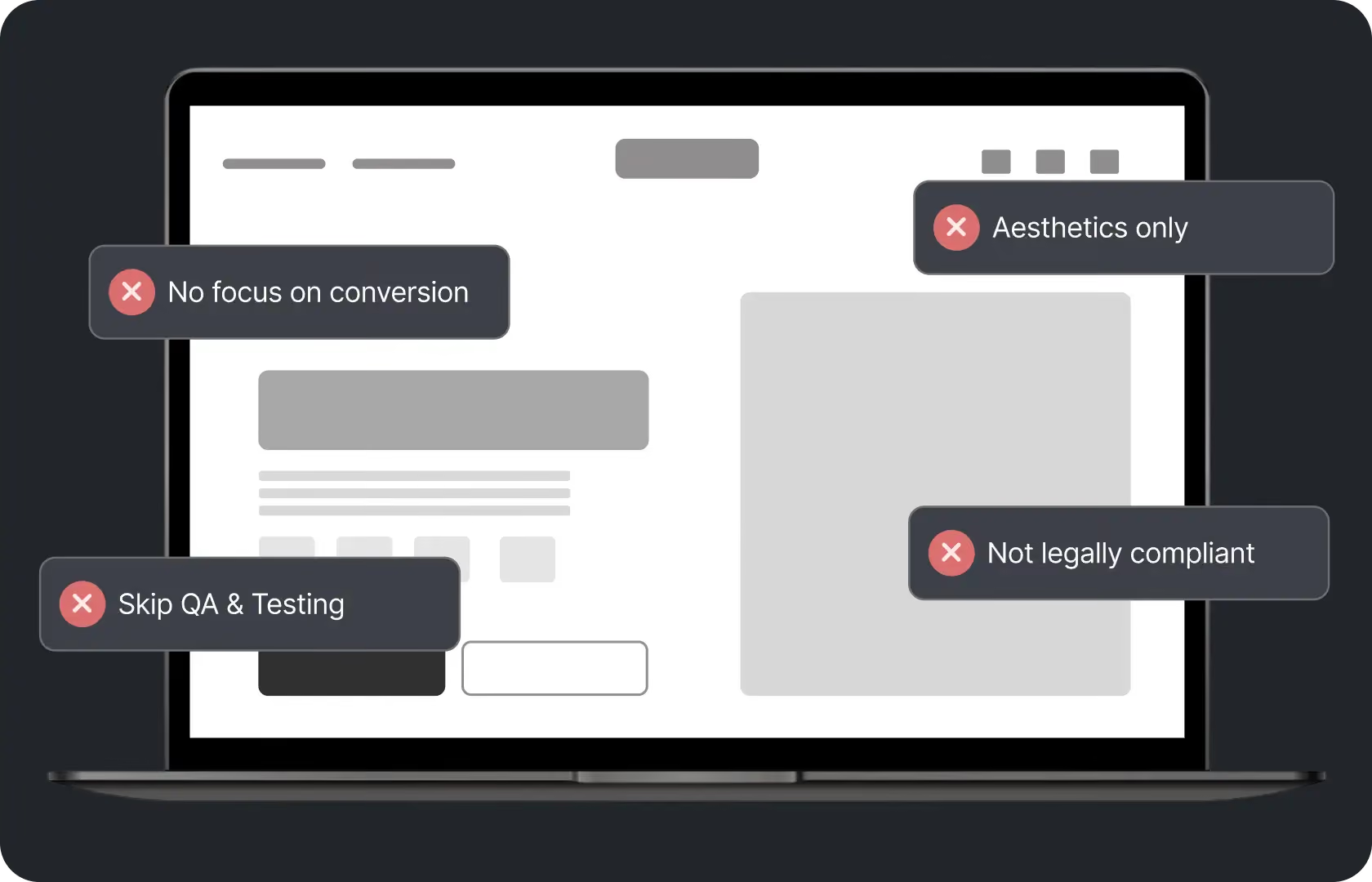
- Skipping pre-launch testing because the deadline is tight. This reliably produces a wave of fixable problems in the first two weeks after launch, at exactly the moment the team should be focused on driving traffic and converting it.
Why Getting Store Setup Right Matters
The decisions made during store setup are the hardest to change after launch. Navigation restructuring, payment gateway migration, information architecture overhauls. All of these require significant effort and carry real risks of disrupting SEO equity, customer experience, and payment flows during the transition.
A store converting at 1.5 percent when it should be converting at 3 percent is not a marketing problem. It is a store architecture problem. And it is costing the brand the return on every unit of marketing spend it is putting in while the problem sits unfixed.
For brands operating across multiple markets, the setup decisions compound further. A store not properly configured for a specific market will quietly underperform in that market regardless of how strong the product is or how much the brand spends on advertising into it.
How Suplex Design Approaches E-Commerce Store Setup for Your Brand
Every store setup at Suplex Design starts with the brand, the buyer, and the markets. There is ideally no default theme, no standard app stack, no recycled navigation structure. What we bring is a setup process built around commercial architecture first, and aesthetics second.
Launching for the first time? Rebuilding something that is not performing? Moving from marketplaces to D2C? Get in touch with Suplex Design.

Frequently Asked Questions
What does e-commerce store setup from Suplex Design include?
More than most people expect. Discovery and architecture mapping, platform and theme selection, payment gateway configuration, logistics and shipping setup, app stack build, and pre-launch testing across payments, mobile, and page speed. We do not just get the store live. We get it ready to actually convert the traffic it receives.
How much does an e-commerce store setup cost at Suplex Design?
Honestly it depends on the complexity. A focused setup for a single-market store with a curated product range typically starts from around $1,500 at Suplex Design. Stores with custom theme development, multiple markets, complex payment or logistics configuration, or large catalogues cost more. We scope clearly before starting so the number is not a surprise.
Do you only work on Shopify?
Shopify is our primary platform for e-commerce store setup because it is the right fit for most D2C brands. That said, Suplex Design also works on WooCommerce and Webflow where the brand's specific requirements point there. The platform recommendation comes from what the brand actually needs, not from what we build on most often.
How long does a store setup take?
A standard store setup at Suplex Design typically takes four to six weeks from discovery to launch, depending on the product range, number of markets, and whether custom theme work is involved. Stores with more complexity take longer. We confirm the timeline during scoping so both sides know what to expect.
Do you provide support after the store goes live?
Yes, absolutely. Suplex Design offers ongoing support after launch covering bug fixes, performance monitoring, iterative improvements, and new feature development as the store scales. In our experience, the most important discoveries tend to happen in the first few weeks after launch, when real buyers start using the store and showing you what is working and what is not.
Let’s Make It Happen
Shopify Success Stories
AuraML
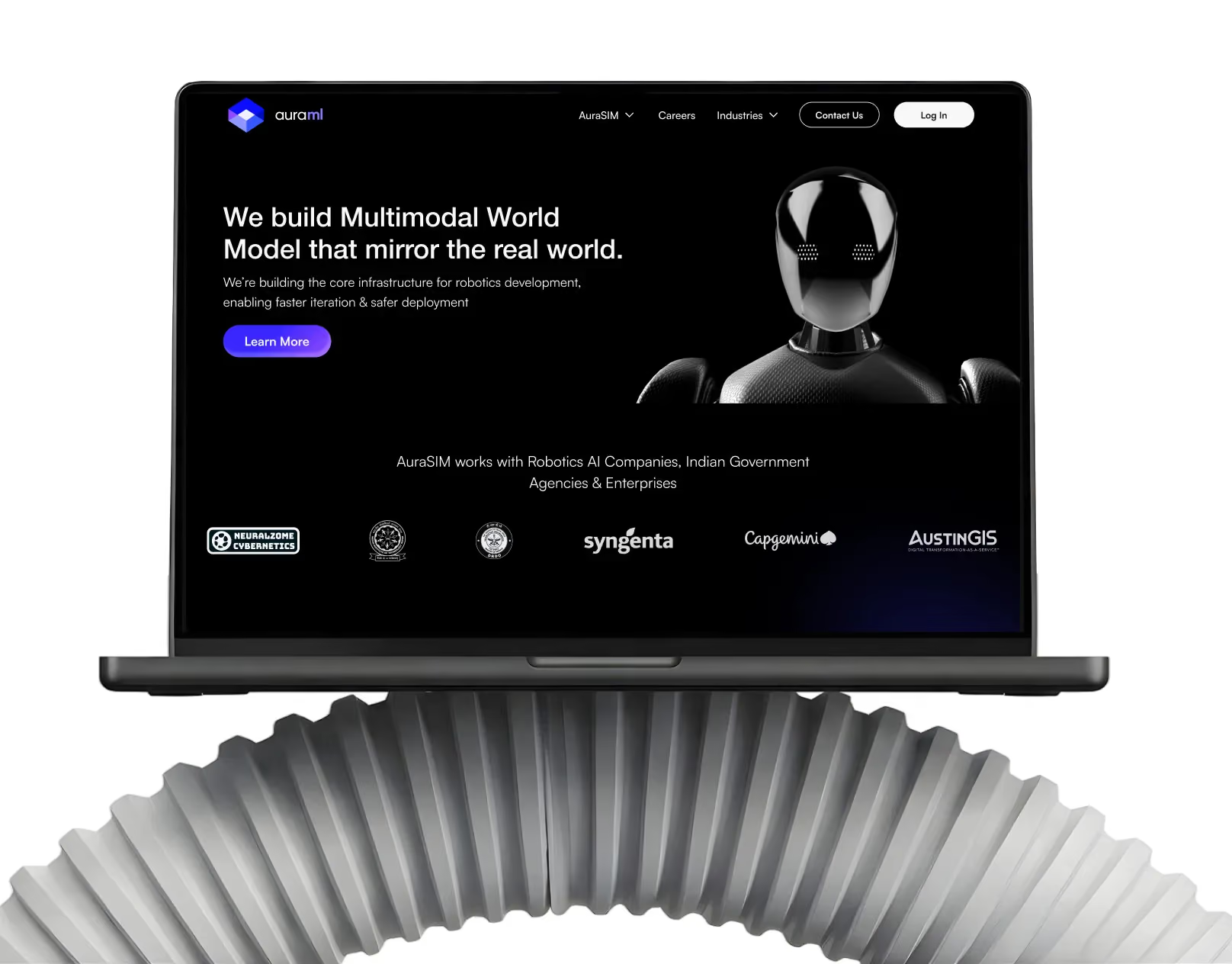
How Suplex helped AuraSIM shift from a simulation tool to the brand that makes physical AI feel ready for the real world.

Tea Culture of the World
How Suplex made 120 teas from across the world feel like a discovery rather than a decision.

Great Lakes
How Suplex built a full stack website for a Midwest tequila brand with a real production story.
Why Suplex?
World Class Aesthetics
.webp)
Profitable E-Commerce
.webp)
Build A Brand
.webp)
Build Your D2C Business The Right Way
Build It With Suplex.


