Information Architecture
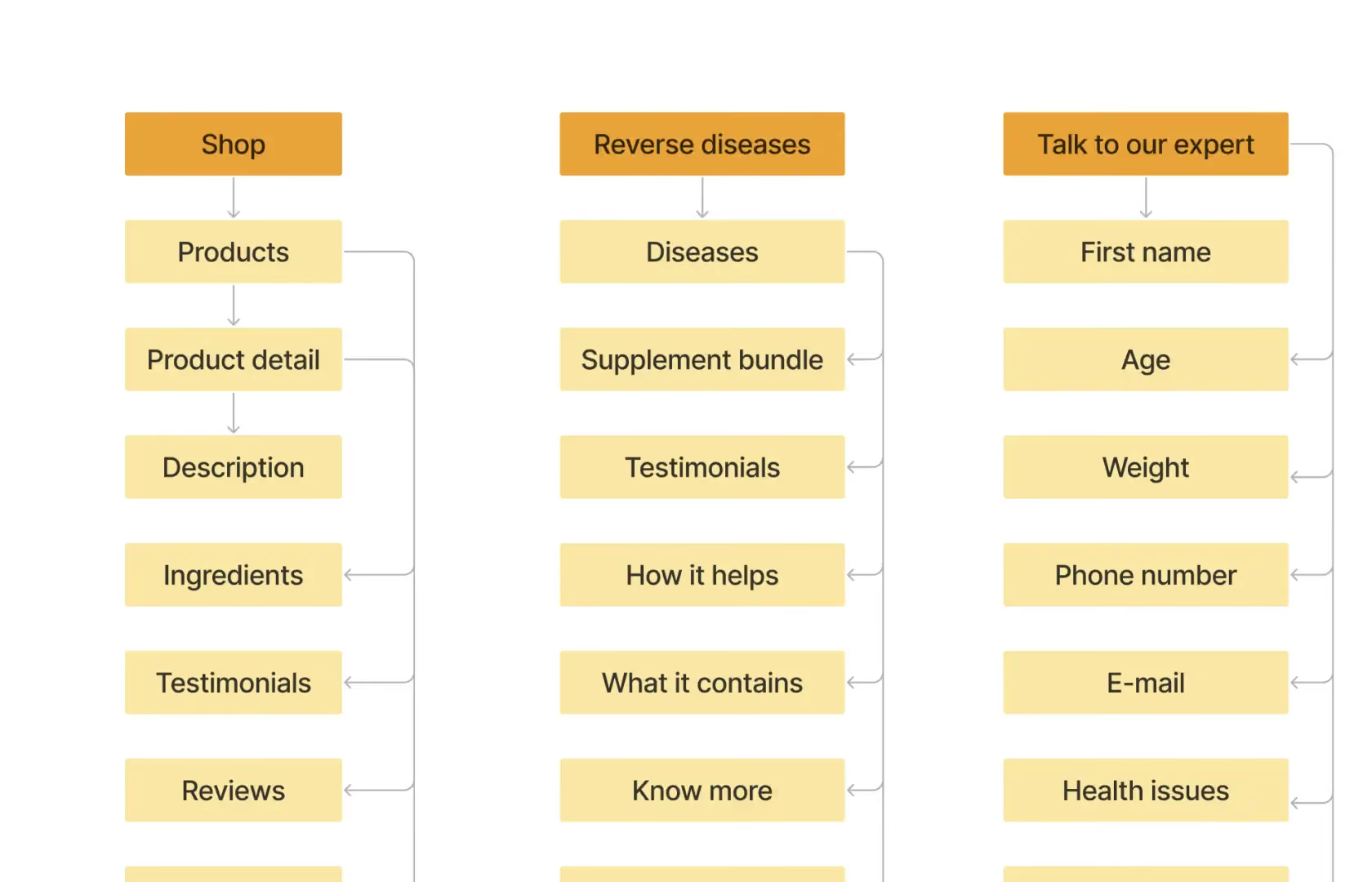
Information Architecture in UX Design
Have you ever landed on a store and immediately known where everything was? Probably did not think about why. You just found what you came for and moved on.
That experience does not happen by accident. Someone made a deliberate set of decisions about how content is organised, how navigation is labelled, and how pages relate to each other. Those decisions are information architecture. When they are right, the store feels intuitive. When they are wrong, buyers leave without quite knowing why, and the team is left wondering whether the traffic quality is the problem. It is almost never the traffic.
At Suplex Design, our team builds IA for D2C and e-commerce brands across India, the UAE, the UK, the US, and Singapore. Built around how real buyers think about a category, not around how the brand has internally structured its range. Those are usually two very different things.
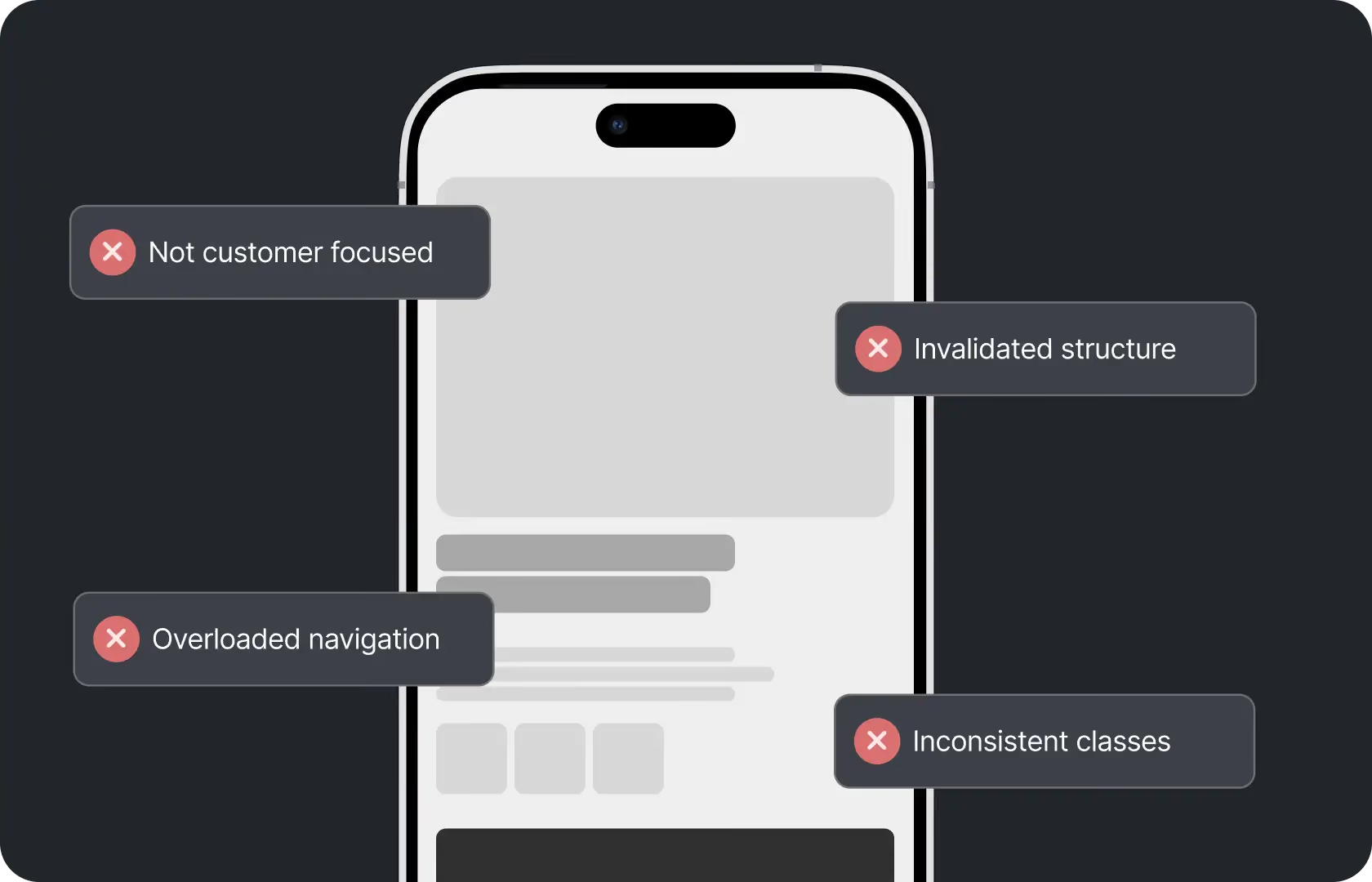
What Information Architecture Actually Is
IA is the structure underneath the design. Before the colours, the fonts, the imagery. The skeleton.
It covers how pages and content are grouped into categories. How those categories are labelled in navigation. How many levels a buyer has to go through to reach a specific product or piece of information. How search is structured and what it understands. How breadcrumbs and wayfinding cues tell buyers where they are in the store at any given moment.
Talking about why this matters commercially, the numbers are clear enough. Research from Baymard Institute shows that navigation and IA problems are a leading cause of e-commerce site abandonment. Not pricing, product quality or loading speed. The store was just too hard to navigate. Buyers could not find what they came for and left. IA is not the most visible part of a digital product. It is one of the most consequential.
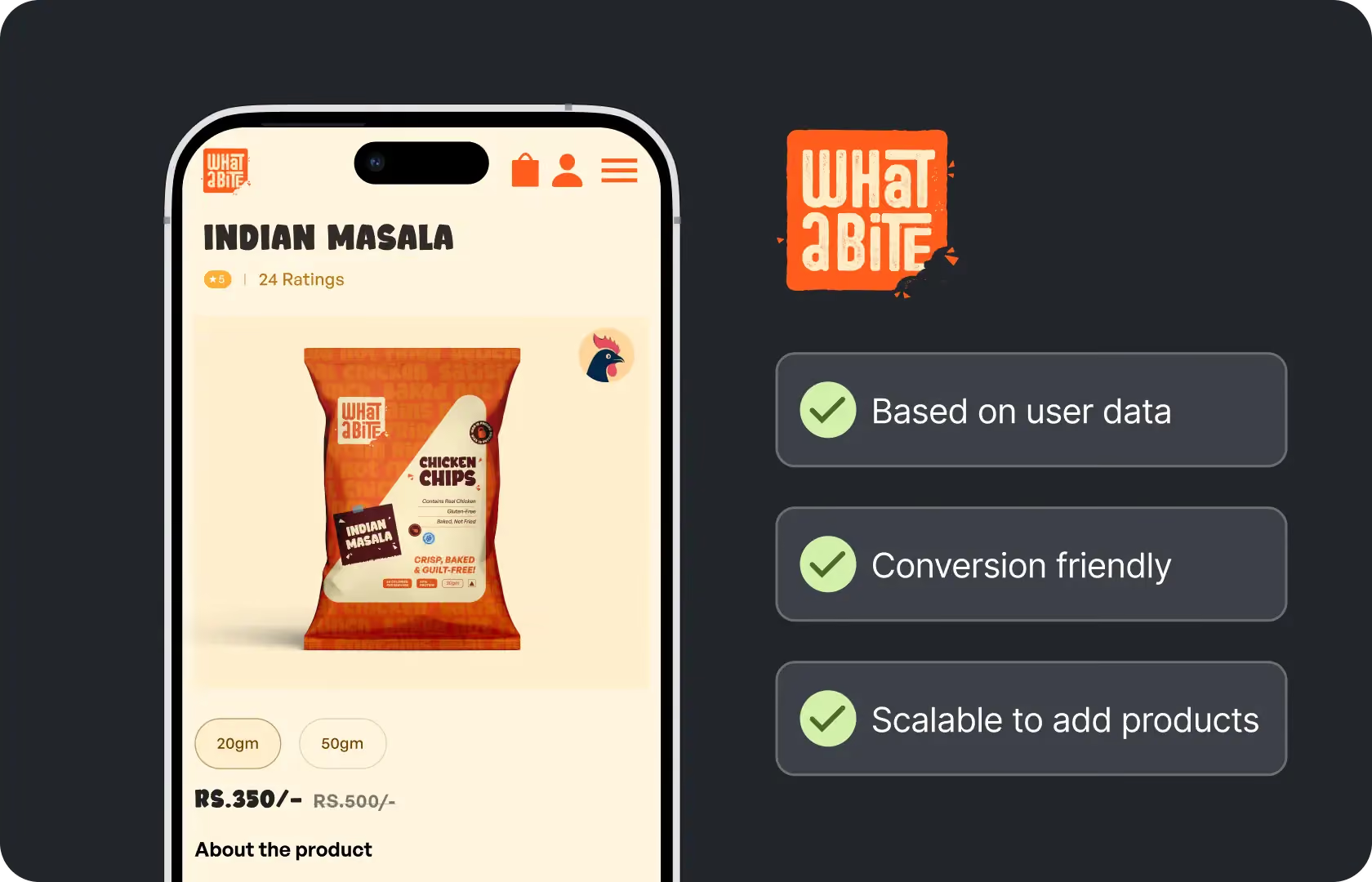
How Suplex Design Approaches Information Architecture
Most IA work gets done the wrong way around. The team sits in a room, maps out the brand's product range, and builds a navigation structure that makes sense to everyone in that room. Then they wonder why buyers cannot find anything.
At Suplex Design, we start with the buyer. How does someone who has never seen this brand before think about the category? What words do they use for the products they are looking for? How do they expect things to be grouped? What do they try first when they cannot find something? The IA comes from those answers, not from the brand's internal taxonomy.
Content Audit and Inventory
Before structuring anything, we need to know what exists.
For existing stores, that means a content audit. Every page type, every collection, every product, every piece of supporting content. Where it currently lives, how it is currently labelled, how much traffic it gets, and what users are doing when they arrive there. Stores that have grown organically over time almost always have structural problems they have stopped noticing. Collections with overlapping product sets. Navigation labels that made sense two years ago and are now ambiguous. Pages that exist but are effectively invisible because no IA path leads to them cleanly.
For new stores, the inventory is the product range, the planned content types, and the anticipated future scale. The IA needs to accommodate where the brand is going, not just where it is today. A navigation structure designed for 50 SKUs that cannot accommodate 500 is a rebuild waiting to happen.
Card Sorting and Tree Testing
Two research methods that most IA processes skip because they add time. Both consistently produce better outcomes.
Card sorting asks real users to group items the way they naturally would. It surfaces how buyers actually think about a product category rather than how the brand thinks buyers think. The gaps between those two things are where most navigation problems live. A skincare brand might group products by ingredient. Its buyers might group them by concern. Those are different structures, and designing the wrong one costs conversions.
Tree testing validates the proposed IA before anything is designed. Users are given a text-only version of the proposed navigation structure and asked to find specific items. Where they succeed, the structure works. Where they fail or hesitate, it does not. This is considerably cheaper to fix at the IA stage than after the navigation has been built and the visual design has been completed on top of it.
At Suplex Design, the method we use depends on the scope and the timeline. Remote unmoderated card sorting and tree testing through tools like Maze or Optimal Workshop can run in parallel with other project work and typically adds one to two weeks to the IA phase. For brands where the commercial stakes of getting IA wrong are high, that is a very reasonable trade.
Navigation Structure Design
The primary navigation is where most IA decisions are visible to the buyer. And where most mistakes are made.
How many items in the top-level nav is too many? Where does search sit relative to browse? What goes in the main nav versus the footer versus a secondary nav? Which product categories deserve their own top-level entry and which should be sub-items? Should collections be organised by product type, by use case, by person, or by some combination?
None of these have universal answers. They depend on the catalogue, the buyer, the category conventions, and what the competitor analysis has revealed about what is working in the space. Our team of UX designers at Suplex Design makes these decisions with that full context rather than applying a navigation template that worked for a different product on a different platform.
Labelling and Taxonomy
The words used in navigation are as important as the structure.
A category called "Essentials" is ambiguous. "Everyday Skincare" is not. A collection called "New In" sets a different expectation from "New Arrivals." A page called "Our Story" competes for attention with a page called "About Us" if both exist and serve similar purposes. Labels that feel natural to the internal team are often the least natural to a buyer encountering the brand for the first time.
We also look at SEO implications of labelling decisions. Collection names and page titles that match how buyers search for the category in organic search are doing double duty. They are wayfinding for buyers inside the store and discoverability signals for buyers who have not yet arrived. The IA and the SEO strategy inform each other, and at Suplex Design we design with both in mind simultaneously.
Site Mapping and Handoff
The output of the IA process is a site map and a set of annotated decisions that explain the structure. Not just what it is but why. Every labelling choice, every grouping decision, every hierarchy call documented with the reasoning behind it.
This matters because IA decisions get challenged throughout a project. A founder wants a collection surfaced higher. A marketing team wants a new product category added that does not fit cleanly into the existing structure. A developer wants to simplify something that was deliberately complex for a reason. When the reasoning is documented, those conversations are faster and better. The team can evaluate proposed changes against the user research rather than gut feel.

Tools Used in IA Work
Suplex Design uses Figma for site mapping and documenting the IA, Maze and Optimal Workshop for card sorting and tree testing, Miro for collaborative IA workshops where multiple stakeholders are involved, and Google Analytics and Hotjar for understanding how users are currently behaving on existing stores before restructuring anything. On Shopify, we also review how the platform's navigation menus, collections, and URL structure interact with the proposed IA, because Shopify has specific constraints that affect how deeply nested structures can go.
Is IA Work Right for You Right Now?
Depends on where you are.
Building a new product? IA should happen before wireframes. Full stop. Wireframing without an IA means the layout will be designed around a structure that may not hold up to user testing, and fixing structure problems at the wireframe stage is harder than fixing them at the IA stage.
Running an existing store that is getting traffic but not converting the way it should? IA is often where the answer is. Particularly if you are seeing high bounce rates on collection pages, poor search usage, or users failing to reach the product pages your analytics say are your strongest converters. Just adding new products or categories to an existing well-structured store? Probably not the moment for a full IA project. A focused review of how the new additions fit into the existing structure is usually enough.
Common Mistakes in Information Architecture
Same ones. Every time.
- Building the IA around the brand's internal product taxonomy rather than buyer mental models. The team knows the range intimately. A first-time buyer does not, and they will navigate using their own categories, not the brand's.
- Designing for the current catalogue size without thinking about where the product range is going. An IA that works perfectly for 80 products often breaks when the catalogue grows to 300.
- Over-nesting. Three or four levels of navigation hierarchy is usually two levels too many. Buyers who have to click more than twice to reach a product from the homepage will frequently use search instead, and if search is not well configured, they leave.
- Using internal jargon as navigation labels. Words the team uses every day that mean nothing to a buyer who has just discovered the brand.
- Not validating the structure with real users before building on top of it. Card sorting and tree testing exist for this reason and are consistently skipped because they add time. The time they save in rework is almost always greater.
At Suplex Design, the IA process catches these before they get designed around. Because restructuring a navigation after a store has been built is a project. Fixing it at the IA stage is a conversation.
Why Information Architecture Matters for D2C Brands
Buyers who cannot find what they came for do not ask for help. They leave. And they usually do not come back. The session data shows this clearly. High bounce rates on collection pages, low add-to-cart rates despite reasonable traffic, poor site search usage when search is available. These are all IA problems dressed up as performance problems.
For D2C brands investing in paid acquisition, IA has an immediate commercial multiplier. Every pound or rupee spent driving traffic to a store hits the conversion rate at the point of arrival. A store with a well-structured IA converts a higher proportion of that traffic. A store with a confusing one converts less, which means the same acquisition spend produces fewer sales. The IA is part of the unit economics whether or not the brand thinks of it that way.
For brands building for scale, IA is also a maintenance problem. A poorly structured information architecture that works at 50 SKUs becomes a genuine operational problem at 500. Collections overlap. Navigation becomes unwieldy. The site map starts to look like something that grew rather than something that was designed. Rebuilding it at scale is considerably harder than building it right the first time.
How Suplex Design Approaches IA for Your Brand
Every IA project at Suplex Design starts with the buyer, the catalogue, and the commercial goals. There is ideally no default structure and no recycled site map from a previous project. The structure comes from the user research and the competitor analysis, not from convention.
Building something new and need the structure done before wireframes begin? Running an existing store and conversion is lower than it should be? Get in touch with Suplex Design.

Frequently Asked Questions
What does IA work from Suplex Design include?
Content audit for existing stores, card sorting and tree testing with real users where the scope justifies it, navigation structure design, labelling and taxonomy decisions, and a documented site map with reasoning behind every structural choice. For Shopify stores, we also review how the proposed IA maps to Shopify's collection, menu, and URL structure before handoff.
How much does information architecture work cost at Suplex Design?
A focused IA engagement for a single-market store with a defined product range typically starts from around $1,000 at Suplex Design. Projects involving card sorting, tree testing, large catalogues, or multi-market considerations cost more. We scope clearly before starting.
How long does IA take?
Two to four weeks for most e-commerce IA projects, depending on whether user research methods like card sorting or tree testing are included and how complex the catalogue is. Skipping the user research is faster. It also produces a structure that reflects the team's assumptions rather than buyer behaviour, which is usually the thing we are trying to fix.
Do you do IA for apps as well as websites?
Yes. The IA process is the same regardless of whether the product is a Shopify store, a custom web build, or a mobile app. The specific constraints differ. A mobile app has different navigation conventions from a web store, and the IA needs to account for those. But the underlying process, understanding the buyer, mapping the content, structuring and validating the hierarchy, is the same.
Can you restructure the IA on an existing store without a full redesign?
Yes, and this is actually one of the more common engagements at Suplex Design. A navigation restructure and relabelling exercise on an existing Shopify store can produce meaningful improvements in findability and conversion without requiring a visual redesign. We scope exactly what is changing and what is staying, so the project has a clean boundary and does not creep into a full rebuild.
Let’s Make It Happen
Shopify Success Stories
AuraML
How Suplex helped AuraSIM shift from a simulation tool to the brand that makes physical AI feel ready for the real world.

Tea Culture of the World
How Suplex made 120 teas from across the world feel like a discovery rather than a decision.

Great Lakes
How Suplex built a full stack website for a Midwest tequila brand with a real production story.
Why Suplex?
World Class Aesthetics
.webp)
Profitable E-Commerce
.webp)
Build A Brand
.webp)
Build Your D2C Business The Right Way
Build It With Suplex.


