International E-Commerce Setup

International E-Commerce Setup in E-Commerce Growth
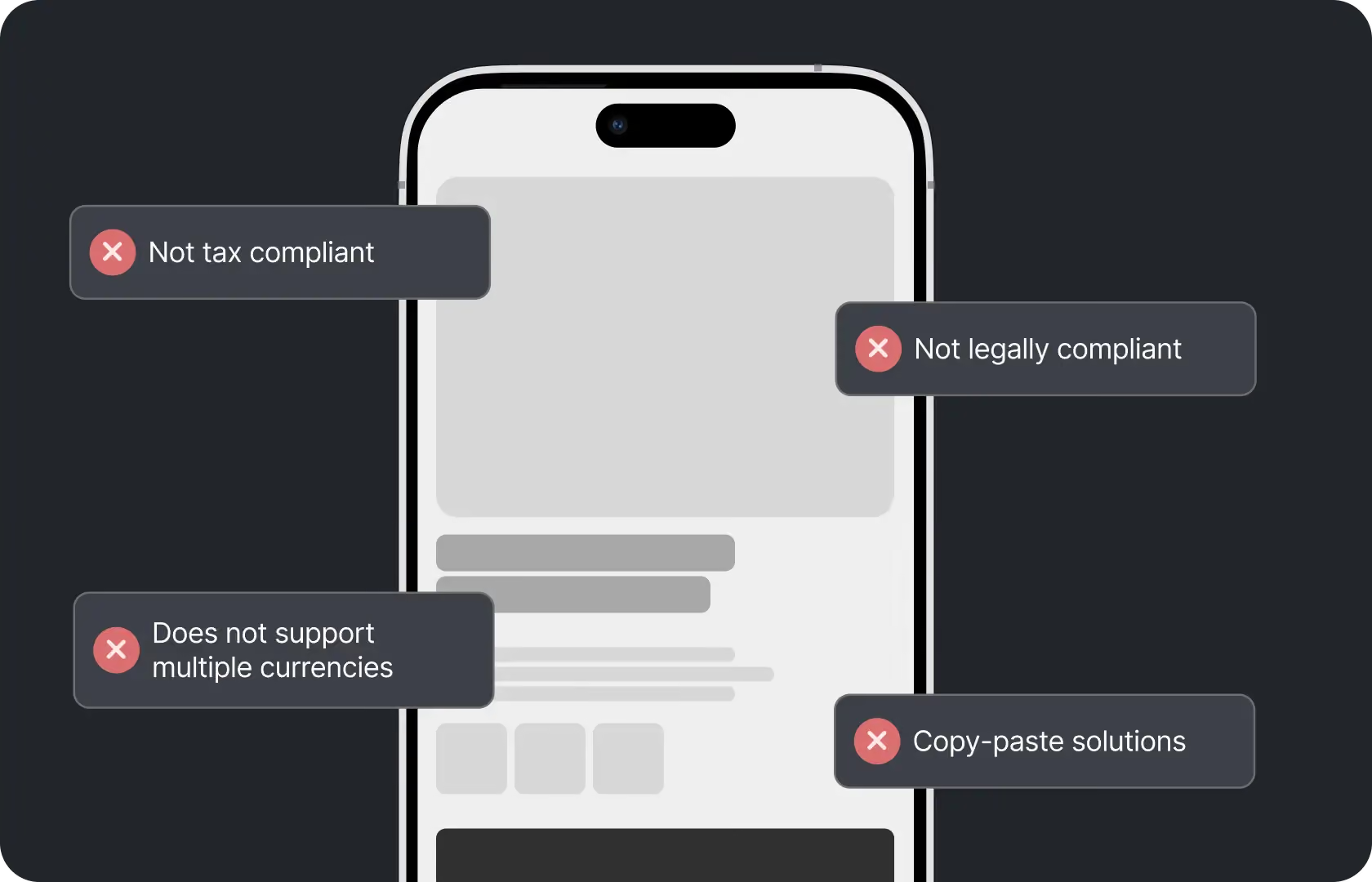
Expanding into a new market sounds straightforward until you are actually in it. The store is live. Ads are running. Traffic is arriving. And then the returns start, because buyers in the UK or UAE were not told about import duties until their package arrived and they were handed a bill they were not expecting. Or the payment method they trust is not available at checkout. Or the prices are still in a currency that does not match where they are.
These are not edge cases. They are the standard failure modes for international e-commerce launches that were not properly set up before the ads started running.
Cross-border e-commerce grew 25 percent year on year in 2025 and is projected to reach 7.9 trillion USD by 2030. Around 30 percent of online store visitors come from across borders. The opportunity is real. So is the complexity of capturing it properly. At Suplex Design, our team has set up international e-commerce operations for D2C brands across India, the UAE, the UK, the US, and Singapore, and we build the infrastructure before the first international ad runs, not after the first international disaster.
What International E-Commerce Setup Actually Involves
It is not just enabling international shipping in Shopify and calling it done.
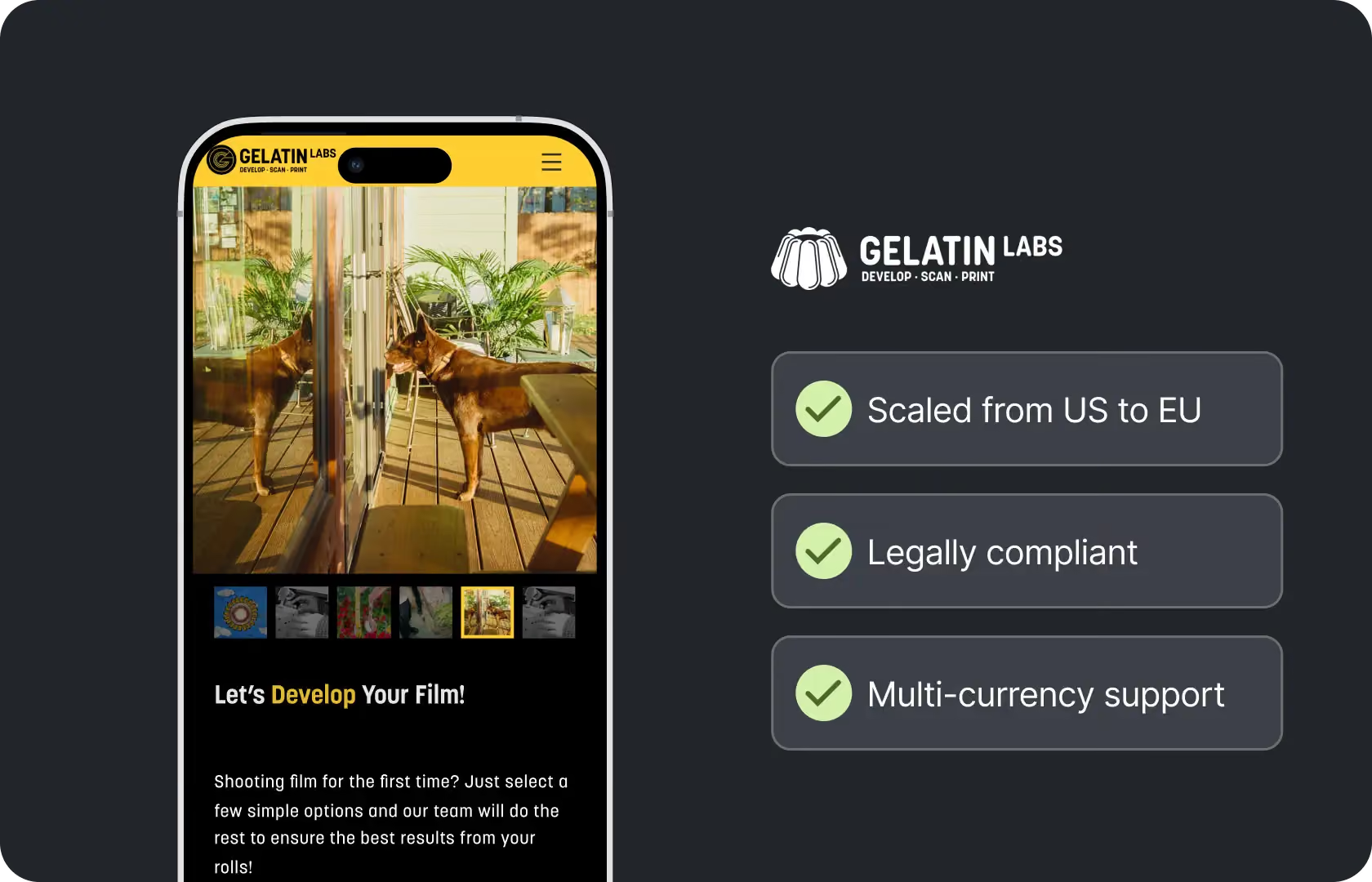
Currency: Every market has a currency its buyers trust. A buyer in the UAE expects to see prices in AED. A buyer in the UK expects GBP. Displaying prices in a foreign currency does not just feel wrong to the buyer. It actively reduces conversion because it introduces uncertainty about the true cost at the point of decision.
Payment methods: Different markets rely on different payment methods. UPI dominates in India. Card payments with specific acquirers are standard in the UAE. Buy now pay later has meaningful penetration in the UK and Australia. A checkout that only offers the payment methods the brand uses in its home market will consistently underperform in any other.
Tax and duties: VAT in the UK and EU. GST in Australia and India. Sales tax in the US, which varies by state. Import duties for cross-border orders. Each of these requires specific configuration. And the buyer experience difference between displaying duties at checkout versus not is significant. A buyer who discovers unexpected costs when their parcel arrives does not come back.
Localisation: Language, product descriptions written for the market, culturally relevant imagery, local sizing conventions, local returns addresses where applicable. A store that feels like it was designed for a different country communicates exactly that.
Logistics: Which carriers reach each market reliably. What the realistic delivery window is. Whether the brand is shipping DDU or DDP. All of this shapes the buyer experience and the return rate.
How Suplex Design Approaches International E-Commerce Setup
The temptation with international expansion is to move fast. Enable a new market in Shopify, point some ads at it, and see what happens. Our team at Suplex Design consistently pushes back on this approach. Not because moving fast is wrong, but because launching into a market with a half-configured store produces data that looks like a demand problem when it is actually an infrastructure problem. And fixing it after the fact costs more than getting it right upfront.
Market Selection and Sequencing
Before any configuration starts, there is a strategic question worth asking. Which market first, and why?
For Indian brands, the UAE is frequently the first international market that makes commercial sense. Large Indian diaspora. High purchasing power. Strong appetite for Indian D2C brands across food, beauty, wellness, and fashion. Relatively favourable import duty structure for many product categories. And close enough proximity that logistics are manageable.
The UK is often the second, particularly for brands with English-language positioning that travels well. The US is high-opportunity but also high-competition and more complex to configure correctly from a tax perspective, given the state-level sales tax variation. Singapore and Southeast Asia work well for brands where the category has existing demand and where the logistics infrastructure supports reasonable delivery windows.
Our team at Suplex Design helps brands sequence market entry based on where the commercial opportunity is strongest relative to the setup complexity. Not all markets are worth the same effort at the same stage of growth.
Shopify Markets Configuration
For Shopify stores, Shopify Markets is the foundation for international expansion. Launched in 2022 and significantly expanded through 2025, it allows brands to manage multiple markets from a single admin, each with its own currency, language, domain, and pricing rules, while maintaining a unified product catalogue and inventory backend.
Our team configures Shopify Markets to handle currency conversion and local pricing, market-specific domains or subfolders, language localisation using Shopify's translation tools or Weglot where deeper customisation is needed, and market-specific product availability for categories that are not relevant or not compliant in certain markets.
For brands on Shopify Plus, Shopify Managed Markets is worth evaluating. It makes Global-e the merchant of record for international orders, which means the brand does not need to register for taxes in each market it sells into. For a growing brand, removing that administrative burden is meaningful. Worth understanding the trade-offs, but often the right call.
Payment Localisation
Each market has payment methods that its buyers trust and methods they do not. Getting this right is commercially important.
For UAE, we configure Checkout.com or a local acquirer that supports the card networks popular in the region. For India, Razorpay handles UPI, cards, net banking, and wallets. For UK and Australia, we ensure card payments are clean and evaluate whether buy now pay later options like Klarna or Afterpay make sense for the price point. Shopify Payments is not available in all markets, which means third-party gateways are required in many of the markets Suplex Design's clients are expanding into.
Shopify lets merchants offer over 150 local payment methods globally. The brands that take the time to identify and configure the right ones for each market consistently outconvert those that do not.
Duties, Tax, and Cross-Border Compliance
This is the area that catches most international launches off guard. And the consequences range from a poor customer experience to a legal and financial exposure the brand was not aware it was taking on.
For orders into the UK, buyers expect VAT to be included in the price at checkout, not added on delivery. For the EU, the Import One-Stop Shop scheme covers orders under 150 euros with a single VAT registration rather than requiring registration in each member state. For Australia, GST registration is required once annual revenue from Australian buyers crosses 75,000 AUD. For the US, state-level sales tax nexus rules apply based on where the brand has economic activity. Each of these is real and each of them requires configuration.
On the duties side, the difference between DDP and DDU matters more than most brands realise. DDU means duties are charged to the buyer at delivery, which creates a surprise cost they were not expecting and a customer experience that frequently ends in a return or a dispute. DDP means duties are calculated and collected at checkout. The buyer pays what they would have paid anyway, but the experience feels seamless. For any market where order values are meaningful, DDP is strongly recommended.
Localisation and Store Experience
A store that was built for one market and pointed at another without any adaptation will consistently underperform. Not because the product is wrong, but because everything about the experience signals that it was not designed for the buyer reading it.
Our team handles translation of product descriptions, navigation labels, checkout copy, and email templates for each market. We review imagery for cultural relevance. We adapt product descriptions where regulatory requirements or category conventions differ. And we configure local returns addresses where the brand's logistics setup supports them, because a buyer who has to return a product internationally often just does not bother, which means the brand absorbs the loss without the buyer getting the resolution they wanted.
Logistics and Fulfilment
International logistics requires more planning than domestic. Carrier selection for each market, realistic delivery window communication at checkout, customs documentation, and how returns are handled cross-border.
We connect stores to international carriers like DHL, FedEx, or Aramex depending on the market, and configure calculated shipping rates so buyers see an accurate cost at checkout rather than a flat rate that either overcharges some buyers or creates margin-eroding surprises for the brand. For brands using third-party logistics providers, we configure the Shopify integration so order routing to international fulfilment partners is automated.

Tools and Technology
Suplex Design builds international e-commerce setups on Shopify Markets for multi-market management, with Shopify Managed Markets evaluated for brands that want to simplify tax and compliance obligations. Payment configuration uses Stripe for global markets, Checkout.com for UAE and MENA, and Razorpay for India. Weglot or Shopify's native translation tools handle localisation depending on depth required. Zonos or Shopify's built-in duty and tax tools handle cross-border compliance. Carrier integrations connect to DHL, FedEx, Aramex, and regional providers depending on the market.
Common Mistakes in International E-Commerce Setup
Most failed international launches share the same problems. They are almost always avoidable.
- Running international ads before the store infrastructure is configured for the target market. Traffic that arrives at a store without local currency, the right payment methods, or clear duty information converts poorly and produces misleading demand signals.
- Shipping DDU instead of DDP and not communicating delivery timelines clearly at checkout. Buyers who receive unexpected duty bills and long waits after purchase do not return and frequently dispute the charge.
- Not registering for tax where required. VAT registration obligations in the UK and EU, GST in Australia, and sales tax nexus in the US are real legal and financial obligations. Ignoring them is not a strategy.
- Treating localisation as an optional extra. A store in English with prices in USD pointed at UAE buyers is not an international store. It is a domestic store with international shipping turned on.
- Trying to enter too many markets simultaneously. Each market requires its own configuration, its own compliance, and its own logistics setup. Spreading this across five markets at once typically means none of them is done properly.
- Not planning for international returns. A customer in the UK returning a product to an India-based brand faces a logistics challenge that will frequently result in them simply keeping the item and leaving a negative review rather than going through the process.
Why International E-Commerce Setup Matters
The brands that expand internationally successfully treat it as an operational project before they treat it as a marketing project. The store infrastructure, the compliance setup, the payment localisation, and the logistics configuration all need to be in place before meaningful ad spend goes into a new market.
Doing it the other way, launching ads first and fixing the infrastructure later, produces conversion rates that make the market look like it does not have demand when the real problem is that the store was not ready to convert the demand it had. We have seen this pattern play out many times at Suplex Design. It is an expensive way to learn something that could have been avoided.
For D2C brands looking at international expansion, the operational setup is the growth lever. Get it right and each new market compounds. Get it wrong and each new market becomes a separate problem to diagnose.
How Suplex Design Approaches International E-Commerce for Your Brand
Every international setup at Suplex Design starts with the market, the product, and the compliance requirements before any configuration begins. There is ideally no standard template for international expansion. The UAE requires different payment configuration from the UK. The UK requires different compliance from Australia. The right approach depends on where the brand is going, what it is selling, and what its logistics infrastructure can actually support.
Ready to expand internationally and want the infrastructure built properly before the first ad runs? Get in touch with Suplex Design.

Frequently Asked Questions
What international e-commerce services does Suplex Design offer?
Market selection and sequencing strategy, Shopify Markets configuration, local currency and payment method setup, duty and tax compliance configuration, store localisation including translation and content adaptation, and logistics integration for cross-border fulfilment. We also work with brands that have already launched internationally and are trying to understand why a specific market is underperforming.
Which markets does Suplex Design have experience setting up?
India, the UAE, the UK, the US, Singapore, and Australia are the markets we work in most regularly at Suplex Design. Each has specific payment, compliance, and logistics requirements that differ enough to matter. We have done the configuration work across all of them and know where the non-obvious complications tend to appear.
How long does an international e-commerce setup take?
A focused single-market setup typically takes three to five weeks at Suplex Design, covering currency and payment configuration, basic localisation, duty and tax setup, and logistics integration. Multi-market setups take longer. We scope the timeline clearly before starting so both sides know what to expect.
Do we need Shopify Plus for international e-commerce?
Not necessarily. Shopify Markets is available on standard Shopify plans and covers most of what a brand needs for multi-market selling. Shopify Managed Markets, which simplifies tax compliance by making Global-e the merchant of record, requires Shopify Plus. Whether Plus is worth it for international expansion depends on the scale of the operation and how much the team wants to simplify the compliance overhead. We give an honest view on this during scoping.
Do you provide ongoing support after the international setup is complete?
Yes, absolutely. International operations require ongoing attention. Tax registration thresholds change. Carrier rates and coverage shift. New payment methods become relevant as markets evolve. Suplex Design offers ongoing support after the initial setup so the international operation keeps working properly rather than quietly accumulating problems that only surface when something breaks.
Let’s Make It Happen
Shopify Success Stories
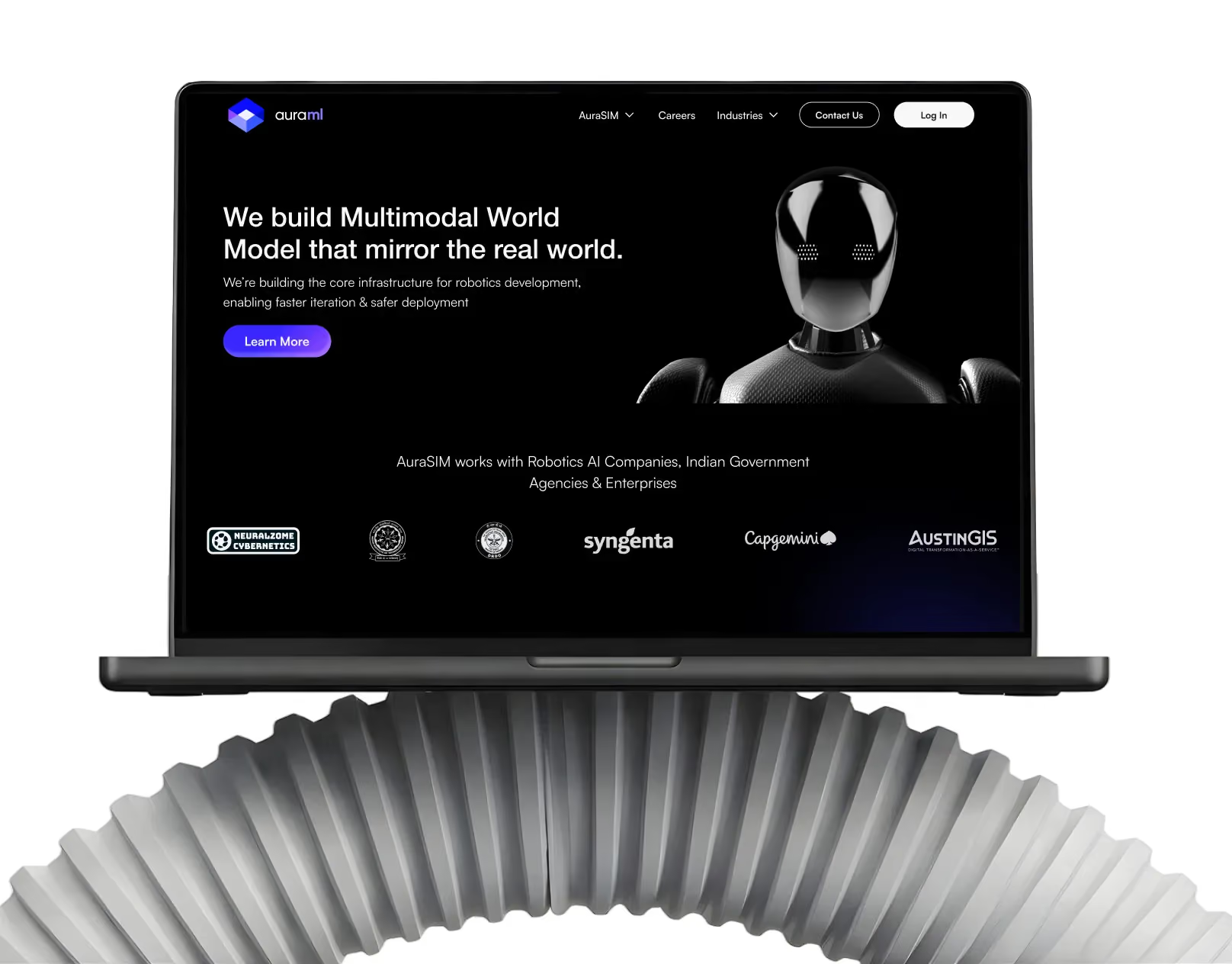
AuraML
How Suplex helped AuraSIM shift from a simulation tool to the brand that makes physical AI feel ready for the real world.

Tea Culture of the World
How Suplex made 120 teas from across the world feel like a discovery rather than a decision.

Great Lakes
How Suplex built a full stack website for a Midwest tequila brand with a real production story.
Why Suplex?
World Class Aesthetics
.webp)
Profitable E-Commerce
.webp)
Build A Brand
.webp)
Build Your D2C Business The Right Way
Build It With Suplex.


