iOS Apps
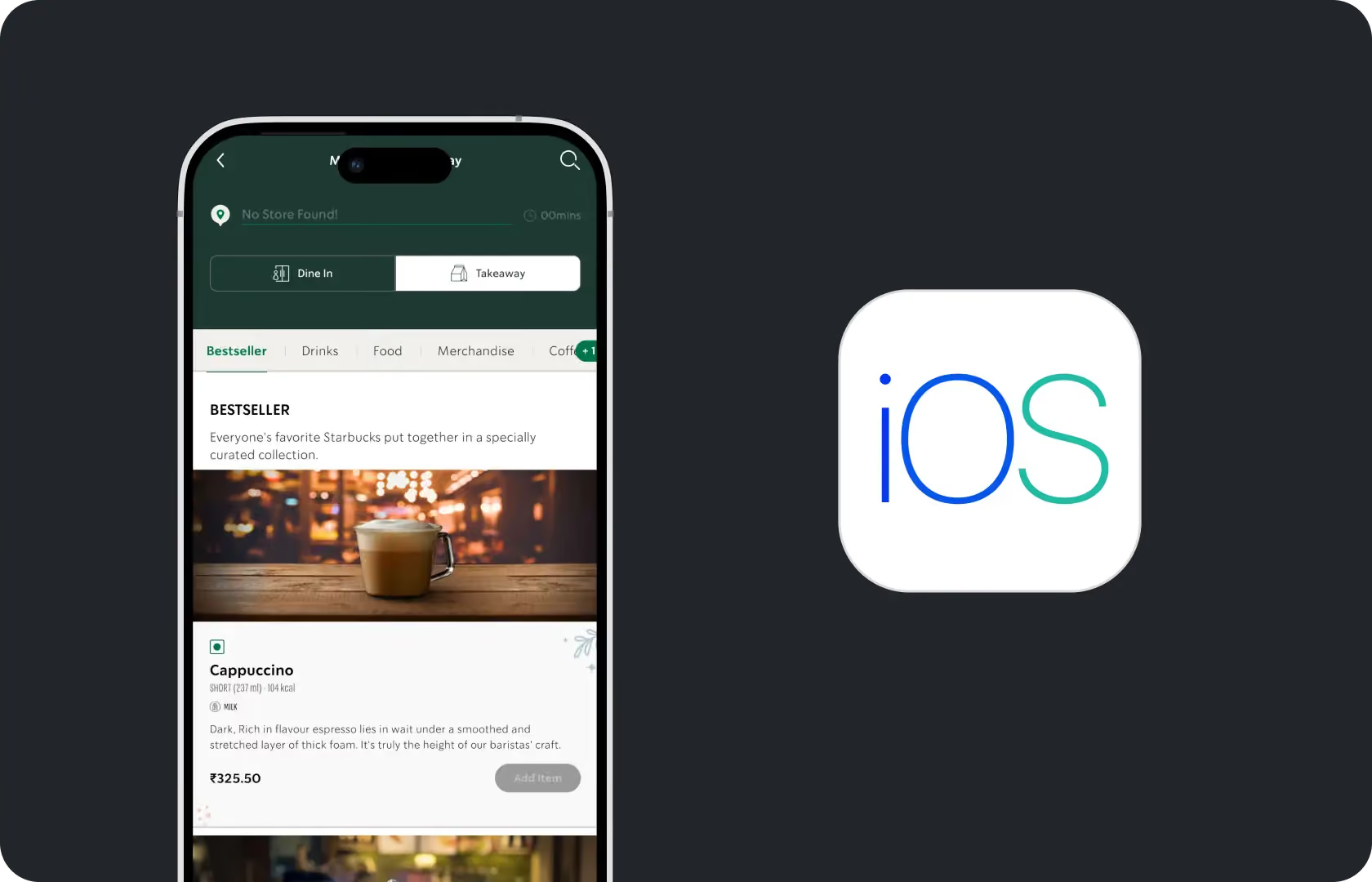
iOS Development in Web Development
An iOS app is not the right investment for every D2C brand. For brands at an early stage where the primary goal is validating product-market fit and building an audience, a well-built mobile web experience on Shopify or a custom site handles most of what a native app would offer, at a fraction of the cost and with none of the App Store submission overhead. The app makes sense later, when the buyer relationship is established enough that a dedicated, higher-engagement native experience genuinely adds value.
But for brands that have reached that point, an iOS app done properly is a meaningful competitive advantage. Push notifications that drive repeat purchase. An experience that loads faster and feels more responsive than a mobile website. Offline capability. Biometric checkout. Apple Pay integration that removes address entry entirely. And the commercial signal that an app in the App Store sends to a buyer about the brand's commitment and permanence.
At Suplex Design, iOS development is done in Swift using UIKit or SwiftUI depending on the requirements. Design and development are handled by the same team. The app is built on a tested prototype rather than a static brief. And App Store submission is part of the engagement, not an afterthought.
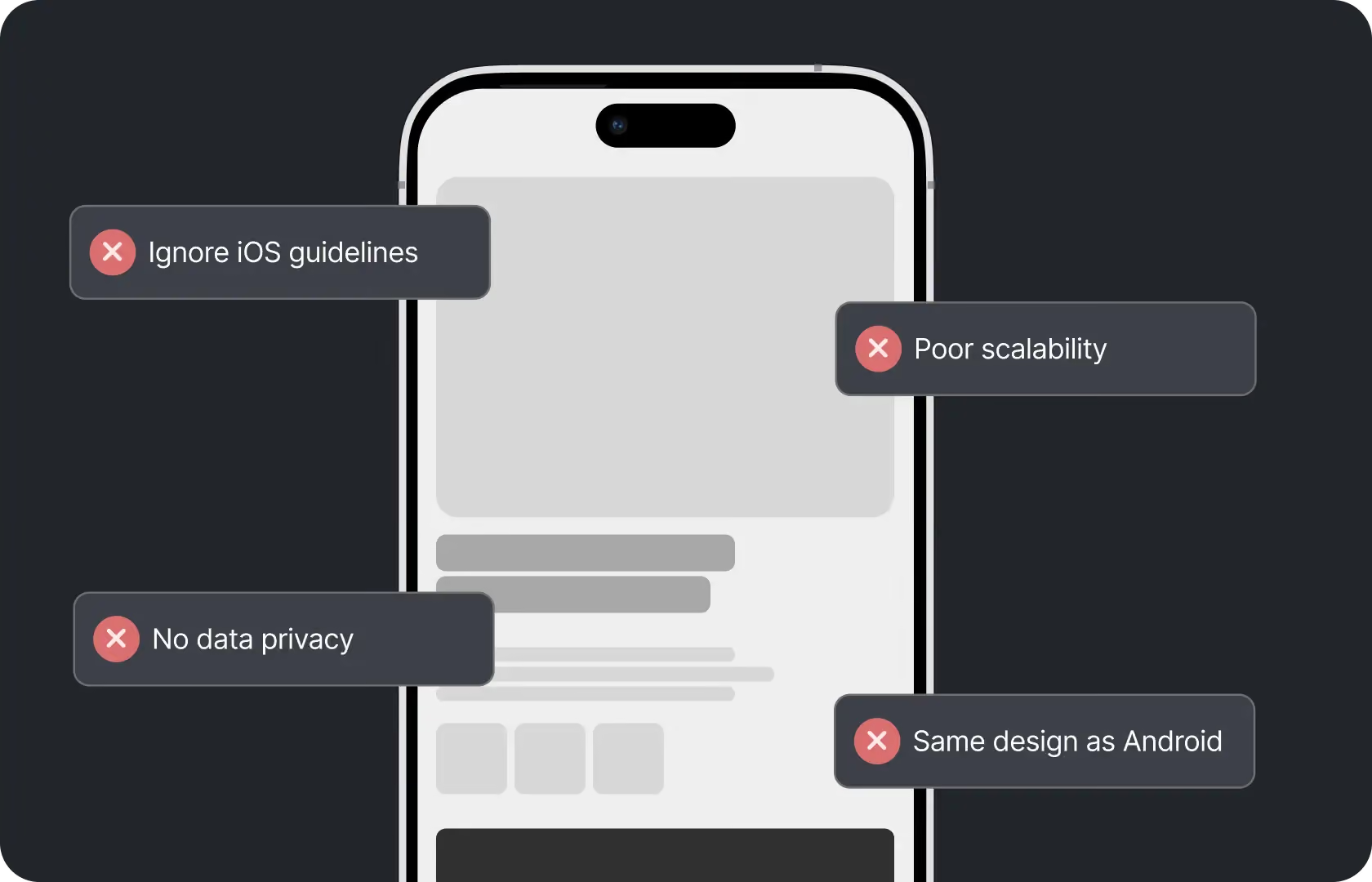
When a D2C Brand Should Consider an iOS App
Not every brand should consider an iOS app to be honest. Here is the honest picture. An iOS app earns its place when the repeat purchase rate is high enough that the buyer relationship benefits from a dedicated channel. A coffee subscription brand, a skincare brand with a refill model, a wellness brand with a programme the buyer follows over time. These are the use cases where push notifications, personalised experiences, and the convenience of a native app translate into measurably higher LTV.
An iOS app also makes sense when the product experience itself is digital or semi-digital. A fitness brand with a workout programme. A nutrition brand with a meal planning tool. A learning brand with course content. These are products where the app is not just a commerce channel, it is the product. Where an iOS app is less clearly justified is for a single-purchase or low-repeat category where the buyer relationship does not extend beyond the transaction. The development and maintenance cost of an iOS app is significant. For brands where the incremental value over a well-built mobile website is small, the resource is better deployed elsewhere.
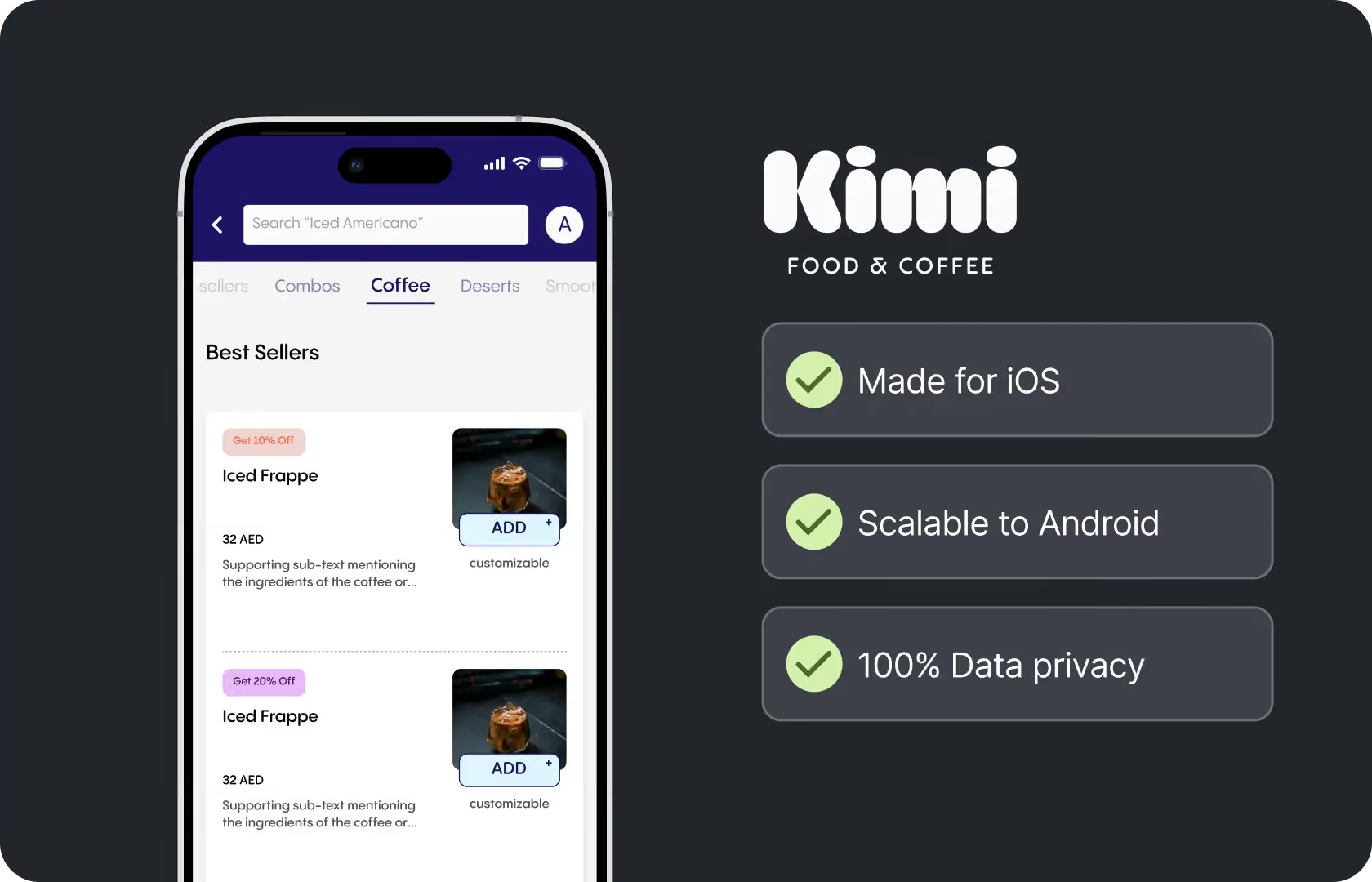
How Suplex Design Approaches iOS Development
Design and development together. Not design handed to development. The most common source of iOS app quality problems is the gap between what was designed and what was built, which happens when design and development are sequential activities rather than parallel ones. A designer produces a prototype. It goes to a developer. The developer interprets it. The interpretation and the intention diverge. The product that launches is not the product that was designed.
At Suplex Design, our iOS projects are run with design and development working together from the discovery phase. The designer builds in Figma with awareness of what is and is not straightforward to implement in UIKit or SwiftUI. The developer reviews prototypes and provides input on interaction design before screens are finalised. The result is a product that can actually be built to spec rather than a design that requires compromise at every implementation step.
UIKit vs SwiftUI
The choice between UIKit and SwiftUI is not a default. It is a decision made at the architecture stage based on the specific requirements. SwiftUI is Apple's modern declarative framework, introduced in 2019 and significantly matured since. It produces code that is faster to write, easier to read, and better suited to the component-based design approach that produces maintainable codebases. For most new iOS projects at Suplex Design, SwiftUI is the right choice.
UIKit is the older, imperative framework that still underlies much of iOS. It is more flexible in certain edge cases, particularly for complex animations and custom gesture recognisers, and it is necessary when integrating with third-party libraries that have not yet been updated for SwiftUI. For apps with specific requirements in these areas, or for apps that need to support older iOS versions where SwiftUI's capabilities are more limited, UIKit is still the appropriate choice.
Our team makes this decision explicitly during technical scoping rather than defaulting to one framework for all projects.
Commerce Integration
Most D2C iOS apps need to connect to a commerce backend. How that connection is built matters for both the buyer experience and the development overhead. For brands on Shopify, the Storefront API is the native commerce integration layer. It provides product data, collection browsing, cart management, and checkout flow via a GraphQL API that the iOS app consumes directly. The checkout can be presented within the app using Shopify's checkout sheet or, for brands on Shopify Plus, through a custom checkout flow built with the Checkout Extensibility toolkit.
For brands with custom backends, the commerce integration is built against the brand's own API layer. The architecture decisions here, caching strategy, offline handling, error state management, are more complex than in a platform-connected app and are planned carefully during the architecture phase rather than discovered during development.
Apple Pay and other payment methods supported by the Wallet are integrated natively, since they are one of the most commercially significant advantages of a native iOS app over a mobile website. A buyer who does not need to enter their address and card details to complete a purchase converts at a meaningfully higher rate than one who does.
Push Notifications and Engagement
Push notifications are one of the most commercially valuable capabilities of a native iOS app, and one of the most commonly misused. If and when done well, push notifications drive repeat purchase at a cost per acquisition significantly below paid channels. A timely, relevant notification about a restock, a personalised recommendation, or a limited offer reaches a buyer who has already demonstrated intent by downloading the app. The conversion rate on this audience is substantially higher than cold acquisition.
Done poorly, push notifications train buyers to turn them off, or to delete the app. The brands that use push effectively are the ones that treat it as a high-value, low-frequency channel rather than a cheap broadcast channel. At Suplex Design, push notification architecture is planned with this orientation from the start, building the infrastructure for triggered, personalised notifications rather than mass broadcasts.
App Store Submission and Review
Did you know that Apple rejects a significant proportion of submissions and the review timeline is variable. At Suplex Design, App Store submission is included in every iOS engagement rather than handed to the client as a final step. We prepare the App Store listing, screenshots, and metadata. We ensure the app meets Apple's current guidelines, which change more frequently than most teams expect. We handle the TestFlight beta distribution for internal and external testing before submission. And we manage the response to any reviewer feedback or rejection, which is a normal part of the submission process rather than an exceptional event.
The timeline from code-complete to App Store availability is typically one to two weeks, depending on Apple's current review queue. We factor this into the project timeline rather than treating it as zero-duration.

Tools and Technology
Suplex Design builds iOS apps in Swift using SwiftUI or UIKit depending on the project requirements. Xcode is the development environment. Version control is through GitHub. For commerce integration, we use Shopify's Storefront API with Apollo Client for GraphQL, or custom API integration for brands with their own backends. Push notifications are implemented through Apple Push Notification Service and managed via a backend notification service. Analytics are integrated through Firebase or Mixpanel depending on the brand's existing analytics setup. Instruments and Xcode's performance profiler are used throughout development to catch memory leaks and performance regressions before they reach the App Store.
Is an iOS App the Right Investment for You Right Now?
An iOS app makes commercial sense when the brand has an established customer base with meaningful repeat purchase behaviour. When the category and the product lend themselves to the ongoing engagement that an app enables. When the commerce experience would be meaningfully better natively than on a mobile website, specifically around checkout, push notifications, and offline capability.
It is harder to justify when the brand is still in early growth mode and the development resource would produce a higher return deployed elsewhere. When the repeat purchase rate is low and the app would primarily serve single-purchase customers. Or when a well-built progressive web app would deliver a sufficient proportion of the native experience at lower cost.
Our team at Suplex Design will tell you honestly which situation you are in. We have recommended against iOS app development to brands that came in expecting a build, because the timing was not right for them. We would rather have that conversation than take a project that is not the right fit.
Common Mistakes in iOS App Development
Consistent. And most of them are timing and process problems rather than technical ones.
- Building an iOS app before the web experience is properly optimised. If the mobile web experience is poor, the app will not fix the underlying problems. It will replicate them in a native wrapper.
- Treating design and development as sequential rather than parallel activities, producing designs that require significant compromise at the implementation stage because nobody checked feasibility during the design phase.
- Under-scoping App Store submission and review. Brands that plan their launch date without factoring in App Store review time consistently have delayed launches.
- Treating push notifications as a broadcast channel rather than a triggered, personalised one, producing notification opt-out rates that undermine the channel's commercial value.
- Not planning for ongoing maintenance. iOS apps require updates to stay compatible with new iOS versions and Apple's evolving guidelines. An app that is not maintained becomes a liability rather than an asset.
At Suplex Design, the project structure and the handover process are designed to prevent all of these.
Why iOS Development Quality Matters for D2C Brands
An iOS app is a long-term commercial asset. It takes time to acquire users, it takes time for the push notification channel to generate meaningful revenue, and it takes time for the retention advantages of a native experience to compound in the LTV data. None of these benefits are available from an app that is poorly built, has a checkout experience buyers find frustrating, or sends push notifications so aggressively that they get turned off in the first week. The quality of the initial build determines the trajectory of the app as a commercial channel. A well-built app that receives ongoing iteration improves in commercial value over time. A poorly built app that requires a rebuild twelve months after launch does not generate the return that justified the initial investment.
How Suplex Design Approaches iOS Development for Your Brand
Every iOS project at Suplex Design starts with an honest assessment of whether the timing is right and what the app needs to do commercially before any design or development begins. If the project makes sense, design and development run together. The app is built on a tested Figma prototype. Commerce integration, push notifications, and App Store submission are all part of the scope. And post-launch support is available for the iteration work that produces the most commercially significant improvements.
Ready for an iOS app and want it built properly? Unsure whether now is the right time? Want an honest view on whether a native app or a better mobile web experience is the right next investment? Get in touch with Suplex Design.

Frequently Asked Questions
What iOS development services does Suplex Design offer?
Native iOS app development in Swift using SwiftUI or UIKit, Shopify Storefront API integration for commerce, custom API integration for brands with their own backends, push notification architecture, Apple Pay integration, TestFlight beta distribution, App Store submission and review management, and post-launch support and iteration. Design and development are handled together rather than sequentially.
How much does iOS app development cost at Suplex Design?
A focused iOS app with core commerce functionality, push notifications, and Shopify integration typically starts from around $12,000 at Suplex Design. Apps with more complex feature sets, custom backends, subscription commerce, or significant content layers cost more. We scope carefully before starting so the estimate reflects actual requirements.
How long does an iOS app take to build and launch?
From discovery to App Store availability, a focused iOS app typically takes ten to sixteen weeks at Suplex Design. This includes discovery and architecture, design and development running in parallel, TestFlight beta testing, App Store submission, and the review period. Brands that try to compress this timeline consistently encounter problems at the App Store submission stage that could have been avoided with more preparation time.
Should we build for iOS first or Android first?
It depends on your audience. For brands targeting the UK, the US, and UAE audiences at the premium end of the market, iOS is typically the right first platform. For brands primarily targeting India and other markets where Android dominates, Android first is usually the more commercially sensible call. If the budget allows both simultaneously, both is the right answer. We can advise on the right sequencing based on your specific audience data.
Do you provide ongoing support after the iOS app launches?
Yes, absolutely. iOS apps require ongoing maintenance to stay compatible with new iOS versions, to respond to App Store guideline changes, and to iterate on the product based on user behaviour. Suplex Design offers ongoing iOS development support after launch. In our experience, the most commercially valuable work on an iOS app happens in the six to twelve months after launch, not before it.
Let’s Make It Happen
Shopify Success Stories
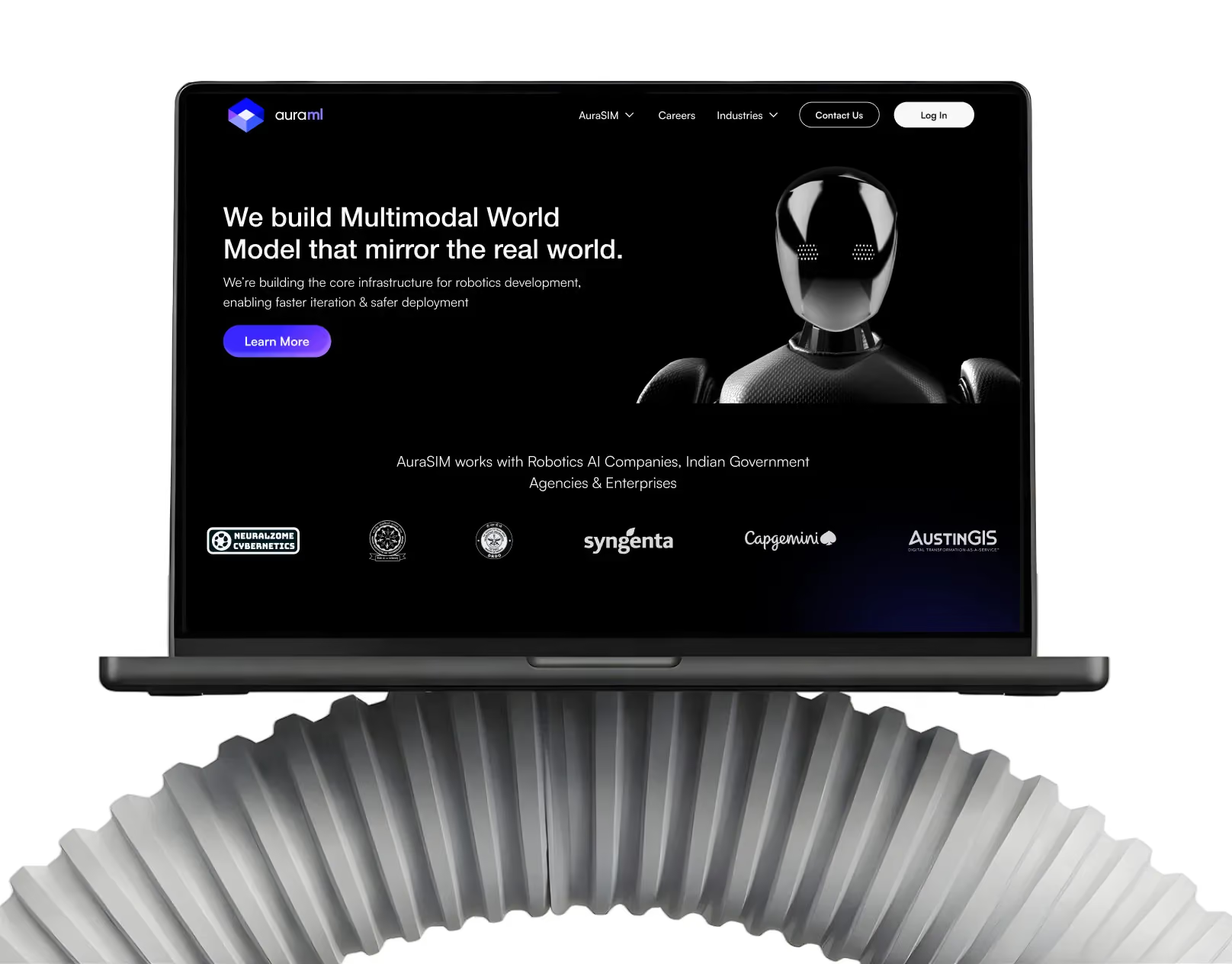
AuraML
How Suplex helped AuraSIM shift from a simulation tool to the brand that makes physical AI feel ready for the real world.

Tea Culture of the World
How Suplex made 120 teas from across the world feel like a discovery rather than a decision.

Great Lakes
How Suplex built a full stack website for a Midwest tequila brand with a real production story.
Why Suplex?
World Class Aesthetics
.webp)
Profitable E-Commerce
.webp)
Build A Brand
.webp)
Build Your D2C Business The Right Way
Build It With Suplex.


