Platform Consultation
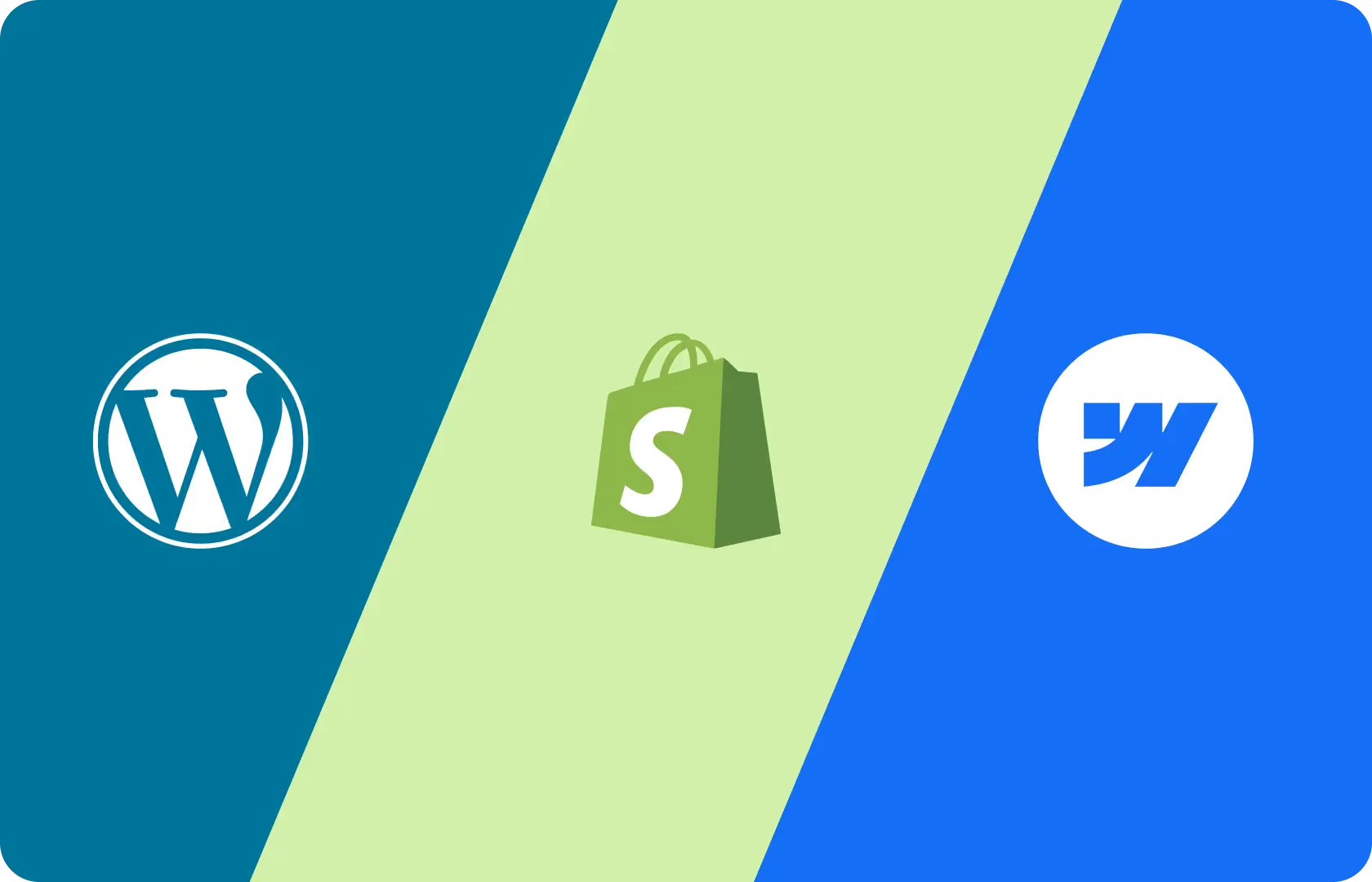
Platform Consultation in E-Commerce Growth
So here is something we see fairly often at Suplex Design. A brand has been live for a year on WooCommerce or Magento. Things are working, sort of. But the team is spending more time managing the platform than growing the business. Plugin conflicts. Slow load times. Hosting costs creeping up. Integrations that half-work.
Eventually someone says "we should move to Shopify." And then the replatforming project begins, with all the cost, disruption, and SEO risk that comes with it.
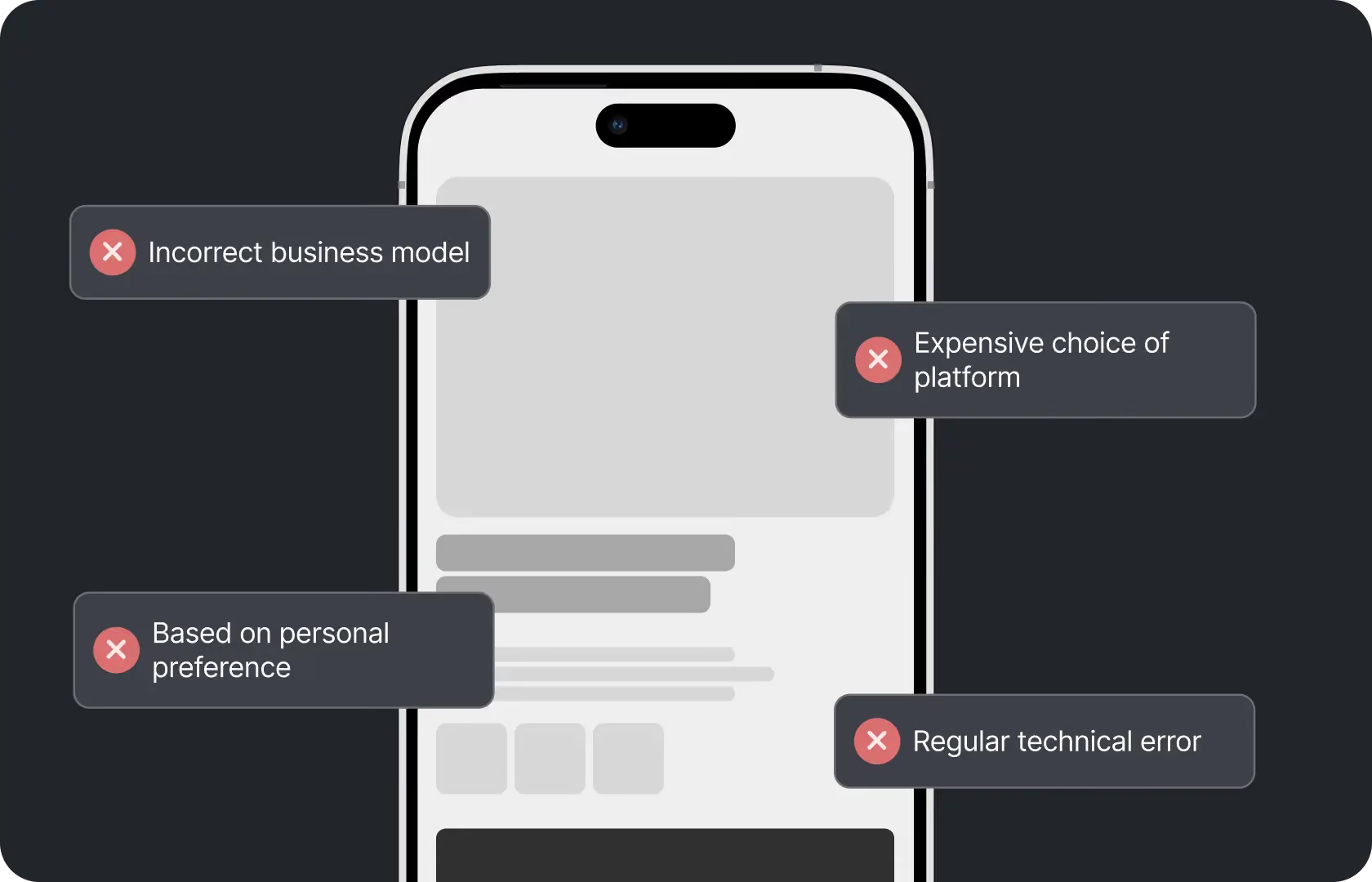
Honestly, a lot of those situations could have been avoided. Not because WooCommerce or Magento are bad platforms. They are genuinely right for the right kind of business. But they are not right for every business. And the brands that end up on the wrong one are almost never making a bad decision on purpose. They are making a decision without enough information.
At Suplex Design, our team of e-commerce specialists helps D2C brands across India, the UAE, the UK, the US, and Singapore make this decision properly. And when a brand has already made the wrong call, we help them pick the right one the second time with as little disruption as possible.
What Is E-Commerce Platform Consultation?
Platform consultation is a structured process. It looks at the brand's situation, its growth plans, its technical constraints, and what the team can realistically manage after launch. From there, it maps all of that against what different platforms actually do well. And what they do not.
Talking about the platforms most D2C brands are choosing between right now, the main ones are Shopify and Shopify Plus, WooCommerce, Webflow, BigCommerce, and Adobe Commerce. Each fits a different profile.
Shopify is the dominant all-in-one solution for most sizes and stages. WooCommerce suits brands already inside the WordPress ecosystem who want more control. BigCommerce works well for mid-market brands that want strong native features without transaction fees. Adobe Commerce is built for larger operations with in-house development resources and genuinely complex requirements.
The right platform is not the one with the best marketing. It is the one that fits what you actually need to do.
How Suplex Design Approaches Platform Consultation
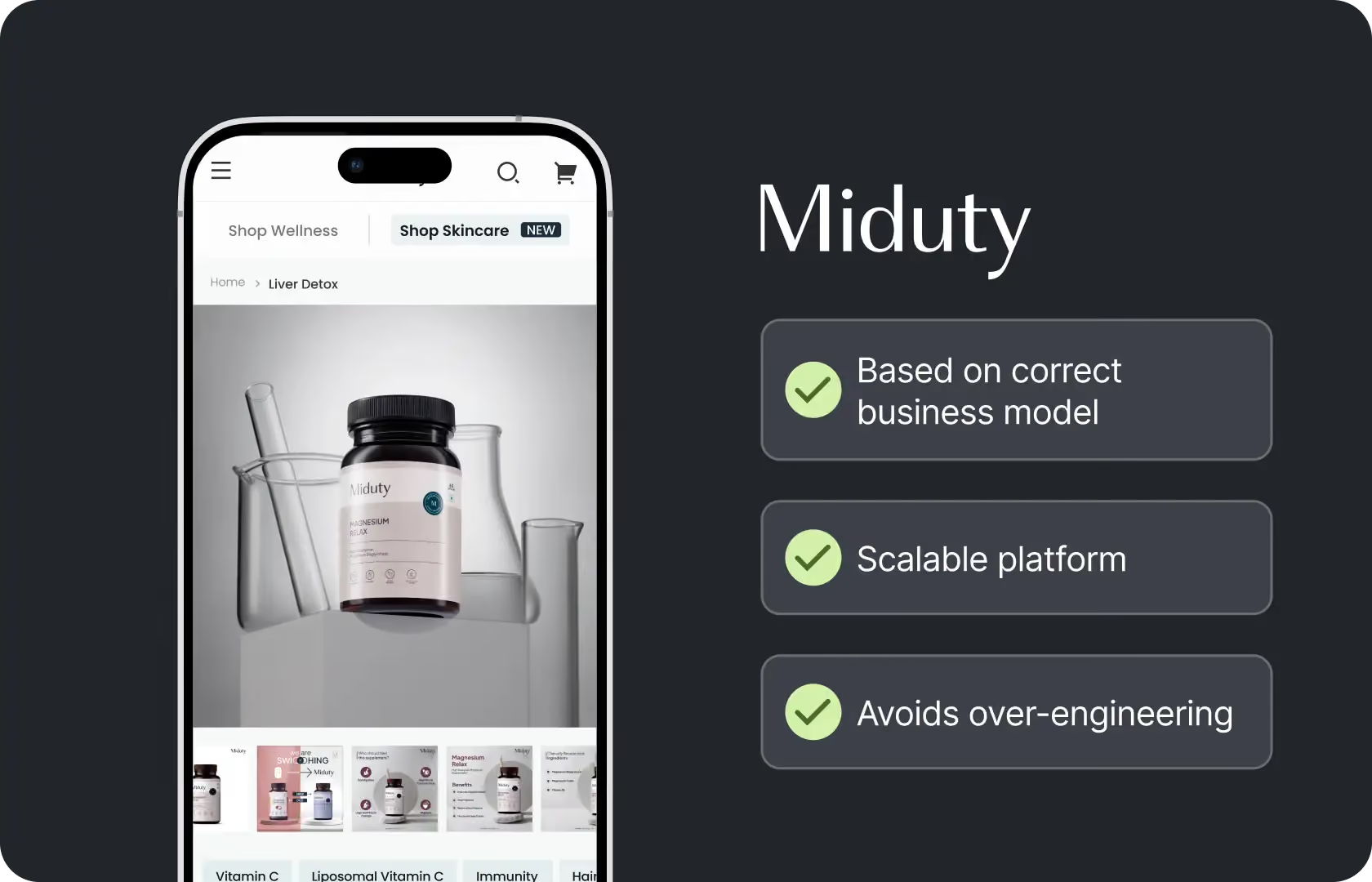
You will find that most agencies skip proper platform consultation entirely. They work on whatever platform they know best and recommend that one. At Suplex Design, we do things differently. Our team has built on Shopify, WooCommerce, Webflow, and custom solutions. We have also moved brands between all of them. So basically, we have no commercial reason to recommend one over another. The recommendation comes from what fits your brand.
Mapping What the Brand Actually Needs
The first thing our team does is map what the brand actually needs from a platform. Not what it wants in an ideal world. What it genuinely needs to operate and grow.
Catalogue complexity is one factor. A brand with 50 SKUs needs something very different from a brand with 5,000. That difference becomes obvious fast once real volume arrives.
Team capability is another. A platform that requires developer involvement for routine content updates is a bad fit for a lean team. Even if it has more features. Shopify wins here for most brands. WooCommerce and Adobe Commerce are more powerful in some ways, but they ask more of the team running them. Worth knowing before you commit.
Logistics and integrations come next. Does the brand need to connect to an ERP or a warehouse management system? Does it need B2B wholesale running alongside D2C? These requirements narrow the platform options significantly. In some cases they point clearly toward a custom build.
Evaluating Platform Fit Without a Sales Agenda
Once requirements are mapped, our team evaluates each platform against them. Not a feature comparison spreadsheet. A practical assessment of whether the platform can do what the brand needs, at what cost, with what technical overhead.
Talking about cost, this is where most platform comparisons go wrong. The sticker price is rarely the real number. The real cost is total cost of ownership. Hosting. Development. Maintenance. App subscriptions. The ongoing time your team spends managing the platform.
Research shows Shopify's total cost of ownership runs about 33 percent lower than competitors at similar scale. Not a small number. But that figure does not apply equally to every brand in every situation. Our team works through what the actual cost looks like for your specific requirements rather than applying a general rule.
We also think about what replatforming would cost if the brand outgrows its current platform. This is so because brands that pick without thinking about where they are going tend to find themselves rebuilding within two or three years. A careful platform decision now is almost always cheaper than a replatform later.
Replatforming Assessment
A lot of the consultation work we do at Suplex Design is with brands already on a platform and feeling the friction. The question is not always "should we move." Sometimes it is "is this a platform problem or an implementation problem?"
And honestly speaking, those are very different answers. A brand on WooCommerce that is slow and hard to manage might be on the wrong platform. Or it might have a poorly configured hosting setup and a theme built by someone who did not know the platform well. Moving to Shopify will not fix the second problem. It will just put the same mess on a new platform.
We have seen this play out more times than we can count. Our team assesses both possibilities before making any recommendation. The platform matters. But so does the build on top of it.
Migration Planning
When a replatform is the right call, we plan it carefully. The biggest risk is not the technical work. It is poor planning. Brands that rush migrations risk losing data, taking significant SEO traffic hits, and spending months post-launch fixing things that could have been dealt with before cutover.
At Suplex Design, migration planning covers data migration and validation, URL mapping and redirect strategy, SEO preservation, integration reconfiguration, and a proper testing period before the new store goes live. Most migrations land in the six to sixteen week range from kickoff to cutover. Brands that try to do it faster almost always pay for it afterwards.

Tools and Technology in Platform Consultation
At Suplex Design, platform consultation draws on hands-on experience across Shopify and Shopify Plus, WooCommerce, Webflow, BigCommerce, Adobe Commerce, and custom builds. For migration projects, we use Screaming Frog for URL audits, Google Search Console for SEO baseline data, and structured data validation tools to make sure the new platform preserves search visibility. For cost modelling, we work from the brand's actual usage patterns, not platform pricing pages.
Is Platform Consultation Right for You?
Platform consultation makes sense in a few situations. You are pre-launch and choosing between platforms for the first time. You are post-launch and your current platform is creating friction. You are growing fast and unsure whether your platform can support where you are going. Or you are entering a new market and not sure your current setup can handle it.
If you are happily on a platform that is working and scaling with you, this is probably not what you need right now. But if something feels off and you are not sure whether it is a platform problem or something else, that is exactly what our team is useful for.
Common Mistakes in Platform Selection
Most platform selection mistakes come from the same starting points. Good faith decisions made without enough information.
- Choosing based on what a developer or founder is most familiar with, rather than what the brand's requirements actually point toward. Familiarity is a real advantage. It should not outweigh fit.
- Evaluating on feature lists rather than operational reality. More features is not always better. It is often harder to manage and more expensive to maintain, especially without in-house technical resources.
- Looking only at the platform subscription fee and missing the real total cost. Hosting, plugins, apps, development, and team time all land on the bottom line eventually.
- Picking for where the brand is today without thinking about where it will be in two or three years. Then facing a replatform at exactly the point when the team has the least capacity for it.
- Treating replatforming as a copy-paste of the existing store rather than a chance to fix what was not working. Brands that do this tend to recreate the same problems on a shinier platform.
At Suplex Design, we structure the consultation to catch these early. A good platform decision at the start saves significantly more than the consultation costs.
Why Platform Consultation Matters for D2C Brands
The platform a D2C brand builds on shapes almost every operational decision that follows. How quickly the team can publish new products. How well the store handles traffic spikes. How cleanly it integrates with fulfilment, CRM, and analytics tools. How much developer time routine maintenance takes.
A brand that replatforms eighteen months into its growth stage does not just spend money on the migration. It takes a period of internal distraction that slows down marketing, product development, and growth investment during the project. The cost is not just the migration budget. It is the opportunity cost of the team's focus.
For brands with international ambitions, platform selection also affects how cleanly the brand can expand. Some platforms handle multi-currency, multi-language, and market-specific checkout configurations much better than others. Getting this right at the platform selection stage is considerably easier than retrofitting it later.
How Suplex Design Approaches Platform Consultation for Your Brand
Every platform consultation at Suplex Design starts with understanding the brand, the team, and the commercial context. There is ideally no default answer. Shopify is right for a lot of brands. It is not right for all of them. WooCommerce is right for some. Custom builds are right for a few. The recommendation comes from the requirements, not from what we build on most often.
If you are choosing a platform for the first time, considering a replatform, or just unsure whether what you are on is the right fit for where you are going, get in touch with Suplex Design to talk it through.

Frequently Asked Questions
What does platform consultation from Suplex Design actually include?
Good question to ask early. At Suplex Design, it covers a structured assessment of your requirements, an honest evaluation of which platforms fit them, total cost of ownership modelling, and a clear recommendation with the reasoning behind it. For brands already on a platform and considering a move, it also includes a replatforming risk assessment and migration planning.
How much does platform consultation cost at Suplex Design?
Honestly, it depends on the scope. A focused consultation for a pre-launch brand choosing between two or three platforms is straightforward and typically starts from around $500. A more involved engagement covering replatforming assessment, migration planning, and risk mapping for an established store with complex integrations will cost more. We scope it clearly before starting.
Do you recommend Shopify to everyone?
No, and this is actually one of the things that makes our consultation useful. Our team at Suplex Design has built on Shopify, WooCommerce, Webflow, and custom solutions. We have no commercial reason to favour one platform over another. Sometimes the right answer is Shopify. Sometimes it is WooCommerce. Occasionally it is something custom. The recommendation comes from the requirements.
How long does a replatforming project take at Suplex Design?
Most proper migrations land in the six to sixteen week range from kickoff to cutover, depending on how complex the existing store is, how many integrations are involved, and the catalogue size. Brands that try to rush this tend to pay for it post-launch. We plan migrations with enough runway to do them properly.
Do you provide support after the platform decision is made?
Yes, absolutely. Suplex Design can carry the consultation through to the actual build, migration, and ongoing development. A lot of our client relationships start with platform consultation and carry through to the full store build. The consultation is a starting point, not a one-off deliverable.
Let’s Make It Happen
Shopify Success Stories
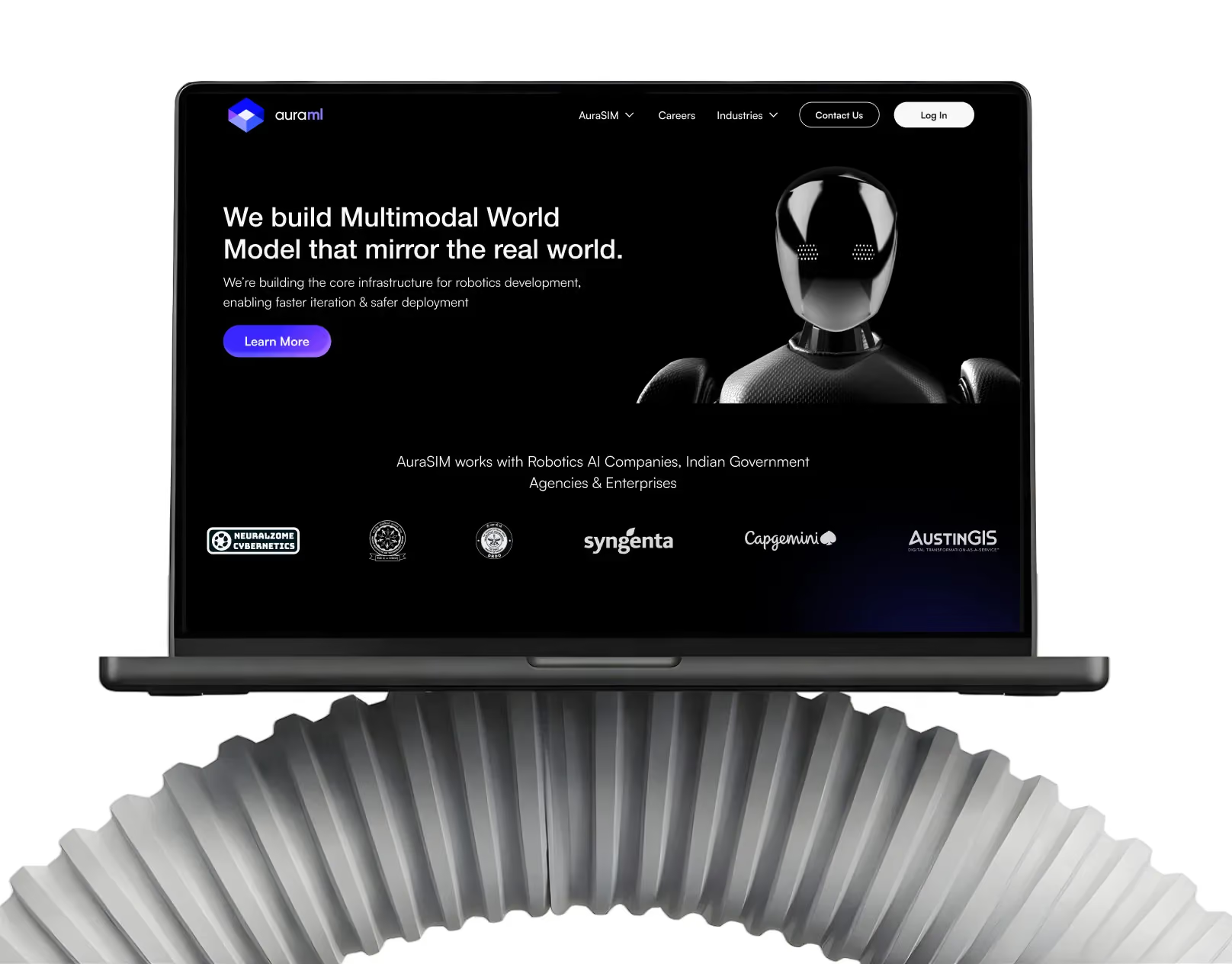
AuraML
How Suplex helped AuraSIM shift from a simulation tool to the brand that makes physical AI feel ready for the real world.

Tea Culture of the World
How Suplex made 120 teas from across the world feel like a discovery rather than a decision.

Great Lakes
How Suplex built a full stack website for a Midwest tequila brand with a real production story.
Why Suplex?
World Class Aesthetics
.webp)
Profitable E-Commerce
.webp)
Build A Brand
.webp)
Build Your D2C Business The Right Way
Build It With Suplex.


