Setup Shopify Store
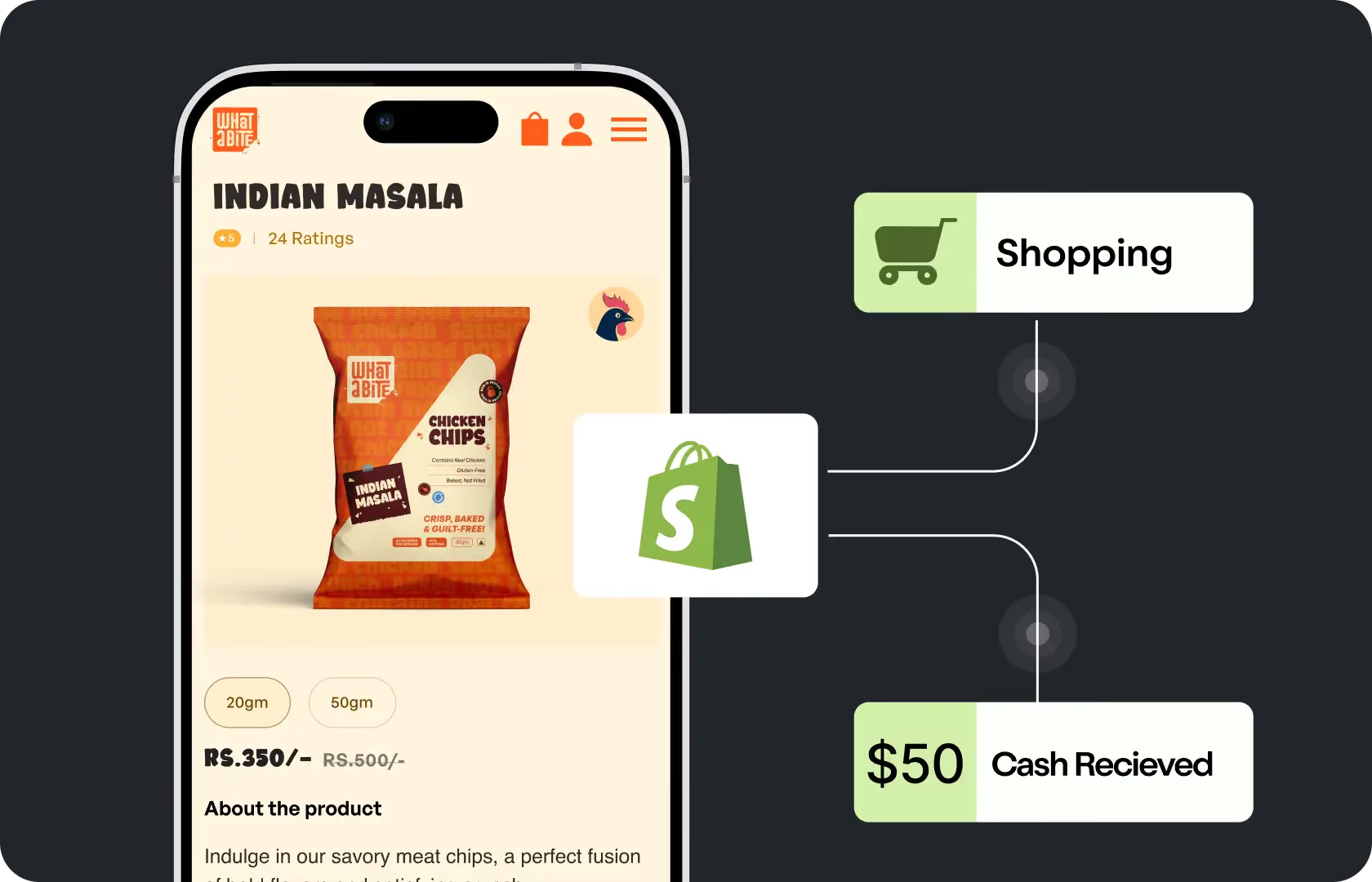
Setup Shopify Store in E-Commerce Development
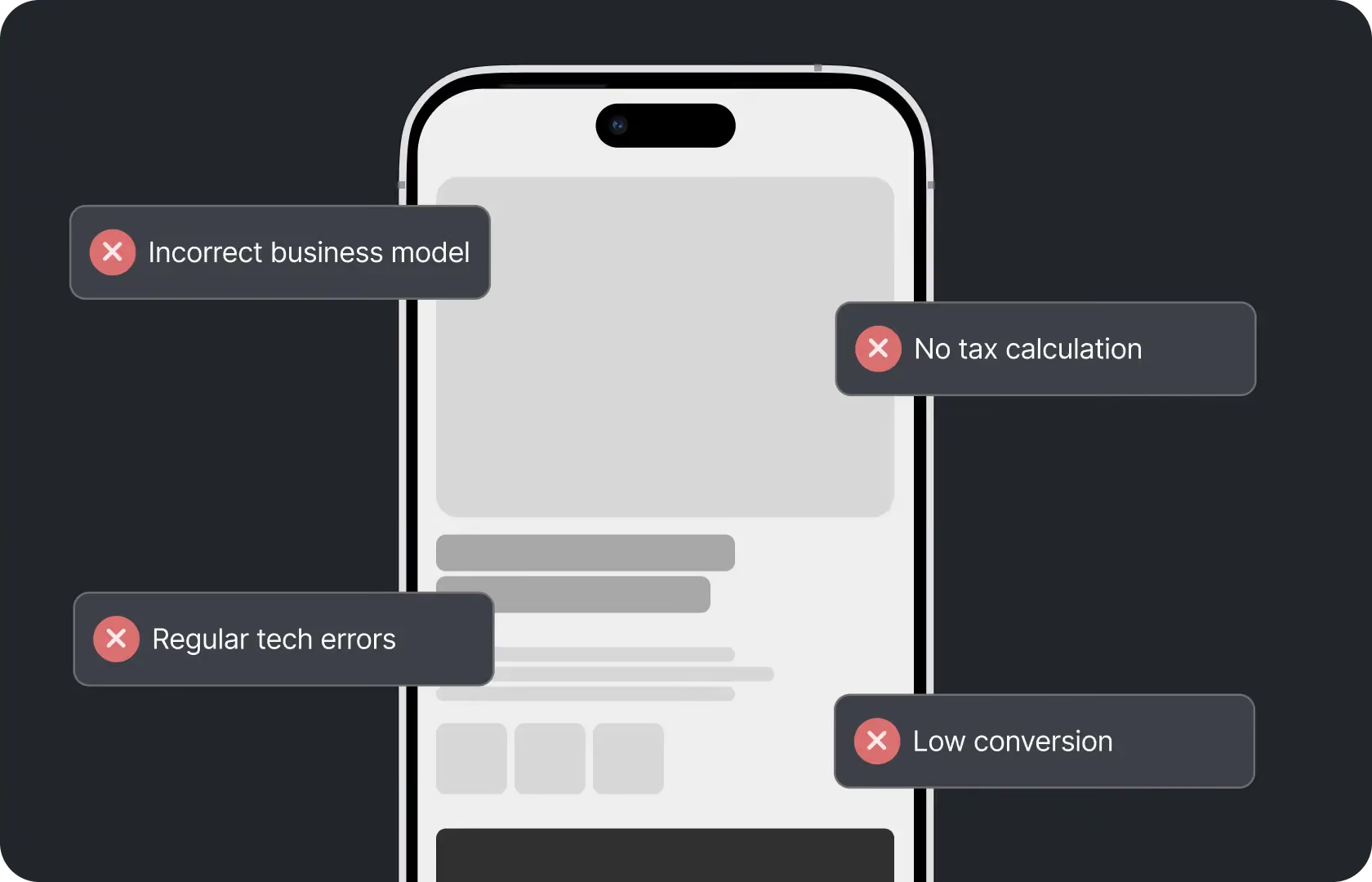
You might be shocked to know that most Shopify stores are set up twice. Once quickly, just to get something live, and once properly, after the first version fails to convert the way the brand had expected. And honestly speaking from our experience with setting Shopify stores at Sulpex, the gap between those two versions is almost always the same set of decisions made without enough thought by the founders and their team. Like, take for example, a theme chosen for aesthetics over good website performance, a checkout flow that was never tested on the devices your buyers actually use, payment methods that do not match how your market prefers to pay, and a product page structure built around internal priorities over customer’s purchase intent.
If you notice, global brands like Gymshark, Allbirds, and Warby Parker did not build their digital presence by launching a default Shopify theme and merely hoping for conversions. Nor did any well renowned Indian D2C brands like boAt, The Souled Store, or Sleepy Owl. In fact each of them had somewhere down the line made deliberate decisions early about how their store is structured, how checkout is configured, and how the experience holds up across devices and markets. Shopify as of today powers more than 5.8 million online stores globally, and the global e-commerce is projected to exceed 8 trillion USD by 2027. The platform is not the variable, but what you build on it definitely is. At Suplex, Shopify store setup is treated as a commercial architecture problem, and not merely like a design task.
What Is Shopify Store Setup?
Shopify store setup is the process of building a store that is ready to accept orders, process payments, fulfil shipments, and convert visitors into buyers. It covers everything right from domain connection and theme selection to product cataloguing, payment gateway integration, shipping configuration, tax compliance, and the app stack required to run the business operationally across the globe. The technical configuration required varies significantly from country to country and market to market. Payment gateways, tax rules, supported currencies, shipping carrier integrations, and checkout localisation all differ across geographies, and as per our experience of building Shopify websites at Sulpex, a store built without accounting for those specifics will surely create friction at the exact moment a buyer is trying to complete a purchase.
Beyond the technical configuration, Shopify store setup also means making early decisions that are difficult to change later like the information architecture of the navigation, the structure of the product pages, the logic of the collections, the hierarchy of calls to action, and the way the checkout flow is sequenced. A shopify store built without thinking through these decisions at the beginning will require a redesign within twelve months, this is a fact we have experienced multiple times when brands come to us at Suplex for redesigning their Shopify stores.
How Suplex Approaches Shopify Store Setup
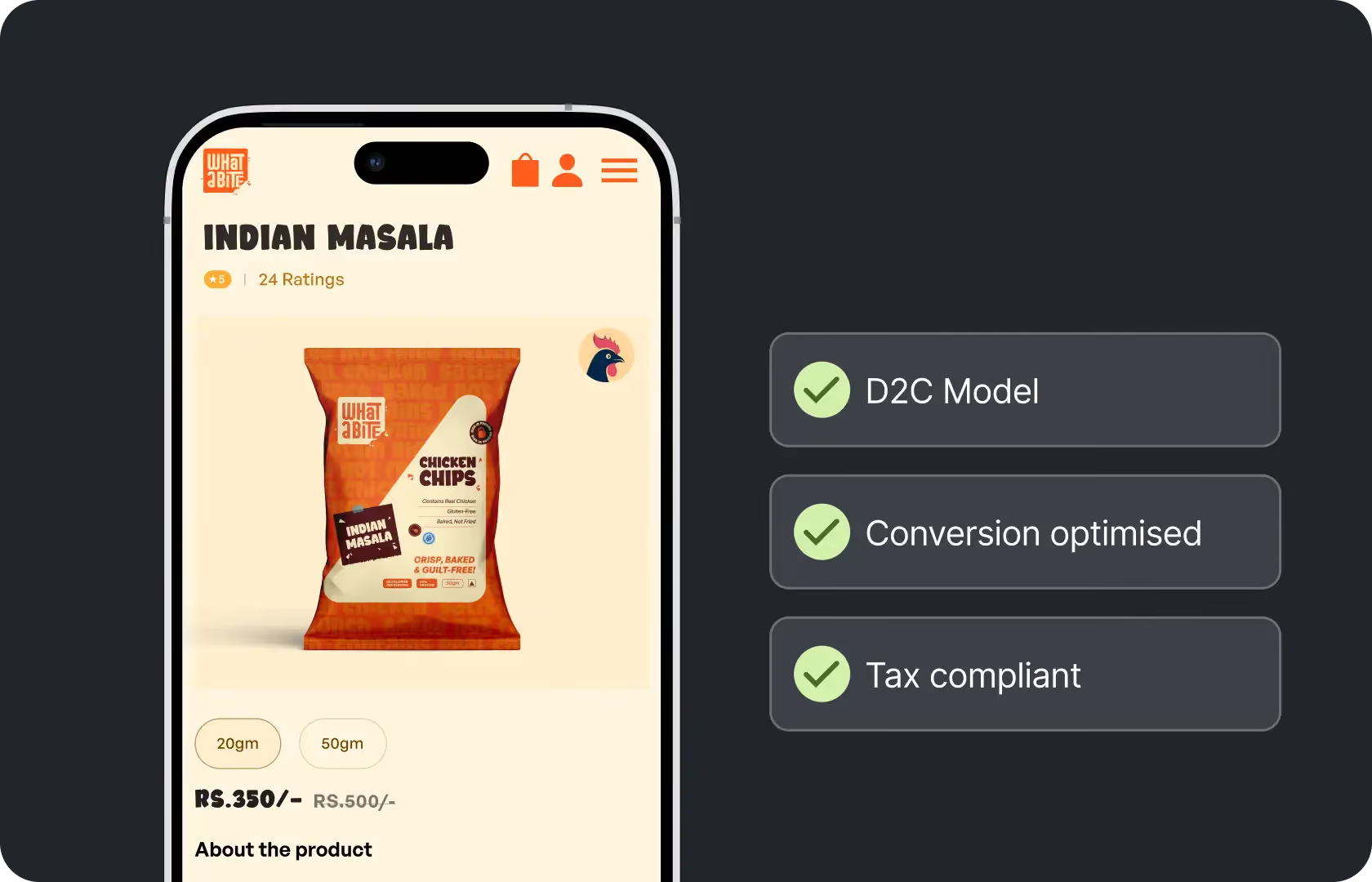
At Suplex, store setup commences with an initial discovery phase and unlike other agencies, we do not instantly hop on a theme selection journey with our clients. Before anything is built, we need to understand the category, the user, the product range, the target markets, and the commercial model that your brand is aiming for. A single-SKU D2C brand selling a premium supplement needs a fundamentally different store architecture from a fashion brand with two hundred SKUs across five categories. Getting this wrong at the setup stage is expensive to fix later, and hence we take these up beforehand itself with all our clients.
Discovery and Commercial Architecture
We start by mapping the store's information architecture before touching anything on the Shopify admin front. Now, this means defining the navigation structure, the collection hierarchy, the product page template logic, and the checkout flow sequence based on how the target buyer actually shops, not how the brand aspires to present its range. For stores targeting multiple markets, this includes decisions about currency display, language localisation, and market-specific content. Our team of Shopify developers at Suplex understand the fact that these are not afterthoughts, in fact they are what determine whether a buyer in a new market feels the store was built for them or stumbles through a checkout clearly designed for someone else.
Theme Selection and Customisation
You will find that most agencies pick a theme based on how it looks in a demo. At Suplex, Our team of Shopify developers do things a bit differently, theme selection is based on how the theme performs under load, how its Liquid code is structured, and whether its default information hierarchy matches the store's conversion goals or not. We know for a fact that a visually beautiful theme built on bloated code will consistently underperform a simpler theme that renders quickly across device types and connection speeds. So once a theme is selected, our team of UX & UI designers at Sulpex customise it for the brand's visual identity, the product range, and the conversion priorities identified in our initial discovery phase. This involves things like product page design, collection layout, and checkout experience design, all within the Shopify framework.
Payment Gateway and Market-Specific Configuration
Payment configuration is one of the most consequential and most commonly underestimated parts of store setup. The right gateway depends on the markets being served. So if you must have seen, Stripe is the most widely used globally while Checkout.com is kind of more preferred for UAE and MENA operations and Razorpay works well in Indian markets. Market-specific providers handle local payment methods across India, Southeast Asia, and elsewhere. The goal in every case is ideally to ensure that every payment method a buyer in the target market expects to see is available at checkout, and that the flow between payment selection and order confirmation is tested and working before the store goes live because if a checkout that fails at this stage loses customers who will not come back.
Tax, Compliance, and Localisation
Tax configuration varies significantly by market, and getting it wrong creates problems that can really compound at scale. VAT in the UAE and UK, GST in India and Australia, sales tax in the US, and import duties for cross-border orders, all of these require specific configuration within Shopify's tax settings or through dedicated apps. For brands selling internationally, we configure Shopify Markets or the relevant multi-currency and multi-region setup so that prices, tax displays, and checkout flows are correct for each geography. We know that compliance is not the most exciting part of the process, but we also understand that it is what prevents a small operational oversight from becoming a significant financial or legal problem later for your beloved brand.
Logistics and Fulfilment Integration
Now when it comes to shipping configuration that connects the store to the logistics infrastructure the brand is working with, whether that is a global carrier like DHL, Aramex, or FedEx, a regional provider, or a third-party logistics platform, we configure shipping zones, rates, and rules based on your brand's fulfilment model. For brands with weight-based or dimension-based shipping requirements, calculated shipping rates are set up rather than flat rates, which in turn tends to improve your brand’s checkout transparency and reduces cart abandonment caused by unexpected costs appearing late in the flow. For brands shipping across borders, we configure duties and import tax settings so buyers are not surprised at delivery of your products to their respective countries.
App Stack and Retention Foundation
A Shopify store without a proper and relevant app stack is a store without a growth engine. We at Suplex, help brands identify and configure the apps that matter for their specific model like for example email and SMS automation through Klaviyo, review collection through Judge.me or Loox, loyalty programme apps for repeat purchase incentivisation, and analytics integrations through Google Analytics 4 and the relevant ad platform pixels. Our goal at Suplex, is not to install every available app out there on the shopify app store for your brand, it is to build a lean, high-performance stack that does not slow the store down while giving your brand the data and automation it needs to grow starting right from day one.
Pre-Launch Testing
Before a store goes live, our team of Shopify developers at Suplex run a structured pre-launch checklist that covers payment flow testing across all configured methods, mobile checkout testing across device types and screen sizes, page speed benchmarking, order notification and fulfilment trigger verification, tax and invoice generation, and a review of all legal pages including the return policy, privacy policy, and shipping policy. Because we at Sulpex strongly believe that a store that goes live with an untested checkout is a store that loses its first customers before it even has a chance to retain them.

Tools and Technology Behind Shopify Store Setup
At Sulpex, we build within Shopify 2.0 using JSON templates and Liquid, which gives us the flexibility to create custom page structures without compromising on theme performance or update compatibility. Payments are configured through Stripe for international markets, Checkout.com for UAE and MENA operations, or market-specific providers where needed. Shipping connects to global carriers or regional logistics platforms depending on the brand's fulfilment model. And with respect to retention and growth, we configure Klaviyo for email and SMS automation, Judge.me or Loox for review collection, and Google Analytics 4 alongside the relevant ad platform pixels from day one itself.
Common Mistakes in Shopify Store Setup
We at Suplex have identified that these same mistakes appear consistently across Shopify store setups, and most of them are not visible until the store is live and losing sales it should be converting.
- Choosing a theme based on how it looks in a demo rather than how it performs across the device types and connection speeds your buyers actually use, which is rarely a desktop on a fast connection.
- Configuring payment gateways without testing the full checkout flow end to end in the target market, so payment failures or redirect errors only surface after real customers encounter them.
- Setting up flat shipping rates without testing how they appear at checkout, so buyers encounter unexpected costs late in the purchase flow and abandon rather than complete the order.
- Ignoring market-specific tax and compliance requirements until after launch, when retrofitting correct configuration becomes significantly more complex and carries the risk of past non-compliance.
- Installing too many apps without assessing their combined impact on page load speed, which degrades Core Web Vitals scores and reduces organic search visibility as the site scales.
- Building the product page and navigation structure around the brand's internal taxonomy rather than the mental model a buyer uses when they arrive at the store with a specific need.
- Going live with an untested checkout flow, which means the first real customers encounter friction or failure at the exact moment the store needs to earn their trust.
At Suplex, the setup process is structured specifically to catch and resolve these issues before launch rather than after the first month of underperforming data.
Why Shopify Store Setup Matters for D2C Brands
The decisions made during store setup are the hardest to change after launch because honestly, things like navigation restructuring, payment gateway migration, and product page redesigns all require significant effort and carry the risk of disrupting established flows, SEO equity, and customer experience during the transition. Brands that get these decisions right at the start compound the advantage over time. However the brands that get them wrong spend the first year fixing them instead of growing over the next few years.
For D2C brands, the commercial stakes are high because customer acquisition costs are rising across every category and every market. A store converting at 1.5 percent when it could convert at 3 percent is effectively halving the return on every unit of marketing spend. That gap is not usually a marketing problem, in fact it is actually a store architecture problem, and it starts at the setup itself.
For brands operating across multiple geographies, the setup decisions compound further. A store not properly configured for a specific market will underperform in that market regardless of how well the brand is positioned or how strong the product is. Hence, we at Sulpex are big on the idea of getting the technical foundation right across markets from the start because we know that is what makes international growth a genuine possibility rather than a series of ongoing fixes.
How Suplex Approaches Shopify Store Setup for Your Brand
Every Shopify store Suplex builds is shaped by the specific brand, category, product range, target markets, and buyer behaviour we are working with. There is ideally no default theme, standard app stack, or recycled navigation structure. What we bring is a setup process built around commercial architecture first and aesthetics second, with genuine depth in the market-specific configurations.
If you are launching a Shopify store for the first time, rebuilding your brand’s store that is not converting the way you feel it should, or moving from a marketplace-first model to D2C, that is the conversation worth starting. Get in touch with Suplex to talk about Shopify store setup for your brand.

Frequently Asked Questions
Why do so many Shopify stores fail even though the platform itself is powerful?
Most Shopify stores don’t fail because of the platform. They fail because they’re built to launch quickly, not to convert. When structure, UX, and buying behaviour aren’t thought through, stores end up looking fine but leaking sales at every step. Traffic gets blamed, ads get blamed, but the real issue is usually the foundation.
You can see the opposite approach in brands like Allbirds. They invested heavily in experience, navigation, and clarity before pushing scale, which meant their store was ready to handle growth. At Suplex, we take three to four weeks to set up Shopify stores properly, focusing on structure, user flow, and conversion logic from day one. If you want a store that’s designed to sell rather than just exist, hopping on a short call with Suplex is the right place to start.
What does a proper Shopify store setup involve beyond choosing a theme and adding products?
includes navigation logic, collection structure, product hierarchy, content flow, filtering, search behaviour, checkout experience, and a clean backend setup that supports growth. All of this determines how easily a customer can find what they want, understand it, and move towards purchase without friction. A good-looking theme alone can’t solve that.
Brands like Warby Parker treat store structure with the same seriousness as brand and marketing, because they know the store is where revenue is actually decided. At Suplex, a complete Shopify setup typically takes four to five weeks, so the foundation is built intentionally, not rushed. If you want to see what “proper setup” looks like for your business and stage, getting on a quick call with Suplex can help walk through what should be in place before you launch.
How does Shopify's store structure impact conversions and ad performance?
Store structure directly shapes what happens after someone clicks your ad. If a visitor lands and can’t immediately understand what you sell, who it’s for, and where to go next, the ad has already lost. Clear product hierarchy, logical categories, and focused landing paths are what turn paid traffic into actual revenue, not just sessions.
Brands like Skims tightly align their ad destinations with product and category structure so customers land in the exact context promised in the ad. At Suplex, we spend two to three weeks optimising store structure specifically around buying journeys and funnel alignment. If you want your store to support your ads instead of fighting them, hopping on a short call with Suplex can help map that connection properly.
What are the most common setup mistakes that only show up after traffic starts coming in?
Most setup mistakes stay hidden until real users arrive. Poor mobile UX, slow-loading pages, confusing navigation, messy product pages, and fragile checkout flows often don’t surface during internal testing. But once paid traffic starts coming in, these issues show up immediately in the form of high bounce rates and low conversion. Brands like Outdoor Voices had to simplify and rethink their Shopify experience after facing early conversion challenges, because growth exposed what wasn’t working.
At Suplex, we proactively look for these failure points during setup, typically across three to four weeks, so problems are solved before traffic is scaled. If you want to catch costly issues before they start burning ad spend, hopping on a short call with Suplex can help surface what needs tightening early.
How do I ensure my Shopify store is easy for my team to manage after launch?
A Shopify store shouldn’t feel fragile or overly technical once it’s live. The key is building clean CMS logic, reusable sections, and workflows that make everyday updates simple for non-technical teams. When the backend is cluttered or over-engineered, even small changes start depending on developers, which slows teams down and creates unnecessary friction.
Brands like Glossier have done this well by keeping backend operations intuitive, so internal teams can move quickly without breaking anything. At Suplex, this ease of use is planned during the full setup phase itself, not patched in later. If you want your store to scale without becoming a maintenance headache, getting on a short call with Suplex can help map how to future-proof your operations from day one.
Let’s Make It Happen
Shopify Success Stories
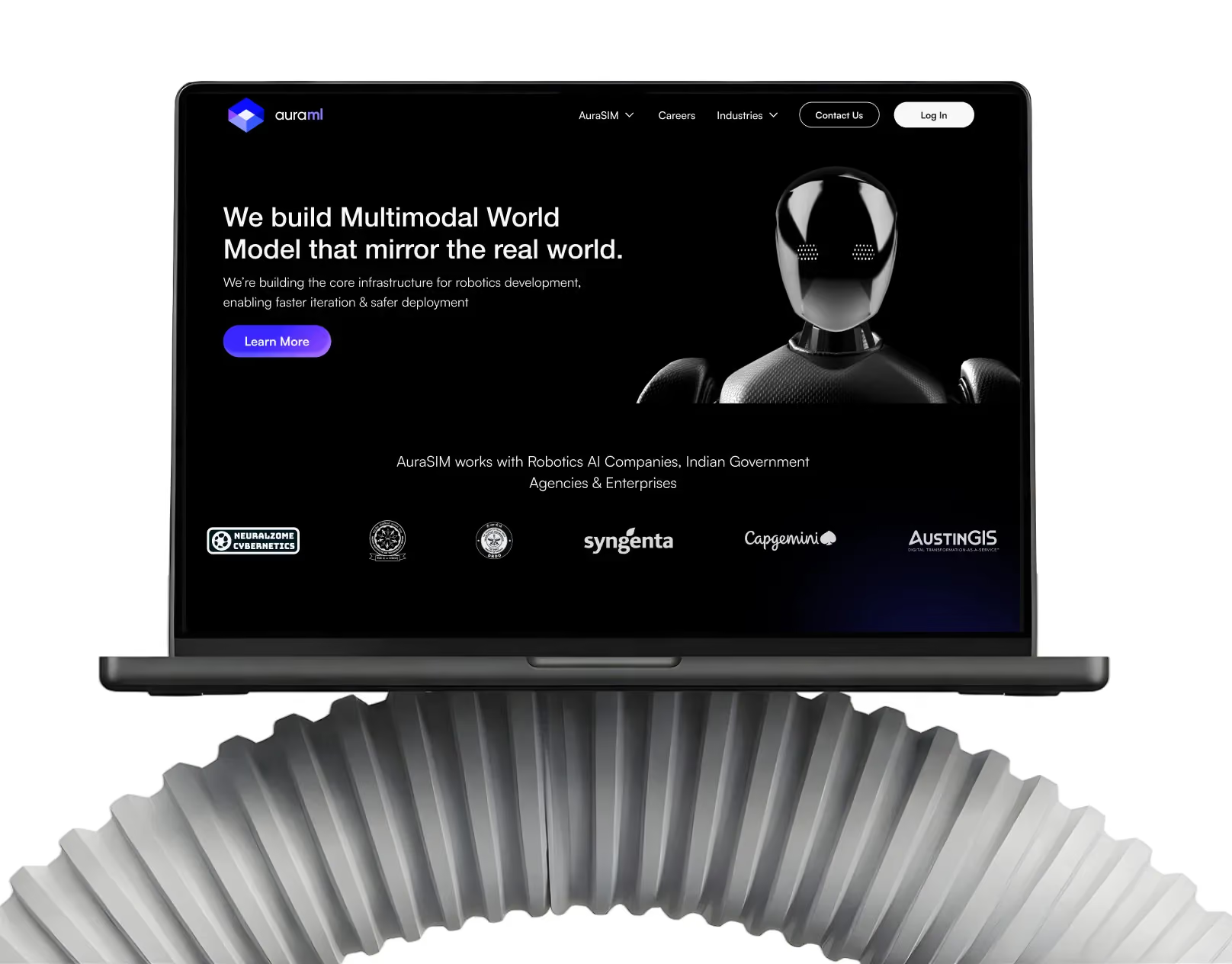
AuraML
How Suplex helped AuraSIM shift from a simulation tool to the brand that makes physical AI feel ready for the real world.

Tea Culture of the World
How Suplex made 120 teas from across the world feel like a discovery rather than a decision.

Great Lakes
How Suplex built a full stack website for a Midwest tequila brand with a real production story.
Why Suplex?
World Class Aesthetics
.webp)
Profitable E-Commerce
.webp)
Build A Brand
.webp)
Build Your D2C Business The Right Way
Build It With Suplex.


