Shopify Audit
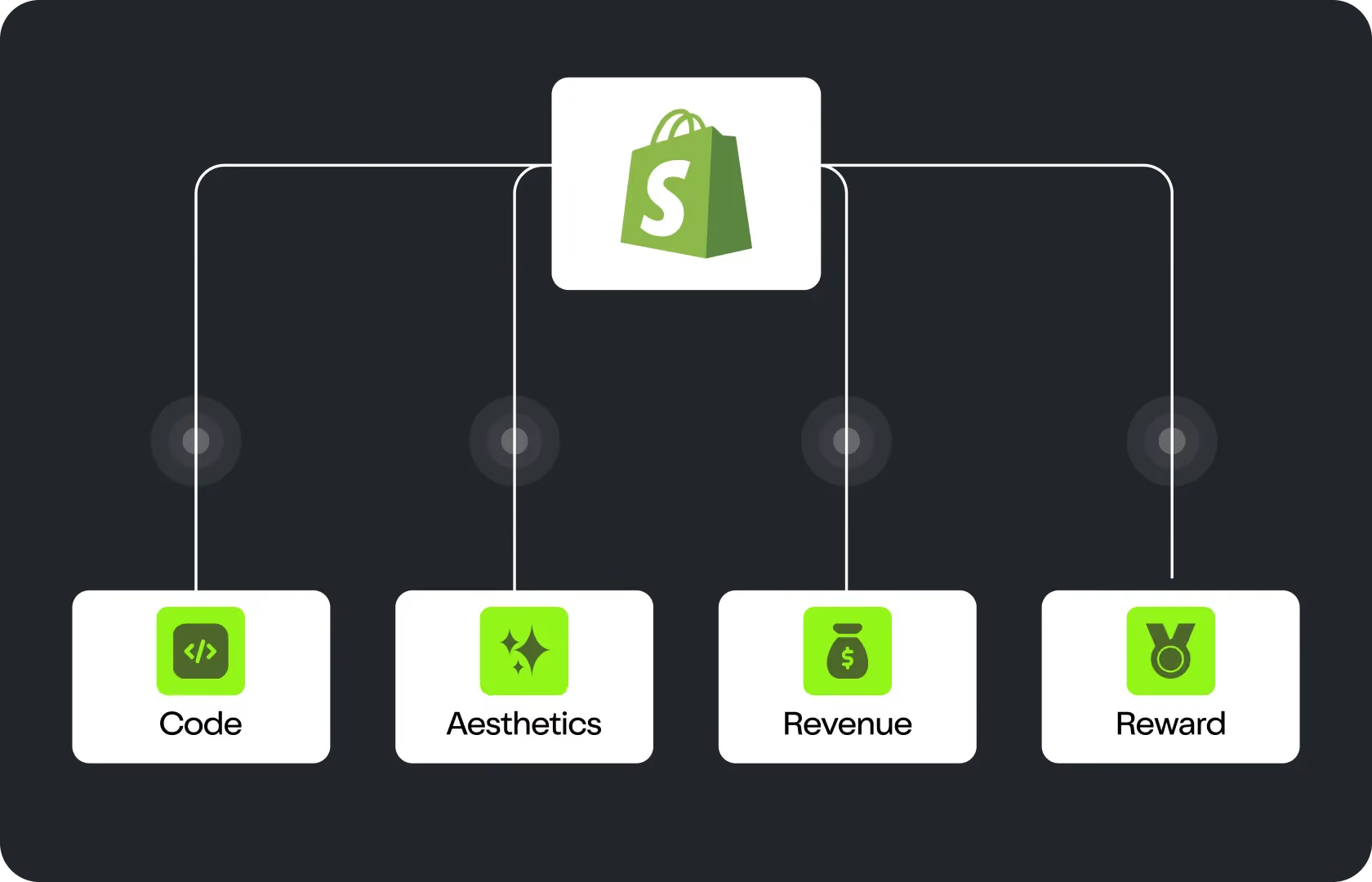
Shopify Audit in E-Commerce Development
So here is something that happens quite often in the brands we work with at Suplex Design. A store has been live for twelve or eighteen months. The team has been running ads, posting on social, sending emails. Traffic is decent but the numbers are not moving the way they should. The honest answer in most of these cases is that the store has accumulated problems over time, which were individually manageable, but in totality now they are costing the business a meaningful amount of revenue every single month.
Talking about what a Shopify audit actually is, it is essentially the process of finding those problems before they compound further. Brands like Gymshark, Allbirds, and The Souled Store do not let their stores drift for years without reviewing what is working and what is not. They build audit cycles into how they operate, and this is so because they understand that a store built eighteen months ago was not built with the current traffic patterns, device mix, or competitive landscape in mind. At Suplex Design, our team of Shopify experts approach the audit as a diagnostic, not a checklist, and the output is always a prioritised action plan rather than a document full of observations.
What Is a Shopify Store Audit?
So, ideally speaking a Shopify store audit is a structured review of everything that determines whether a store converts well, ranks well, and runs efficiently. This involves looking at conversion rate across the funnel, page speed and Core Web Vitals, technical SEO health, UX and navigation logic, the app stack and its performance impact, checkout experience, mobile behaviour, and whether the store's information architecture still matches how buyers actually shop. What this means for your brand is that the audit surfaces not just what is broken, but why it matters commercially and what fixing it is likely to do for revenue.
Our team of Shopify developers and UX specialists at Suplex Design reviews stores with that platform-specific knowledge rather than applying a standard web audit template and hoping the findings translate.
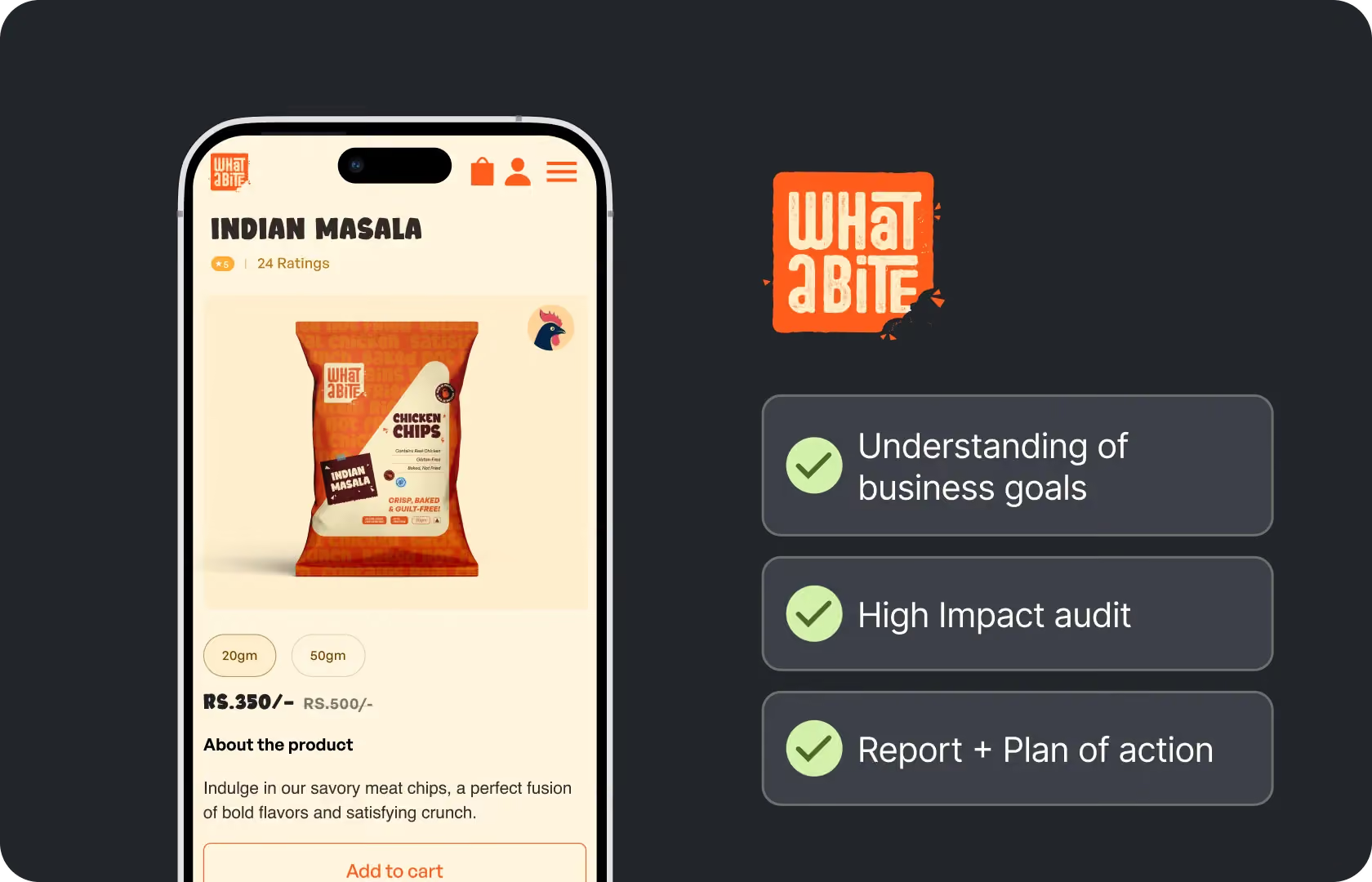
How Suplex Design Approaches a Shopify Audit
You will find that most agencies run a Shopify audit by pulling a PageSpeed score and a Screaming Frog crawl and calling it done. At Suplex Design, we do things differently. Our audit process is structured across five interconnected areas, and honestly speaking, the findings in each area often explain what is happening in the others.
Conversion Funnel Analysis
We start by mapping the conversion funnel from landing to checkout, because this is where the commercial impact is most direct. Using Google Analytics 4 and Shopify Analytics, our team identifies where visitors are dropping off and at what rate. A high add-to-cart rate paired with low checkout completion tells a very different story from a low add-to-cart rate, and both require different fixes. We look at product page performance, collection page behaviour, search usage and exit patterns, cart abandonment triggers, and checkout step drop-off by device type. The average Shopify store converts at around 1.4 percent, and the top ten percent of stores convert at 3.2 percent or higher. For most brands we audit, that gap is not explained by the product or the price. It is explained by specific, fixable problems in the funnel.
Page Speed and Core Web Vitals
Honestly speaking, even a one-second delay in page load time reduces conversions by approximately 7 percent. So basically, if your store loads in four seconds when it could load in two, you are losing a good portion of visitors even before they have seen a single product. Our team of performance specialists at Suplex Design audits every key page template using Google PageSpeed Insights for lab data and Search Console's Core Web Vitals report for real-user field data from Chrome. We identify and document every significant contributor to slow load times, from uncompressed images and render-blocking scripts to app bloat and theme code that has never been cleaned up.
Technical SEO Review
If your store is getting traffic but not growing it, technical SEO is very often a large part of the reason. Our SEO review covers crawlability and indexation status across all key page types, title tags and meta descriptions across product and collection templates, structured data and schema markup, internal linking logic, redirect health, duplicate content from Shopify's canonical URL handling, and mobile usability signals from Search Console. Talking about Shopify specifically, the platform has some quirks that generic SEO audits miss entirely, like how it handles collection and product URL duplication, and our team knows where to look for these.
UX and Navigation Review
This is the area where, honestly speaking, most stores have the biggest number of problems and the lowest awareness of them. Navigation structures that made sense when the store launched often do not scale well as the product range grows. Collection hierarchies that worked for fifty SKUs create friction for two hundred. Filters that are present but not configured correctly. Mobile navigation patterns that require too many taps to reach a product. We review the store's information architecture against how real buyers move through the category, using heatmap data from Hotjar or Microsoft Clarity where available, and our own category knowledge where it is not.
App Stack and Code Audit
Most stores that come to us for an audit have apps they no longer use whose code is still loading on every page. They have duplicate functionality across multiple apps, each adding its own scripts. They have apps configured in ways that conflict with each other. Our team of Shopify developers at Suplex Design reviews every installed app, checks what scripts it loads and on which pages, and assesses whether its commercial contribution justifies its performance cost. This step alone often surfaces changes that produce meaningful speed improvements within days of the audit being completed.
Audit Output and Prioritisation
The output of a Suplex Design Shopify audit is not a report full of observations. It is a prioritised action plan that groups findings by commercial impact and implementation effort. Structural changes that require development time are done separately in an order with clear reasoning for why they are worth the effort. And hence, what your team receives at the end is not a document to read and file. It is a roadmap to work from, with enough context behind each recommendation that whoever implements the changes understands not just what to do but why it matters for your specific store and your specific buyers.

Tools and Technology Behind a Shopify Audit
At Suplex Design, our team uses Google Analytics 4 and Shopify Analytics for funnel and conversion data, Google Search Console for SEO health and Core Web Vitals field data, Google PageSpeed Insights and Lighthouse for performance diagnostics, Screaming Frog for crawl analysis and redirect health, and Hotjar or Microsoft Clarity for heatmaps and session recordings where the client has them set up. Code review is done manually alongside Shopify's Theme Check tooling. Every finding is cross-referenced against what it means commercially, not just what it means technically.
Is a Shopify Audit Right for You?
A Shopify audit makes the most sense when a store has been live for six months or more, is generating traffic, but is not converting at the rate the team expected. It also makes sense before a significant investment in paid advertising, because spending more money to drive traffic to a store with conversion problems just amplifies the problem rather than solving it. And it makes sense after a period of rapid growth, when apps, content, and customisations have accumulated and nobody has reviewed the overall health of the store as a system.
If you are pre-launch, an audit is probably not what you need yet. What you need is a properly built store from the start, which is a different service and a different conversation. If you are post-launch and things feel like they should be performing better than they are, an audit is very likely the fastest way to find out why.
Common Mistakes in Shopify Store Audits
Most Shopify audits that do not produce useful outcomes fail for the same set of reasons, and in our experience at Suplex Design, they are almost all process problems rather than technical ones.
- Auditing only the homepage and product pages. This misses the collection and checkout stages where the majority of drop-off actually happens for most stores.
- Using only lab data from PageSpeed Insights and ignoring real-user field data from Search Console. This means the audit reflects a simulated test rather than the experience your actual buyers are having.
- Producing a flat list of findings without prioritisation, so the team ends up fixing low-impact issues first because they are easier, while the high-impact problems sit unaddressed.
- Auditing on desktop only and missing mobile experience problems despite being aware of the fact that over 70 percent of e-commerce traffic arrives on mobile devices.
- Treating the audit as a one-time exercise rather than building a review cycle into how the store is managed.
- Running a generic web audit rather than a Shopify-specific one, so platform quirks around URL structure, canonical handling, and app script loading are missed entirely.
At Suplex Design, the audit process is structured to avoid all of these, because in our experience an audit that surfaces the wrong priorities wastes more time than it saves.
Why a Shopify Audit Matters for D2C Brands
An audit is probably the highest-return activity a D2C brand can undertake with a store that has been live for more than six months. This is so because the cost of fixing conversion problems is fixed, while the revenue benefit compounds across every visitor who comes to the store from that point onwards. A store that improves its conversion rate from 1.4 percent to 2 percent does not just earn more from this month's traffic. It earns more from every month's traffic going forward, without increasing the marketing budget.
For brands investing in paid advertising, the audit has an additional dimension. Every percentage point improvement in conversion rate increases the effective return on ad spend without changing the bid or the creative. A store converting at 2 percent and a store converting at 3 percent can be running identical ad campaigns with identical budgets, and the second store is generating 50 percent more revenue from the same spend. That difference does not come from better ads. It comes from a better store, and an audit is what tells you where the specific improvements need to happen.
How Suplex Design Approaches Shopify Audits for Your Store
Every Shopify audit Suplex Design runs is specific to the store, the category, the traffic patterns, and the buyer behaviour we are working with. There is ideally no standard template and no generic findings report. What we deliver is a structured review across conversion, performance, SEO, UX, and code health, with findings prioritised by what will actually move revenue for your specific store rather than what is easiest to document.
If your store has been live for a while and growth feels slower than it should be, or if you are about to invest significantly in driving more traffic and want to make sure the store is ready to convert it, that is the right moment to get in touch. Talk to Suplex Design about a Shopify audit for your store.

Frequently Asked Questions
What does a Shopify audit from Suplex Design actually cover?
At Suplex Design, our Shopify audit covers conversion funnel analysis, page speed and Core Web Vitals, technical SEO health, UX and navigation review, and an app stack and code audit. The output is a prioritised action plan grouped by commercial impact, not a flat list of observations. Every finding is explained in terms of what it is costing the store and what fixing it is likely to do for revenue.
How much does a Shopify audit cost at Suplex Design?
Honestly it depends on the size of the store and the scope of the audit. A focused audit covering the core areas typically starts from around $800 at Suplex Design. Larger stores with multiple markets, complex app stacks, or specific performance issues that require deeper investigation will cost more. We scope it clearly before starting so you know exactly what you are getting and what it will cost.
How long does a Shopify audit take?
Typically one to two weeks from the time we have access to the store's analytics and admin. Straightforward stores move faster. Stores with complex setups, multiple markets, or significant historical data to review take a bit longer. We give you a clear timeline upfront so there are no surprises on when you will have the findings in hand.
Do we need to give Suplex Design access to our Shopify admin?
Yes, and also to Google Analytics 4 and Search Console if those are set up. The most important parts of the audit, conversion funnel data, real-user Core Web Vitals, crawl health, and code review, require access to the actual store and its data rather than just the public-facing URL. We treat all the access we get with confidentiality and make sure that it is used for the audit work only.
Do you provide support after the audit to help implement the findings?
Yes, absolutely, Suplex Design can handle the implementation of audit findings after delivery, whether that is performance fixes, UX improvements, checkout changes, or SEO updates. A lot of our ongoing client relationships actually start with an audit, because once we know exactly what needs fixing, the implementation work is a natural next step. We stay involved for as long as it is useful.
Let’s Make It Happen
Shopify Success Stories
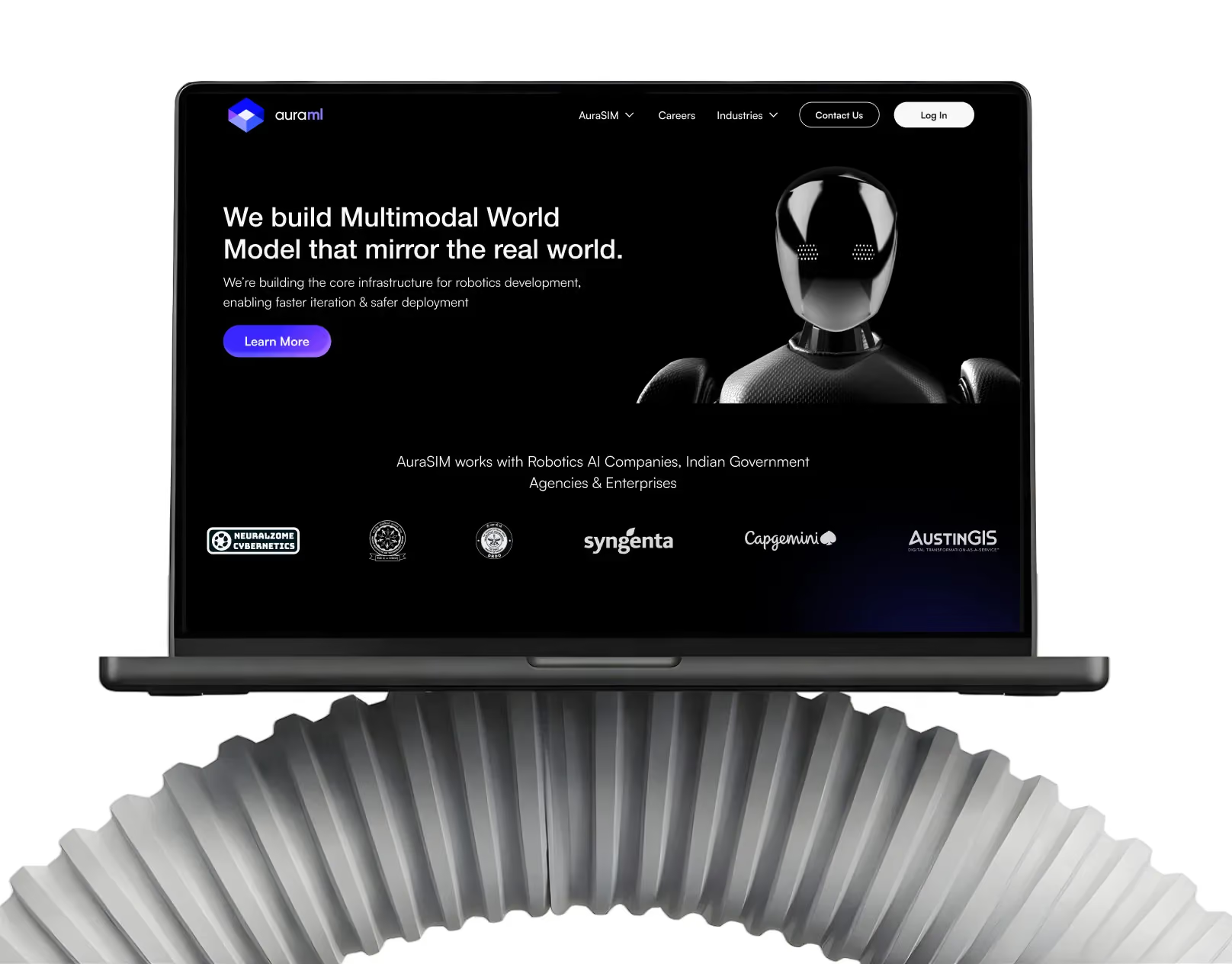
AuraML
How Suplex helped AuraSIM shift from a simulation tool to the brand that makes physical AI feel ready for the real world.

Tea Culture of the World
How Suplex made 120 teas from across the world feel like a discovery rather than a decision.

Great Lakes
How Suplex built a full stack website for a Midwest tequila brand with a real production story.
Why Suplex?
World Class Aesthetics
.webp)
Profitable E-Commerce
.webp)
Build A Brand
.webp)
Build Your D2C Business The Right Way
Build It With Suplex.


