Shopify Plus
Shopify Plus in E-Commerce Development
Shopify Plus is not simply a more expensive Shopify plan, and honestly, most brands that upgrade to it treat it exactly like that, which is why they end up paying significantly more and operating almost identically to how they did before. The platform starts at 2,500 USD per month and yet, from our experience working with brands at Suplex on their Shopify Plus builds, the majority of merchants on Plus are using a fraction of what they are paying for. With respect to the checkout customisation that goes untouched, Shopify Flow just sits idle, and the B2B wholesale channel is almost ignored & the multi-store expansion that justified the upgrade kind of never gets built.
You would often notice that global brands like Gymshark, Tesla, Heinz, Red Bull, and Allbirds use Shopify Plus precisely because they have pushed the platform to do things for them that standard Shopify can simply not do. Like talking about Gymshark, for example, built its entire global D2C operation on Shopify Plus, relying on the platform to handle peak traffic during product drops without the kind of performance degradation that would cost them millions in lost sales. At the given time, more than 80,000 brands across 175 countries now use Shopify Plus, but the ones getting genuine value from it are the ones that treat it as an enterprise operating system rather than a premium Shopify subscription. And hence we at Suplex just make sure our clients are in that camp.
What Is Shopify Plus?
Shopify Plus is the enterprise tier of the Shopify platform, designed for high-growth, high-volume brands that have outgrown the standard Shopify plans. The line between needing standard Shopify and needing Plus is usually crossed somewhere around 80,000 USD in monthly revenue, though the actual trigger is often less about revenue and more about operational complexity. When your checkout needs custom logic that the standard platform cannot support, when you are managing multiple storefronts across different markets, when your B2B wholesale process is eating up your team's time, when your automation requirements have grown beyond what basic Shopify tools can handle, that is when Plus makes commercial sense.
The platform gives you full control over your checkout through Checkout Extensibility and Shopify Functions, which is a meaningful departure from standard Shopify where the checkout is largely locked. It gives you Shopify Flow for advanced automation across order management, inventory, customer tagging, and promotional campaigns. It gives you up to ten expansion stores managed from a single admin, built-in B2B wholesale functionality, significantly higher API limits for complex integrations, and unlimited staff accounts. What it does not give you, unfortunately, is someone to implement all of this properly, and that is a fact we have seen play out repeatedly when D2C brands from different niches come to us at Suplex having been on Plus for six months and still running like they are on Advanced.
How Suplex Approaches Shopify Plus
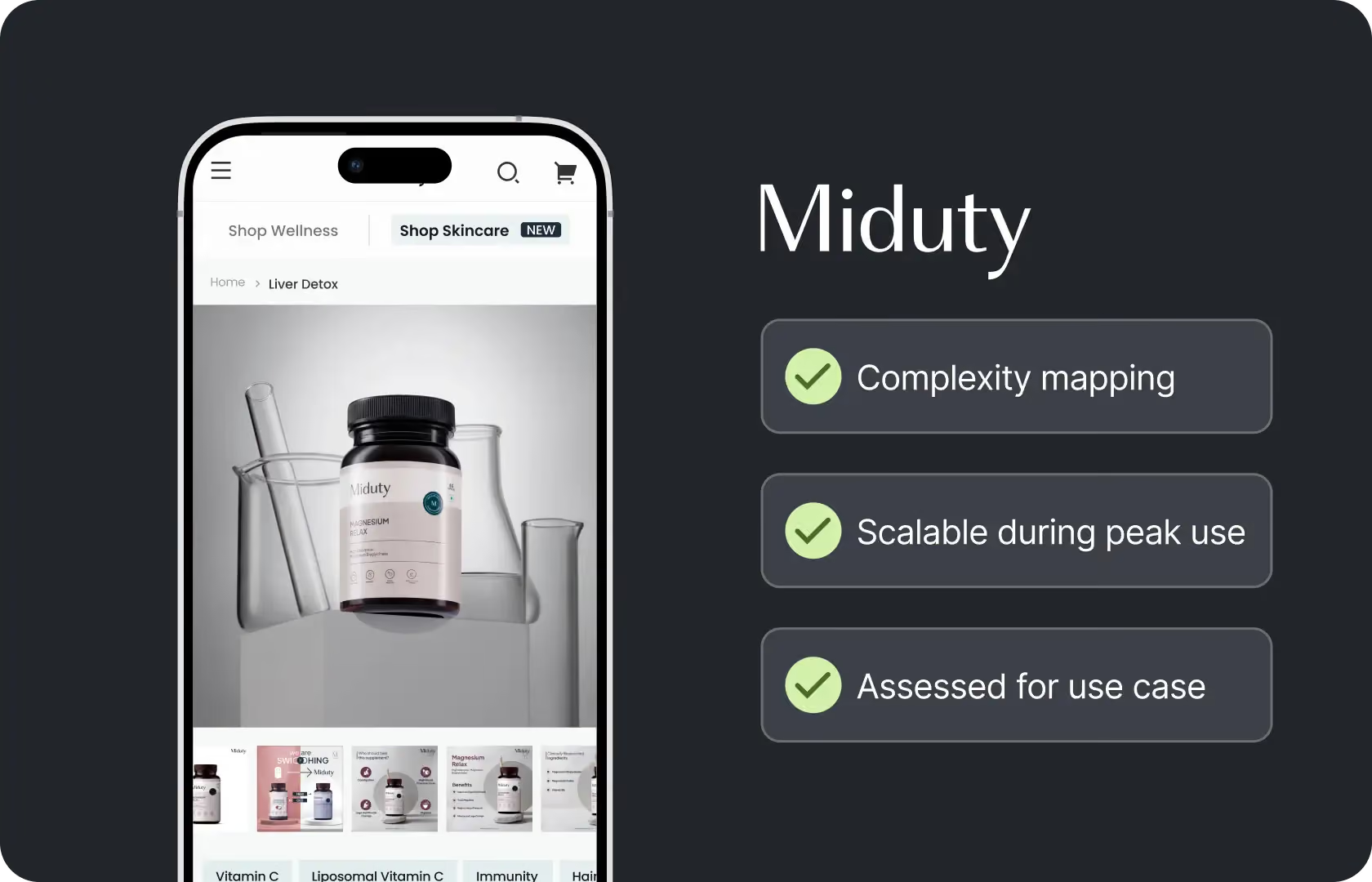
At Suplex, our approach to Shopify Plus is built around one question, i.e. what specifically does this brand need from Plus that it cannot get on standard Shopify? That question drives everything, from how we structure the migration to which Plus features we build out first and which ones we defer because they are not yet relevant to your beloved brand.
Should You Actually Upgrade?
You will find that most agencies skip this conversation entirely and go straight to migration planning, because their commercial interest is in the project, not in whether the project is the right call. At Suplex, we do things differently than most agencies in the Shopify web development space. The first conversation we have with any brand considering Shopify Plus is an honest assessment of whether the upgrade is justified right now or not. If you are approaching 80,000 USD in monthly revenue and hitting the ceiling of standard Shopify's checkout customisation or automation capabilities, Plus is very likely the right move. In case if you are below that threshold and the primary motivation is prestige rather than capability, we will tell you that, because an unnecessary Plus subscription at 2,500 USD a month is money that could be doing more useful things for your growth.
Migration Planning and Store Architecture
For brands where Plus is the right call, migration planning starts well before any technical work begins. We commence with auditing the current store thoroughly, including what theme architecture it is on, how the app stack is structured, which custom integrations exist, and where the current setup's limitations are actually causing commercial friction for your brand’s loyal customers. From there, we build a migration plan that moves the store to Plus without disrupting the things that are already working. A badly managed Plus migration can break SEO rankings, disrupt payment flows, and create checkout errors that surface at the worst possible moment. We at Suplex are particular about this sequencing, because the cost of getting it wrong is paid in lost sales rather than just lost time.
Checkout Customisation with Checkout Extensibility
The checkout is where Shopify Plus earns its price for most brands, and it is the feature most agencies configure the least. Checkout Extensibility is Shopify Plus's drag-and-drop checkout customisation system, and Shopify Functions gives you the ability to write custom backend logic for discounts, shipping rules, and payment methods. What this means in practice is that your checkout can do things standard Shopify's locked checkout simply cannot like custom delivery date pickers, gift message fields, dynamic upsell offers between cart and confirmation, loyalty point displays at checkout, and complex discount logic that responds to cart conditions rather than applying flat codes. We at Suplex have implemented all of these, and we know from experience that even small checkout improvements at this stage of the funnel produce disproportionate revenue impact.
Shopify Flow Automation
Shopify Flow is Plus's automation engine, and it is one of the most underused features on the platform. Brands that use it properly reduce the manual operational load significantly, and honestly speaking, the time savings compound in ways that are hard to appreciate until you have seen a well-configured Flow setup running. We build Flow automations for order tagging and routing based on product type, customer segment, or fulfilment requirements. We set up promotional campaign logic using the Launchpad integration, so flash sales and product drops go live and close automatically rather than requiring manual intervention. We configure inventory alerts, high-risk order flagging, customer tier management, and post-purchase follow-up sequences. Each of these is a small piece of a larger operational system that makes the brand run with less friction as it scales.
B2B Wholesale on Shopify Plus
Shopify Plus includes native B2B wholesale functionality that allows brands to run their retail and wholesale operations from the same admin without a separate platform or relying on any sort of third-party apps. For brands selling to resellers, distributors, or corporate buyers alongside their D2C channel, this is can easily simplify their operations. We configure B2B on Shopify Plus at Sulpex, to support customer-specific pricing, quantity rules, payment terms, and custom product catalogues so that each wholesale buyer sees exactly what is relevant to them and nothing that is not. For brands that have been managing B2B through manual invoicing or a separate WooCommerce setup, the consolidation alone tends to truly justify a significant portion of the Plus subscription cost.
Multi-Store Expansion
Shopify Plus allows brands to run up to ten expansion stores from a single organisation admin, which is what makes it the right infrastructure for brands operating across multiple geographies, languages, or currencies. Each expansion store can be localised independently with its own domain, pricing, currency, language, and checkout configuration, while still being managed centrally. And especially, for brands that are planning on to entering new international markets, this means you can launch a localised storefront for, say, the UAE or the UK without building an entirely separate Shopify setup and paying for it separately. Our team of Shopify developers at Suplex plan the multi-store architecture carefully, because the decisions made about which store handles which market and how inventory is shared between them have long-term implications for how the brand scales.
Tools and Technology
We work within Shopify Plus using Checkout Extensibility and Shopify Functions for checkout logic, Shopify Flow for automation, and the Shopify Plus organisation admin for multi-store management. B2B wholesale is configured natively through Shopify's built-in B2B features rather than through third-party apps where avoidable. For analytics, we connect ShopifyQL Notebooks for custom reporting, and integrate Google Analytics 4 and Klaviyo to ensure the data flowing out of the Plus store is as robust as the capabilities flowing into it. API integrations with ERP systems, 3PLs, and PIMs are handled at the higher API rate limits that Plus provides, which is one of the practical reasons complex integrations that fail on standard Shopify work reliably on Plus.

Common Mistakes in Shopify Plus Migration and Setup
We at Suplex have seen the same mistakes appear consistently across Shopify Plus projects, and most of them are not technical failures. They are planning failures.
- Upgrading to Shopify Plus before the brand genuinely needs it, which means paying 2,500 USD or more per month for features that will not be used at the current stage of growth, while the same budget could accelerate the brand much faster elsewhere.
- Migrating to Plus without auditing the existing store first, so technical debt, poorly structured theme code, and redundant apps all carry over into the new environment and continue causing the same problems at a higher price point.
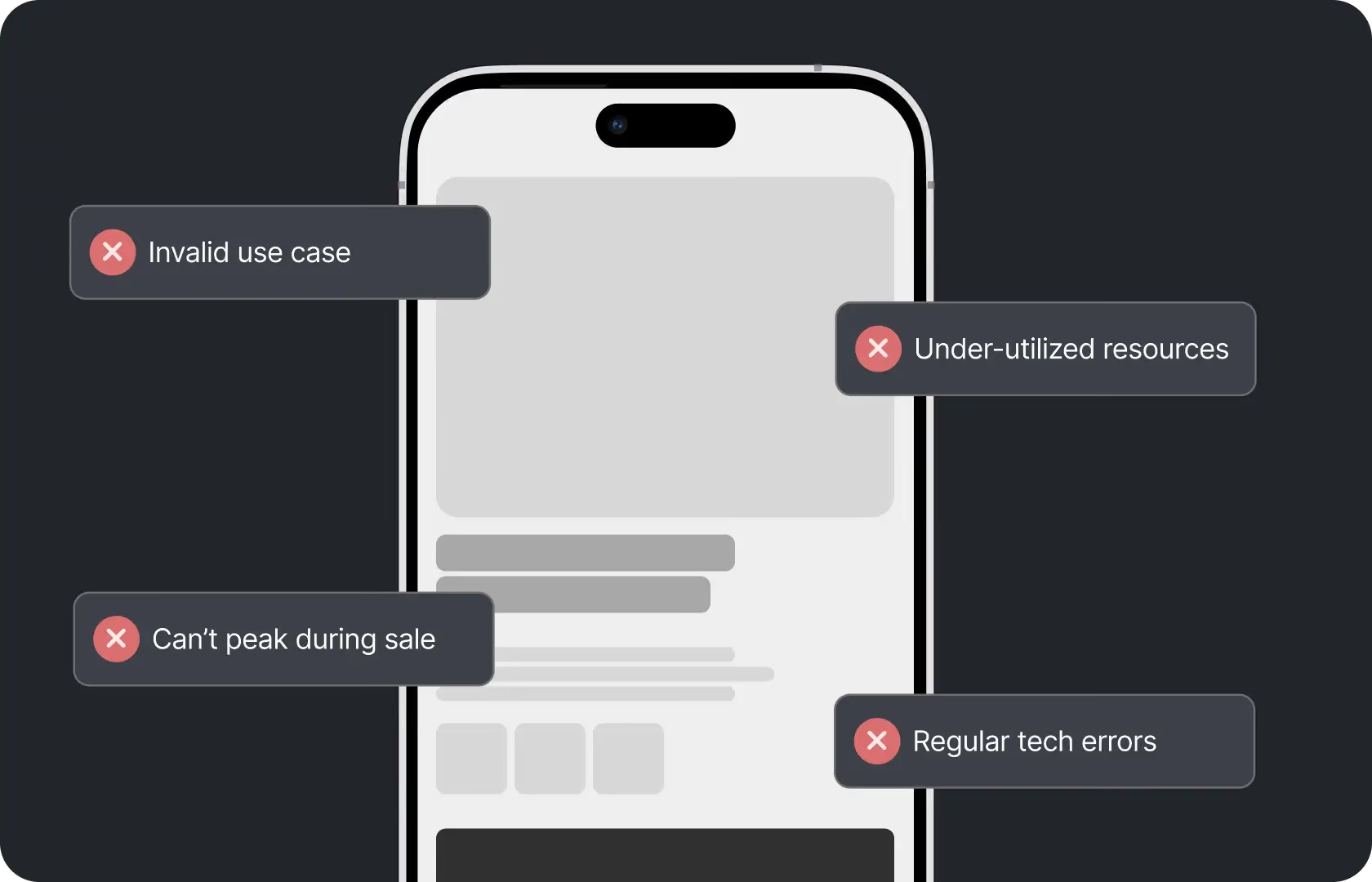
- Setting up Plus and then using it exactly like standard Shopify, which is more common than it should be. The checkout stays uncustomised. Flow is never configured. The B2B channel sits unused. The brand is paying enterprise pricing for a standard Shopify experience.
- Building expansion stores without planning how inventory, fulfilment, and customer data will be managed across them, which creates operational complexity that negates the convenience the multi-store setup was supposed to provide.
- Treating the Shopify Plus merchant success team as the primary implementation resource, when in reality the merchant success team is an advisory function and the technical implementation still requires a specialist agency with genuine Plus expertise.
- Configuring Shopify Flow automations without testing them properly across edge cases, which leads to automation errors that surface at the worst times, like during a flash sale or a product launch when order volume is highest.
At Suplex, the process is structured to catch these before they cost your brand money, because on a platform that starts at 2,500 USD a month, every month of underutilisation is an expensive mistake.
Why Shopify Plus Matters for D2C Brands
For D2C brands at scale, standard Shopify eventually becomes a ceiling rather than a foundation as the checkout limitations start costing you conversion rate improvements you cannot implement. The automation constraints mean your team is doing manually what the platform should be doing automatically. The single-store setup means every new market requires a new account, a new subscription, and a new management overhead. Shopify Plus usually tends to remove those ceilings for your brand, but only if the implementation behind it is built to take advantage of what the platform truly offers.
The brands that get the most from Shopify Plus are the ones that treat the upgrade as an operational investment rather than a technical milestone. The checkout improvements in itself when and if built properly using Checkout Extensibility and Shopify Functions can produce conversion rate lifts that justify the platform cost. The Flow automation reduces the team time spent on manual operations, which compounds in value as order volumes grow. The multi-store infrastructure allows the brand to expand internationally without proportional increases in management complexity, and that is where the real leverage of the platform lives for globally ambitious D2C brands.
How Suplex Approaches Shopify Plus for Your Brand
Every Shopify Plus project at Suplex starts with an honest conversation about whether Plus is the right move right now for your brand or not and what specifically you need it to exactly do. There is ideally no default migration playbook, standard Flow configuration, or cookie-cutter checkout setup. What we bring to the table at Suplex, is genuine depth in the Plus features that most agencies configure in passing, and a commercial orientation that means every decision is connected to what will actually drive revenue, reduce operational cost, or enable growth that was not possible before.
If you are considering upgrading to Shopify Plus, have already upgraded and are not getting the value you expected, or are managing a multi-market expansion that needs proper multi-store architecture, that is the conversation worth starting. Get in touch with Suplex to talk about Shopify Plus for your brand.

Frequently Asked Questions
What Shopify Plus services does Suplex Design offer?
At Suplex Design, we handle the full Shopify Plus journey. That includes honest upgrade assessments, migration planning, checkout customisation using Checkout Extensibility and Shopify Functions, Shopify Flow automation, B2B wholesale setup, and multi-store expansion for brands going international. We also come in for brands that have already upgraded but are not actually using what Plus offers.
How much does a Shopify Plus migration cost?
Honestly it depends on how complex your current setup is and how much of Plus you want to actually use. A straightforward migration at Suplex Design starts from around $2,000. Projects involving custom checkout logic, Flow automation builds, B2B configuration, and multi-store setup will cost more. We scope everything before starting so the number is clear from day one.
How long does a Shopify Plus migration take?
Typically four to eight weeks, sometimes a bit more if the existing store has significant technical debt or if multi-store configuration is involved. We always audit the current store first before committing to a timeline, because in our experience at Suplex Design, what looks simple from the outside often has complications underneath that affect how long the migration safely takes.
Do you help brands figure out if they actually need Shopify Plus?
Yes, and this is actually one of the first conversations we have with brands who come to us considering the upgrade. Not every brand needs Plus right now, and paying 2,500 USD a month for features you are not ready to use yet is not a great outcome. Our team at Suplex Design will give you an honest read on whether the upgrade makes sense for where your brand currently is.
Do you provide ongoing support after the Shopify Plus setup is done?
Yes, absolutely. Suplex Design stays involved after the migration, covering performance monitoring, Flow automation updates, checkout improvements, and new feature builds as the brand scales. Shopify Plus is not a set-and-forget platform, and the brands that get the most from it are the ones that keep iterating on what they have built.
Let’s Make It Happen
Shopify Success Stories
AuraML
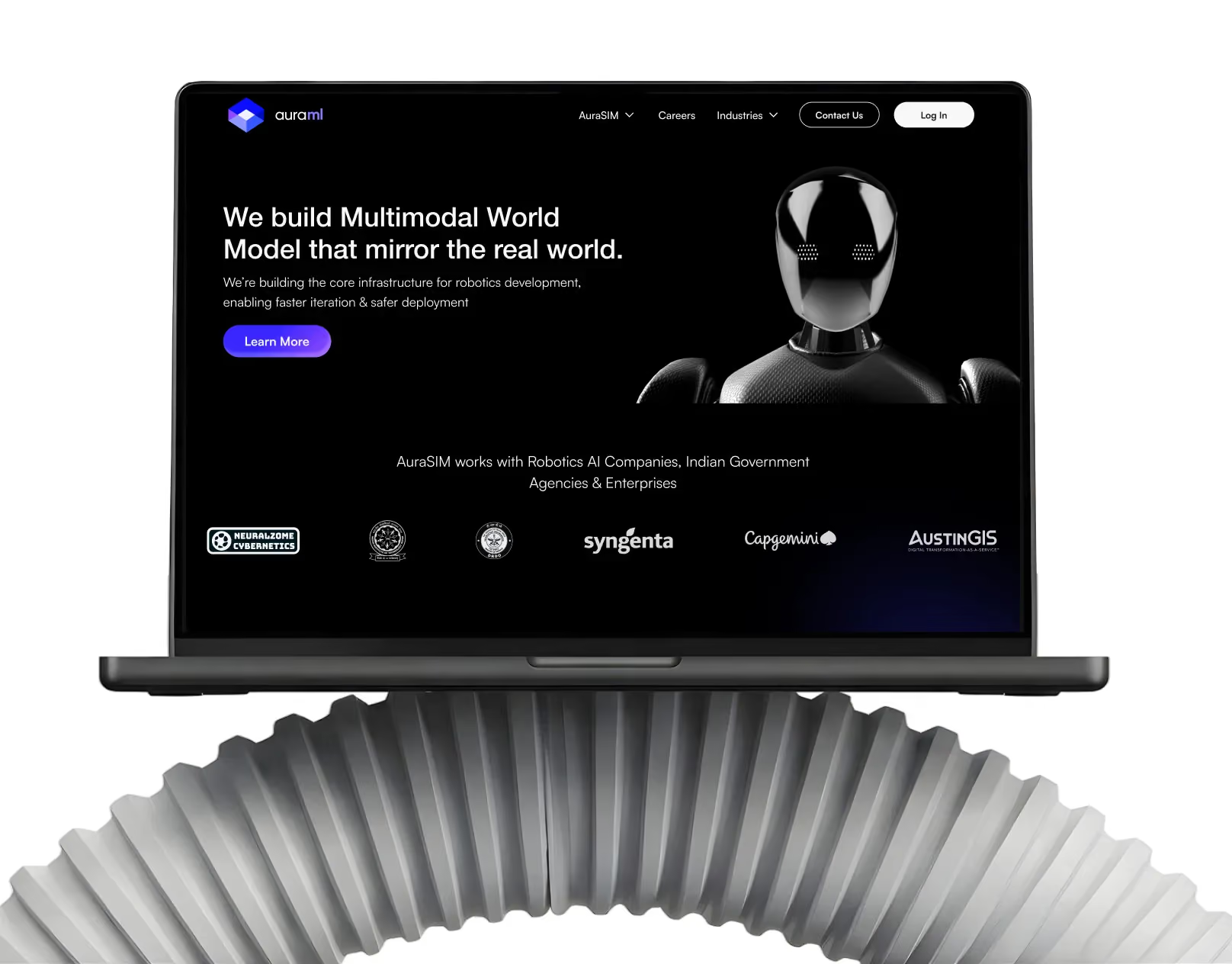
How Suplex helped AuraSIM shift from a simulation tool to the brand that makes physical AI feel ready for the real world.

Tea Culture of the World
How Suplex made 120 teas from across the world feel like a discovery rather than a decision.

Great Lakes
How Suplex built a full stack website for a Midwest tequila brand with a real production story.
Why Suplex?
World Class Aesthetics
.webp)
Profitable E-Commerce
.webp)
Build A Brand
.webp)
Build Your D2C Business The Right Way
Build It With Suplex.


