Ecommerce Website Project Timeline: Phases, Realistic Timelines and What Causes Delays
.avif)
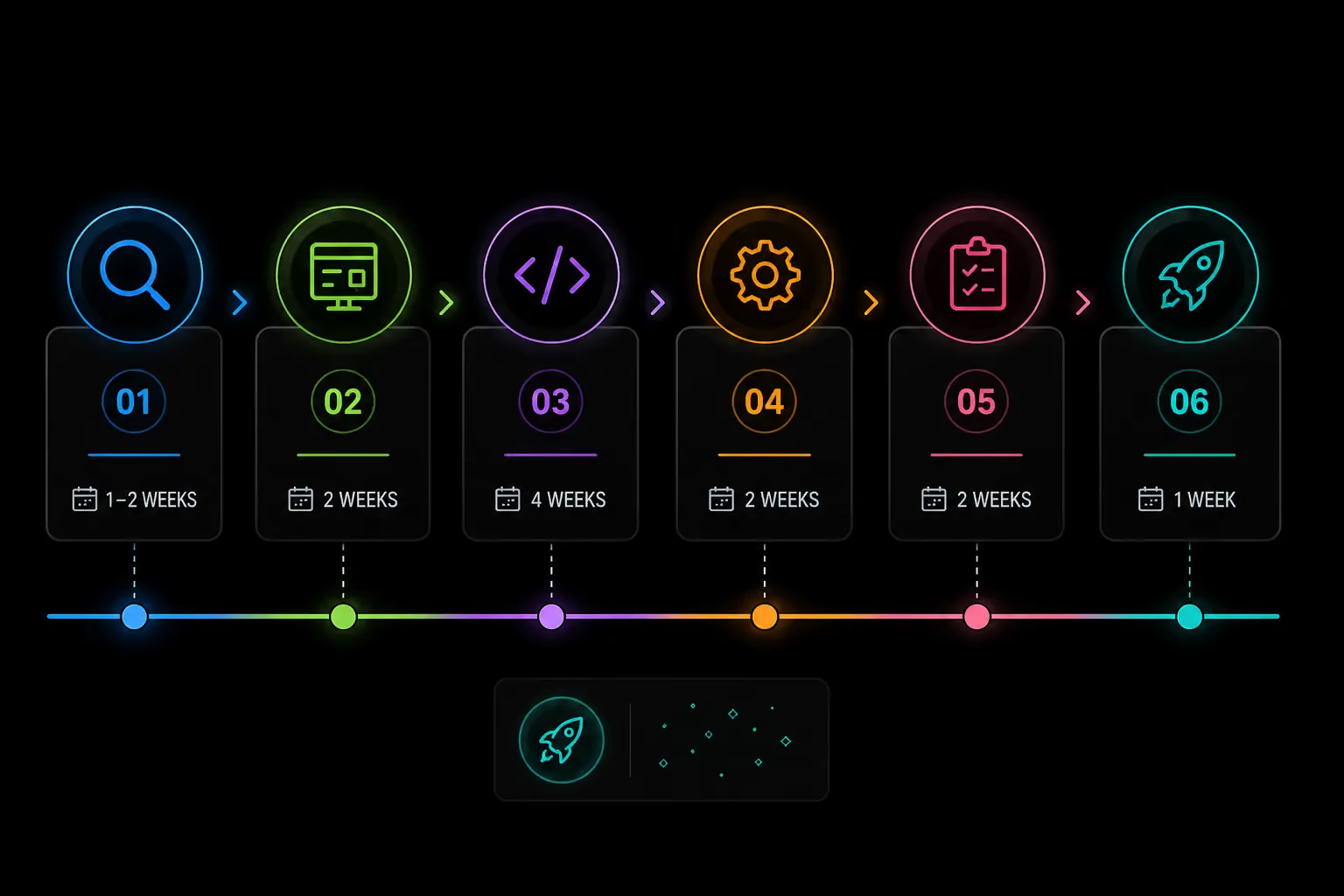
Ecommerce Website Project Timeline: Phases, Realistic Timelines and What Causes Delays
Most ecommerce builds take 8 – 16 weeks from signed brief to launch. A basic Shopify store with a premium theme and content ready can go live in 3 – 6 weeks.
A mid-complexity store takes 10–16 weeks. Enterprise and headless builds take 4–9 months. Most delays come from content readiness and client approvals, not development.
This blog explains the five phases of an ecommerce project, what happens in each stage, who owns what and the biggest causes of delays. It also includes a client readiness checklist and a framework to evaluate agency timeline estimates before signing.
How Long Does an Ecommerce Website Actually Take? (The Real Answer by Build Type)
The timeline question is the first one every client asks and the one most agencies answer vaguely.
Here is a direct answer structured by build type and platform because the range between a 3-week launch and a 9-month build is not random. It follows a logic based on complexity, integration depth, and content readiness.
Three things to understand before you read any timeline:
Timeline Starts From a Signed Brief and Kickoff, First call or first proposal. Discovery, scope alignment, and contract negotiation all happen before the clock starts.
A Shopify Build Using a Premium Theme With No Integrations can genuinely launch in 3 – 4 weeks but only if your content is ready on Day 1. That condition eliminates most early-stage brands from this tier.
The difference between a 10-week and a 20-week project is almost always content readiness and approval speed, not the development team's skill level. Agencies that quote aggressively short timelines are typically assuming you will deliver content faster than you will.
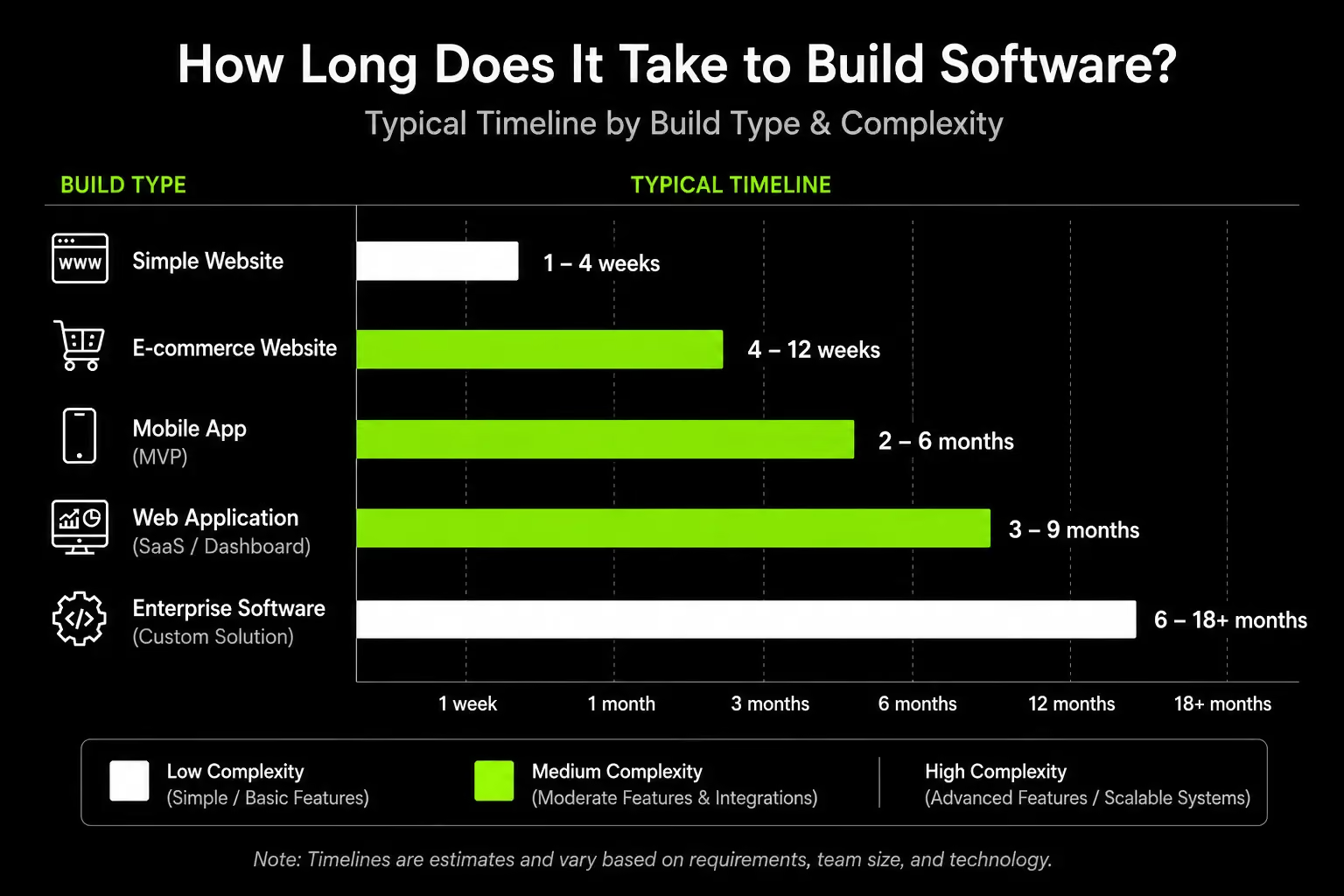
The 5 Phases of an Ecommerce Project: The Build Clock
No competitor in the current top search results maps these phases with client and agency ownership split, named outputs, and common failure points in the same section.
The framework below the Build Clock gives you a complete picture of what is happening at each stage, who is responsible for it, and where things go wrong.
Phase 1: Discovery and Strategy (Weeks 1 – 2)
Discovery is the phase that sets the timeline for everything that follows. It is also the phase most frequently compressed, rushed, or skipped entirely usually by agencies under pressure to start billing development hours and by clients eager to see something visual.
Owner: Agency-led, heavily client-dependent for inputs
Outputs: Project brief, scope document, platform recommendation, sitemap draft, full integration requirements list
The platform decision happens here. Shopify versus a custom build is not a design preference, it is a business architecture question that depends on catalog complexity, integration requirements, growth trajectory and budget.
Making this decision in Phase 3 when development has already started in the wrong direction costs weeks.
Every integration must be identified here: payment gateways, ERP, CRM, loyalty programme, shipping carrier APIs, analytics. Every integration discovered in Phase 3 instead of Phase 1 adds time and cost to the project. The discovery phase exists specifically to prevent mid-build surprises.
What Goes Wrong: Vague or incomplete brief leads to scope drift in Phase 3. Missing integrations from the scope list create surprise blockers mid-development. No defined decision-maker means approval loops extend Phase 2 by weeks.
At Suplex, the discovery sprint is non-negotiable before any design or development begins. Projects that skip or compress this phase consistently hit the same walls in Weeks 6 – 10 integration requirements discovered mid-build, scope disputes and approval delays that had no formal process to manage them.
Phase 2: UX Design and Prototyping (Weeks 2 – 6)
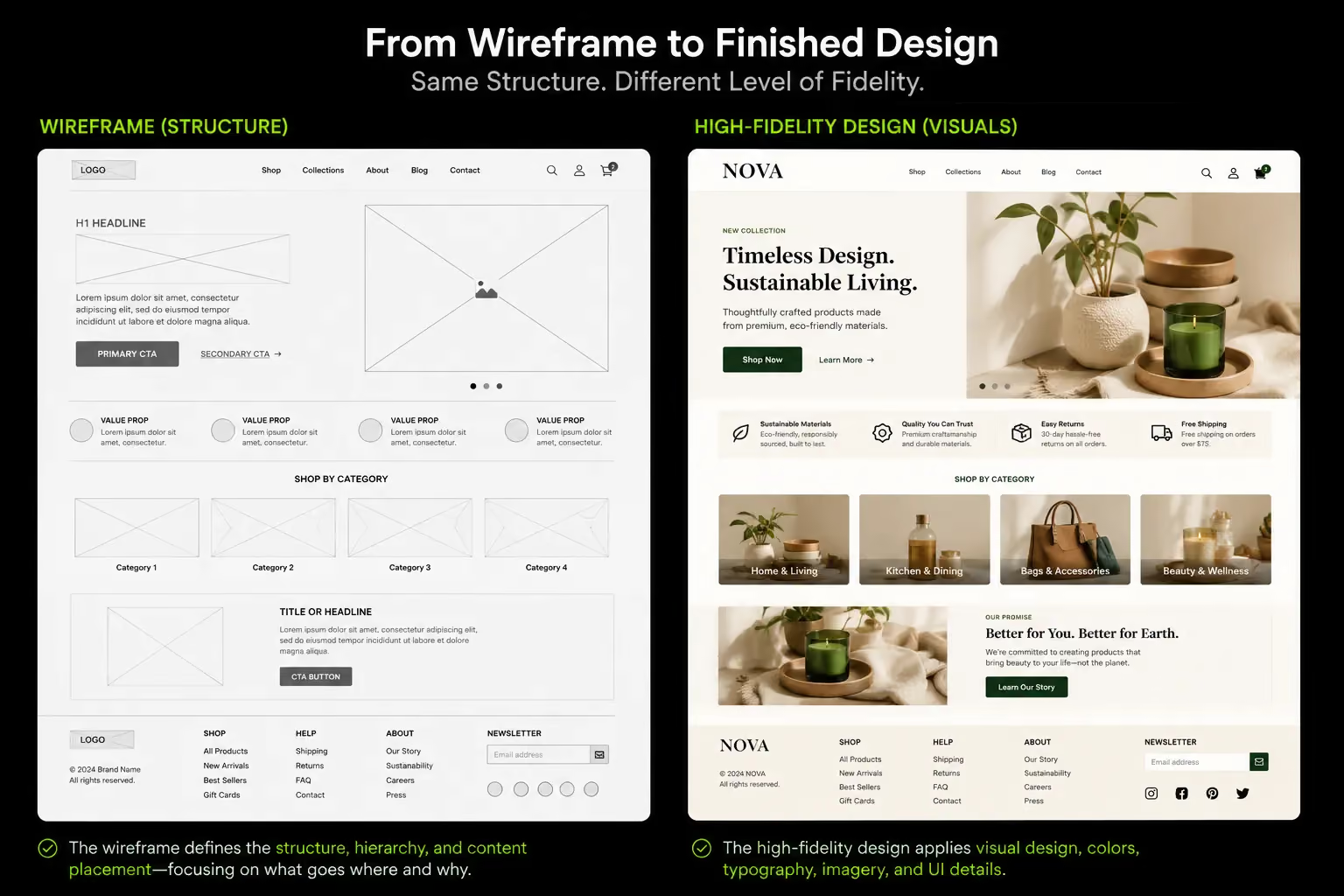
Design is structural work, not decoration. The wireframes and user flows produced in this phase determine how buyers navigate the store, how products are structured for conversion, and how the checkout behaves. The visual design that follows is the expression of those structural decisions, not the starting point for them.
Owner: Agency-led, client approval required at each milestone
Outputs: Information architecture document, wireframes, high-fidelity UI design, interactive prototype, mobile design sign-off
Wireframes come before visual design. Skipping this step produces layouts that look good in a presentation and do not work for real users navigating a product catalog. It also produces design that is harder to hand off to developers because structural decisions were never made explicitly.
Mobile-first is not a feature added at the end of the design phase. Over 70% of ecommerce traffic arrives on mobile. Designing desktop-first produces a fundamentally different information hierarchy that treats mobile as an afterthought. Every design phase at Suplex runs mobile-first from wireframe one.
Design revision cycles are the largest single time variable in this phase. Two rounds of consolidated feedback is the correct structural limit. "Consolidated" means one set of feedback from one decision-maker, not sequential rounds from multiple stakeholders who have not aligned internally before their feedback reaches the agency.
Prototype sign-off is a contractual milestone before development starts. Not a suggestion. Not an approximate date. A formal approval that signals scope is locked and development can begin on a stable brief.
What Goes Wrong: Multiple stakeholders giving conflicting feedback with no internal alignment. No defined decision-maker. Clients treat design sign-off as a starting point for new feature requests rather than a commitment to scope.
Two scenarios from real projects: A D2C skincare brand arrives with a complete brand kit, clear competitor references, and a locked feature list. Design phase: three weeks. Another brand changes its core product positioning in Week 3 of design full information architecture restart, phase extended by four weeks. Both outcomes were within the client's control from day one.
Phase 3: Development and Integration (Weeks 5 – 14)
Development is where the project becomes a functional store. It is also where the timeline is most affected by decisions made or not made in Phases 1 and 2.
Owner: Agency-led; client provides credentials, approvals, and content
Outputs: Functional ecommerce store, configured payment gateways, connected integrations, product catalogue loaded, checkout tested end-to-end
Shopify builds are faster than custom builds for a structural reason: the core commerce infrastructure cart, checkout, payment routing, order management is pre-built by Shopify.
Development effort goes into theme customisation, app configuration, and integration setup. Custom builds require constructing that infrastructure from the ground up.
Every week saved in discovery is multiplied here a well-defined scope in Phase 1 can save 2 – 4 weeks of development time.
Every integration adds a dependency chain: API credentials, merchant account approval, testing environment configuration and live environment validation.
These dependencies are not under the agency's control. The integration risk table below reflects real-world timing from Gulf market projects:
Content upload product data, descriptions, images, SEO metadata is a Phase 3 task that is entirely client-owned and almost universally the last thing brands prepare.
100 products equals 3 – 5 days of dedicated effort including description writing, image formatting, variant setup and metadata per SKU.
A 500-product catalogue equals 2 – 3 weeks of dedicated content work. If this has not started before development completes, the launch date moves.
What Goes Wrong: Payment gateway onboarding not initiated until Week 8 when development is almost complete. ERP integration complexity not scoped before the project starts. Product data not structured or ready when development finishes.
Phase 4: QA, Content and UAT (Weeks 12 – 16)
This is the most consistently underestimated phase in ecommerce projects, the phase most commonly compressed when a launch date is approaching and the phase where most post-launch bugs originate when treated as a formality.
Owner: Shared agency runs functional QA; client owns UAT and content delivery
Outputs: Bug-free tested store, complete product catalogue, formal UAT sign-off, go-live clearance
Agency QA covers: browser compatibility across Chrome, Safari, Firefox, and Edge. Mobile rendering across iOS and Android device types.
Complete checkout flow for every payment method in scope. Shipping rate logic, discount and coupon code behaviour, error states and edge cases, 404 handling and performance under test load conditions.
UAT User Acceptance Testing is the client's phase. It must be time-boxed. Five to seven business days with a structured feedback form is the correct format.
An open-ended UAT window with no deadline and no feedback structure becomes a second design phase, a feature request session, and an indefinite delay simultaneously.
The single biggest cause of ecommerce project delays is content not being ready when development completes.
Development finishes in Week 10. Client begins sourcing product photography in Week 12. Launch moves to Week 16. This sequence plays out on projects across every category and every market.
It is preventable only if content preparation is scoped as a parallel workstream with a deadline, starting from Week 1.
What Goes Wrong: UAT is treated as an open feedback window rather than a structured, time-boxed phase with a defined deadline. Content preparation starting after development completes rather than running in parallel.
Phase 5: Launch and Post-Launch (Weeks 15 – 17 and Beyond)
Launch is a transition point in the project lifecycle, not a finish line. What happens in the 30 days after go-live determines whether the investment in the build delivers its intended commercial return.
Owner: Agency-led with structured client team handover
Outputs: Live site, DNS configured, analytics active, redirect mapping complete, team trained, 30-day monitoring plan in place
Pre-launch requirements that must be confirmed before DNS switches: analytics and tracking verified and collecting data, SEO foundation set with sitemap submitted to Google Search Console, redirect mapping complete from all old URLs to new equivalents, Core Web Vitals passing on key page types, and performance test completed under expected load.
Launch day is a controlled event not a reveal. Active monitoring for 24 – 48 hours post-go-live surfaces real-user edge cases that UAT under test conditions did not catch.
Payment gateway behaviour under live transactions, mobile rendering on device types not in the test matrix, and server performance under real concurrent traffic all need active monitoring.
The 30/60/90 day post-launch plan should be agreed before launch, not after. This is when heatmaps and session recordings start accumulating data, conversion rate baselines are established and CRO testing begins.
Without a post-launch plan, data collects unused while the site sits static.
What Goes Wrong: No redirect mapping from old URLs organic search equity lost. Analytics not configured before launch, no baseline data for the first weeks of trading. Team not trained on the platform before handover operational bottlenecks from day one.
What Actually Causes Ecommerce Project Delays: Agency vs. Client
This section does not appear in any of the top-ranking articles on this topic. Vague references to "complexity" or implicit blame placed on the client are not useful to anyone planning a project.
The delay map below names every common cause, assigns ownership, and describes how to prevent it.
Every day of client-side delay in an approval or content delivery typically adds 1.5 – 2 days to the project timeline because development resources get reallocated to other work and cannot be instantly resumed at full capacity when the input arrives.
A good agency makes delays visible before they become critical through weekly milestone check-ins, documented sign-off gates, and formal change requests for any scope addition.
Vague timelines with no milestone structure make delays invisible until the launch date has already moved.
A direct example from a Gulf market project: a D2C supplements brand needed a bilingual Shopify store.
Development completed at Week 10. Arabic translation had not been commissioned a client-side oversight made without understanding the timeline impact.
Launch moved to Week 15. The delay was four weeks. The cause was a single planning omission in Week 1.
Shopify vs. Custom Build: How Platform Choice Directly Affects Your Timeline
Platform choice is a timeline decision as much as it is a features decision. The speed difference between a Shopify build and an equivalent custom build is structural, not a reflection of developer skill.
Shopify is not easier to build on than a custom stack. It is faster to launch because Shopify already provides the core commerce infrastructure every ecommerce store needs: cart, checkout, payments, order management and tax handling.
A Shopify development team configures and customises that infrastructure. A custom development team builds it from scratch. The timeline difference reflects the amount of work involved.
Custom builds offer full control over architecture, data structures and UX. Every feature is built to exact specifications, without platform limitations.
But everything Shopify includes by default must also be built, tested and maintained on a custom platform, which increases long-term cost and complexity.
Shopify Plus sits between the two. It combines platform speed with enterprise-grade flexibility through Shopify Functions, custom checkout logic and multi-storefront management via Shopify Organisation.
The better question is not which platform is superior. It is which platform fits your current scale and where the business will be in 18 months.
A fast-growing D2C brand validating demand should usually start on Shopify. A B2B distributor with complex ERP integrations and customer-specific pricing may need a different architecture entirely.
UAE and Gulf-Specific Factors That Add Time to Your Ecommerce Timeline
No content in the current top 10 results for this keyword covers UAE or Gulf-specific timeline factors. This is a complete content gap and the most practically useful section in this guide for any brand or agency planning a build in this market.
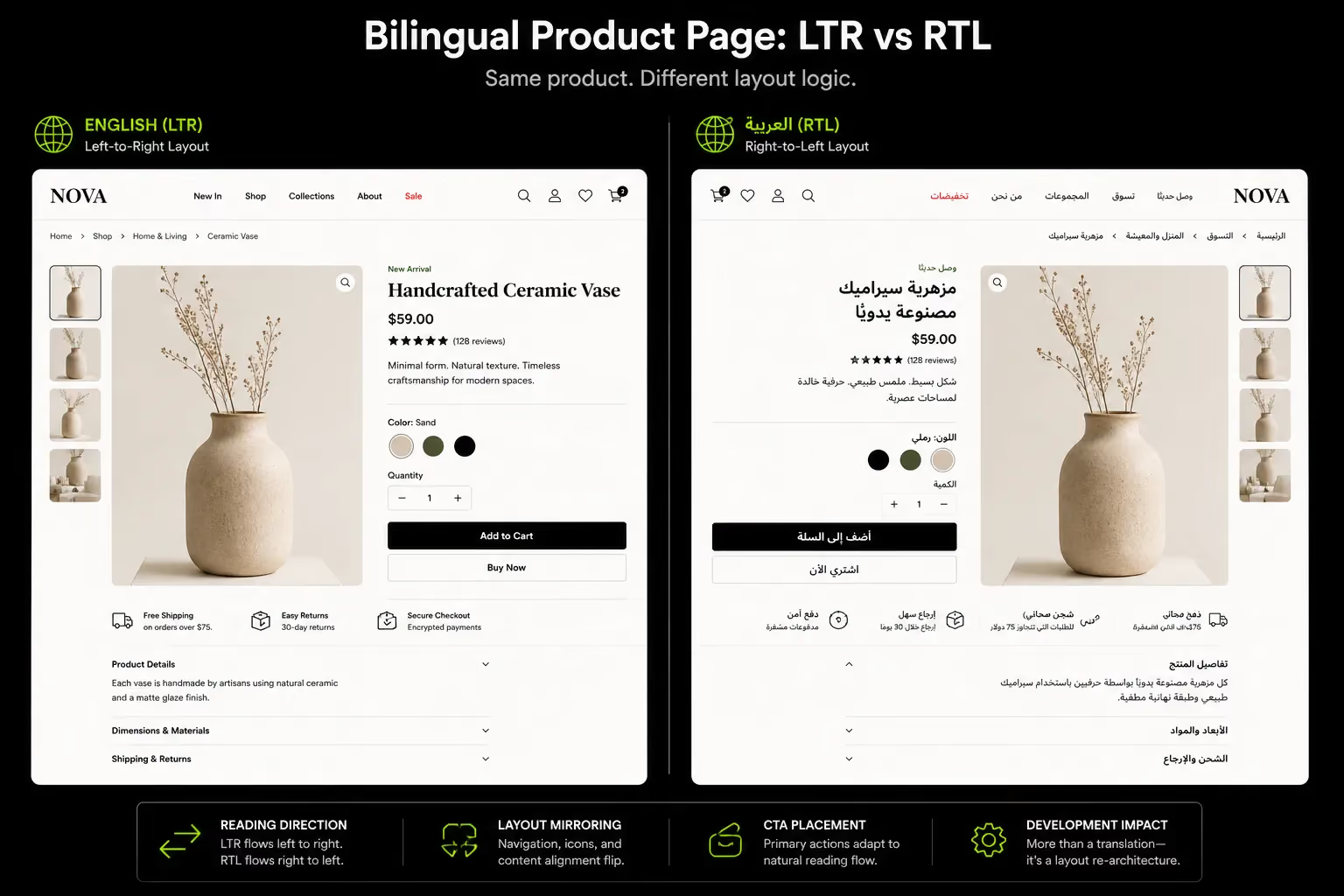
- Arabic RTL Design & QA: Typically adds 1–2 weeks to UAE ecommerce projects. RTL is not just text mirroring, it changes layout logic, navigation flow and user behaviour across the store.
- Payment Gateway Approvals: Merchant onboarding with providers like Network International, PayTabs, Telr, Tabby and Tamara can take 5–15 business days, so applications should begin in Week 1.
- Cash on Delivery (COD): COD should be planned from the start, especially for Gulf ecommerce stores where it remains a major payment method.
- UAE VAT Configuration: VAT must be correctly applied across products, shipping and GCC sales zones to avoid compliance and operational issues after launch.
- Bilingual Content Preparation: Translating product descriptions, SEO metadata and interface labels for a 200-product catalogue can take 2–3 weeks and should run alongside development.
- Peak Trading Periods: For launches around Ramadan, White Friday or Dubai Shopping Festival, allow at least a 2-week buffer for testing and optimisation before peak traffic periods.
- UAE Timeline Rule of Thumb: Bilingual UAE ecommerce projects usually require 2–3 additional weeks compared to standard global timelines due to Arabic RTL, localisation and regional payment infrastructure.
How Suplex Approaches Ecommerce Timelines
Every Suplex project starts with a discovery sprint to define scope, platform, integrations and content responsibilities before development begins. Timelines are built around real project requirements, not assumptions.
Projects follow phased approvals with clear deliverables and sign-offs at each stage. This keeps progress predictable and exposes delays early.
Content readiness is treated as a priority from Week 1. Clients with organised product data, assets and SKU structures typically move 20–30% faster through development.
For UAE and Gulf projects, Arabic RTL support, payment gateway setup, VAT configuration and bilingual content are scoped from day one.
After launch, we provide a 30-day monitoring and optimisation period driven by real user behaviour and performance data.
We have delivered ecommerce projects across D2C, FMCG, health and wellness, and food and beverage by following the same process: structured discovery, clear ownership and defined milestones before development starts.
Red Flags in an Agency Timeline Quote
Evaluating a timeline proposal critically before you sign is the highest-return action a commercial decision-maker can take before an ecommerce project starts. These red flags do not mean an agency is incompetent.
They mean the quote is incomplete and incomplete quotes produce unexpected costs, missed deadlines, and scope disputes.
- Any quote under 6 weeks for a mid-complexity store with custom design and multiple integrations. Ask what has been removed from scope to hit that number. Either QA has been compressed, integrations are not included, or the design is template-based with light configuration. Get clarity before you sign.
- No discovery phase mentioned. If scope is undefined, the timeline is a guess. Agencies that move straight to design without a discovery phase are quoting against assumptions, not against your actual requirements.
- "Timeline starts after content is received" with no guidance on content preparation. This positions the agency to attribute every delay to the client while providing no practical help to prevent it. A structured agency helps you understand content requirements and sets deadlines for them at kickoff.
- No QA phase defined. Testing is either not planned or being compressed into launch day. Both produce post-launch bugs that cost more to fix under live trading conditions than during QA.
- No mention of change control. Every scope change in a project without a formal change request process becomes invisible until it appears in a final invoice dispute or a missed launch date conversation.
- A vague deliverable list. "Full ecommerce website" is not a deliverable, it is a description. A credible proposal lists specific phase outputs, page types in scope, integration deliverables, and acceptance criteria for each milestone.
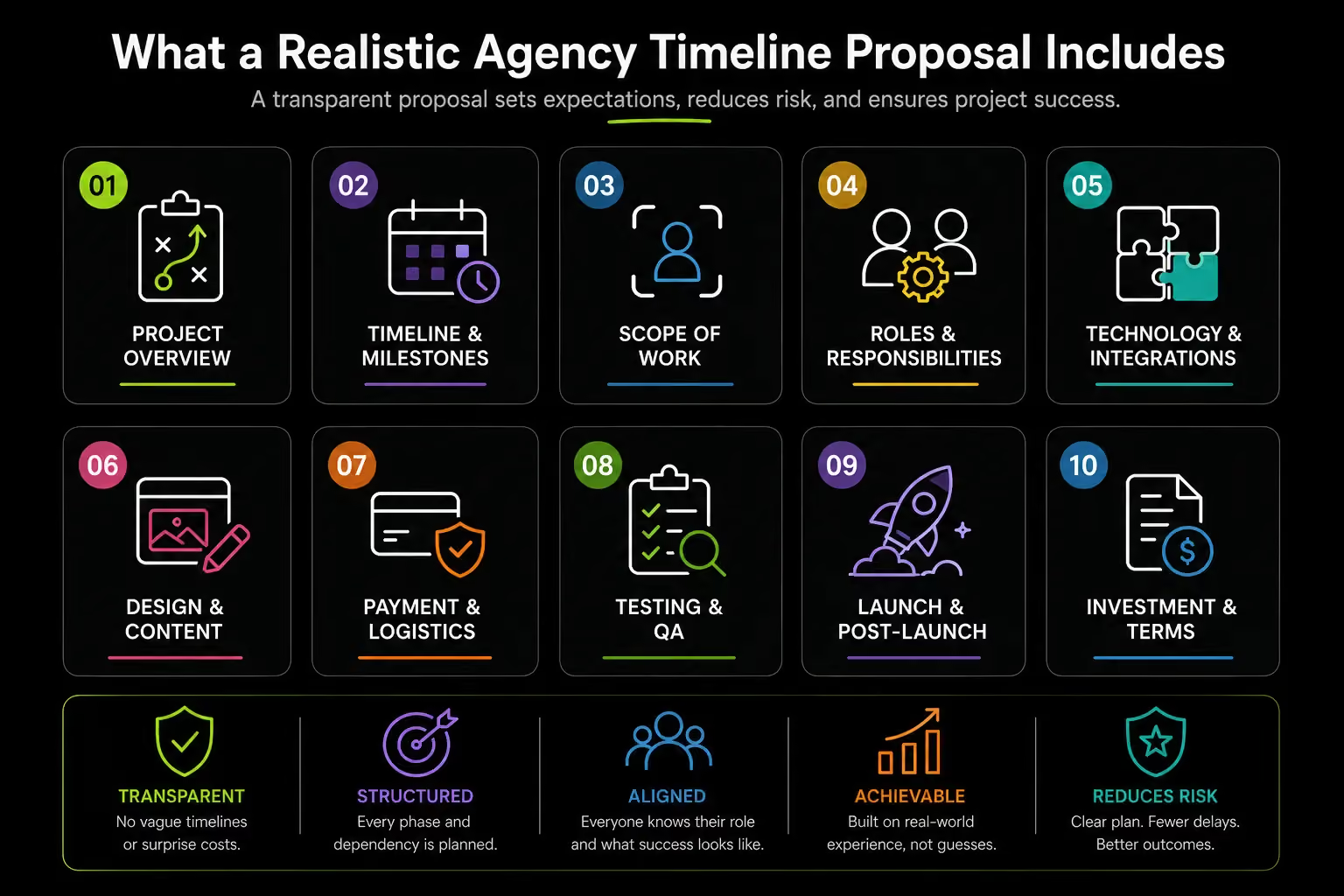
What to Prepare Before Your Project Starts: Client Readiness Checklist
Clients who arrive at kickoff with these items ready move 20 – 30% faster than those preparing them in parallel with the build. This checklist is also a practical readiness assessment for any brand evaluating whether they are ready to start a project brief.
Frequently Asked Questions
How long does an ecommerce website project take from start to finish?
Most ecommerce projects take 8–16 weeks from kickoff to launch. A template-based Shopify store with ready content can launch in 3–6 weeks, while custom builds with integrations usually take 10–16 weeks. Enterprise and headless projects typically run 4–9 months. The biggest factor is rarely development speed, but how quickly clients provide content and approvals.
What are the main phases of an ecommerce website project?
An ecommerce project typically moves through five phases: discovery and strategy, UX design, development, QA and content, then launch and post-launch monitoring. Most projects take 8–16 weeks in total, with each phase requiring approval before the next begins. The most common delays happen during design feedback and content preparation.
What is the biggest cause of ecommerce project delays?
The biggest cause of ecommerce project delays is content not being ready when development finishes, especially product photography, product descriptions and structured product data. The second most common issue is scope creep, where new features are added mid-project. Both problems are preventable with clear scoping and content deadlines set at kickoff.
How long does it take to build a Shopify ecommerce store?
A basic Shopify store with a premium theme and ready content can launch in 3–6 weeks. Mid-complexity builds with custom themes, integrations and larger catalogues usually take 8–14 weeks. Shopify Plus enterprise projects typically run 12–20 weeks, depending on integrations and checkout customisation.
Does platform choice affect the ecommerce project timeline?
Yes. Shopify projects are usually much faster because core ecommerce systems like checkout, cart and payments are already built. A mid-complexity Shopify store often takes 8–12 weeks, while a comparable custom build can take 16–24 weeks or longer. The best choice depends on your business stage, operational needs and long-term growth plans.
Hi, I’m Rishabh Jain
I believe great digital experiences have the power to shape perception, build trust, and move businesses forward. That belief led me to found Suplex Design Studio, a global digital design and development studio helping FMCG and D2C brands build websites and digital experiences that are strategic, thoughtful, and commercially meaningful.
I started Suplex at 25 with a clear intent, to create digital experiences that look appealing, work seamlessly, and help D2C businesses grow. By 28, the studio had scaled globally, guided by a strong foundation in integrated design that I developed during my academic journey in London, where I was honoured with the Dean’s Award.
Over the years, I’ve had the opportunity to work with 100+ brands, from Fortune 500 organisations to family-run businesses, helping them build websites, e-commerce experiences, and digital products that create clarity, credibility, and long-term value.
Our work has been recognised internationally, including the Manifest Award (2024), the Clutch Global Award (2025), and features across platforms such as The Dieline, Packaging of the World, and the World Brand Design Society.
None of this would be possible without the people behind the work. I’m deeply grateful to the Suplex team, whose commitment, creativity, and attention to detail turn ideas into meaningful digital experiences every day.
At the heart of our work is a simple philosophy, digital design should be intentional, functional, and built to create real business value. That continues to guide everything we create at Suplex.





































Let’s Make It Happen
E-Commerce Success Stories
%201.avif)






.avif)
.avif)
Build Your D2C Business The Right Way
Build It With Suplex.


