Best Shopify Templates for Beauty Products (2026 Guide)
.avif)
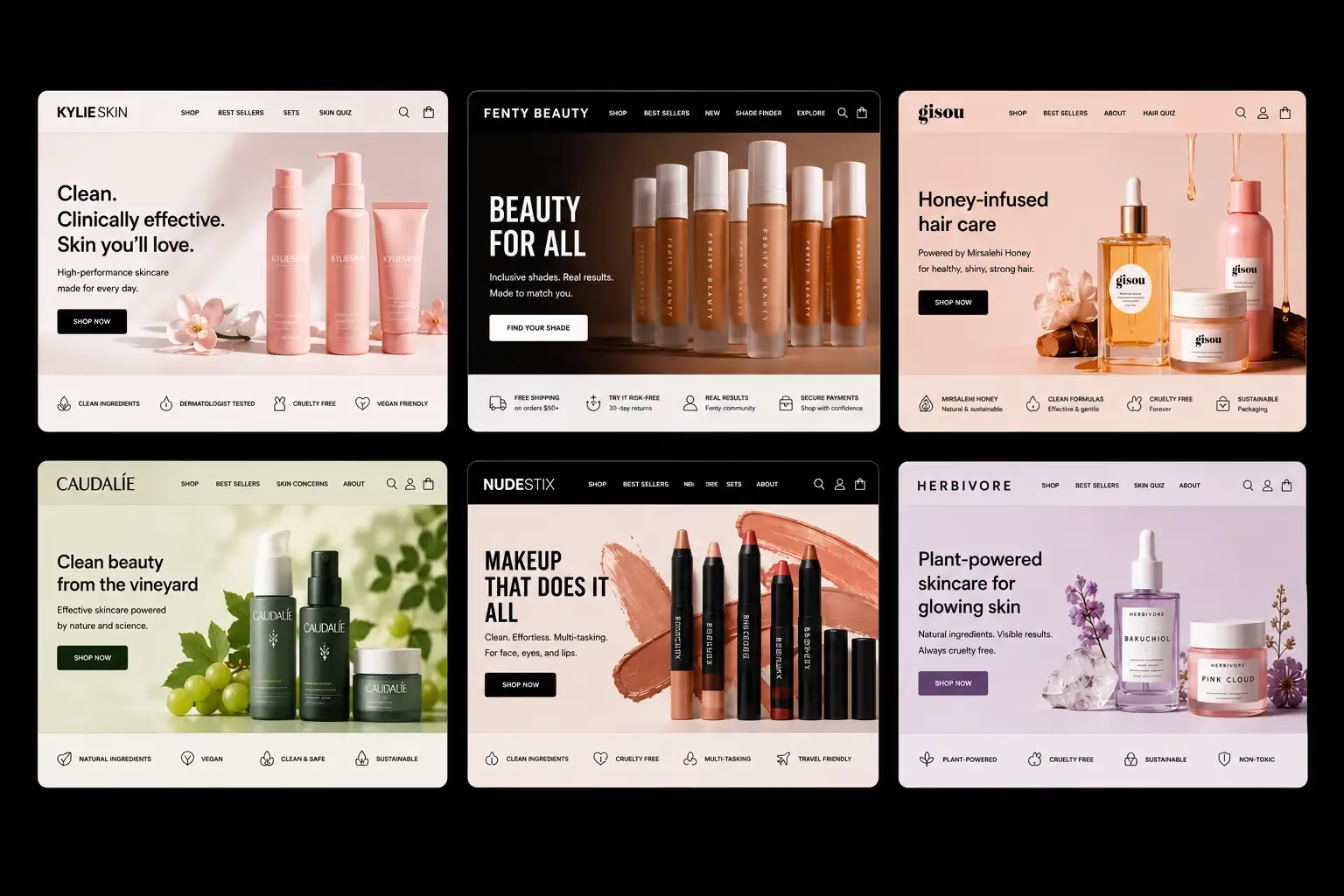
Best Shopify Templates for Beauty Products (2026 Guide)
The best Shopify theme for a beauty brand depends on your products, positioning, and growth stage, not which demo looks most like Glossier.
Theme demos are built under ideal conditions with few products, no apps, and optimized assets. Once real-world factors like large catalogs, third-party apps, and mobile ad traffic are added, performance can change dramatically.
This guide recommends themes by brand type, explains the conversion logic behind key features, and helps you determine when a theme is enough and when a custom build makes more sense.
What Actually Makes a Shopify Theme Work for Beauty Products
Before any theme is recommended, you need a filtering lens because the question "which theme looks best?" is the wrong question.
The right question is "which theme removes the barriers standing between my customer and a purchase decision?" Those are different questions with different answers.
The 4-Layer Beauty Theme Test
Apply this evaluation to any theme before purchasing. It works for themes in the Shopify store, on ThemeForest, and for assessing your current setup.
Layer 1 Visual Layer: Does it support full-width imagery, hero video, editorial layouts, and clean whitespace? Can it showcase texture, pigment, and finish in a way that creates desire before a word is read? Beauty sells through aspiration. The visual layer is where that aspiration is either communicated or lost.
Layer 2 Product Layer: Does it include native colour swatches or shade pickers, ingredient or benefit tab sections, before-and-after image sliders, and multi-image galleries? If these require third-party apps, factor that cost and the load time those apps add into your evaluation. Every app installed to compensate for a theme limitation adds JavaScript to every page and compounds the speed problem.
Layer 3 Trust Layer: Does it support star ratings, photo reviews, trust badge placement, UGC sections, and social proof displays out of the box? In beauty, trust signals are purchase signals particularly for first-time buyers making a skin-to-product decision without being able to test in person.
Layer 4 Performance Layer: What is the PageSpeed score under real production conditions with products loaded, apps running, and real media uploaded? Not the developer preview. Not the demo store with eight placeholder images. The real number, on mobile, under the conditions your customers will actually experience.
Beauty shoppers are high-consideration buyers. They research ingredients, compare shades, read reviews, and look for skin-tone representation before committing to a purchase. The theme must support that behaviour not interrupt it with slow load times, confusing navigation, or missing information.
Free vs Premium Shopify Themes for Beauty: The Real Cost Calculation
The comparison is not free versus $350. It is $0 now versus $0 now with $60 – $120/month in apps added within three months.
A skincare brand launching on Sense will add a swatch app ($15/month), a quiz app ($29/month), a review app ($25/month), and a video section app ($19/month) within the first quarter. That is $88/month and a materially slower store from four separate JavaScript additions.
A premium theme with these features built natively costs $350 once and runs faster because each feature is integrated into the theme architecture rather than injected as an external script.
At 12 months: $350 one-time versus $1,056 in app subscriptions plus the compounding performance cost of each additional script load.
Brands with 50+ SKUs, complex variant logic, or meaningful ad traffic almost always outgrow free themes within six months. The free decision costs more than the premium one by Month 4.
When we audit a beauty brand's Shopify store at Suplex, speed under real production load is almost always the first problem we find. The theme looked exceptional in the demo.
Under actual traffic, with 12 apps running, it is loading in 5 – 6 seconds on mobile. That is where the revenue is leaking not from the ad strategy or the product.
Best Shopify Templates for Beauty Products: Matched by Brand Type
Theme selection organised by brand stage produces better commercial outcomes than theme selection organised by aesthetics.
The same question that guides product development: who is the customer and what do they need to believe before they buy should guide theme selection.
For Boutique and Storytelling-First Beauty Brands
Recommended themes: Prestige / Palo Alto / Alchemy
These themes are built for luxury skincare, artisan beauty, and founder-led brands with a curated product range of under 30 SKUs where brand narrative is the primary purchase driver.
Editorial layouts, generous whitespace, typographic hierarchy and immersive hero sections create a premium environment before a product description is read.
The design earns trust through visual language rather than social proof density.
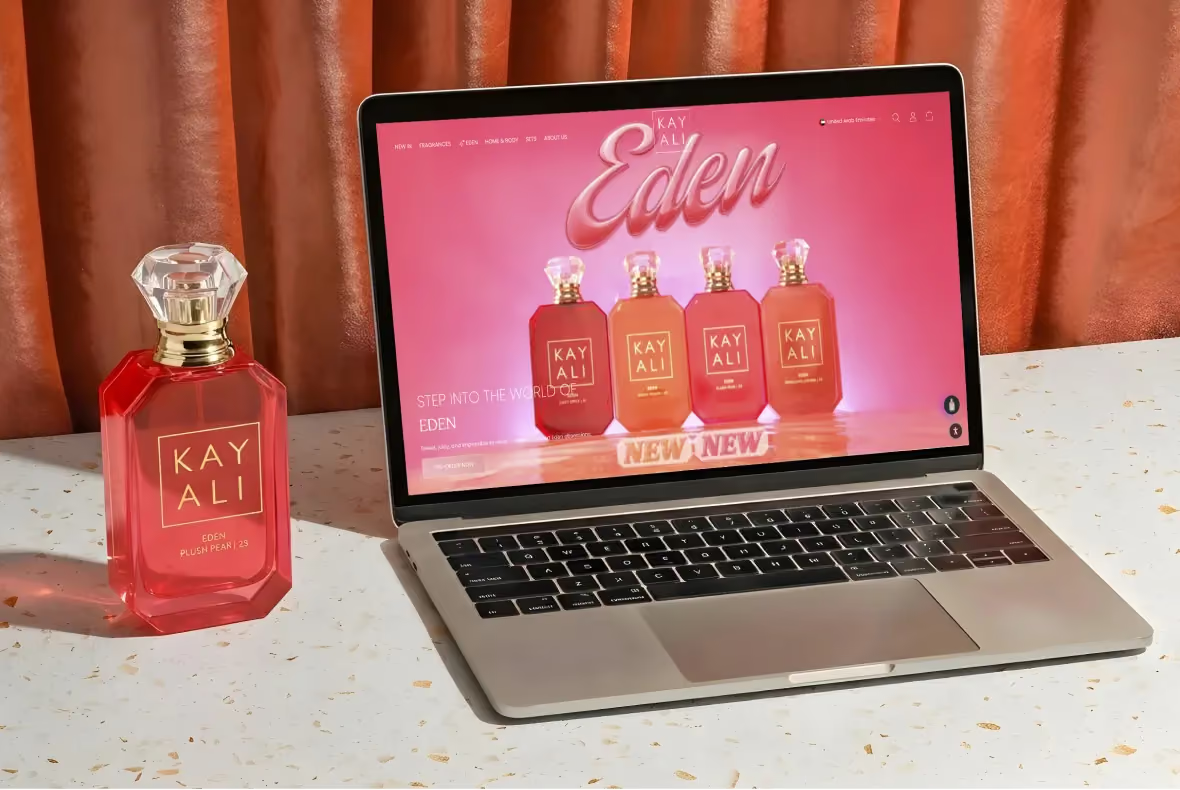
Prestige is the most widely chosen off-the-shelf equivalent to the editorial aesthetic brands like Kayali and high-end UAE skincare operations aspire to.
It handles countdown timers, promo sections, upsell tools, and video carousels cleanly. It is not built for high-SKU catalogs, aggressive upselling, or high-volume D2C paid traffic.
Under full production conditions with real media, Prestige needs active image optimisation and app management; it will not maintain its demo performance without deliberate attention.
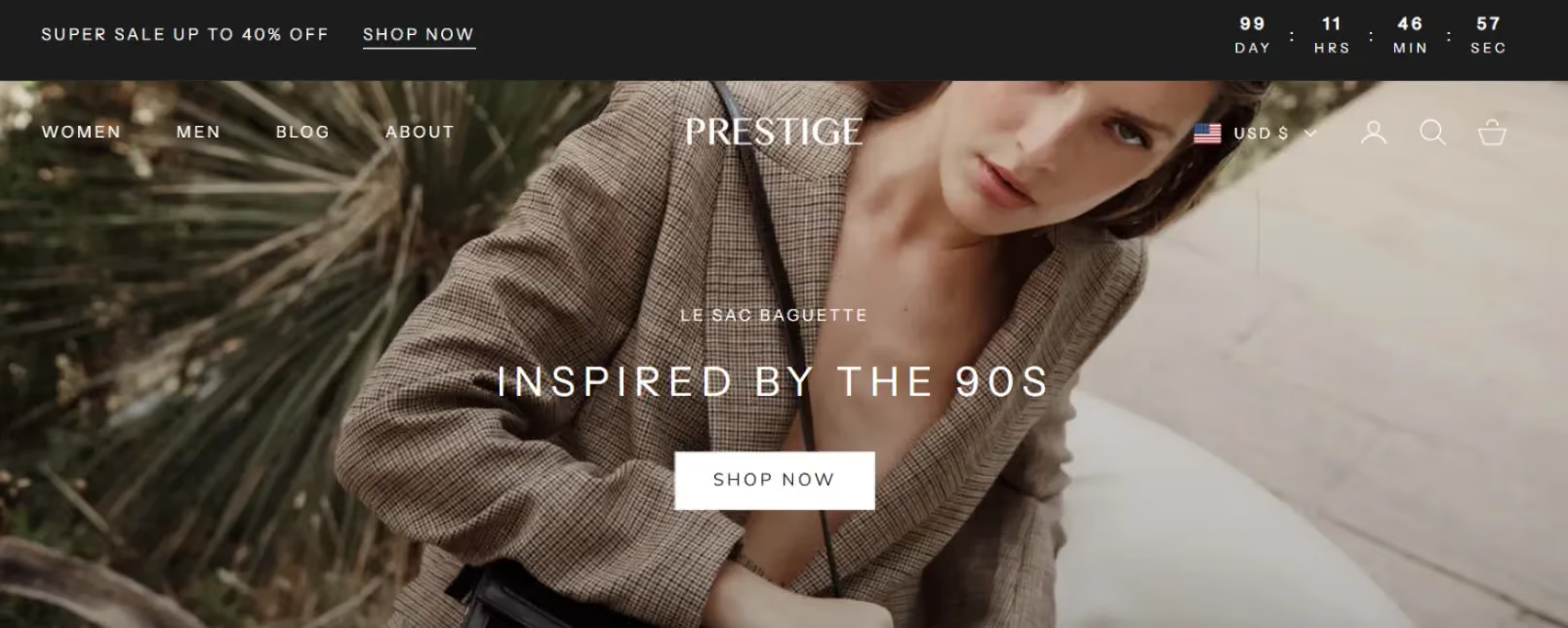
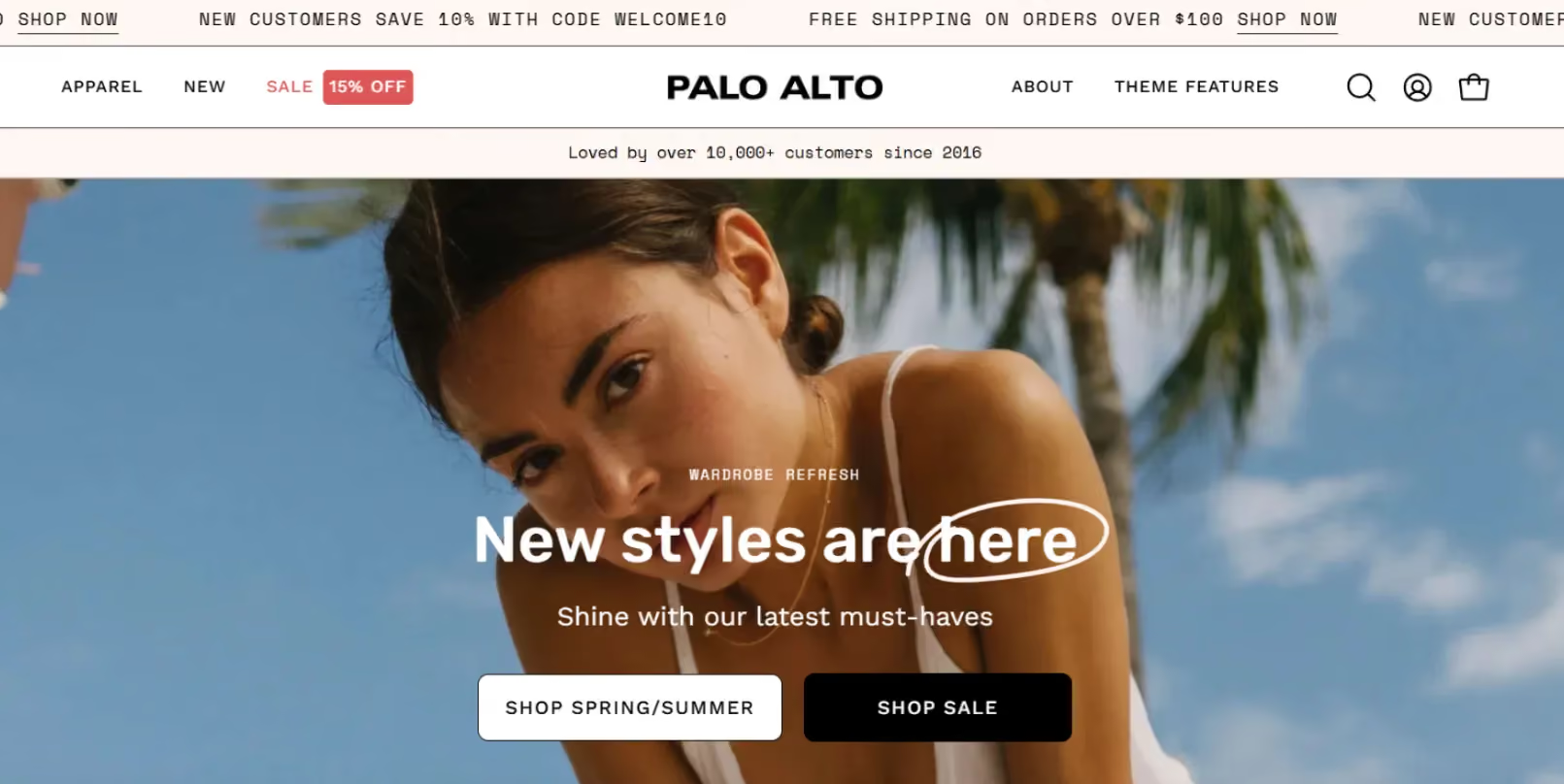
Palo Alto is a strong alternative for founder-led brands where the origin story and brand philosophy are the primary conversion drivers.
Its layout prioritises long-form storytelling sections, full-bleed imagery, and editorial-style product introductions making it well-suited for brands where the "why" behind the product matters as much as the product itself.
It performs particularly well for single-hero-product brands or curated ranges where the narrative builds across the page before the CTA appears.
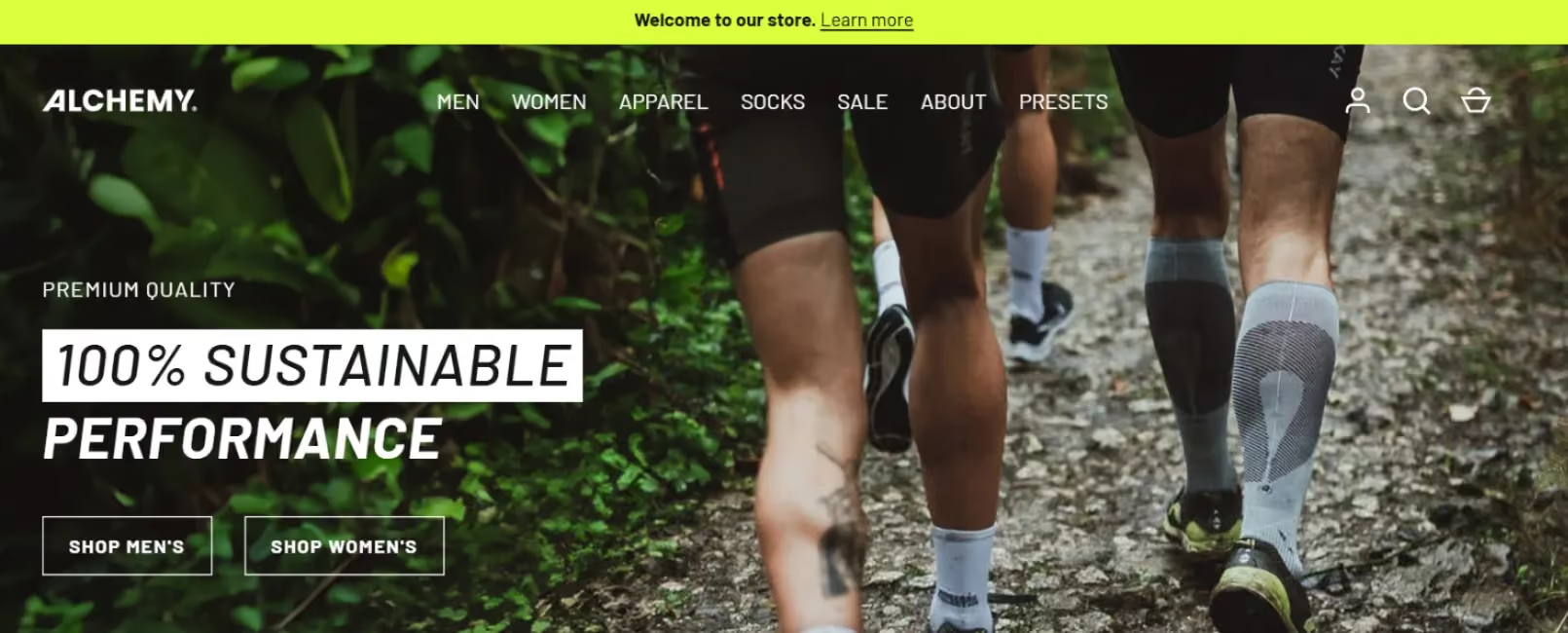
Alchemy is worth considering for brands in the wellness-beauty overlap skin supplements, adaptogens, ritual-based skincare.
Its design language is quieter and more considered than Prestige's editorial flair, leaning toward minimal, ingredient-forward layouts that communicate scientific credibility without clinical coldness.
For UAE and Gulf brands where the clean beauty and functional wellness segment is growing, Alchemy's default visual vocabulary aligns well with how that audience expects premium wellness products to present.
The honest limitation across all three is worth naming directly: boutique brands choosing any of these themes because they look closest to the premium brands they admire are starting from the right place.
But those premium brands the ones whose aesthetics these themes approximate are almost universally running custom Shopify builds, not stock themes. The aesthetic is the right reference point. The execution strategy is different.
For Mid-Scale Beauty Brands with Diverse Product Ranges
Recommended themes: BEAUTIFY (Clean Canvas) / Symmetry / Beyond
This tier serves brands with 30 – 150 SKUs across skincare, makeup, or wellness brands managing bundles, gift sets, and seasonal collections where navigation needs to work as hard as the visual design.
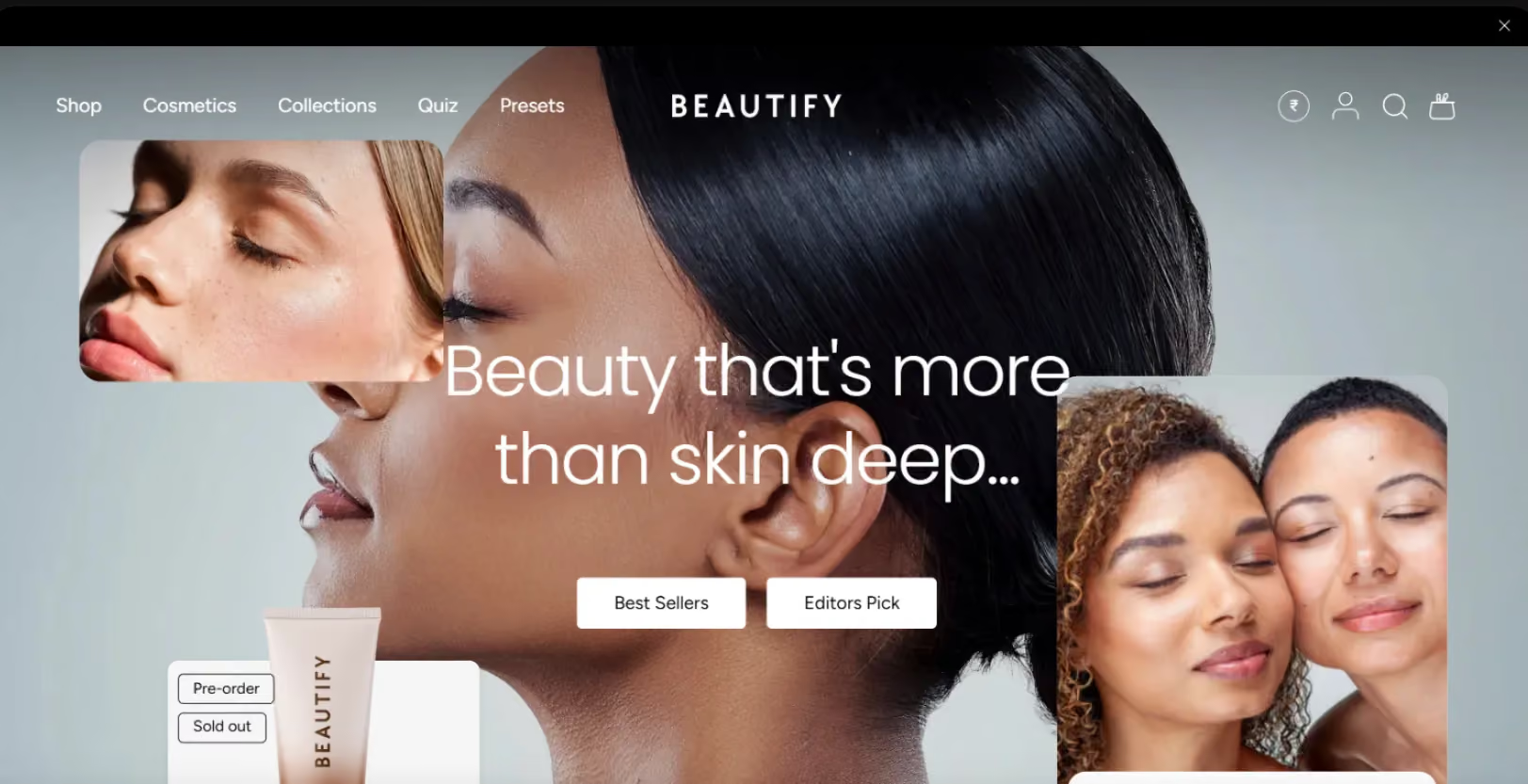
BEAUTIFY is built specifically for beauty and wellness by Clean Canvas, Shopify's longest-tenured premium theme partner.
Native shade picker, combined product listing, video carousel, and quiz sections are included without third-party app dependencies.
For a beauty brand in this SKU range, it eliminates the most expensive and performance-degrading category of app additions in a single purchase.
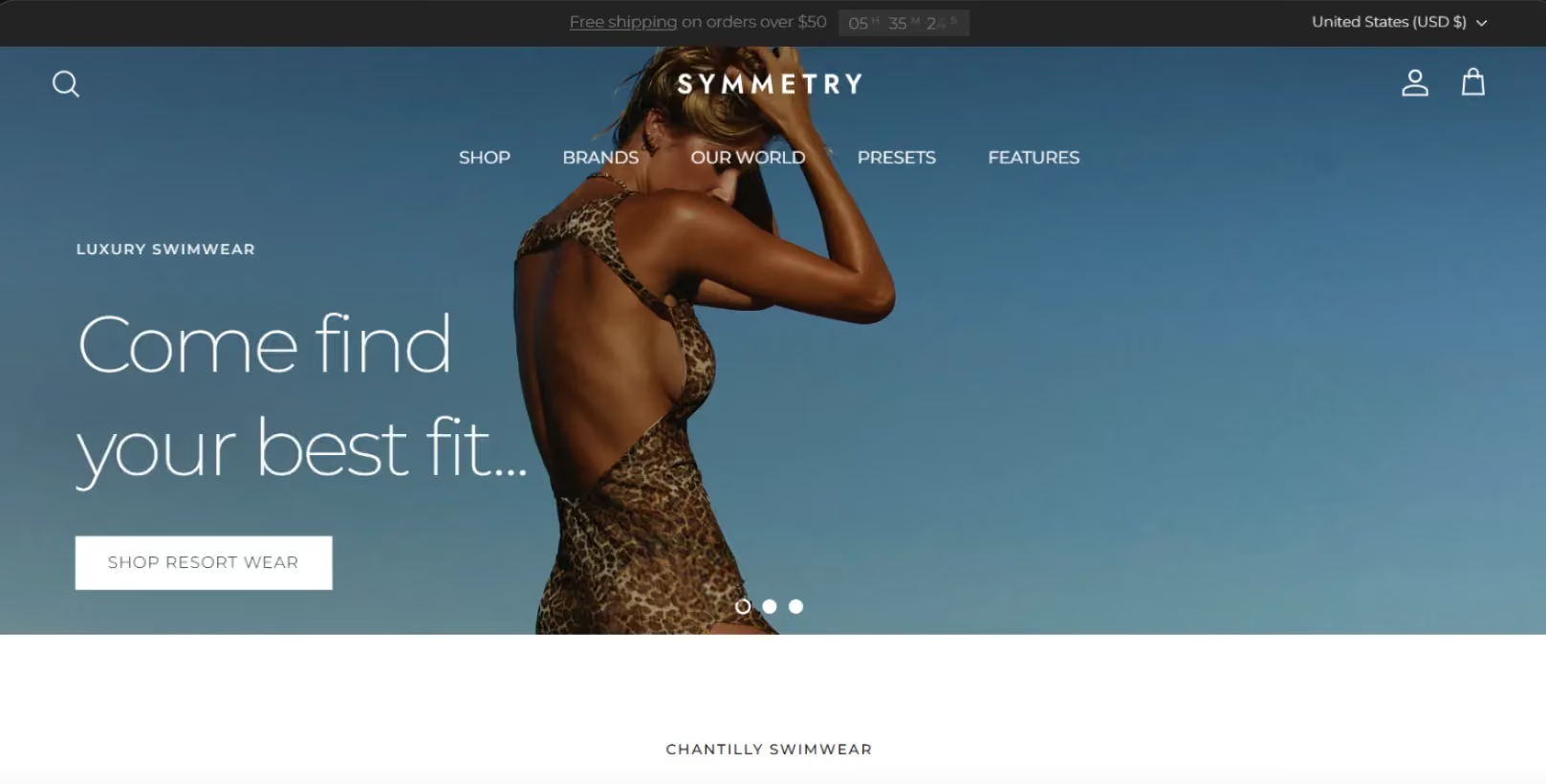
Symmetry is the strongest option for large-catalog beauty retailers. Advanced multi-column navigation and attribute-based filtering allow buyers to discover products by skin concern, ingredient type, finish, or benefit not just category.
At 80+ SKUs, the inability to filter by skin type or key ingredient is a discovery failure that costs conversions regardless of how strong the visual design is.
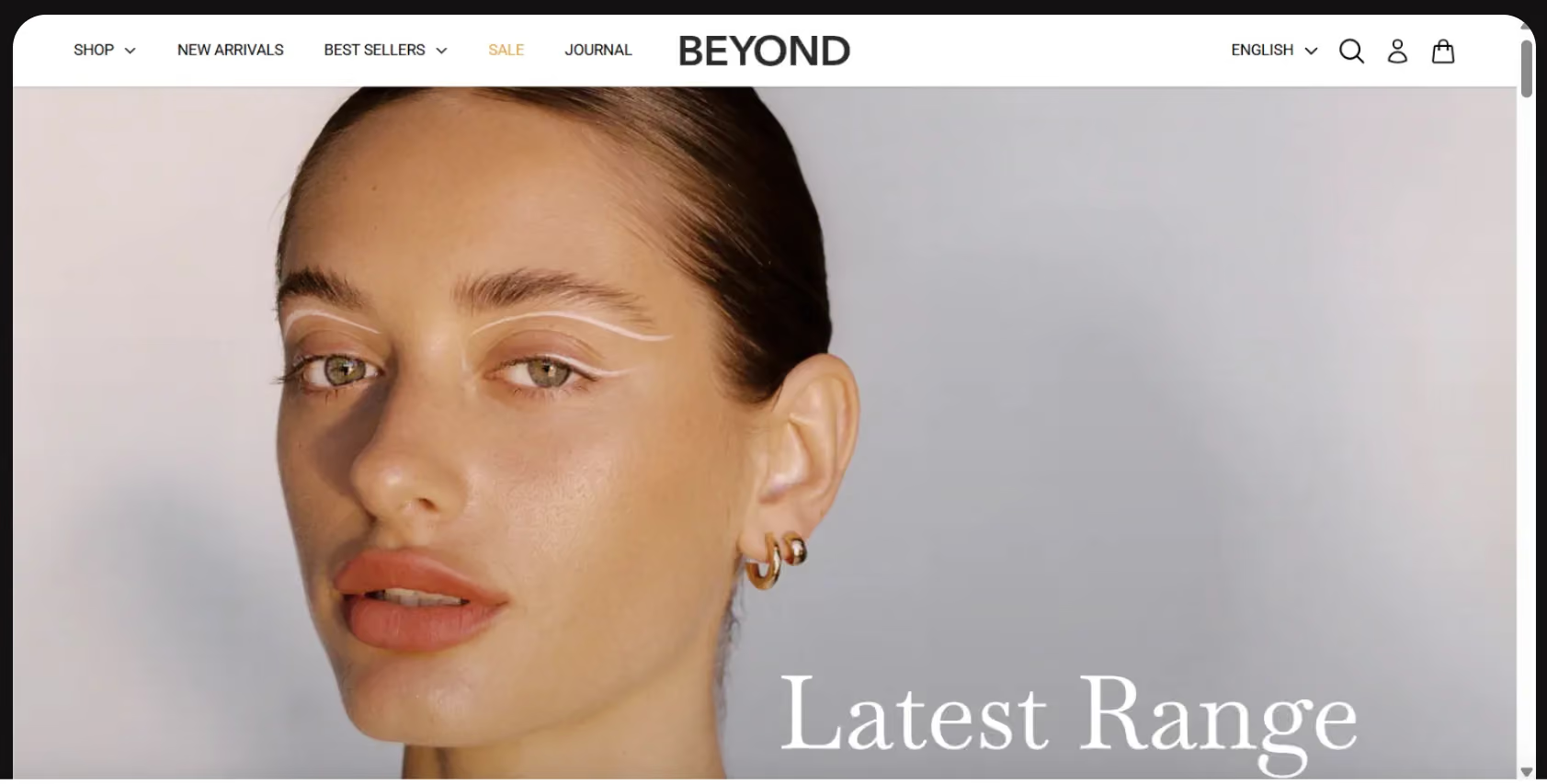
Beyond is purpose-built for eco and natural beauty brands. Sustainability messaging sections, ethical brand storytelling layouts and ingredient transparency displays are structured into the theme architecture rather than patched in.
For Gulf market brands operating in the clean beauty segment, a category growing strongly among UAE female buyers, this design context signals alignment before a product description is read.
At 30+ SKUs, information architecture becomes as important as aesthetics. A theme that cannot filter by skin concern or sort by ingredient will cause buyers to leave because they cannot find the right product, not because they do not trust the brand.
We consistently see brands in the 30 – 150 SKU range plateau not because of traffic or pricing, but because their navigation was never designed to handle that catalog size.
For High-Volume and Fast-Scaling D2C Beauty Brands
Recommended themes: Bullet / Expanse / Eurus / Ella
This tier is for brands running significant paid social spend, 150+ SKUs, multi-region operations, or Shopify Plus configurations. At this scale, performance is not an aesthetic consideration, it is a P&L decision.
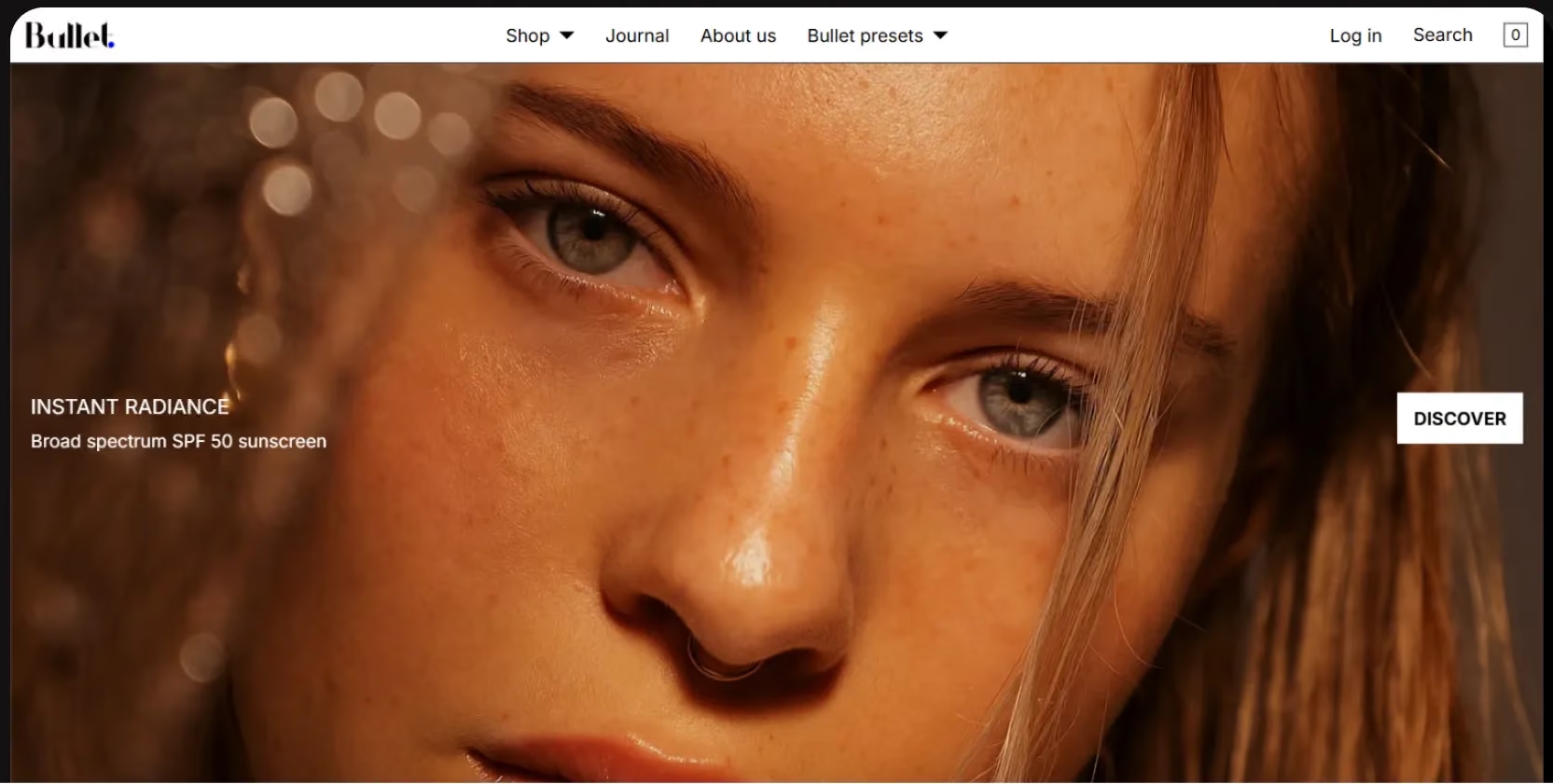
Bullet (v6.0.0, February 2026) supports 20 languages, includes 8 new sections, and delivers consistent sub-3-second mobile performance under production load.
For high-traffic beauty stores, it is currently one of the strongest performers in the Shopify Theme Store.
Eurus delivers strong speed credentials with mega menu support and advanced collection filtering built for scale without requiring app additions that compromise the performance it achieves out of the box.
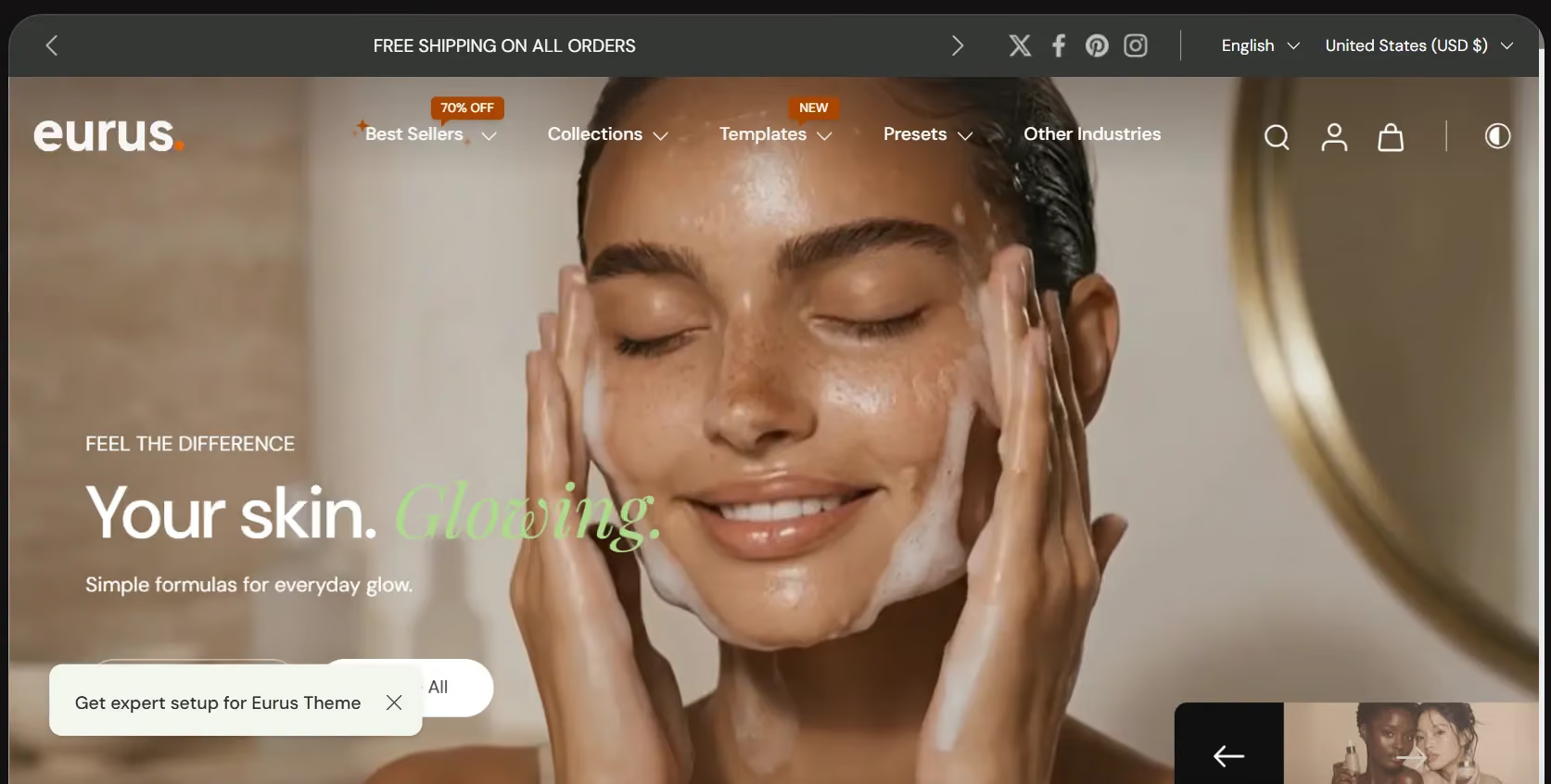
Ella includes 30+ pre-built demos including cosmetics presets, native upsell and cross-sell mechanics, and Shopify OS 2.0 drag-and-drop. Strong for brands managing multiple product lines skincare, supplements, and body care under one storefront.
The revenue math at this stage makes the theme performance decision concrete. A D2C beauty brand in the UAE with 40,000 monthly sessions from paid social, a 1.8% conversion rate, and AED 150 average order value is generating AED 108,000/month.
At 2.5% conversion achievable with the right theme, mobile UX and checkout architecture monthly revenue is AED 150,000. The theme's performance architecture is worth AED 42,000/month in that specific scenario, at unchanged ad spend.
High-volume beauty brands frequently come to us after months of increasing ad spend on a beautiful but slow theme. The problem is not the ads. It is the store speed on mobile at the moment the ad traffic lands.
Best Free Shopify Themes for Beauty Products
Recommended themes: Sense / Dawn / Horizon
These are the correct starting point for founders launching a first product, validating a D2C model, or bootstrapping before a larger build commitment.
Sense is the most recommended free beauty theme on the Shopify store clean layout, product-forward design, and maintained directly by Shopify with reliable updates.
Dawn is the fastest and most minimal free option, an excellent foundation for incremental development.
Horizon (added 2025) offers more design flexibility than Dawn with stronger visual sections suitable for founders who need more layout latitude without cost.
The honest calculation: all three require app dependencies to deliver shade pickers, quiz sections, ingredient tabs, and UGC displays. The "free" label is accurate for the theme itself. The production store with the features a beauty brand needs is not free by Month 3.
Theme Comparison at a Glance
The Features That Actually Move Conversion in Beauty (And Why They Work)
A feature list without conversion reasoning is a spec sheet. Each element below is explained in terms of the buyer behaviour it supports and what happens to conversion when it is absent.
Shade Pickers and Colour Swatches
Beauty shoppers abandon when they cannot visualise a product on themselves. This is not a preference problem, it is a decision barrier.
A lipstick with 24 shades displayed in a dropdown menu creates friction at the exact moment a buyer is deciding which shade is theirs. A visual swatch grid with hover preview keeps the buyer in decision mode on the same page.
Huda Beauty's product pages use a highly refined shade selection system that allows buyers to navigate between shades without page reloads.
Brands attempting to replicate this with a standard dropdown on a generic theme see measurably higher abandonment on foundation and concealer SKUs the products with the highest margins and the most shade-selection complexity.
Themes with native shade picker support (BEAUTIFY, Symmetry, Bullet) eliminate this friction without the performance cost of a third-party swatch app.
Before-and-After Sliders and Visual Proof
Skincare is a results category. Buyers need visual evidence. A before-and-after slider on a product page functions as native social proof the buyer can verify the brand's claim without leaving the page or searching for external reviews.
For a UAE-based skincare brand selling a pigmentation serum, a before-and-after slider showing results across different skin tones does two things simultaneously: it verifies the product claim and allows the buyer to self-identify with the result.
Both actions reduce abandonment. Static "before/after" images on a basic layout present the same information without the interactive engagement that keeps buyers on page.
Mobile Cart and Checkout Architecture
Most beauty purchases in the UAE and Gulf are researched on mobile and completed there. The indicators of a mobile checkout that converts: sticky add-to-cart button visible without scrolling, a slide-out cart panel that does not require a page navigation.
Guest checkout presented as a primary option rather than buried below account creation and tap target sizes that work on a phone in one hand without precision.
A theme that performs on desktop but delivers a collapsed mobile checkout experience is commercially dangerous for any brand running paid social traffic which describes every scaling beauty brand in this market.
Ingredient and Education Sections
The clean beauty movement has made ingredient literacy mainstream among beauty buyers, particularly in the Gulf market where buyers increasingly compare ingredient lists before purchasing.
Themes that support expandable ingredient lists, tabbed product descriptions, and FAQ sections reduce return rates and build trust with research-led buyers by providing the information they would otherwise leave the site to find.
On the Miduty project, the product page was not primarily a selling tool. It was a trust-building tool. The buyer needed to understand ingredients and efficacy before they would consider converting a dynamic familiar to any brand serving health-conscious female buyers in the UAE. That requirement informed every design decision from the tab structure to the typography choices, before any visual design was applied.
Video and UGC Display Support
TikTok and Instagram Reels are now the primary beauty discovery channels for most D2C brands. A store that cannot bring that social content on-site loses the momentum between discovery and purchase.
Shoppable video sections on product and homepage pages reduce the gap between "I saw this on Instagram" and "I bought this." UGC galleries customer photos, image reviews, video testimonials are among the highest-converting trust elements in beauty ecommerce.
According to Bazaarvoice research, UGC increases conversion rates by up to 166% for beauty products compared to stores that present brand content only.
The Feature-to-Conversion Map
When a Shopify Template Is Not Enough
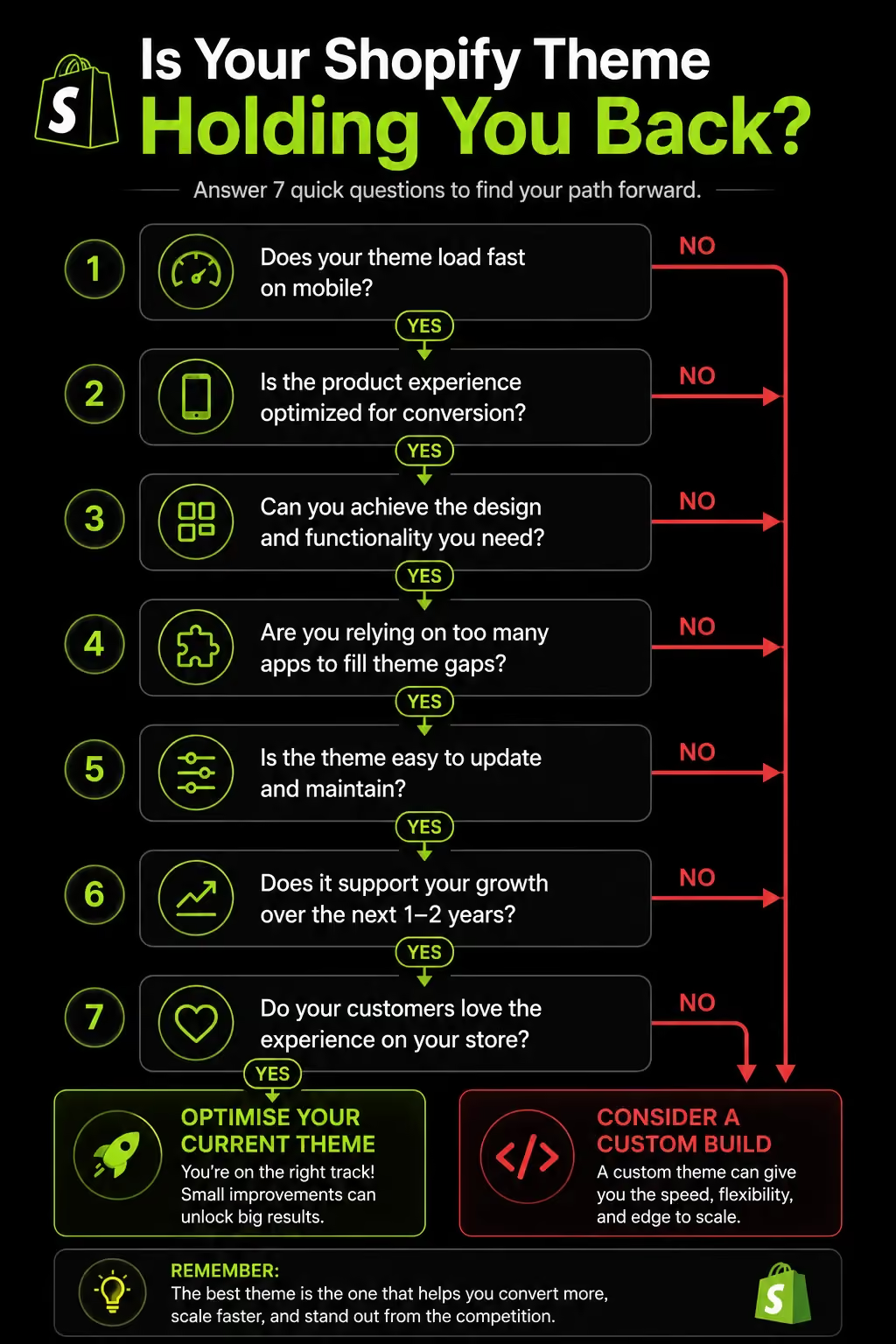
There is a specific inflection point at which a Shopify theme stops serving a beauty brand and starts constraining it. Most brands do not recognise it until the evidence has been accumulating for months. These are the signals to watch for.
Seven Signs Your Beauty Store Has Outgrown Its Theme
1. Conversion rate has plateaued despite consistent traffic growth and increasing ad spend. When more traffic and more spend produce proportionally flat revenue, the constraint is usually the store experience, not the audience.
2. You are running 10 or more apps and your mobile PageSpeed score is below 60. This combination indicates that the theme's native capabilities required significant external patching, and that patching has compounded into a performance problem.
3. Your brand has a clear, distinct visual identity but no template executes it accurately without looking like a compromise. If every theme demo requires "we can customize it to look more like our brand" from your agency, the theme is the wrong tool.
4. You are operating across multiple markets with different currencies, languages including Arabic RTL, and regional payment gateway requirements. No off-the-shelf theme handles multi-region Gulf selling reliably without significant custom development at which point the theme is serving as a starting point, not a solution.
5. Your SKU count has passed 150 and buyers are telling you they cannot find what they are looking for. Navigation and filtering at this scale requires information architecture that most themes approximate rather than deliver.
6. You need UX flows; no theme supports natively diagnostic quizzes, loyalty tier displays, skin routine builders, or shade-matching tools that are core to your customer experience.
7. Developers are writing overrides for overrides. When technical debt in the theme is compounding faster than it can be addressed, the architecture has become a liability.
The Revenue Math That Makes the Decision Concrete
A beauty brand generating AED 400,000/month at a 1.8% conversion rate with 22,000 monthly sessions:
- At 2.5% conversion (achievable with a purpose-built store): AED 555,000/month
- Monthly difference: AED 155,000
- Annualised: AED 1.86 million
- Cost of a well-executed custom Shopify build: AED 80,000 – 180,000 once
The theme is not a cost line. It is revenue infrastructure. The brands that come to us for custom Shopify builds are almost never unhappy with how their site looks.
They are unhappy with what it is costing them in conversion rate, in developer hours writing workarounds, and in app subscriptions that have turned their product page into a slow, fragile system. That is the theme ceiling.
How We Approach Shopify Store Design for Beauty Brands
We do not start with theme selection. We start with user research, personas, and information architecture.
For Miduty, a personal care and wellness brand, the primary challenge was building trust with health-conscious women who were skeptical of product claims.
That insight shaped the entire experience, from content hierarchy and page structure to typography and visual design.
The product pages were designed to highlight ingredient credibility, certifications, and supporting evidence before presenting purchase CTAs.
The theme choice came later, after the customer journey had already been defined.
Four questions we ask every beauty brand before recommending any Shopify approach:
Who is your primary buyer, and what do they need to believe before they trust you enough to purchase?
The answer to this question determines the trust layer of the design before anything visual is decided.
What is your SKU count today, and realistically, what will it be in 18 months?
A theme that works at 30 SKUs may become a navigation liability at 80. Scoping for 18 months prevents a rebuild that could have been avoided.
Where does your traffic come from organic, paid social, or marketplace migration and does your store's mobile experience match those traffic sources?
A brand running Instagram and TikTok campaigns needs a mobile experience built for that entry point, not adapted from a desktop design.
What does your checkout abandonment data tell you about where trust breaks down?
Abandonment at the payment step indicates trust signal failure. Abandonment at the cart indicates pricing or shipping friction. These are design problems with different solutions.
For early-stage brands with a focused product range, a well-configured premium theme is often the right starting point. We will say that honestly the goal is the right outcome for the brand's current stage, not the largest engagement.
For brands scaling across the UAE and Saudi Arabia, a custom Shopify build is often the better choice. Requirements like Arabic RTL support, regional payment methods, and high mobile performance can be difficult to achieve with off-the-shelf themes.
The strongest brands focus less on choosing the best-looking theme and more on understanding what customers need to see before they buy. That approach drives better conversions and long-term growth.
If you are evaluating a Shopify build or rebuild for a beauty brand and want a clear starting point, the Suplex team runs platform consultations that start with audience and commercial context, not theme recommendations.
Frequently Asked Questions
What is the best free Shopify theme for beauty products?
Sense is the most widely recommended free Shopify theme for beauty. It has a clean layout, solid product page structure, and is maintained directly by Shopify. Dawn is faster but minimal. Horizon offers more design flexibility. All three work best for early-stage brands before investing in a premium build though each requires apps to deliver shade pickers, quizzes, and ingredient displays that premium themes include natively.
What features should a Shopify theme for beauty products have?
A beauty Shopify theme should include native colour swatches or shade pickers, before-and-after image sliders, mobile-optimised product pages, tabbed ingredient or benefit sections, video support on product pages, trust badge placement, and social proof displays. Themes requiring third-party apps for these features add monthly costs and reduce page speed both of which hurt conversion rate.
Is Prestige a good Shopify theme for beauty brands?
Yes for luxury and boutique beauty brands prioritising editorial aesthetics and brand storytelling. Prestige creates a premium visual environment and supports upsell tools, video sections, and countdown timers. It is not the strongest choice for large catalogs, high-volume D2C ad traffic, or brands that need strong collection filtering. It requires active performance management under real production conditions.
How much do premium Shopify themes for beauty stores cost?
Premium Shopify beauty themes range from $89 (Ella on ThemeForest) to $380 (Prestige on the official Shopify Theme Store). The upfront cost is typically offset within 3 – 6 months by eliminating third-party app subscriptions. Shade pickers, quiz sections, review tools, and video features can cost $60 – $120/month in apps on a free theme making the premium theme cheaper within the first year.
Can I customise a Shopify beauty theme without coding?
Yes. All Shopify 2.0 themes include a drag-and-drop section editor for rearranging layouts, adding content blocks, and updating colours, fonts, and brand assets. Deeper customisations, custom product page logic, multi-language or multi-currency setups, performance-critical changes, or brand-specific UX flows require a Shopify developer.
When should a beauty brand use a custom Shopify build instead of a theme?
When your brand has 150+ SKUs, operates across multiple markets, has plateaued conversion rates despite strong traffic, or requires UX flows no theme supports natively diagnostic quizzes, loyalty tiers, or routine builders. The inflection point is usually when app subscriptions are compounding, mobile page speed has degraded below 60, and developers are writing workarounds for existing workarounds.
Which Shopify theme is best for a beauty brand in the UAE or Gulf?
For luxury or boutique positioning, Prestige or BEAUTIFY. For high-volume D2C operations, Bullet or Eurus deliver stronger mobile performance under real traffic. Multi-region selling, Arabic RTL support, and regional payment gateway compatibility (Tabby, Tamara, Network International) often require custom Shopify development; no off-the-shelf theme handles Gulf market multi-region requirements reliably without significant custom work.
Hi, I’m Rishabh Jain
I believe great digital experiences have the power to shape perception, build trust, and move businesses forward. That belief led me to found Suplex Design Studio, a global digital design and development studio helping FMCG and D2C brands build websites and digital experiences that are strategic, thoughtful, and commercially meaningful.
I started Suplex at 25 with a clear intent, to create digital experiences that look appealing, work seamlessly, and help D2C businesses grow. By 28, the studio had scaled globally, guided by a strong foundation in integrated design that I developed during my academic journey in London, where I was honoured with the Dean’s Award.
Over the years, I’ve had the opportunity to work with 100+ brands, from Fortune 500 organisations to family-run businesses, helping them build websites, e-commerce experiences, and digital products that create clarity, credibility, and long-term value.
Our work has been recognised internationally, including the Manifest Award (2024), the Clutch Global Award (2025), and features across platforms such as The Dieline, Packaging of the World, and the World Brand Design Society.
None of this would be possible without the people behind the work. I’m deeply grateful to the Suplex team, whose commitment, creativity, and attention to detail turn ideas into meaningful digital experiences every day.
At the heart of our work is a simple philosophy, digital design should be intentional, functional, and built to create real business value. That continues to guide everything we create at Suplex.













Let’s Make It Happen
E-Commerce Success Stories
%201.avif)





.avif)
.avif)
Build Your D2C Business The Right Way
Build It With Suplex.


