Magento to Shopify Plus Migration: The Complete 2026 Guide (With Checklist)
.avif)
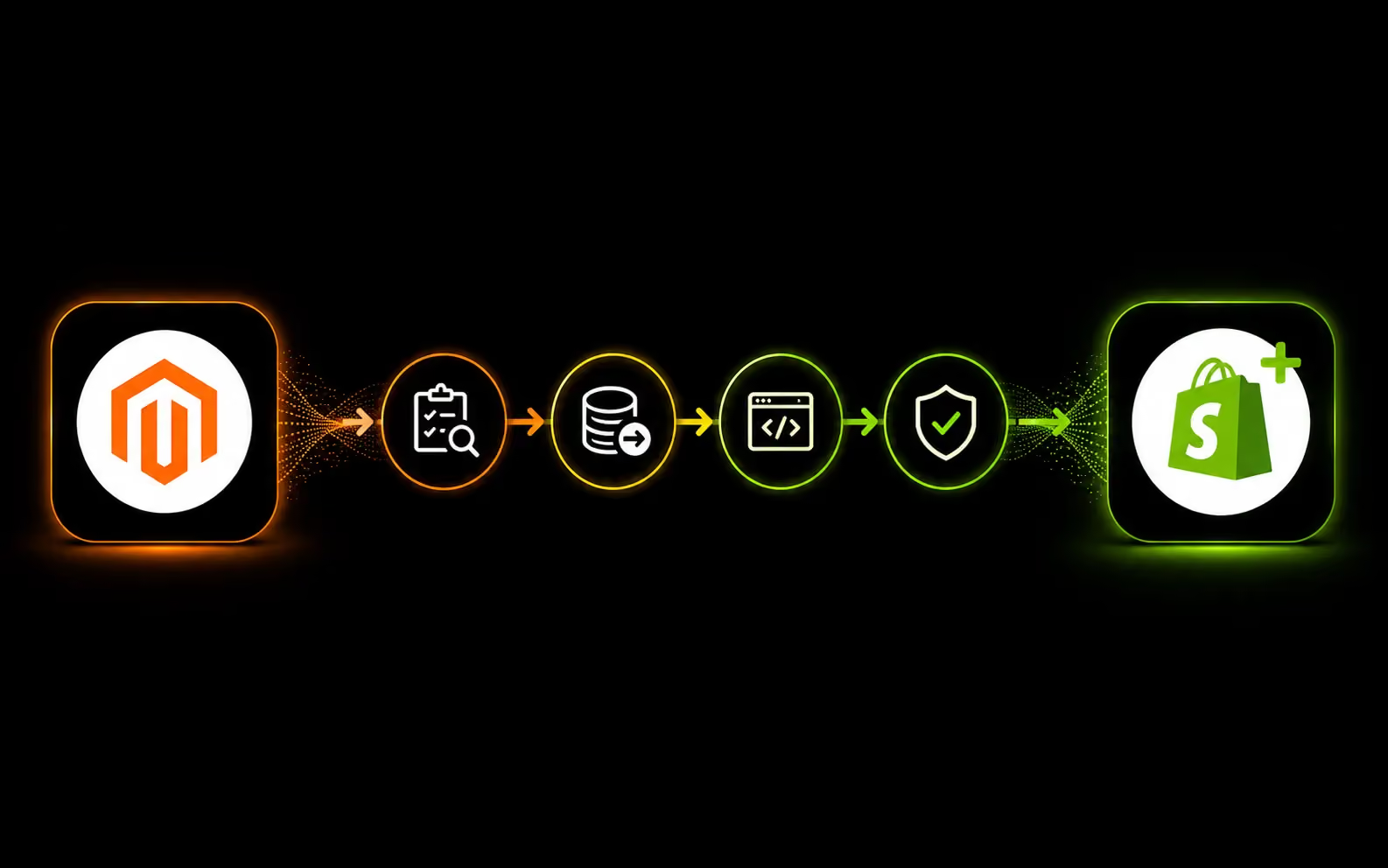
Magento to Shopify Plus Migration: The Complete 2026 Guide (With Checklist)
Migrating from Magento to Shopify Plus typically takes 3 to 6 months and costs between $20,000 and $100,000+, depending on store complexity, integration depth and whether you are redesigning alongside the migration.
This blog covers the full process, why brands are leaving Magento, what the migration actually involves, what it costs, how to protect your SEO and a step-by-step checklist you can use to plan and execute the move.
It is written for ecommerce managers, CTOs and digital leads at mid-to-enterprise brands currently on Magento Open Source or Adobe Commerce who are evaluating replatforming.
One data point worth noting before you read further, in Q3 2025, Magento lost 11% of its active stores year-over-year. The migration trend is not slowing.
Why Brands Are Leaving Magento for Shopify Plus
The shift away from Magento is not a trend driven by marketing. It is driven by the real operational cost of running a platform that was built for a different era of ecommerce, one where custom development was the only path to flexibility and where infrastructure management was an accepted overhead.
The Real Cost of Staying on Magento
Magento's total cost of ownership is higher than most teams' budget for when they first build on it. When you add up server hosting, security patching, PCI DSS compliance management, extension updates and the developer hours required for every meaningful change, the annual bill for a mid-size Magento store typically lands between $50,000 and $150,000.
The hidden cost is agility. On Magento, a new product type, a checkout modification, or a promotional campaign that requires custom logic takes developer involvement.
During peak trading windows Ramadan, White Friday, GITEX in the UAE context that dependency creates real commercial risk. Teams cannot move fast when every change goes through a development queue.
Security is an ongoing liability. Magento Open Source stores require manual security patching. Missed patches create vulnerabilities. Hosting infrastructure is entirely your team's responsibility.
Adobe Commerce Cloud offloads some of this, but the licensing cost starts at $22,000 per year before infrastructure is accounted for.
The cumulative effect: technical teams spend their time maintaining the platform rather than building features. Commercial teams wait weeks for changes that competitors on modern platforms execute in hours.
What Shopify Plus Offers That Magento Does Not
Shopify Plus is a fully hosted SaaS platform. That single fact eliminates the infrastructure management, security patching, and hosting overhead that consumes Magento teams. Shopify handles uptime, security, and performance at the infrastructure level. Your team manages commerce, not servers.
The operational difference is significant:
- Non-technical teams can manage products, content, and promotions without developer support through Shopify's admin
- Shopify Markets provides native multi-currency, multi-language, and multi-region support a genuine advantage for GCC brands selling across UAE, KSA, Kuwait, and Qatar from a single backend
- Arabic storefront support is native, not an extension dependency
- UAE payment gateways Checkout.com, Telr, PayTabs integrate cleanly without custom development
- Shopify Plus starts at approximately $2,500/month, against a Magento TCO of $4,000 – $15,000+/month depending on infrastructure and support requirements
For UAE and Gulf brands specifically, the market context adds urgency. The UAE ecommerce market is projected to reach AED 48.8 billion by 2028.
Shopify stores in the UAE grew 25% year-over-year as of mid-2025. Brands that delay replatforming from an operationally expensive platform are competing with teams that can deploy faster, test more, and respond to market conditions in real time.
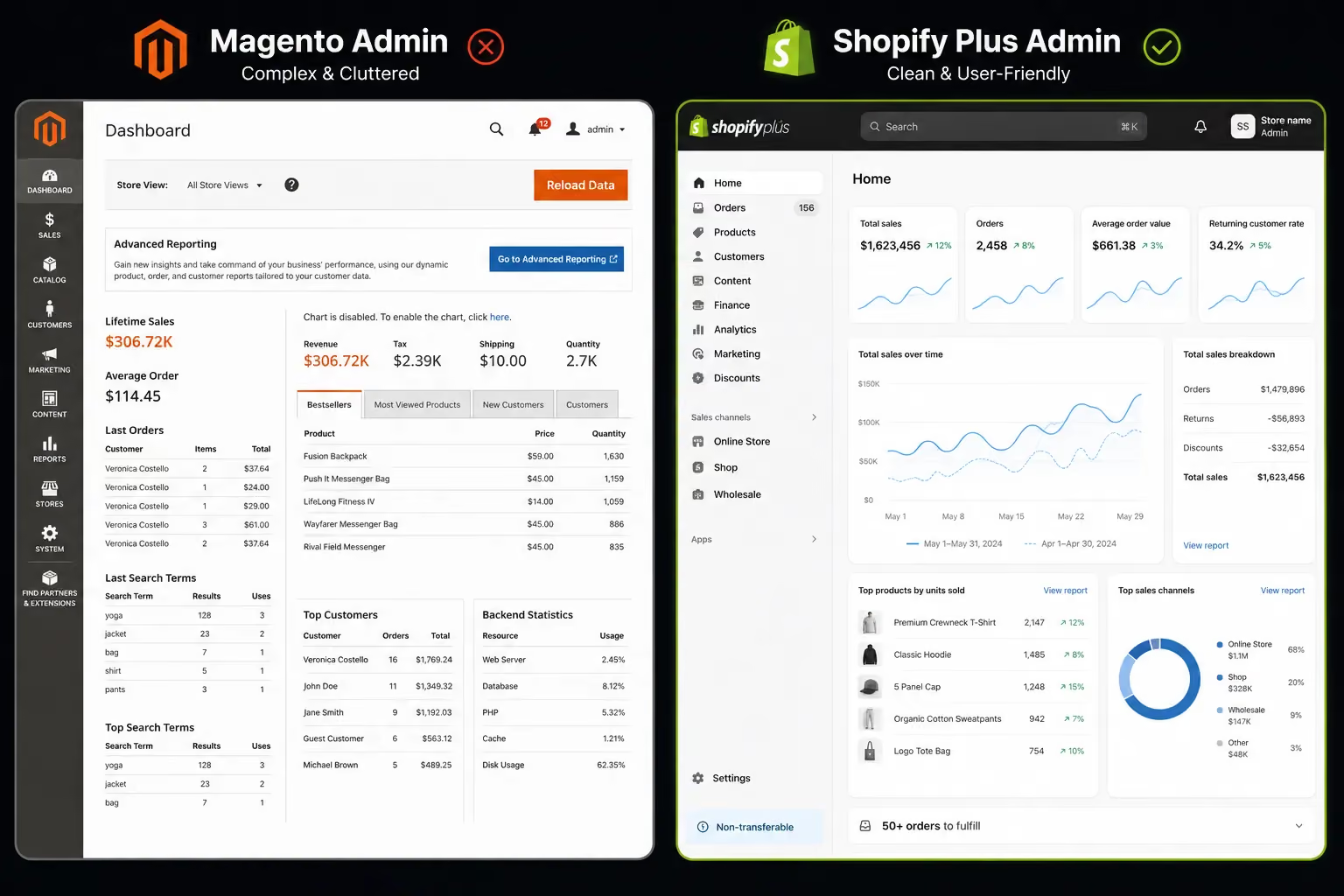
Magento vs. Shopify Plus: Key Differences to Understand Before You Migrate
Before you begin any migration planning, you need a clear picture of what changes and what does not when you move platforms. This is not just a features comparison, it is a map of what your team will gain, what they will lose, and what will need to be rebuilt.
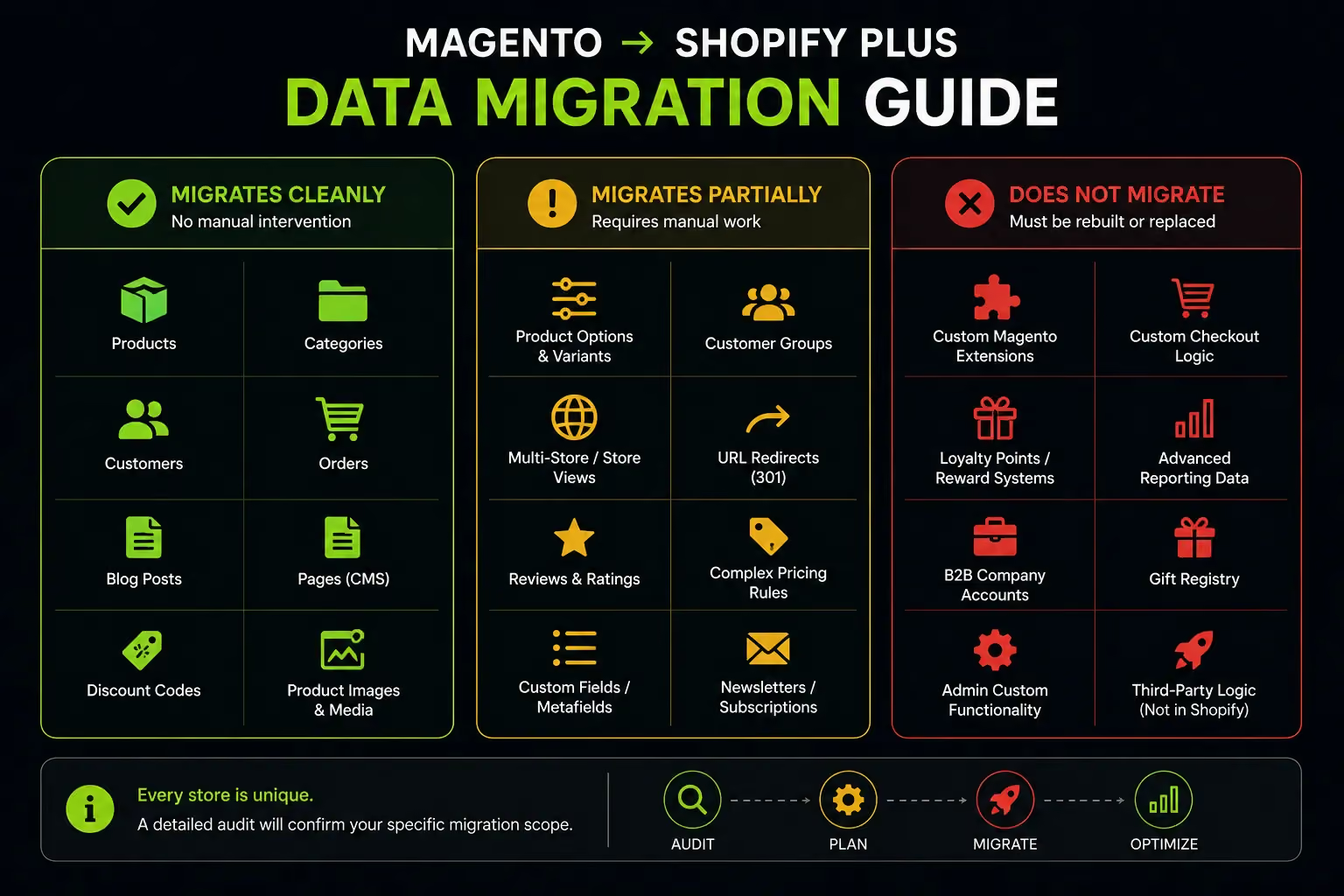
What Does Not Transfer Automatically
This is the section most migration guides bury or skip. These are the issues that create the most expensive surprises on Day 1:
Customer passwords cannot be migrated. Magento uses salted password hashing, an encryption method Shopify cannot read or replicate. Every migrated customer will need to reset their password after launch.
Plan a branded email campaign for this: it goes out on launch day, explains the change clearly, and includes a direct reset link. Fail to plan this and you will have customers who cannot log in and a customer service queue to match.
Custom Magento modules have no automatic Shopify equivalent. Every custom extension needs to be individually assessed: does a Shopify app replace it? Does it need to be rebuilt using Shopify Functions or APIs? Is it still needed at all? This audit is non-trivial and must happen before scope and cost are finalised.
URL structures are fixed in Shopify. Products live at /products/, collections at /collections/. Magento allows fully flexible URL hierarchies. Moving from Magento's URL structure to Shopify's means every indexed URL changes and every indexed URL that changes needs a 301 redirect. Without that redirect map, you hand years of SEO equity to your competitors.
Complex B2B pricing rules and tiered pricing do not transfer automatically. Shopify Plus has native B2B features, but your Magento pricing logic needs to be mapped and rebuilt using Shopify's B2B tools or Shopify Functions.
Magento categories become Shopify collections, and subcategory structures need to be restructured. This affects both navigation design and SEO architecture.
How Long Does a Magento to Shopify Plus Migration Take?
The honest answer depends on what you are migrating from. A simple store with a clean catalog and minimal custom integrations moves faster than an enterprise platform with ERP dependencies and multi-region configuration.
Add 2 – 4 weeks to any timeline that involves complex integrations ERP systems, order management platforms, custom subscription logic, or PIM tools. Integration rebuild is consistently the most time-consuming phase, and it is the phase most teams underestimate.
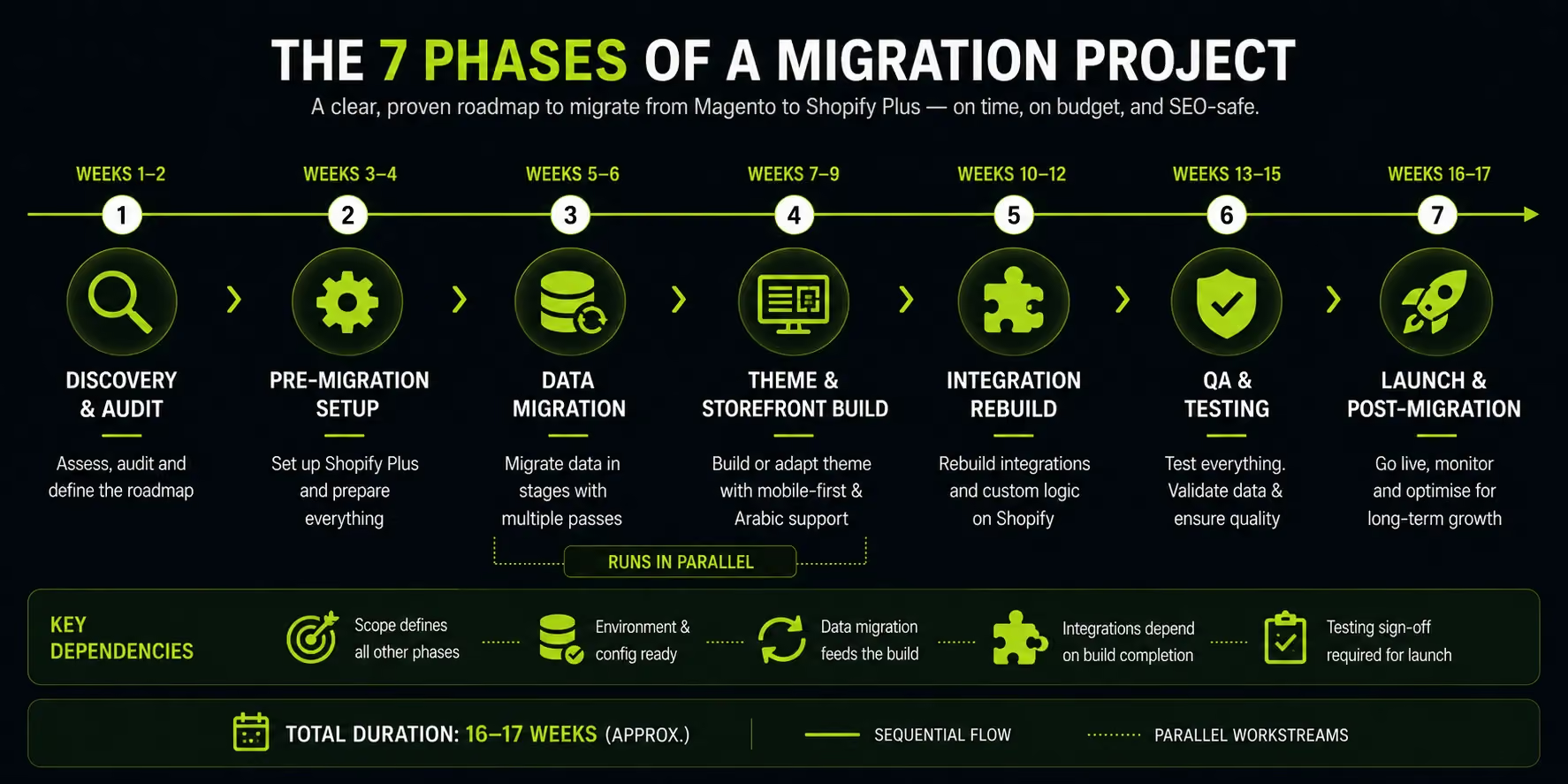
The 7 Phases of a Migration Project
Understanding the project structure helps you allocate budget, assign internal resources, and set realistic expectations with stakeholders.
Phase 1: Discovery and Audit: Full catalog audit, integration mapping, custom functionality review, and an SEO snapshot. This phase defines the scope of everything that follows. Time spent here saves multiples of that time later.
Phase 2: Pre-Migration Setup: Magento data backup, Shopify Plus account creation, basic configuration, Shopify Markets setup for multi-region stores, and payment gateway integration (particularly important for UAE/GCC stores).
Phase 3: Data Migration: Staged transfer of products, customers, orders, discount codes, blog posts, and CMS pages. This phase runs in parallel with Phase 4 and is typically performed in multiple passes a full migration on staging, then a delta migration of any changes made during the build period.
Phase 4: Theme and Storefront Build: New design or adapted theme build. Mobile-first execution is mandatory particularly for UAE audiences where mobile commerce represents over 70% of ecommerce traffic. Arabic language storefront configuration happens here.
Phase 5: Integration Rebuild: ERP, CRM, payment gateways, and logistics platforms are reconnected via Shopify APIs. Custom Magento module logic is rebuilt using Shopify Functions or replaced by Shopify apps.
Phase 6: QA and Testing: Functional testing, data validation, redirect verification, mobile performance testing, and full transaction testing across every payment method. No phase should be compressed more than this one is tempted to be.
Phase 7: Launch and Post-Migration: Go-live execution, 301 redirect upload, sitemap submission to Google Search Console, password reset campaign, and 30-day monitoring protocol.
Magento to Shopify Plus Migration Cost Breakdown
Most mid-size Magento to Shopify Plus migrations cost between $20,000 and $75,000. Enterprise-scale projects with ERP integrations, large catalogs, multi-region configuration, or custom B2B logic regularly exceed $100,000.
In the UAE, these figures translate to approximately AED 73,000 – AED 275,000 for mid-size builds and AED 367,000+ for enterprise projects.
What Drives the Cost
No two migrations cost the same because no two Magento stores are the same. The variables that move the number most:
- SKU count and data volume: More products, customers, and order history mean more migration time, more validation work, and more risk of data errors.
- Number of integrations: Each ERP, CRM, OMS, or PIM connection is a rebuild project within the migration. One complex ERP integration can add $10,000 – $30,000 to the project cost alone.
- Custom Magento modules: Every module that has no Shopify equivalent needs to be rebuilt using Shopify Functions or APIs or assessed for deprecation. This assessment itself takes time.
- Theme approach: Using a Shopify-compatible template reduces cost. A fully custom Shopify Plus theme designed from scratch adds $8,000 – $25,000+ to the scope.
SEO migration complexity: Larger stores with more indexed pages require more comprehensive redirect mapping, metadata audit, and post-launch monitoring.
Hidden Costs Teams Overlook
These do not appear in agency quotes and reliably catch clients off guard:
Revenue fluctuation during migration: Expect reduced development team availability for your current store during the migration window. New feature development pauses. Some teams also experience a small post-launch dip in conversions while customers adjust to the new experience.
App subscription costs post-migration: A typical Shopify Plus store running reviews, loyalty, upsells, analytics, and email automation pays $200 – $800/month in app subscriptions. Budget for this as an ongoing operational cost.
Team retraining: Shopify Plus is simpler than Magento, but it is different. Your team needs 2 – 4 weeks to reach full operational confidence. Expect reduced productivity during that window.
Post-launch fixes: Budget $2,000 – $8,000 for the first 90 days post-launch. Edge cases, device-specific issues, and integration anomalies emerge under real traffic that staging testing did not surface.
SEO recovery investment: 3 – 6 months of active monitoring, redirect maintenance, and content optimisation is standard after a migration of this scale.
Add a 30 – 40% contingency to any initial quote. Indirect and opportunity costs routinely add 10 – 30% to the stated project price on migration projects.
Step-by-Step Magento to Shopify Plus Migration Checklist
This is the most actionable section of this guide. Work through each step in order. Do not skip Phase 1 to accelerate Phase 3.
SEO Risks in Magento to Shopify Plus Migration (And How to Avoid Them)
SEO is the highest-anxiety part of any platform migration for good reason. Organic traffic represents years of compounding effort. A poorly executed migration can erase that equity in days. A well-executed one can preserve it fully and often improve it.
URL Structure Changes
This is the most significant SEO risk in the migration. Magento allows fully flexible URL hierarchies. Shopify enforces fixed URL patterns: /products/ for all product pages, /collections/ for all collection pages, /blogs/ for blog content.
Every URL in your current Magento store that is indexed by Google and does not map to an identical URL in Shopify needs a 301 redirect.
Without a comprehensive redirect map, every page Google has indexed on your Magento store becomes a 404 on your Shopify store. Link equity built through backlinks, rankings earned through content, and crawl pathways established over years all disappear. Recovery takes months and is never fully complete.
The fix: export your Magento url_rewrite table during the audit phase. This gives you every URL the store has served including historical redirects. Map each one to its Shopify equivalent and upload the full redirect list before your launch DNS switch.
Temporary Ranking Fluctuations Are Normal
Expect 3 – 6 weeks of ranking fluctuation as Google recrawls and reindexes your site. This is standard after any major platform change.
It is not a signal that something is wrong, provided your redirect map is complete and your metadata has been preserved.
Most stores that follow a structured migration process recover within 3 months. Many rankings improve post-migration because Shopify Plus consistently delivers faster page speeds and better Core Web Vitals scores than Magento installations of equivalent scale.
Your SEO Preservation Checklist
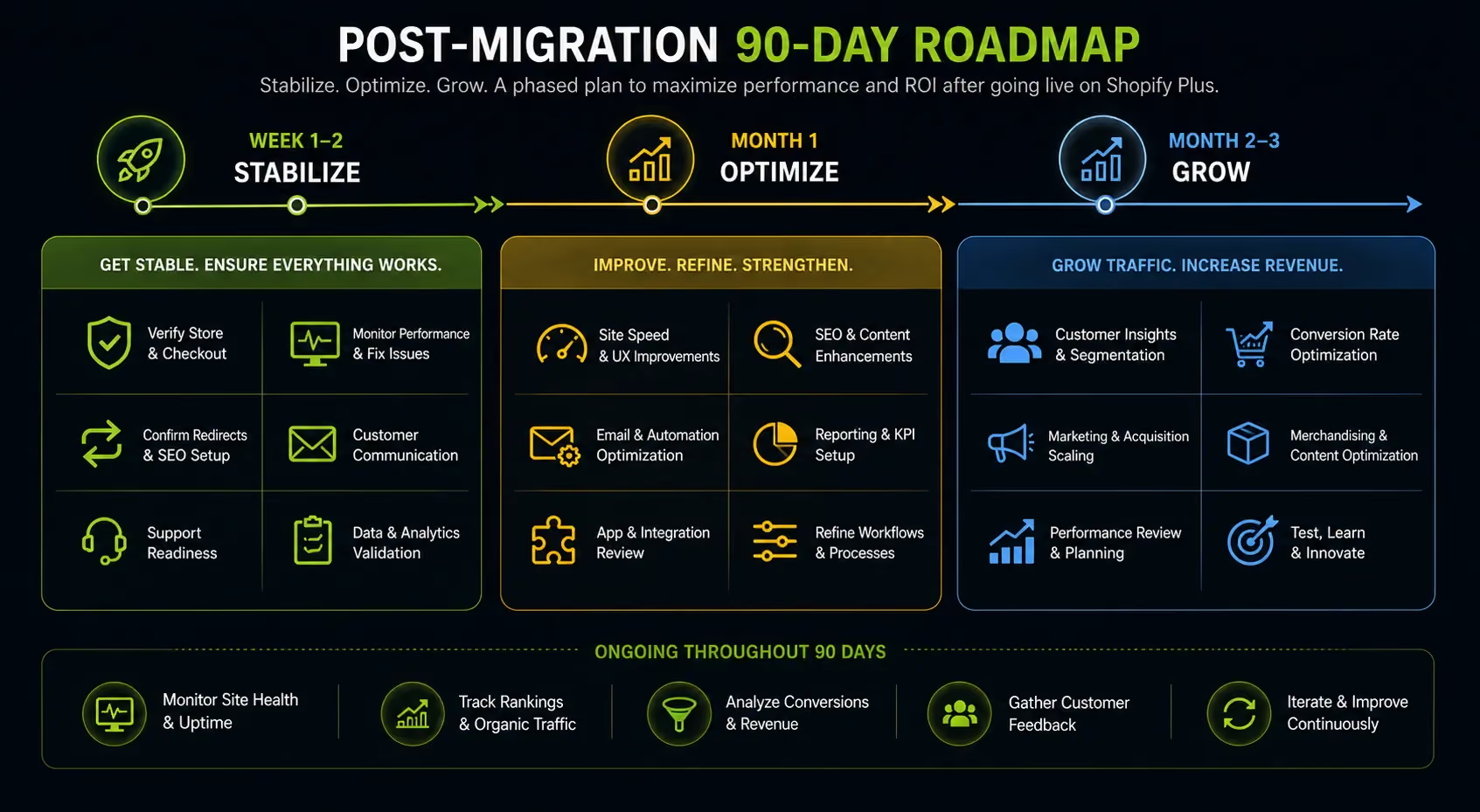
Post-Migration: What to Do in the First 90 Days
The launch is not the finish line. The first 90 days determine whether your migration delivers the performance improvements that justified the investment.
Immediate (Weeks 1 – 2)
The priority in the first two weeks is validation, not optimisation:
- Monitor Google Search Console for crawl errors and indexation issues daily. Any spike in 404s is a redirect problem. Fix it the same day.
- Confirm all 301 redirects are functioning. A Screaming Frog re-crawl of your redirect map after launch takes a few hours and catches anything that slipped through QA.
- Watch checkout abandonment rate closely. Any significant increase versus your Magento baseline is a UX signal; something in the new checkout flow is creating friction.
- Confirm payment gateways are processed correctly in production. Staging testing and live processing sometimes behave differently.
Short-Term (Months 1 – 3)
Once the site is stable, shift focus to performance improvement:
CRO testing: Shopify Plus's performance improvements frequently unlock higher conversion rates. A 10 – 30% improvement in conversion rate in the 90 days post-migration is commonly reported by brands coming from slower Magento setups. Use Shopify's built-in analytics and an A/B testing app to begin testing your highest-traffic pages.
Core Web Vitals optimisation: Use Shopify's performance tools and PageSpeed Insights to identify any remaining speed issues. Shopify Plus generally performs better than Magento at scale, but theme code quality and app load still matter.
Customer re-engagement: Run a targeted email campaign to customers who reset their passwords after launch. Follow up with a loyalty incentive, a discount code or early access offer to reactivate lapsed customers during the transition window.
App stack review: By Month 2, you have enough data to evaluate which apps are delivering value. Eliminate subscriptions that are not contributing to revenue or operations. A lean app stack also improves performance.
How Suplex Approaches Magento to Shopify Plus Migrations
Replatforming is not a development project with a design component bolted on. It is a business-continuity exercise that requires equal attention to data integrity, SEO preservation, and commercial performance from Day 1.
Suplex is a Shopify design and development partner based in the UAE with direct experience in ecommerce replatforming across retail, fashion, F&B and B2B categories.
The migration process at Suplex follows a structured sequence: audit, strategy, data migration, storefront build, integration rebuild, QA, launch, and a defined post-launch optimisation period. Nothing moves to the next phase until the current phase is validated.
For UAE and GCC brands, the regional context is built into the process from the start Arabic storefront configuration, Shopify Markets setup for multi-country selling, local payment gateway integration (Checkout.com, Telr, PayTabs), and mobile-first design execution calibrated for the Gulf's high mobile commerce penetration.
The outcome Suplex targets on every migration is straightforward: a Shopify Plus store that trades from Day 1, retains its organic rankings, and gives the commercial team the operational flexibility the Magento platform never could.
If you are evaluating a move from Magento, a migration readiness assessment reviewing your current platform, integrations, data structure, and SEO assets before any scope is written is the right starting point. Talk to the Suplex team before you commit to a timeline or budget.
Frequently Asked Questions About Magento to Shopify Plus Migration
How long does it take to migrate from Magento to Shopify Plus?
Most migrations take 3 – 6 months from discovery to launch. Simple stores with limited integrations can complete in 6 – 8 weeks.
Enterprise stores with ERP integrations, large catalogs, or multi-region setups run 4 – 6 months. Rushing the timeline is the single most common cause of data loss, SEO damage, and post-launch bugs. Built- in buffer costs less than fixing a rushed launch.
Will I lose SEO rankings when migrating from Magento to Shopify?
You can lose rankings if the migration is done poorly specifically from broken redirects and URL structure changes without 301 mapping.
Done correctly, with comprehensive redirect mapping, metadata preservation, and structured data recreation, most stores maintain rankings. Many see improvements post-migration because Shopify Plus delivers faster page speeds and better Core Web Vitals than Magento at equivalent scale.
How much does a Magento to Shopify Plus migration cost?
Costs range from $20,000 to $75,000 for most mid-size stores and exceed $100,000 for enterprise projects with complex ERP integrations or large catalogs. In the UAE, this translates to approximately AED 73,000 – AED 275,000 for mid-size builds.
DIY migration tools cost $200 – $3,000 but carry significant risk for stores with custom features or large datasets. Always build in a 30 – 40% contingency.
Can customer passwords be migrated from Magento to Shopify?
No. Magento uses salted password hashing that Shopify cannot read or replicate. All migrated customers will need to reset their passwords after launch.
Best practice is a branded email campaign that goes out on launch day, explains the change simply and includes a direct password reset link. Prepare this campaign before launch, not after customers start contacting support.
What data can be migrated from Magento to Shopify Plus?
Products including variants, images, descriptions, and metadata; customer records including names, emails, and addresses; historical orders; discount codes; CMS pages; and blog posts all migrate.
Custom product attributes migrate as Shopify metafields. What cannot migrate: passwords, complex custom module logic, and Magento's URL structure which requires comprehensive 301 redirect mapping to preserve SEO equity.
Is Shopify Plus suitable for UAE and GCC brands?
Yes. Shopify Plus supports Arabic storefronts, multi-currency pricing, and Shopify Markets for cross-border selling across UAE, KSA, Kuwait, and Qatar. It integrates natively with Checkout.com, Telr, and PayTabs. Shopify stores in the UAE grew 25% year-over-year as of mid-2025, reflecting strong and accelerating platform adoption across the region.
Hi, I’m Rishabh Jain
I believe great design has the power to shape perception, build trust, and move businesses forward. That belief is what led me to found Suplex Design Studio, a global branding and packaging studio working with FMCG and D2C brands across markets.I started suplex at 25 with a clear intent, to create design that is strategic, thoughtful, and commercially meaningful. By 28, the studio had scaled globally, guided by a strong foundation in Integrated Design that I developed during my academic journey in London, where I was honoured with the Dean’s Award.
Over the years, I’ve had the opportunity to work with 100+ brands, from Fortune 500 organizations to family-run businesses, helping them build packaging and brand systems that create recall, relevance, and long-term value.
Suplex’s work has been recognized internationally, including the Manifest Award (2024), the Clutch Global Award (2025), and features on platforms such as Packaging of the World, The Dieline, and the World Brand Design Society.
None of this would be possible without the people behind the work. I’m deeply grateful to the suplex team, whose commitment, creativity, and attention to detail turn ideas into meaningful brand experiences every day.
At the heart of my work is a simple philosophy, design should be intentional, honest, and built to last, and that continues to guide everything we create at suplex.






































Let’s Make It Happen
E-Commerce Success Stories
%201.avif)






.avif)

.avif)
Build Your D2C Business The Right Way
Build It With Suplex.


