Electronics Ecommerce Website Design in Dubai: What to Build to Compete With the Big Retailers

Electronics Ecommerce Website Design in Dubai: What to Build to Compete With the Big Retailers
Electronics ecommerce in the UAE demands more than a standard online store. High order values, tight margins, complex specifications and comparison-led buying make the website harder to get right.
With marketplaces such as Amazon.ae and noon dominating online electronics sales, D2C brands need to compete on more than price.
With our experience in Dubai’s ecommerce market, here is our guide covering the key decisions behind electronics ecommerce website design in Dubai, from catalogue structure and product comparisons to warranties, compliance and after-sales service.
What Makes Electronics E-commerce Different in Dubai
Electronics buyers compare models, specifications, prices and warranty terms before making a purchase.
A website needs to present this information clearly, especially when customers are choosing between products that look similar but differ in performance or compatibility.
What an Electronics Store Needs
What to Consider in the UAE
Regional Models And Warranties: Make it clear whether a product is intended for the UAE market and whether local warranty support is included. Imported models may have different coverage or compatibility requirements.
Payments: Show the full price in AED and explain instalment plans or buy-now-pay-later options, including eligibility and fees, before checkout.
Delivery and Installation: For large appliances and televisions, customers need to know delivery times, installation costs and which locations are covered.
Returns and Repairs: Explain how customers can request a return, claim a warranty or arrange a repair. Keep the terms easy to find and consistent with UAE consumer protection requirements.
When Do You Need a Custom Build?
A standard Shopify theme may work for a small catalogue of accessories with few product variations.
A larger store with hundreds of models may need advanced filters, comparison tools, structured product data and integrations for inventory or after-sales service.
Before hiring an electronics ecommerce developer, ask how they will organise the catalogue, display technical differences and manage warranty information. These decisions matter as much as the storefront design.
What Electronics Websites in Dubai Can Learn from Dyson and Sharaf DG
Dyson and Sharaf DG offer two different approaches to electronics e-commerce. Dyson focuses on premium product storytelling, while Sharaf DG combines technical specifications with local retail services. Both offer useful lessons for electronics brands in the UAE.
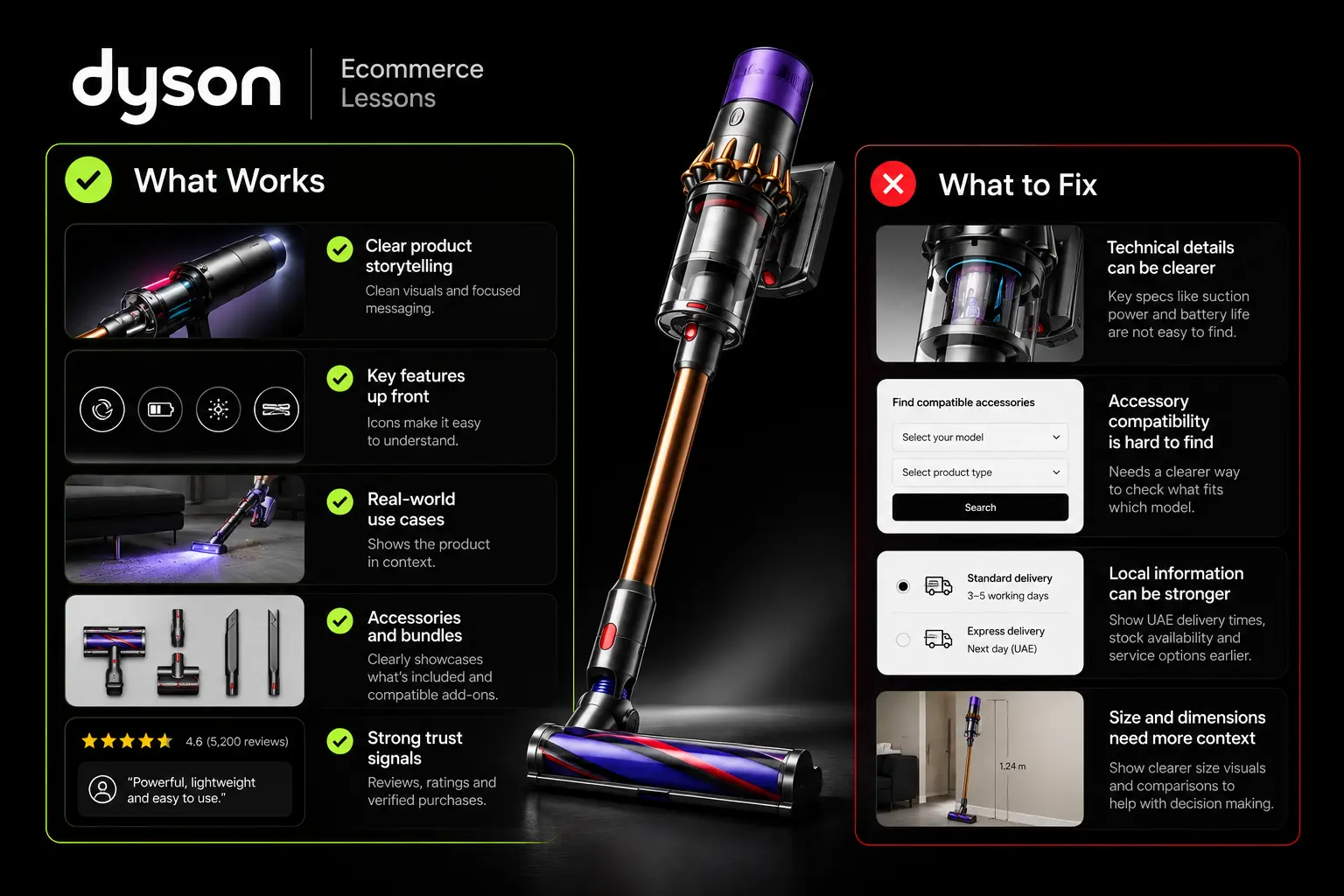
Dyson: Explain Why the Product Is Worth Buying
In August 2026, Suplex published an independent audit of Dyson's website, awarding it 4 out of 5. The audit highlighted detailed product explanations, customer reviews, warranty information and instalment options.
It also found that the homepage video failed to play and product gallery captions were missing near the buy button.
Lesson: Put technical evidence and product benefits close to the purchase decision, and ensure interactive features work reliably.
Sharaf DG: Cover the Details That Matter Locally
Sharaf DG combines a broad electronics catalogue with UAE-specific purchasing and after-sales services.
Its Lenovo gaming laptop listing displays processor, memory, storage and display specifications alongside pricing, delivery and warranty details. Sharaf DG also offers installation, repairs, trade-ins and store pickup.
The Lesson: Customers need to know not just what a device does, but what it costs, when it will arrive and where to get support.
What Electronics Brands Should Apply
- Product Pages: Place specifications, compatibility, warranty and delivery details near the buy button.
- Comparison Tools: Let shoppers compare models using measurable specifications.
- Local Services: Show installments, installation and repair options where relevant.
- Performance: Test galleries, videos, filters and checkout on mobile and desktop.
A good electronics store helps customers compare devices, understand the differences and make informed purchases.
Catalogue, Filters and Product Comparison
Electronics shoppers often compare several models before buying. Your catalogue should make it easy to narrow options, compare specifications and find the right product without opening dozens of pages.
Build Filters Around Buying Decisions
Use filters that help customers shortlist products based on what matters to them.
- Smartphones: Brand, price, storage, RAM, screen size and battery capacity.
- Laptops: Processor, RAM, storage, screen size and graphics card.
- Home appliances: Capacity, dimensions, energy rating and installation requirements.
- Audio products: Connectivity, battery life, noise cancellation and compatibility.
Keep the most useful filters visible on mobile. Let shoppers combine filters, remove selections easily and see how many products match their choices.
Make Product Comparisons Useful
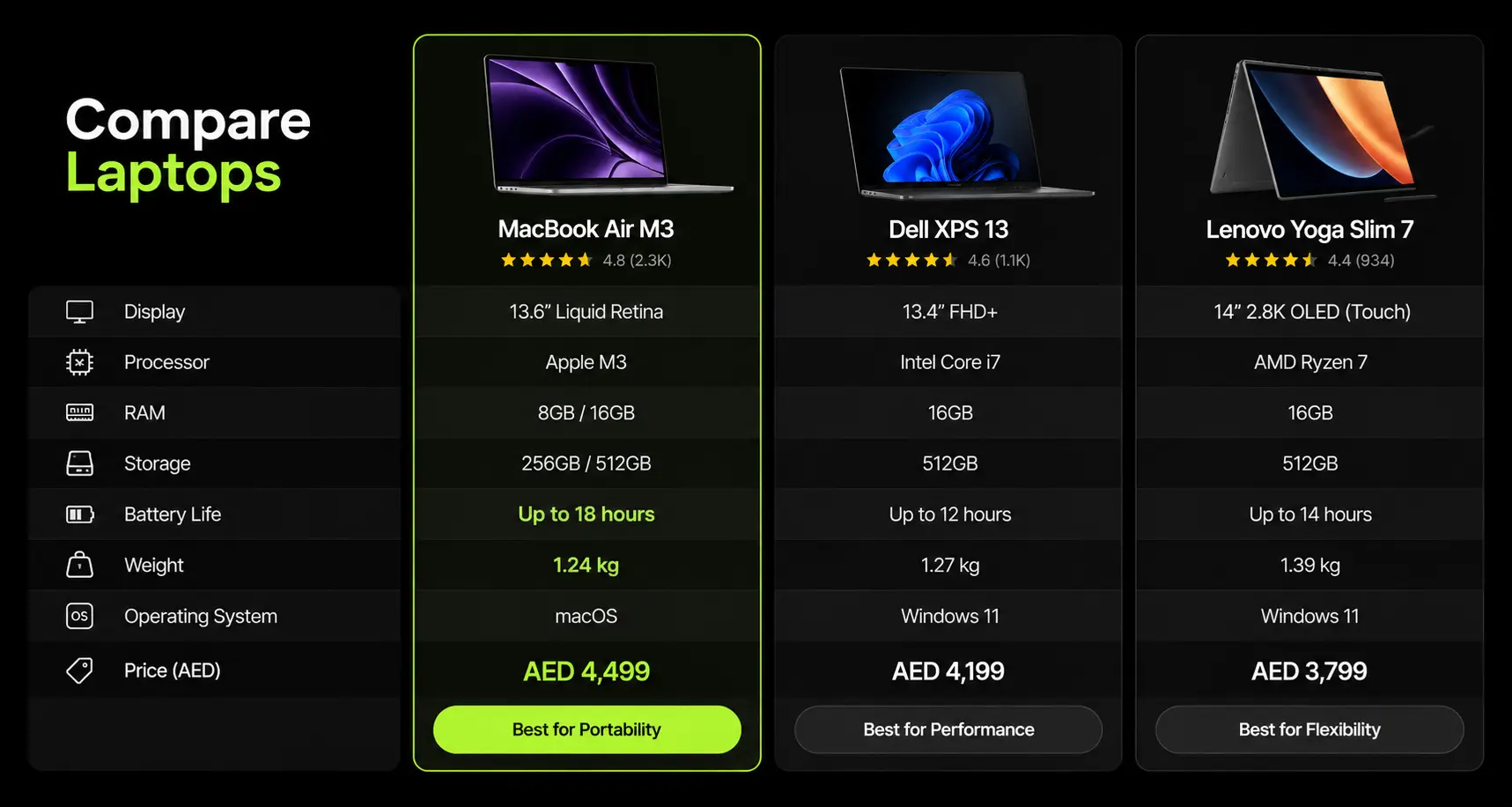
A comparison feature helps customers understand the differences between similar models. Include specifications that affect the buying decision, rather than listing every technical detail.
For example, a laptop comparison should highlight processor, RAM, storage, display, graphics and warranty. For smartphones, prioritise camera specifications, battery capacity, storage and software support.
Keep specifications consistent across products so shoppers can compare them accurately. Include the price, availability, delivery estimate and warranty alongside the technical details.
Help Customers Choose With Confidence
Show compatibility information where relevant, such as supported accessories, device requirements and installation needs. Make warranty coverage, return conditions and delivery details easy to find before checkout.
For Dubai customers, clear delivery estimates and information about installation or after-sales support can help remove uncertainty, especially for expensive electronics.
The goal is to help shoppers find the right product and understand the differences between alternatives without making them
work for the information.
Product Pages That Close Technical Sales
An electronics product page must help customers choose the right model, trust the seller and understand the full cost before buying.
For UAE stores, that means combining technical details, regional compatibility, warranty information and payment options in one clear buying journey.
What customers should see first
Keep the most important buying information close to the price and add-to-cart button:
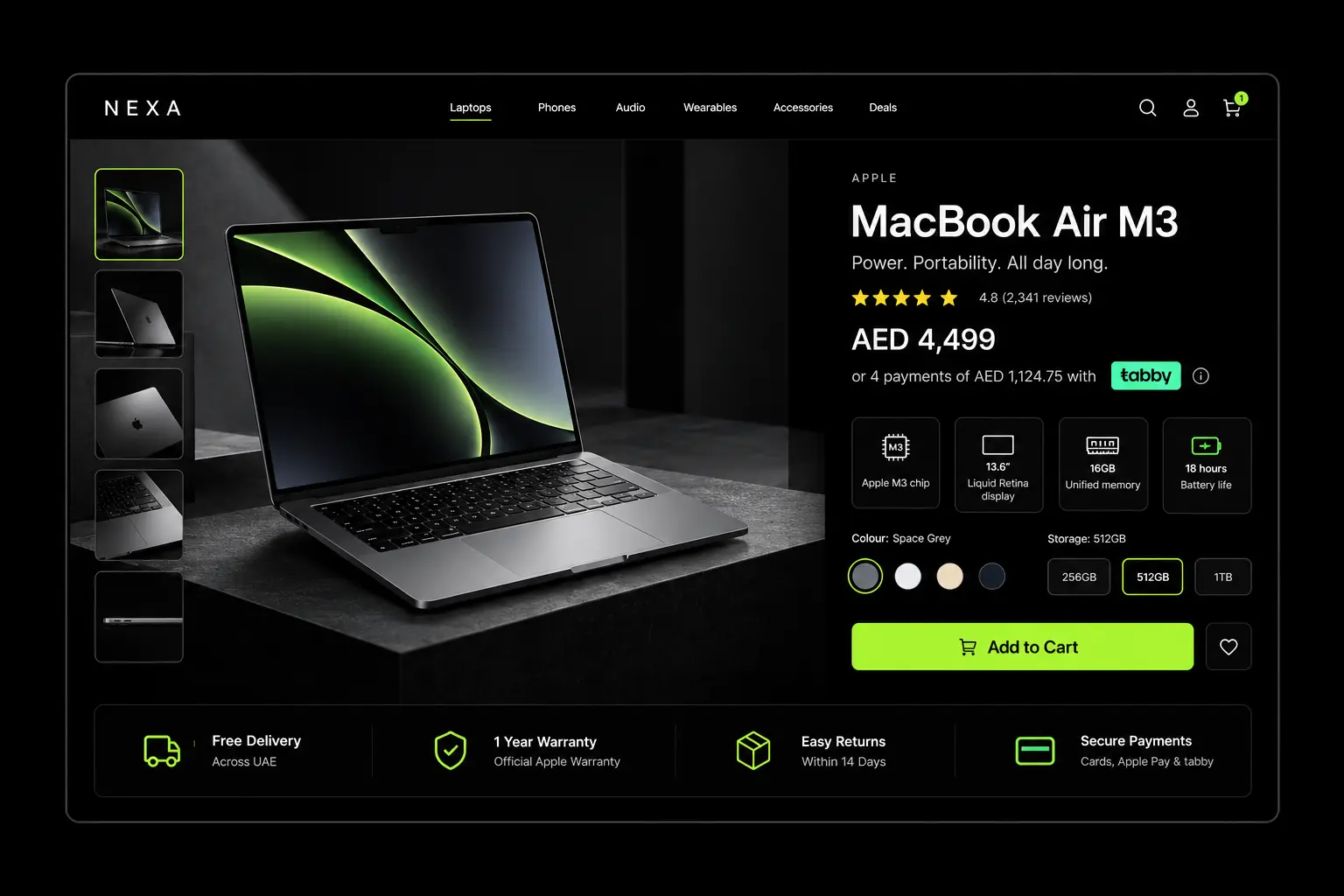
- Key Specifications: Highlight three to five attributes that distinguish the model, rather than leading with the full technical sheet.
- Price and Instalments: Show the AED price and monthly payment amount where BNPL is available.
- Stock and Delivery: Display availability and realistic delivery estimates by emirate.
- Warranty: State the warranty period, provider and coverage clearly.
- Model Comparison: Link to a comparison tool or a short guide explaining which model suits different needs.
Make the product gallery answer questions
Product images should explain the product, not just display it. Caption images to identify important features such as ports, hinges, display angles and controls. Use video demonstrations where they help customers understand how a product works.
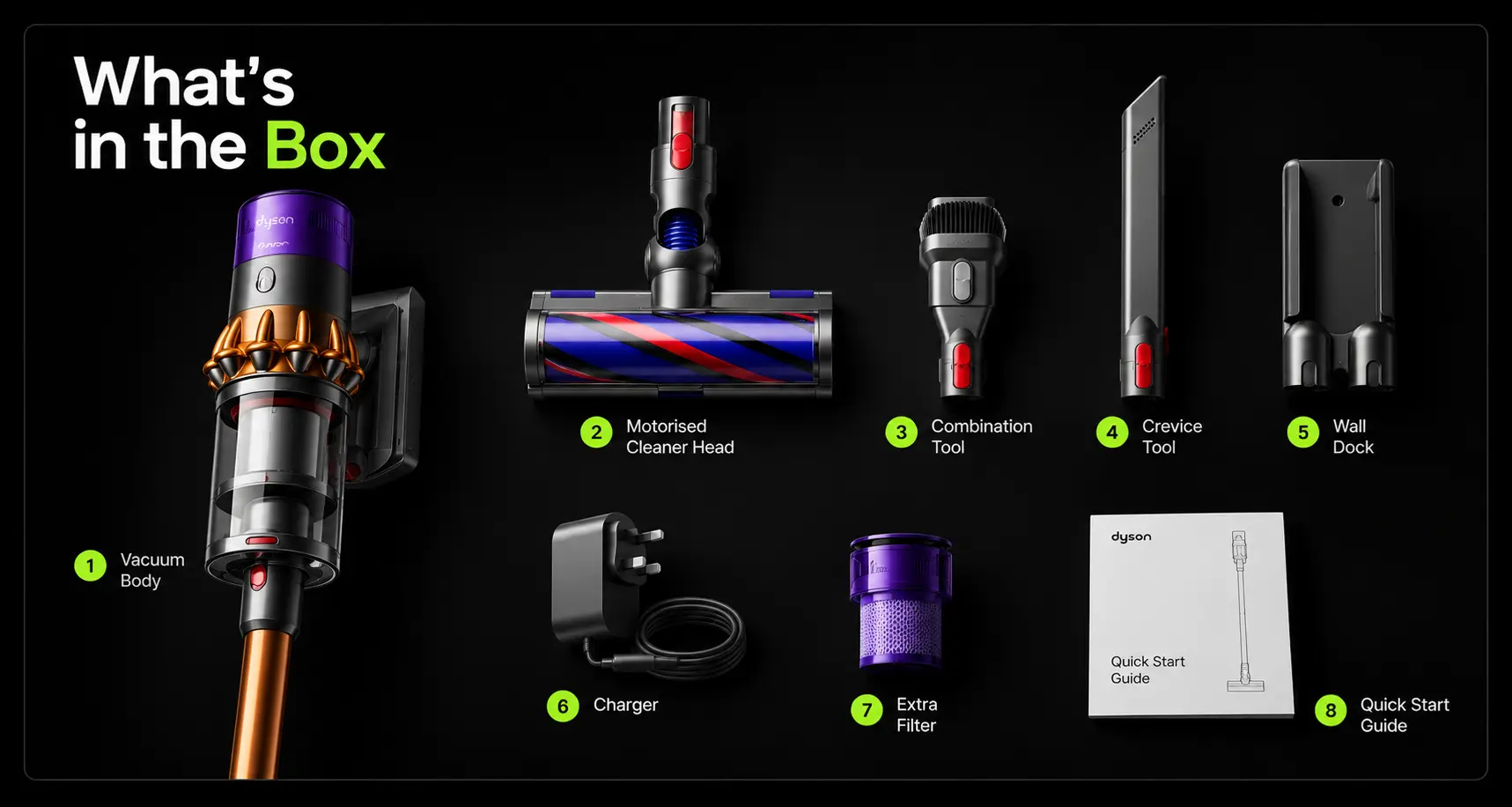
Show what's included in the box as well. Customers should know whether the price includes chargers, cables, mounts, batteries or other accessories, and which items cost extra.
Baymard's product-page UX research highlights how unclear accessory information can weaken product-page usability.
Make Regional Variants Clear
Electronics sold in Dubai may have different regional specifications. State the relevant details before checkout, including:
- UAE-compatible plug type and power requirements.
- Keyboard layout, including Arabic and English where applicable.
- SIM and eSIM support for mobile devices.
- Regional warranty coverage and model number.
Where variants differ meaningfully, label them clearly rather than relying on a vague dropdown. This helps prevent customers from ordering the wrong version.
Use One Source Of Product Data
The specification table, filters, comparison tool and product page should draw from the same structured product data.
On Shopify, metafields can store attributes consistently and support these features. If specifications exist only in long descriptions, details can become inconsistent across pages and comparisons.
Below the main buying section, add the full specification table, compatible accessories, protection plans, verified reviews and an FAQ based on real customer questions.
Choose The Right Level Of Development
A well-configured Shopify theme with structured specifications and a suitable comparison app may meet your needs without a custom build. Custom development makes sense when your catalogue, integrations or buying logic exceed what standard features can handle.
The goal is to resolve technical questions before checkout, helping customers choose confidently without leaving your store to research the same product elsewhere.
Warranty, Authenticity and Trust
Electronics buyers in Dubai want to know whether a product is genuine, whether its warranty is valid in the UAE and where to get support if something goes wrong.
If your product page leaves these questions unanswered, customers may choose another seller.
Make Warranty Terms Clear
Include these details on relevant product pages:
- Warranty Provider: Manufacturer, distributor or seller.
- Coverage: Duration, covered faults, exclusions and UAE or GCC validity.
- Regional Model: Model number, plug type, power requirements and regional differences.
- Authenticity: Authorised reseller status and available product verification methods.
- Extended Protection: Price, coverage and exclusions for optional plans.
The UAE Consumer Protection Law and its executive regulations set out consumer information requirements and supplier obligations concerning warranties and defective goods.
Ensure your product information, invoices and policies meet applicable UAE requirements, including Arabic-language requirements where relevant.
Make After-Sales Support Easy to Find
Provide the required business and transaction details on invoices. Include serial numbers and distributor information where available to help customers with warranty claims.
Show Trust Signals Near the Buy Button
Use specific, verifiable information such as “Two-year UAE manufacturer warranty,” “Official UAE model” or “Delivery available in Dubai.” Avoid claims you cannot substantiate.
Keep warranty terms, return policies and support contacts accessible before checkout. Clear information helps customers compare offers, understand their coverage and know where to turn for help after delivery.
Financing: Instalments, Trade-In and Services
For expensive electronics, payment flexibility and convenient services can influence where customers buy. Show available options early so shoppers can assess the full cost before checkout.
Show Instalment Options Beside the Price
Display the full AED price alongside an estimated monthly payment where a plan is available.
Options include:
- Buy Now, Pay Later: Integrate providers such as Tabby and Tamara, subject to merchant approval and product eligibility.
- Bank Instalments: Offer eligible card-based plans through your payment provider.
- Cash on Delivery: Set appropriate order verification procedures and value limits for expensive devices.
Explain repayment schedules, fees and eligibility clearly. Check provider terms and merchant costs before advertising specific plans, and measure their impact on conversion and margins.
Offer Trade-In for Device Upgrades
Trade-in programmes let customers offset the cost of a new device without reducing its advertised price.
A useful flow should let shoppers select their existing model, describe its condition, receive an estimated value and understand when the final offer will be confirmed.
You will also need processes for collection, inspection, data wiping and resale. Introduce trade-in only when these operations are in place.
Make Services Easy to Book
Match Website Promises to Operations
Start with payment options, reliable delivery information and services relevant to your product range. Add installation, trade-in or device setup when fulfilment and support teams can handle them consistently.
Check service availability, fees and eligibility across Dubai and other delivery areas. Update capacity during peak periods such as White Friday and the Dubai Shopping Festival.
The aim is to make high-value purchases easier to plan without creating payment confusion or service commitments your team cannot fulfil.
Services That Big-Ticket Electronics Need
For expensive electronics, the purchase often involves more than the device itself. Installation, extended warranties, repairs and trade-ins can generate additional revenue while giving customers reasons to return. Your website should make these services available during the buying process.
Make Services Part of the Buying Flow
Customers should be able to compare the device price with the cost of relevant services before checkout. Offering installation or extended protection after delivery means asking customers to make another decision later.
Build the following into your store:
- Checkout Scheduling: Let customers select available delivery and installation slots rather than wait for a callback.
- Product-Specific Eligibility: Show only services compatible with the selected device.
- Transparent Pricing: Display fixed prices or indicative ranges instead of asking customers to contact sales for basic cost information.
- Service History: Give customers an account area to check warranty details, past repairs and upcoming maintenance.
Use Services to Build Repeat Business
A completed sale can lead to future repairs, maintenance, upgrades and trade-ins. Keep service records linked to the customer's account, with appropriate consent for follow-up communications.
This can help a direct-to-consumer electronics store build relationships beyond the initial purchase. Unlike marketplace sales, where access to customer relationships may be limited, a D2C store can connect product ownership with ongoing support provided its data practices and customer communications meet applicable requirements.
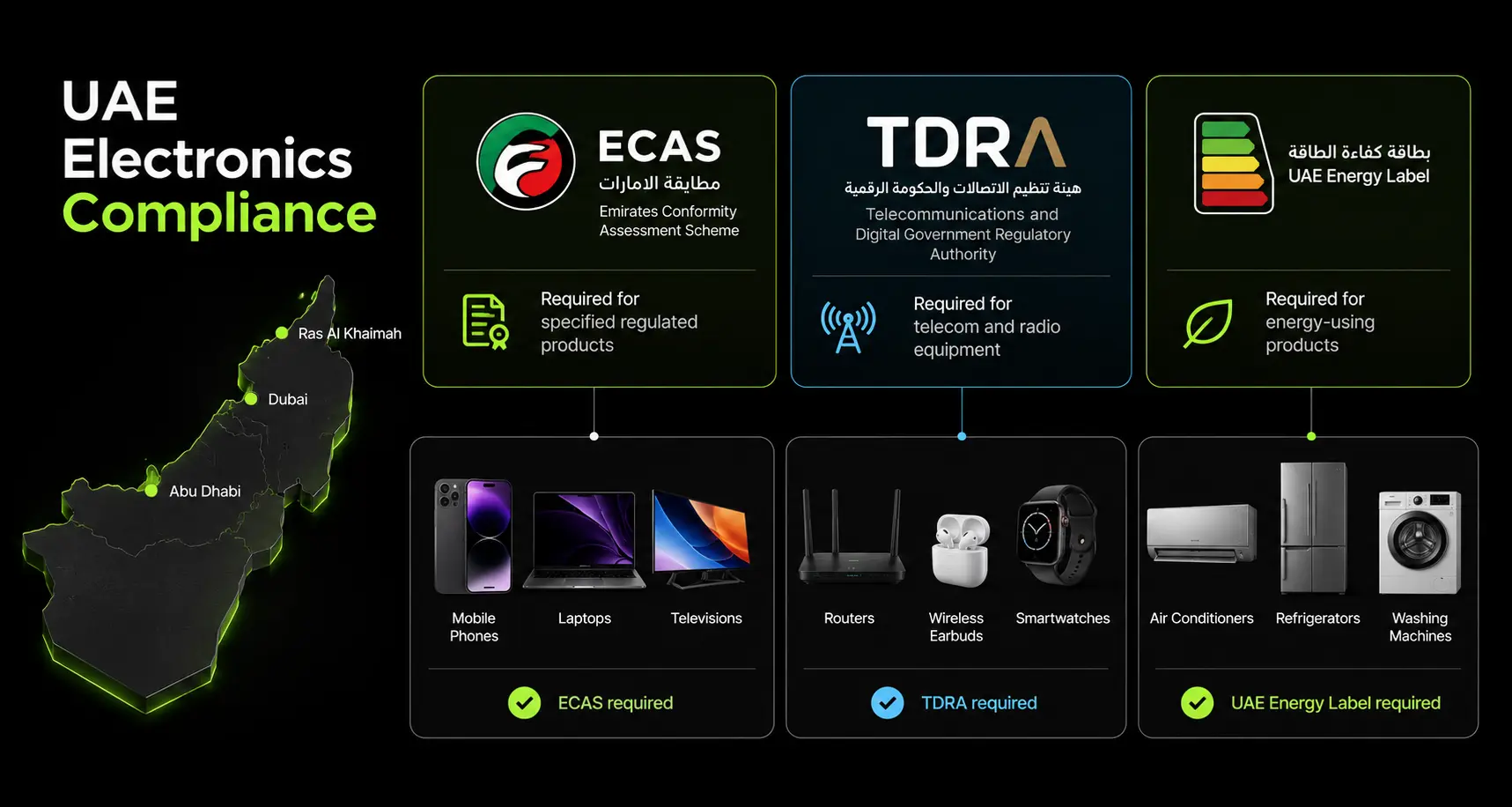
UAE Compliance and Shipping: What Your Electronics Website Must Reflect
UAE compliance affects which electronics you can sell, what product information you must display, how invoices are generated and where orders can be shipped. Build these requirements into your store before launch.
Account for Three Compliance Areas
Requirements depend on the product category and model. Your product database should capture applicable approvals, certificate validity, warranty details and energy ratings.
Verify requirements with the relevant authority or conformity assessment provider before listing regulated products.
Display Consumer Information Clearly
The UAE Consumer Protection Law and its executive regulations establish requirements for consumer information, invoices and warranties.
Show regional model details, warranty coverage and return conditions before checkout. Configure invoices to capture required supplier, transaction and product information, including serial numbers where applicable, and support Arabic-language requirements.
Configure Shipping Around Product Restrictions
Electronics shipping requires product-specific rules, particularly for lithium batteries and large appliances.
- Shipping profiles: Set rules by product type, destination and courier restrictions.
- Cross-border orders: Verify GCC and international shipping eligibility before accepting payment.
- Delivery estimates: Show realistic timelines by emirate, including scheduled delivery and installation where applicable.
Plan Before Development
Your developer can implement product fields, invoice templates and shipping restrictions, but your business must confirm which rules apply to each product.
Build compliance into your product data and order workflows from the start. This reduces avoidable listing and fulfilment issues as your catalogue grows.
Competing With Marketplaces and Choosing the Right E-commerce Platform
Amazon.ae, noon and retailers such as Sharaf DG compete on price, selection and convenience. An independent electronics store needs a clear reason for customers to buy directly rather than through a marketplace.
Give Customers a Reason to Buy Direct
Compete through product knowledge and services, not price alone.
- Warranty Clarity: Identify official UAE models and explain local warranty coverage.
- Expert Advice: Offer model comparisons, compatibility guidance and pre-sales support through chat or WhatsApp.
- Additional Services: Provide installation, device setup, trade-in and extended protection where relevant.
- Exclusive Offers: Differentiate through bundles, loyalty rewards or exclusive products.
- After-Sales Support: Make warranty registration, repairs, accessories and upgrades easy to access.
Decide whether to match marketplace prices on selected products or charge more for added services. Keep inventory and pricing synchronised across sales channels to avoid overselling and inconsistent offers.
Choose a Platform That Fits Your Catalogue
As indicative planning budgets, Shopify projects may cost AED 15,000–45,000, while Shopify Plus builds may range from AED 45,000–90,000 or more.
WooCommerce, Magento and custom projects can range from AED 30,000 to over AED 350,000, depending on scope.
Choose based on actual requirements, not catalogue size alone. Shopify supports B2B features across multiple plans, while Plus offers additional capabilities, including unlimited B2B catalogues and customer-specific pricing. Check the current B2B plan differences before deciding.
Account for payment and ownership costs
Platform fees can change the economics of a high-volume store. Since 26 August 2026, eligible UAE merchants on Shopify Advanced can use Shopify Payments, which was previously available only on Plus.
When using third-party gateways, Shopify's additional transaction fees vary by plan. Review the official UAE pricing and Shopify Payments announcement before deciding.
Compare three-year costs, including subscriptions, payment processing, apps, integrations, maintenance and internal support—not just the initial development quote.
The goal is to build a store that wins through better decision support and customer service, on a platform that fits your actual operational needs.
How Suplex Approaches Electronics Ecommerce Websites
Building an electronics ecommerce website requires more than a polished design. Product specifications, comparison tools, warranty information, payment options and delivery services must work together to help customers choose the right product. Suplex approaches these requirements before moving into visual design.
The Development Process
- Catalogue audit: Define product attributes, variants, warranty terms, certification requirements and service eligibility.
- Filters and comparisons: Build filters and comparison tools around structured product data so customers can evaluate models easily.
- Product-page design: Organise specifications, warranty details, financing options and relevant services.
- Trust and compliance: Plan certification information, authorised-seller claims, returns policies and after-sales support.
- Checkout and fulfilment: Configure payment options, VAT invoicing, delivery estimates and applicable shipping restrictions.
- Launch and optimisation: Track conversion rates, comparison usage and service uptake to identify opportunities for improvement.
Where Suplex Fits
Suplex is a Dubai-based ecommerce agency offering Shopify and custom ecommerce development, UX/UI design, conversion rate optimisation and AI-powered commerce. Its work supports D2C and consumer brands across the UAE and wider region.
For electronics brands, the focus is on creating a store that supports product discovery, informed purchasing and ongoing customer service.
Start With the Right Problem
Not every electronics store needs a complete rebuild. If the existing platform and product data are sound, improving filters, comparison tools, product-page structure or warranty visibility may be sufficient.
A larger redevelopment makes sense when the current setup cannot support the catalogue or required functionality.
Start by reviewing your SKU list, existing platform and main commercial challenge, whether that is low conversion, product returns or average order value. This helps establish whether the project needs better product data, UX improvements or a more substantial development effort.
FAQs
What features should an electronics ecommerce website have?
Include specification-based filters, side-by-side comparisons, compatibility tools, accessory recommendations and model-number search. Product pages should feature key specifications, detailed spec tables, demonstration videos, warranty terms, return policies and available instalment options. Add delivery booking, installation and trade-in where relevant.
How should an electronics product page present specifications?
Show three to five important specifications near the price, followed by a detailed specification table. Use captioned images and videos to demonstrate features, and include regional details such as plug type, keyboard layout and warranty coverage. Structured product data also helps search engines interpret your listings.
Do electronics sold online in the UAE need certification?
Requirements depend on the product. Certain telecommunications and wireless devices require TDRA approval, while regulated products may need conformity certification from MoIAT. Some appliances also require energy labels. Confirm the applicable requirements for each product before listing it.
Should an electronics store offer instalments or BNPL?
Instalments and buy-now-pay-later options can help customers manage higher-priced purchases. Display available payment plans near the product price, with clear eligibility, fees and repayment terms. UAE options may include Tabby, Tamara and eligible bank instalment plans, depending on merchant approval and integration support.
Is Shopify suitable for electronics stores in Dubai?
Shopify suits many electronics brands and specialist retailers. Metafields, filters and third-party integrations support detailed product catalogues. Larger retailers may also need advanced search, product information management (PIM) and ERP integration. Evaluate these requirements before choosing Shopify Plus or another enterprise platform.
Hi, I’m Rishabh Jain
I believe great digital experiences have the power to shape perception, build trust, and move businesses forward. That belief led me to found Suplex Design Studio, a global digital design and development studio helping FMCG and D2C brands build websites and digital experiences that are strategic, thoughtful, and commercially meaningful.
I started Suplex at 25 with a clear intent, to create digital experiences that look appealing, work seamlessly, and help D2C businesses grow. By 28, the studio had scaled globally, guided by a strong foundation in integrated design that I developed during my academic journey in London, where I was honoured with the Dean’s Award.
Over the years, I’ve had the opportunity to work with 100+ brands, from Fortune 500 organisations to family-run businesses, helping them build websites, e-commerce experiences, and digital products that create clarity, credibility, and long-term value.
Our work has been recognised internationally, including the Manifest Award (2024), the Clutch Global Award (2025), and features across platforms such as The Dieline, Packaging of the World, and the World Brand Design Society.
None of this would be possible without the people behind the work. I’m deeply grateful to the Suplex team, whose commitment, creativity, and attention to detail turn ideas into meaningful digital experiences every day.
At the heart of our work is a simple philosophy, digital design should be intentional, functional, and built to create real business value. That continues to guide everything we create at Suplex.






































Let’s Make It Happen
E-Commerce Success Stories








Build Your D2C Business The Right Way
Build It With Suplex.


