How to Start Shopify Dropshipping in 2026: Step-by-Step Guide
.avif)
How to Start Shopify Dropshipping in 2026: Step-by-Step Guide
How to start Shopify dropshipping has never been easier mechanically. The real challenge in 2026 is differentiation.
The SERP is full of identical stores selling the same products from the same AliExpress listings.
Dropshipping is a lean operational model that trades inventory risk for margin risk. Understand that from the start and you are already ahead of most people who try this.

What Is Shopify Dropshipping and How Does It Actually Work?
Shopify dropshipping is a retail fulfilment model where you sell products through your Shopify store without holding any inventory. Understanding the mechanics and the real economics is what separates brands that scale from those that stall.
The Mechanics in Plain Terms
Shopify dropshipping works in three steps: a customer places an order on your store, that order forwards automatically to your supplier and the supplier ships directly to the customer. You keep the margin.
No warehouse, no upfront inventory inv
estment, no packaging or shipping operations on your end.
Your job is exactly three things:
- Build a store people trust enough to buy from.
- Choose products people want, priced at a level that supports profitability.
- Drive traffic that converts at a positive return on ad spend.
That sounds simple. The execution is where most people run into trouble.
The Real Economics What Margins Actually Look Like
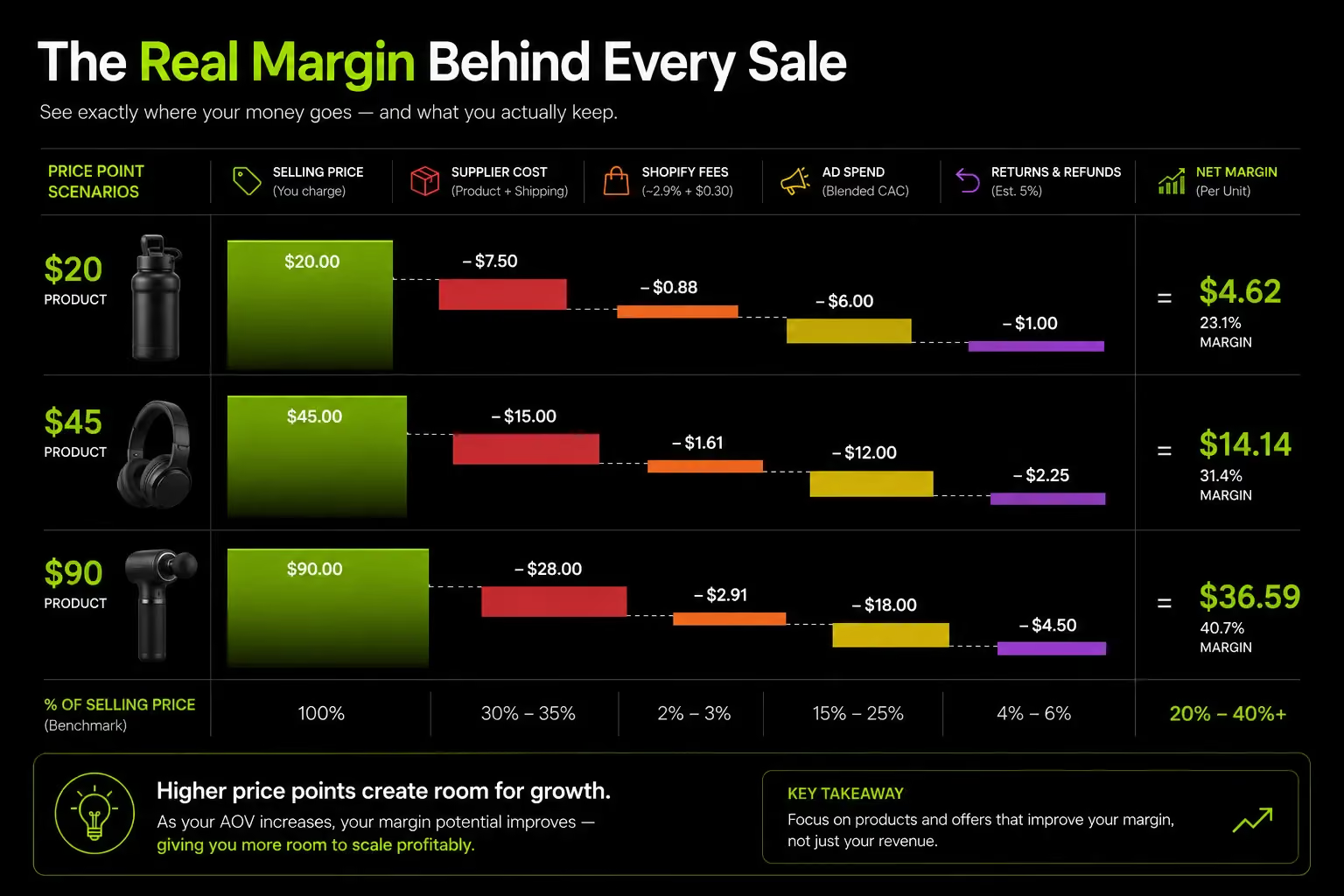
This is the table every guide skips. Run these numbers before you commit to a niche.
Average dropshipping profit margins range from 15% to 45% depending on niche, supplier pricing, and how you position the product.
Stores chasing $10–$15 products are fighting a margin war they cannot win. Products priced above $35–$40 are the realistic floor for a model built on paid acquisition.
Purchasing power across the UAE and GCC is high. A consumer in Dubai will comfortably pay a premium for perceived quality, fast delivery and a branded experience. Generic, price-competitive products perform poorly in this market.
Lifestyle, wellness, home, beauty, and specialty food categories carry significantly higher AOV potential.
Dropshipping vs. Private Label vs. Wholesale
Many serious D2C brands start with dropshipping to validate demand, then transition to private label or wholesale for proven products. Dropshipping is not a destination, it is a testing infrastructure.
If you want help deciding which model fits your brand and market, Suplex's platform consultation service is a structured starting point.
Is Dropshipping Still Worth It in 2026?
This is the highest-volume scepticism question on this topic and it deserves a direct answer, not a hedged one. Here is the honest picture.
The Honest Answer
Yes. Dropshipping is viable in 2026. But the version that works looks nothing like 2019–2021.
The era of throwing up a generic store, importing random trending items, and relying on cheap Facebook traffic is over.
What works now is niche-specific, brand-forward, and operationally deliberate. Stores built around a clear customer problem, priced correctly and designed to convert those are the ones generating consistent revenue.
Brands that treat it as "set and forget" fail. Brands that treat it as a lean ecommerce operation with real brand intent succeed.
Why Most Dropshippers Fail and What the Data Actually Says
These are the five most common failure causes, with the actual mechanics behind each one.
Wrong Product Selection: Chasing trending products rather than solving a clear need. Trend-based products have 6–12 week lifecycles. Problem-solving products sustain demand for years. Picking based on what is going viral on TikTok this week is a short-cycle bet with poor odds.
Suppliers Not Properly Vetted: Poor shipping times and quality complaints destroy reviews and ad ROAS before the store builds any momentum. Most failed stores never ordered a sample from their supplier before listing the product.
No Margin For Paid Acquisition: Launching with $10–$15 products and expecting to profitably run Meta or TikTok ads. At 20% gross margin on a $12 product, you have $2.40 to acquire a customer. No ad platform in 2026 delivers consistently at that CPA.
Store Design That does not convert: Unbranded, default-template stores with supplier stock images and copy-pasted descriptions run conversion rates of 0.3–0.8%. Properly designed branded stores convert at 2–4%. That difference, at scale, is the entire business.
No post-launch iteration: Most failed stores never ran a single A/B test. They launched and waited. Launching is a starting point, not a completion event.
These are execution failures. None of them are built into the model itself.

Step 1: Choose a Niche That Has Commercial Logic, Not Just Trend Appeal
Niche selection advice in most guides is either "follow your passion" or "find trending products." Both are incomplete starting points. A viable niche in 2026 needs to pass four tests simultaneously.
Why Most Niche Advice Is Wrong
Passion without commercial logic runs out of money within three months. Trend-chasing without supplier depth runs out of product the moment the trend peaks.
Most niches people enter fail one or more of the four criteria below without the founder realising it until the losses arrive.
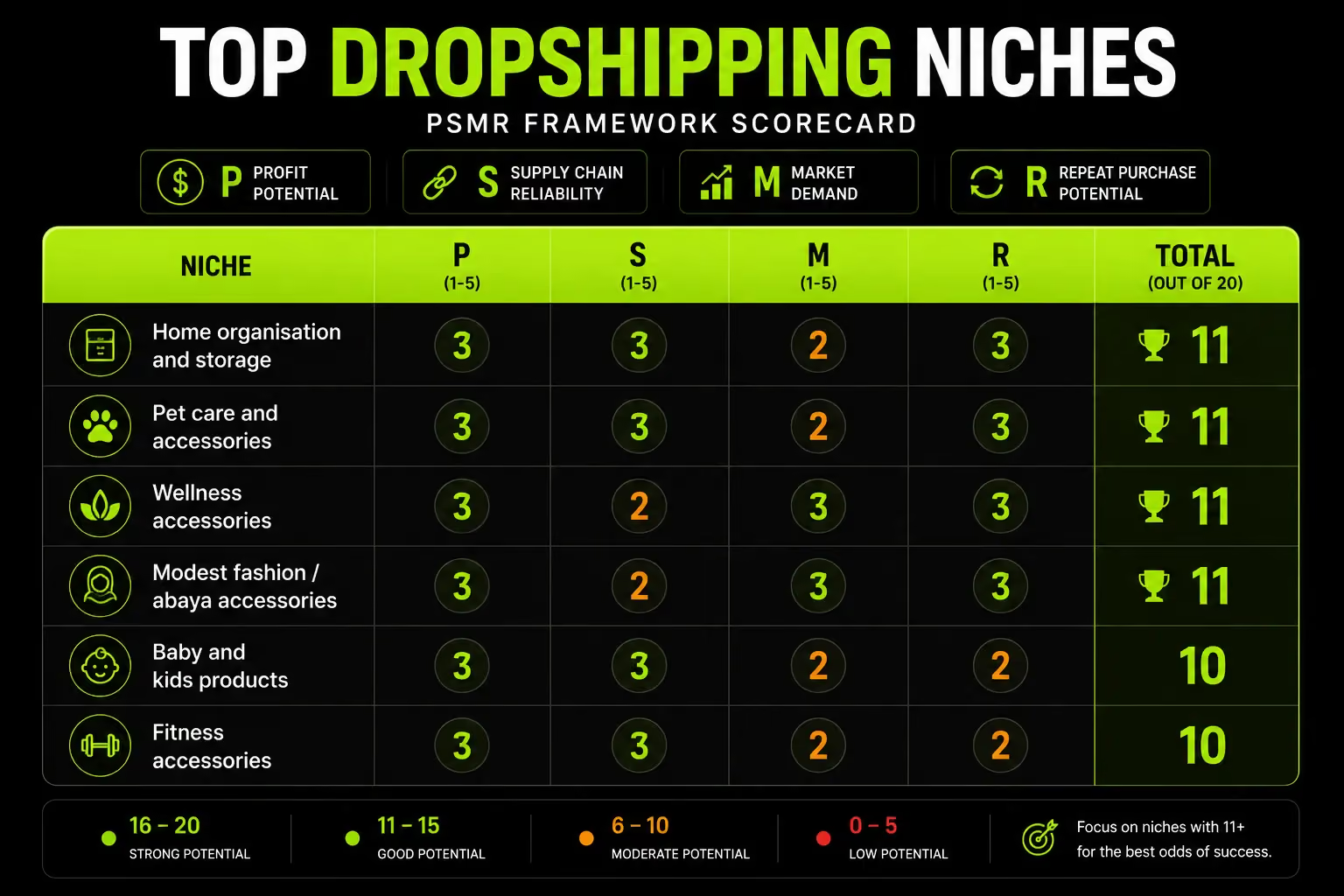
The PSMR Niche Validation Framework
This is a framework we use at Suplex when working with brands evaluating their dropshipping niche. Score each criterion from 1 to 3. A total below 8 means reconsider. Above 10 means proceed.
P - Problem or Passion: Does the product solve a clear problem or serve a genuine interest group? Problem-solving products (health, organisation, safety, productivity) have persistent, search-driven demand. Passion products (fitness, pets, hobbies, beauty) have loyal, repeat-purchase audiences. Trend products have velocity but no longevity.
S - Supplier Depth Can you source from at least 2–3 reliable suppliers with a proven track record? Single-supplier dependency is a business risk. If your sole supplier has a stockout or raises prices by 20%, your margin collapses overnight.
M - Margin Viability: Can you price this product above $35–$40 and still be competitive? Run the full margin calculation before committing: supplier cost + Shopify transaction fees (2–2.9%) + estimated ad spend (30–40% for a new store) + returns provision (3–8%) = minimum viable selling price.
R - Repeat Purchase Potential Does the niche support returning customers? Consumables, accessories, lifestyle products and seasonal items have natural repurchase cycles. One-time purchase products require you to constantly acquire new customers at any meaningful scale.
Modest fashion, Arabic lifestyle products, beauty and skincare, and specialty food (organic, sugar-free, halal-certified) are underserved in the Gulf's dropshipping space. Western suppliers rarely cater to these categories.
Partnerships with UAE, Saudi, or Turkey-based suppliers give a structural sourcing advantage.

Step 2: Find and Vet Suppliers Who Won't Sink Your Business
The standard advice is "use AliExpress." That is a starting point, not a sourcing strategy. Here is the full picture on supplier selection and what vetting actually looks like in practice.
Types of Dropshipping Suppliers on Shopify
You can browse all of these directly in the Shopify App Store's dropshipping section. AliExpress via DSers is a fine testing ground for new stores. But 15–30 day shipping is a conversion barrier in any market where fast delivery has become the default expectation.
Spocket and CJ Dropshipping, with regional warehousing, deliver a meaningfully better post-purchase experience.
How to Properly Vet a Supplier Before You Commit
Most guides say "check reviews." That is a starting point, not a process.
- Order a Sample Yourself: Evaluate the actual product, packaging, arrival condition, and how long it took. Non-negotiable before you list anything.
- Check Fulfilment Reliability: Look for suppliers with a 95%+ order fulfilment rate. Below 90% means customer complaints arrive before the store has any brand equity to absorb them.
- Test Response Time: Message the supplier directly. If they take 48+ hours to reply, expect the same during order disputes.
- Verify Product Consistency: Some suppliers photograph their best unit. The 50th unit shipped may look different. Order twice from the same listing before scaling.
- Understand The Return Policy: Know this before a customer asks. AliExpress suppliers vary significantly on how they handle returns.
For brands targeting the UAE market, shipping time is a conversion variable, not just a satisfaction metric. UAE consumers are conditioned by noon.com, Amazon UAE and Namshi.
A 20-day delivery window loses customers at checkout. Suppliers with regional Middle East warehousing, or UAE-based fulfilment partners, are a genuine competitive moat in this market.
Suplex helps brands in the UAE set up their e-commerce store infrastructure with supplier integrations factored into the build from the start.
Step 3: Build a Store That Converts, Not Just One That Exists
This is where most dropshipping stores fail before a single ad runs. Installing a theme and adding products is not store building. Conversion architecture is.
Platform Setup, The Non-Negotiables First
Before touching design, lock down the fundamentals.
- Sign Up For Shopify: The Basic plan at $39/month is the right entry point. Shopify's official dropshipping guide covers platform-level setup in detail.
- Secure a Branded Domain: A custom domain is a trust signal from the first visit. mystore.myshopify.com is not.
- Configure Payment Gateways: Shopify Payments where available. For UAE and Gulf stores, integrate PayTabs, Telr, or Stripe with AED support.
- Set Shipping Zones and Delivery Windows Honestly: Customer service costs spike when buyers are surprised by delivery timelines.
Theme Selection and Store Design, What Actually Affects Conversion
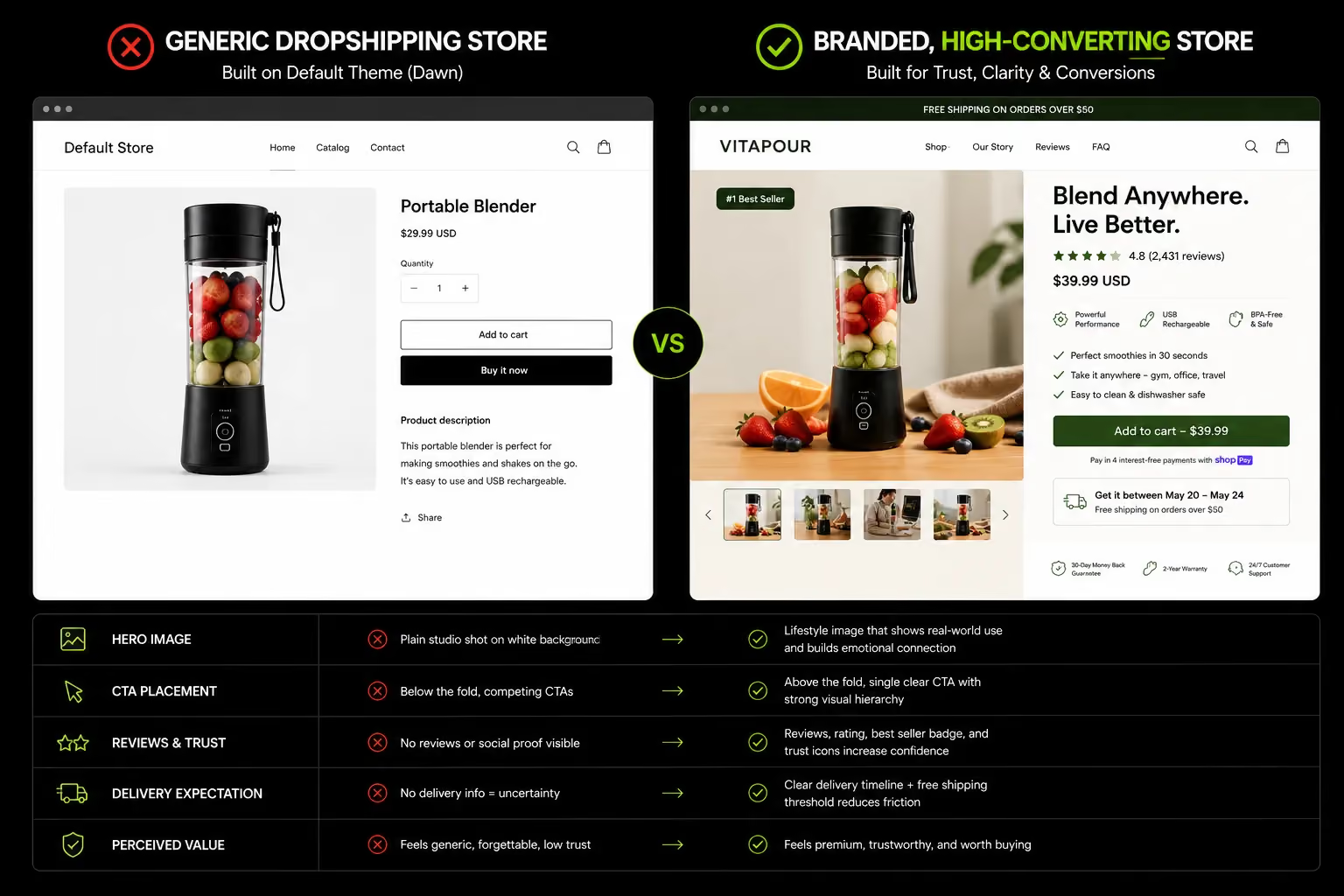
Dawn is a capable free theme. The problem is that every beginner dropshipping store uses it, which means generic-looking stores all signal the same lack of differentiation. What matters more than theme selection:
Mobile-First Structure: Over 70% of dropshipping traffic arrives on mobile. If the product page does not load clean and fast on a 6-inch screen, you have lost most of your audience before they have seen a price. Suplex builds mobile-first Shopify stores with this as the starting constraint, not an afterthought.
Product Page Architecture: A high-converting dropshipping product page needs: a lifestyle hero image (not a supplier stock photo), benefit-led copy above the fold, star ratings and review count visible without scrolling, an explicit delivery estimate and a single dominant CTA.
Trust architecture: Secure checkout badges, money-back guarantees, and visible return policies reduce friction. New stores without reviews need to compensate with exceptionally strong copy and consistent brand signals.
Speed: Shopify stores loading above 3 seconds lose 40%+ of visitors before they reach a product. Compress images, limit your app count, and choose a performance-tested theme. Our guide to Shopify speed optimisation covers the highest-impact fixes.
We have built Shopify stores for D2C brands across the UAE, Gulf, and UK and the most consistent finding is this: brands invest in ad spend before the store can convert at a level that makes ads profitable. A properly structured product page with correct mobile layout, trust signals, and clear CTA hierarchy routinely doubles CVR from a default setup. That is the work Suplex's conversion rate optimisation service is built around.
Essential Apps for a Dropshipping Store
A disciplined app stack of 6–8 tools outperforms a 20-app store every time. Every app adds page load time and monthly cost. Install with intent. Audit quarterly.
Step 4: Product Pages and Pricing That Justify the Purchase
Pricing and product copy are where dropshipping stores leave the most money on the table. Most guides give you a formula without the commercial logic behind it.
How to Price Dropshipping Products in 2026
The "2–3x your cost" rule is a starting point without strategy.
Floor calculation: Supplier cost + Shopify fees + estimated cost per acquisition + returns provision = minimum viable selling price.
Ceiling research: Search the product on your target market's dominant platform Amazon UAE, Google Shopping, noon.com. Identify where you stop being competitive on price.
Sweet spot: Price in the upper 30–40% of the competitive range. Position on quality and brand, not on being cheapest. Price-sensitive buyers return more often and leave negative reviews more frequently.
Avoid sub-$30 products if running paid ads. At 20–25% gross margin on a $25 sale, you have $5–$6 to acquire a customer. No paid channel delivers consistently at that CPA for a new store without an existing retargeting audience.
Practical example: A home organisation product costs $14 from your supplier. The competitive range on Google Shopping is $28–$55. Price at $42–$47. Gross margin is 67%. After 30% ad spend, you retain approximately $13 per unit.
That is a viable paid acquisition model. Pricing at $29 "to win on price" drops that retained margin to $3. The economics collapse.
Product Page Copy That Converts
Supplier descriptions describe features. Customers buy outcomes. The rewrite is non-negotiable.
- Headline: Lead with the outcome, not the product name. "Stop losing things in your bag" outperforms "Premium Bag Organiser Insert."
- Subheadline: Reinforce the benefit with specificity. "Fits 90% of tote and shoulder bags. 12 compartments. 4 sizes."
- Bullet points: 5–7 benefit-led, short, specific bullets. No jargon.
- Social proof placement: Star rating and review count directly below the headline not below the fold.
- Delivery expectation: Explicit, visible, honest. "Estimated delivery: 8–12 days from order." Uncertainty at this point kills conversions.
Step 5: Drive Traffic and Acquire Customers Profitably
Channel selection, sequencing, and CAC reality need to be understood before your first dirham or pound goes into ads. Most competitor guides treat this as an afterthought. It is not.
The Sequencing Problem Most New Dropshippers Get Wrong
Most guides say: build stores, run ads. The missing step is: build a store, validate product organically, then scale with ads.
Running paid ads on an unvalidated product with an unconverted store is spending money to generate data you could have gathered more cheaply through organic channels first.
Recommended launch sequence:
- Organic social (TikTok, Instagram Reels): zero cost, direct product validation signal.
- Influencer seeding: Send samples to micro-influencers (5K–50K followers) in your niche in exchange for content.
- Email capture with a launch discount: Builds a list before launch day, not after.
- Paid ads: Only after CVR is consistently above 1.5% and at least one organic proof point exists.
Channel Selection by Niche and Market
Snapchat has higher active user penetration in the UAE and Saudi Arabia than most Western markets. For brands targeting this market, Snapchat ads are significantly underpriced relative to audience reach.
Instagram in the UAE skews toward fashion, lifestyle and beauty, a strong native fit for those categories.
The Paid Ads Reality Check
Three numbers must be clear before spending on ads.
CVR (conversion rate): Below 1%, fix the store before spending on traffic. Adding visitors to a broken funnel generates losses, not data.
AOV (average order value): Below $35, achieving a positive ROAS on paid acquisition is extremely difficult for a new store without a retargeting audience.
Target ROAS: At 30% gross margin, you need a minimum 3x ROAS to break even on ad spend. Plan to run at a loss in weeks 1–3 as you build audience data. That is how paid acquisition works at the start, not a sign the model is broken.
Suplex's D2C data analytics service helps brands track these numbers accurately from the first sale, so scaling decisions get made on real data rather than assumptions.
Step 6: After Launch, The Iteration Loop Most Dropshippers Skip
Almost no competitor guide includes this section and it is where most stores stall after week two. Launching is not the goal. Launching a store that earns useful data is.
What to Track in Your First 30 Days
- Traffic source breakdown: which channel sends visitors with the highest CVR?
- Add-to-cart rate vs. checkout rate vs. purchase rate the gaps between these numbers show exactly where the funnel breaks.
- Product page scroll depth: are visitors reading the full page, or bouncing from the hero section?
- Email capture rate: if below 3–5%, the offer is wrong.
- Return rate by product: high returns are a product quality signal, not a logistics one.
The Scaling Signal
You have a product worth scaling when all five of these conditions are true simultaneously:
- CVR is consistently above 1.5%.
- ROAS is above 2.5x on paid acquisition.
- At least 10 organic reviews have been collected.
- The supplier has fulfilled 50+ orders without a quality complaint.
- Your email list has a 25%+ open rate.
When all five are met, increase ad spend incrementally 20–30% per week. Scaling before these conditions are met compounds losses, not profits.
When to Transition Away from Dropshipping for Your Best Products
This is the strategic move most guides never mention. Once a product proves itself through dropshipping:
- Negotiate directly with the manufacturer for wholesale pricing: This typically improves margin by 15–25%.
- Consider private labelling: custom branding, packaging, and product positioning at a higher price point and with full brand control.
- Move to a 3PL warehouse in your target region: for 2–4 day delivery. For UAE-based brands, this is a significant trust and CVR unlock that generic dropshipping stores cannot match.
The best Shopify dropshipping stores use dropshipping as a validation layer, not a permanent operating model.
Once you know which products convert and at what price, the economics of wholesale or private label become immediately attractive.
How Suplex Helps Brands Build Shopify Dropshipping Stores That Convert
At Suplex, we build Shopify stores for D2C brands across the UAE, Gulf, and UK and we have seen what separates stores stalling at $2,000/month from those scaling past $50,000.
The difference is almost never the product. It is almost always the store's conversion architecture, the traffic strategy's sequencing, and the brand's visual and copy positioning.
What we typically work on with brands entering the dropshipping space:
- Store architecture and UX: information hierarchy, product page structure, mobile-first layout. Our user flow design service maps the path from landing to purchase before a single pixel is designed.
- Theme selection and custom development: for brands that need to go beyond what a template can deliver. Our custom Shopify themes service is built specifically for this.
- Brand-level design: logo, colour system, typography, and visual language that makes a dropshipping store feel like a real brand, not a product catalogue. See our brand building for ecommerce service.
- Performance optimization: Core Web Vitals, app stack audit, image compression, and speed benchmarking. A slow store costs you sales before a customer even reaches a product page. Our performance optimisation service addresses this directly.
We do not build generic stores. We build stores designed to convert and we approach dropshipping builds the same way we approach every D2C launch: strategy first, then design, then build.
If you are building a Shopify dropshipping store and want it built to convert from day one not redesigned three months later because it is not performing, our dropshipping service and e-commerce store setup service are built around exactly that.
Frequently Asked Questions
How much money do I need to start dropshipping on Shopify?
Realistically, budget $200–$500 to start. This covers your Shopify plan ($39/month), a domain ($14/year), one or two supplier apps ($0–$50/month), and a small initial ad spend or influencer seeding budget. Stores launched with no marketing budget typically stall waiting for organic traffic that does not arrive in the first 60–90 days.
Is $100 enough to start dropshipping on Shopify?
$100 covers your first month of Shopify Basic and a domain. It does not cover meaningful paid advertising. If starting with $100, invest it in a well-built store and focus exclusively on organic TikTok or Instagram content for the first 4–8 weeks. Validate product demand organically before spending on ads.
Why do so many dropshippers fail?
The most common causes are: choosing the wrong product (trend-based, low margin, or not problem-solving), selecting suppliers without vetting their fulfilment reliability, launching paid ads before the store converts at a viable rate, and not iterating after launch. These are execution failures, not model failures. Most failed dropshipping stores can trace closure to one of these four causes.
How long does it take to make money dropshipping on Shopify?
Expect 4–8 weeks to make your first meaningful sales with consistent effort. Profitable months where revenue exceeds all costs including ad spend typically arrive between months 3–6 for brands doing everything correctly. Overnight success stories are statistical outliers, not a reliable benchmark to plan against.
What is the best niche for Shopify dropshipping in 2026?
Niches with strong repeat purchase potential, healthy margins, and growing demand include pet accessories, home organisation, wellness products, modest fashion (particularly in UAE/Gulf markets) and problem-solving baby products. Avoid hyper-competitive generic categories (phone cases, charging cables) where Chinese sellers on AliExpress have structural cost advantages you cannot overcome on price.
Hi, I’m Rishabh Jain
I believe great design has the power to shape perception, build trust, and move businesses forward. That belief is what led me to found Suplex Design Studio, a global branding and packaging studio working with FMCG and D2C brands across markets.I started suplex at 25 with a clear intent, to create design that is strategic, thoughtful, and commercially meaningful. By 28, the studio had scaled globally, guided by a strong foundation in Integrated Design that I developed during my academic journey in London, where I was honoured with the Dean’s Award.
Over the years, I’ve had the opportunity to work with 100+ brands, from Fortune 500 organizations to family-run businesses, helping them build packaging and brand systems that create recall, relevance, and long-term value.
Suplex’s work has been recognized internationally, including the Manifest Award (2024), the Clutch Global Award (2025), and features on platforms such as Packaging of the World, The Dieline, and the World Brand Design Society.
None of this would be possible without the people behind the work. I’m deeply grateful to the suplex team, whose commitment, creativity, and attention to detail turn ideas into meaningful brand experiences every day.
At the heart of my work is a simple philosophy, design should be intentional, honest, and built to last, and that continues to guide everything we create at suplex.


















Let’s Make It Happen
E-Commerce Success Stories
%201.avif)






.avif)
.avif)
Build Your D2C Business The Right Way
Build It With Suplex.


