Beauty Ecommerce Website Design Trends: What's Actually Converting in 2026
.avif)
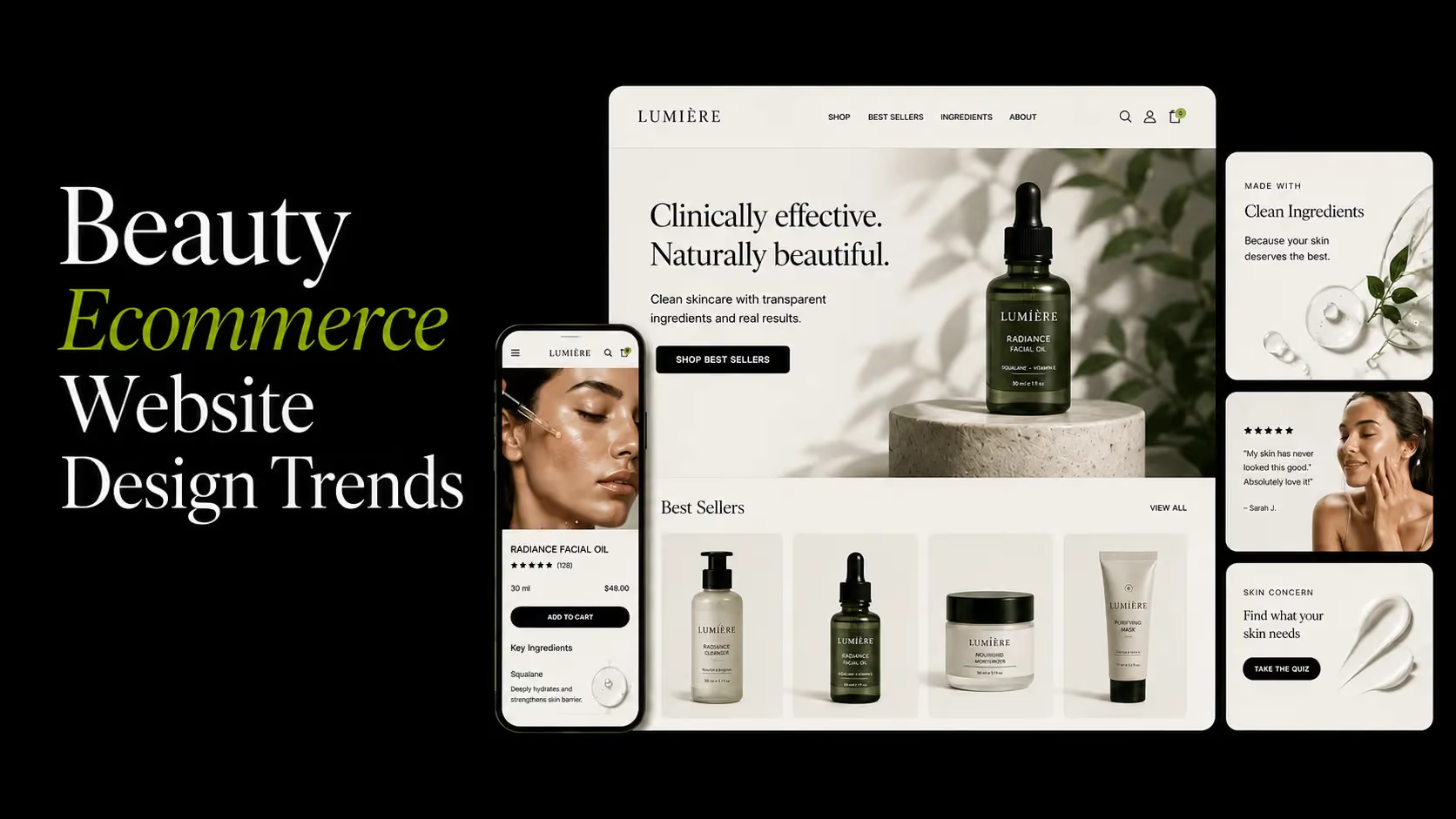
Beauty Ecommerce Website Design Trends: What's Actually Converting in 2026
Beauty ecommerce website design trends are not just about creating a beautiful storefront, they are about increasing conversions.
The highest-performing beauty brands use design to reduce purchase hesitation by addressing concerns around shades, textures, ingredients and trust.
This blog explores 10 proven design trends that help beauty ecommerce stores build confidence, improve the shopping experience, and convert more visitors into customers.
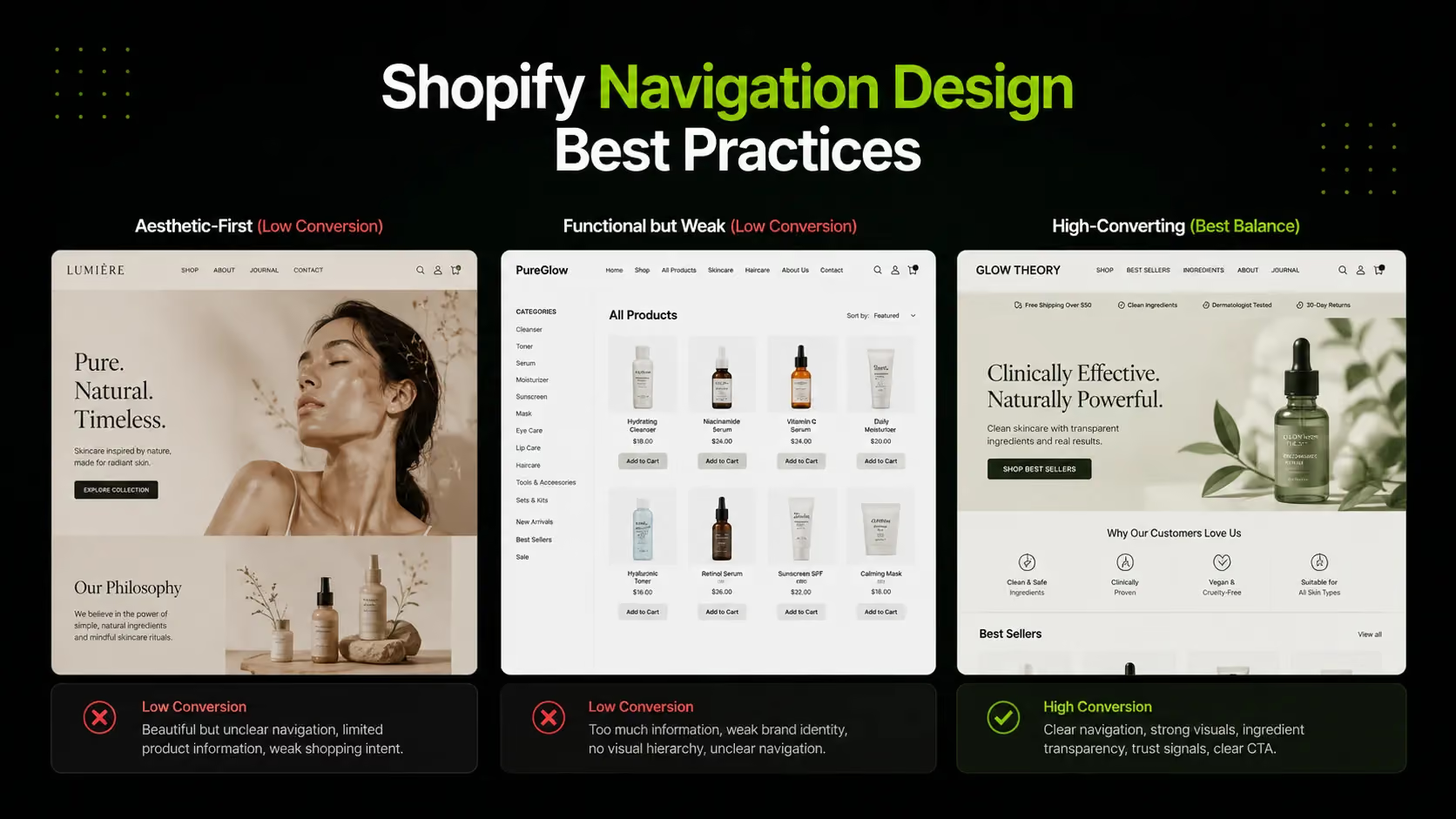
The Beauty Ecommerce Design Problem When Beautiful Doesn't Convert
Beauty is the category where the gap between aesthetic quality and conversion performance is widest. Understanding why makes every design decision that follows commercially legible rather than stylistically arbitrary.
Why Beauty Is the Hardest Category to Design for Conversion
The purchase decision for a cosmetic or skincare product involves four specific anxieties that other product categories do not carry at the same intensity.
Product Tangibility Uncertainty:
The customer cannot smell, feel, or test a moisturiser's texture through a screen. Photography is the only proxy for the sensory experience.
Design choices that reduce photography quality, small images, stock imagery, limited angles remove the only tool available to replace the in-store product interaction.
Shade Matches Anxiety:
For makeup, purchasing the wrong shade is a wasted purchase and a return problem.
The customer needs confidence in shade accuracy before committing. A store that does not design around shade confidence will have higher return rates and lower repeat purchase rates in colour categories regardless of product quality.
Ingredient Trust Anxiety:
For skincare especially, the customer needs to understand what is in the product and whether it is safe or effective for their specific concern.
This is an information architecture problem. It cannot be solved by photography alone, and it cannot be solved by burying the ingredient list below the fold.
Brand Credibility Gap:
For newer D2C brands, the customer is evaluating whether this brand produces products that work without any prior product experience. Trust architecture matters more in beauty than in almost any other category.
Every design decision in beauty ecommerce either addresses or ignores one of these four anxieties.
Designs that prioritise visual impact at their expense produce stores that photograph beautifully and convert poorly.
The Two Design Schools and Why the Best Brands Blend Both
Beauty ecommerce design typically follows one of two approaches. Editorial-first brands like Chanel, La Mer and Dior Beauty rely on striking visuals and minimal copy to reinforce existing brand trust.
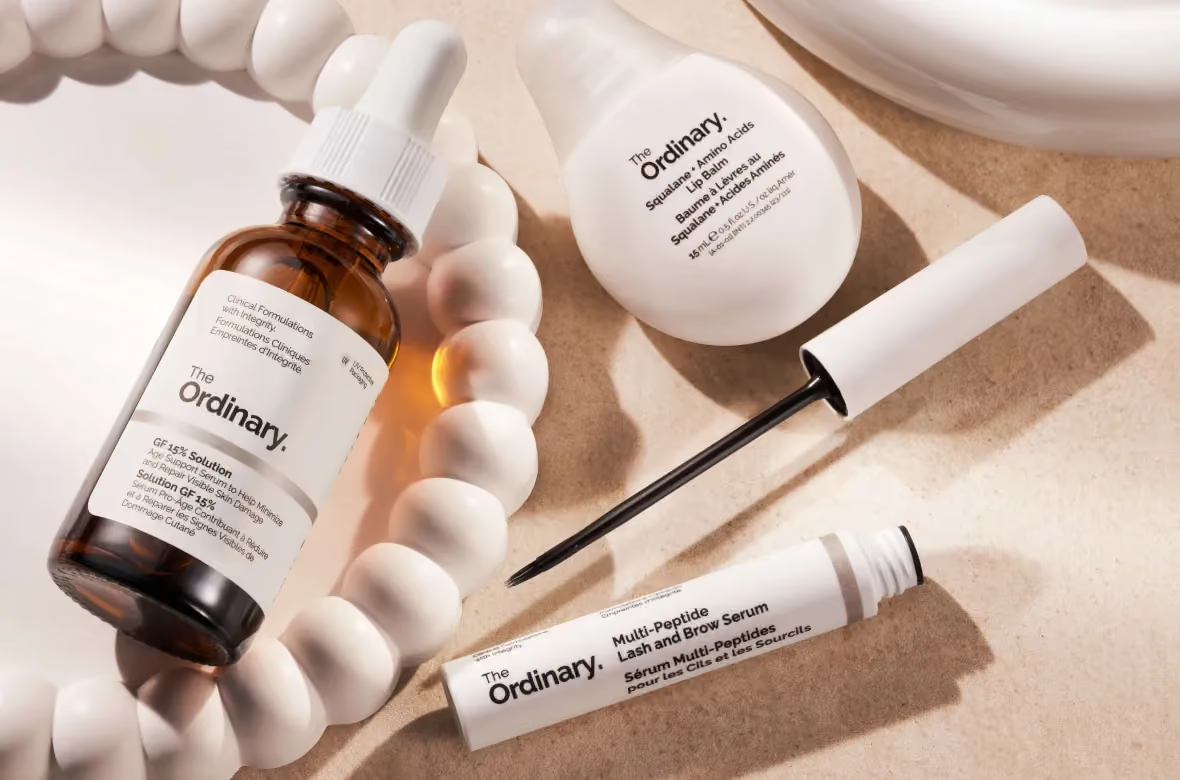
Functional-first brands like The Ordinary, Paula's Choice, and INKEY List prioritise ingredients, claims, and product education to build confidence. Neither approach succeeds on its own.
The highest-converting beauty stores combine both: editorial visuals create desire, while information-rich product pages remove purchase anxiety. The right balance depends on your customer.
Ingredient-focused shoppers need educational content, luxury fragrance buyers expect premium storytelling, and makeup shoppers need tools that build shade confidence.
The best design strategy starts by identifying the customer's biggest barrier to purchase before choosing the visual direction.
Trend 1: Ingredient Transparency as a Visual Design Language
Ingredient transparency has evolved from a compliance requirement into a core design principle. In 2026, informed skincare shoppers expect ingredient information to be visible, accessible, and easy to understand—not buried below the fold.
Make Ingredients the Hero
Leading skincare brands treat key activities as visual elements rather than technical details. Displaying "Niacinamide 10%" or "Retinol 0.5%" prominently above the fold immediately communicates transparency and builds confidence before a customer reads the product description.
Surface Trust Signals Early
"Free from" claims such as paraben-free, sulfate-free, fragrance-free, and non-comedogenic should appear beside the product image or Add to Cart button, not hidden in specifications.
Presenting these trust signals at the point of decision reduces purchase hesitation for ingredient-conscious shoppers.
Explain Ingredients in Plain Language
Modern product pages include expandable ingredient glossaries that explain what an active ingredient does, who it is suitable for and how it should be used.
This removes uncertainty while positioning the brand as an expert rather than expecting customers to research elsewhere.
Simplify Routine Building
Routine builders that recommend compatible products increase average order value while reducing returns.
The best implementations make multi-step skincare feel simple and personalised instead of technical or overwhelming.
UAE & Gulf Market Considerations
For beauty brands targeting the UAE and GCC, certification badges deserve the same prominence as ingredient information.
With strong consumer interest in Halal-certified, vegan, and cruelty-free products, placing these trust signals beside the Add to Cart CTA helps answer purchase concerns before shoppers have to search for the information.
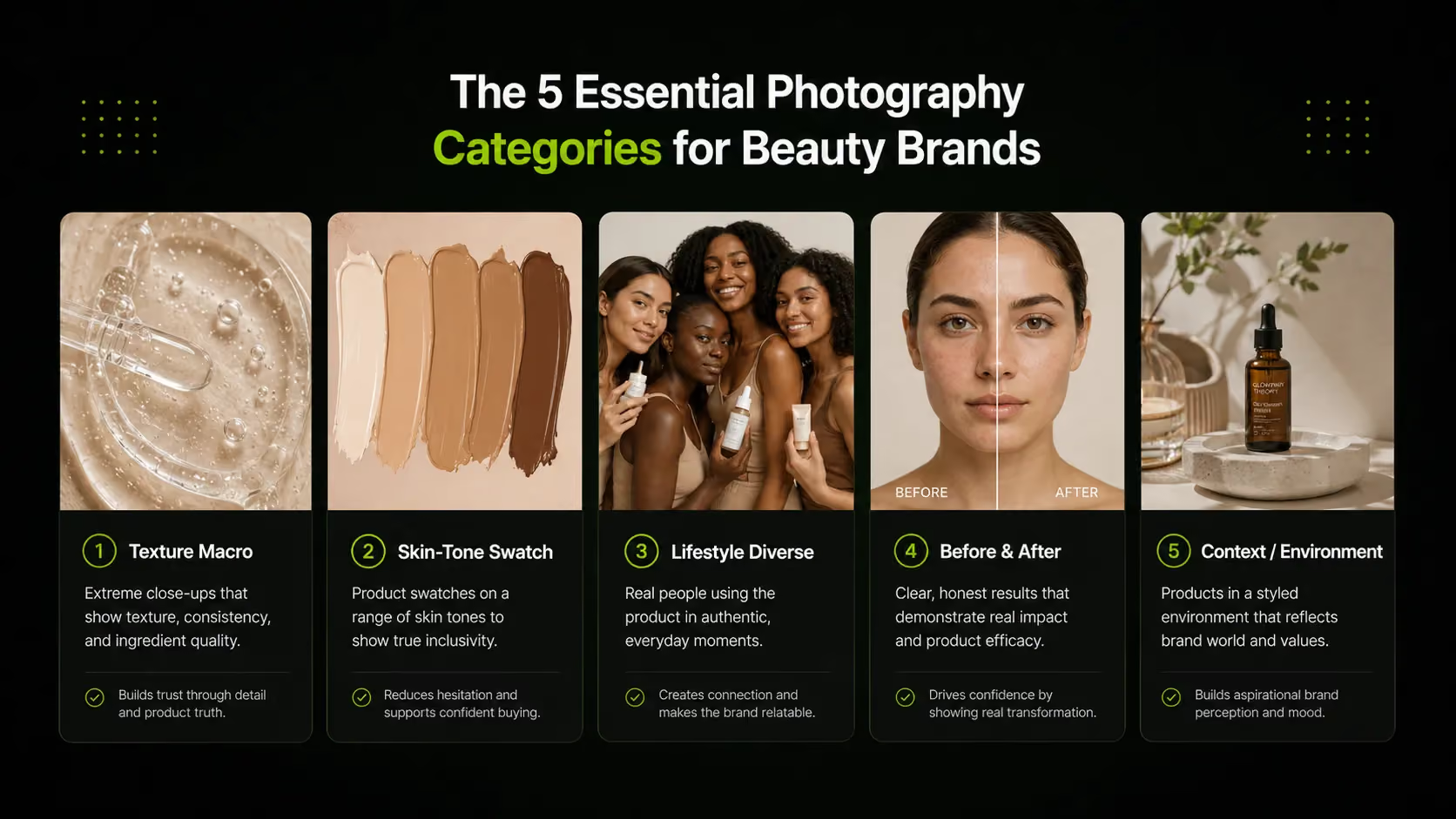
Trend 2: Photography That Closes the Tangibility Gap
Beauty product photography is more than branding, it is the closest online shoppers get to touching, testing, or trying a product. The best beauty stores use photography to answer purchase questions before customers ask them.
1. Texture & Finish Photography
Macro images that reveal serum consistency, foundation coverage, or lipstick finish reduce uncertainty and increase purchase confidence. Texture often communicates more than product copy ever can.
2. Multi-Skin-Tone Swatches
For shade-based products, swatches across diverse skin tones are essential. They help customers make confident shade selections, reducing returns and improving conversions.
3. Diverse Lifestyle Photography
Show products on real people across different skin tones, hair textures, ages, and lifestyles. For UAE and Gulf brands, inclusive imagery and culturally relevant styling help more shoppers see themselves in the brand.
4. Compliant Before-and-After Images
Authentic before-and-after photography remains one of skincare's highest-converting assets, provided claims are clinically substantiated. In regulated markets such as the UAE, KSA, and the EU, unsupported efficacy claims create legal and reputational risk.
5. Context & Lifestyle Images
Editorial photography—bathroom shelves, skincare routines, or vanity setups—creates aspiration and justifies premium positioning. It builds emotional appeal before product information closes the sale.
Optimise for Mobile
With most beauty ecommerce traffic coming from mobile devices, photography must also be performance-friendly. Compress images, use WebP, implement responsive srcset, and lazy-load below-the-fold assets to preserve fast page speeds without compromising visual quality.
Trend 3: AR Virtual Try-On Becomes a Conversion Essential
AR virtual try-on has evolved from a novelty into a proven conversion tool for beauty ecommerce.
As online shoppers expect the confidence of an in-store experience, virtual try-on reduces purchase hesitation, increases conversions, and lowers returns.
Where AR Delivers the Most Value
AR offers the strongest ROI for colour-based categories where shade selection is the biggest purchase barrier:
- Lipsticks – Preview colour before buying.
- Foundation & Concealer – Reduce shade mismatch and returns.
- Blush, Bronzer & Eyeshadow – Help shoppers visualise colour payoff and intensity.
For skincare, AI-powered skin analysis is more valuable than AR try-on, while fragrance benefits more from rich storytelling, fragrance notes, and social proof than visual technology.
Choosing the Right Solution
Mid-market Shopify brands now have several viable options:
- Perfect Corp. YouCam – Best for brands with large shade catalogues requiring highly accurate face mapping.
- Shopify Native AR – Ideal for showcasing packaging and 3D products rather than wearable colour.
- Banuba – API-first platform suited to brands building custom mobile experiences.
Before You Invest
Successful AR depends on accurately digitised shade libraries. For brands with fewer than 30 shades, implementation costs are often manageable and ROI can be achieved quickly.
In the UAE and Gulf markets, where many beauty brands have limited physical retail presence, virtual try-on can deliver even greater conversion gains by replacing the in-store testing experience.
Our AI for Shopify service covers AR try-on platform evaluation and Shopify integration as part of beauty brand builds where the category and shade count justify the investment.
Trend 4: UGC and Creator Content Become Core Site Design
User-generated content (UGC) has evolved from a review feature into a core part of beauty ecommerce design.
Today's shoppers trust real customer experiences more than polished brand campaigns, making UGC one of the strongest drivers of conversion.
Why UGC Outperforms Brand Photography
Beauty shoppers want to know how a product performs on real people with similar skin tones, skin types, and lifestyles, not just professional models.
Leading brands integrate customer photos and creator videos directly into product pages, allowing shoppers to visualise real-world results before purchasing.
High-Converting UGC Patterns
On product pages:
- Customer photo galleries displayed above the fold.
- Filters by skin tone, skin type, or concern.
- Inline video reviews instead of external links.
- "As worn by" galleries showing products across different people and lighting conditions.
On homepage and category pages:
- Shoppable Instagram and TikTok content.
- Creator-led hero banners.
- Community galleries featuring real customers alongside brand imagery.
Within reviews:
- Verified purchase badges.
- Reviewer profiles including skin type, age range, or primary concern.
- Post-purchase prompts encouraging customers to upload photos 2–4 weeks after delivery, when product results are most visible.
UAE & Gulf Market Considerations
Creator influence plays an outsized role in beauty purchasing across the UAE and GCC. Rather than treating influencer content as external social proof, successful regional brands embed creator videos and customer content directly into the shopping journey, making UGC a primary conversion asset instead of an afterthought.
Our D2C data analytics service covers the measurement infrastructure to track which UGC placements are generating the highest conversion impact by product and customer segment.
Trend 5: Skincare Education Becomes Site Architecture
Successful skincare brands no longer sell individual products, they sell complete routines. By designing around skincare journeys instead of single purchases, brands increase average order value (AOV), strengthen customer trust, and improve long-term retention.
Design Around Routines, Not Products
Interactive routine builders let shoppers select their skin type, concerns, and current regimen to receive personalised product recommendations.
This digital consultation simplifies decision-making while increasing basket size and reducing product mismatches.
Organised by Skin Concern
Navigation built around concerns such as acne, hyperpigmentation, sensitivity, hydration, or anti-ageing better reflects how customers shop than traditional product categories.
Product type can remain a secondary filter, making it easier for visitors to find the right solution.
Educate Through Ingredient Guidance
Showing which ingredients work well together and which combinations to avoid helps customers use products correctly and builds trust.
Compatibility guidance is particularly valuable for ingredient-conscious shoppers and reduces post-purchase confusion.
Build the Complete Routine
Instead of recommending individual upsells, show where each product fits within a complete skincare regimen.
A "Complete Your Routine" section with one-click add-to-cart for the full routine encourages larger purchases while helping customers achieve better results.
Our conversion rate optimisation service includes cross-sell architecture as a first-priority AOV improvement for skincare brands.
Trend 6: Clean, Purposeful Design Over Visual Maximalism
In beauty ecommerce, minimalism is no longer just an aesthetic choice, it is a conversion strategy.
Simplified layouts reduce cognitive load, helping shoppers focus on the information they need to make a purchase.
Prioritise Clarity
Beauty product pages already contain high-value information such as ingredients, shades, reviews, and claims.
Clean layouts with generous white space make this content easier to scan, increasing confidence and reducing decision fatigue.
Use Typography to Guide Attention
Strong visual hierarchy helps customers process information quickly:
- Large, readable body text (16–18px on mobile).
- Product name, key benefit, and CTA clearly prioritised.
- Ingredient names visually highlighted to reinforce transparency.
Let Products Stand Out
Neutral backgrounds, restrained colour palettes, and selective accent colours keep attention on the product rather than the interface. Luxury brands often reinforce premium positioning with monochromatic palettes and generous spacing.
Structure Product Pages for Conversion
An effective product page follows a clear hierarchy:
- Product images
- Product name, rating, and price
- Add to Cart CTA
- Key benefits and ingredients
- Detailed information
- Customer reviews
Design Faster Homepages
The homepage should communicate the brand, featured products, and shopping path immediately.
Fast-loading hero images or short looping videos consistently outperform long autoplay videos that delay navigation and increase bounce rates.
Trend 7: Mobile-First Becomes the Beauty Ecommerce Standard
Mobile is now the primary shopping device for beauty consumers, especially in social-commerce-driven markets.
Every beauty store should be designed for the mobile experience first, with desktop serving as a secondary optimisation.
Design for Mobile Shopping Behaviour
Beauty shoppers typically discover products on social media and complete purchases on their phones.
Product pages should prioritise thumb-friendly navigation, fast loading, and clear purchase paths on a vertical scrolling experience.
Optimise Shade Selection
For products with multiple shades, use swipeable shade selectors with large, tappable swatches and a clearly displayed shade name. Small colour grids increase selection errors, abandoned purchases, and product returns.
Keep the CTA Visible
Long product pages should include a sticky Add to Cart bar showing the selected shade, price, and purchase button. This lets shoppers buy at any point without scrolling back to the top.
Build Mobile-Friendly Product Galleries
Image galleries should support swipe gestures, zoom, and clear navigation indicators. For makeup, customers should be able to browse shade swatches and on-skin photography effortlessly.
Simplify Personalisation
Mobile skin quizzes work best with short, multiple-choice questionnaires rather than camera-based skin scans, which often reduce completion rates because of permission requests.
UAE & Gulf Market Considerations
Beauty discovery across the UAE and GCC is heavily influenced by TikTok, Instagram, and Snapchat.
Many shoppers arrive on product pages after already engaging with a product through social content or AR filters, so pages should immediately reinforce purchase confidence with prominent CTAs, pricing, reviews, and trust signals rather than lengthy introductions.
Our mobile-first design service treats mobile as the primary design surface for beauty builds, not a responsive adaptation of a desktop layout.
Trend 8: Trust Architecture Becomes a Competitive Advantage
For beauty D2C brands, trust is the biggest barrier to purchase. Unlike many ecommerce categories, shoppers are evaluating both product performance and personal safety, making trust signals essential throughout the buying journey.
Address Beauty's Two Biggest Concerns
Beauty shoppers want reassurance that a product is:
- Safe for their skin – reducing concerns about irritation, breakouts, or unsuitable ingredients.
- Worth the investment – minimising the risk of choosing the wrong shade, texture, or formula.
The most effective beauty stores answer these concerns before customers reach checkout.
Surface Product-Level Trust Signals
Trust indicators should appear directly on product pages, not hidden elsewhere on the site. Key examples include:
- Dermatologist-tested or approved badges.
- Halal, vegan, and cruelty-free certifications.
- Clear suitability labels such as "Best for oily, acne-prone skin."
For UAE and Gulf brands, Halal certification and WhatsApp support are particularly influential trust signals.
Back Claims with Evidence
Clinical claims should be supported by accessible evidence. An expandable "Clinical Evidence" section summarising study results or testing data adds credibility while keeping product pages easy to scan.
Make Reviews More Relevant
Beauty reviews become significantly more useful when shoppers can filter by skin type, skin concern, age range, or verified purchase status.
Relevant reviews help customers determine whether a product is likely to work for them, reducing purchase hesitation.
Offer Real Human Support
Beauty shoppers often have questions about ingredients, routines, or shade selection before buying.
Prominently displaying a phone number, live chat, or WhatsApp contact gives customers immediate reassurance and can recover sales that FAQs alone cannot.
Trend 9: Sustainability and Clean Beauty Shape Design
Clean beauty has become a mainstream expectation, but customers now expect evidence not just messaging.
The most effective beauty brands use design to communicate sustainability while backing every claim with credible proof.
Use Design to Reinforce Sustainability
Packaging, photography and colour palettes should reflect the brand's sustainability positioning.
Recyclable packaging, natural materials, earthy tones and minimalist styling create an immediate visual connection with clean beauty before customers read a single product claim.
Tell Ingredient Stories Visually
Brands with responsibly sourced ingredients should showcase their origins through photography and storytelling.
Highlighting the source of key botanicals, harvesting methods, or formulation processes builds authenticity and helps differentiate the brand.
Avoid Greenwashing Signals
Consumers are increasingly sceptical of vague sustainability claims. Avoid:
- Generic nature imagery unrelated to the product.
- "Clean" or "natural" claims without supporting evidence.
- Sustainable colour palettes that contradict the product's ingredients or packaging.
Every environmental claim should be supported with visible certifications or clear explanations.
Beauty shoppers across the UAE and GCC are highly research-driven and expect transparent proof of sustainability claims. Certifications such as Halal, organic, vegan or cruelty-free should be displayed prominently on product pages and linked to verifiable sources whenever possible.
In this market, credibility is built through evidence, not aesthetics alone.
Beauty Ecommerce Design in the UAE & Gulf: What Makes This Market Different
The UAE and Gulf beauty market has distinct customer expectations that directly influence ecommerce design.
Brands that localise their visual experience, trust signals, and user journey are better positioned to compete in one of the world's fastest-growing beauty markets.
Premium Design Is the Baseline
Gulf consumers are highly exposed to global luxury brands through retail, travel, and social media.
High-quality photography, refined layouts, and premium branding are expected not optional. Generic templates and stock imagery struggle to build credibility.
Make Trust Visible
For many shoppers, Halal certification is a purchase requirement rather than a bonus. Display Halal, vegan, cruelty-free, and dermatologist-tested certifications prominently on product pages, linking each badge to a verifiable certifying body where possible.
Design Equally for Arabic and English
A bilingual beauty store should deliver the same experience in both languages. Native RTL layouts, Arabic-optimised typography, direction-aware navigation and high-quality translated content demonstrate genuine commitment to the market and create a consistent shopping experience.
Reflect Local Beauty Preferences
Fragrance, oud, attar, eye makeup, and skincare are particularly important categories across the Gulf.
Whether a brand adopts traditional regional aesthetics or a modern global look, the visual identity should remain consistent across product photography, packaging, and digital design.
Build Around Creator-Led Commerce
Beauty purchasing in the UAE and GCC is heavily influenced by creators and social platforms.
Product pages should reinforce this discovery journey with creator content, customer reviews, trust badges, and fast mobile checkouts, allowing shoppers to move seamlessly from social media to purchase.
Our international ecommerce setup service covers the technical infrastructure for bilingual Arabic-English beauty stores and our global aesthetic audit service provides the Gulf-market-specific visual assessment that international beauty brands entering the region need before launch.
Trend 10: AI-Powered Personalisation Becomes Core Site Architecture
AI is rapidly transforming beauty ecommerce by delivering personalised shopping experiences that increase conversion rates, boost average order value (AOV) and reduce purchase uncertainty.
Rather than being an optional feature, AI is becoming a core part of the customer journey.
Personalised Skin Consultations
Short skin quizzes or AI-powered skin analysis help customers identify products suited to their skin type and concerns.
The most effective quizzes take less than 90 seconds and provide a personalised routine instead of generic recommendations.
Dynamic Product Recommendations
AI can tailor homepages and product recommendations based on browsing history, purchase behaviour, or customer segments.
Returning shoppers see products that match their interests rather than the same bestseller list shown to everyone.
AI Shade Matching
For foundation and concealer, AI shade matching allows customers to upload a photo and receive a personalised shade recommendation with a confidence score.
This reduces shade uncertainty, improves purchase confidence, and lowers return rates.
AI Beauty Advisors
Conversational AI assistants provide instant answers to common beauty questions, such as ingredient compatibility, routine building, or shade selection.
Available around the clock, they replicate many benefits of an in-store consultation while helping brands scale customer support without increasing staffing costs.
Our AI for Shopify service covers the implementation of quiz tools, AI product advisors, and personalisation infrastructure for beauty brands on Shopify.
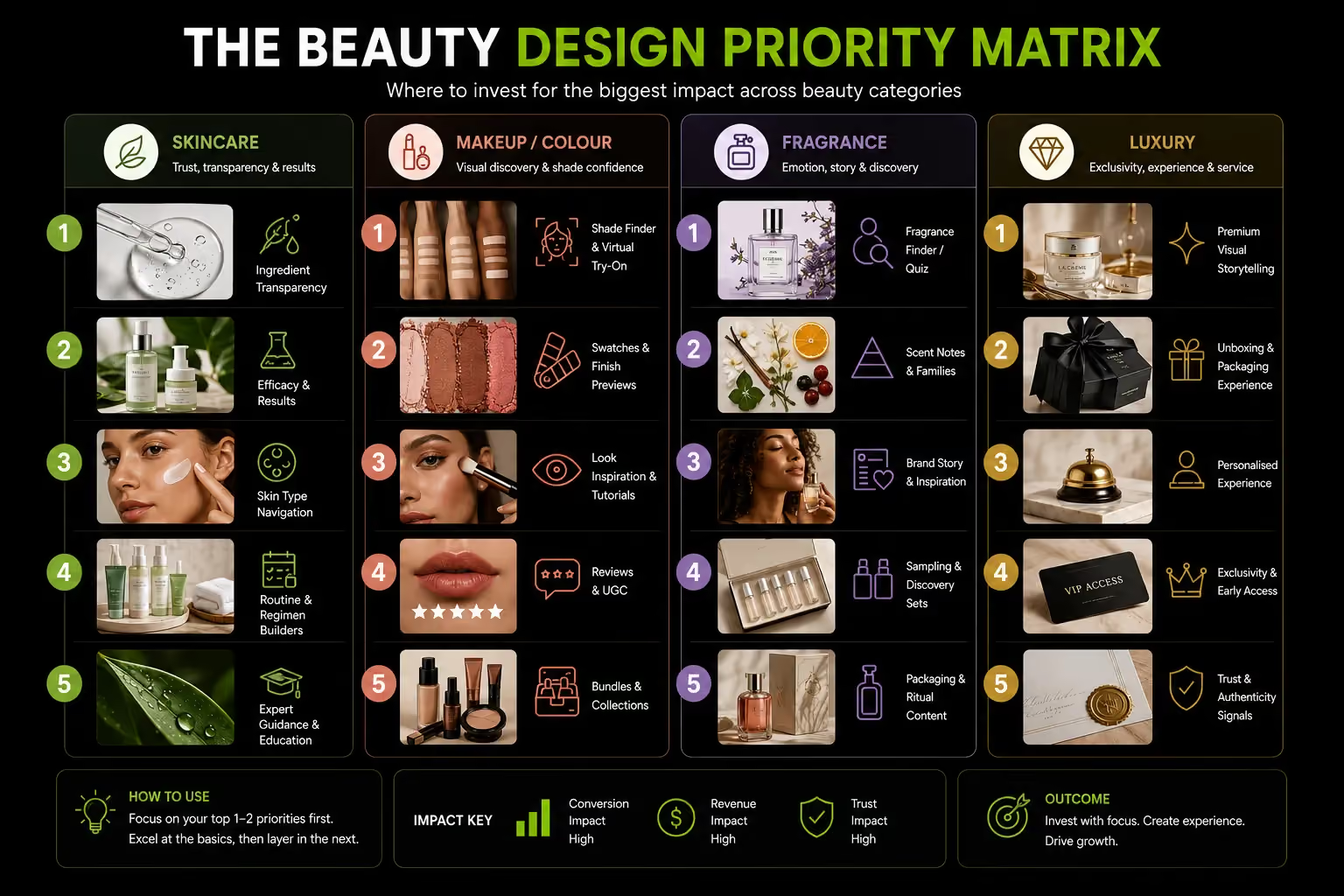
The Beauty Design Priority Framework Which Trends to Invest in First
The right starting point depends on your beauty sub-category. These are the five priority investments for each, ranked by conversion impact.
By Beauty Sub-Category
Skincare brands:
- Ingredient transparency design highest trust-building ROI for ingredient-educated consumers
- Skin concern navigation and routine builder highest AOV impact
- Filterable review system by skin type highest purchase confidence impact
- Mobile-first product page design with sticky CTA
- AI skin quiz or personalisation second-stage investment after the first four are executed
Makeup and colour cosmetics brands:
- Multi-skin-tone swatch photography highest return-rate reduction impact
- AR virtual try-on for shade-heavy SKUs highest conversion lift for colour categories
- UGC and creator content on product pages highest trust-building for newer brands
- Mobile shade selector UX
- Shade match AI tool second-stage after AR is established
Fragrance brands:
- Editorial visual quality highest brand differentiation in a non-try-on category
- Fragrance note pyramid visual design the primary purchase decision aid for fragrance
- UGC and creator content creator-led fragrance discovery is the dominant discovery channel
- Ingredient and accord transparency for clean or natural fragrance positioning
- Sensory copy quality in the absence of scent, copy carries the full purchase persuasion burden
Luxury beauty brands:
- Premium photography and editorial visual language trust through visual quality
- White space and typographic hierarchy
- Ingredient provenance storytelling
- Packaging and unboxing visual communication
- Clinical claim substantiation luxury consumers are research-driven, not impulse-driven
How We Design Beauty Ecommerce Stores at Suplex
At Suplex, we design beauty ecommerce stores by balancing visual appeal with commercial performance. A beautiful website that fails to convert is as ineffective as a high-converting store that lacks a premium brand experience.
Every project begins with one question: what purchase anxieties prevent this customer from buying, and how can design remove them?
Our approach changes based on the category. For skincare, we prioritise ingredient transparency, certifications, and educational content.
For makeup, we focus on shade selection, swatch photography, and virtual try-on experiences.
For luxury fragrance, editorial photography and premium storytelling create the emotional appeal needed to justify higher price points.
This methodology extends across our client work. For Miduty, we designed product pages around ingredient transparency, certifications and benefit-led messaging to build trust with health-conscious shoppers. For Celesti, the focus was premium editorial design and luxury positioning.
Whether you're launching a new beauty brand or redesigning an existing store, our process starts by identifying the design improvements with the greatest commercial impact.
From strategic audits and brand positioning to custom Shopify development and conversion optimisation, we create beauty ecommerce experiences that are built to attract, engage, and convert.
Book a call directly with our founders to discuss your beauty brand's ecommerce design. Slots are limited.
Frequently Asked Questions
What makes a good beauty ecommerce website?
A great beauty ecommerce website combines premium visuals with trust-building features like ingredient transparency, realistic product photography, shade-matching tools, customer reviews, and clear certifications to reduce purchase hesitation.
What are the top beauty ecommerce design trends in 2026?
Key trends include ingredient-first design, AR virtual try-on, AI personalisation, UGC integration, mobile-first experiences, and clean, minimalist layouts focused on conversion.
How does AR virtual try-on improve conversions?
AR virtual try-on helps shoppers visualise products before buying, increasing conversion rates, improving purchase confidence, and reducing returns—especially for foundation, concealer, and lipstick.
What is the best design approach for a skincare website?
Focus on education and trust with concern-based navigation, ingredient transparency, routine builders, clinical evidence, and personalised product recommendations.
How should beauty websites handle shade matching?
Use multi-skin-tone swatches, AI or quiz-based shade finders, and AR virtual try-on to help customers choose the right shade and reduce returns.
What design features are important for beauty ecommerce in the UAE?
Prioritise Halal certification, bilingual Arabic-English design, native RTL layouts, WhatsApp support, and creator-led content tailored to Gulf consumers.
How important is UGC for beauty ecommerce?
UGC is one of the strongest conversion drivers. Customer photos, videos, and verified reviews build trust by showing how products perform on real people, making shoppers more confident to buy.
Hi, I’m Rishabh Jain
I believe great design has the power to shape perception, build trust, and move businesses forward. That belief is what led me to found Suplex Design Studio, a global branding and packaging studio working with FMCG and D2C brands across markets.I started suplex at 25 with a clear intent, to create design that is strategic, thoughtful, and commercially meaningful. By 28, the studio had scaled globally, guided by a strong foundation in Integrated Design that I developed during my academic journey in London, where I was honoured with the Dean’s Award.
Over the years, I’ve had the opportunity to work with 100+ brands, from Fortune 500 organizations to family-run businesses, helping them build packaging and brand systems that create recall, relevance, and long-term value.
Suplex’s work has been recognized internationally, including the Manifest Award (2024), the Clutch Global Award (2025), and features on platforms such as Packaging of the World, The Dieline, and the World Brand Design Society.
None of this would be possible without the people behind the work. I’m deeply grateful to the suplex team, whose commitment, creativity, and attention to detail turn ideas into meaningful brand experiences every day.
At the heart of my work is a simple philosophy, design should be intentional, honest, and built to last, and that continues to guide everything we create at suplex.













Let’s Make It Happen
E-Commerce Success Stories

%201.avif)





.avif)
.avif)
Build Your D2C Business The Right Way
Build It With Suplex.


