Ecommerce Customer Retention Strategy Basics for Higher Sales
.avif)

Ecommerce Customer Retention Strategy Basics for Higher Sales
Ecommerce customer retention is the ability to get a customer to buy from you again, measured most simply as repeat purchase rate.
Most guides list tactics before establishing what a good number even looks like for your category.
A fashion brand and a supplements brand shouldn't be judged against the same benchmark. This guide starts with diagnosis, then gets to tactics.
What Ecommerce Customer Retention Actually Means snd How To Measure It
Before any tactic makes sense, get the measurement right. Most competing guides skip this step entirely and jump straight to tactics.
Retention Rate Vs Repeat Purchase Rate, Not The Same Metric
These two terms get used interchangeably constantly, and they measure different things. Retention rate measures whether existing customers keep buying over a fixed period. Repeat purchase rate measures whether a first-time buyer ever places a second order at all.
A brand can look healthy on one while declining on the other. Strong loyalty from an early cohort of customers can keep retention rate looking fine while newer customers are failing to come back at all, dragging repeat purchase rate down without the overall retention number showing it clearly.
Track both, and don't let a strong number on one metric mask a weak number on the other.
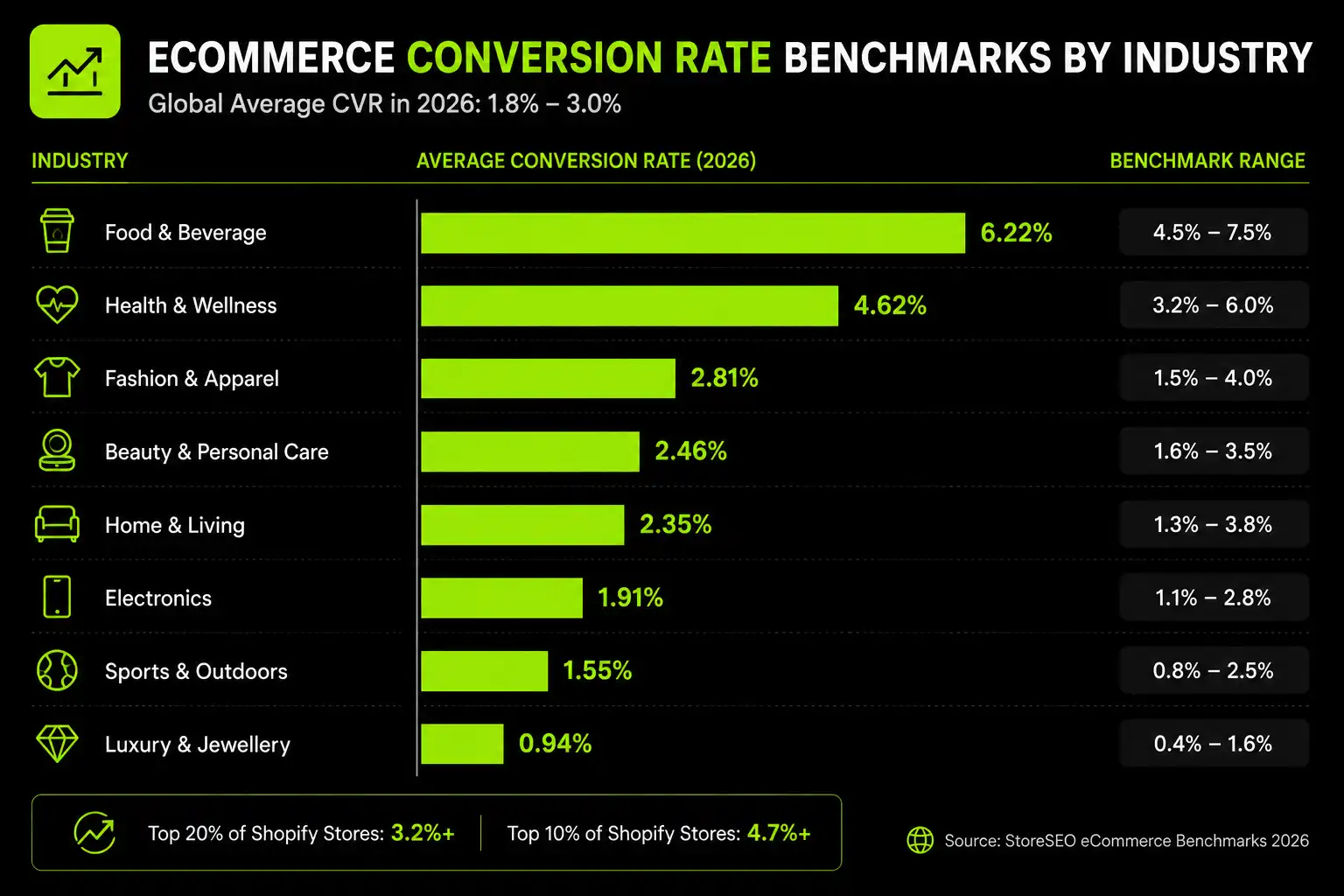
The reported DTC average repeat purchase rate sits around 25% to 30%, though individual studies range from 18.8% to 31%, directional and source-dependent, not a single fixed figure you should hold yourself to exactly.
Know Your Category Benchmark Before You Judge Your Number
A single flat "average retention rate" quoted across every category misleads more than it informs. Here's what repeat purchase rate typically looks like by category:
A luxury brand sitting at 15% repeat purchase rate may be performing perfectly well for its category. A consumables brand at 15% has a real problem worth investigating.
Judging both against one flat industry average would send the wrong signal to each.
The 60-Day Window: Why Timing Matters More Than Tactics
This is the core reframe of the whole piece. Retention isn't primarily a "which tactic" question, it's a "what happens in the first 60 days" question.
The Data Point That Changes The Framework
Customers who place a second order within 60 days of their first are roughly 3x more likely to become long-term customers than those who take 120+ days. Roughly half of all second orders happen within 30 days, and three-quarters happen within 90 days.
This reframes retention entirely. Most retention advice, loyalty programmes, occasional newsletters, operates on a timeline far longer than the window that actually predicts long-term customer value.
If your retention strategy's first meaningful touchpoint lands 45 days after purchase, you've already missed the window where most of the reorder decisions get made.
A Weak Sequence Vs A Timed One
Here's the practical contrast. A brand with a single, generic post-purchase email 14 days after delivery is doing something, but it's not doing much.
A brand with a structured touchpoint sequence across day 1, day 7, day 21, and day 45 covers the exact window where reorder probability is highest, using roughly the same total effort.
The second approach wins not because it does more work, but because the work is timed to the window that matters.
A day-1 order confirmation builds trust immediately. A day-7 delivery check-in catches any product issue before it becomes a reason not to reorder.
A day-21 touchpoint lands right as many consumable products start running low. A day-45 touchpoint catches the tail end of the 60-day window before reorder probability starts dropping.

Reorders, Not Cross-Sells, In The Early Window
In many categories, most second purchases are reorders of the same product rather than cross-sells to something different.
This has a direct practical implication: a "time to reorder" prompt often outperforms a "you might also like" recommendation in this early window, because the customer already knows they want more of what worked the first time.
Save the cross-sell recommendation for later in the relationship, once the core reorder habit is established.

We build post-purchase sequences around this 60-day window specifically, rather than defaulting to a generic drip campaign timeline that ignores when the reorder decision actually gets made.
Foundational Retention Strategies: What To Actually Build
Each tactic below ties back to either the 60-day window or the category benchmark, not presented as a standalone bullet disconnected from the diagnosis above.
Post-Purchase Email And Sms Sequences
Order confirmation, shipping updates, a delivery check-in, and a reorder or complementary-product prompt, timed to land inside the 60-day window rather than spread evenly across months.
This is the direct, practical application of the timing framework above: don't just have a post-purchase flow, have one sequenced against the window where it actually matters.
Loyalty And Rewards Programmes
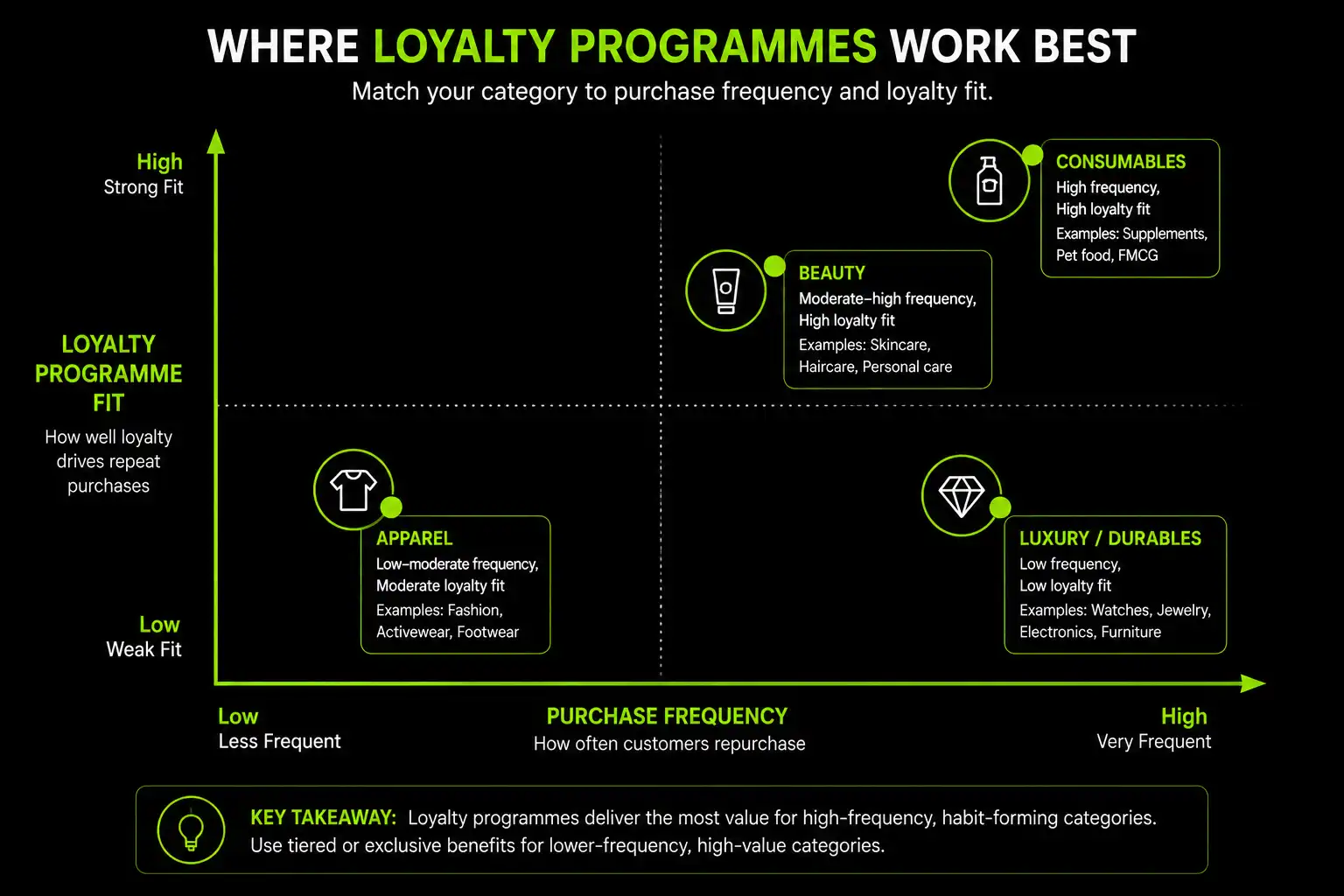
A loyalty programme works well in high-purchase-frequency categories, consumables, beauty, food, where customers buy often enough to actually accumulate and redeem points in a meaningful timeframe.
In low-frequency, high-consideration categories like luxury or furniture, a points system has little pull. A customer buying a sofa once every five years isn't motivated by a loyalty tier they'll barely interact with.
Match the tactic to your category's natural purchase frequency before investing in it.
Subscription and Replenishment Models
Consumable categories, supplements, coffee, skincare, benefit most from subscription mechanics because the product itself already creates a natural reorder cycle.
A subscription doesn't invent demand, it formalises timing that would happen anyway, turning an implicit reorder pattern into an explicit, automated one.
For categories without a natural consumption cycle, forcing a subscription model onto the purchase pattern usually underperforms a simple, well-timed reorder prompt instead.
Customer Service As A Retention Lever
Responsive post-purchase support, order tracking, easy returns, functions as a genuine retention tactic, not just a cost centre to minimise.
Support quality directly affects whether a customer trusts a brand enough to buy again, particularly during the delivery-anxiety window right after purchase, when a customer is still deciding whether this new brand was a good choice.
A retention strategy that optimises marketing while ignoring support quality is solving half the problem.
Personalization In Retention Flows
Personalization sharpens every tactic above, segmented reorder prompts, tailored replenishment timing, but it's a large enough topic to deserve its own treatment rather than a compressed recap here.
Our ecommerce personalization examples guide covers the tiered approach in full, from free native tools through custom-built recommendation logic.
Suplex's Approach To Retention Strategy
We start every retention conversation with the number, not the tactic. Pulling actual repeat purchase rate and comparing it against the client's category benchmark comes before we recommend a loyalty programme, subscription model, or lifecycle email rebuild, not after.
Our post-purchase flow work is built around the 60-day window specifically, sequencing touchpoints to when they're statistically most likely to produce a second order, rather than defaulting to a generic monthly newsletter cadence that ignores timing entirely.
This diagnostic discipline runs through prior work we've done in adjacent territory. Celesti (skincare) sits in a consumable-adjacent category where repeat purchase mechanics genuinely matter and the conversion and UX work there reflects the same underlying approach: measure the actual number before recommending a fix, rather than reaching for a tactic first.
Retention strategy without a measured starting point is guesswork dressed up as a plan. Knowing your category benchmark and your actual repeat purchase rate is the step that turns a generic tactic list into a strategy that fits your specific business.
Retention Strategy Basics For Uae And Gulf Ecommerce Brands
Standard US/UK retention playbooks don't map cleanly onto Gulf purchase behaviour. Here's what changes.
COD Changes The Weight Of The Post-Purchase Experience
A customer paying cash on delivery has made a lighter commitment at first purchase than a prepaid customer, no payment has actually changed hands until the product arrives.
This shifts more weight onto the post-purchase experience itself, product quality and delivery speed carry more influence over whether a COD customer reorders, because the commitment they made at checkout was smaller to begin with.
A weak post-purchase experience costs a COD-first brand more in retention than it costs a prepaid-first brand, because there's less sunk commitment already anchoring the customer to the brand.
Whatsapp As A Reorder Channel
WhatsApp Business is increasingly used as a reorder channel across the Gulf, and a direct "reorder your last order" message sent through WhatsApp can outperform email open rates for UAE audiences, reflecting how this audience actually prefers to communicate.
A retention strategy built purely around email lifecycle flows misses a channel that regularly performs better here. If your reorder prompts only live in an inbox, you're likely underusing the channel with the strongest actual engagement for this market.
Ramadan and EOSS Need Separate Seasonal Campaigns
Ramadan and EOSS (End of Season Sale) create seasonal repeat-purchase spikes that don't map cleanly onto the standard 60-day window, purchase timing and intent both shift during these periods in ways an always-on lifecycle flow isn't built to handle.
Treat these as separate seasonal retention campaigns rather than folding them into your standard sequence, the touchpoint timing and messaging that works in a normal month won't fit the urgency and gifting intent that defines these windows.
Subscriptions are Less Established, Replenishment Nudges Work Better
Subscription models are less culturally established in some Gulf categories than in the US or UK. A manual replenishment nudge, a simple reorder prompt rather than a hard subscription commitment, often outperforms a subscription push for UAE consumers who are still building trust with a newer D2C brand.
Asking for a recurring commitment before that trust exists can backfire, where a one-tap reorder prompt achieves the same reorder outcome without asking for more commitment than the relationship has earned yet.
We've adapted retention sequencing, COD-aware messaging, WhatsApp touchpoints, seasonal campaign structuring, for UAE D2C and FMCG brands as a Shopify, Meta, and Google Partner working across the region.
These aren't adjustments layered onto a US playbook, they're built around how Gulf shoppers actually behave after their first purchase.
Frequently Asked Questions
What is a good customer retention rate for ecommerce?
It depends heavily on category. Consumables brands (supplements, food, coffee) often see 30 to 55% repeat purchase rates, while beauty runs 22 to 40%, apparel 20 to 32%, and luxury as low as 10 to 19%. Compare your number against your category benchmark, not a flat industry average, before deciding if it needs work.
What is the difference between customer retention and repeat purchase rate?
Retention rate measures whether existing customers keep buying over a defined period. Repeat purchase rate measures whether a first-time buyer ever places a second order at all. A brand can have a strong repeat purchase rate from loyal early adopters while newer cohorts show declining retention, they're not interchangeable.
What are the most important customer retention strategies for ecommerce?
Timed post-purchase email and SMS sequences, a loyalty programme where purchase frequency justifies it, subscription or replenishment models for consumable categories, responsive customer service, and personalization in retention flows. The 60-day window after first purchase is when most of these tactics have the highest impact.
Why is the 60-day window important for retention?
Customers who reorder within 60 days of their first purchase are roughly three times more likely to become long-term customers than those who take longer. Roughly half of all second orders happen within 30 days. Retention efforts concentrated in this window outperform generic, evenly-spaced lifecycle campaigns.
Does a loyalty programme improve ecommerce retention?
It depends on purchase frequency. Loyalty programmes work well in categories where customers buy often enough to accumulate and redeem points, consumables, beauty, food. In low-frequency, high-consideration categories like luxury or furniture, a points system has little pull and rarely moves the retention number.
How does customer service affect retention?
Significantly. Fast order tracking, easy returns, and responsive support directly affect whether a customer trusts a brand enough to buy again, particularly during the delivery-anxiety window right after purchase. Retention strategy that ignores post-purchase support quality is optimising marketing while ignoring the experience that actually drives repeat behaviour.
Is a subscription model right for every ecommerce brand?
No. Subscription mechanics work best for consumable, naturally-recurring products, supplements, coffee, skincare, where the product creates its own reorder cycle. For considered, infrequent, or highly variable purchases (fashion, home goods), a subscription commitment often feels wrong to the customer and underperforms a simple reorder prompt.
Hi, I’m Rishabh Jain
I believe great design has the power to shape perception, build trust, and move businesses forward. That belief is what led me to found Suplex Design Studio, a global branding and packaging studio working with FMCG and D2C brands across markets.I started suplex at 25 with a clear intent, to create design that is strategic, thoughtful, and commercially meaningful. By 28, the studio had scaled globally, guided by a strong foundation in Integrated Design that I developed during my academic journey in London, where I was honoured with the Dean’s Award.
Over the years, I’ve had the opportunity to work with 100+ brands, from Fortune 500 organizations to family-run businesses, helping them build packaging and brand systems that create recall, relevance, and long-term value.
Suplex’s work has been recognized internationally, including the Manifest Award (2024), the Clutch Global Award (2025), and features on platforms such as Packaging of the World, The Dieline, and the World Brand Design Society.
None of this would be possible without the people behind the work. I’m deeply grateful to the suplex team, whose commitment, creativity, and attention to detail turn ideas into meaningful brand experiences every day.
At the heart of my work is a simple philosophy, design should be intentional, honest, and built to last, and that continues to guide everything we create at suplex.























Let’s Make It Happen
E-Commerce Success Stories
%201.avif)






.avif)
.avif)
Build Your D2C Business The Right Way
Build It With Suplex.


