Footwear Ecommerce Website Developers in the UAE: What Your Shoe Store Needs to Get Right

Footwear Ecommerce Website Developers in the UAE: What Your Shoe Store Needs to Get Right
Building a footwear e-commerce store involves more than displaying shoes online. Customers need help choosing the right fit, sizing varies between brands, stock is managed by size and returns are part of the business.
With experience building e-commerce websites in the UAE, we cover what footwear brands and retailers should look for when choosing a development partner, from essential store features and build priorities to development costs in AED.
Why a Footwear Store Needs Different Development and When It Doesn’t
A fashion store sells sizes. A footwear store sells fit, and fit involves more than the size label. Length, width, instep and heel shape vary by style and by the last used to make the shoe.
A store built like a general apparel site often reduces sizing to one dropdown, leaving customers without the information they need to choose the right pair.
These differences affect sales, inventory and returns. Size-level stock determines whether a shopper can buy the style they want.
Width and fit information can influence whether the shoes stay sold or come back as a return. For sneaker brands, launch mechanics can determine whether a release runs smoothly or overwhelms checkout.
When a Standard Build Is Enough
Not every footwear business needs specialist development. If you sell a small range of slides or sandals in S/M/L sizing or most of your sales come through marketplaces, a well-chosen theme with clear size charts and good product photography may be enough. The same applies if your return rates are already low and stable.
Specialist development becomes worthwhile when one or more of these apply:
- Your range covers several fits, widths or lasts, and returns are concentrated around particular styles.
- You sell in multiple size systems, which is common when serving UAE shoppers.
- You run limited releases where demand regularly exceeds available stock.
- You sell online and in physical stores and need inventory, exchanges and reservations to work together.
If none of these describe your business, invest in product data and photography before spending on custom development.
Fit and Sizing: What Your Footwear Store Needs to Get Right
Fit is a major challenge when selling shoes online. Customers cannot try them on before buying, and sizing varies between brands and styles. A standard size chart often isn't enough to help shoppers choose the right pair.
In the UAE, shoppers also use different sizing systems, including UK, EU and US sizes. Width matters too, as a shoe can be the right length but too narrow across the forefoot.
What Your Product Pages Should Include
- Multiple Size Systems: Show UK, EU and US sizes alongside foot length in centimetres.
- Width Information: Identify narrow, standard and wide options where available. Flag styles that run particularly narrow or wide.
- Style-Specific Fit Notes: Explain whether a shoe runs small, large or true to size.
- Fit Feedback in Reviews: Let customers indicate whether the shoe fits as expected or feels narrow or wide.
- Foot Measurement Guide: Explain how to measure feet and match measurements to your size chart.
- Saved Sizing: Allow returning customers to save their preferred size and width.
Start with accurate product data, clear fit notes and useful review feedback. Add a size recommendation tool later, once you have enough purchase and return data to make reliable suggestions.
Track returns by style, size and fit. If a shoe regularly comes back because it runs small, update its product page accordingly.
Your developer can build the size selectors, fit guides and review filters, while your team keeps the product information accurate and up to date.
What Our Gully Labs Audit Shows About Footwear Product Pages
Footwear product pages must do more than display a shoe. They need to help customers assess fit, understand construction, compare options and feel confident buying without trying the product on.
In July 2026, Suplex published an independent audit of Gully Labs, an Indian D2C sneaker brand. The site received a score of 4 out of 5, with strong product pages and one notable first-visit experience issue.
What The Product Pages Get Right
- Construction Close-ups: A “LOOK CLOSER” section uses four detailed images to show sneaker materials and craftsmanship, helping customers assess quality beyond the main product photograph.
- Product Comparisons: A comparison table explains how Gully Labs differs from similar-looking shoes, giving shoppers a clearer reason to pay a premium.
- Reviews and FAQs: Customer reviews averaging 4.7 stars and a six-question FAQ address concerns before checkout.
- Cross-Selling: “Similar Vibe” and “Matching Item” sections help customers discover related products.
- Brand Credibility: The origin story is accessible within one click, while press logos link to original coverage.
These features show how a footwear website can turn a product page into a decision-making tool rather than a gallery of images and specifications.
What Could Improve The Experience
The audit identified a persistent discount pop-up offering INR 500 off that blocked the main brand message on arrival. Its close button was difficult to find, and the pop-up reappeared after browser navigation.
The recommendation was to keep the offer but change its timing. An exit-intent prompt, delayed pop-up or less intrusive banner could capture leads without blocking the first impression. The dismissal should also persist during the session.
What Every Footwear Store Should Audit
Beyond the elements reviewed in Gully Labs, footwear stores should assess the information that helps shoppers choose the right size:
he Gully Labs audit did not assess its sizing tools, so its findings should not be treated as evidence that the brand has a fit problem.
A strong e-commerce website combines detailed product information, useful buying guidance and friction-free navigation.
Audit these elements before commissioning a redesign, so development effort goes towards the gaps that matter most to customers and the business.
If you are still deciding whether your current store needs a rebuild, start with a Shopify store audit to identify issues across product pages, sizing, navigation and conversion.
Product Data, Imagery and Size-Level Stock
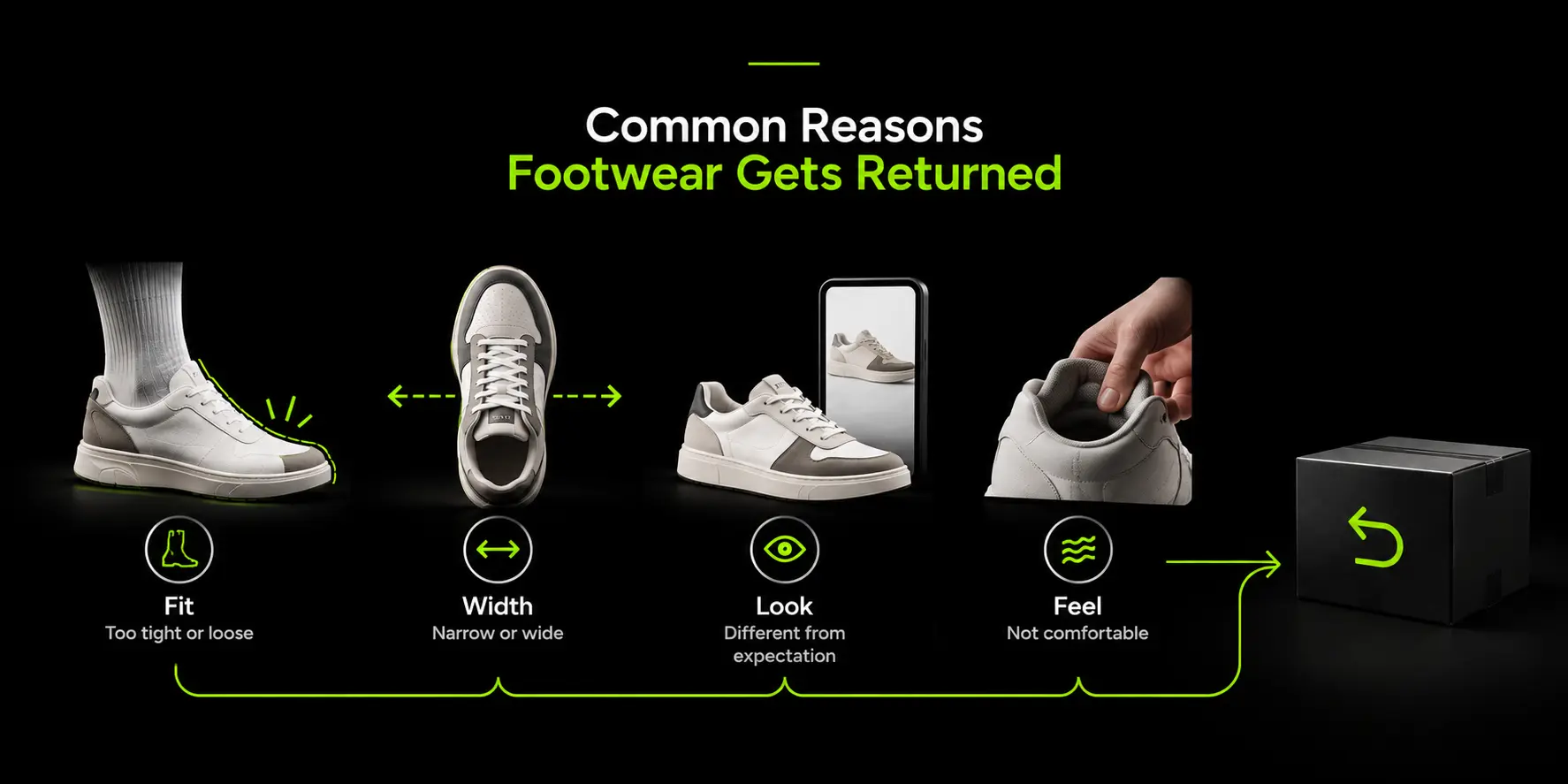
Footwear returns often happen when a shoe looks or feels different from what the customer expected. Accurate product information and detailed photography help shoppers make informed buying decisions.
Shopify product metafields can store these details and power filters, product badges and other store features.
Build an Image Set That Answers Buying Questions
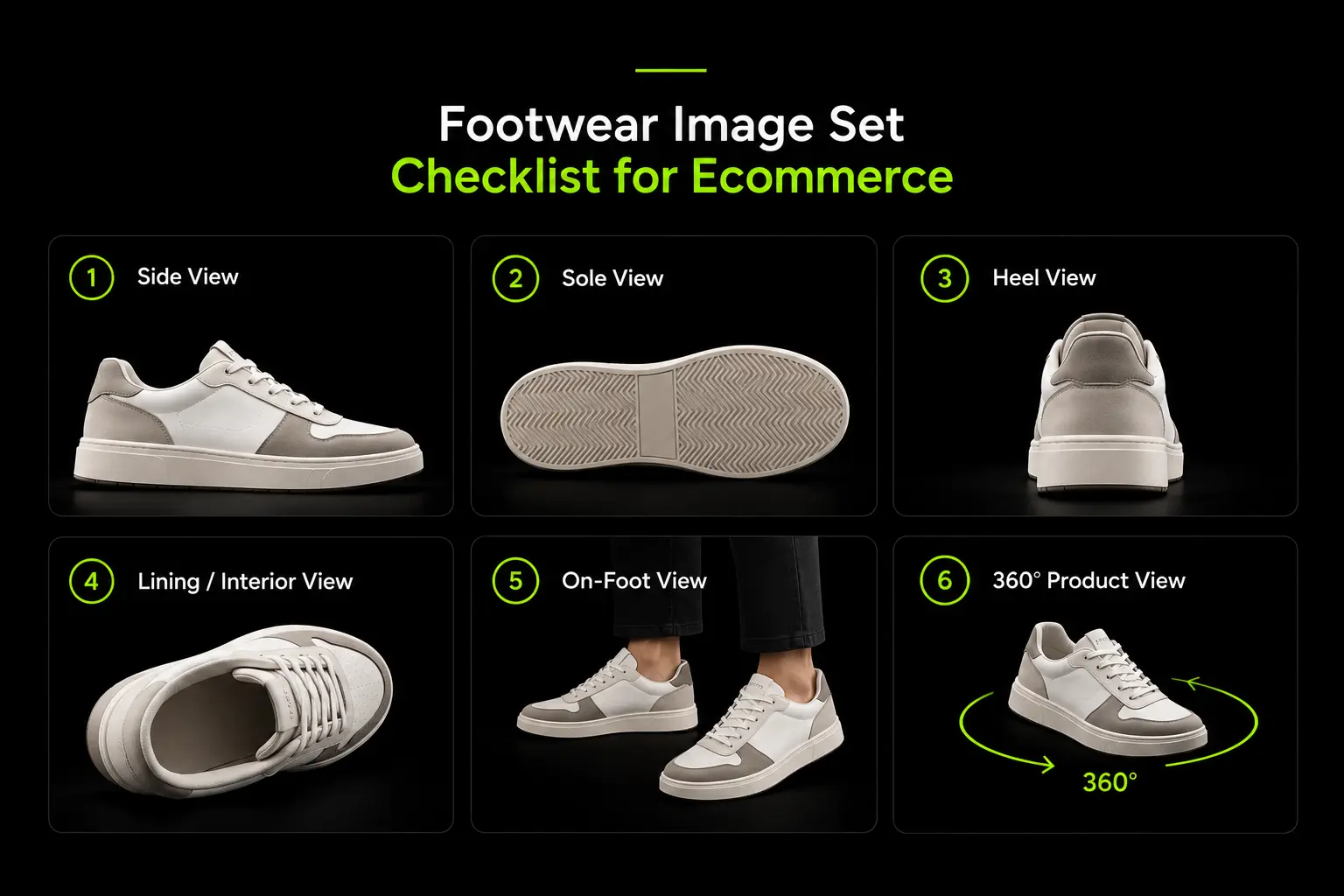
Include front, side, back and top views, with close-ups of the sole, heel and lining. On-foot images show shape and proportions, while short videos demonstrate movement and flexibility. Use neutral lighting to keep colours accurate.
Plan photography alongside store design. Suplex's sister concern, Confetti is a branding agency that also offers product photography, helping footwear brands align product imagery with their wider visual identity.
Make Size-Level Stock Visible
A style may be available in EU 38 but sold out in EU 42 and 43. Make stock information easy to find:
- Collection Cards: Show available sizes.
- Size Filters: Let shoppers filter by in-stock sizes.
- Low-Stock Messages: Display alerts by size.
- Back-In-Stock Alerts: Notify customers when their preferred size returns.
Set up colour, size and width as clear variants, with inventory tracked at the correct level. Check platform variant limits and how inventory and filters handle size combinations before development begins.
Exchange-First Returns and Return-Reason Data
Fit-related returns are common in footwear e-commerce. A good returns process makes exchanges easier, helps retain sales and gives your team data to improve product information.
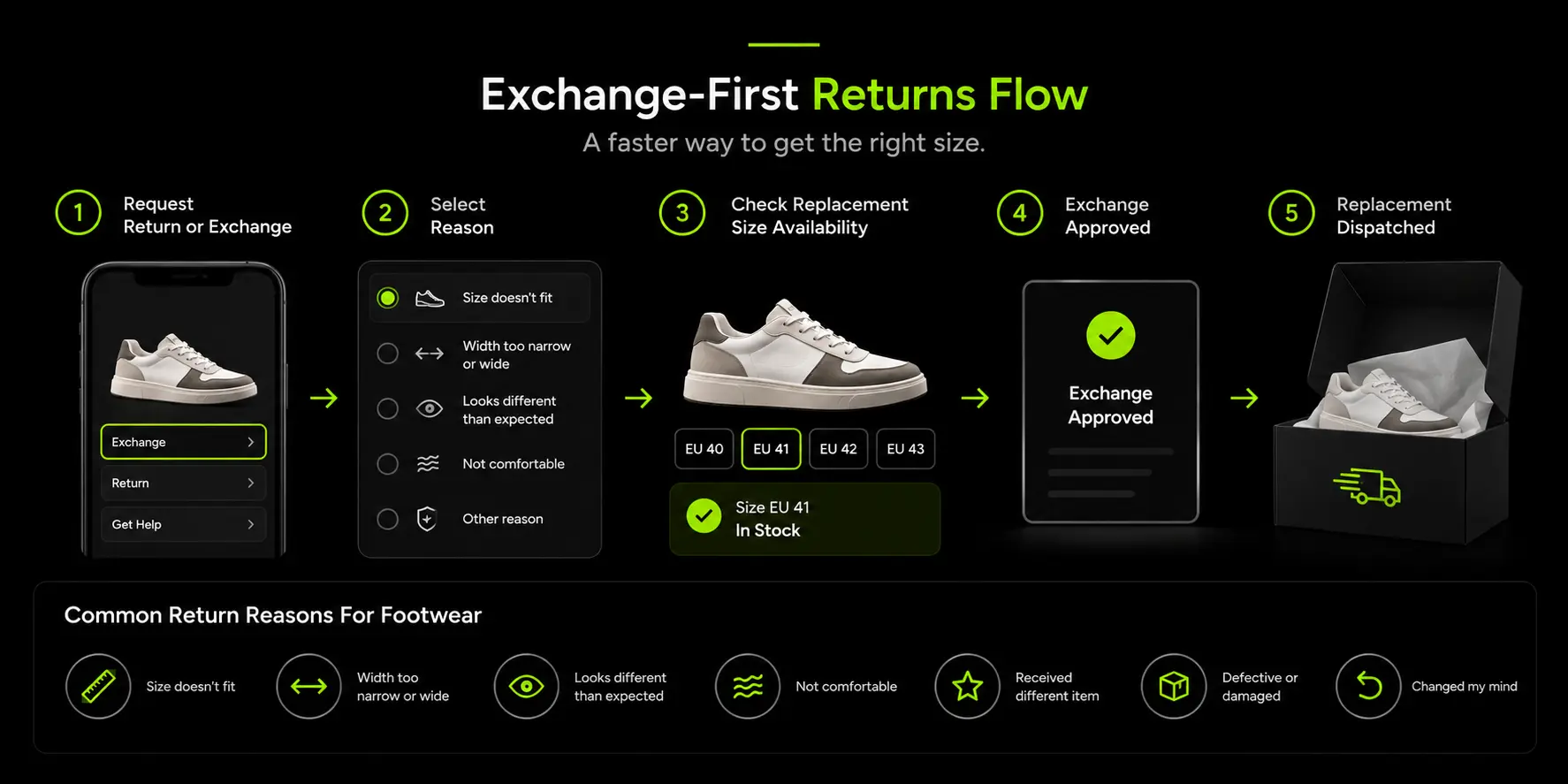
How an Exchange-First Flow Should Work
- Self-Service Returns Portal: Let customers start returns through their account or order confirmation without contacting support.
- Offer Exchanges Early: Make size and width swaps easy to find, while keeping refund options clear under your returns policy and applicable rules.
- Check Live Inventory: Confirm the replacement size is available before approving an exchange.
- Speed Up Replacements: Where operationally possible, dispatch the new pair when the courier scans the returned item.
- Explain Condition Requirements: Ask customers to try shoes indoors on a clean surface and retain the original box, tags and packaging.
- Provide UAE Collection Options: Offer prepaid return labels or courier pickup where commercially viable.

Connect the returns portal to order and inventory data so customers can check replacement availability during the process.
Turn Return Reasons Into Product Improvements
Capture specific reasons customers can select quickly:
- Too long or too short
- Too narrow or too wide
- Heel slips
- Tight across the instep
- Uncomfortable
- Looks different from the photos
Review returns by style and size each month. Repeated complaints about a narrow fit should prompt a product-page update and a closer look at the shoe itself.
Connect return reasons to product reporting so your team can update fit notes, imagery and sizing information.
Plan for Customers Ordering Multiple Sizes
Some shoppers order two sizes to compare at home. Corso reports that 51% of Gen Z shoppers bought multiple apparel or footwear items online in 2024 intending to return some.
Clear size guidance and straightforward exchanges help reduce guesswork and make online purchases easier.
Sneaker Drops and Limited Releases
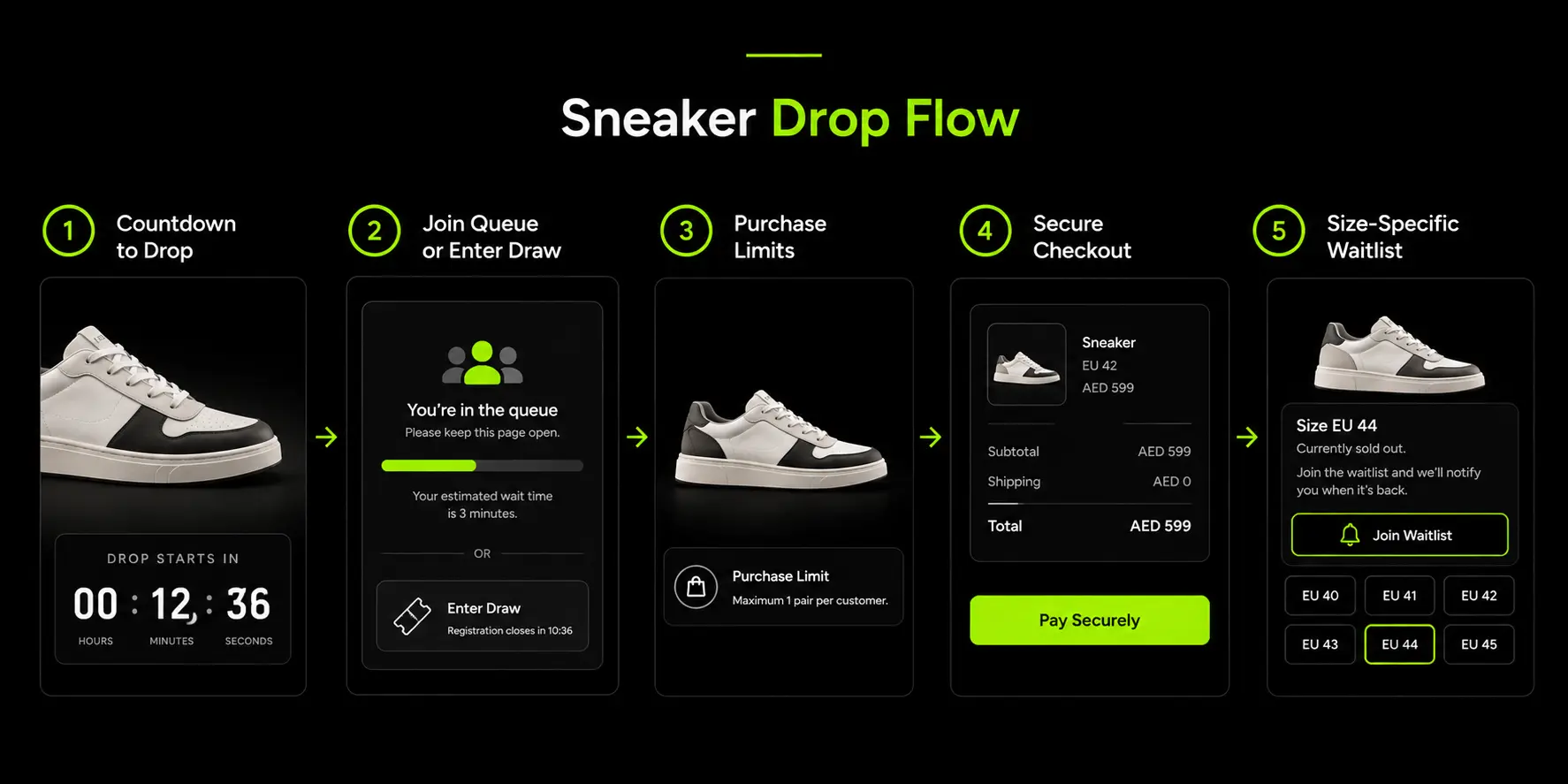
Limited sneaker releases can put heavy pressure on an e-commerce store. When demand exceeds available stock, checkout delays, overselling and bot purchases can frustrate customers. Your setup should reflect expected demand and available stock.
Choose the Release Model First
You can also give members early access before releasing remaining stock publicly.
What Your Website Needs
- Dedicated Launch Page: Show product details, countdown and launch time in the customer's local time zone.
- Purchase Limits: Set limits per customer and, where appropriate, delivery address.
- Bot Protection: Add suitable measures for high-demand releases.
- Inventory Control: Prevent duplicate sales, especially across size-level stock.
- Load and Payment Testing: Test checkout capacity and payment methods before launch.
- Post-Release Updates: Offer size-specific waitlists and back-in-stock alerts.
Plan Fulfilment Before the Drop
Confirm warehouse capacity, courier arrangements and delivery timelines before announcing the release. UAE customers may expect fast delivery, so plan for sudden order volumes.
If releases rarely sell out quickly, scheduled product launches and back-in-stock alerts may be sufficient. Add queues, raffles and advanced bot protection as demand grows. Choose release features according to actual sales demand and the inventory you have available.
Footwear E-commerce in the UAE: What Your Store Needs to Get Right
Footwear brands selling in the UAE need to account for different sizing systems, local payment preferences, delivery expectations and seasonal demand. These details affect product pages, checkout and fulfillment.
1. Sizing for an International Customer Base: UAE shoppers come from different markets and use different shoe sizing systems. Display UK, EU and US sizes alongside foot length in centimetres. Add clear fit guidance to every product page.
For bilingual stores, make sure size guides and product information work in both Arabic and English, including right-to-left layouts.
2. Payments and Checkout: Support card payments, Apple Pay and Google Pay where available. BNPL options such as Tabby and Tamara can also help customers buying higher-priced footwear.
Shopify Payments became available to UAE merchants on the Advanced plan in August 2026, extending eligibility beyond Plus.
Stores on lower plans may need third-party gateways and incur additional transaction fees. Check Shopify's UAE availability update and current pricing before choosing your setup.
3. Delivery, Exchanges and Returns: Show delivery estimates before checkout, ideally by emirate and service level.
Offer same-day delivery in Dubai or next-day delivery elsewhere where your fulfilment partners can meet those timelines. Make exchange conditions, collection options and return policies easy to find.
4. VAT and Cross-Border Sales: Configure UAE VAT correctly, generate compliant invoices and show the full order cost before payment.
For GCC and international orders, clarify shipping charges, import duties, delivery estimates and return arrangements.
5. Climate and Seasonal Merchandising: Plan your catalogue around local demand for sandals, breathable materials and lightweight footwear during hotter months.
Account for back-to-school, Ramadan, Eid, White Friday and the Dubai Shopping Festival when planning campaigns and stock.
Choose a developer who understands footwear product data, checkout, inventory and fulfillment. These areas directly affect how easily customers find and purchase the right pair.
Platform and Build Approach for UAE Footwear Online Stores
Choose the platform based on your store's requirements. For most footwear brands in the UAE, Shopify or Shopify Plus will be sufficient.
A custom or headless build makes sense when specific requirements exceed what these platforms can handle.
For a more tailored storefront, custom Shopify theme development; brands with advanced wholesale or launch requirements can also assess Shopify Plus.
How to Decide
- Single-Market Store: A straightforward catalogue does not require Plus or custom development. A well-structured Shopify theme with size availability and clear fit information should be sufficient.
- Wholesale or Frequent Drops: Consider Shopify Plus if you need native B2B features, multiple storefronts or more advanced selling tools.
- Complex Store Requirements: Choose custom or headless development when your drop mechanics, size-level merchandising or integrations exceed the platform's capabilities.
What to Prioritise Before Development
Pay close attention to your product data structure, size-availability features, exchange process and analytics setup. These decisions affect how the store works day to day.
A well-planned Shopify store can handle a demanding footwear catalogue without the additional cost and maintenance of a custom build.
How Suplex Approaches Footwear E-commerce in the UAE
A footwear store depends on accurate size data, clear product information and a smooth exchange process. We plan these elements before moving into design and development.
- Catalogue Audit: Review sizing systems, width options, fit information and product data.
- Product Page Structure: Plan fit notes, size availability, product imagery and customer reviews.
- Collection Setup: Configure size filters, stock visibility and restock alerts.
- Returns and Exchanges: Connect exchange workflows to size-level inventory and return reasons.
- Checkout and Localisation: Configure AED pricing, VAT, BNPL, Arabic RTL and delivery options.
- Testing and Optimisation: Review analytics, fit-related returns and conversion data after launch.
Suplex is a Dubai-based Shopify and Google Partner working with D2C and consumer brands across the UAE and wider region. Our services include Shopify and custom e-commerce development, UX/UI design, conversion optimisation and performance optimisation.
Our experience with complex product catalogues and mobile-first buying journeys is relevant to footwear stores that need structured product data and size-aware shopping features.
Not every footwear brand needs a new website. If your platform and product data are working well, improving product content, size availability and the returns process may be enough. A rebuild makes sense when your catalogue has outgrown the current variant and filtering setup.
Send us your SKU list and explain how you currently manage sizing. Contact Suplex and we can assess whether your store needs data improvements, better product content or a larger development project.
FAQs
What Should a Footwear E-commerce Website Include?
Include EU, UK and US size conversions, width options, style-specific fit notes, detailed product images and material specifications. Add size-level stock filters, back-in-stock alerts and an exchange portal. Sneaker brands may also need launch pages, queues or raffle features.
How Can a Shoe Website Reduce Returns?
Add fit notes, width guidance, foot measurement instructions and customer reviews with fit feedback. Track return reasons such as narrow fit or heel slip by style. Use this information to update product pages and improve sizing guidance.
How Should Shoe Sizes Be Shown to UAE Shoppers?
Display EU, UK and US sizes alongside foot length in centimetres. Mark your primary sizing system and include width information and style-specific fit notes. Allow returning customers to save their preferred size.
How Do You Run a Sneaker Drop on Shopify?
Create a launch page with a countdown and product details. Choose a first-come queue, raffle or member early-access model. Set purchase limits, add suitable bot protection and test checkout capacity before launch. Offer size-specific waitlists after the release.
Is Shopify Suitable for Footwear Brands in the UAE?
Yes. Shopify supports size, width and colour variants, product metafields, inventory filters and POS integrations. Apps can add fit prediction and exchange features. Plan for UAE payment gateways, BNPL, COD and Arabic RTL support.
Hi, I’m Rishabh Jain
I believe great digital experiences have the power to shape perception, build trust, and move businesses forward. That belief led me to found Suplex Design Studio, a global digital design and development studio helping FMCG and D2C brands build websites and digital experiences that are strategic, thoughtful, and commercially meaningful.
I started Suplex at 25 with a clear intent, to create digital experiences that look appealing, work seamlessly, and help D2C businesses grow. By 28, the studio had scaled globally, guided by a strong foundation in integrated design that I developed during my academic journey in London, where I was honoured with the Dean’s Award.
Over the years, I’ve had the opportunity to work with 100+ brands, from Fortune 500 organisations to family-run businesses, helping them build websites, e-commerce experiences, and digital products that create clarity, credibility, and long-term value.
Our work has been recognised internationally, including the Manifest Award (2024), the Clutch Global Award (2025), and features across platforms such as The Dieline, Packaging of the World, and the World Brand Design Society.
None of this would be possible without the people behind the work. I’m deeply grateful to the Suplex team, whose commitment, creativity, and attention to detail turn ideas into meaningful digital experiences every day.
At the heart of our work is a simple philosophy, digital design should be intentional, functional, and built to create real business value. That continues to guide everything we create at Suplex.



























Let’s Make It Happen
E-Commerce Success Stories








Build Your D2C Business The Right Way
Build It With Suplex.


