Product Catalog Structure for Ecommerce: How to Build It Right (2026 Guide)
.avif)
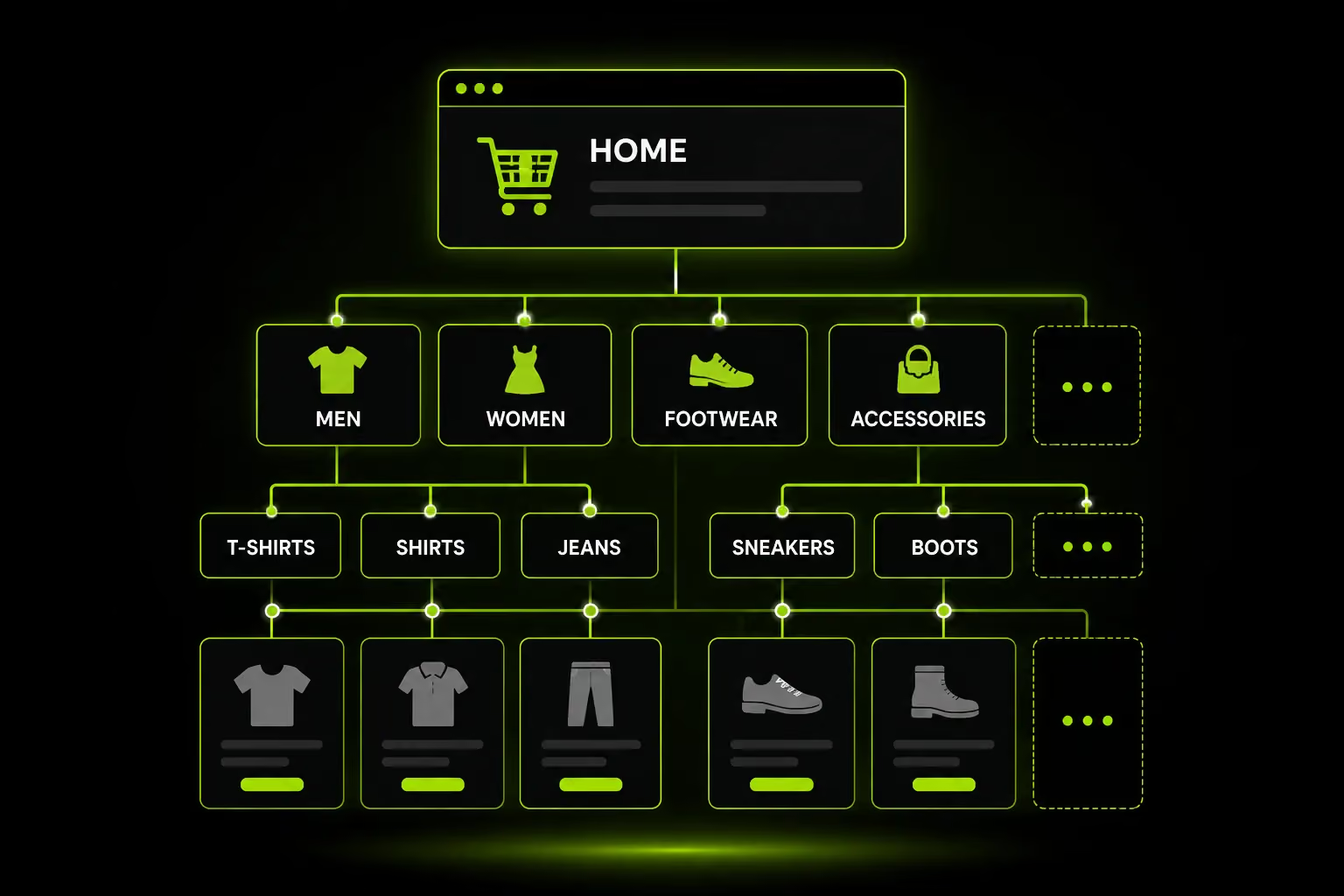
Product Catalog Structure for Ecommerce: How to Build It Right (2026 Guide)
Product catalog structure for ecommerce websites is not an organisational task. It is a revenue architecture decision.
Baymard Institute research shows 67% of ecommerce sites have mediocre-to-poor category taxonomy. Products that cannot be found cannot be bought.
AI-driven traffic to Shopify stores grew 8x in Q1 2026. The brands invisible to AI assistants are losing a traffic channel growing faster than any other.
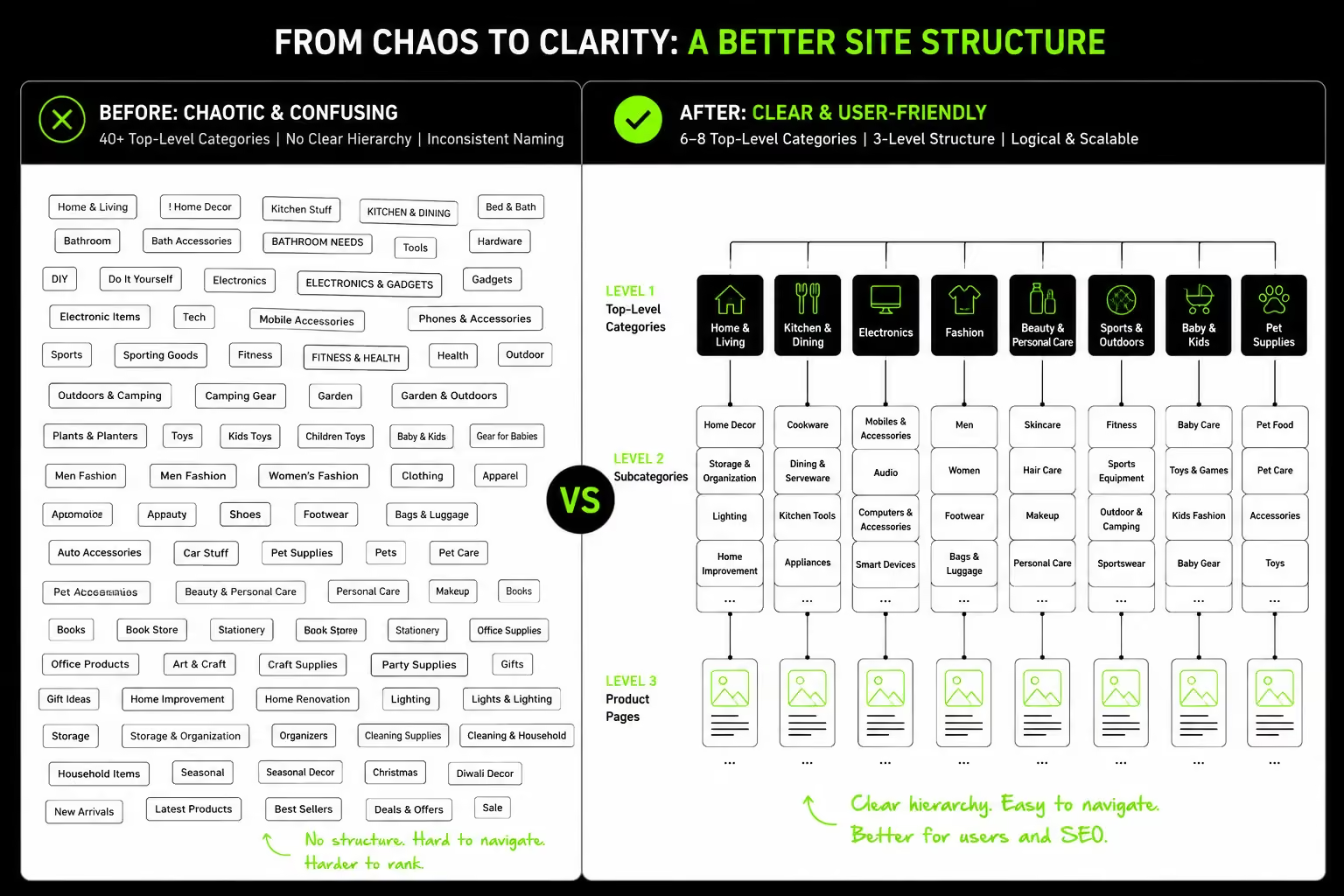
What Product Catalog Structure Actually Means and Why It Affects More Than Navigation
Most brands treat catalog structure as a navigation problem. It is actually four problems running in parallel and a decision made in one layer affects all the others.
Understanding this distinction is what separates stores that rank, convert, and get recommended by AI from those that stall.
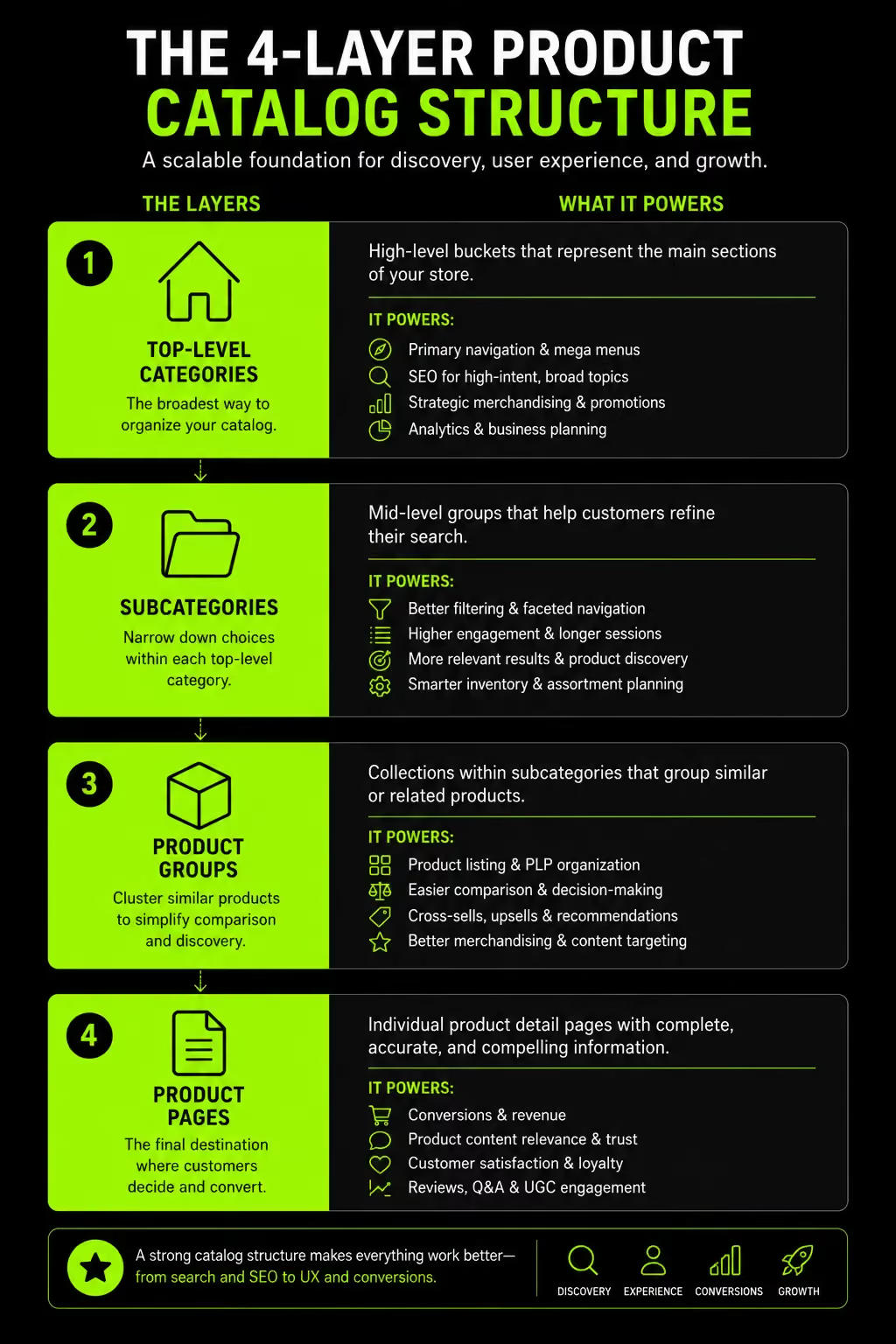
The Four Layers of Ecommerce Catalog Structure
These four layers operate simultaneously in every ecommerce store. Most brands optimise only the first and ignore the rest.
Layer 1 Navigation Taxonomy: The customer-facing category and subcategory structure. What shoppers see in your menu, on collection pages, and in breadcrumbs. This determines whether a browsing customer finds a product in 2–3 clicks or bounces after failing to navigate.
Layer 2 Attribute Taxonomy:The data model defining product properties size, colour, material, use case, skin type, dietary qualification, occasion. This powers your filter system, enables personalisation engines, and is the primary input AI systems use to understand, compare, and recommend your products. The most under-built layer in most ecommerce stores.
Layer 3 URL and SEO Architecture: The hierarchy reflected in your URL structure (/clothing/womens/dresses/) and how it maps to crawlable, indexable category pages with distinct keyword intent. Each level of the hierarchy generates a landing page that can rank for a specific commercial query. Ignore this layer and you build pages with traffic potential you never capture.
Layer 4 Feed and Syndication Taxonomy: How your products are classified for Google Merchant Center, Meta Product Catalogue, ChatGPT Shopping, Perplexity product feeds, and other surfaces. This layer determines whether your products appear in Google Shopping, AI-powered product recommendations, and cross-channel ads. Brands with no feed strategy are invisible to an entire class of discovery.
The brands gaining ground on AI product discovery in 2026 are those that have invested in Layer 2 and Layer 4. The underlying catalog structure of how categories are named, nested, and attributed determines what is possible across all four.
Suplex's information architecture service is designed around all four layers, not just the navigation tree.
The Catalog Structure Decision Framework, Before You Build
The decisions you make before you start structuring your catalog determine everything that follows. No competing guide addresses these pre-structure decisions.
Most brands jump directly to naming categories without answering the three questions that govern the entire structure.
The Three Structural Decisions That Determine Everything Else
Decision 1: How many top-level categories?
The right number for most ecommerce stores is 5–8. Fewer than 5 usually means categories are too broad; shoppers cannot quickly identify where their intended product lives.
More than 10–12 creates cognitive overload, particularly on mobile where the navigation becomes a scrollable list that loses people before they click anything.
The test: can a first-time visitor, in under 5 seconds, identify which top-level category their product belongs to? If you need to explain the structure, the structure is wrong.
Decision 2: How deep should the hierarchy go?
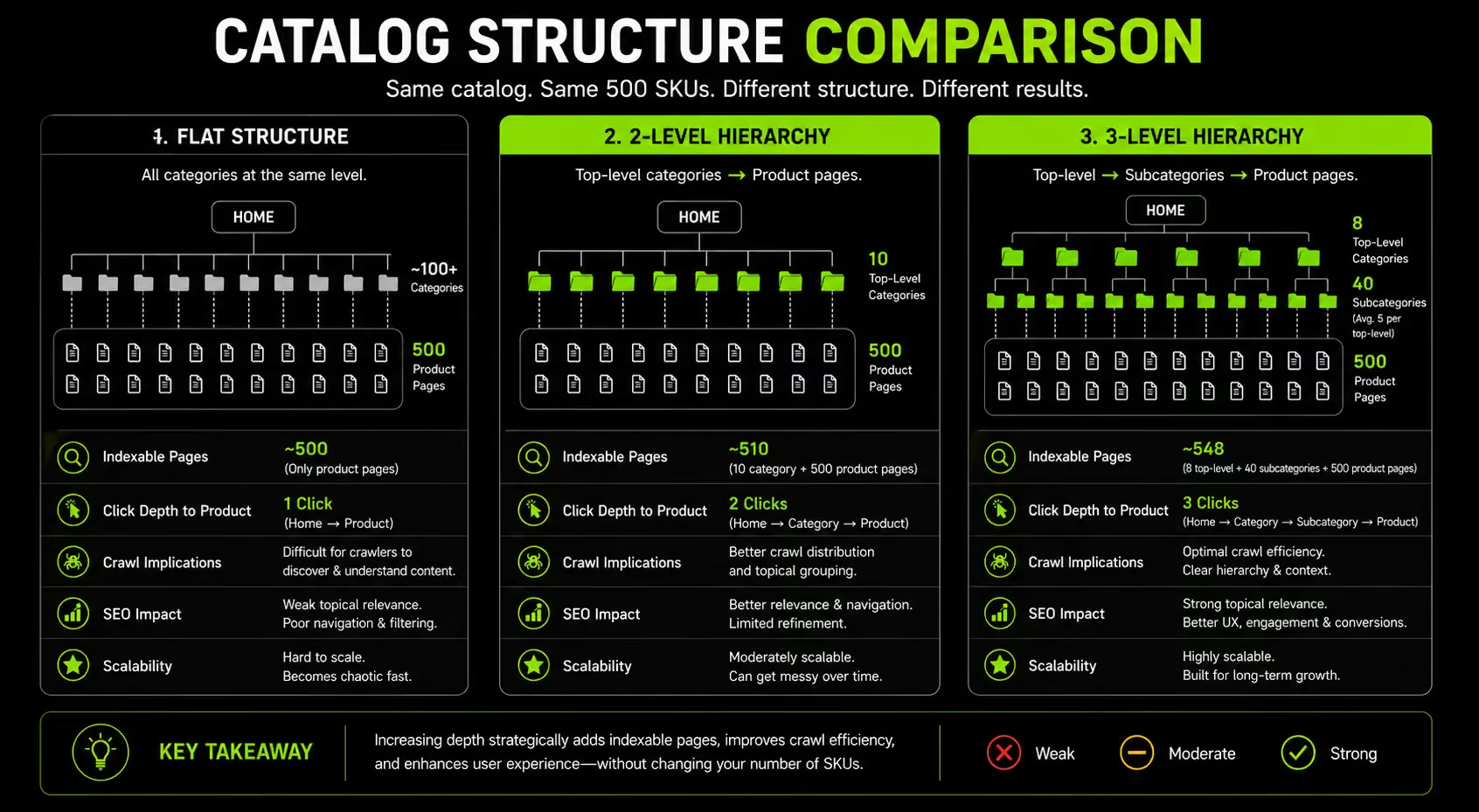
Shopify's own taxonomy research recommends a maximum of 2–3 levels. The technical SEO limit for crawlable ecommerce taxonomy is 4 levels category pages nested beyond Level 4 receive reduced crawl frequency from Googlebot.
The practical rule: every product should be reachable in 3 clicks from the homepage. Homepage to category to subcategory to product page.
Any deeper, and a meaningful portion of your catalog is effectively invisible to both shoppers and search crawlers.
Decision 3: Flat vs. hierarchical which fits your catalog size?
The most common mistake: over-structuring small catalogs, or under-structuring large ones.
A 150-SKU fashion store with 4 levels of hierarchy confuses users and wastes crawl budget.
A 3,000-SKU supplement brand with a single flat category layer creates an unnavigable experience and misses dozens of long-tail SEO ranking opportunities.
Category Naming, The Decision Most Brands Get Wrong
Category names are ranking pages. They are also the first navigation decision a shopper makes. Getting the names wrong costs you SEO performance and shopper orientation at the same time.
Name Categories the Way Shoppers Search Not the Way You Organise Inventory
There are two common naming failure modes, and both are entirely avoidable.
Failure Mode 1 Internal language on the storefront:
A supplements brand using categories like "Product Line A", "Stack Series", or "Phase 1 / Phase 2" internal product architecture that means nothing to a shopper searching for "protein powder" or "weight loss supplements."
This is how buying teams think about inventory, not how customers search for products.
Failure Mode 2 Generic naming that misses SEO opportunity:
A fashion brand using "Tops", "Bottoms", "Outerwear" functional but keyword-poor.
"Women's Linen Shirts", "Men's Chino Trousers", "Waterproof Jackets" carry specific search intent and rank for long-tail queries that "Tops" will never reach.
When we built the information architecture for Miduty, a D2C nutraceuticals brand, one of the first structural decisions was organising the primary catalog navigation around health goals rather than product types.
Shoppers searching for energy, immunity, or muscle support do not think in ingredient classes. They think about outcomes. The navigation structure reflects that, and it is a direct conversion lever.
The Category Naming Test
Before finalising any category name, run three checks:
- Search Volume check: Is there a measurable search volume for this exact phrase or a close variant? A category name nobody searches generates a page that ranks for nothing.
- Clarity check. Can a shopper who has never seen your store understand what products live in this category within 2 seconds? If the name requires context or explanation, rename it.
- Uniqueness check. Does this name distinguish itself from adjacent categories clearly enough that no product is ambiguous in its placement? Ambiguous category boundaries create duplicate product placement, internal linking dilution, and user confusion.
Shopify-Specific Naming: Collections vs. Tags
On Shopify, products are organised through collections (the primary navigation structure) and tags (metadata applied to products for filtering, search, and automated collection rules).
These are not interchangeable, and using them incorrectly is one of the most common structural mistakes we see on store audits.
A tag like "bestseller" or "summer" does not create a crawlable, rankable landing page. A collection called "Summer Dresses" does. Tags are not URL-generating pages with SEO equity.
The correct framework:
- Collections = navigational taxonomy. SEO-generating, crawlable, linkable pages. These build your catalog's ranking architecture.
- Tags = attribute taxonomy. Filter logic, automated collection rules, internal search refinement. Operational, not SEO.
- Metafields = enriched product data. Material, certifications, skin type, dietary suitability. The layer AI systems parse when generating product recommendations.
If your current Shopify store uses tags as the primary category mechanism, that is an architecture problem worth fixing before spending another dirham on ads.
Our custom Shopify themes service rebuilds collection structure as part of every engagement, not as a separate retrofit.
Building the Hierarchy How to Structure Categories, Subcategories and Product Pages
The practical architecture for brands with 200–5,000 SKUs follows a replicable model. Here is how it translates across the verticals Suplex works in most frequently.
The Three-Level Model
The most effective structure for most ecommerce brands:
Homepage
└── Top-Level Category (e.g. "Women's Clothing")
└── Subcategory (e.g. "Dresses")
└── Sub-Subcategory or Product Page (e.g. "Maxi Dresses")
Each level generates an indexable landing page targeting progressively more specific commercial intent:
- /womens-clothing/ broad category intent, high volume, high competition
- /womens-clothing/dresses/ mid-funnel category intent
- /womens-clothing/dresses/maxi-dresses/ specific transactional intent, lower competition, higher CVR
One important Shopify-specific note: product URLs should remain independent of collection structure. /products/blue-linen-maxi-dress/ not /womens-clothing/dresses/blue-linen-maxi-dress/.
This allows products to appear in multiple collections without URL conflicts or canonical issues when your category structure evolves.
Our user flow design service maps the path from category landing to purchase before any theme or design work begins so the hierarchy above is validated against actual user behaviour, not assumptions.
Product Attributes The Layer That Powers Filtering, Personalisation, and AI Discovery
This is the most commercially important and least understood dimension of catalog structure.
Every other guide covers navigation and URLs. Almost none address what happens when a shopper asks an AI assistant for a product recommendation.
What Product Attributes Are and Why They Matter Now
Product attributes are the data fields that describe each product beyond its name and price. Colour, size, material, use case, fit, occasion, dietary qualification, fragrance family, country of origin, skin type suitability these are attributes.
Until recently, attributes mattered for two things: filter functionality and internal reporting. In 2026, they matter for something far more commercially consequential: AI product recommendation.
When a shopper asks ChatGPT "what's the best lightweight moisturiser for oily skin under AED 150?" The AI systems that respond are parsing structured attribute data to match the query to specific products.
A product described as "moisturiser, 50ml, AED 120" loses to a product described as "lightweight oil-free gel moisturiser, suitable for oily and combination skin, fragrance-free, dermatologically tested, 50ml, AED 120."
The products AI systems can clearly understand are the products they confidently recommend. Attribute richness is the variable that determines AI citation frequency.
In Q1 2026, AI-driven traffic to Shopify stores grew 8x and orders from AI-powered searches increased nearly 13x year over year.
This is not an emerging opportunity. It is a live revenue channel with the fastest growth rate in ecommerce. Brands that structured their attribute taxonomy early are already benefiting.
Which Attributes to Prioritise by Category
Fashion and Apparel
Health and Supplements
Beauty and Skincare
How to Structure Attributes on Shopify
Shopify gives you three places to store attribute data. Most stores use only one correctly.
Variants: handle purchase-differentiating options like size and colour. These create separate inventory units. Shopify allows a maximum of 3 options and 100 variants per product, a real constraint for brands with complex SKU ranges.
Metafields: are custom structured data attached to products, collections, or pages. This is where rich attribute data should live: material composition, dietary certifications, skin type suitability, usage occasion, ingredient highlights. Metafields power AI feeds, personalisation rules, and schema markup. They are the most under-utilised feature in the average Shopify store, and the highest-value investment in a catalog structure build.
Tags: are flat labels applied to products. Used for automated collection rules and search filtering. Tags are strings, not typed values they are not structured data. Use metafields for AI-relevant attributes. Use tags for operational filtering.
In our builds for D2C supplement and beauty brands, the most commercially impactful work we do post-launch is consistently attribute enrichment.
Stores launch with product names and basic descriptions. Six months later, when AI referral traffic emerges as a channel, their product data is too thin to compete.
The cost of retrofitting 500 SKUs with properly structured attributes is three to five times the cost of building the attribute framework correctly at setup.
Our D2C data analytics service includes attribute schema planning as part of the initial data architecture.
Faceted Navigation The Double-Edged Sword of Catalog Structure
Faceted navigation is the filter system that lets shoppers refine by multiple attributes simultaneously. For the shopper, it is excellent.
For search engines, it is one of the most dangerous features in ecommerce if implemented without SEO controls.
What Faceted Navigation Is and Why It Exists
Faceted navigation, powered on Shopify by the Search and Discovery app and collection filter settings, lets a shopper arrive on a category page, apply size + colour + price range simultaneously, and see only matching products. Browse-to-product clicks drop substantially.
The problem is what happens to URLs and crawl behaviour when this is not implemented carefully.
The Crawl Budget and Duplicate Content Problem
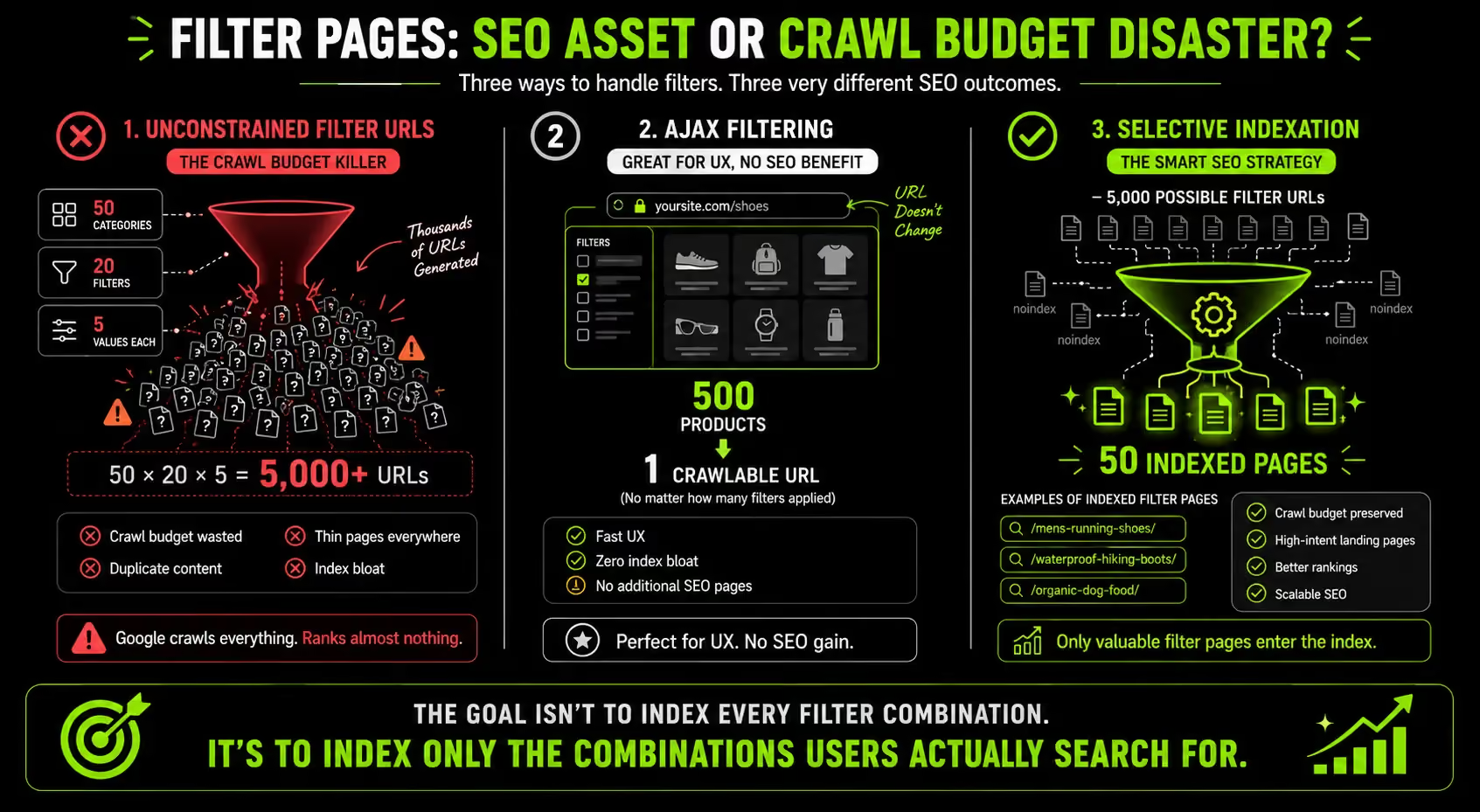
A catalog with 4 filter dimensions, each with 10 options, produces mathematically over 10,000 possible URL combinations.
If each combination generates a unique, crawlable URL, Googlebot faces a serious crawl budget problem:
- Crawl budget is consumed by thousands of thin, near-duplicate filter pages.
- Your actual category pages receive proportionally less crawl frequency.
- Duplicate content signals accumulate across thousands of overlapping filter combinations.
- Ranking signals for your core category pages are diluted.
There are three implementation options, and the right one depends on whether any filter combination has genuine search demand.
The decision rule: only create indexable filter pages for attribute combinations with confirmed search volume.
"Women's blue linen dresses" or "protein powder chocolate flavour" have real search demand and deserve indexed, optimised pages. "Size 8 + blue + on sale" does not.
Our performance optimisation service includes a faceted navigation audit as part of every technical SEO engagement specifically to identify whether filter URL proliferation is suppressing core category page rankings.
URL Structure and Internal Linking The SEO Skeleton of Your Catalog
URL decisions and internal linking architecture are where catalog structure decisions become ranking decisions. Both are handled superficially by most competing guides.
URL Structure Principles for Ecommerce
Keep product URLs flat and independent of category.
Use /products/blue-linen-midi-dress/ not /womens/dresses/midi/blue-linen-midi-dress/.
Embedding products within category paths creates problems whenever taxonomy changes every category restructure breaks product URLs and loses accumulated link equity.
On Shopify, all products live at /products/[handle] by default. Collections live at /collections/[handle]. This separation is correct. Do not fight it.
Make collection URLs keyword-rich and human-readable.
Use /collections/womens-linen-dresses/ not /collections/cat-127-sub-43/. Each collection URL is a ranking page. Give it the keyword phrase shoppers search for.
Maintain consistent URL depth.
If subcategory pages live at /collections/womens/dresses/, keep all subcategories at the same depth level.
Inconsistent URL depth creates unpredictable internal link equity distribution and confuses crawlers.
Internal Linking Architecture
Internal links distribute ranking signals from high-authority pages (homepage, top-level categories) through to subcategory and product pages.
Most ecommerce stores have a structural problem here: category pages accumulate the most link equity, but product pages the revenue-generating pages receive proportionally too little.
Four internal linking structures that fix this:
Breadcrumbs: Every product page and subcategory should carry breadcrumb navigation. This creates an automated, consistent internal link chain from product back to subcategory back to category back to homepage. Also generates breadcrumb rich results in SERPs.
Cross Collection Links on Category Pages: A "Women's Dresses" page should include navigational links to "Women's Tops" and "Women's Outerwear" lateral links that distribute equity across the category structure rather than concentrating it in one branch.
Related Products on Product Pages: "Customers also viewed" and "Complete the look" sections are internal link generators. They distribute equity to product pages that would otherwise receive very few inbound internal links.
Schema Markup: Implement ItemList schema on collection pages. BreadcrumbList schema on all pages. AggregateRating schema where reviews exist. These structured data signals help Google understand the catalog hierarchy without relying solely on crawled link paths.
Before any catalog restructure, an ecommerce website audit is the fastest way to identify where your current URL structure and internal linking are leaking ranking equity. Our Shopify audit service starts with exactly this analysis.
Structuring Your Catalog for AI Product Discovery The 2026 Imperative
This section does not appear in any competing guide on catalog structure. That is because every existing guide was written before AI product discovery became a measurable revenue channel. In 2026, it is.
Why AI Systems Now Depend on Your Catalog Structure
AI-driven traffic to Shopify stores grew 8x in Q1 2026. Orders from AI-powered searches increased nearly 13x year over year. ChatGPT reaches 900 million weekly users and its shopping integration has been live since September 2025.
Approximately 66% of frequent shoppers already use AI assistants to guide purchase decisions.
When a shopper asks an AI assistant "what's the best halal-certified protein powder for muscle gain available in the UAE?"
The response is generated from structured product data. The AI parses product type, attributes, certifications, pricing, and availability to generate a recommendation. Brands with rich, structured catalog data get recommended. Brands with thin, unstructured data are invisible.
This is not future-proofing. It is a current revenue channel growing faster than any other in ecommerce.
The Four Catalog Structure Requirements for AI Discoverability
Requirement 1: Shopify Standard Product Taxonomy alignment.
Shopify's Standard Product Taxonomy spanning 26 business verticals and 10,000+ product categories is the classification layer Shopify uses to syndicate product data to ChatGPT Shopping, Perplexity's product feeds, and Google Merchant Center.
Products mapped to incorrect or too-broad taxonomy categories are less likely to appear in relevant AI-generated recommendations.
On Shopify, this is set via the "Product Category" field on each product different from your collection structure. Every product should have a specific, accurate taxonomy classification, not the broadest available parent category.
You can reference the Shopify Standard Product Taxonomy on GitHub for the full classification tree.
Requirement 2: Rich, natural-language attribute descriptions.
Thin attributes ("colour: blue") lose AI citation competitions to rich attributes ("deep navy blue, fade-resistant cotton poplin, suitable for formal and smart-casual occasions").
AI systems match shopper queries to natural-language descriptors not normalised database values. Enrich product descriptions and metafields with the exact phrasing shoppers use in AI prompts: material, use case, fit, occasion, skin type, dietary suitability, key ingredients.
Requirement 3: Product schema on every product and category page.
Product schema on product pages. ItemList schema on collection pages. BreadcrumbList schema on all pages. AggregateRating schema where reviews exist.
These structured data signals are among the highest-weighted inputs for AI citation decisions, particularly on Google AI Overviews and Gemini.
Most Shopify stores implement product schema via their theme but skip collection and breadcrumb schema leaving significant structured data equity on the table.
Requirement 4: Google Merchant Center feed accuracy.
Five AI shopping surfaces Universal Cart (Google), ChatGPT Shopping, Perplexity Buy with Pro, Alexa for Shopping, and Copilot Checkout draw from Google Merchant Center feed quality.
GTIN completeness, accurate pricing, correct product category classification, and up-to-date inventory signals determine whether products appear in AI-powered product cards. A feed with missing GTINs or misclassified categories is not just an ad performance problem.
It is an AI discoverability problem. See Google's product data specification for the full requirements.
In the UAE, where Arabic-language AI search (via Google, Gemini, and Arabic ChatGPT) is growing rapidly, the catalog structure imperative is particularly acute.
Brands that invest in Arabic-language product metadata, halal and dietary certifications as structured attributes and Shopify taxonomy alignment gain AI discovery advantage in a market where most competitors are still optimising for English-only keyword search.
Our AI for Shopify service and information architecture service both address the structured data and taxonomy alignment work that AI discoverability requires.
The 5 Most Common Catalog Structure Mistakes and How to Fix Them
These are the failure patterns we see most consistently when brands come to us for Shopify audits on existing stores. Each one is fixable but the earlier it is caught, the cheaper the fix.
Mistake 1: Too Many Top-Level Categories
Symptom: Navigation menu has 12+ top-level items. Users spend more time reading the menu than browsing products. Mobile navigation becomes a scrollable list.
Why it happens: Every product launch generates a request to add a new top-level category. The menu expands incrementally with zero structural governance.
Fix: Consolidate to 5–8 top-level categories. Use mega menus or dropdown subcategories to maintain discoverability without top-level proliferation. Any navigation that requires more than 2 seconds of reading has already lost the user.
Mistake 2: Category Names Built for Internal Logic, Not Customer Language
Symptom: Categories use internal product codes, brand nomenclature, or technical classifications that mean nothing to a shopper.
Why it happens: The catalog is structured the way the buying team or warehouse thinks about products not the way customers search.
Fix: Map every category name to the most common search query for that product group. Use Google Search Console data, Google Suggest and your own site search query log. Rename categories to match the language customers actually use. The name that ranks is the name people search.
Mistake 3: Faceted Navigation Without SEO Controls
Symptom: Google Search Console shows thousands of indexed pages with near-identical content. Core category pages are losing ranking despite strong content.
Why it happens: Filters are implemented for UX without configuring URL canonicalisation, noindex directives, or AJAX-based filtering.
Fix: Audit all filter-generated URLs. Apply canonical tags to filter combinations without genuine search demand. Add noindex to the rest. Consider AJAX filtering for non-SEO-priority filter dimensions. This is one of the most high-impact fixes on any Shopify audit.
Mistake 4: Products Buried Below 4 Clicks
Symptom: High bounce rates on category pages. Users are not drilling into subcategories. Key product pages have very low organic impressions despite strong content.
Why it happens: Over-structured catalogs with 4–5 levels of hierarchy before reaching products. Common in brands that modelled their ecommerce taxonomy after their wholesale catalogue architecture.
Fix: Audit click depth for all products using a site crawl tool. Any product requiring 5+ clicks should be surfaced via shortcut categories, cross-collection features, or flatter subcategory restructuring. The 3-click rule from homepage to product is the target.
Mistake 5: Thin Product Attributes That Prevent AI Discoverability
Symptom: Products are discoverable via traditional search but absent from AI-powered product recommendations. AI referral traffic is a fraction of industry benchmarks.
Why it happens: Product data was built for human browsing name, price, basic description. AI systems need structured attributes: material, use case, certifications, skin type compatibility, dietary suitability.
Fix: Audit product metafields across your catalog. Identify the top 5–8 attributes relevant to your category. Enrich all SKUs systematically. Align with Shopify Standard Product Taxonomy. Submit an updated feed to Google Merchant Center. If you have more than 500 SKUs, plan this as a phased project starting with your top-selling and highest-margin products.
How We Build Catalog Structure at Suplex
Catalog structure is one of the first decisions we make on any new ecommerce build and one of the most consistently under-invested areas we find when brands come to us for audits on existing stores.
The pattern we see repeatedly: a brand launches on Shopify with a category structure that made sense for their initial 50-product range. Twelve months later, the catalog has tripled.
New categories were added incrementally without a structural plan. The navigation has 14 top-level items. Filters are generating thousands of indexed pages. AI referral traffic is near-zero because product attributes were never enriched.
Our approach to catalog architecture follows the four-layer model navigation taxonomy, attribute taxonomy, URL and SEO architecture, and feed syndication and we build all four from the first engagement, not as retrofit projects months after launch.
The brands that see the fastest improvement in organic traffic and AI-driven discovery after working with us are consistently those that invested in attribute enrichment alongside structural reorganisation, not just a new theme and a cleaner menu.
If your existing catalog structure has grown without a clear architectural plan or if you are launching a new store and want to build the structure correctly from day one our e-commerce store setup service, Shopify audit service, and information architecture service all start with catalog architecture before any design or theme work begins.
Book a call directly with our founders to discuss your catalog structure. Slots are limited.
Frequently Asked Questions
What is product catalog structure in ecommerce?
Product catalog structure is the system that organises your entire product inventory into categories, subcategories, and attributes determining how shoppers browse, how search engines crawl and rank your pages, and how AI systems understand and recommend your products. A well-structured catalog increases discoverability, reduces bounce rates, improves conversion, and enables AI-powered product discovery across surfaces like ChatGPT Shopping, Google AI Overviews, and Perplexity.
How do you structure a product catalog for ecommerce?
Start with three decisions: how many top-level categories (5–8 for most stores), how deep the hierarchy goes (maximum 3 levels, every product reachable in 3 clicks), and whether a flat or hierarchical model fits your catalog size. Then name categories based on search query data, not internal product logic. Build Shopify collections as your SEO architecture; use tags for filtering logic and metafields for rich attribute data. Add faceted navigation only with SEO controls in place.
How many categories should an ecommerce website have?
Most ecommerce stores perform best with 5–8 top-level categories. Fewer than 5 tends to make categories too broad for shoppers to navigate quickly. More than 10–12 creates cognitive overload on mobile. Within each top-level category, 3–8 subcategories is the typical effective range enough to meaningfully refine browsing without requiring shoppers to read an entire navigation tree before clicking.
How deep should an ecommerce category hierarchy go?
The recommended maximum is 3 levels: category, subcategory, product page. Every product should be reachable in 3 clicks from the homepage. Category pages nested beyond 4 levels receive reduced crawl frequency from Googlebot and are effectively invisible to most shoppers. Shopify's own taxonomy research recommends a maximum depth of 2–3 levels for most stores.
What is faceted navigation in ecommerce?
Faceted navigation is the filter system that lets shoppers refine a catalog by multiple attributes simultaneously size, colour, price, skin type, and other product attributes. While it improves the browsing experience, it creates serious SEO risks if filters generate thousands of unique URLs without indexation controls. A catalog with 4 filter types and 10 options each produces 10,000+ possible URL combinations. Properly implemented faceted navigation uses AJAX filtering, canonical tags, or selective indexation to prevent crawl budget waste.
Hi, I’m Rishabh Jain
I believe great design has the power to shape perception, build trust, and move businesses forward. That belief is what led me to found Suplex Design Studio, a global branding and packaging studio working with FMCG and D2C brands across markets.I started suplex at 25 with a clear intent, to create design that is strategic, thoughtful, and commercially meaningful. By 28, the studio had scaled globally, guided by a strong foundation in Integrated Design that I developed during my academic journey in London, where I was honoured with the Dean’s Award.
Over the years, I’ve had the opportunity to work with 100+ brands, from Fortune 500 organizations to family-run businesses, helping them build packaging and brand systems that create recall, relevance, and long-term value.
Suplex’s work has been recognized internationally, including the Manifest Award (2024), the Clutch Global Award (2025), and features on platforms such as Packaging of the World, The Dieline, and the World Brand Design Society.
None of this would be possible without the people behind the work. I’m deeply grateful to the suplex team, whose commitment, creativity, and attention to detail turn ideas into meaningful brand experiences every day.
At the heart of my work is a simple philosophy, design should be intentional, honest, and built to last, and that continues to guide everything we create at suplex.



























Let’s Make It Happen
E-Commerce Success Stories
%201.avif)






.avif)

.avif)
Build Your D2C Business The Right Way
Build It With Suplex.


