Best Ecommerce Platform for Fashion Brands: Shopify vs. The Rest
.avif)
Best Ecommerce Platform for Fashion Brands: Shopify vs. The Rest
The best ecommerce platform for fashion brands is Shopify for most brands. That answer is accurate and incomplete at the same time.
A fashion brand with 50 SKUs and a clean visual aesthetic is in a different platform situation than one with 2,000 SKUs across 15 colourways and 7 sizes per product.
Platform selection is a 3–5 year infrastructure commitment. The wrong choice either limits your growth or costs you a 3–6 month migration at the worst possible moment.
The Decision Before the Platform Comparison: What Are You Actually Choosing?
Most fashion founders treat platform selection as a website decision. It is not. Understanding what you are committing to changes how you evaluate every platform that follows.
Platform Choice Is a 3–5 Year Infrastructure Decision
Your platform determines more than your storefront. It determines:
- Which payment gateways you can use and what transaction fees you pay per order
- How complex your variant and size/colour management can get before hitting platform constraints
- What your team's operational load is for ongoing store management and maintenance
- How much developer work is required every time you want something the platform does not support natively
- What the migration cost is if you choose wrong typically $15K–$80K in development and 3–6 months of organic traffic disruption
The Gymshark example shows the cost of choosing the wrong platform. A 10-hour Black Friday outage on Magento reportedly cost over $100,000 in a single day.
After migrating to Shopify Plus in 2017, they scaled to $500M+ in annual revenue without a comparable outage.
The biggest mistake is choosing based on upfront cost instead of 3-year total ownership. A "free" WooCommerce store needing $2,000/month in developer maintenance and paid plugins can cost more than Shopify while delivering lower reliability and higher migration costs.
The Four Questions That Determine Platform Fit for Fashion
These four questions produce better platform decisions than any feature comparison.
Question 1: How complex is your product catalogue?
A fashion brand with 50 products, each in 4 colours and 5 sizes, has 20 variants per product well within any platform's limits.
A brand with 200 products in 15 colourways and 8 sizes has 2,400 variant combinations and Shopify's 100-variant limit per product becomes a structural constraint that requires workarounds or a different platform.
Question 2: What is your technical team's capacity?
A fashion founder with no development resources needs a hosted, managed platform (Shopify, BigCommerce, Squarespace) where the platform handles infrastructure, security, and updates.
A brand with an in-house development team can consider self-hosted options (WooCommerce, Magento) with greater customisation flexibility.
Question 3: What is your primary commercial model?
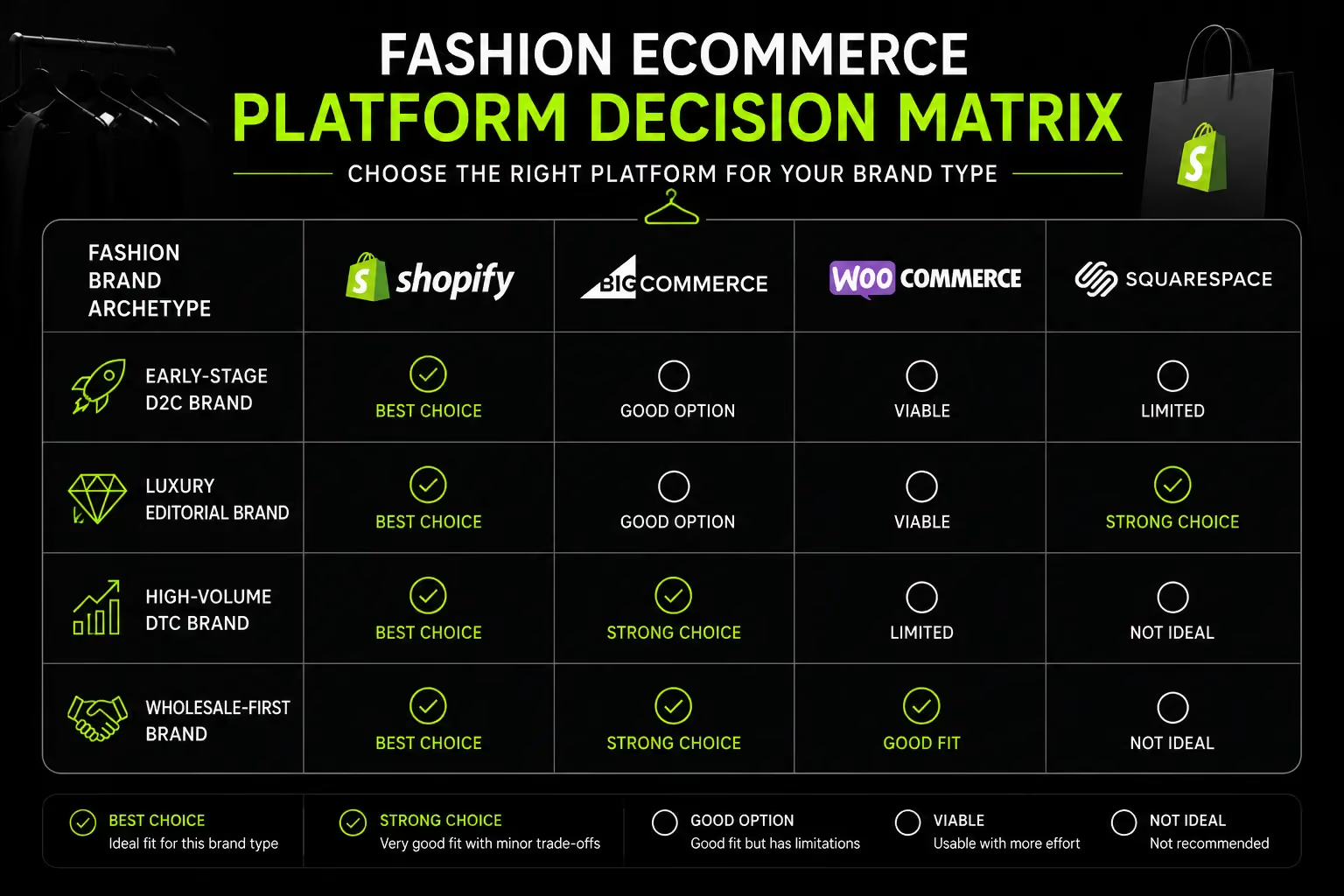
D2C fashion brands optimise for consumer checkout conversion, mobile experience, and direct marketing integration. Wholesale-first brands need B2B pricing, purchase order management, and company account features.
Different platforms excel at different models. A platform that is excellent for D2C can be operationally painful for wholesale.
Question 4: What markets are you targeting?
A UAE fashion brand needs native BNPL integration (Tabby, Tamara), Arabic RTL layout, COD availability, and UAE payment gateway compatibility.
An international brand needs multi-currency checkout and cross-border tax management.
Platform capabilities differ significantly across these requirements, and the gap matters most at the point of purchase.
Shopify Why It Is the Default Choice for Fashion Brands (and When It Is Not)
Shopify dominates fashion ecommerce for documented commercial reasons but the specific circumstances where it is the wrong answer deserve equal attention.
Why Shopify Is the Fashion Platform of Record in 2026
Shopify holds 45.99% of the global ecommerce platform market 2.6 times WooCommerce's share. The fashion brands that have validated it at scale are not marginal examples:
- Gymshark: $500M+ annual revenue; 3M+ customers across 131 countries; moved from Magento after the Black Friday loss; built their $1B+ brand on Shopify Plus.
- Fashion Nova: 100 million orders on Shopify in 2025; drops hundreds of new products weekly; Shopify Plus infrastructure handles the volume without failure.
- SKIMS: $275M revenue, $3.2B valuation; Shopify Plus managing high-demand product launches.
- Victoria Beckham: Luxury fashion on Shopify Plus with editorial visual quality; proves Shopify can serve the luxury segment at brand standard.
- Kith, Alo Yoga, Steve Madden, Represent, KHAITE, Allbirds: All operating at commercial scale on Shopify or Shopify Plus.
Steve Madden's post-migration data point is worth noting specifically: a 16% conversion rate increase after migrating to Shopify. That is the platform's checkout quality advantage made concrete.
Why Shopify works specifically for D2C fashion brands:
- Fastest path from brand decision to live store no developer required for launch
- 8,000+ apps including fashion-specific tools: size recommendation (True Fit), virtual try-on (ModiFace), styling (Stylitics)
- Shop Pay, Apple Pay, Google Pay natively integrated with a documented 50% conversion increase attributed to Shop Pay
- Purpose-built fashion themes (Impulse, Prestige, Stiletto) without custom development cost see our best Shopify templates for clothing brands guide for the full breakdown
- 99.99% managed uptime fashion brands run product launches on it without infrastructure planning
Shopify's Specific Limitations for Fashion Brands
The variant limit problem is the most significant fashion-specific constraint.
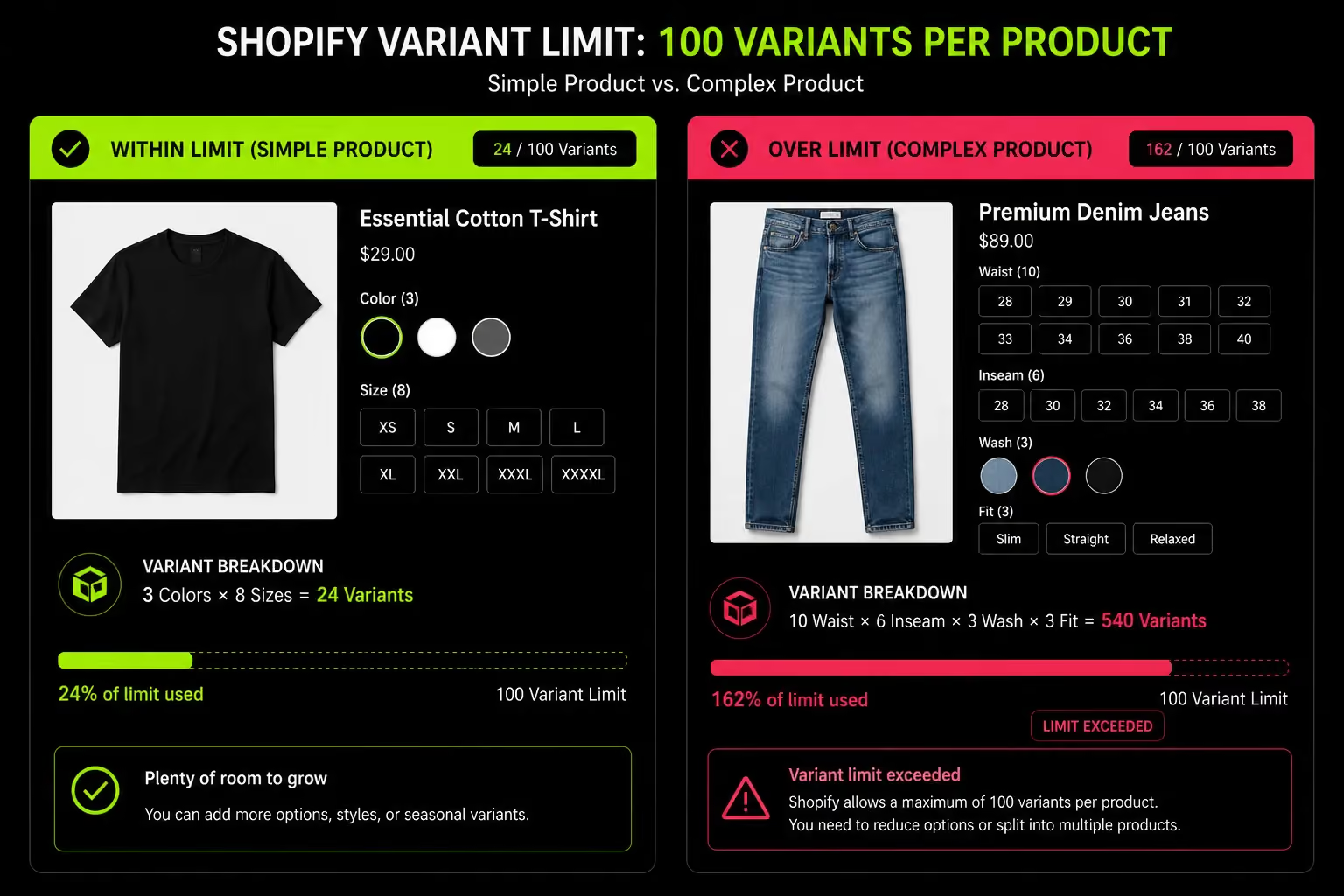
Shopify limits each product to 100 variants and 3 options. For most fashion brands, this is not an issue. For brands with complex product matrices, it is a hard ceiling.
The mathematics are worth understanding clearly:
Solutions exist: separate product listings per variant cluster, Shopify Functions (Plus only) for custom variant logic.
But none are as clean as a platform without the limit. For brands where this is a genuine constraint, BigCommerce (600 SKUs per product) or WooCommerce (unlimited) handle it without workarounds.
The cost structure at scale.
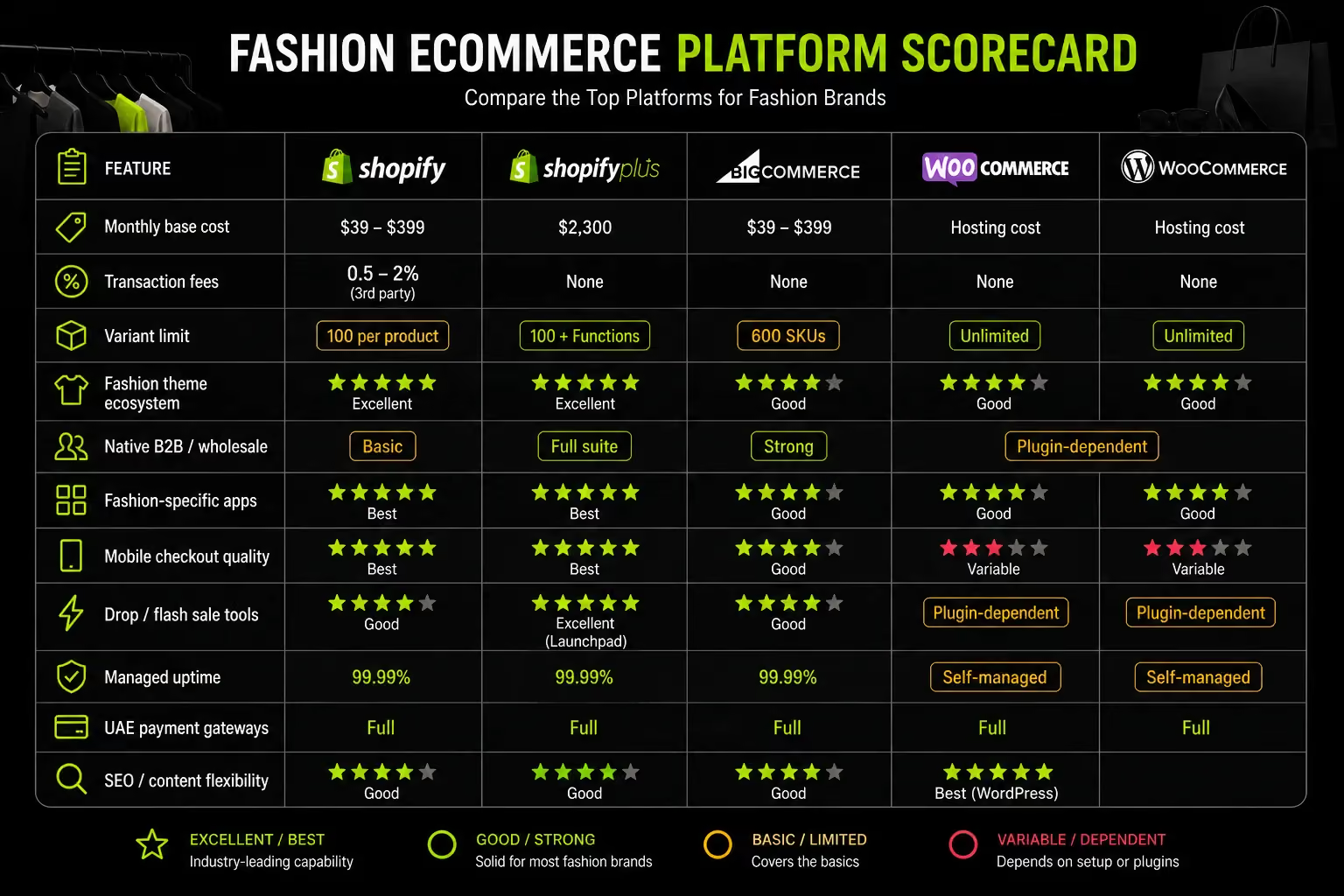
Shopify's transaction fees (0.5 - 2% on non-Shopify Payments gateways) and app subscription creep (each functionality layer adds $20–$100/month) means total platform cost rises as the brand scales.
Shopify Plus at $2,300/month eliminates transaction fees but the jump from Basic ($39/month) to Plus is significant.
BigCommerce charges no transaction fees on any payment gateway at any plan tier, which matters for brands using UAE regional gateways (Telr, PayTabs) rather than Shopify Payments.
When to consider alternatives to Shopify for fashion:
- Catalogue with significant products requiring 100+ variants per SKU
- Wholesale-first or hybrid wholesale/D2C model at scale
- Content-first brand where editorial authority and organic search are the primary acquisition channels
- Enterprise brands with complex ERP integration requirements and in-house development teams
If you are uncertain whether your catalogue complexity or commercial model points toward Shopify or an alternative, a platform consultation with a clear commercial lens is the fastest way to get a grounded answer.
BigCommerce: The Best Shopify Alternative for Complex Fashion Catalogues
Most guides dismiss BigCommerce as "runner-up to Shopify." That framing misses the specific scenarios where it is the commercially correct answer.
Where BigCommerce Genuinely Outperforms Shopify for Fashion
600 Skus Per Product Is The Variant Advantage.
BigCommerce supports up to 600 SKUs per product, six times Shopify's limit. For a denim brand selling 12 washes, 10 waist sizes and 6 inseam lengths (720 combinations), BigCommerce eliminates the architectural workarounds that Shopify requires.
For a fashion brand where the variant constraint is a genuine operational problem, this difference is material.
No Transaction Fees On Any Payment Gateway.
BigCommerce charges zero transaction fees regardless of which gateway you use. At $500K annual GMV with a third-party gateway on Shopify's Basic plan (2% transaction fee), that is $10,000/year in transaction fees.
At Shopify's Advanced plan (0.5%), that is $2,500/year. For UAE brands using Telr, PayTabs or Tap Payments rather than Shopify Payments, BigCommerce's fee structure has a direct impact on unit economics.
Native B2b And Wholesale Features.
BigCommerce has stronger native B2B capability than standard Shopify price lists, company accounts, quote management and purchase order workflows are available without the Plus tier requirement.
For fashion brands that sell both retail D2C and wholesale to boutiques or retailers, BigCommerce's native hybrid model is a meaningful operational advantage.
Built-In Features That Shopify Charges Through Apps.
Gift cards, product reviews, built-in SEO tools, and advanced shipping rules are included in BigCommerce's base plans.
For fashion brands managing total platform cost, this reduces the app subscription layer that inflates Shopify's effective monthly cost at scale.
BigCommerce's Limitations for Fashion
The learning curve is meaningful. Shopify is designed for non-technical operators. BigCommerce is designed for brands with some technical comfort.
The theme ecosystem is smaller and less fashion-specific. The app ecosystem has fewer fashion-specific integrations for size recommendation, virtual try-on, and social commerce.
BigCommerce also has revenue-based plan thresholds: Standard ($39/month) is capped at $50K annual sales, Plus at $105K, Pro at $400K.
Each threshold forces an upgrade. Shopify's plan structure does not impose revenue ceilings.
Best For Fashion: Brands with 200+ products where variant complexity exceeds Shopify's 100-variant limit; wholesale-first or hybrid retail-wholesale operations; brands running on regional payment gateways where transaction fees are a material cost line.
WooCommerce Maximum Flexibility, Maximum Responsibility
WooCommerce is the right platform for specific fashion brand profiles. The generic "open-source is flexible" argument misses the concrete circumstances where that flexibility is actually worth the operational overhead it demands.
When WooCommerce Makes Sense for Fashion Brands
Fashion Brands With Content-First Acquisition Strategies.
WooCommerce runs on WordPress, the most powerful content management platform available.
If a fashion brand's primary acquisition channel is organic search via editorial content (buying guides, trend reports, style editorial, sustainable fashion education).
The WordPress CMS provides structural advantages in content architecture, internal linking, and editorial flexibility that Shopify's CMS does not match.
A sustainable fashion brand building domain authority through content before scaling paid acquisition is better served on WooCommerce/WordPress for its first two years.
For a detailed comparison of the two platforms' content capabilities, our Shopify vs WordPress ecommerce guide covers the trade-offs specifically.
Fashion Brands With Complex Wholesale Or Marketplace Infrastructure.
WooCommerce's open-source architecture means a development team can build any pricing logic, any B2B workflow, or any marketplace integration the brand requires.
For fashion brands with complex multi-vendor relationships, bespoke wholesale terms, or custom marketplace integrations, WooCommerce is the only option short of a fully custom build.
Fashion Brands With Strong In-House Technical Teams.
WooCommerce has no monthly platform fees. At scale, with a competent technical team managing hosting, security and plugin maintenance, the total cost of ownership can be lower than Shopify Plus.
This calculus only works when developer time is accounted for accurately. The "free" nature of WooCommerce is accurate only if developer maintenance cost is zero, which it is not.
WooCommerce's Fashion-Specific Risks
Performance Under Fashion's Traffic Patterns.
Fashion brands experience extreme traffic spikes, product launches, influencer mentions, sale events.
WooCommerce on inadequately provisioned hosting fails under these conditions. Managing infrastructure to handle spike traffic is the brand's responsibility not the platform's. Shopify handles this automatically.
Fashion-Specific Features Require Plugins.
Size recommendation, virtual try-on, lookbook sections, drop mechanics, and flash sale infrastructure all require plugins on WooCommerce.
Each plugin is a maintenance responsibility, a potential security vulnerability, and a plugin-conflict risk. Shopify's app ecosystem is curated; WooCommerce's is not.
Plugin And Update Management At Scale.
A WooCommerce store with 15+ plugins requires careful, tested update management plugin updates that can break other plugins.
A broken store from a plugin conflict on launch day is a higher risk on WooCommerce than on any hosted platform.
Best For Fashion: Content-first acquisition brands; technically capable teams building complex B2B or marketplace infrastructure; brands where Shopify's monthly cost is a genuine constraint at an early stage.
Squarespace: The Visual-First Choice for Boutique Fashion
Squarespace has a specific role in the fashion platform landscape. For the brand profile it fits, it fits extremely well.
When Squarespace Is Right for Fashion
Small Boutique Fashion Labels With Under 500 Products.
Squarespace's design templates are among the most aesthetically refined of any ecommerce platform.
For a fashion designer selling 30–100 curated pieces and prioritising visual presentation over catalogue management features, Squarespace delivers designer-quality results without development cost.
Fashion brands where the website is a portfolio first and a store second.
Independent designers, sustainable fashion creators, and artisan fashion labels often need their website to function as a brand portfolio and editorial space more than as a high-volume transactional engine.
Squarespace's template aesthetic is better suited to this than Shopify's commerce-first architecture.
Squarespace's Hard Limits for Fashion
Squarespace reaches its limitations faster than other platforms for growing fashion brands:
- No native app ecosystem for fashion-specific features (size recommendation, virtual try-on, multichannel inventory)
- Limited variant management for complex colour-size matrices
- No wholesale or B2B features
- Limited integration options for fashion logistics and fulfilment partners
- Checkout is functional but significantly less conversion-optimised than Shopify's
For any fashion brand expecting meaningful growth beyond 500 products or $500K annual revenue, Squarespace typically requires a platform migration, a cost that should be factored into the initial decision.
Best For Fashion: Small boutique labels under 500 products, independent designer-makers prioritising visual brand presentation, fashion brands at a very early stage with limited budget.
Luxury Fashion and Shopify: The Question That Keeps Appearing
"Do luxury brands use Shopify?" is one of the most searched questions in this space. The answer is nuanced and commercially important.
Yes, But Via Shopify Plus with Specific Architecture
The assumption that luxury fashion cannot use Shopify is outdated. Victoria Beckham, KHAITE, Represent, Self-Portrait, Strathberry, Wales Bonner and Christian Dior all operate on Shopify or Shopify Plus.
Victoria Beckham's store maintains an editorial, luxury feel, muted tones, full-bleed imagery, minimal UI visually indistinguishable from a bespoke custom platform.
What Makes Shopify Plus Viable For Luxury Fashion:
Headless Capability: Shopify Plus with Hydrogen allows brands to build fully custom frontends with any visual design, any interaction pattern, any editorial layout while using Shopify as the commerce backend.
The customer sees a unique, brand-specific experience. Under the hood, Shopify handles infrastructure, payments, and order management.
Checkout Extensibility: Shopify Plus allows custom checkout flows, personalized gift messaging, order customisation, exclusive product access and brand-specific checkout design that signal luxury positioning at the transaction moment.
Theme Quality at The Premium Tier: A well-configured Prestige theme with bespoke section customisation produces a visual result luxury consumers accept at the price point.
Victoria Beckham's store uses this approach and has not suffered brand equity damage from being on a widely used platform.
For brands considering Shopify Plus, our guide on when to upgrade to Shopify Plus covers the revenue and feature thresholds that make the upgrade commercially justified.
When Luxury Fashion Needs Something Different
Specific requirements that exceed what Shopify Plus can deliver:
- Very large editorial teams requiring CMS flexibility beyond Shopify's page editor (some luxury houses use headless CMS like Contentful paired with a commerce backend)
- Complex wholesale and B2B relationships with bespoke pricing tiers, seasonal buying windows, and multi-location inventory (some use Centra or Salesforce Commerce Cloud for their B2B layer)
- Brands deeply integrated with global ERP systems (SAP, Oracle) with complex order orchestration requirements
For most D2C luxury fashion brands below $100M GMV, Shopify Plus is commercially and technically adequate.
The assumption that luxury requires bespoke platforms is a 2015 belief that has not kept pace with Shopify Plus's development.
The Platform Decision Framework for Fashion Brands
Choose your platform based on your current growth stage, operational complexity and long-term scalability needs.
Stage-Based Platform Selection
Each stage has different technical, operational and growth requirements that influence the best ecommerce platform choice.
Stage 1: Early-Stage Fashion Brand (Under $500k Revenue, Under 200 Products)
Shopify Basic or Standard. Fastest time to market. No developer required for launch. Best app ecosystem for early-stage fashion features.
Free or low-cost themes (Dawn, Crave) are adequate at this stage.
Exception: if the brand is genuinely content-first a fashion editorial project building an audience before selling WooCommerce/WordPress is a viable choice given its structural content advantages.
Stage 2: Growing Fashion Brand ($500k–$2m Revenue, 200–1,000 Products)
Shopify Standard or Advanced. Fashion-specific apps (size recommendation, loyalty programme, email flows) are being added at this stage.
The app ecosystem quality advantage over BigCommerce is commercially meaningful here. This is also the point to evaluate whether variant complexity is approaching the 100-variant limit.
If it is, this is the decision window for BigCommerce or Shopify Functions architecture.
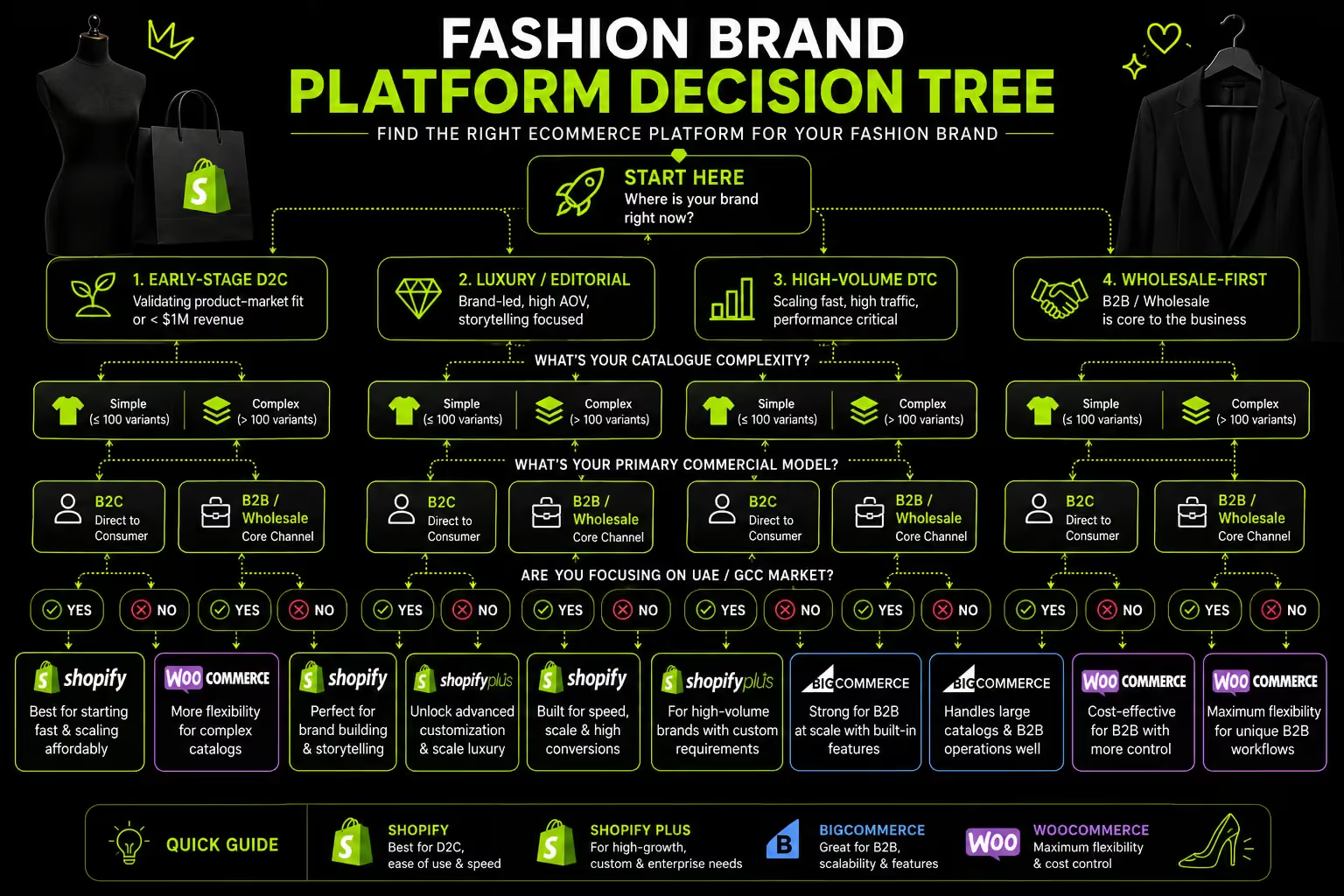
Stage 3: Scaling Fashion Brand ($2m–$10m Revenue, 1,000+ Products, Multiple Channels)
Shopify Plus. The feature set Launchpad for drops, Checkout Extensibility, B2B suite, Shopify Markets for international, Shopify Flow for automation becomes commercially justified at this scale.
The $2,300/month investment is typically offset by transaction fee savings and app consolidation within the first year for brands at $2M+ GMV with third-party gateways.
Exception: brands where the 100-variant limit is a hard catalogue constraint should evaluate BigCommerce at this stage.
Stage 4: Enterprise Fashion Brand ($10m+ Revenue, Complex Integrations, Multi-Market)
Shopify Plus with headless capability (Hydrogen/Oxygen) for brand differentiation, or evaluate Centra (fashion-specific headless).
Salesforce Commerce Cloud (if Salesforce CRM is already embedded), or Adobe Commerce (if in-house development team and complex integration requirements).
This is where the decision requires genuine architectural evaluation rather than a default answer. Our Shopify vs Magento comparison covers the enterprise-level trade-offs in detail.
The Commercial Model Decision Layer
The UAE and Gulf Fashion Brand Platform
This section is absent from every competing guide. UAE fashion brands have platform requirements that Western-market comparisons do not account for and getting the platform wrong for the UAE market compounds the cost of switching.
Why Platform Selection for UAE Fashion Brands Has Specific Requirements
The UAE is among the fastest-growing fashion ecommerce markets in the Gulf. Apparel is the #1 category among UAE's 23,000+ Shopify stores 28.3% of all UAE Shopify businesses.
For UAE fashion brands launching or scaling in 2026, these regional factors change the platform evaluation:
Bnpl Integration As A Baseline Requirement.
Tabby and Tamara are the dominant BNPL services in the UAE, with 37%+ of UAE consumers now using BNPL for fashion purchases.
Both integrate natively with Shopify via the App Store. BigCommerce supports them through third-party integrations. WooCommerce via plugins.
The integration quality and checkout native feel differs Shopify's native app block integration produces a more seamless checkout experience than plugin-based alternatives on other platforms.
UAE Logistics Integration.
Aramex and Fetchr are the dominant fashion logistics carriers in the UAE, with same-day and next-day delivery capability in UAE metro areas.
Both have Shopify-native integrations. The operational workflow for COD collection, returns management, and delivery status updates is best documented for Shopify in the UAE market.
For brands setting up UAE-specific logistics and payment flows, our international ecommerce setup service covers the full configuration.
Shopify Payments UAE.
Shopify Payments entered early access in the UAE in 2026, giving UAE-based fashion brands direct access to the same payment infrastructure available to US and UK merchants.
This reduces the dependency on third-party gateways and the associated transaction fees for brands that qualify.
Arabic RTL Requirement.
Any UAE fashion brand targeting Arabic-speaking consumers needs bilingual Arabic-English store functionality.
On Shopify, this is achieved through the Translate & Adapt app or Weglot, with RTL layout requiring either a natively RTL-compatible theme or custom CSS work.
Shopify's Translate & Adapt workflow is more marketer-accessible than WooCommerce's multilingual plugin approach, a meaningful operational advantage for fashion brands updating content regularly.
Modest Fashion Category Considerations.
Modest fashion is a high-growth category in the UAE abayas, modesty-compatible activewear, hijab-friendly styles and full-coverage options are growing faster than conventional fashion categories in the Gulf.
UAE modest fashion brands building D2C operations consistently choose Shopify for speed to market, mobile checkout quality, and fashion-specific theme ecosystem.
Our Loomsona case study shows how we built a bilingual modest fashion store in the UAE with the specific category architecture and Arabic-first design system the brand required.
Platform Recommendation for UAE Fashion Brands
D2C fashion brand in the UAE (early to growth stage): Shopify. Native UAE logistics integration, BNPL via Tabby/Tamara, Shopify Payments UAE access, best mobile checkout for a mobile-first market.
UAE fashion brand with B2B or wholesale component: Shopify Plus (B2B suite) or BigCommerce (native wholesale features, zero transaction fees on regional gateways).
UAE fashion brand that is content-first: WooCommerce/WordPress for the Arabic content architecture flexibility, with a planned platform migration to Shopify as commerce volume grows.
What Platform Migration Actually Costs :The Number Every Guide Ignores
The cost of wrong platform choice is the most commercially important variable in the entire decision and the one every competing guide leaves out.
The Real Cost of Migrating Between Platforms
Fashion brands that choose the wrong platform and need to migrate face:
Development Cost: $15,000–$80,000 depending on complexity product count, custom functionality, integration scope.
A fashion brand migrating from Magento to Shopify Plus with a large product catalogue, custom size guide system, and ERP integration is a $50,000–$80,000 project. Our ecommerce platform migration guide covers the scope variables that drive that cost range.
Timeline: 3–6 months for a well-scoped migration. 4–8 months when integrations are complex or the scope was not properly inventoried upfront. During that period, the brand is running two platforms in parallel with double operational load.
Organic Traffic Disruption: URL structure changes during migration require systematic 301 redirects. Brands that migrate without proper redirect mapping lose organic search rankings sometimes permanently on competitive terms.
Recovery typically takes 6–12 months. For fashion brands that have built organic traffic over years, this is a significant risk.
Operational Disruption: Double data entry, double order management, and double operational load for the migration period at the exact moment the team's attention should be on growth.
The Gymshark lesson crystallises this: the $100,000+ lost during a single Magento Black Friday failure was the wrong-platform cost compressed into one day's event.
Most brands pay the wrong-platform cost more slowly in developer hours, in suboptimal features, in missed launch windows and never identify the platform as the source.
The Correct Framing: platform selection is not "which is cheapest to start?" it is "which produces the lowest total cost over 3 years, including the cost of migration if I choose wrong?"
That framing consistently favours the platform that is right for the brand's stage and commercial model.
How We Help Fashion Brands Choose the Right Platform
At Suplex, we're a Shopify Partner, but our recommendations are based on what best fits your business.
For most early and growth-stage fashion brands, Shopify is the right choice thanks to its strong checkout, fashion-focused ecosystem, UAE integrations, and fast time to market.
Where needed, we've also recommended BigCommerce for complex catalogues and WooCommerce for content-led brands.
Whether it's Loomsona, Celesti, or Kimi, every platform decision has been based on a 3-year commercial strategy.
If you're choosing a platform, we start by evaluating your brand stage, catalogue and market before making any recommendation.
Frequently Asked Questions
Which Ecommerce Platform Is Best For Fashion Brands?
Shopify is the best ecommerce platform for most early- and growth-stage D2C fashion brands. It powers brands like Fashion Nova, Gymshark, SKIMS, Victoria Beckham, and Steve Madden. BigCommerce is the strongest alternative for brands that exceed Shopify's 100-variant limit or prioritize wholesale features and zero transaction fees.
Do Luxury Fashion Brands Use Shopify?
Yes. Luxury brands including Victoria Beckham, KHAITE, Represent, Self-Portrait, Strathberry, and Christian Dior use Shopify or Shopify Plus. Modern Shopify Plus stores can deliver fully bespoke luxury experiences, especially with headless architecture, while retaining Shopify's commerce infrastructure. Victoria Beckham's site is a strong example of a premium editorial experience built on Shopify.
What Is The Best Ecommerce Platform For A New Clothing Brand?
Shopify Basic ($39/month) is the best choice for most new clothing brands, offering fast setup, a strong fashion app ecosystem, and reliable mobile checkout. Start with a free theme like Dawn or Crave, and invest in product photography and branding before upgrading to premium themes or plans.
Is Shopify Good For Fashion Brands With Large Catalogues?
For most fashion brands, yes. Shopify's 100-variant limit is sufficient, but brands with large colour-size combinations may exceed it. In those cases, BigCommerce is a better fit, supporting up to 600 SKUs per product. Shopify Plus can overcome the limit with custom development using Shopify Functions.
What Ecommerce Platform Should Fashion Brands Use In The Uae?
Shopify is the leading platform for UAE fashion brands, with native integrations for local logistics, BNPL providers, payment gateways, and Shopify Payments. It's especially well suited to D2C apparel brands. If you need an Arabic RTL storefront, choose an RTL-compatible theme or plan for additional customization.
Hi, I’m Rishabh Jain
I believe great design has the power to shape perception, build trust, and move businesses forward. That belief is what led me to found Suplex Design Studio, a global branding and packaging studio working with FMCG and D2C brands across markets.I started suplex at 25 with a clear intent, to create design that is strategic, thoughtful, and commercially meaningful. By 28, the studio had scaled globally, guided by a strong foundation in Integrated Design that I developed during my academic journey in London, where I was honoured with the Dean’s Award.
Over the years, I’ve had the opportunity to work with 100+ brands, from Fortune 500 organizations to family-run businesses, helping them build packaging and brand systems that create recall, relevance, and long-term value.
Suplex’s work has been recognized internationally, including the Manifest Award (2024), the Clutch Global Award (2025), and features on platforms such as Packaging of the World, The Dieline, and the World Brand Design Society.
None of this would be possible without the people behind the work. I’m deeply grateful to the suplex team, whose commitment, creativity, and attention to detail turn ideas into meaningful brand experiences every day.
At the heart of my work is a simple philosophy, design should be intentional, honest, and built to last, and that continues to guide everything we create at suplex.

























Let’s Make It Happen
E-Commerce Success Stories

%201.avif)






.avif)

.avif)
Build Your D2C Business The Right Way
Build It With Suplex.


