Beauty Ecommerce Website Design Agency In The UAE: What To Expect, What To Ask and What The Best Beauty Sites Get Right

Beauty Ecommerce Website Design Agency In The UAE: What To Expect, What To Ask and What The Best Beauty Sites Get Right
Beauty ecommerce website design agency choices matter more in the UAE because shoppers cannot swatch, smell, or test products online.
The website must help them choose the right shade, understand ingredients, and find products suited to their needs.
For UAE beauty brands, mobile shopping, Arabic and English content, local payments, and delivery information matter too.
As an experienced ecommerce agency, here's our guide to explaining what a specialist agency should deliver and how to choose the right one.
Why Beauty Brands Need a Specialist Ecommerce Agency
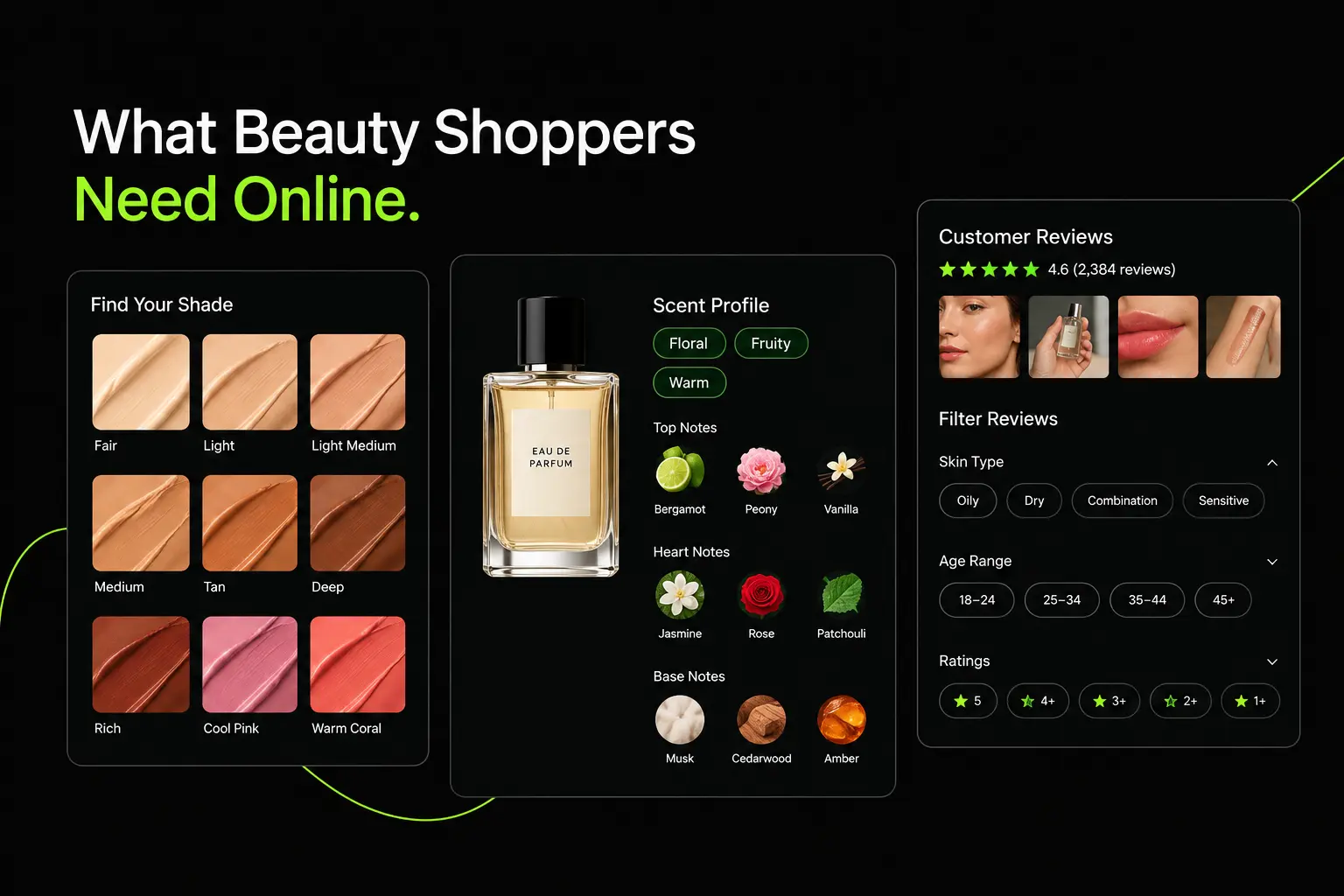
Beauty shoppers cannot test a foundation shade, smell a perfume, or feel a skincare product before buying. Your website needs to answer the questions they would normally ask at a beauty counter.
ECDB estimates that UAE personal care ecommerce had an add-to-cart rate of 14% - 14.5% in 2025, with cart abandonment at 81% - 81.5%.
These are indicative market estimates, but they highlight the challenge of turning product interest into completed purchases.
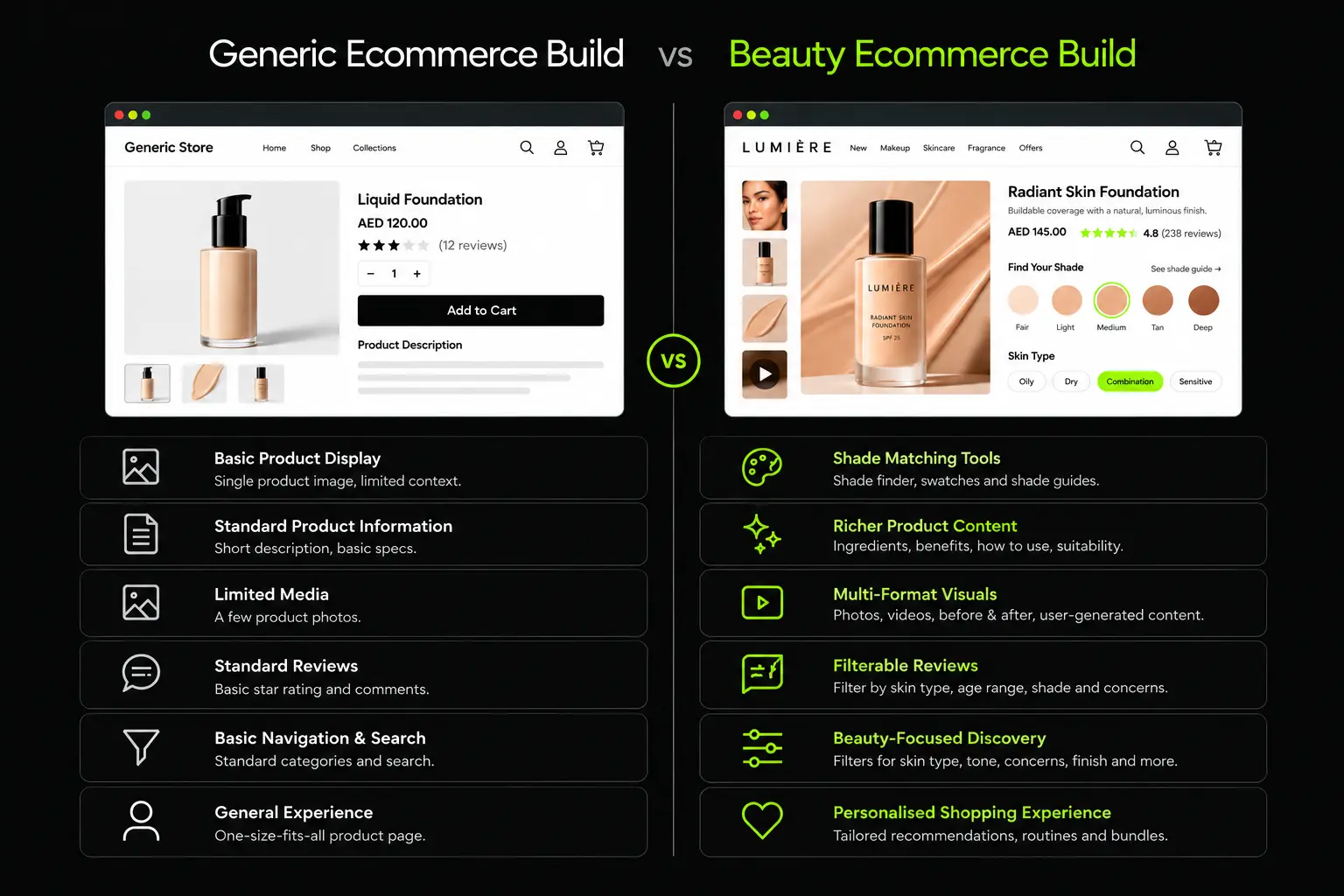
A generic ecommerce template may look polished yet leave shoppers struggling to find the right product. Beauty stores need features designed around how customers compare, evaluate, and choose products.
These features help customers make decisions with greater confidence. A foundation shopper may need to compare undertones, while someone buying skincare may want to understand ingredients and build a routine. Fragrance shoppers need scent notes and families to narrow their choices.
When evaluating an agency, go beyond asking whether it can build a Shopify store. Ask how it would help your customers choose the right shade, fragrance, or skincare routine.
The answer should explain the shopping experience and decision-making tools, not just the theme or visual design.
What We Learned Auditing Leading Beauty Websites
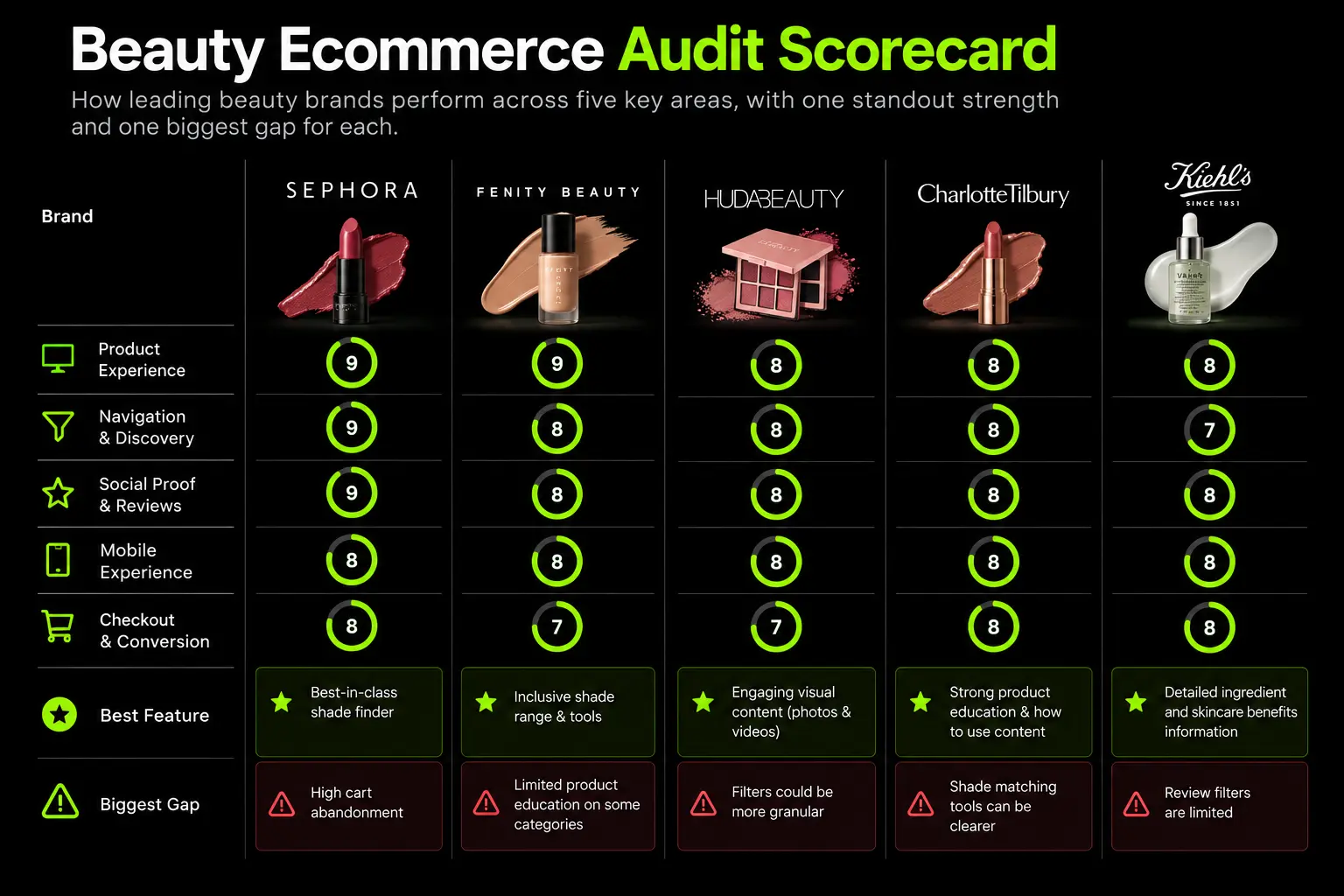
The Suplex UX/UI and performance team has published independent audits of leading beauty websites. These are reviews of publicly available sites, not client projects and the ratings reflect each site at the time of review. Huda Beauty and Kayali are particularly relevant to UAE audiences because both were founded in Dubai.
These audits reveal several practical lessons for beauty ecommerce design.
Five Patterns That Separate the Best Beauty Sites
1. Help Shoppers Choose Before They Open A Product Page: Fenty displays shade counts and other useful details on collection cards, helping customers assess whether a range meets their needs. By contrast, ratings and review information are less useful when shoppers must open every product to find them.
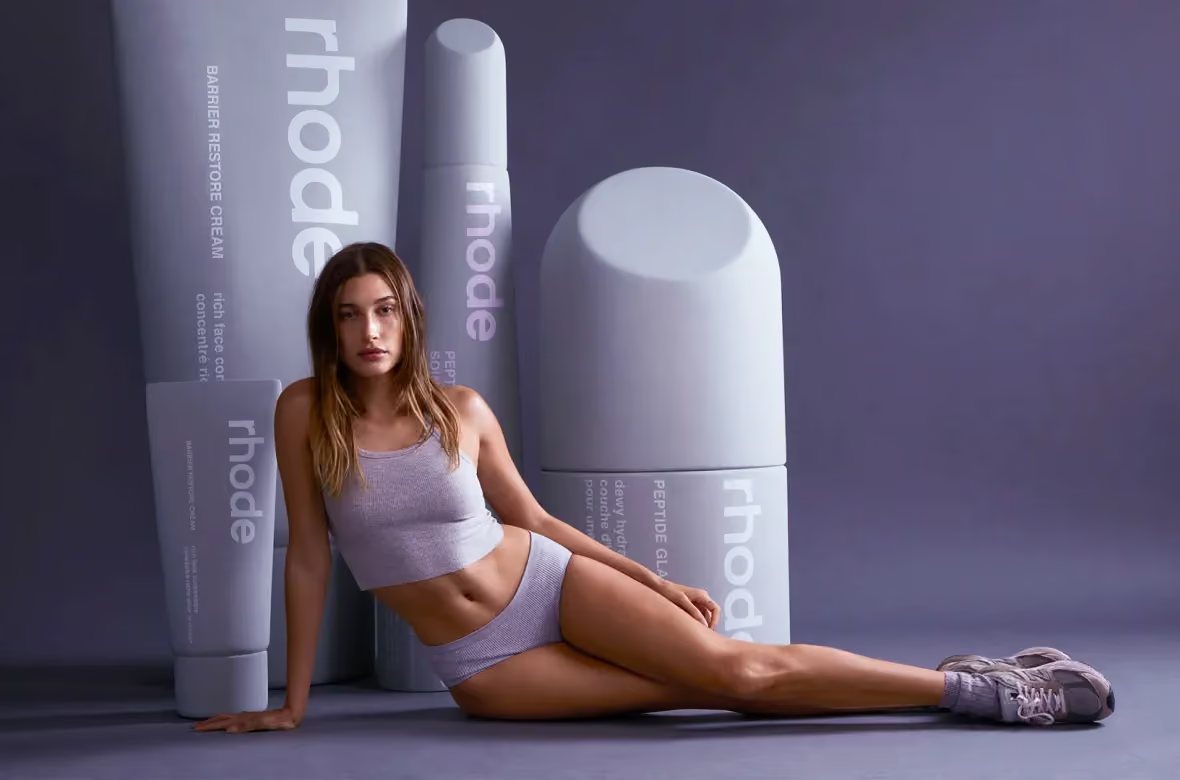
2. Make Reviews Relevant To Individual Shoppers: Skin type, skin tone, age, and customer photos can help shoppers judge whether a product might suit them. Fenty's detailed review filters are a strong example, while Rhode could offer more visual proof through customer photos.
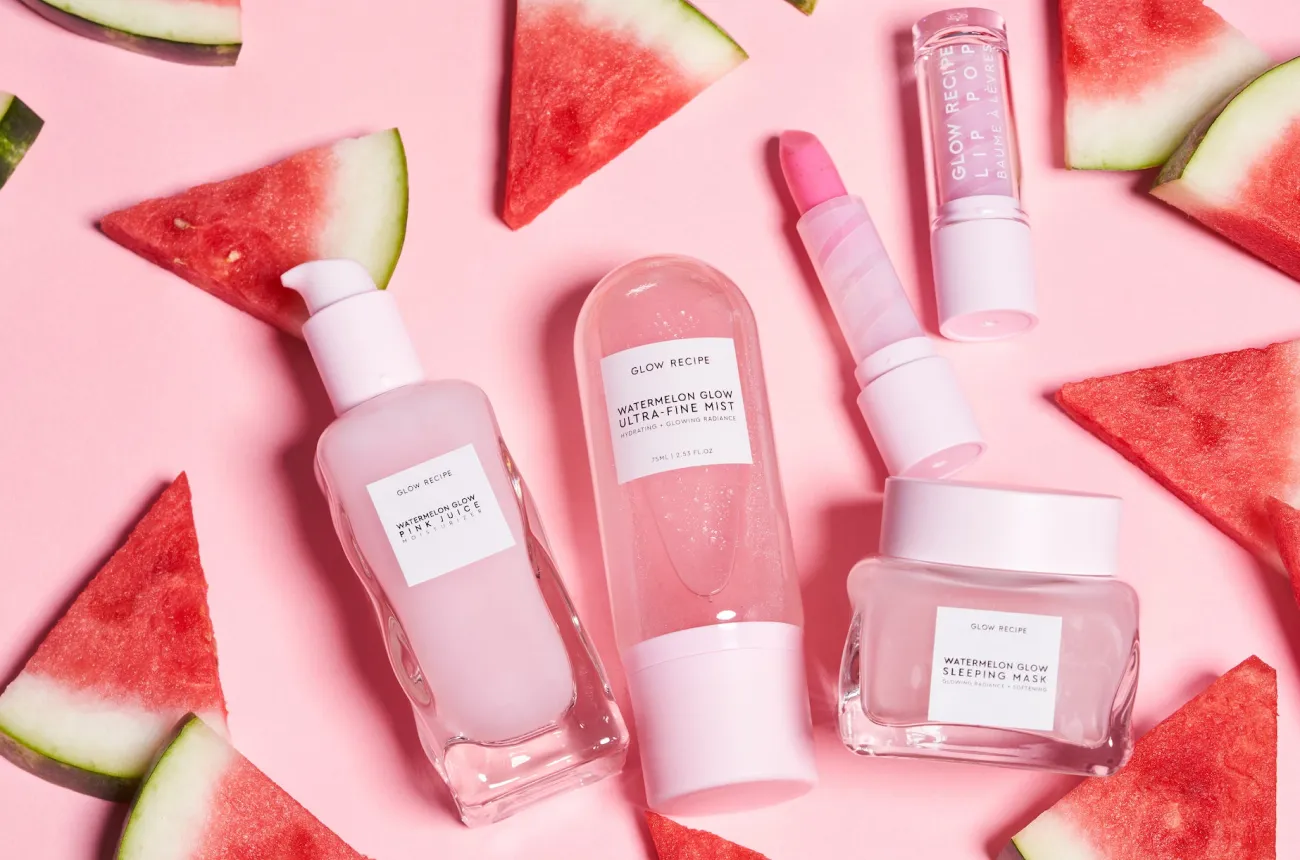
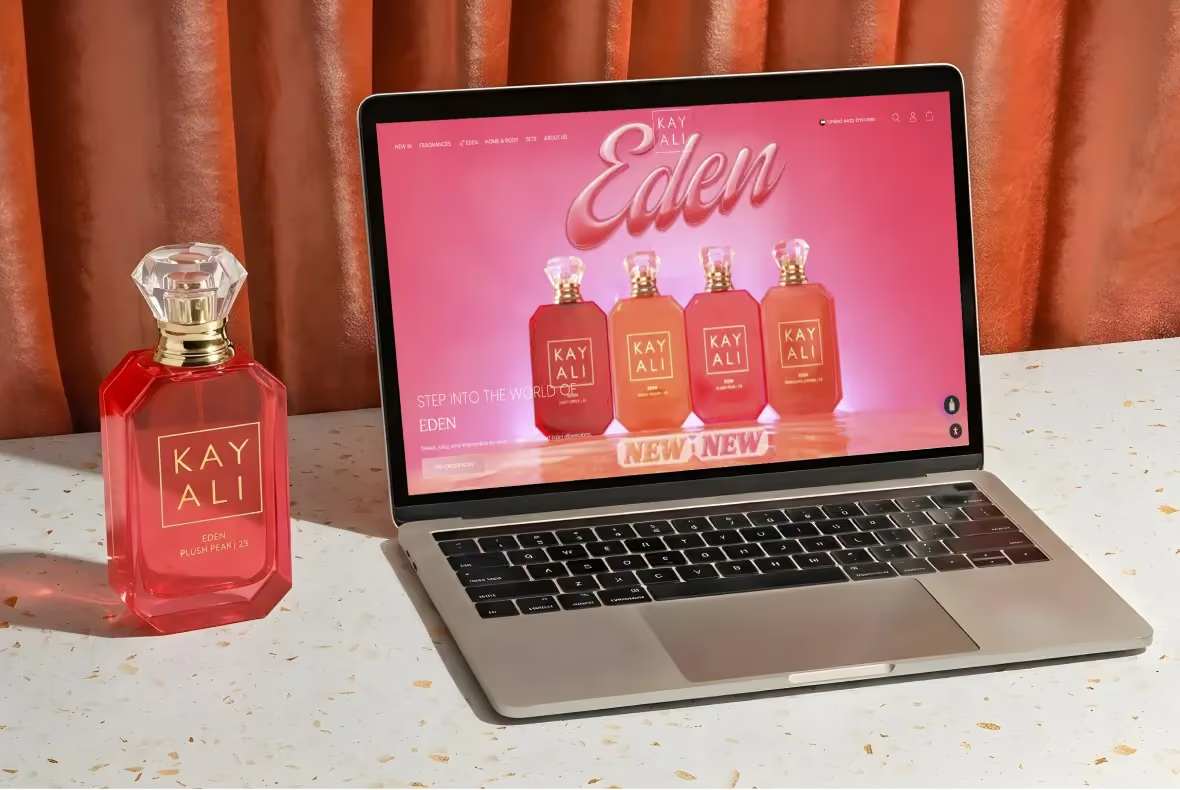
3. Use Education To Reduce Purchase Uncertainty: Glow Recipe's skin quiz, Huda Beauty's curated routines, and Kayali's fragrance discovery and layering guidance help customers understand which products fit their needs.
4. Offer Smaller Sizes To Encourage First Purchases: Kayali's range of vials, minis, and full-size fragrances lets shoppers try a scent before committing to a larger bottle.
5. Treat Performance As Part Of The Design: Huda Beauty and Kayali demonstrate how image-heavy, content-rich experiences can still face loading challenges. Optimised images, careful app selection, and performance testing should be considered during development, not left until launch.
Localization matters too. During the Glow Recipe audit, pages viewed from India displayed USD and INR prices together.
Similar inconsistencies in a UAE store could undermine trust if AED pricing, VAT, or regional settings are handled incorrectly.
The wider Suplex audit library includes additional beauty brands and provides more examples of how product discovery, customer confidence, localization, and performance affect the shopping experience.
The UAE Layer: What Beauty Ecommerce Sites Need Here
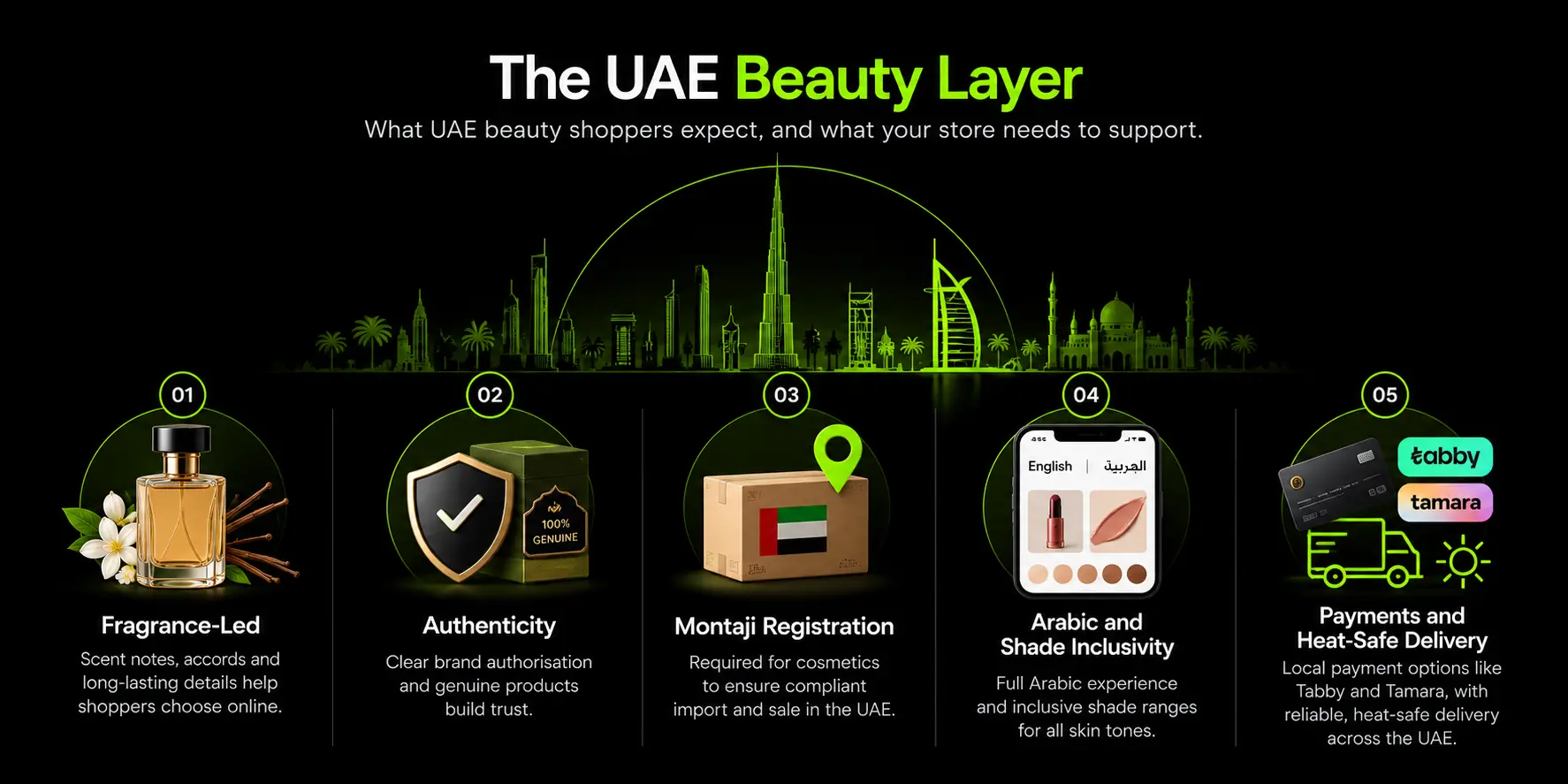
Beauty ecommerce in the UAE needs to account for local shopping habits, product authenticity, registration requirements, bilingual content and delivery conditions. These details affect both customer trust and the way a store should be designed.
A Fragrance-Led, Gifting-Heavy Market
Fragrance is an important category in the Gulf, making scent discovery and gifting useful features for beauty stores.
Shoppers benefit from fragrance finders, scent notes, layering guides, and sample sizes that let them try a product before buying a full bottle.
Plan gifting experiences around Ramadan, Eid, White Friday, Mother's Day, and Valentine's Day. The Kayali website audit offers an example of seasonal storytelling, fragrance education, and size options.
Authenticity and Trust Signals
Product authenticity matters when shoppers buy premium cosmetics and fragrances online. Dubai Customs reported 68 seizures involving counterfeit goods worth approximately AED 42.195 million during the first quarter of 2025, across product categories.
Beauty stores can help reassure customers by displaying:
- Official brand or authorised retailer status.
- Clear policies on product authenticity and batch information.
- UAE business and contact details.
- Verified customer reviews.
- Transparent returns and refunds policies.
Registration and Advertising Rules
Cosmetics and personal care products sold in Dubai may require registration through Dubai Municipality's Montaji system.
Documentation and approval requirements depend on the product category and applicable rules. Advertisement permits may also apply to promotional campaigns and influencer content.

For the website, this means maintaining accurate registration information, ensuring product claims are appropriately supported and checking promotional content against applicable requirements.
Confirm current rules directly with Dubai Municipality before launch; this section is for general guidance, not legal advice.
Arabic Content and Shade Inclusivity
Beauty stores should represent the skin tones and needs of their target audience through inclusive product photography, accurate shade descriptions, and useful undertone guidance.
For bilingual stores, Arabic ingredients, usage instructions, and product claims should be reviewed by a fluent writer.
A consistent Arabic experience is more useful than a storefront where only some pages or checkout steps are translated. The technical considerations are similar to those discussed in Arabic-English ecommerce development in the UAE.
Payments and Delivery
Payment options such as Apple Pay, Tabby, and Tamara may suit different customer preferences, subject to merchant eligibility and provider availability. COD policies should account for refused orders and product value.
Delivery also needs local planning. Heat-sensitive skincare and fragrance products may require suitable packaging and handling during UAE summers.
Clear delivery expectations help customers understand how their orders will be protected and when they can expect them.
What a Beauty Ecommerce Agency Should Deliver
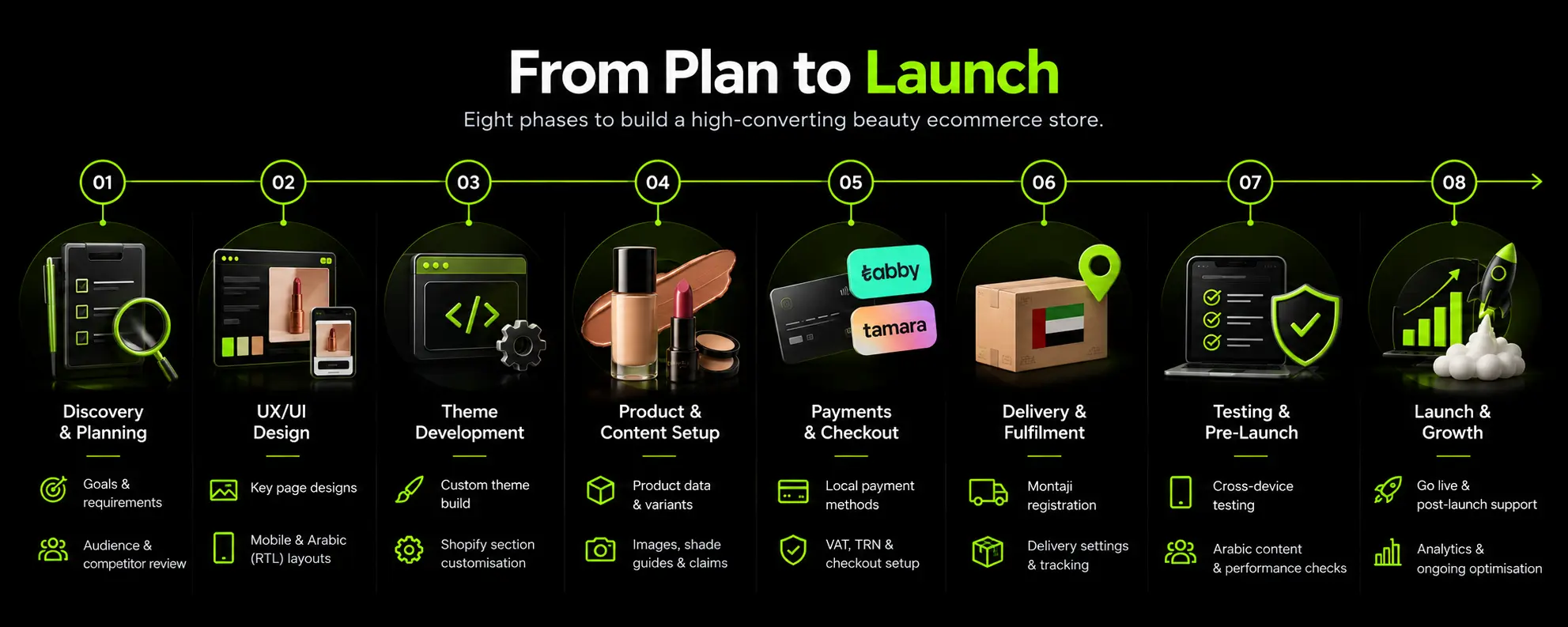
A beauty ecommerce project needs more than an attractive theme. The agency should understand how customers choose products and build an experience that helps them make confident buying decisions.
The deliverables should be agreed upon before development begins. A foundation brand may need shade-matching tools, while a fragrance store may benefit more from scent discovery and sample-size options.
Performance also deserves attention. High-resolution beauty photography improves product presentation but can slow pages if images are not optimised. Agree on performance targets before design starts and test the finished store across devices.
After launch, customer behaviour can reveal where shoppers struggle and which product pages need improvement. The agency should outline how these findings will inform future optimisation.
Finally, clarify what the project includes, which apps have recurring fees, and who will maintain integrations after launch. This helps prevent unexpected costs and keeps responsibilities clear.
Is Shopify Right for a UAE Beauty Brand?
Shopify suits most UAE beauty and skincare brands, with support for product variants, subscriptions, loyalty programmes, reviews and international selling through Shopify Markets. The right setup depends on your catalogue, customer experience, and plans for growth.
App Categories To Consider:
- Reviews with customer photos and useful filters
- Quizzes for skin concerns, shades, or fragrance discovery
- Loyalty and rewards programmes
- Subscriptions for repeat purchases
- Sampling and gift-with-purchase options
- Virtual try-on tools, if the added complexity and impact on speed are justified
Three Things To Check For The UAE Market:
- Payments: Confirm which payment gateways are available for your Shopify plan and business. Eligibility and payment options can vary, so verify the latest terms before choosing a plan.
- Arabic and RTL Support: Choose a theme that handles right-to-left layouts properly across product pages, navigation, and checkout.
- App Localisation: Check that reviews, quizzes, loyalty widgets, and other app features work in Arabic. Some apps may remain in English even when the rest of the store is translated.
A ready-made theme may be enough for a straightforward catalogue. Brands that need a more tailored shopping experience can explore custom Shopify theme development.
How to Evaluate a Beauty Ecommerce Design Agency in the UAE
A good agency should understand how people choose beauty products and explain how it will turn that understanding into a better shopping experience. Ask these questions during every agency conversation:
- How would you design the shade, skin-type, or scent discovery journey for our products?
- Which beauty websites have you built or audited, and what did you learn from them?
- How would you organise customer reviews, photos, and skin-related attributes?
- What performance targets will you set for a store with high-resolution images and video?
- How will you handle Arabic content, BNPL options, AED pricing, and VAT?
- How will you keep product information and claims consistent with applicable registration and compliance requirements?
- What support will you provide after launch, including conversion optimization, seasonal campaigns, and review collection?
Red Flags To Watch For:
🚩 Red flag: No relevant beauty or fragrance experience and little understanding of category-specific UX.
🚩 Red flag: Shade selection through basic dropdowns instead of clear visual swatches.
🚩 Red flag: No measurable performance targets.
🚩 Red flag: Plans to add Arabic only after the main store is complete.
🚩 Red flag: Virtual try-on tools taking priority over essential shopping features.
Also, look beyond the agency's portfolio screenshots. Ask what problems each project solved, how the team approached them, and what happened after launch. The answers will tell you more than polished visuals alone.
For a broader evaluation checklist, read these guides on questions to ask an ecommerce agency and red flags in a Shopify agency's portfolio.
Cost and Timeline for a Beauty Ecommerce Website in the UAE
The cost of a beauty ecommerce website depends on the catalogue, features, and level of customisation required, rather than the agency's location.
Key cost drivers:
- Number of products, SKUs, and shades
- Quizzes or product finders
- Reviews and loyalty programmes
- Product photography and video
- Arabic language support
- Custom theme development versus an adapted theme
- Third-party integrations
The following timelines are rough estimates based on Suplex's experience. Actual timelines depend on the scope, content readiness, photography, product registration, and approval process.
Ask each agency to break its quote down by phase. Check whether Arabic implementation, mobile testing, quality assurance, performance optimisation and post-launch support are included.
This makes it easier to compare proposals and identify potential extra costs. For a broader breakdown of ecommerce development costs and what affects the budget, see our ecommerce store setup service.
How Suplex Designs Beauty Ecommerce Websites
Suplex is a Dubai-based Shopify and ecommerce agency. Our approach to beauty ecommerce is shaped by independent website audits, where we study how leading brands help customers choose products and what could make their shopping experience better.
What We Focus On:
- Shade and scent discovery
- Product routines and regimen navigation
- Reviews with photos and useful filters
- Clear product sizes and sampling options
- Arabic and AED localisation
- Performance targets agreed upon before design begins
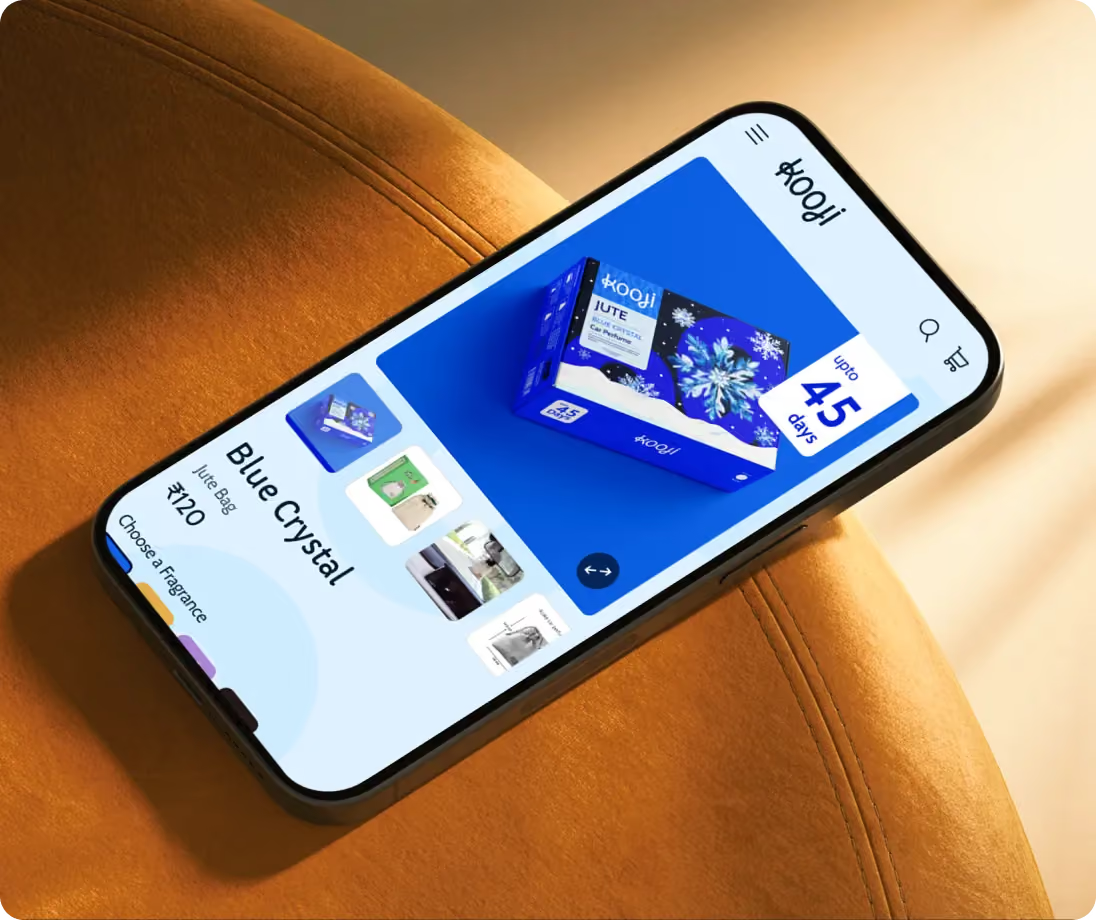
Our closest fragrance-related project is Kooji, a premium car perfume brand. For its Shopify store, we structured product information into concise, easy-to-scan descriptions.
This follows the same principle highlighted in our Kayali audit: fragrance pages should help shoppers understand a scent without overwhelming them with text.
Kooji is not a beauty brand and the brands reviewed in our audit series are not Suplex clients. The audits are independent research, while Kooji is an example of our client work. We keep that distinction clear when discussing our experience.
Frequently Asked Questions About Beauty Ecommerce Website Design Agencies
What Does a Beauty Ecommerce Website Design Agency Do?
It designs and builds online stores for beauty, skincare, and fragrance brands. The focus is on helping shoppers make decisions they cannot easily make online, such as choosing a shade, finding products for their skin type, or selecting a fragrance. Services typically include UX design, product pages, Shopify development, reviews, loyalty features, and post-launch optimisation.
Why Do Beauty Brands Need a Specialist Ecommerce Agency?
Beauty products are difficult to evaluate without trying them. A specialist agency understands how to support these decisions through shade guides, skin quizzes, customer reviews with photos, product routines, and sample sizes. Without these features, even an attractive store may leave shoppers unsure about what to buy.
What Features Should a Beauty Ecommerce Website Have?
Important features include shade or scent selection, customer reviews with photos and useful filters, ingredient information, usage instructions, product bundles, sample sizes, and loyalty rewards. UAE stores should also consider Arabic content, AED pricing, VAT, eligible BNPL options, authenticity information, and seasonal gifting for Ramadan and Eid.
Is Shopify a Good Platform for Beauty Brands in the UAE?
Yes. Shopify suits most beauty and skincare brands, with support for product variants, subscriptions, review and loyalty apps, and international selling through Shopify Markets. Before choosing a plan, check payment gateway eligibility in the UAE, select a theme that supports Arabic right-to-left layouts, and test whether third-party apps work correctly in Arabic.
Do Cosmetics Need Registration Before Being Sold Online in Dubai?
Cosmetics generally need to meet applicable product registration requirements before being sold in Dubai. Dubai Municipality uses its Montaji system for relevant consumer products, and separate requirements may apply to advertising. Rules depend on the product and circumstances, so confirm the current requirements with Dubai Municipality or a qualified local adviser.
How Much Does a Beauty Ecommerce Website Cost in the UAE?
The cost depends on catalogue size, design, and features. An adapted theme generally requires less investment than a custom store with product quizzes, loyalty features, Arabic localisation, and extensive photography. Integrations and ongoing support also affect the budget. Request a phase-by-phase quote to compare proposals fairly.
How Long Does It Take to Build a Beauty Ecommerce Website?
An adapted-theme store typically takes six to ten weeks, while a custom beauty store with a quiz, loyalty features and Arabic support may take ten to sixteen weeks. These are indicative estimates, not fixed deadlines. Photography, product information, registration, and approval delays can all affect the schedule.
Hi, I’m Rishabh Jain
I believe great digital experiences have the power to shape perception, build trust, and move businesses forward. That belief led me to found Suplex Design Studio, a global digital design and development studio helping FMCG and D2C brands build websites and digital experiences that are strategic, thoughtful, and commercially meaningful.
I started Suplex at 25 with a clear intent, to create digital experiences that look appealing, work seamlessly, and help D2C businesses grow. By 28, the studio had scaled globally, guided by a strong foundation in integrated design that I developed during my academic journey in London, where I was honoured with the Dean’s Award.
Over the years, I’ve had the opportunity to work with 100+ brands, from Fortune 500 organisations to family-run businesses, helping them build websites, e-commerce experiences, and digital products that create clarity, credibility, and long-term value.
Our work has been recognised internationally, including the Manifest Award (2024), the Clutch Global Award (2025), and features across platforms such as The Dieline, Packaging of the World, and the World Brand Design Society.
None of this would be possible without the people behind the work. I’m deeply grateful to the Suplex team, whose commitment, creativity, and attention to detail turn ideas into meaningful digital experiences every day.
At the heart of our work is a simple philosophy, digital design should be intentional, functional, and built to create real business value. That continues to guide everything we create at Suplex.















Let’s Make It Happen
E-Commerce Success Stories








Build Your D2C Business The Right Way
Build It With Suplex.


