Lifestyle Brand Ecommerce Experience: Ideas, Design Principles, and What Actually Converts
.avif)
Lifestyle Brand Ecommerce Experience: Ideas, Design Principles, and What Actually Converts
The lifestyle brand ecommerce experience is not a product catalogue with better photography.
It is an identity infrastructure architecture that makes a customer feel the purchase is not just a transaction but a statement of belonging. A standard ecommerce brand sells products. A lifestyle brand sells membership in the world.
Gymshark sells fitness communities. Patagonia sells participation in an environmental mission. Lululemon sells a wellness philosophy with a wardrobe attached.
Lifestyle brands generate stronger commercial returns through omnichannel experiences. Customers spend 16% more per order, loyalty members generate 12–18% higher revenue and brands with consistent cross-channel experiences retain 89% of customers versus 33% for fragmented brands.
Campaigns spanning three or more channels also achieve 494% higher order rates, making omnichannel a key driver of retention and lifetime value.
What Makes a Lifestyle Brand and Why the Ecommerce Experience Must Be Different
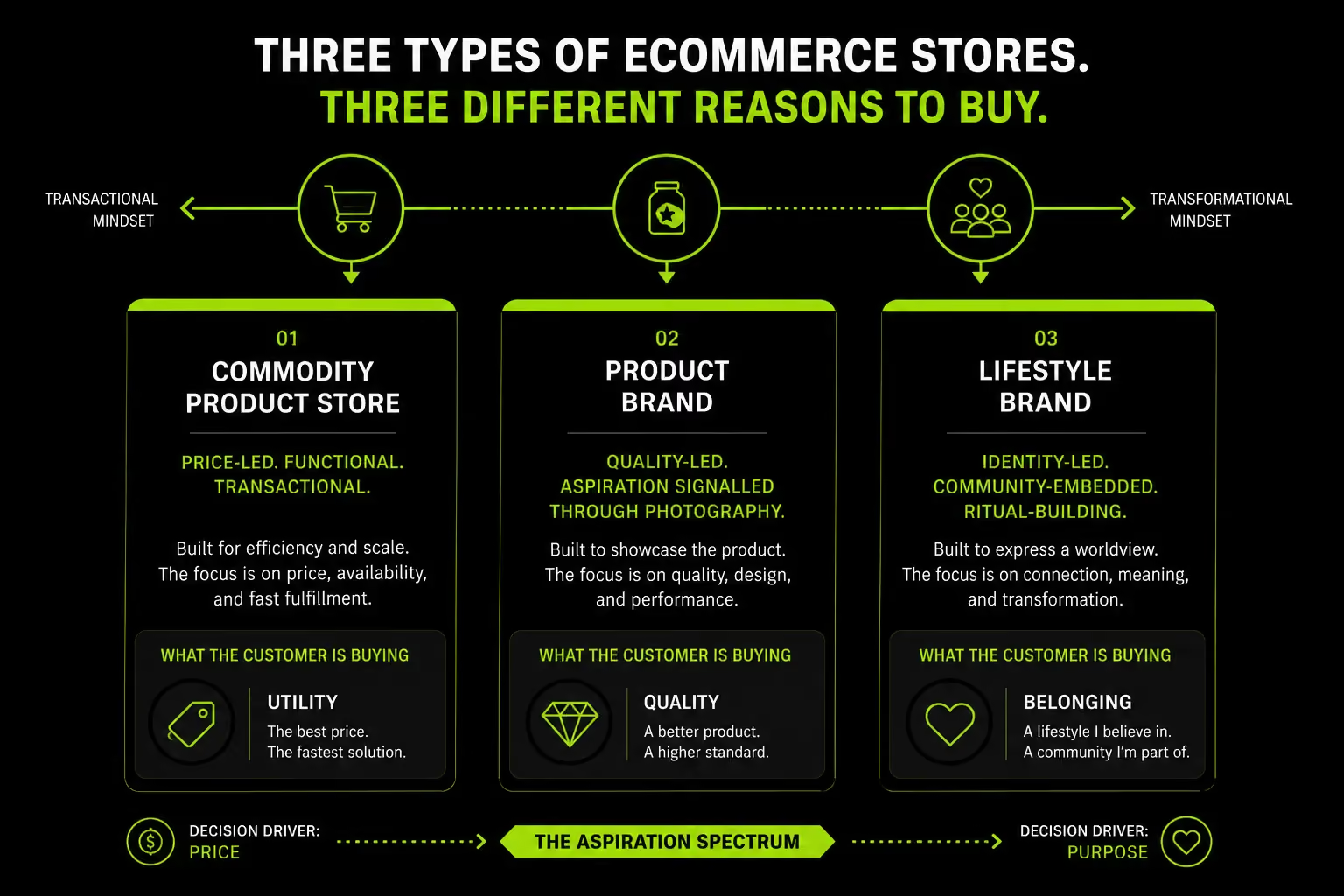
Defining a lifestyle brand precisely and commercially matters here, because the ecommerce architecture required is structurally different from a standard product brand and building the wrong one is expensive to fix post-launch.
The Commercial Definition of a Lifestyle Brand
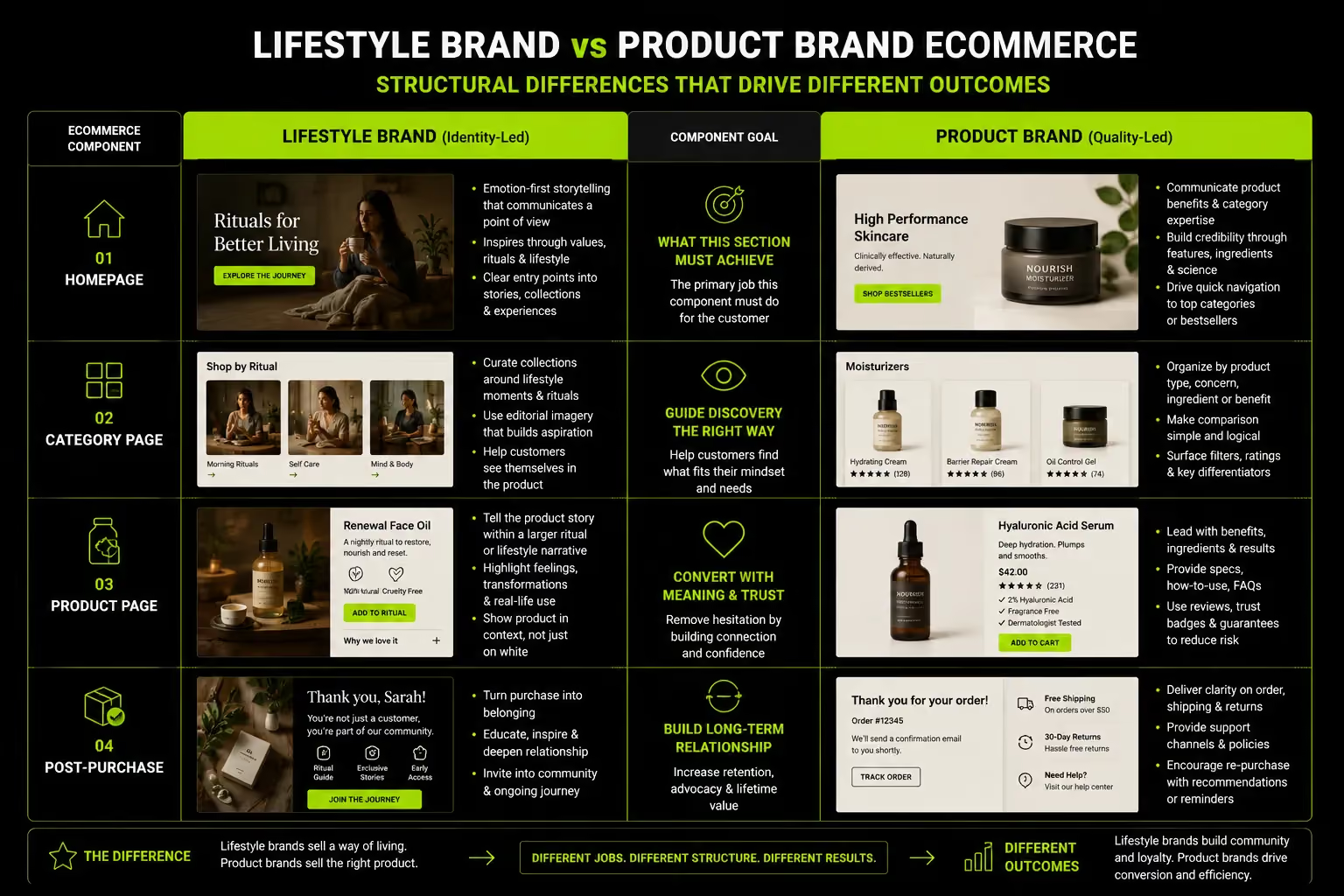
A lifestyle brand sells identity alongside products. The customer's primary motivation is not just to own the thing but to participate in the world the brand represents. Four signals distinguish a lifestyle brand from a product brand.
- Identity alignment over utility: Lifestyle brand customers describe their purchase in terms of who they are, not what they need. "I'm a Patagonia person" is a different statement from "I bought a jacket." The purchase is an expression of values, aspirations, or community membership.
- Repeat purchase without functional depletion: Customers return before their existing products are worn out. The trigger is a new collection, a brand event, a community activity, or identity reinforcement not a replacement need.
- Community as product extension: Lifestyle brands have audiences who communicate their brand membership to each other through UGC, social tagging, in-person events, and ambassador culture. The community is not a marketing asset. It is a product extension.
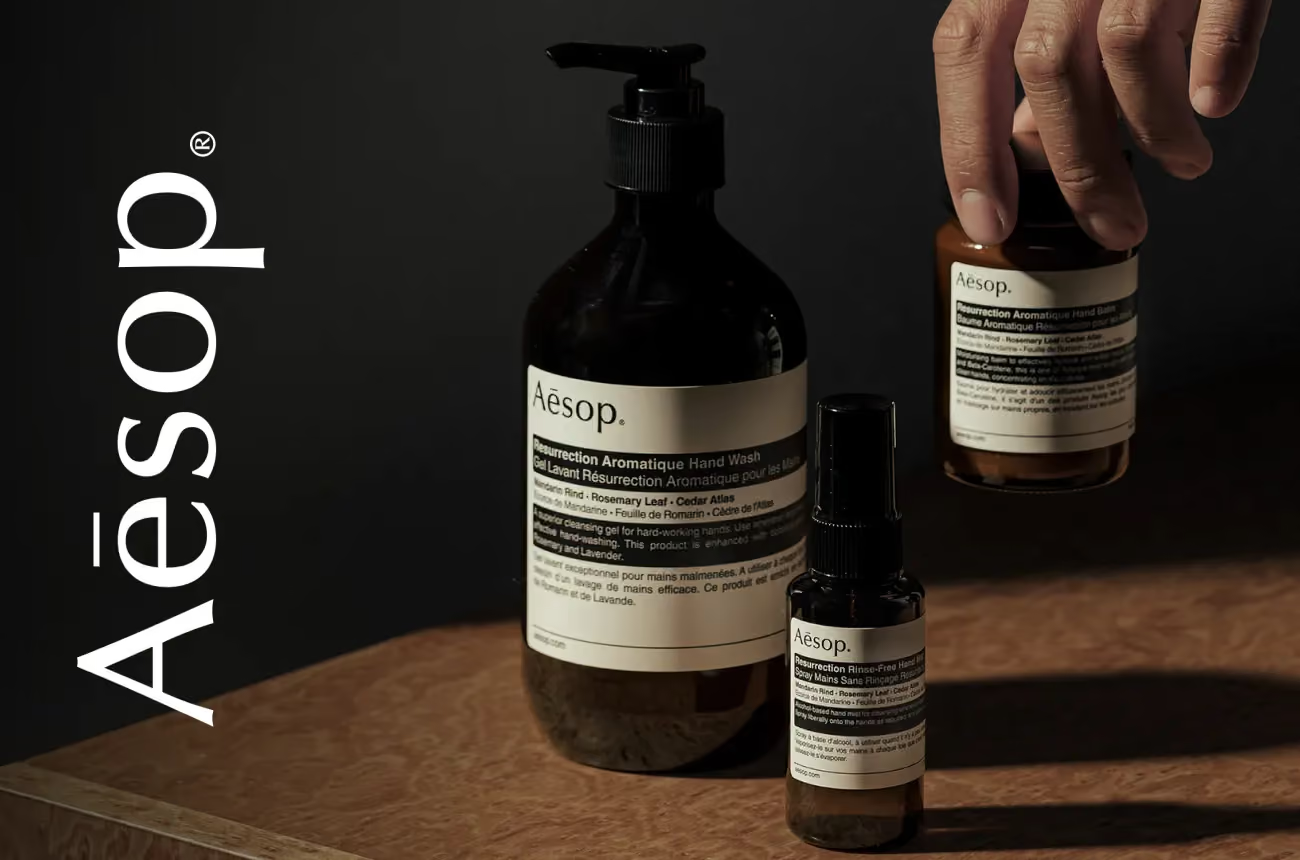
- Mission or philosophy as primary communication: Lifestyle brands speak about what they believe before they speak about what they sell. Patagonia's website addresses environmental missions before outdoor gear. Aesop communicates ritual and thoughtfulness before listing product ingredients.
A standard ecommerce store is designed to complete transactions. A lifestyle brand ecommerce store must also communicate the brand's world.
Without that, products become commodities, and the price premium, loyalty, and community that drive long-term growth disappear.
The homepage introduces the brand's identity, not just its products. Product pages reinforce that identity while supporting purchase decisions.
The post-purchase experience extends the relationship, turning customers into members of the brand community.
For brands building this from the ground up, Suplex's brand building for ecommerce service covers the full architecture from identity to ecommerce experience.
Idea 1: Build the Brand World Before the Product Catalogue
The homepage and above-the-fold experience is where most lifestyle brand ecommerce stores fail. The product arrives before the world. Visitors leave before they find out what the brand actually stands for.
The Editorial Homepage
The lifestyle brand homepage in 2026 is not a product grid with a hero banner. It is an editorial entry point curated like a magazine issue, not stocked like a shop floor.
- Hero Section: The hero communicates the world, not the product. A fitness brand's hero shows a person in a specific environment, in a specific light, in a specific emotional state, not a product on a white background with a promotional banner. The product may be present in the image. It is not the subject of it.
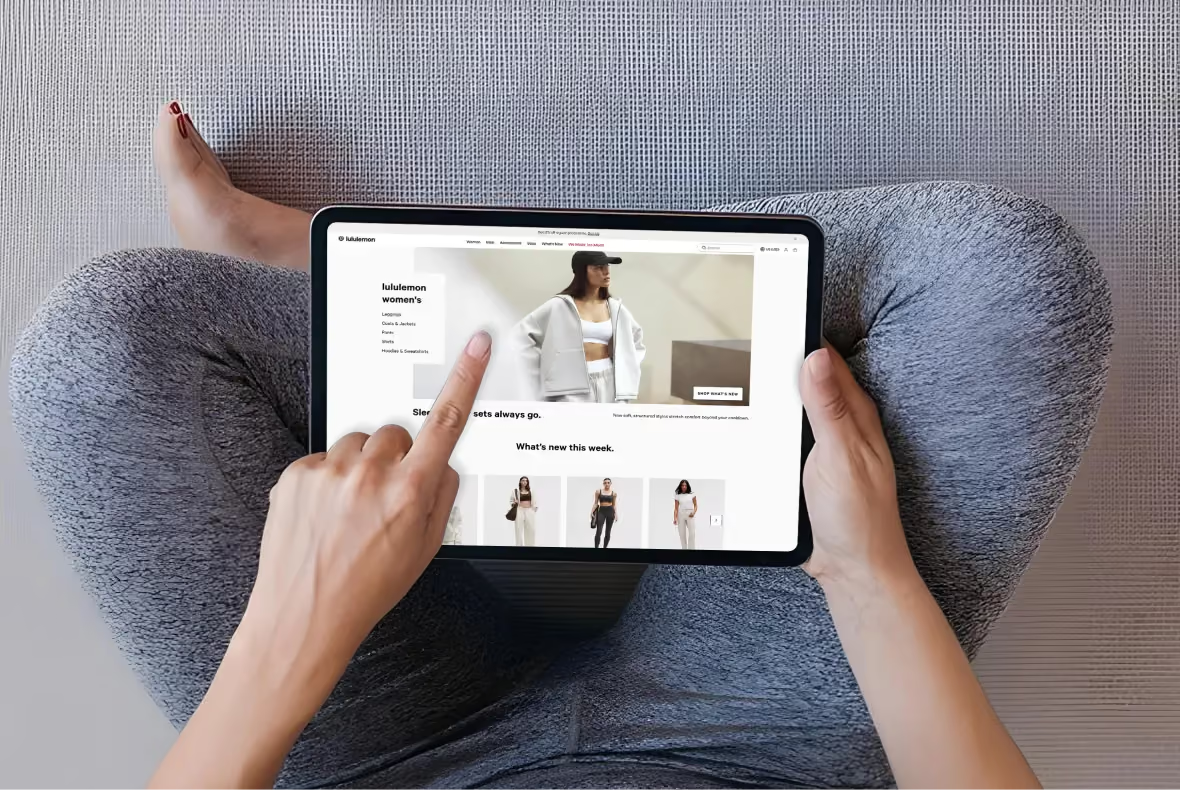
- Navigation as Editorial Curation: Category navigation in lifestyle brand stores often uses lifestyle-language labels rather than product-type labels. Lululemon's navigation uses activity labels ("Run," "Train," "Yoga") rather than product types ("Shorts," "Tights," "Tops"). The navigation reinforces how the customer thinks about their life, not how the warehouse thinks about inventory.
- Brand Positioning Above The Fold: A single phrase or sentence communicating the brand's philosophy, visible in the hero section before scrolling. Patagonia's "We're in business to save our home planet." Aesop's quiet emphasis on ritual and thoughtfulness. These are not taglines. They are world declarations.
- Content and Product Interleaved: Editorial content (photography, story excerpts, community features) appears alongside product links throughout the homepage, not separated into a "Shop" section and a "Journal" section. The shopping experience and the brand world experience are the same experience.
What the Homepage Must Establish in 3 Seconds
Every visitor to a lifestyle brand ecommerce store answers three implicit questions within 3 seconds of arriving:
- Is this brand for someone like me?
- Does this brand represent something I care about?
- Is this worth exploring further?
A homepage focused on products, prices, and promotions signals a product brand. One built around visual storytelling, brand voice, and community signals a lifestyle brand.
Aesop leads with editorial imagery, literary references, and a distinctive design language, so visitors decide whether the brand fits their identity before viewing products.
Gymshark achieves the same goal through athlete imagery, social proof, and community-driven content, positioning itself as a brand for people who train seriously rather than simply a seller of fitness apparel.
Suplex's global aesthetic audit evaluates whether a lifestyle brand's ecommerce store is communicating its world or just its catalogue.
Idea 2: Design Product Pages as Identity Confirmation, Not Product Information Pages
The lifestyle brand product page has a different primary job from a standard ecommerce product page. Both questions must be answered. The identity question must come first.
The Lifestyle Brand Product Page Architecture
A standard product page answers: "What is this product, what does it cost, and should I trust this brand enough to buy it?"
A lifestyle brand product page answers: "Is this product consistent with the lifestyle I want to live, does it reflect what this brand stands for, and does buying it confirm who I am?"
Lifestyle Photography: Prioritise real-world, in-context imagery over isolated product shots. Show fitness products during training, home products in lived-in spaces, and wellness products as part of daily routines to help customers imagine the lifestyle.
Brand-led Product Copy: Write descriptions in the brand's voice, using storytelling instead of only specifications. Highlight values, craftsmanship, rituals, or product origins to reinforce the lifestyle and identity the brand represents.
Contextual Cross-Selling: Recommend products as complete looks, routines, or kits rather than standalone add-ons. This reinforces the brand's lifestyle while naturally increasing average order value.
Community Integration: Feature authentic UGC that showcases real customers using the product. More than social proof, it helps shoppers see themselves as part of the brand's community and lifestyle.
Mission-Driven Storytelling: Weave sustainability, ethical sourcing, or craftsmanship into the product story rather than relying on certification badges. This reinforces the brand's values and strengthens the emotional connection with customers.
Idea 3: Content as Commerce: The Editorial Layer That Drives Repeat Visits
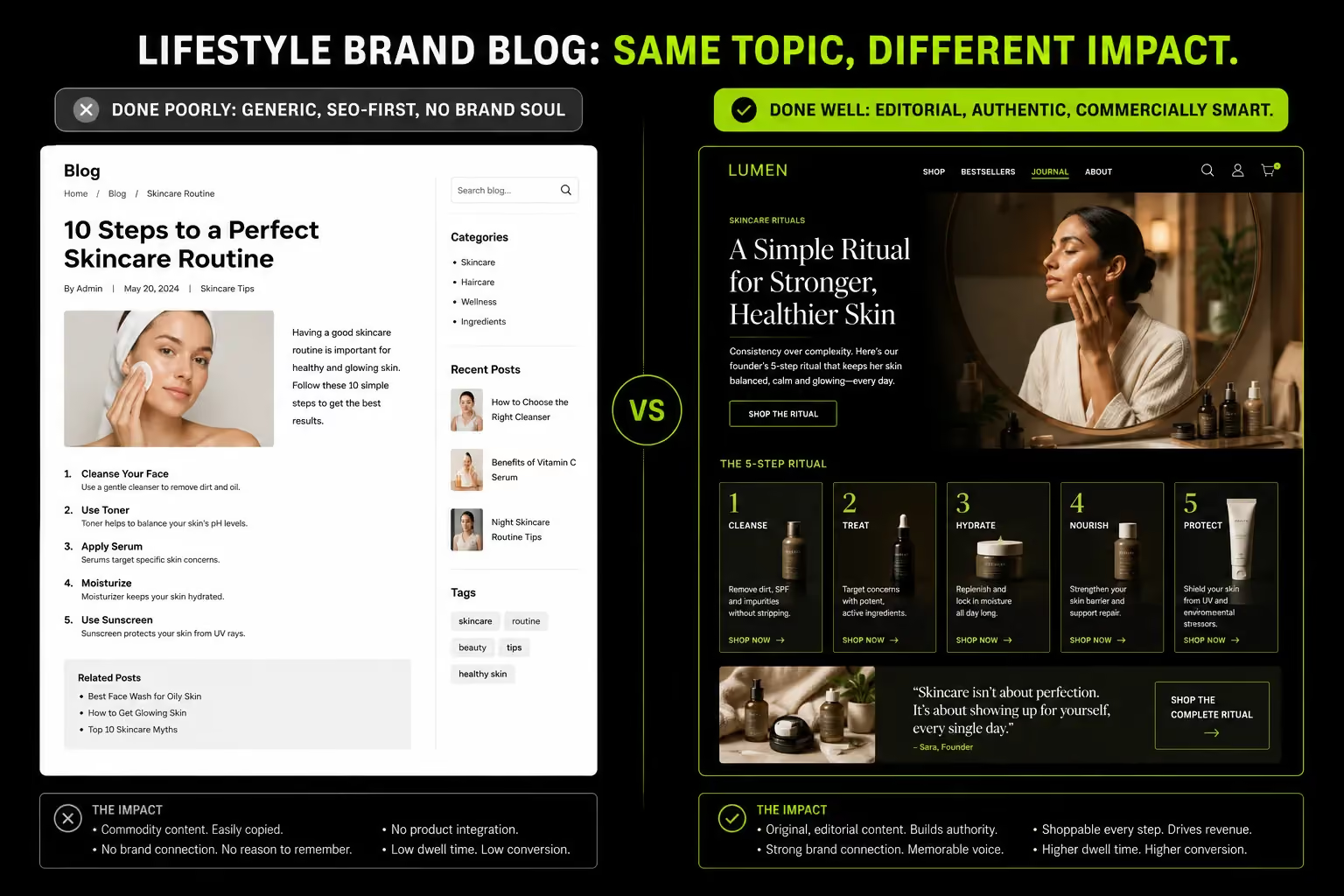
For lifestyle brands, content produces direct commercial returns not only through SEO but through brand world reinforcement that brings customers back unprompted and increases LTV visit by visit.
The Lifestyle Brand Content Architecture
The most valuable content for a lifestyle brand extends beyond products. It helps customers pursue the lifestyle the brand represents, building trust and long-term loyalty.
Gymshark creates workout plans and training content that support customers' fitness journeys, while Patagonia publishes environmental stories that reinforce its mission.
In both cases, content keeps the brand relevant long before the next purchase.
Content Formats That Work for Lifestyle Brands on Shopify
Brand Journal: Create an editorial hub with stories, guides, photography, and community features. Using names like Journal, Stories, or Field Notes positions it as a publication, encouraging repeat visits and stronger customer lifetime value beyond purchase-driven traffic.
Educational Content: Create guides, tutorials, and expert advice that help customers live the lifestyle your brand represents. Whether it's fitness plans, recipes, or styling tips, this content builds trust and strengthens community beyond the purchase.
Behind-the-Brand Content: Share founder stories, production processes, design philosophy and supplier relationships to highlight the values behind the brand. This builds authenticity and helps D2C brands stand out beyond their products.
Shoppable Editorial: Integrate products naturally within editorial content, such as linking featured items in routines, recipes, or fitness guides. This keeps shopping contextual and enhances the content experience rather than interrupting it.
Suplex's D2C data analytics service tracks editorial content performance by LTV and return visit rate, not just page views.
Idea 4: Community Infrastructure as a Website Feature
Community is the primary differentiator of lifestyle brands from product brands, and it belongs in the website architecture, not only on social media.
Why Community Belongs on the Website, Not Just on Social
Social platforms help brands reach audiences, but they are rented channels controlled by changing algorithms.
An on-site community gives brands ownership of the customer experience, first-party data, and direct communication.
Features like customer galleries, UGC submissions, member programmes, and event registrations turn the website into a community hub rather than just a store.
By integrating community with ecommerce, brands build stronger loyalty, increase repeat engagement, and reduce reliance on social platforms.
On-Site Community Features for Lifestyle Brands
Customer Gallery: Showcase customer-submitted photos directly on your website instead of relying on social feeds. This creates an owned brand experience while combining authentic community engagement with powerful social proof.
Community-First Loyalty: Design loyalty programmes as memberships rather than points systems. Reward members with exclusive content, early access, events, and other experiences that deepen belonging and encourage long-term loyalty.
Community Events: Integrate workshops, meetups, classes, or ambassador programmes into your website with event calendars and registration. These experiences strengthen the community, encourage repeat purchases, and position the website as a hub for the brand, not just a store.
Members Only Content: Offer exclusive editorial content, product previews, founder updates, or early access to collections for registered members. This adds value to membership and encourages repeat visits beyond shopping.
Idea 5: Visual Storytelling Architecture: Photography, Video, and Visual Identity
For lifestyle brands, the visual language of the ecommerce experience is the primary brand communication mechanism.
The question is not what to photograph but what visual school the brand belongs to and whether the ecommerce experience reflects it consistently.
The Two Schools of Lifestyle Brand Visual Design
Editorial Restraint:
Use a refined visual language with generous white space, restrained colours, large-format photography, and minimal promotional messaging. This creates a premium brand experience that communicates quality and identity before shoppers even view a product.
Community Energy:
Use authentic UGC, diverse models, dynamic imagery, and bold typography to highlight an active, inclusive community. This visual style makes customers feel they belong, rather than simply admire the brand.
The right visual direction depends on your audience, price positioning, and brand identity. Whether you choose editorial restraint or community energy, consistency across the entire ecommerce experience is essential.
Video as Brand World Communication
Use video to communicate the brand's values, community and lifestyle, not just promote products. Behind-the-scenes stories, customer experiences, and documentary-style content create deeper emotional connections and encourage repeat visits.
For Shopify stores, optimise performance by using compressed WebM videos, keeping autoplay loops under 10 seconds, and lazy-loading videos below the fold. Brand storytelling should never come at the expense of page speed or conversions.
Suplex's performance optimisation service covers the technical implementation of video without page speed cost.
Idea 6: Omnichannel Experience Architecture for Lifestyle Brands
Lifestyle brands are intrinsically omnichannel. Their brand world exists across social events, physical retail, and digital.
The website is one node in that architecture but it is the owned node, the identity headquarters, and the transaction hub.
The Omnichannel Commercial Case
Omnichannel customers spend 16% more per order, purchase more frequently, and are retained at much higher rates than single-channel shoppers.
For lifestyle brands, the impact is even greater because customers engage across social media, content, events, email, and ecommerce before making repeat purchases.
The website should support every stage of this journey, serving as the central hub that connects all brand touchpoints rather than functioning as a standalone online store.
The Four Omnichannel Integration Ideas for Lifestyle Brand Websites
Social-to-Site Continuity:
Ensure landing pages match the content customers clicked on. Extending the same visuals, messaging and products from social posts creates a seamless journey and can be achieved on Shopify using UTM-based dynamic landing pages.
Community Event Integration: Connect events with your ecommerce experience through registrations, attendee-exclusive product access, event galleries, and follow-up emails. This extends engagement beyond the event and strengthens long-term community loyalty.
Physical Retail as Brand World Immersion:
For lifestyle brands with physical retail presence, the store is a three-dimensional brand world experience.
Aesop's stores are individually designed to reflect their specific neighbourhood. The website's "Store Finder" does not just show a map; it communicates the brand's physical world investment.
Post Purchase Onboarding:
Treat post-purchase emails or WhatsApp messages as the start of the customer relationship, not just order updates. Welcome customers into the brand community with relevant content, exclusive benefits and invitations to engage, encouraging long-term loyalty and repeat purchases.
See Suplex's international ecommerce setup service for the technical architecture of WhatsApp and multi-channel post-purchase flows in Gulf markets.
Idea 7: Mission and Values as Ecommerce Experience Design
For mission-driven lifestyle brands, values communication is not a separate brand exercise.
It is part of the ecommerce experience architecture and the difference between doing it structurally and doing it cosmetically is the difference between building loyalty and eroding it.
The Mission-as-Experience Model
Patagonia shows how a mission can become part of the ecommerce experience rather than a marketing message. Features like product repair, resale, supply chain transparency, and environmental storytelling are integrated directly into the shopping journey.
The key difference is that these mission-driven features provide real customer value. By embedding sustainability into the buying experience, Patagonia strengthens trust, increases loyalty, encourages repeat purchases and reduces customer acquisition costs.
Avoiding Mission Theatre
Mission claims must be backed by real products, programmes, or verifiable practices. Without tangible proof, sustainability and purpose messaging risks becoming "mission theatre" and undermining customer trust.
For UAE and Gulf markets, trust depends on evidence. Certifications, ethical sourcing, supply chain transparency, and measurable social impact should be integrated into the ecommerce experience rather than presented as unsupported marketing claims.
Idea 8: Personalisation as Lifestyle Curation
Personalisation in lifestyle brand ecommerce is not product recommendation based on purchase history.
It is lifestyle curation based on identity signals and the commercial payoff is brand world deepening, not just next-product discovery.
The Difference Between Product Personalisation and Lifestyle Curation
Traditional ecommerce personalisation recommends similar products based on browsing behaviour.
Lifestyle brands go further by combining products with relevant content, events, and community experiences that match the customer's interests and aspirations.
This approach strengthens brand identity, builds loyalty, and encourages repeat purchases by making customers feel understood—not just targeted.
Practical Personalisation Ideas for Lifestyle Brand Shopify Stores
Lifestyle Quiz: Use a short 3–5 question quiz to understand each customer's interests, goals, or experience level. The results personalise product recommendations, content and the homepage, creating a more relevant experience on every visit.
Returning Visitor Recognition: Welcome returning customers with personalised products, content, or member benefits based on their previous interactions, creating a continuous experience instead of treating every visit as a first visit.
Content Personalisation: Recommend editorial content based on previous purchases, such as wellness guides or interior design tips. This makes the experience feel helpful and relevant, reinforcing the customer's connection with the brand.
Language Preference Persistence: For bilingual UAE and Gulf stores, remember customers' Arabic or English language preference across visits. Maintaining their chosen language creates a more seamless, personalised experience and strengthens brand trust.
The Lifestyle Brand Ecommerce Experience Framework
Every idea in this guide can be organised into one original model that structures what the ecommerce experience must do and when.
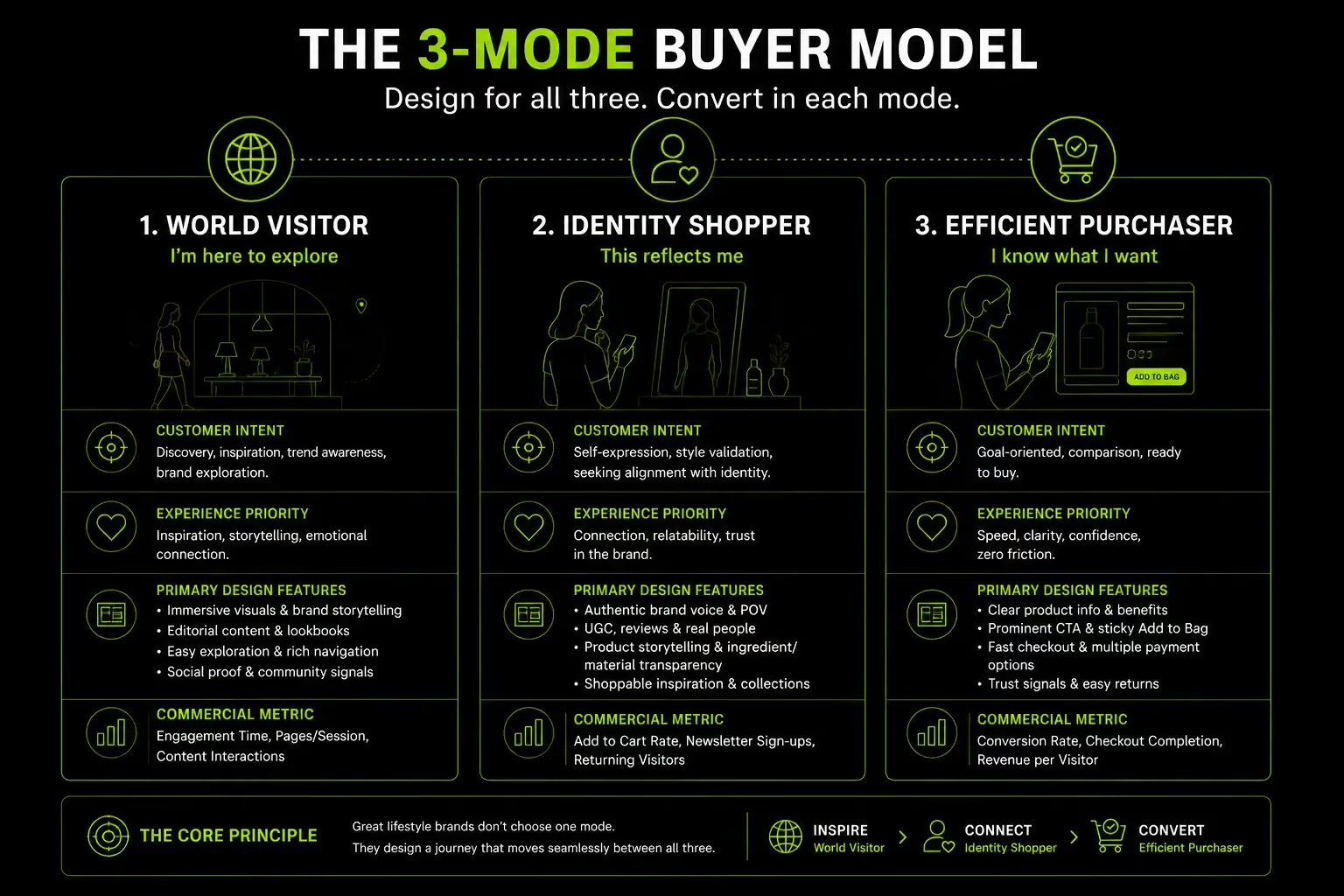
The 3-Mode Buyer Model for Lifestyle Brands
Lifestyle brand customers visit in three distinct modes. The ecommerce experience must serve all three. Most lifestyle brand stores design for only one.
Mode 1 - World Visitor: These visitors are exploring the brand rather than shopping. Engage them with editorial content, videos, and community features while encouraging an email or WhatsApp signup to support future engagement and conversion.
Mode 2 - Identity Shopper: These customers buy products that reflect their values and aspirations. Use lifestyle imagery, brand-led storytelling, and community content to reinforce identity while making purchasing feel confident and effortless.
Mode 3: Efficient Purchaser: These customers know what they want. Prioritise fast product discovery, a frictionless checkout, and relevant post-purchase recommendations without distracting them with unnecessary brand content.
Most lifestyle ecommerce stores are designed for Identity Shoppers but overlook World Visitors and Efficient Purchasers.
World Visitors need content and community to build long-term engagement, while Efficient Purchasers need speed and convenience.
A successful lifestyle brand adapts the experience to each customer mode rather than relying on a single design approach.
UAE and Gulf Lifestyle Brand Ecommerce What This Market Requires
Every competing piece on lifestyle brand ecommerce ignores the Gulf entirely. This section is written specifically for it.
The Gulf Lifestyle Brand Opportunity
The UAE and KSA have young, mobile-first consumers who discover and buy premium lifestyle products through creator-led content. This creates strong opportunities for brands across fitness, wellness, home, and fashion.
The market combines global lifestyle brands with a growing number of regional brands that are building authentic, Gulf-focused identities and communities.
The Daily Bean (coffee and lifestyle), Loomsona (modest fashion), Kimi (home and lifestyle), and Coasters are all building in this space brands whose identity is rooted in Gulf lifestyle aesthetics and consumer behaviour rather than imported from Western lifestyle brand templates.
Gulf-Specific Ecommerce Experience Requirements for Lifestyle Brands
Arabic-First Design:
Treat Arabic as a native design language, not just a translation. Adapt typography, right-to-left layouts, imagery, and cultural cues to create an experience that feels authentic and strengthens connections with Arabic-speaking customers.
Local Cultural Storytelling:
Build editorial content and brand experiences around authentic Gulf lifestyles, traditions and seasonal rituals rather than adapting Western campaigns. Reflecting local culture creates stronger brand relevance and a deeper sense of belonging for regional customers.
The Daily Bean is a direct example of this done right, a brand whose entire editorial world is built around Gulf café culture, not imported coffee brand aesthetics.
WhatsApp Community:
In the Gulf, WhatsApp is more than a support channel—it is a powerful community platform. Use it to share exclusive content, early product launches, and direct brand updates, building stronger customer relationships beyond social media.
Snapchat Landing Pages:
For Gulf lifestyle brands, optimise Snapchat traffic with fast-loading, mobile-first landing pages that match the creative, reinforce the lifestyle message, and provide a direct path to the featured product or collection.
How We Build Lifestyle Brand Ecommerce Experiences at Suplex
At Suplex, we design lifestyle ecommerce stores that balance three goals: building the brand world, fostering community, and driving conversions.
Success comes from treating these as one connected experience rather than prioritising one at the expense of the others.
Our process begins by identifying which buyer mode World Visitor, Identity Shopper, or Efficient Purchaser best represents your audience.
We then tailor the experience to match that behaviour while supporting growth across every stage of the customer journey.
For Gulf brands, we build Arabic-first ecommerce experiences with native RTL layouts, typography and culturally relevant design not simply translated English stores.
The result is an experience that feels authentic to regional audiences and strengthens long-term brand loyalty.
If your ecommerce store showcases products but fails to fully express your brand world, our global aesthetic audit identifies the gaps and provides a roadmap to create a more engaging, higher-converting experience.
Suplex's global aesthetic audit starts from the brand experience, not the product catalogue.
Frequently Asked Questions
What is a lifestyle brand in ecommerce?
A lifestyle brand sells identity as much as products. Its ecommerce experience should communicate the brand's values, community, and lifestyle before focusing on the product catalogue. Brands like Gymshark, Patagonia, Lululemon, and Aesop succeed by making customers feel part of a world, not just a transaction.
What is considered a lifestyle brand ecommerce experience?
A lifestyle brand ecommerce experience combines shopping with brand storytelling, community, and post-purchase engagement. Every touchpoint from the homepage and product pages to editorial content and onboarding reinforces the brand's identity while supporting a seamless buying experience.
What are examples of lifestyle brands with great ecommerce experiences?
Gymshark builds around community and athlete-led content. Patagonia integrates sustainability through resale, transparency, and environmental storytelling. Glossier puts customer-generated content at the centre of its product pages, while Aesop uses editorial storytelling and minimalist design to communicate brand values. Each demonstrates a distinct but consistent approach to lifestyle brand ecommerce.
What are the four pillars of a lifestyle brand?
A lifestyle brand is built on four core pillars: identity, helping customers express who they are; community, creating a sense of belonging; mission, standing for values beyond the product; and ritual, making the product part of a meaningful daily practice.
How do you build a lifestyle brand online?
Start with the brand world, not the product catalogue. Define the lifestyle your brand represents, then reflect it through editorial content, community features, and identity-led product pages. Reinforce belonging with UGC, loyalty programmes, events, and a post-purchase experience that welcomes customers into the brand community—not just confirms their order.
Hi, I’m Rishabh Jain
I believe great design has the power to shape perception, build trust, and move businesses forward. That belief is what led me to found Suplex Design Studio, a global branding and packaging studio working with FMCG and D2C brands across markets.I started suplex at 25 with a clear intent, to create design that is strategic, thoughtful, and commercially meaningful. By 28, the studio had scaled globally, guided by a strong foundation in Integrated Design that I developed during my academic journey in London, where I was honoured with the Dean’s Award.
Over the years, I’ve had the opportunity to work with 100+ brands, from Fortune 500 organizations to family-run businesses, helping them build packaging and brand systems that create recall, relevance, and long-term value.
Suplex’s work has been recognized internationally, including the Manifest Award (2024), the Clutch Global Award (2025), and features on platforms such as Packaging of the World, The Dieline, and the World Brand Design Society.
None of this would be possible without the people behind the work. I’m deeply grateful to the suplex team, whose commitment, creativity, and attention to detail turn ideas into meaningful brand experiences every day.
At the heart of my work is a simple philosophy, design should be intentional, honest, and built to last, and that continues to guide everything we create at suplex.


















Let’s Make It Happen
E-Commerce Success Stories
%201.avif)





.avif)
.avif)
Build Your D2C Business The Right Way
Build It With Suplex.


