Is Shopify Good for Beauty Brands? The Strategic Verdict for D2C and FMCG Decision Makers
.avif)
Is Shopify Good for Beauty Brands? The Strategic Verdict for D2C and FMCG Decision Makers
Is Shopify good for beauty brands? The honest answer is yes, for most direct-to-consumer skincare, makeup and personal care businesses, but the fit depends on three things.
How complex your shade and size matrix is, how much regulatory documentation your products carry and how far along your subscription or replenishment model already is.
This article skips the inspiration gallery and gives you a working framework instead.
Why "Is Shopify Good For Beauty Brands" Isn't A Yes/No Question
Most answers focus on its attractive themes, large app store and ease of use. Those benefits are real, but they do not tell you whether Shopify is the right fit for your beauty business.
The better question is: Can Shopify support your products, compliance requirements and growth model without creating unnecessary complexity?
Three factors matter most.
Product and Variant Complexity: A skincare brand with 10 straightforward SKUs has very different requirements from a cosmetics brand selling 100+ foundation shades across multiple finishes and sizes.
Shopify can support both, but complex catalogues may require custom development, metafields, advanced filtering, or carefully selected apps.
Regulatory and Payment Requirements: Beauty ecommerce can involve ingredient restrictions, product claims, labeling requirements and payment limitations.
Products positioned around therapeutic claims, CBD-related ingredients, supplements, or other restricted categories may require additional checks. Before choosing Shopify, brands should verify payment eligibility and applicable regulations in their target markets.
Growth Stage: A brand generating $30,000 per month may need a simple, efficient Shopify setup. At $300,000 or more, requirements can expand to subscriptions, loyalty, personalization, international selling, inventory integrations and ERP or fulfillment systems.
Shopify can scale, but adding apps without a clear architecture can increase costs and maintenance.
So, is Shopify good for beauty brands? For many, absolutely. But the right answer depends on catalogue complexity, compliance, business model and growth plans.
That is the question this guide explores, rather than simply showcasing a list of “top Shopify beauty stores.”
What Beauty Brands Specifically Need From An Ecommerce Platform
Beauty and personal care have a few catalogue and operational patterns that generic ecommerce advice does not account for. Knowing which of these apply to your business is the first real step in the decision.
Shade, Size and Variant Complexity
A single foundation SKU can carry 20 to 40 shades. Add a size option and a finish option and you are past Shopify's standard limit of 100 variants and 3 options per product on ordinary plans.
Shopify has been rolling out an extended variants capability, up to roughly 2,000 variants through newer APIs, but this is not yet the default experience for every store and often needs a developer or app to implement properly, so confirm current availability before you plan around it.
Batch, Lot and Ingredient Compliance Tracking
Skincare and cosmetics brands often need to track batch numbers, expiry dates and full ingredient lists per SKU, sometimes per market. Shopify does not do this natively.
Brands handle it through metafields, a compliance-focused app, or a connected PIM (product information management) system once the catalogue grows past a handful of products.
Subscription And Replenishment Models
Skincare and haircare lend themselves to repeat purchases. Shopify's native subscription tooling covers the basics, but most beauty brands running a real replenishment program use Recharge, Skio, or a similar app for flexible billing cycles, skip/pause logic and bundling.
Visual Merchandising, Zoom and Swatch-Heavy Product Pages
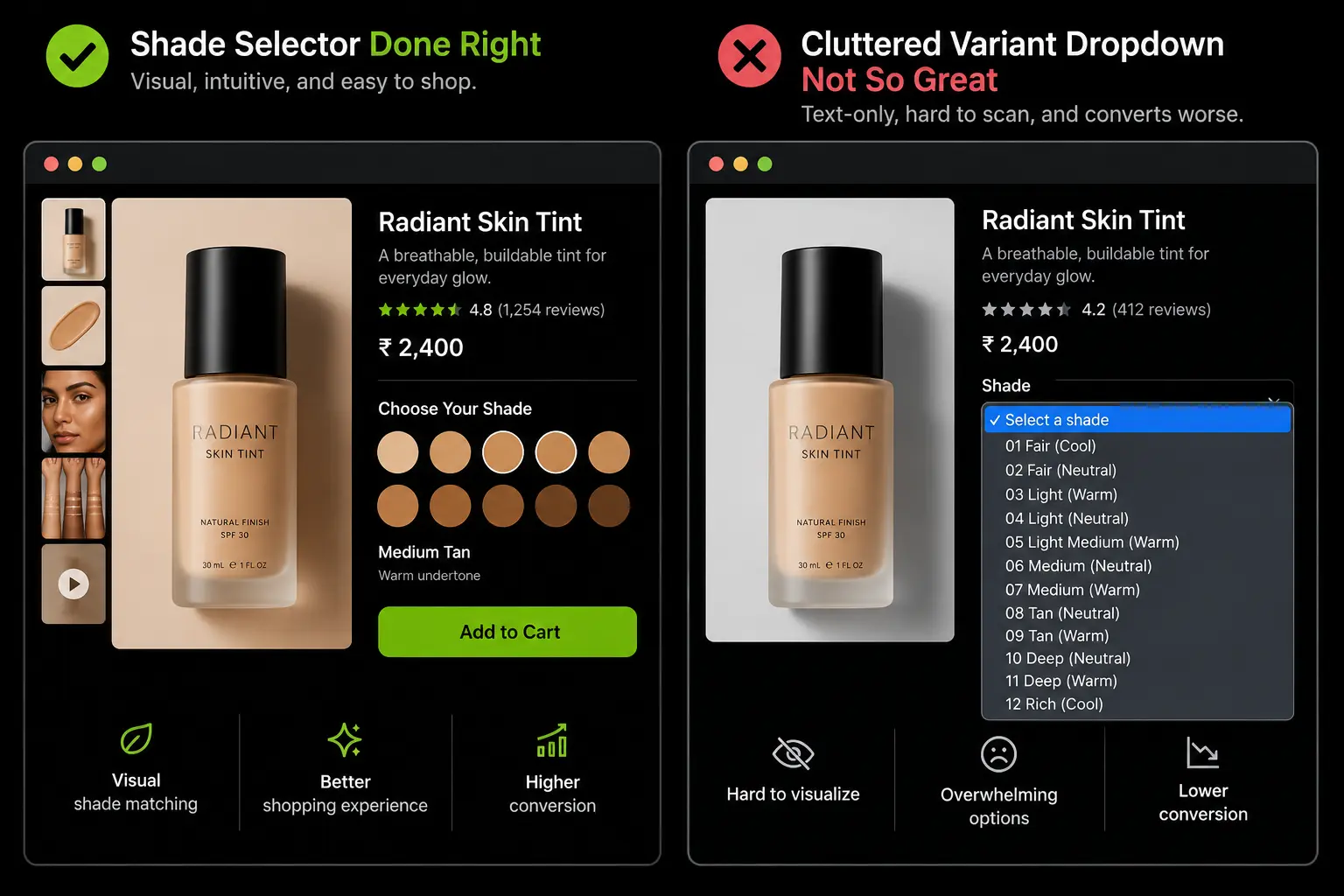
Beauty buyers rely on close-up product photography, colour swatches and sometimes before/after imagery to make a decision they cannot physically test online.
Shopify themes handle this reasonably well out of the box and the app ecosystem adds shade-matching quizzes and AR try-on on top.
Sampling, Gift-With-Purchase and Bundle Mechanics
Free samples, gift-with-purchase thresholds and curated bundles are core acquisition tactics in beauty. These are achievable on Shopify but usually require an app for anything beyond a simple free-gift-at-checkout offer.
High-Risk Payment Processing For Cosmetics And Wellness Claims
This is the part most competing content skips entirely. Payment processors, including Shopify Payments and PayPal, categorise merchants by risk and certain cosmetic and wellness sub-categories, such as products making health claims, CBD-adjacent formulations, or skin-lightening agents, can get flagged, held for review, or restricted outright.
In practice this shows up as a payout hold during underwriting review, a request for additional product documentation, or in some cases an outright rejection of the merchant account, any of which can stall a launch by days or weeks if it is discovered after the store is already built.
If your product line touches any of these categories, confirm processor eligibility before you commit to a platform and a specific gateway and keep a backup gateway option in your project plan rather than assuming your first choice will clear review.
Retail POS And Marketplace Sync
If you also sell through Sephora, Amazon, Noon, or TikTok Shop, your Shopify store needs to sync inventory and pricing with those channels.
This is achievable through Shopify's own channel integrations and third-party connectors, but it adds a layer of operational complexity worth planning for early.
Where Shopify Genuinely Excels for Beauty Brands
Shopify’s biggest advantage for beauty brands is not simply its attractive storefronts. It is the combination of speed, flexibility and a mature ecommerce ecosystem that lets brands launch quickly and add functionality as they grow.
Real Beauty Brands Show What’s Possible
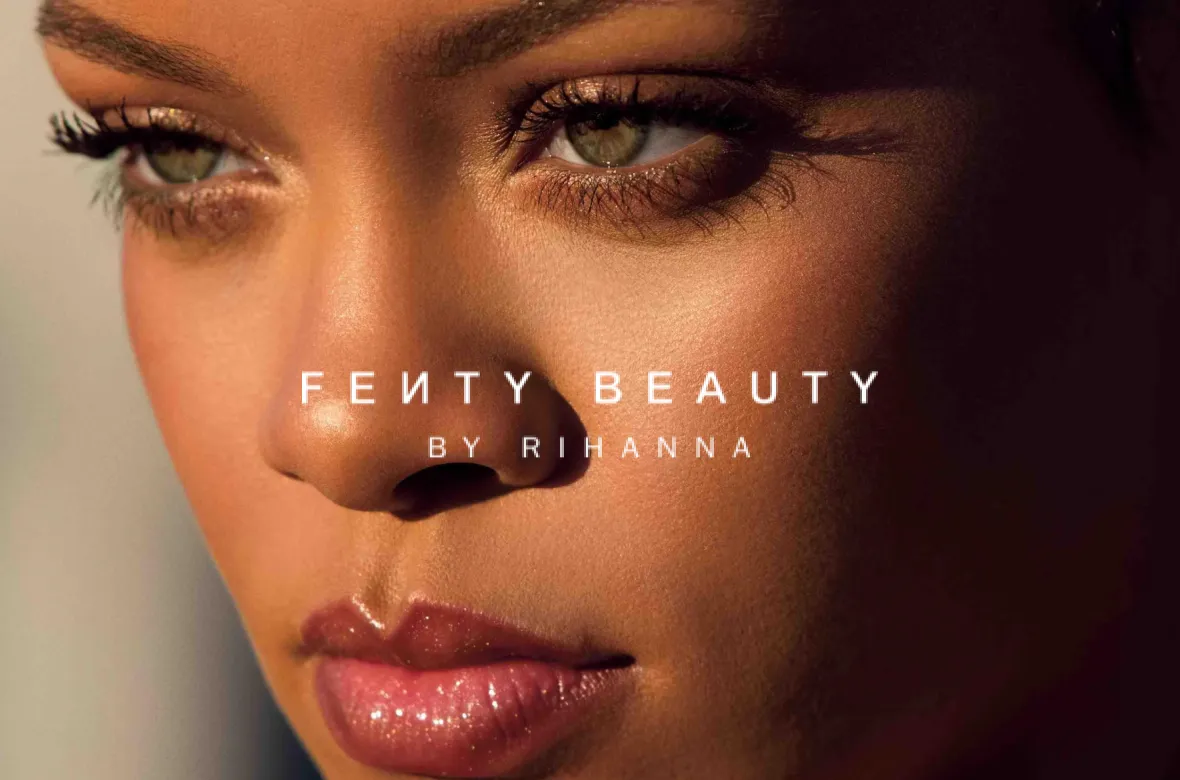
Brands such as NUXE, Fenty Beauty, Rare Beauty and Glossier demonstrate how Shopify can support different beauty business models, from personalized skincare and shade-heavy cosmetics to omnichannel retail.
The important takeaway is to provide a flexible foundation for personalization, subscriptions, customer support, retail POS, and social commerce without requiring every feature to be built from scratch.
A Mature App Ecosystem
Beauty brands can add shade finders, quizzes, subscriptions, loyalty programs, reviews, UGC, bundles, and virtual try-on through Shopify’s ecosystem. This reduces development requirements and makes it easier to test new customer experiences.
Faster Launches, Lower Development Overhead
A well-planned Shopify store can typically launch in weeks rather than the months often required for a fully custom ecommerce build.
That speed matters when launching a new product, entering a market, or testing a D2C business model.
Flexible Design Without Starting From Zero
Shopify’s Online Store 2.0 themes, custom sections, metafields, and Liquid give design teams considerable control over the storefront. Marketing teams can also manage much of the content themselves, reducing reliance on developers for everyday merchandising.
But for beauty brands, design is more than choosing a theme. Product presentation, brand storytelling, conversion-focused UX, and the overall customer journey need to work together.
Our approach to D2C brand building for ecommerce covers how these elements can be brought together to create a stronger digital storefront.
For brands looking for a balance between premium design, operational flexibility, and speed to market, Shopify is difficult to overlook.
Where Shopify Falls Short for Beauty Brands
Shopify works well for many beauty businesses, but certain requirements can make the platform more complicated and expensive to manage.
Complex Shade and Variant Matrices
Makeup brands can hit Shopify’s standard variant limits quickly. A foundation with 30 shades, two finishes, and two sizes creates 120 combinations.
Brands can restructure products, use custom product options, or explore Shopify’s newer extended-variant capabilities where available. Each approach has trade-offs in catalogue management, development time, or cost. The best solution depends on the size and frequency of your product range.
Limited Native Subscription Features
Shopify supports basic recurring purchases, which works well for straightforward “subscribe and save” models.
Beauty brands that need prepaid plans, flexible skip and pause options, curated boxes, or more advanced subscription logic often turn to specialist platforms such as Recharge or Skio. That adds another software cost and another system to maintain.
Payment Restrictions for Certain Products
Some beauty and wellness products receive additional scrutiny from payment processors, particularly products involving CBD, ingestible supplements, or therapeutic and drug-like claims.
Payment eligibility should be confirmed before development begins. Finding out after launch can lead to approval delays, payout holds, or the need to switch payment providers.
App Costs and Storefront Performance
Shopify’s app ecosystem is a major advantage, though relying on too many apps can create problems. Each app can add recurring costs, scripts, integrations, and maintenance requirements. Reviews, loyalty, subscriptions, quizzes, customer support and personalization can quickly turn into a complicated technology stack.
For a growing beauty brand, regular app audits are essential. Removing overlapping tools and moving high-impact functionality into custom development can improve performance, simplify maintenance, and keep the technology budget under control.
Shopify Versus Alternatives For Beauty Ecommerce
The right comparison depends on what is actually constraining your current setup, not a generic feature checklist.
Shopify Versus BigCommerce For Beauty
BigCommerce offers a higher native variant limit and stronger built-in B2B tools, which can matter for a beauty brand doing wholesale alongside D2C.
Its app ecosystem and theme selection are smaller than Shopify's, which usually means more custom development to match the same design quality.
Shopify Versus WooCommerce For Beauty
WooCommerce gives more control over hosting, data and customisation since it runs on WordPress, which suits a brand that already has WordPress content infrastructure.
It also means your team owns more of the maintenance burden that Shopify otherwise handles for you.
Shopify Versus Salesforce Commerce Cloud For Enterprise Beauty
Salesforce Commerce Cloud suits beauty brands operating at genuine enterprise scale, typically with multi-region, multi-brand operations and dedicated technical teams.
It is rarely the right starting point for a brand still establishing product-market fit.
Shopify Versus Headless Or Composable For AR And Content-Heavy Beauty Brands
A headless setup, where the storefront is decoupled from the commerce backend, gives more control over AR experiences, editorial content and page speed.
It also requires a larger development team and ongoing engineering investment that most pre-enterprise beauty brands do not yet need.
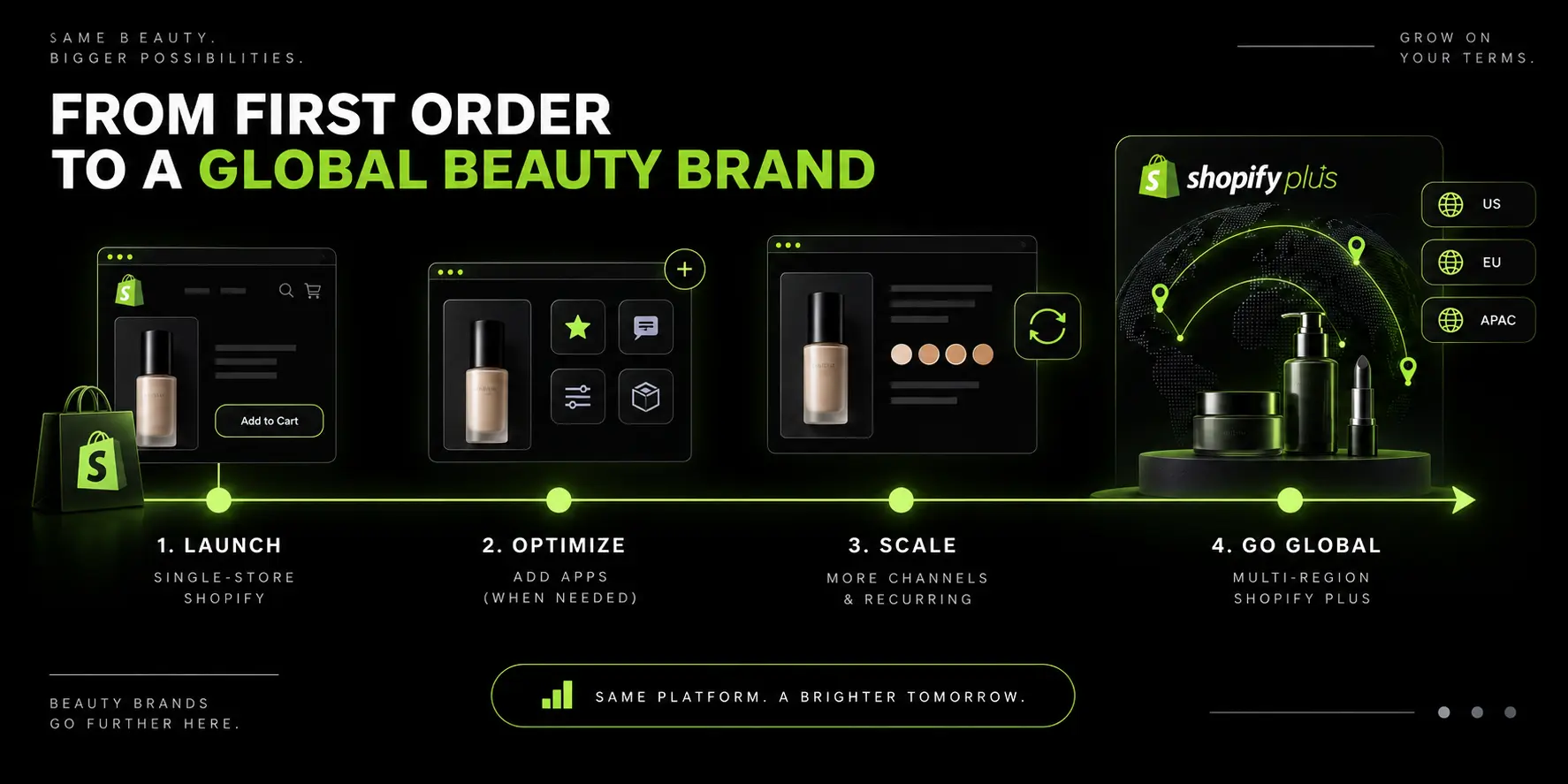
Shopify Plus: When a Growing Beauty Brand Should Upgrade
Shopify Plus becomes relevant when a beauty brand starts running into operational limits that standard Shopify plans cannot handle efficiently.
The decision usually comes down to volume, B2B requirements, international expansion, and the cost of workarounds.
Higher Order Volumes and Operational Complexity
There is no revenue figure that automatically means it is time for Plus. A better trigger is when transaction costs, app subscriptions, development work and platform limitations start affecting the economics of your store.
Plus also provides higher API limits, greater checkout flexibility, automation capabilities, and additional support, which can become valuable as order volumes increase and the technology stack becomes more complex.
Wholesale and B2B Sales
Beauty brands selling to salons, spas, distributors, or retail partners may benefit significantly from Shopify Plus.
Its B2B features support company accounts, custom pricing, quantity rules, payment terms, and dedicated purchasing experiences, reducing the need for a separate wholesale system in many cases.
Multi-Brand and International Expansion
Plus is also useful when a beauty business operates several brands or storefronts across different markets.
Managing multiple currencies, languages, catalogues, and regional operations becomes easier with the additional organization and expansion capabilities.
When Should You Upgrade?
The strongest reason to move to Plus is operational rather than simply hitting a revenue milestone. If your team is spending increasing amounts on apps, transaction fees, custom workarounds, and ongoing maintenance, it is worth modelling whether Plus would simplify the business and improve your total cost of ownership.
For a deeper look at the decision, our guide on choosing the right ecommerce development partner covers the technical and commercial factors to consider before making a major platform investment.
Special Considerations for Beauty Brands Selling in the UAE and GCC
The UAE and wider GCC offer strong opportunities for beauty brands, but regional regulations, payment preferences and language requirements need to be considered from the start. Shopify can support these requirements, provided the store is configured around the market.
GCC Requirements at a Glance
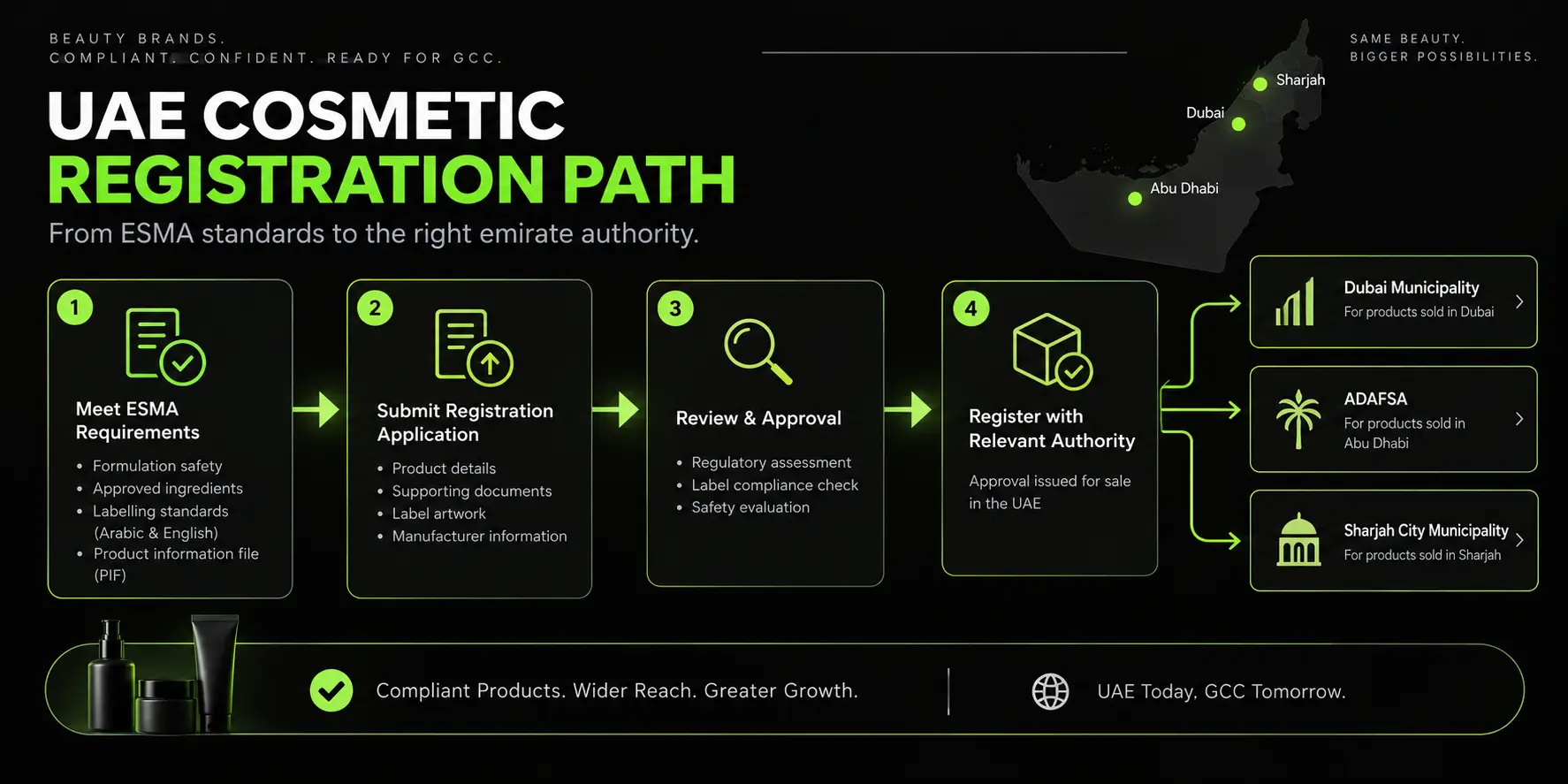
The GCC has a shared technical framework for cosmetics, but product registration and market-entry requirements remain country-specific. A product approved in one GCC market should not automatically be treated as approved across the region.
UAE Cosmetic Registration and Compliance
Before selling cosmetics in the UAE, brands need to meet the applicable product registration, safety, labeling, and documentation requirements. Dubai Municipality’s Montaji system is particularly relevant for consumer products such as cosmetics and personal care products sold in Dubai.
These regulatory steps sit outside Shopify, but they directly affect your product information, packaging, launch timeline, and market-entry process.
AED Pricing, VAT, and Regional Markets
UAE ecommerce stores need to account for AED pricing and the UAE’s 5% VAT. Brands expanding across the GCC also need to consider local currencies, taxes, duties, and market-specific payment methods.
Shopify Markets can help manage regional pricing and storefront configurations, while tax and compliance requirements still need to be configured correctly.
Arabic and RTL Storefronts
Arabic support requires more than translating product descriptions. Right-to-left layouts can affect navigation, product grids, buttons, filters, and other elements throughout the storefront.
Plan Arabic and RTL support during the design and development stage rather than treating it as a post-launch translation task.
Local Payment Methods and COD
Payment preferences vary across the GCC, with credit cards, digital wallets, buy now, pay later services, and cash on delivery all relevant depending on the market.
Shopify supports regional payment providers and third-party gateways, but availability varies by country and Shopify plan. Confirm gateway eligibility, fees, settlement times, and checkout experience before launch.
Social Commerce and WhatsApp
Beauty discovery across the GCC is heavily influenced by platforms such as Instagram, TikTok, and WhatsApp.
Connecting social channels with Shopify can shorten the path from product discovery to purchase, while WhatsApp can support consultations, shade selection, product recommendations, and customer service.
For a detailed overview at regional payment, localization and technical requirements, our guide to international ecommerce setup covers the key considerations for expanding a Shopify store into international markets.
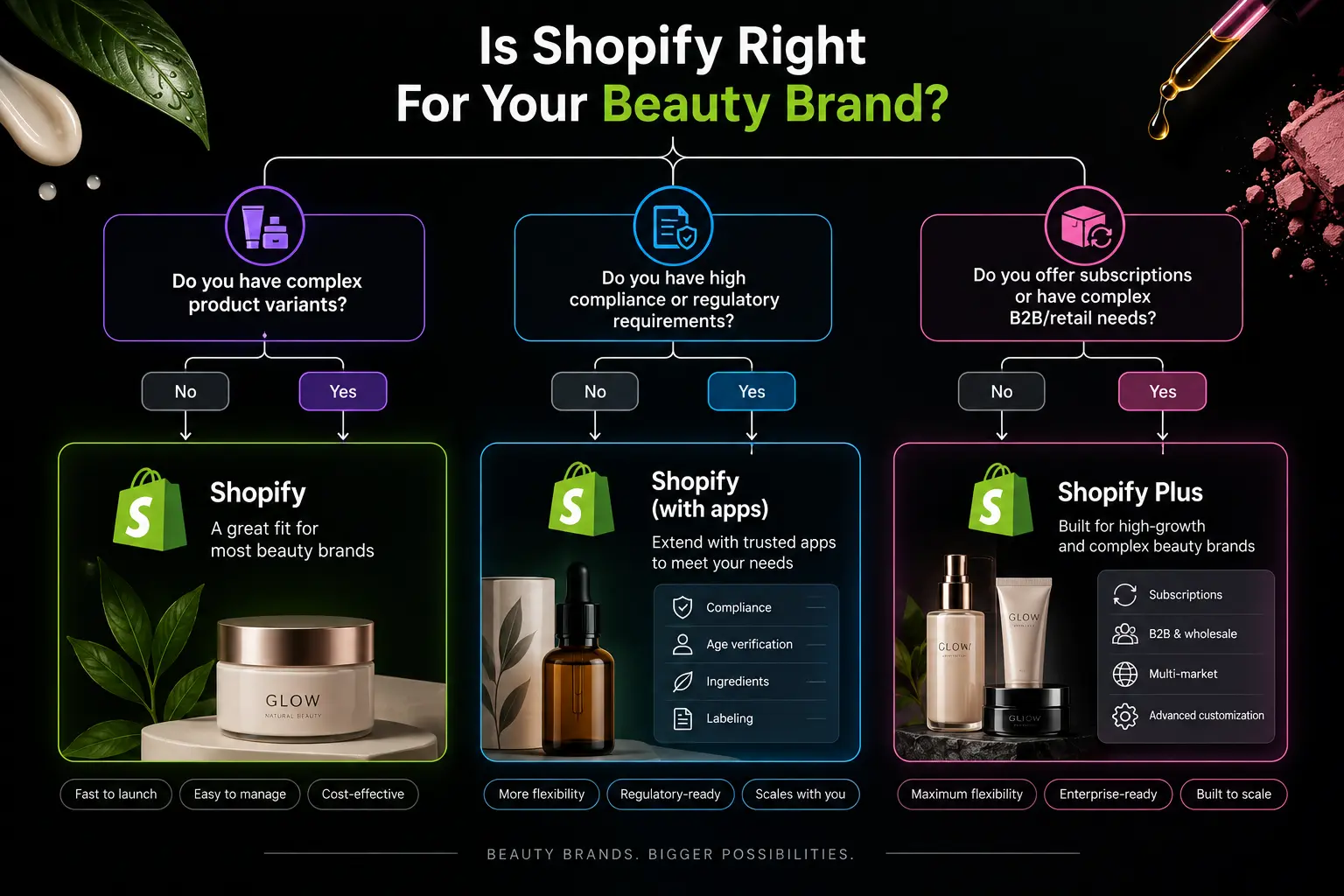
A Practical Decision Framework: Is Shopify Right For Your Beauty Brand?
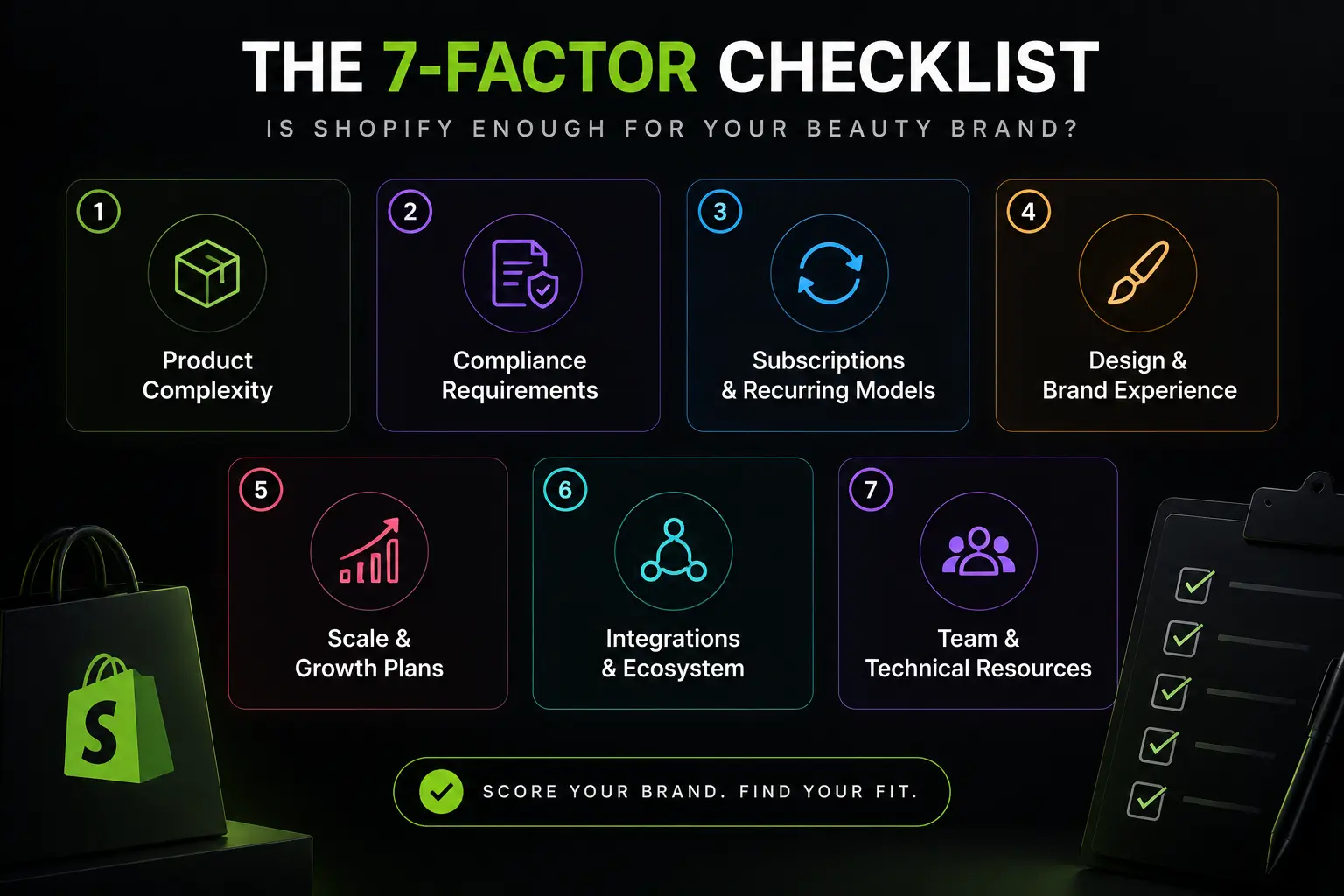
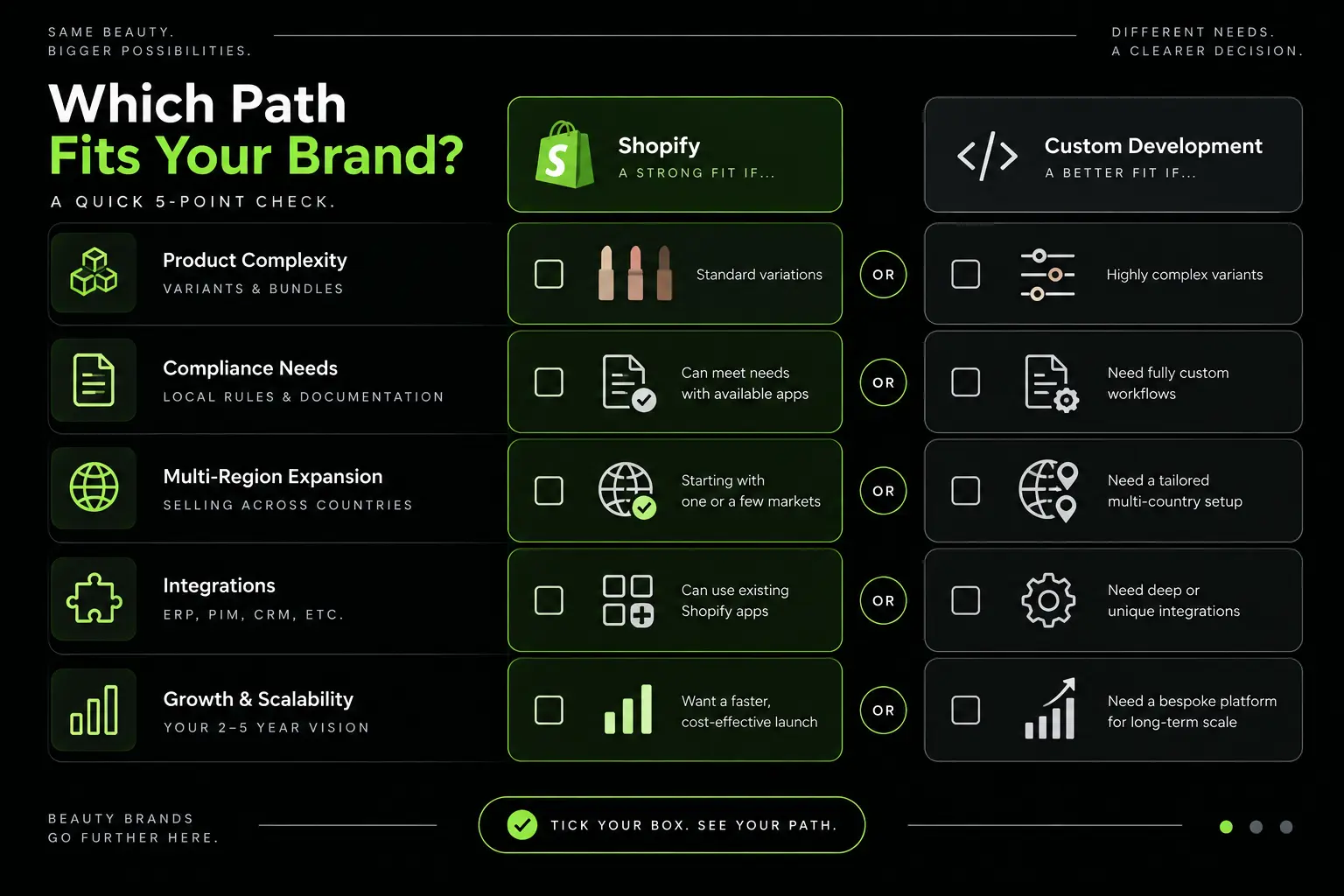
Score your brand honestly on each factor below before deciding.
Variant Complexity: Under 100 variants per product line: Shopify standard is fine. Regularly over 100: plan for an app, extended-variant APIs, or Plus.
Compliance Load: Simple, low-documentation products: minimal extra work. Heavy batch/ingredient/regulatory tracking: budget for metafields or a PIM integration.
Subscription Need: One-time purchase only: native Shopify tools are enough. Real replenishment program: plan for Recharge, Skio or similar from day one.
Growth Stage: Pre-enterprise, single brand, single region: standard Shopify usually fits. Multi-brand, multi-region, or wholesale: start evaluating Plus.
Budget: Lean launch budget: standard Shopify plus a small, focused app stack. Established brand with dedicated ecommerce ops: Plus or a hybrid/headless approach may pay for itself.
If most of your answers land on the first option in each pair, standard Shopify is a solid starting point. If two or more land on the second option, start pricing out Plus or an app-extended setup before you build, not after you launch and hit the wall.
How We Build Shopify Stores For Beauty Brands
Our approach at Suplex starts with an audit of the actual catalogue, compliance needs and growth plan, not a default recommendation to build on Shopify because it is what we know best.
For beauty and skincare brands specifically, that usually means working through shade and variant structure early, deciding where subscription logic needs to live and making sure product pages carry whatever compliance information a brand's specific market requires.
We work with beauty, personal care and other D2C brands across the UAE, the wider Gulf and international markets and we treat platform choice as a business decision first.
If a brand's catalogue and compliance needs point toward BigCommerce, WooCommerce, or a headless build instead, that is the conversation we have before any design work starts.
If you want a second opinion on whether Shopify fits your specific catalogue, Suplex offers a short ecommerce platform audit to work through it.
Frequently Asked Questions
Does Sephora use Shopify?
No. Sephora runs on a large-scale, custom-built enterprise platform suited to its global retail and marketplace operations. Its scale is well beyond what most D2C beauty brands need to plan around, so it is not a useful data point for a Shopify decision.
Do luxury beauty brands use Shopify?
Some do, particularly at the premium D2C stage rather than legacy luxury conglomerate scale. Fenty Beauty and Rare Beauty are examples of premium-positioned brands running on Shopify with a strong app-extended setup. Very large luxury groups more often use enterprise platforms like Salesforce Commerce Cloud.
What are the downsides of using Shopify for a beauty brand?
The main friction points are the 100-variant ceiling for shade-heavy catalogues, native subscription tooling that most brands outgrow quickly and payment processor scrutiny on certain cosmetic and wellness sub-categories. None of these are dealbreakers on their own, but they need to be planned for.
Can you sell cosmetics and skincare on Shopify without restrictions?
Mostly yes, but not unconditionally. Standard skincare and cosmetics sell without issue. Products making specific health claims or falling into higher-risk sub-categories like skin-lightening or CBD-adjacent formulations, may face additional review or restrictions from your payment processor, so confirm eligibility with your chosen gateway before launch.
Is Shopify or Shopify Plus better for a growing beauty brand?
Standard Shopify suits most pre-enterprise D2C beauty brands. Plus becomes worth considering once you need wholesale/B2B functionality, are expanding into multiple brands or regions, or, in the UAE specifically, need direct access to Shopify Payments.
What is the best ecommerce platform for beauty brands in the UAE?
For most UAE and GCC D2C beauty brands, Shopify remains a strong starting point, provided you plan for AED and VAT-compliant checkout, a third-party payment gateway on standard plans and Arabic/RTL support from the theme level up. Brands with heavy wholesale or multi-region needs should evaluate Plus or BigCommerce alongside it.
How much does it cost to build a Shopify store for a beauty brand?
Costs vary widely based on catalogue size, customisation level and app requirements and depend on your agency or development partner's scope. It is worth requesting a detailed quote based on your specific variant complexity and compliance needs rather than relying on a generic price range.
Hi, I’m Rishabh Jain
I believe great design has the power to shape perception, build trust, and move businesses forward. That belief is what led me to found Suplex Design Studio, a global branding and packaging studio working with FMCG and D2C brands across markets.I started suplex at 25 with a clear intent, to create design that is strategic, thoughtful, and commercially meaningful. By 28, the studio had scaled globally, guided by a strong foundation in Integrated Design that I developed during my academic journey in London, where I was honoured with the Dean’s Award.
Over the years, I’ve had the opportunity to work with 100+ brands, from Fortune 500 organizations to family-run businesses, helping them build packaging and brand systems that create recall, relevance, and long-term value.
Suplex’s work has been recognized internationally, including the Manifest Award (2024), the Clutch Global Award (2025), and features on platforms such as Packaging of the World, The Dieline, and the World Brand Design Society.
None of this would be possible without the people behind the work. I’m deeply grateful to the suplex team, whose commitment, creativity, and attention to detail turn ideas into meaningful brand experiences every day.
At the heart of my work is a simple philosophy, design should be intentional, honest, and built to last, and that continues to guide everything we create at suplex.



















Let’s Make It Happen
E-Commerce Success Stories

%201.avif)






.avif)
.avif)
Build Your D2C Business The Right Way
Build It With Suplex.


