Shopify vs WooCommerce for UAE Cosmetics Brands: Features, Costs and Which to Choose

Shopify vs WooCommerce for UAE Cosmetics Brands: Features, Costs and Which to Choose
Shopify vs WooCommerce for UAE cosmetics brands depends on beauty-specific features, three-year costs and technical requirements.
Shopify is ideal for most direct-to-consumer cosmetics, skincare, and fragrance brands seeking a faster launch, beauty-focused apps and less maintenance.
WooCommerce suits content-led brands already using WordPress or businesses needing extensive customisation and greater technical control.
This Suplex guide compares both platforms across features, costs and business needs to help UAE cosmetics brands make an informed decision.
What a UAE Cosmetics Store Needs From Its Platform
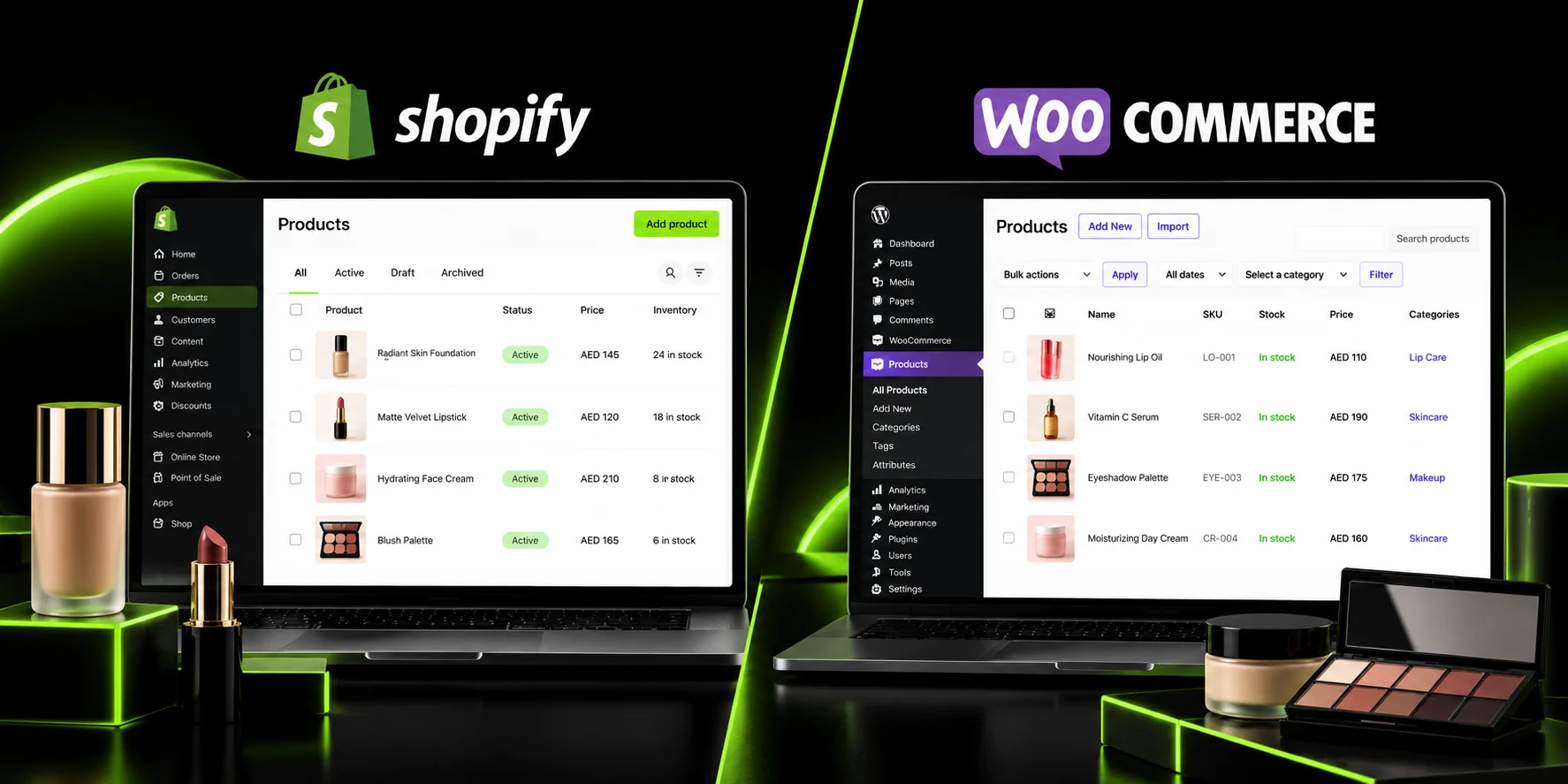
A UAE cosmetics store needs more than basic ecommerce functionality. The platform must support beauty-specific shopping experiences, local payment preferences, bilingual content and product compliance requirements while keeping pages fast and easy to navigate.
Key requirements for a UAE cosmetics store include:
- Product Variants: Shade and size options, including large foundation ranges.
- Reviews: Customer photos and filters for skin type, tone, and concerns.
- Product Discovery: Shade finders, quizzes, and personalized recommendations.
- Retention Features: Replenishment subscriptions, loyalty points, and rewards.
- Promotions: Sampling, gift-with-purchase offers, bundles, and skincare routines.
- Arabic Localization: Arabic content, right-to-left (RTL) layouts, and bilingual navigation.
- Local Pricing: AED display with clear VAT-inclusive pricing.
- Payment Options: Tabby, Tamara, Apple Pay, and cash on delivery (COD), subject to gateway and merchant eligibility.
- Product Information: Fields for registration details, ingredients, and approved claims.
- Performance: Optimized product images and videos for fast loading, particularly on mobile devices.
These requirements matter because cosmetics shoppers often need more information before purchasing.
Customers may compare shades, check ingredients, read reviews from people with similar skin concerns, or look for suitable product combinations. A store that makes these decisions easier can provide a smoother shopping experience.
When comparing Shopify and WooCommerce, assess how each platform supports these features, what apps or plugins are required and how much ongoing maintenance they involve.
Also consider the total cost of running these integrations rather than comparing subscription prices alone.
For a deeper look at the design and user experience considerations behind beauty shopping journeys, explore beauty ecommerce website design guide.
Shopify vs WooCommerce for Cosmetics: Feature by Feature
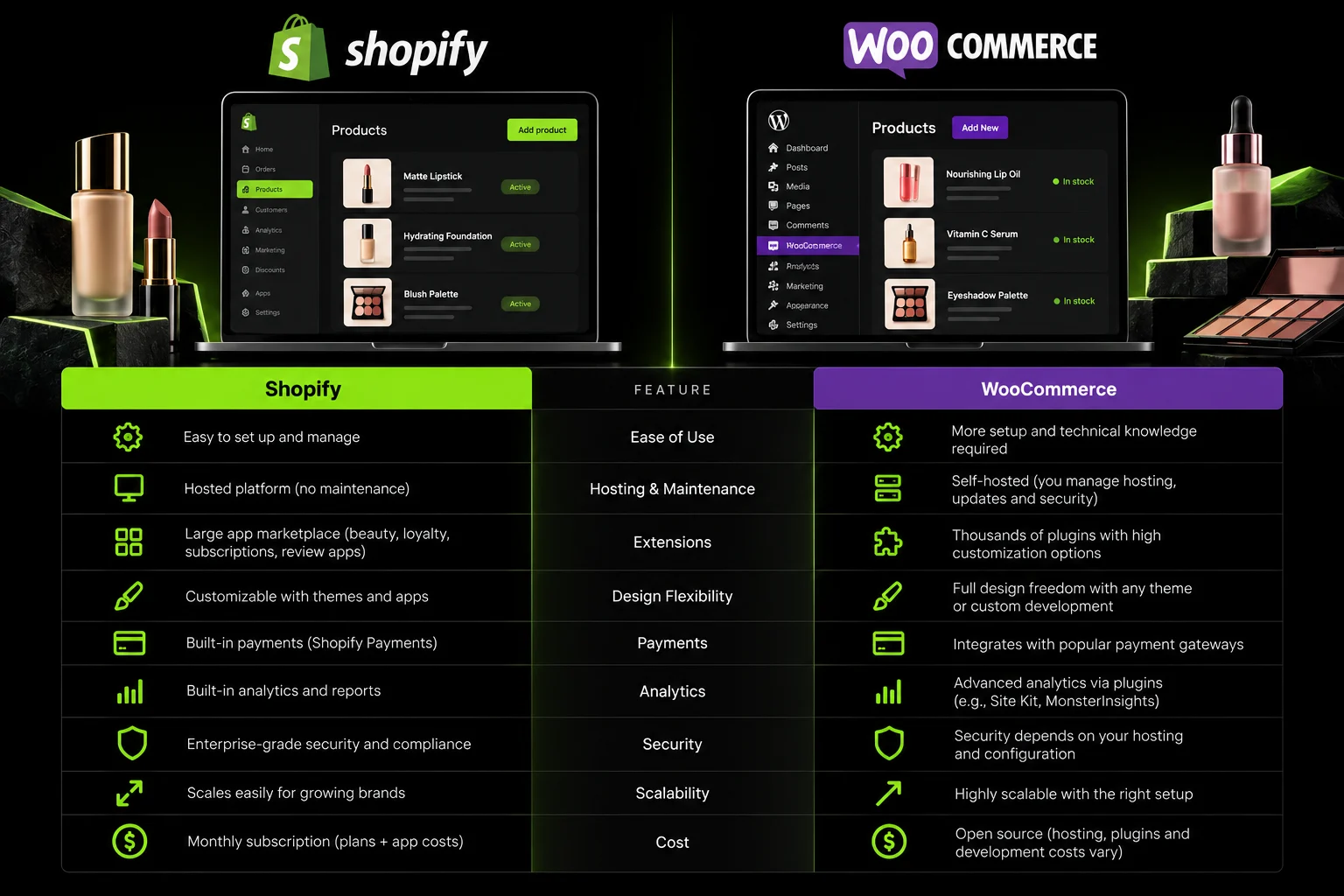
Both platforms support the core features a UAE cosmetics store needs, but they differ in setup, customization, and ongoing maintenance.
Where Shopify leads: Faster launches, a broad beauty app ecosystem, and managed hosting and security.
Where WooCommerce leads: Content flexibility, full code access, and no WooCommerce platform transaction fee.
Most beauty conversion features exist on both platforms. The real difference is the integration and maintenance work required to run them.
Shopify apps can simplify setup, while WooCommerce plugins may require more hands-on updates, compatibility checks, and security management.
The Real Three-Year Cost for a UAE Cosmetics Brand
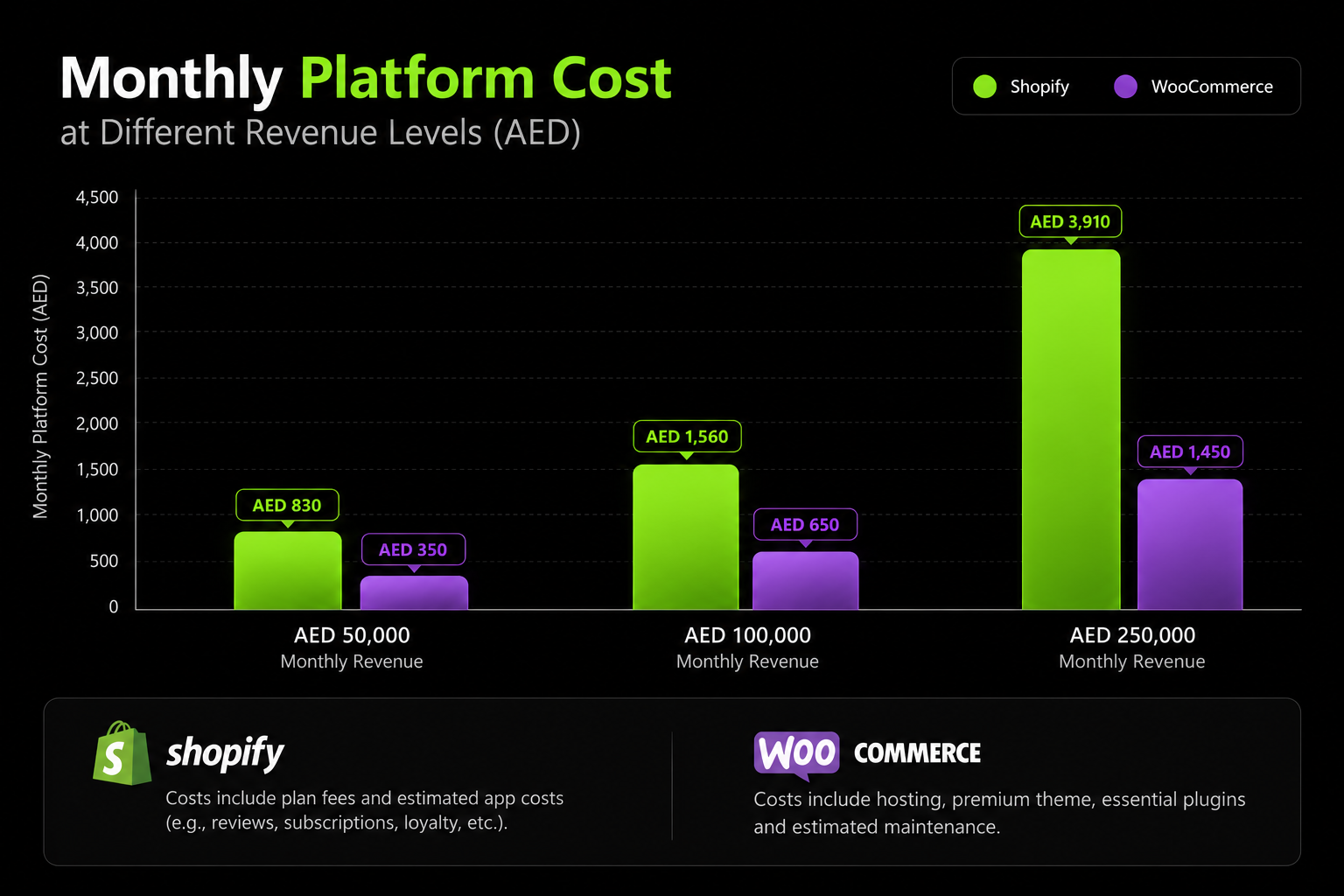
Platform pricing is only part of the cost. Shopify’s third-party transaction fees can increase expenses as revenue grows, while WooCommerce shifts more costs toward hosting, plugins, and maintenance.
Shopify's Cost: Look Beyond the Subscription
Shopify’s annual-billing plans are listed at $29 per month for Basic, $79 for Grow, and $299 for Advanced.
Third-party transaction fees may apply on top of gateway charges, depending on your plan and eligibility for Shopify Payments in the UAE.
The following estimates use an approximate exchange rate of AED 3.67 per USD and assume all sales use a third-party gateway.
At AED 100,000 in monthly revenue, the third-party fee exceeds three times the Grow subscription. Under these assumptions, Advanced becomes cheaper than Grow at approximately AED 202,000 in monthly revenue.
Verify current plan pricing, transaction fees, and Shopify Payments eligibility before deciding.
WooCommerce's Cost: The Software Is Free, the Operation Is Not
WooCommerce has no platform subscription fee, but running a cosmetics store still involves several expenses:
- Managed WordPress hosting
- Premium plugins for reviews, subscriptions, and multilingual features
- Security, backups, and software updates
- Ongoing maintenance and developer support
- Custom development and troubleshooting
Payment gateway plugins, including Network International's N-Genius integration, can support UAE payment requirements. Gateway processing fees still apply.
Three-Year Total Cost Comparison
Over three years, the better-value platform depends on revenue, required features, and technical resources.
Shopify offers a lower maintenance burden, while WooCommerce provides greater control over implementation.
Brands with in-house developers may benefit from WooCommerce; those without technical support may find Shopify easier to manage.
UAE Payments on Shopify vs WooCommerce
Payment setup affects checkout convenience, transaction costs, and mobile conversions for UAE cosmetics brands.
Shopify and WooCommerce support several local payment options, but their fee structures and integration requirements differ.
Cards and Wallets
Both platforms can support card payments and digital wallets, depending on the selected gateway and merchant eligibility.
- Shopify: Supports Shopify Payments where eligible, alongside third-party gateways such as Tap, Telr, PayTabs, and Checkout.com. Third-party transaction fees may apply in addition to gateway processing charges.
- WooCommerce: Supports payment gateway plugins, including Network International’s N-Genius integration. WooCommerce does not charge its own platform transaction fee, although gateway processing fees still apply.
Before selecting a provider, confirm support for Visa, Mastercard, Apple Pay and your preferred settlement arrangements. Test the entire mobile checkout journey to identify payment errors or unnecessary steps.
BNPL, COD and Refunds
Buy now, pay later (BNPL) options such as Tabby and Tamara can help customers manage higher-value beauty purchases. Availability depends on merchant approval and the current integrations supported by each platform.
Consider these requirements before launch:
- Official Integrations: Verify current Tabby and Tamara listings and eligibility.
- Instalment Messaging: Display options such as “4 payments of AED X” on product pages where supported.
- Cash on Delivery: Configure COD availability, order confirmation, and cancellation handling.
- Refunds and Reconciliation: Test full and partial refunds, payment captures, and settlement records.
Gateway selection should reflect your transaction volume, customer preferences, processing fees, and technical requirements. These factors also influence the overall cost of your UAE ecommerce payment setup.
Arabic and Bilingual Stores on Each Platform
For UAE cosmetics brands, an Arabic-English ecommerce store needs more than translated product descriptions.
Customers should be able to browse products, compare ingredients, select shades, complete payments, and receive order updates comfortably in either language.
Both Shopify and WooCommerce can support bilingual storefronts, but the setup and maintenance requirements differ.
Shopify: Shopify Translate & Adapt and Shopify Markets can support translated content and localized storefronts. However, the theme must handle right-to-left (RTL) layouts correctly.
Third-party apps, review widgets, product quizzes, and loyalty features also need testing to ensure Arabic text displays properly.
WooCommerce: WordPress supports RTL layouts, while multilingual plugins such as WPML and Polylang can manage Arabic and English content.
This approach offers flexibility over translations and URL structures, but compatibility between themes, plugins, and checkout components requires ongoing attention.
Before launching, check these essentials:
- Navigation: Menus, buttons, icons, and page layouts should work correctly in RTL mode.
- Product information: Translate descriptions, ingredients, usage instructions, and product attributes accurately.
- Shopping Experience: Test shade selectors, reviews, filters, cart, and checkout in both languages.
- Payments and Notifications: Check payment instructions, error messages, confirmation emails, and order updates.
- SEO and URLs: Plan language-specific URLs, metadata, and appropriate hreflang implementation.
Avoid relying entirely on automatic translation for ingredient information, product claims, and usage instructions. These details need careful review for clarity and accuracy.
The best platform is the one that delivers a consistent bilingual experience without creating unnecessary maintenance work. For further planning considerations, check out Arabic-English ecommerce development services in the UAE.

Performance, Security and Maintenance
Performance, security, and ongoing maintenance affect how reliably a cosmetics store operates. Both Shopify and WooCommerce can deliver fast, secure shopping experiences, but the responsibilities and technical requirements differ.
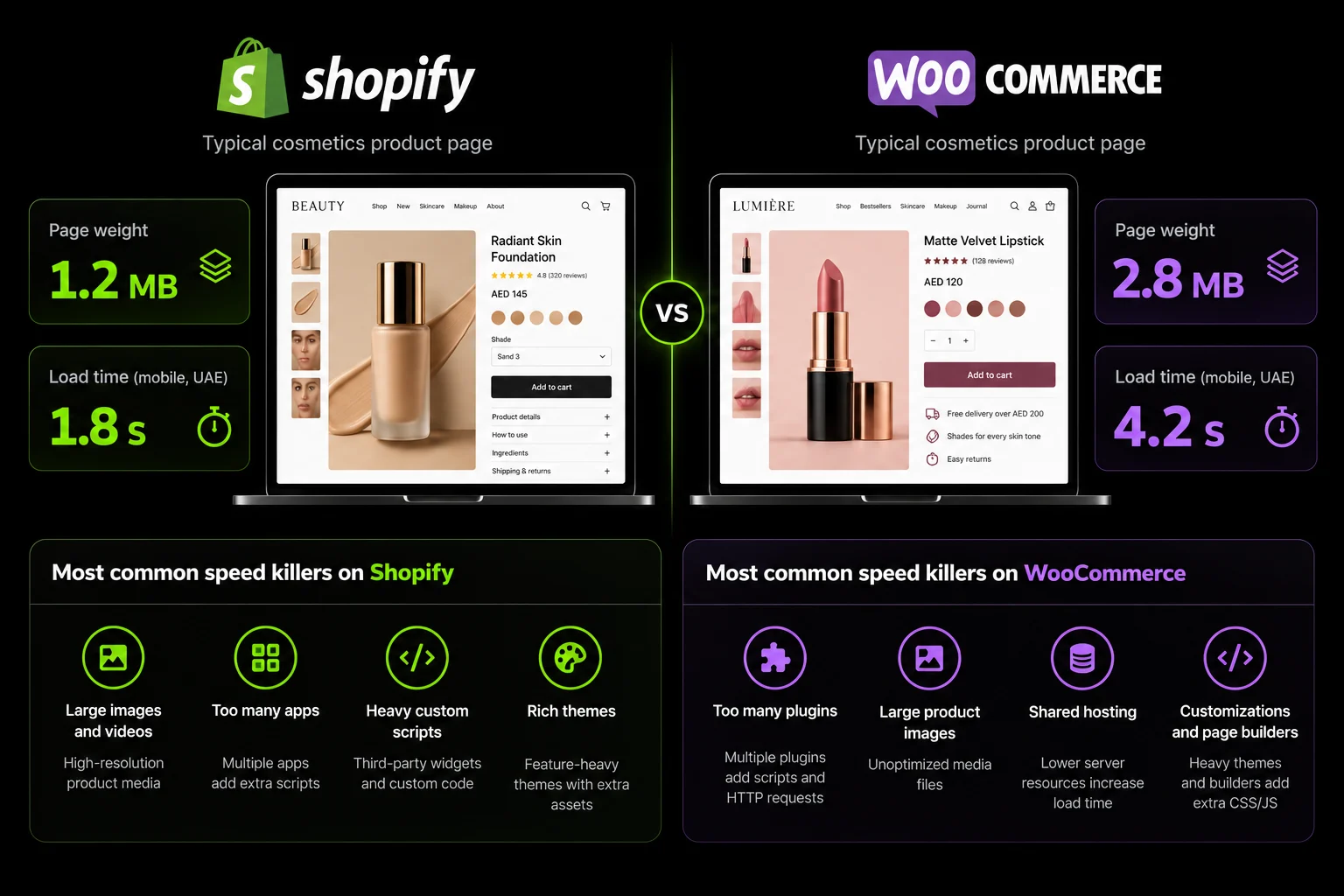
Shopify: Hosting and content delivery infrastructure are managed by Shopify, reducing the need for hands-on server maintenance.
However, installing too many apps, using poorly optimized themes, and loading unnecessary scripts can slow down product pages. Regular app reviews and theme optimization remain important.
WooCommerce: Performance depends on hosting quality, caching, database optimization, and plugin configuration. Store owners are also responsible for software updates, security patches, backups, and compatibility checks.
Without consistent maintenance, outdated plugins can introduce security vulnerabilities or disrupt essential store features.
Why performance matters for cosmetics brands: Beauty shoppers rely heavily on product photography, shade comparisons, demonstration videos and detailed ingredient information.
These assets can increase page weight, particularly on mobile devices and slower connections.
To maintain a smooth shopping experience, prioritize the following:
- Optimize Images: Use appropriately sized images and modern formats such as WebP where suitable.
- Control Scripts: Remove unnecessary apps, plugins, and third-party tracking scripts.
- Improve loading speed: Apply caching and performance optimization techniques appropriate to the platform.
- Protect Customer Data: Maintain secure configurations, updates, and reliable backups.
- Test mobile journeys: Check collection pages, product variants, cart interactions, and checkout performance on real devices.
- Monitor Regularly: Recheck performance after adding apps, changing themes, or introducing new features.
Even established beauty brands can experience performance issues. A well-designed store needs ongoing optimization, not just a fast initial build.
For Shopify stores, speed optimization service can help identify and address theme inefficiencies, excessive scripts, and oversized media assets.
Which Should You Choose? Verdicts by Scenario
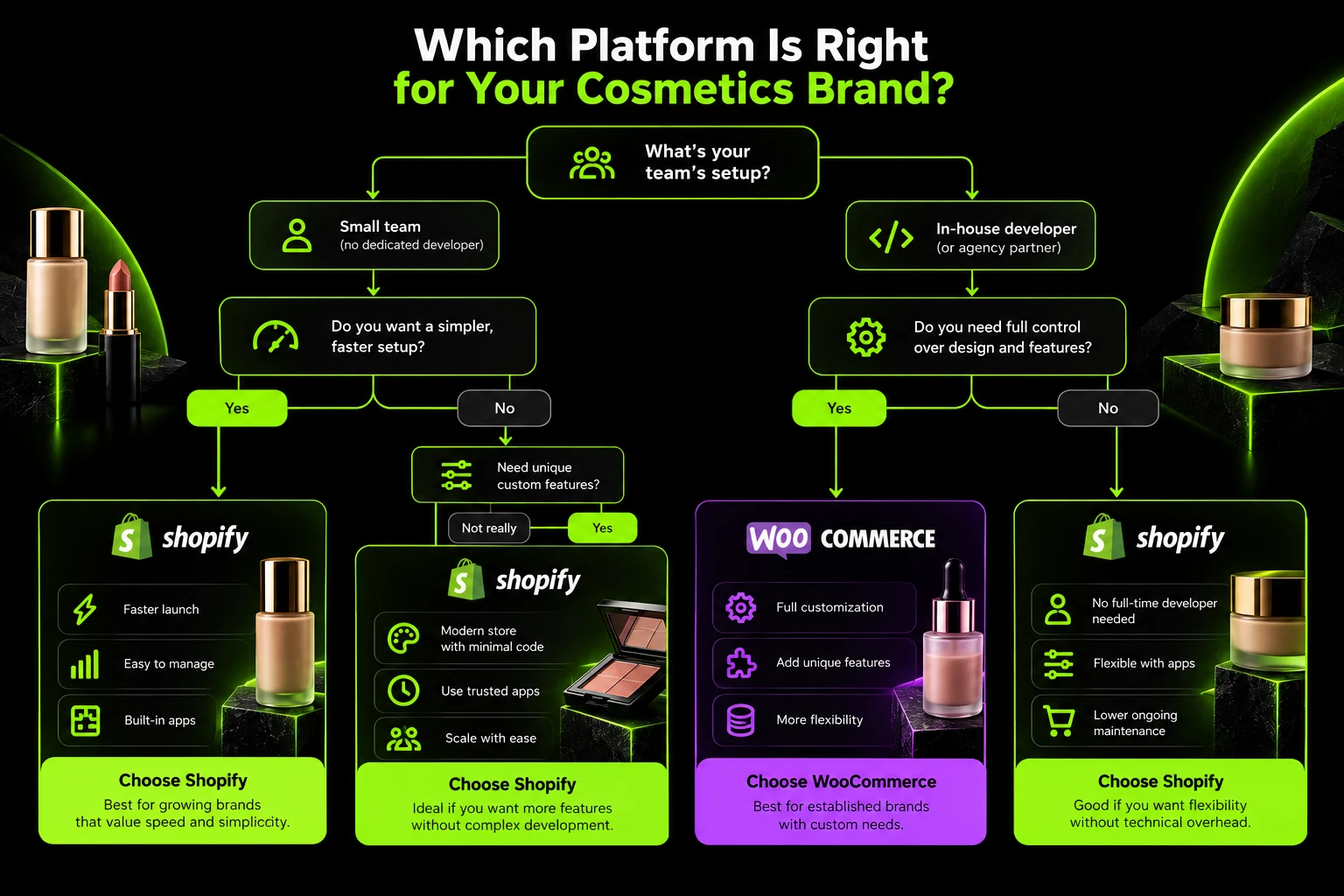
The right platform depends on your launch timeline, revenue, content strategy and technical resources.
Why These Recommendations Make Sense
- New Cosmetics Brands: Shopify's app ecosystem can simplify setup and reduce the work involved in launching reviews, quizzes, and loyalty programs.
- Growing Brands: Third-party transaction fees can affect profitability. Compare Shopify plan costs against projected revenue before upgrading.
- Content-led Skincare Brands: WooCommerce keeps an established WordPress content ecosystem in place, reducing the need for a full content migration.
- B2B and Custom Pricing: WooCommerce offers code-level flexibility, while Shopify Plus may suit businesses that need its enterprise features and can support the higher cost.
- Small Teams: Shopify reduces the burden of managing hosting, security, and software updates.
- GCC expansion: Shopify Markets can simplify managing international storefronts, currencies, and localized experiences.
Rule of Thumb: Choose the platform your team can operate effectively for the next three years, not simply the one with the longest feature list.
Switching Later: WooCommerce to Shopify (or Back)
Choosing Shopify or WooCommerce today does not mean you must stay with that platform forever. Some cosmetics brands move from WooCommerce to Shopify as order volumes grow and managing plugins becomes more demanding.
Others switch to WooCommerce when content marketing, ingredient education, and SEO become central to customer acquisition.
However, migrating a store involves more than transferring products to a new platform. Customer experience, search visibility, and existing business operations must remain intact throughout the process.
What typically migrates:
- Product information, descriptions, images, and variants
- Customer records, subject to data compatibility and privacy requirements
- Historical orders, depending on the migration tools and data structure
What needs extra attention:
- URLs and redirects: Map existing URLs to relevant destinations to protect organic traffic and backlinks.
- Reviews: Check whether review content, customer photos, and product-specific attributes can transfer.
- Subscriptions: Verify recurring payment arrangements and customer authorization requirements before migrating.
- Loyalty Programs: Plan how to preserve points, rewards, and customer balances.
- Arabic Content: Check translated pages, RTL layouts, metadata, and language-specific URLs.
Start planning before development begins. Back up your data, audit integrations, map redirects, and test checkout, payments, and customer accounts before launch.
A successful migration should improve your store without unnecessarily disrupting customers, operations, or search performance. Review the key considerations in these questions to ask before a Shopify migration before finalizing your plan.
How Suplex Helps Cosmetics Brands Choose and Build
Choosing an ecommerce platform is an important decision for cosmetics brands entering or expanding in the UAE.
Suplex is a Dubai-based agency that builds ecommerce stores on both Shopify and WordPress, helping businesses select the platform that best fits their products, budget, and operational requirements.
Our process covers four key areas:
- Platform Consultation: We compare platform costs, assess UAE payment gateway eligibility, and identify the beauty-specific features your catalogue requires. This helps establish a practical foundation before development begins.
- Design and Development: We create an ecommerce experience around your products and customers, considering shade selection, product discovery, reviews, mobile usability, and bilingual shopping requirements where needed.
- Beauty Ecommerce Insights: Our independent website audits of Fenty Beauty, Huda Beauty, Glow Recipe, Rhode, and Kayali help us evaluate product presentation, shopping experiences, and performance. These audits are independent reviews, not client projects.
- Relevant Client Experience: Kooji, a premium car perfume brand built on Shopify, demonstrates our experience in the fragrance-adjacent category.
Why Does Platform Selection Matter?
A platform that works well for one brand may not suit another. A business with a small team and a short launch timeline may prioritize simpler operations, while a content-led skincare brand may need greater flexibility over publishing and customization.
Our aim is to help you understand these trade-offs before committing to a platform or development budget.
With a clear view of your catalogue, payment requirements, technical resources, and growth plans, you can make a more informed decision and build a store designed to support your business over the long term.
Frequently Asked Questions
Is Shopify or WooCommerce better for cosmetics brands in the UAE?
Shopify suits most direct-to-consumer cosmetics brands because it offers faster setup, beauty-focused apps, and less maintenance. WooCommerce suits brands with established WordPress content, complex customization needs, or in-house technical support.
Is WooCommerce cheaper than Shopify?
Not always. WooCommerce has no core software fee, but hosting, premium plugins, security, and developer support add costs. Shopify charges a subscription and may add third-party transaction fees. Compare the total cost over three years.
Does Shopify Payments work in the UAE?
Eligibility depends on Shopify's current supported markets and merchant requirements. If unavailable, UAE merchants can explore third-party gateways such as Tap, Telr, and PayTabs. Check current eligibility and transaction fees before choosing a plan.
Which platform handles Arabic better?
Both support Arabic ecommerce. Shopify offers translation tools and RTL-compatible themes, while WordPress provides native RTL support and multilingual plugins. Test product pages, checkout, error messages, and order notifications in Arabic.
Can I offer Tabby and Tamara on both platforms?
Both platforms can support BNPL integrations, subject to current availability and merchant approval. Verify official integrations and test installment messaging, refunds, and payment processing before launch.
Can I migrate from WooCommerce to Shopify later?
Yes. Products, customer records, and order history may be migrated, depending on data compatibility. Plan carefully for URL redirects, reviews, subscriptions, loyalty balances, and Arabic content to minimize disruption.
Does platform choice affect cosmetics registration in the UAE?
Registration requirements apply regardless of platform. Dubai Municipality's Montaji system governs relevant cosmetics registration processes. Shopify metafields and WooCommerce custom fields can store product registration details, ingredient lists, and approved claims.
Hi, I’m Rishabh Jain
I believe great digital experiences have the power to shape perception, build trust, and move businesses forward. That belief led me to found Suplex Design Studio, a global digital design and development studio helping FMCG and D2C brands build websites and digital experiences that are strategic, thoughtful, and commercially meaningful.
I started Suplex at 25 with a clear intent, to create digital experiences that look appealing, work seamlessly, and help D2C businesses grow. By 28, the studio had scaled globally, guided by a strong foundation in integrated design that I developed during my academic journey in London, where I was honoured with the Dean’s Award.
Over the years, I’ve had the opportunity to work with 100+ brands, from Fortune 500 organisations to family-run businesses, helping them build websites, e-commerce experiences, and digital products that create clarity, credibility, and long-term value.
Our work has been recognised internationally, including the Manifest Award (2024), the Clutch Global Award (2025), and features across platforms such as The Dieline, Packaging of the World, and the World Brand Design Society.
None of this would be possible without the people behind the work. I’m deeply grateful to the Suplex team, whose commitment, creativity, and attention to detail turn ideas into meaningful digital experiences every day.
At the heart of our work is a simple philosophy, digital design should be intentional, functional, and built to create real business value. That continues to guide everything we create at Suplex.
































Let’s Make It Happen
E-Commerce Success Stories










Build Your D2C Business The Right Way
Build It With Suplex.


