Ecommerce Website Design for Luxury Brands: Principles, Conversion and the Gulf Market
.avif)
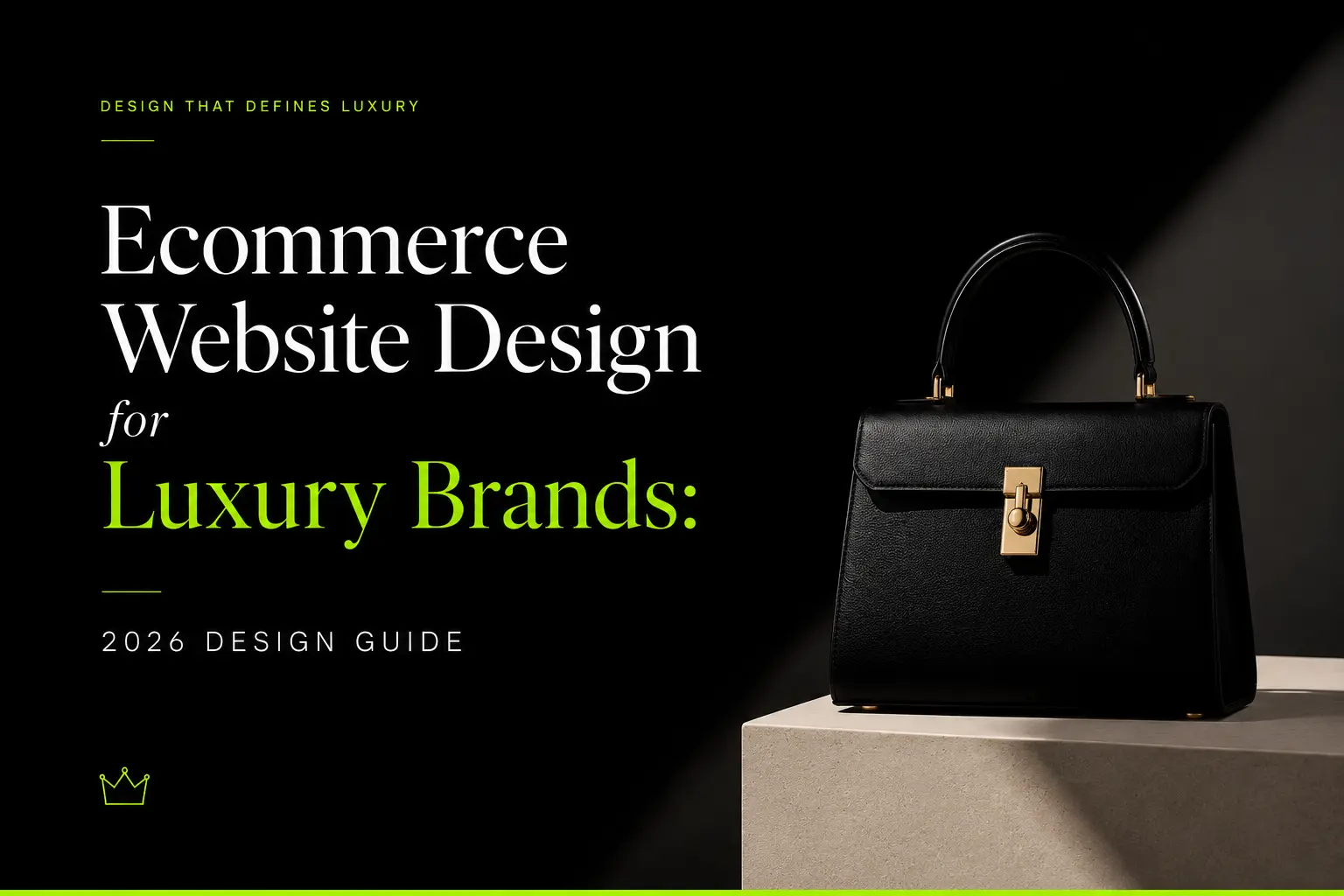
Ecommerce Website Design for Luxury Brands: Principles, Conversion and the Gulf Market
Ecommerce Website Design for Luxury Brands requires a different approach from mainstream ecommerce.
Luxury buyers take time before they buy. They compare products, examine details and judge the brand as carefully as the product. Every page must build trust, showcase craftsmanship and reinforce exclusivity.
This Suplex guide covers the design principles, UX architecture and platform decisions that create premium online shopping experiences and increase purchase confidence.
The Luxury Ecommerce Design Paradox: Why Standard Rules Don't Apply
Luxury ecommerce follows a different set of rules. Buyers are making considered purchase decisions, so the design must support evaluation rather than create urgency.
The Conversion Rate Is Supposed to Be Low
Luxury and jewellery brands typically convert at 0.9%-1.5%, the lowest of any ecommerce category. Luxury purchases involve research, comparison and careful evaluation before buyers commit.
Many brands weaken that experience by copying mass-market tactics such as discount popups, countdown timers and urgency banners.
These elements reduce perceived exclusivity and can undermine premium pricing. Luxury ecommerce design succeeds by building trust, strengthening brand perception and creating a buying journey that feels effortless rather than pressured.
The Four Commercial Jobs of Luxury Ecommerce Design
Standard ecommerce design has one primary job. Remove friction between arrival and purchase. Luxury ecommerce design carries four jobs at once.
- Communicate Brand Worth:. White space, typography, photography quality and interaction design collectively tell the visitor "this brand is worth what it charges" before they've read a single word or they tell the opposite story.
- Replace the Physical Retail Experience: Flagship stores sell through lighting, service, scent, texture and trained staff. The design has to compensate through macro photography, video, material storytelling and a sense of personal connection.
- Build Confidence During the Research Phase: Luxury buyers invest time researching before they purchase. The design must provide rich product information, brand heritage, material provenance, sizing guidance and other decision-making details without creating pressure to buy too soon.
- Build Long-Term Customer Relationships: Design your website to keep customers coming back. Make the first purchase the start of an ongoing relationship with exceptional post-purchase support, personalised communication, exclusive experiences, and a loyalty programme that rewards repeat customers.
Visual Design Principles for Luxury Ecommerce
Luxury ecommerce design is not about adding decorative elements or expensive-looking effects. It is about using visual restraint to direct attention, create perceived value, and make every interaction feel intentional.
Use White Space to Increase Perceived Value
White space is one of the most effective design tools in luxury ecommerce. It creates a sense of exclusivity by removing visual noise and directing complete attention to the product.
Luxury product pages typically dedicate 50–70% of the initial viewport to product photography instead of promotional content or dense information.
Giving products room to breathe makes them feel more premium, while crowded layouts make them feel like commodities.
Typography as Brand Voice
Luxury brands communicate through typeface before the customer reads a word. Serif or sans-serif, weight, size scale, spacing the typographic system carries brand personality in a way no logo or colour palette can replicate alone.
Luxury typography should be readable, not merely decorative. Ultra-thin fonts look elegant but hurt legibility, especially at body size on mobile, pairing a thin display face with a genuinely readable body font, and using contrast deliberately, avoids the most common failure mode here.
A luxury typography system prioritises elegance over impact:
- Headlines: Distinctive serif or refined sans-serif at 48–72px (desktop) and 36–56px (mobile) to create an editorial, premium feel.
- Body Text: Highly legible serif or neutral sans-serif at 16–18px for effortless reading.
- CTA text: Use sentence case "Explore the Collection" instead of "SHOP NOW." The sentence case feels confident and refined, while all caps create unnecessary urgency.
One well-documented failure mode: a major fashion house once ran light grey all-caps text throughout its site.
It matched the brand's bold, all-caps logo, but made the content genuinely hard to scan. Visual branding consistency should never be allowed to sacrifice readability.
Use Asymmetry and Restraint Intentionally
Standard ecommerce sites are symmetrical and grid-based, everything aligned to a predictable 12-column structure, centred, efficient.
Luxury ecommerce sites lean into asymmetry instead. A product image might take 60% of the viewport on one side, with copy occupying the rest. Typography might be oversized on one page and minimal on the next. The inconsistency signals curation, not carelessness.
Slow-paced design is the companion principle. Generous white space, large type, and long-scroll storytelling that rewards patience.
Page speed still matters technically. Largest Contentful Paint under 2 seconds is still the target but the experience of the site should feel unhurried.
Luxury buyers don't want to be rushed and a design that encourages the visitor to slow down isn't failing at conversion. It's correctly serving a customer whose decision requires time and trust.
Colour, Material and the Visual Palette of Luxury
Luxury colour palettes are restrained, deliberate and highly selective. Unlike FMCG or food brands that rely on bright, saturated colours to attract attention, luxury brands use colour to create sophistication, exclusivity and timeless appeal. Most luxury palettes fall into three distinct categories:
- Monochromatic Neutrals: black, white, ivory, cream, warm grey and soft off-whites are widely used by luxury fashion, jewellery and watch brands because they keep the focus on the product rather than the background.
- Deep, Rich Tones: midnight navy, forest green, burgundy, dark chocolate, and charcoal are common in premium spirits, luxury fragrances, and high-end beauty, adding depth and refinement without overwhelming the design.
- Metallic Accents: particularly gold, silver or bronze, should be used with restraint. Apply them to typography, icons, dividers, or subtle interface details instead of large background areas.
When used sparingly, metallic finishes communicate craftsmanship and exclusivity. When overused, they lose their impact and make the design feel decorative rather than luxurious.
In the Gulf, the luxury consumers show a demonstrably stronger appetite for rich, jewel-toned, dark luxury aesthetics than Western luxury consumers typically do.
The airy, cream-and-white palettes that work well in Paris or Milan often need deeper, richer calibration for Gulf positioning. This isn't a stylistic preference, it's a documented cultural difference in what reads as premium, and it affects purchase confidence directly.
Photography and Sensory Design: Closing the Tactile Gap
Luxury customers can't touch, feel or experience your products online. Your photography must replace those missing sensory cues and give customers enough confidence to buy.
Use Photography to Replace Touch
In a physical boutique, customers judge quality by feeling the material, noticing the craftsmanship, and seeing how light interacts with the product.
Online, your photography must communicate all of that. Show texture, weight, scale, material quality and fine details so customers can imagine owning the product.
The goal isn't simply to show what the product looks like, but to help customers understand what it feels like to experience it.
The Five Photography Categories for Luxury Product Pages
Don't expect a few polished product photos to justify a premium price. Give customers every visual detail they need to evaluate quality, craftsmanship and value before they buy. Each type of photography should answer a specific question and remove a specific uncertainty.
- Material Macro Photography: Show close-up details of leather grain, fabric weave, gemstone facets, wood grain, or ceramic finishes. Help customers inspect the quality they would normally judge by touch.
- Scale and Context Photography: Show the product being worn, carried, or used in real life. Never make customers guess the size of a bag, the proportions of a watch, or how a piece of jewellery looks when worn.
- Artisan and Provenance Photography: Show your workshop, craftspeople, production process, and raw materials. Replace marketing claims about craftsmanship with visual proof.
- Lifestyle Editorial Photography: Place your products in environments that reflect your brand not generic luxury settings. Every image should strengthen your brand identity and help customers imagine owning the product.
- 360-Degree Views and High-Resolution Zoom: Let customers inspect every detail, from stitching and engravings to finishes and stone settings. Give them the same level of confidence they would gain by examining the product in a boutique.
If your photography doesn't feel consistent across your website, fix the broader visual system instead of individual images.
Read our Global Aesthetic Audit guide to learn how to create a cohesive luxury experience through photography, typography, colour, and layout.
Product Page Architecture for Luxury: Information That Earns, Not Overwhelms
Your product page has one job to help customers understand why the product deserves its price. Every section should answer a question, build confidence or reinforce craftsmanship not add unnecessary content.
Design For The Research Phase
Don't assume visitors arrive ready to buy. Build your product pages for customers who want to compare options, evaluate quality and gain confidence before making a purchase.
Give them the depth they need detailed product information, craftsmanship, materials, sizing guidance, care instructions, and your brand story without sacrificing the clean, restrained design that defines luxury.
Above the Fold: Give your product photography 50–70% of the viewport so it becomes the focal point. Display the product name in your brand typeface, show the price prominently, and highlight the primary material or provenance immediately.
Never hide the price, affluent customers expect transparency, not mystery. Finish with a refined CTA such as "Add to Bag," "Reserve," or "Explore" instead of a generic "Add to Cart."
Progressive Reveal Below The Fold:
- A short product story (2–4 sentences of brand-voice copy on inspiration, heritage, or design philosophy not a feature list)
- Material and craftsmanship detail that's specific and verifiable ("hand-stitched in our Florence atelier using vegetable-tanned Tuscan leather" does far more work than "100% leather")
- Dimensions and sizing with a human-scale reference non-negotiable
- Care instructions
- Provenance and sustainability information where relevant
- Reviews, if the brand chooses to show them (some decline to as a brand-equity decision; where reviews do appear, 4.2–4.7 star ratings with substantive written reviews tend to outperform a flat 5.0)
- Curated related products hand-picked within the same aesthetic register, not algorithm-driven
There's an important distinction between intentionally omitting a price to draw the customer into a boutique and unintentionally omitting product details or photos the customer actually needs.
If the goal is to motivate an in-person visit, that motivation should come from genuine excitement to see the piece, not frustration at missing information.
The Luxury CTA Problem
Standard ecommerce CTA design calls for high contrast, full colour, all caps and prominent above-the-fold placement. Luxury CTA design asks for close to the opposite:
- Lower Visual Contrast: a thin-bordered button in the brand's accent colour communicates confidence rather than urgency.
- Sentence Case Copy: "Add to Bag" or "Reserve this piece," not "BUY NOW."
- Secondary Placement: On many luxury product pages, the CTA sits below the primary photography rather than above it. The photography builds desire first; the CTA is there when the customer is ready.
- No Urgency Indicators Nearby: "Only 2 left," countdown timers, "47 people viewing this" these are UX anti-patterns in luxury. They cheapen the experience more than they accelerate the sale.
Navigation and Discovery: The Luxury Store as a World to Explore
Your navigation shouldn't just help customers find products. It should help them discover your brand, understand what makes it different, and build confidence before they buy.
Design Navigation Around Your Brand
Don't limit your navigation to functional categories like Women, Men, Sale, or New Arrivals. Give customers a reason to explore your brand by including sections such as Collections, Craftsmanship, Heritage, World or Journal alongside your product categories.
Don't force customers to choose between shopping and storytelling. Support both journeys at the same time. Make it easy for customers with a specific product in mind to find and evaluate it, while giving others opportunities to discover your collections, craftsmanship, design philosophy, and brand heritage.
Weave your brand story directly into the shopping experience instead of isolating it on an "About Us" page. Add a short story behind an iconic collection, explain the inspiration for a signature design, or highlight the craftsmanship behind a product. These details create far more emotional value than promotional banners.
The easier you make it for customers to explore your brand, the more likely they are to trust your products, stay engaged, and return in the future.
Search for Luxury Catalogues
Design search and filters around your catalogue, not your internal naming system. A small, curated collection needs simple navigation, while a large catalogue requires intuitive search and well-organised filters.
Avoid brand-specific terms that new customers won't understand. Use clear labels or explain unfamiliar collection names to remove friction and build confidence.
As your catalogue grows, follow our Information Architecture guide to organise products logically and our Shopify navigation design best practices to create search and navigation that make discovery effortless.
Performance : Why Speed Is Non-Negotiable Even When "Slow" Is the Brand Feel
A luxury browsing experience should feel calm and deliberate. Create a relaxed visual pace through layout, typography, animation and storytelling, but make every page load as quickly as possible. Customers will never appreciate your design if they leave before it appears.
Slow page loads increase abandonment, reduce conversions, and hurt search rankings, regardless of how premium your brand is. Build for speed first, then shape the browsing experience with thoughtful design.
Meet Modern Performance Standards
Aim for the following Core Web Vitals across your website:
- Largest Contentful Paint (LCP): Under 2.5 seconds on mobile.
- Cumulative Layout Shift (CLS): Under 0.1 to prevent layout movement, especially on pages with animation or video.
- Interaction to Next Paint (INP): Under 200 ms for responsive interactions.
- Total page weight: Keep pages below 3 MB, even with high-resolution imagery, by using modern image formats, responsive image sizing, and lazy loading.
Fast performance doesn't make your brand feel less luxurious. It gives customers immediate access to the carefully crafted experience you've designed.
Use Animation to Guide Attention
Use animation to highlight important interactions, reinforce craftsmanship, and make your interface feel refined. Add subtle hover effects, gentle fade-ins, smooth scrolling, and controlled button or form interactions but keep every animation purposeful.
Avoid flashy transitions, excessive motion, autoplay videos with sound, or anything that distracts customers from your products. Keep animations smooth and lightweight so they never slow down your website.
Read our Performance Optimisation guide to improve loading speed and follow our Mobile-First Design guide to ensure animations remain responsive and intuitive across every device.
The Digital Equivalent of White Glove Service Personalisation and Clienteling
Give every customer the attention they would receive in a luxury boutique. Use personalisation and digital clienteling to make every interaction feel thoughtful, relevant and individual.
Create a Personal Shopping Experience
Don't treat every customer the same. Remember previous purchases, recommend products based on genuine preferences, offer personalised styling or gifting suggestions, and invite loyal customers to exclusive launches or events.
Make every interaction feel like it comes from someone who understands the customer, not from an automated marketing system. Personalisation should strengthen the relationship, not remind customers they're part of a mailing list.
A few approaches consistently work:
- Live Chat With Human Experts: Don’t use chatbots. A shopper who can ask "would this necklace work with the bracelet I bought last year?" and get a real answer from a real advisor is experiencing genuine clienteling.
- Video Consultation: Some luxury brands now let a customer start a video call with a sales associate in a physical showroom, with a follow-up via text afterward extending the in-store relationship rather than replacing it.
- WhatsApp as a clienteling channel. In the UAE and the wider Gulf specifically, WhatsApp is the primary personal communication medium for affluent consumers. Enabling WhatsApp consultation for high-consideration purchases is a digital clienteling experience that feels native rather than bolted on.
Loyalty and Membership Architecture for Luxury
Luxury loyalty doesn't accumulate its membership in a world with escalating access to exclusive products, experiences, and communication.
The copy matters as much as the mechanics: "You have 450 points" is mass-market language. "You're a Founding Member of our Private Circle" is luxury positioning.
The elements that make this land digitally:
- Member-Only Access: Pages, collections, or limited editions visible only to registered members, a genuine digital equivalent of a private showroom
- Personal History: An account that shows complete purchase history, a dedicated advisor's contact details, and care guidance specific to what the customer already owns
- Proactive, Channel-Appropriate Outreach: New collection notices and event invitations sent through a customer's preferred channel (email, WhatsApp, SMS), not broadcast to the full list
Luxury Ecommerce Design by Sub-Category
Don't apply the same design strategy to every luxury product. Build your website around the questions customers ask before buying in each category.
Luxury Fashion
Help customers understand how every garment fits, moves, and feels. Make product videos and runway footage a core part of the product page instead of an optional gallery item.
Prioritise size guides, fit information, and measurements above the fold, and show your clothing on diverse models that reflect your target audience.
Replace generic "Customers Also Bought" widgets with curated styling recommendations that reinforce your brand's expertise.
Luxury Beauty and Skincare
Show customers why your products work. Highlight ingredients, formulations, and key benefits instead of hiding them behind tabs.
Support your claims with substantiated before-and-after images, expert videos, and routine-building content that helps customers choose complementary products. Make product education part of the shopping experience.
Luxury Fragrance
Help customers imagine the scent before they buy. Display fragrance notes as clear visual hierarchies, explain the mood and occasions each fragrance suits and feature reviews from customers with similar scent preferences. Reduce purchase risk by offering discovery sets or sample programmes whenever possible.
Luxury Jewellery and Watches
Show every detail that justifies your price. Use 360-degree product views, high-resolution zoom, videos that capture how gemstones reflect light and scale photography on the wrist, hand, or neck.
Display certifications, hallmarking, metal purity, and gemstone grading directly on the product page instead of hiding them in downloadable documents.
If possible, add virtual try-on to help customers visualise the product before purchasing.
Luxury Home and Lifestyle
Help customers picture your products in their homes. Show furniture and décor in realistic room settings, include accurate dimensions and scale references and let customers order material swatches before committing to large purchases.
For high-value products, offer virtual design consultations through video or WhatsApp to answer questions and build confidence.
Platform Architecture for Luxury Brands: Choose the Right Foundation
Your ecommerce platform should support your brand experience, not limit it. Choose the architecture that matches your business goals, design requirements, and operational complexity.
Choose Shopify Plus for Most Luxury Brands
Don't assume you need a fully custom platform to create a luxury ecommerce experience. Build on Shopify Plus if you want enterprise reliability, a secure checkout and the flexibility to customize your storefront.
Use Checkout Extensibility for features like gift messaging and personalisation, and let Shopify handle payments, inventory, and fulfilment while you focus on the customer experience.
Choose Headless When Design Is Your Competitive Advantage
Move to a headless architecture only if your design vision goes beyond what a Shopify theme can deliver. Build a completely custom frontend with Hydrogen while keeping Shopify as your commerce engine.
Choose this approach when you need immersive storytelling, advanced animations, editorial layouts, or highly customised interactions that differentiate your brand.
Choose Custom Development for Complex Requirements
Invest in custom development only when your business requires capabilities that Shopify themes or headless architecture can't provide.
Build custom solutions for product configurators, engraving or monogramming tools, made-to-order workflows, advanced B2B features, deep ERP integrations, or other specialised operational requirements.
For most luxury direct-to-consumer brands, the best balance is a custom-designed Shopify storefront running on Shopify's proven commerce infrastructure. You get complete control over the customer experience without sacrificing performance, security, or scalability.
If you're deciding between different approaches, compare Shopify Plus, Custom Web Development, and Custom vs Template Ecommerce Websites to find the architecture that best fits your business.
Luxury Ecommerce Design for the UAE and Gulf Market What Changes
Don't copy a Western luxury website and expect it to perform in the Gulf. Design your website around the expectations, shopping behaviour, and cultural preferences of customers in the UAE and the wider GCC.
The Gulf Luxury Consumer: What Makes This Market Distinct
The UAE luxury goods market sits at roughly $8.98 billion in 2026, with online luxury advancing at a 7.1% CAGR, supported by AI-driven personalisation and tourist VAT refund schemes.
UAE GDP per capita is projected at around $48,000, and the affluent population roughly 20% of residents drives a disproportionate share of luxury demand.
The Gulf luxury consumer shouldn't be treated as a Western template with local adjustments. They're a primary market with their own design, cultural, and commercial requirements:
- Multicultural Sophistication:. The UAE is home to well over 200 nationalities and Gulf luxury consumers are among the most globally travelled and brand-literate shoppers anywhere. They've shopped at flagship stores in Paris, Milan, and Tokyo and their bar for a luxury digital experience is set by the best in the world, not by regional convention.
- Mobile-First Purchasing: Smartphones account for the large majority of UAE ecommerce orders, and that share continues to grow quickly. The mobile experience needs to be as carefully crafted as desktop, not a responsive afterthought.
- Experiential Expectation: Gulf luxury consumers expect the same personalisation, exclusivity, and experiential access from digital interactions that they get from physical luxury retail, where immersive in-store experience is already table stakes.
Arabic as a Luxury Design System
Don't translate your English website and call it an Arabic experience. Design both languages from the start.
Choose premium Arabic typefaces, create RTL layouts natively and make every navigation element, carousel, menu and interaction work naturally in Arabic. Write Arabic copy with the same attention to tone and brand voice as your English content.
Build Trust With Local Signals
The trust architecture that works for Gulf luxury ecommerce differs from Western markets in commercially meaningful ways:
- Local Presence Signals: For Gulf consumers, visible UAE commitment, a .ae domain or UAE subdirectory, a visible UAE trade licence, a UAE phone number in the header signals legitimacy in a way imported .com brands can't match without it.
- WhatsApp as Luxury Clienteling: As the primary personal channel for affluent UAE consumers, WhatsApp access to a personal advisor for fragrance, jewellery, or high-AOV fashion is a digital equivalent of the in-store relationship that matters most to top-spending customers.
- Halal and Provenance Certification: For luxury beauty, food, and fragrance brands in the Gulf, halal certification is a premium positioning element, not just a compliance checkbox; prominent display communicates cultural alignment that uncertified competitors can't match.
- In-country Delivery Promise: Regional luxury platforms have set high expectations for fast, premium delivery in UAE metros. Matching or approaching that standard is now closer to baseline expectation than a differentiator.
- Duty-Free and VAT Refund Visibility: Tourists make up a meaningful share of UAE luxury purchase volume. Brands targeting that segment should communicate the VAT Tourist Refund Scheme clearly, ideally in the languages of their highest-volume tourist nationalities.
Auditing Luxury Brand Websites : What the Benchmark Brands Are Getting Right
Don't copy another luxury brand's design. Study why it works, identify the principles behind it, and adapt them to your own brand.
Huda Beauty: Build trust through personality, education, and founder-led storytelling. Use product education, expert content, and direct customer communication to justify premium pricing instead of relying on minimal design alone.
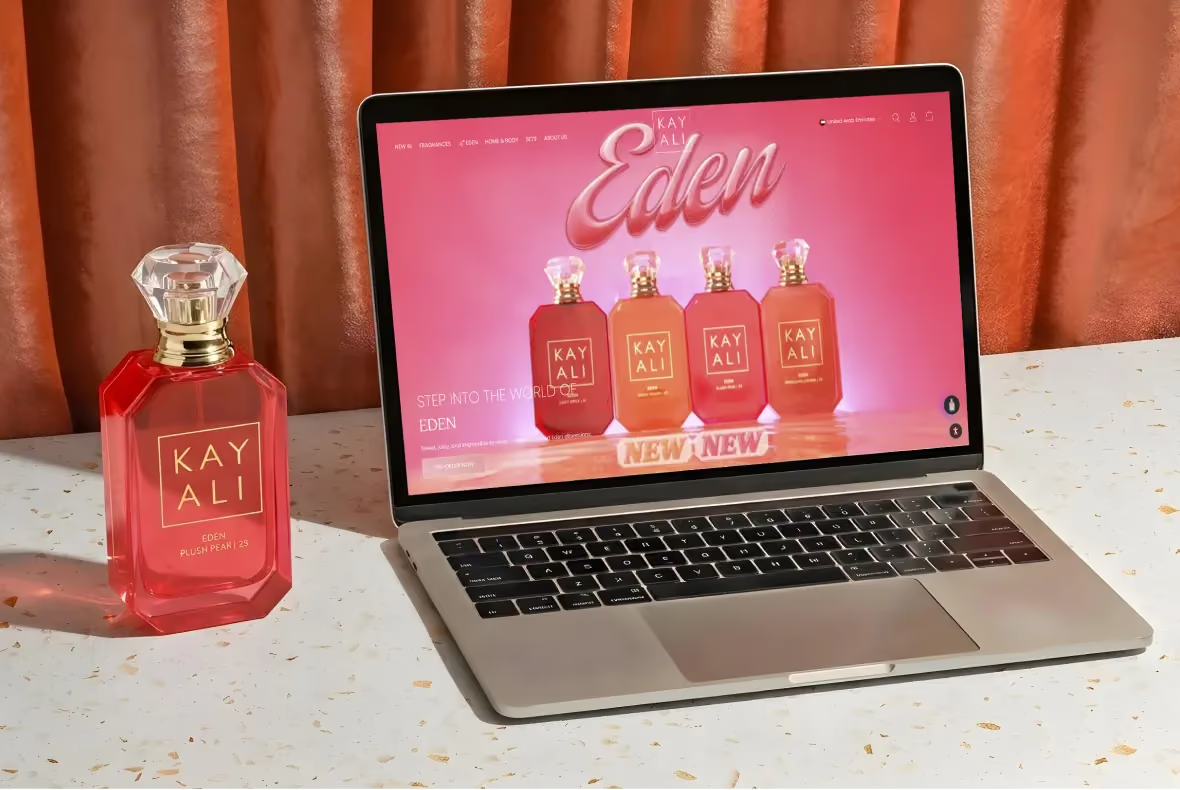
Kayali: Create a refined, sensory experience with elegant photography, restrained layouts, and immersive storytelling. Let every page reinforce your brand identity instead of competing for attention.
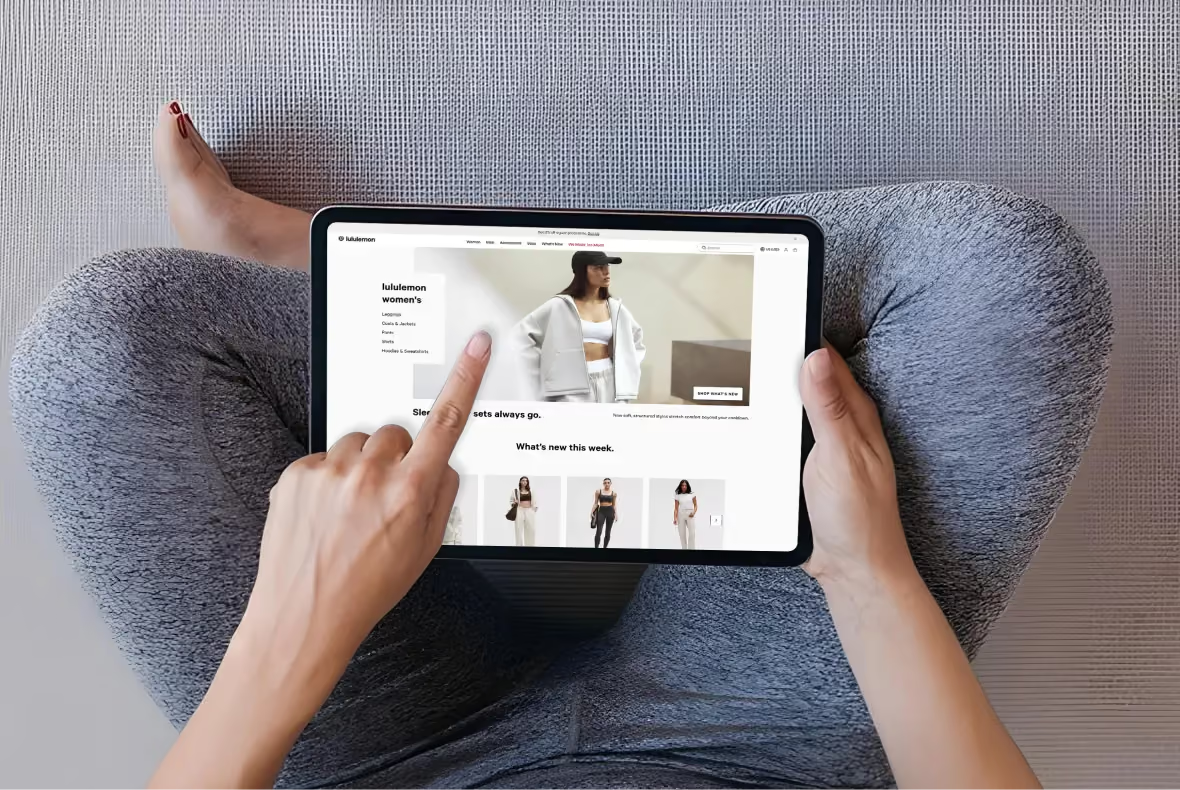
Lululemon: Build a community, not just a storefront. Combine premium ecommerce with educational content, events, and member experiences that keep customers engaged long after their first purchase.
Skims: Remove purchase uncertainty with exceptional product pages. Show every product on different body types, across multiple colours and sizes, and give customers enough information to buy with confidence.
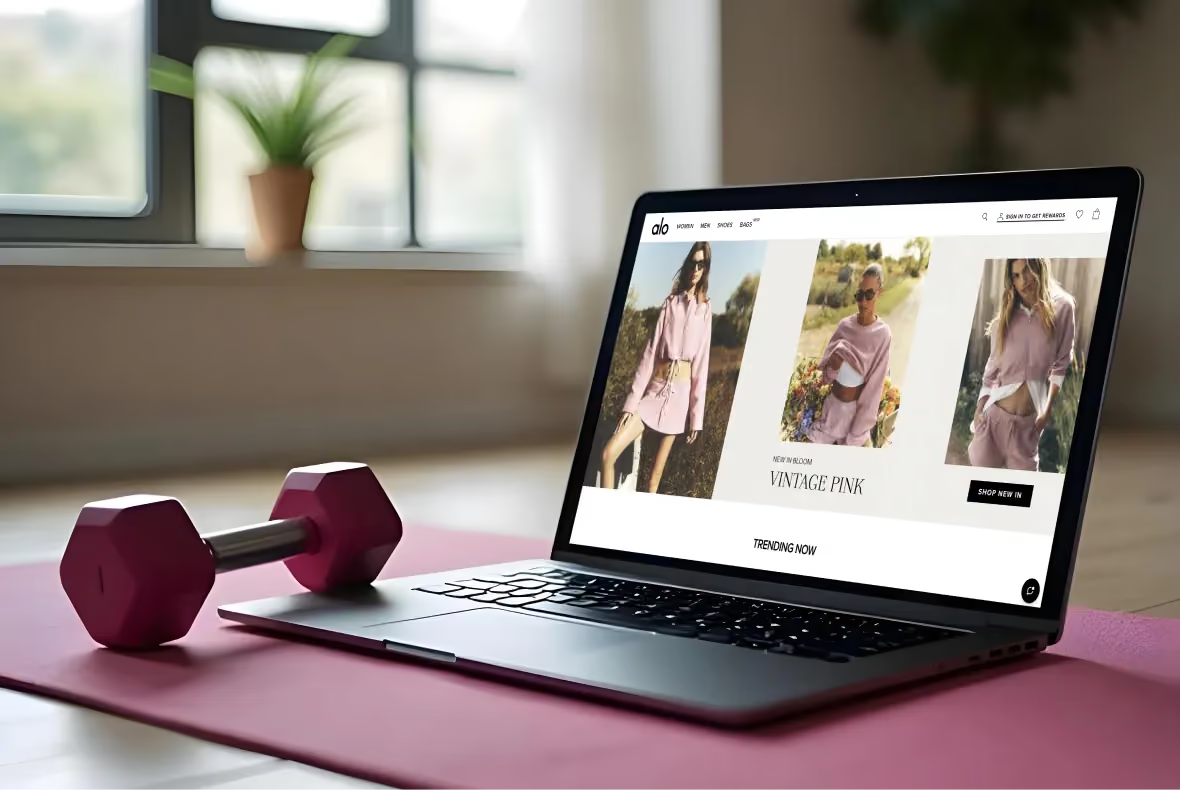
Alo Yoga: Sell the lifestyle before you sell the product. Use editorial content, imagery, and storytelling to help customers connect with your brand before they reach the product page.
How We Design Luxury Ecommerce Experiences at Suplex
Luxury ecommerce demands more than great visuals. Your website has to communicate the same quality, craftsmanship, and exclusivity as your products. That's the principle behind every luxury project we deliver.
Celesti: For this astrology-inspired premium skincare brand, we built an immersive digital experience instead of a conventional ecommerce store. A custom UI/UX system, layered visuals, and editorial product pages combined storytelling with commerce, leading to higher engagement, stronger conversions, and lower abandonment.
Miho: For this contemporary fashion brand, we focused on information architecture, typography, and colour to communicate premium positioning before customers even reached the product pages.
Every luxury website we build for the Gulf starts with the region in mind. We design Arabic and English as equal experiences, tailor photography and colour palettes to local luxury expectations and integrate WhatsApp into the customer journey as a clienteling channel from day one.
If you want to know whether your website reflects the quality of your brand, start with our Global Aesthetic Audit. We'll identify where your design builds confidence, where it creates friction, and what you should improve.
Frequently Asked Questions
What makes a good luxury ecommerce website design?
A good luxury ecommerce website builds confidence through premium design, exceptional photography, clear product information, and effortless navigation. Focus on helping customers research and justify a premium purchase instead of pushing for an immediate sale.
Why do luxury ecommerce websites have lower conversion rates?
Luxury purchases take longer because customers spend more time researching before they buy. Your goal is to build trust and increase average order value and lifetime value—not maximise impulse conversions.
Can luxury brands use Shopify for their ecommerce website?
Yes. Shopify Plus gives luxury brands a secure, scalable platform with extensive design flexibility. Use a custom theme or headless architecture if you need a fully bespoke customer experience.
What photography should a luxury product page include?
Show close-up material details, scale references, lifestyle imagery, craftsmanship, and high-resolution zoom or 360° views. Every image should help customers evaluate quality and reduce purchase uncertainty.
What are the biggest luxury ecommerce design mistakes?
Avoid aggressive popups, urgency tactics, poor product photography, decorative typography that hurts readability, and slow-loading pages. These reduce trust and weaken your premium positioning.
How should you design a luxury ecommerce website for the UAE and Gulf market?
Design Arabic and English as equal experiences, build native RTL layouts, integrate WhatsApp for clienteling, display local trust signals, and tailor photography and colour palettes to Gulf luxury preferences.
Hi, I’m Rishabh Jain
I believe great digital experiences have the power to shape perception, build trust, and move businesses forward. That belief led me to found Suplex Design Studio, a global digital design and development studio helping FMCG and D2C brands build websites and digital experiences that are strategic, thoughtful, and commercially meaningful.
I started Suplex at 25 with a clear intent, to create digital experiences that look appealing, work seamlessly, and help D2C businesses grow. By 28, the studio had scaled globally, guided by a strong foundation in integrated design that I developed during my academic journey in London, where I was honoured with the Dean’s Award.
Over the years, I’ve had the opportunity to work with 100+ brands, from Fortune 500 organisations to family-run businesses, helping them build websites, e-commerce experiences, and digital products that create clarity, credibility, and long-term value.
Our work has been recognised internationally, including the Manifest Award (2024), the Clutch Global Award (2025), and features across platforms such as The Dieline, Packaging of the World, and the World Brand Design Society.
None of this would be possible without the people behind the work. I’m deeply grateful to the Suplex team, whose commitment, creativity, and attention to detail turn ideas into meaningful digital experiences every day.
At the heart of our work is a simple philosophy, digital design should be intentional, functional, and built to create real business value. That continues to guide everything we create at Suplex.











Let’s Make It Happen
E-Commerce Success Stories
%201.avif)




.avif)
.avif)
Build Your D2C Business The Right Way
Build It With Suplex.


