Best Shopify Themes for Food and Beverage Brands: An Honest Guide for 2026
.avif)

Best Shopify Themes for Food and Beverage Brands: An Honest Guide for 2026
The best Shopify themes for food and beverage brands aren't one theme. Food and beverage is the most visually diverse category in ecommerce.
A craft gin brand and a meal kit subscription run on different conversion economics and need different themes entirely.
A blog that recommends one winner for both has confused aesthetics with architecture.
Food and beverage is also Shopify's highest-converting category, averaging a 6.22% conversion rate against a platform average closer to 1.4–2.5%.
The theme is the structural foundation that conversion rate sits on. Getting it right means matching the theme's feature set to your commercial model, not picking whichever one looks most appetising in a demo.
This guide maps theme recommendations to four food and beverage brand archetypes, and covers the theme-versus-semi-custom decision most other guides skip entirely.
What Makes Food and Beverage Theme Selection Different
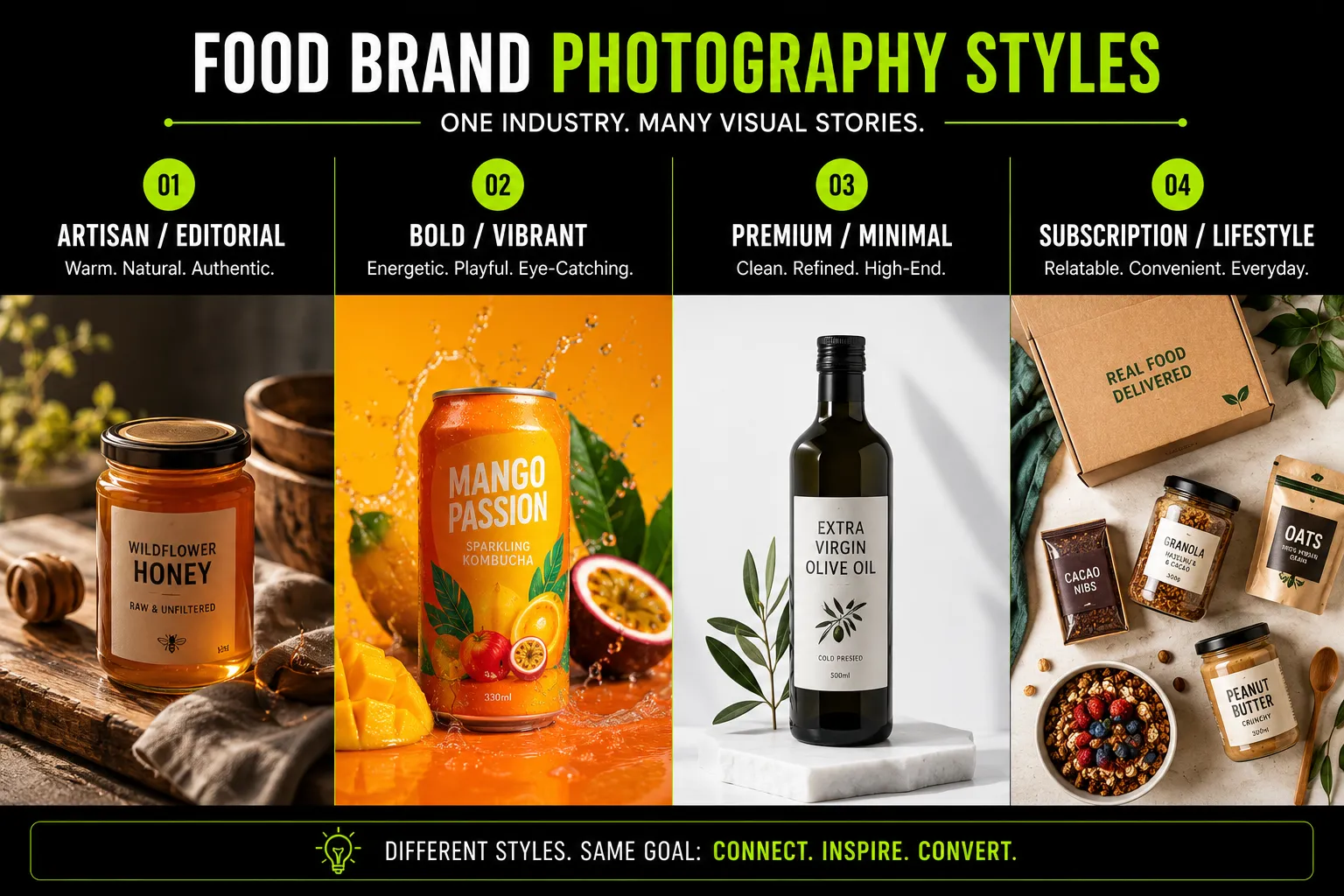
Most theme guides treat food and beverage as one category. It isn't. Your product's visual language and your business model both change what "the right theme" means for you.
The Four Food Brand Archetypes
Archetype 1: Artisan, Premium, Origin-Led
Small-batch olive oil, single-origin coffee, world-sourced teas. The product's story sells it, not price or promotion.
These brands need generous white space, editorial layout sections, origin storytelling templates, and lookbook capability. Photography is usually high-resolution and image-heavy, so performance matters.
Archetype 2: Bold, Functional, Trend-Le
Snack brands, energy drinks, hot sauces, functional beverages. Appetite appeal and energy drive the sale.
These brands need vibrant design, promotional infrastructure like countdown timers and popups, quick buy, and mobile-first optimisation, along with age verification where alcohol or restricted products are involved.
Archetype 3: Subscription, Replenishment Model
Meal kits, coffee subscriptions, functional supplements, specialty food boxes. Repeat purchase is the business model itself, not a bonus.
These brands need native subscription layout support, bundle builder capability, and strong cross-sell built around AOV rather than one-time discovery.
Archetype 4: High-Volume, Multi-Category:
Online grocers, wide-SKU FMCG brands, hybrid physical-digital retailers. Navigation is the conversion bottleneck here.
These brands need robust filtering by allergen, diet, and occasion, a mega menu for deep categories, quick-add from the collection page, and performance that holds up at scale.
Most food brands, and most food theme guides, skip this distinction entirely. An artisan brand ends up on a theme built for snack brands.
A subscription brand picks an editorial theme with no native recurring-purchase support. Both end up with a store that looks fine and underperforms, because the architecture doesn't match how the business actually sells.
If you want help mapping your specific catalogue and business model to the right theme before you commit, Suplex's ecommerce store setup service starts there.
What to Look for Before Reviewing Any Themes
Before you look at a single theme demo, know which features actually matter for food ecommerce. Most competing guides skip straight to reviews and miss this.
- Ingredients and Nutritional Information Display: This is the single most important food-specific feature. A theme without a native structured section for this forces you to stuff it into the description or bolt on an app, both of which hurt page weight and readability.
- Dietary and Allergen Filtering: For brands selling to vegan, gluten-free, halal, keto, or nut-free segments, filtering by dietary attribute is a conversion feature, not a nice-to-have. A shopper who can't filter for their need won't buy.
- Age Verification: Required for alcohol, some energy drinks, and CBD-infused products. A native age gate is faster and more reliable than an app, and for alcohol brands it's the first brand interaction a customer has.
- Subscription and Recurring Purchase Support: For subscription brands, the theme needs to show subscription pricing, benefit callouts, and bundle options on the product page without heavy customisation. Refresh's native layout support is the clearest example of this done well at the theme level.
- Recipe and Content integration: Recipe content drives organic traffic and links naturally back to product pages. A theme with strong editorial architecture built alongside the shop supports this without splitting content and commerce into separate experiences.
- Store Locator: For food brands with physical retail presence, a store locator section cuts the friction of finding local stockists without sending shoppers off-site.
- Image Quality Handling: Food photography is the largest single conversion variable in this category. A theme needs to load imagery well, support zoom for texture shots, and handle video for pours and preparation shots. A theme that compresses photography into small thumbnails is costing you sales.
For more on how product pages convert once you've picked a theme, see Suplex's guide to product listing page best practices.
Free Shopify Themes for Food and Beverage
Free doesn't mean limited here. Several free Shopify themes are purpose-built for this category and hold up against paid options.
Crave (Free): Best for Bold, Functional, Trend-Led Brands
Developer: Shopify · Lighthouse score: 88+ · Price: Free
Crave is Shopify's theme for food and beverage brands leading with visual appetite appeal and energy. High-contrast design, saturated colour, and bold typography make products look immediately desirable, which suits snack brands, beverage labels, and hot sauce brands well.
The food-specific feature set is genuinely strong: native ingredients and nutritional sections, quick buy from collection pages, cart notes, in-store pickup, cross-selling, and a mega menu.
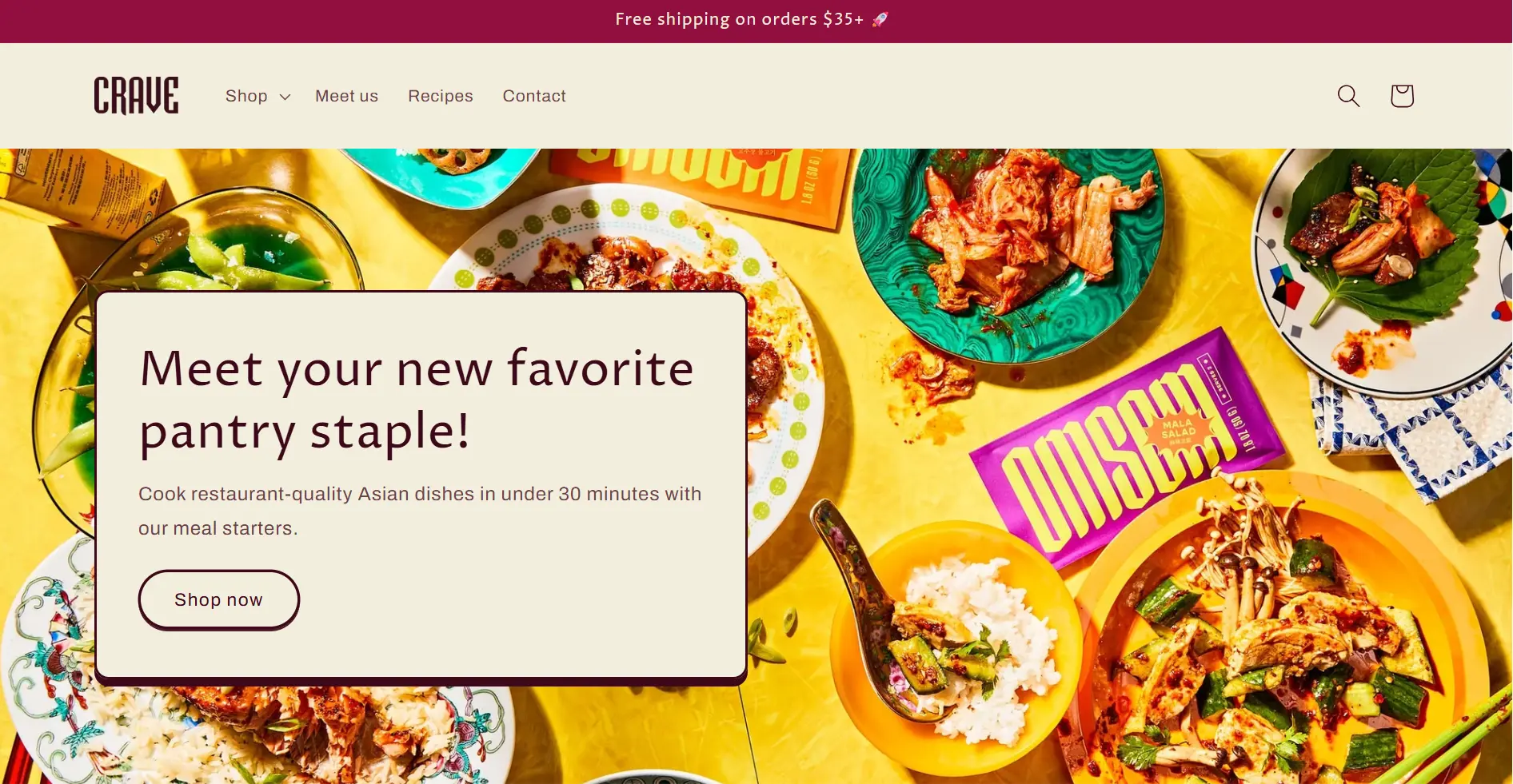
The honest limitation: Crave's visual personality doesn't tone down easily. Calm or premium brands like specialty coffee or artisan chocolate will find its energy works against their positioning.
Best For: Snack brands, functional beverages, hot sauce and condiment brands, brands targeting a younger audience, and anyone launching on a limited budget who wants visual impact fast.
Taste (Free): Best for Editorial, Premium Food Brands
Developer: Shopify · Price: Free
Taste is Crave's quieter counterpart. Large-format photography sections, generous typography, and content-alongside-shop architecture make it a natural fit for premium specialty food brands and brands running recipe content next to their store.
Native nutritional information display and FAQ sections come built in. The editorial architecture links recipe content to purchase, which drives both organic traffic and lifetime value.

The honest limitation: Taste has almost no built-in promotional infrastructure. No countdown timers, no popups. Brands running regular promotions will need apps to add urgency mechanics.
Best For: Speciality coffee, premium condiments, artisan brands with editorial content strategies, farm-to-table brands.
UAE/Gulf note: Taste's clean typography handles bilingual Arabic-English content without the layout conflicts that denser, bolder themes can create, which makes it a solid fit for premium UAE food brands.
Refresh (Free): Best for Subscription Food Brands
Developer: Shopify · Price: Free
Refresh is the most commercially distinctive free theme in this list, not because it's the most visually striking, but because it's the only free theme with native subscription product layout support.
For coffee subscriptions, monthly food boxes, and functional supplement brands, this is a foundational feature that other free themes handle through app workarounds.

The slide-out cart drawer, uncommon for a free theme, and clean modern aesthetic support both first-time buyers and the repeat-purchase behaviour subscription economics depend on.
The honest limitation: Refresh has a more neutral visual identity out of the box. Brands wanting strong visual character will need more customisation work here than on more opinionated themes.
Best For: Coffee subscriptions, speciality food box subscriptions, functional beverage subscriptions, any brand where first-order conversion into a recurring purchase is the goal.
Craft (Free): Best for Small-Batch Artisan Food
Developer: Shopify · Lighthouse score: 90+ · CWV pass rate: 89.1% · Price: Free
Craft is the artisan brand's free theme of record. Serif typography, warm editorial layouts, generous spacing, and lookbook capability communicate craftsmanship before a shopper even looks at a product.
Its 89.1% Core Web Vitals pass rate is the strongest performance metric of any free Shopify theme, which matters for food brands running high-resolution photography that can otherwise slow a page down.
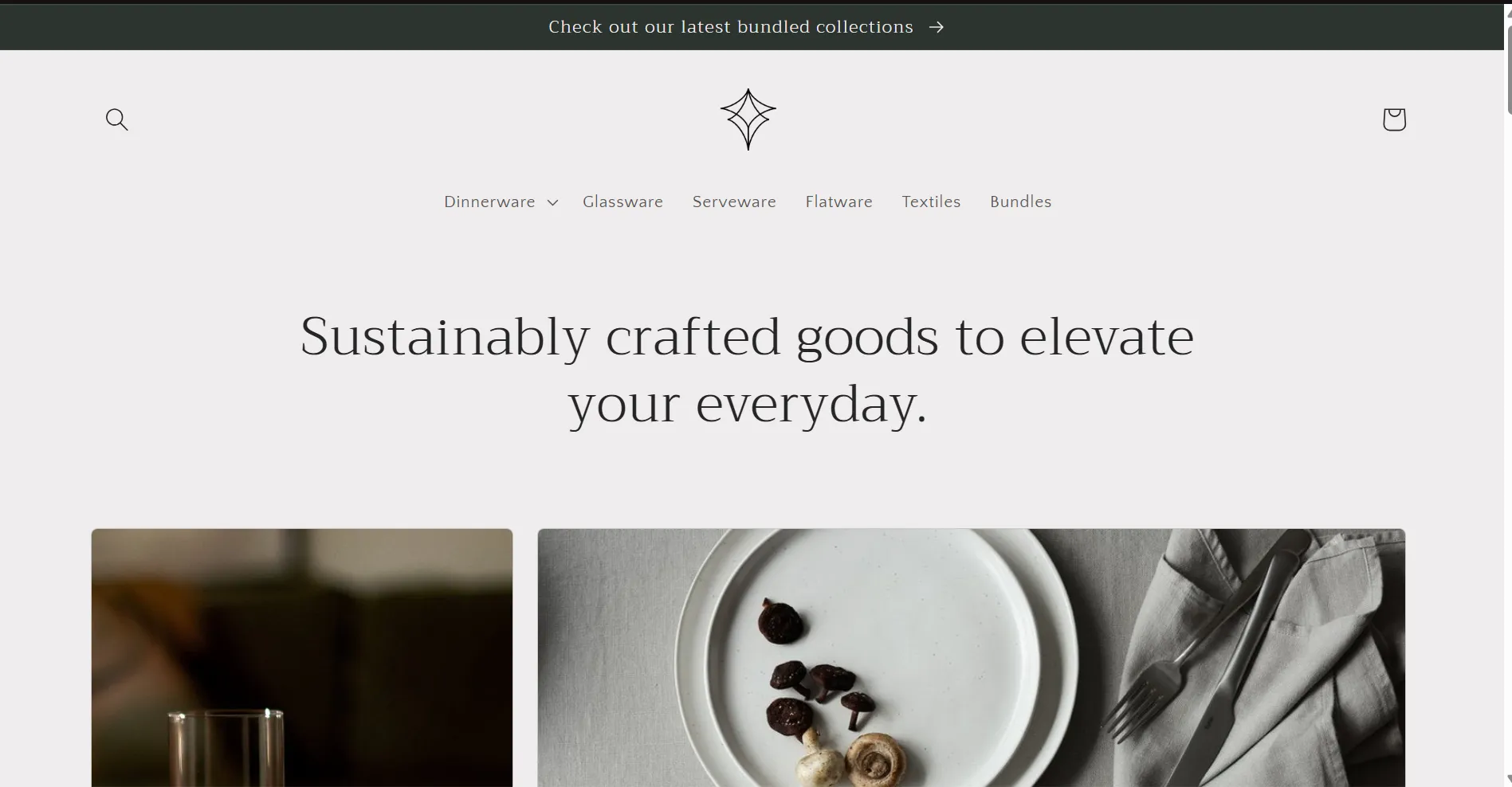
The honest limitation: Craft's aesthetic doesn't flex. Applied to a bold snack brand or high-volume retailer, it looks wrong. It's built for one archetype and does that one archetype very well.
Best For: Handmade and small-batch producers, farm-to-table brands, artisan chocolate, cheese, honey, and preserved food brands.
Dawn (Free): Best for Early-Stage Validation or a Custom Base
Developer: Shopify · PageSpeed: 92, the fastest free Shopify theme · Price: Free
Dawn plays the same role for food brands as it does everywhere else: the fastest, cleanest starting point for validating an idea before committing to a premium theme, or as a code base for custom development.
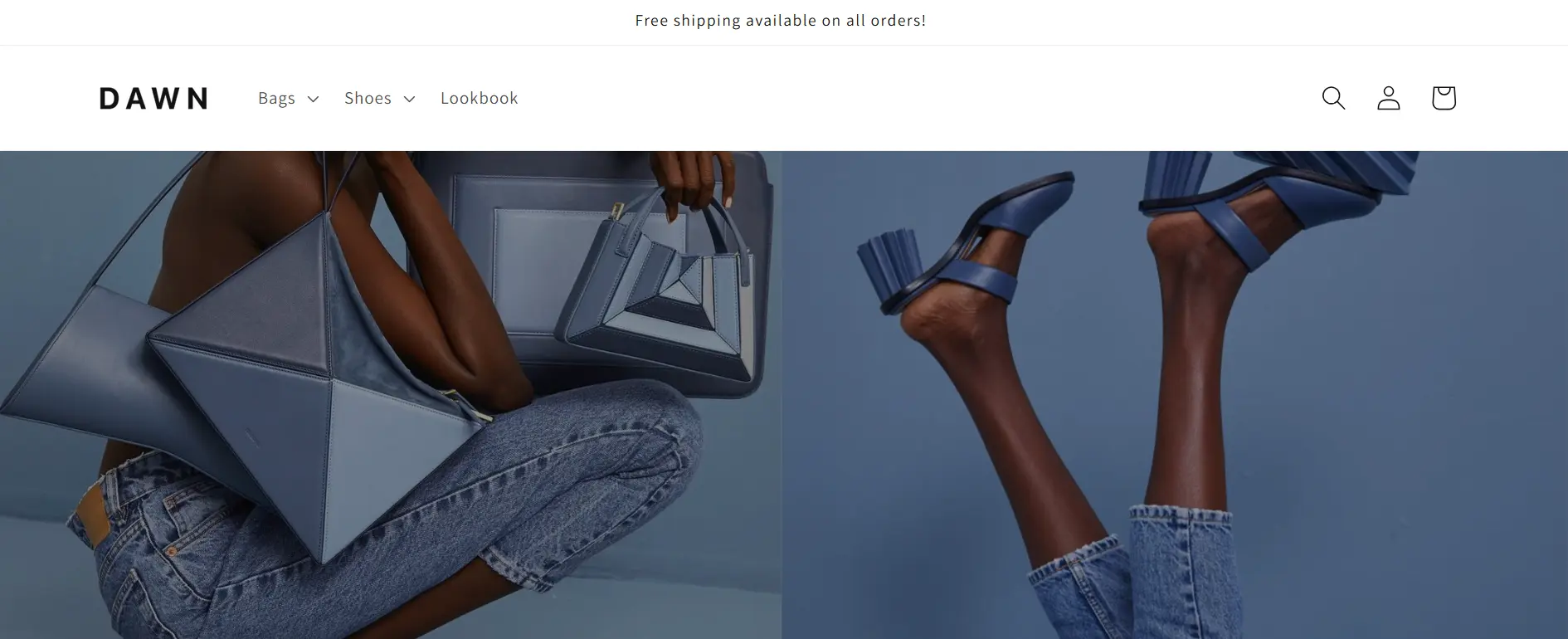
For food brands specifically, Dawn's minimal layout lets strong product photography do all the work. A brand with excellent photography on Dawn will outperform a brand with average photography on any premium theme.
Best For: Early-stage brands validating before theme investment, brands using Dawn as a base for semi-custom development, brands where photography is the primary differentiator.

Premium Shopify Themes for Food and Beverage
Premium themes earn their price through feature depth, not just polish. Here's what each one actually adds over a free option.
Foodie by We Are Underground (~$180): Best Purpose-Built Premium Theme
Developer: We Are Underground · Price: ~$180 one-time · Reviews: 96% positive (48 reviews) · Presets: Foodie, Grow, Slice
Foodie is the only premium Shopify theme built specifically for food businesses, not adapted from a general luxury theme.
Its promotional infrastructure stands out: cross-selling popups, promo banners, countdown timers, in-menu promotions, and homepage menus with pre-order support, all built in rather than requiring apps.
Native ingredients and nutritional information display, age verification, product video, and slideshows all come standard.

The honest limitation: Foodie's promotional density can work against premium or editorial brands. The same features that help a snack brand run a strong limited-edition launch create visual noise on a store trying to signal restraint.
Best For: Small to mid-sized food stores with active promotional calendars, bakeries and confectionery brands with seasonal lines, brands where promotional urgency drives conversion.
Editions by Pixel Union: Best for Subscription and Premium Minimal Food
Developer: Pixel Union · Price: ~$120
Editions is minimal and product-focused, which suits subscription food brands and D2C premium labels wanting photography to do the conversion work without promotional distraction.
Multiple product page layouts, FAQ and lookbook templates, and clean content architecture give flexibility without complexity.
For subscription brands, Editions' clean page architecture integrates more cleanly with apps like ReCharge and Skio than premium themes with busier layouts that can conflict with subscription widget placement.
Best For: Premium D2C subscription brands, artisan labels with a focused product range, brands positioned as elevated and curated rather than bold and energetic.
Aurora: Best for Storytelling-Led Beverage and Specialty Food
Developer: Shopify · Highlights: Stella preset recommended for food/beverage, video sections, collages, before/after sliders, flexible product information blocks
Aurora's Stella preset suits premium beverage and specialty food brands where the visual story of the product drives the purchase.
Video sections, collage layouts, and before/after sliders let brands show ingredient origin and production process, the content that converts premium buyers.

Flexible product information blocks and customisable colour swatches suit brands with multiple flavours, formats, or sizes where each variant has its own identity.
Best For: Craft beverage brands (natural wine, specialty spirits, premium juice), specialty food brands with strong origin stories, brands running seasonal collections.
Canopy by Clean Canvas: Best for High-Volume Food Retail
Developer: Clean Canvas · Highlights: Built for large catalogues, smart filtering, sticky cart, robust search
Canopy solves one specific problem: making a large, complex catalogue shoppable. Online grocers, spice brands with 100+ SKUs, and multi-category food retailers all face the same issue: too many products for standard navigation to handle cleanly.
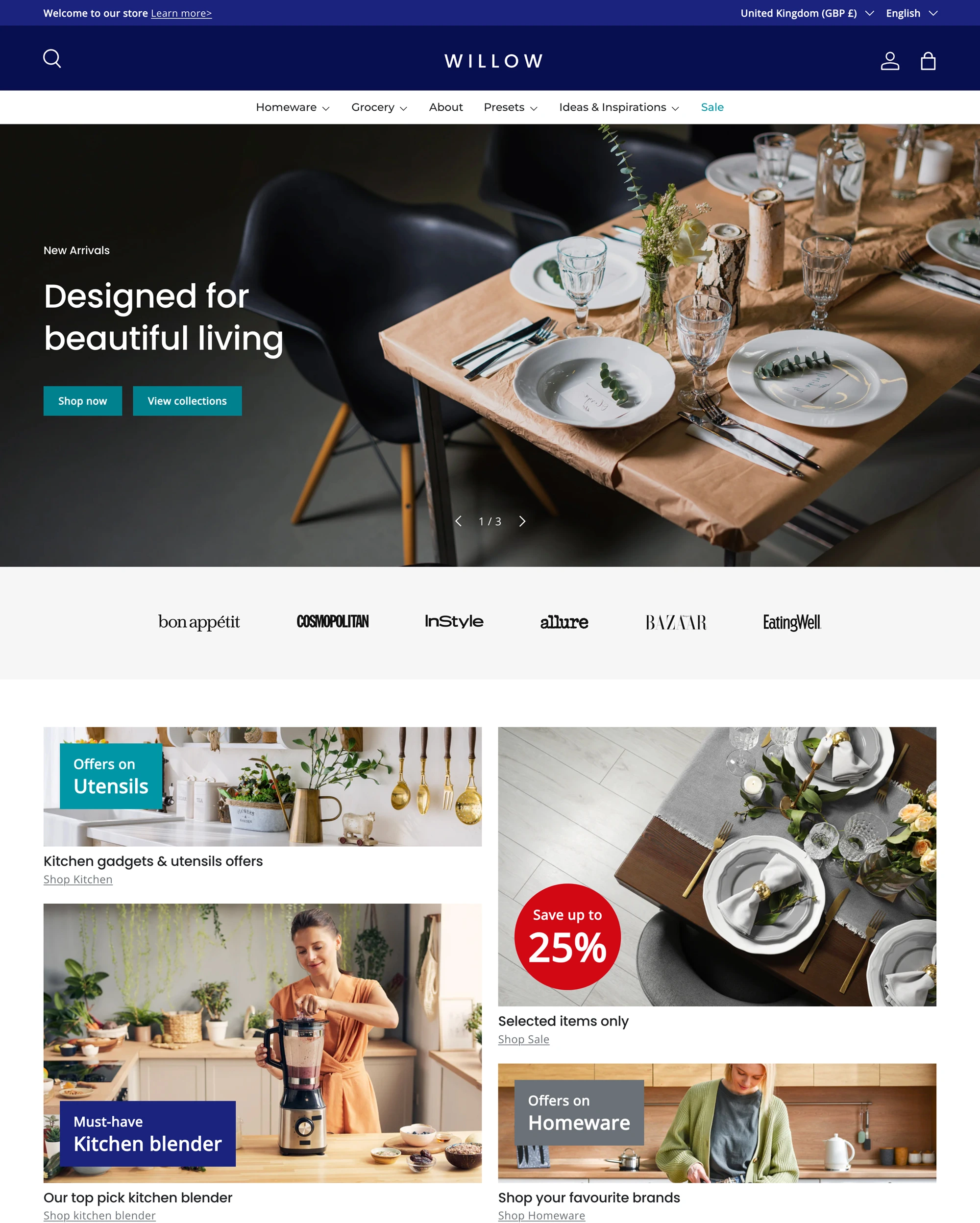
Smart filtering, a multi-column menu with product images, and robust search including dietary and allergen filters via Shopify metafields address this directly.
Best For: Online grocery and multi-category food stores, spice and condiment brands with large SKU counts, food brands operating at high volume where catalogue navigation is the primary UX challenge.
Focal by Maestrooo (~$400): Best for Premium Food Brands With Strong Photography
Developer: Maestrooo · Reviews: 93% positive (335 reviews) · Price: ~$400
Focal isn't food-specific. It's a multi-industry premium theme from the developer behind Prestige, and for premium food brands with genuinely exceptional photography, it elevates product visuals more effectively than most food-specific alternatives.
Image hotspots, lookbook sections, editorial layouts, and 20 built-in section options give premium brands the tools to build stores that feel closer to branded content than product catalogues.
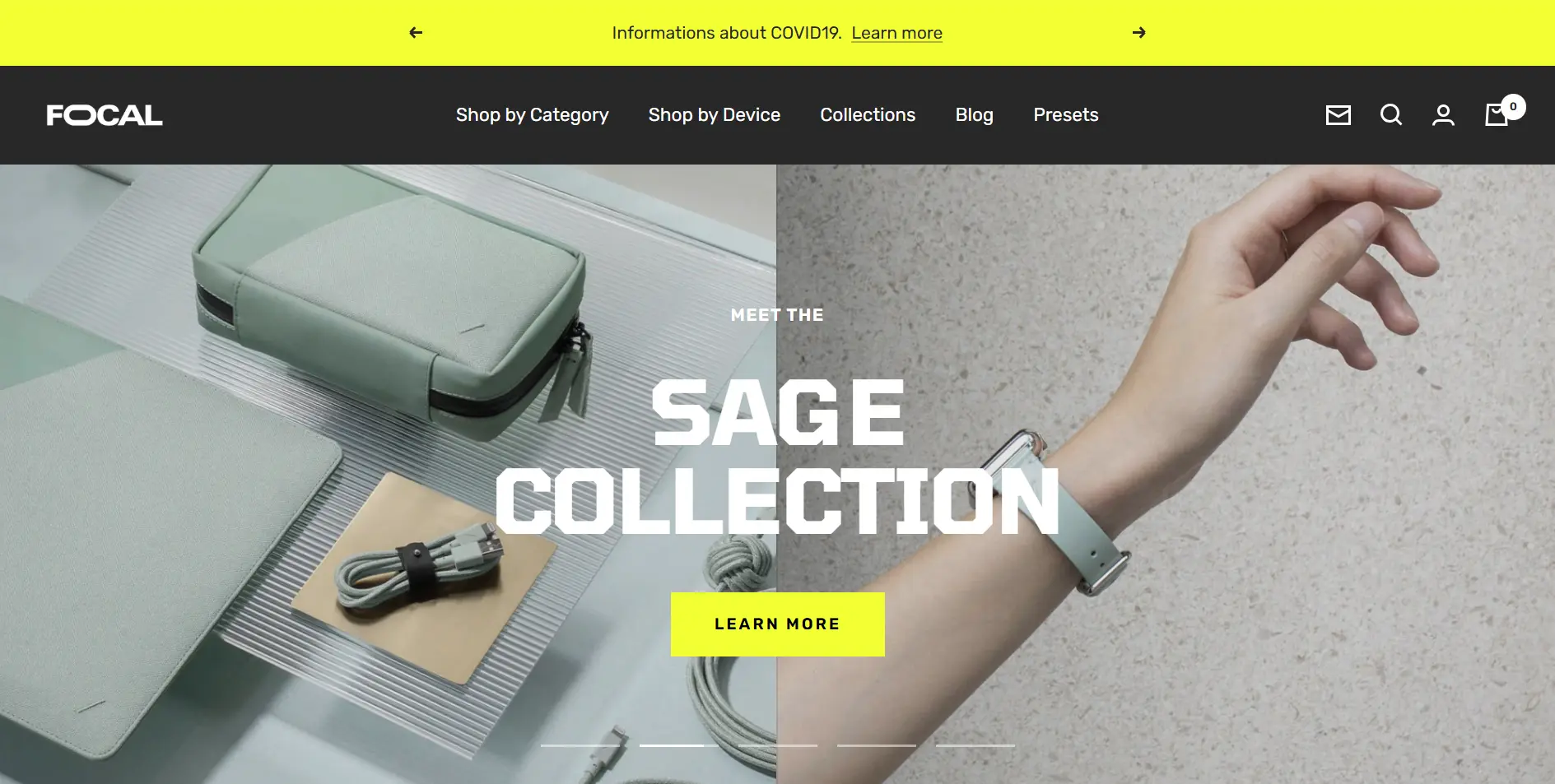
The honest limitation: at $400, Focal is the most expensive option here. For brands under $500K annual revenue, a well-configured free theme with targeted custom sections gets 80–90% of Focal's visual result for far less.
Best For: Premium artisan brands with a real photography investment, brands where the store aesthetic needs to justify a premium price, brands crossing into gifting and lifestyle territory.
If you're weighing a premium theme against a semi-custom build, Suplex's custom Shopify themes service can scope both paths before you spend on either.
Theme Quick Reference by Food Brand Type
Use this table to jump straight to a recommendation based on your brand type.

When a Theme Isn't Enough: The Semi-Custom Decision
A theme is a container. At a certain point, the container stops being able to hold what your brand needs to say.
What a Well-Chosen Theme Can Deliver
A well-configured Taste, Crave, or Foodie theme handles most food brand requirements: ingredient display, nutritional information, visual storytelling, mobile checkout and promotional mechanics.
For most brands under $1M–$1.5M in annual revenue, a well-chosen theme is the right call.
Photography is the biggest conversion lever in this category, not the theme itself. A brand spending $5,000 on professional food photography on a free theme will consistently outperform a brand spending that same amount on a premium theme with average photography.
When Semi-Custom or Custom Development Makes Sense
Origin And Ingredient Storytelling That Exceeds Template Limits:
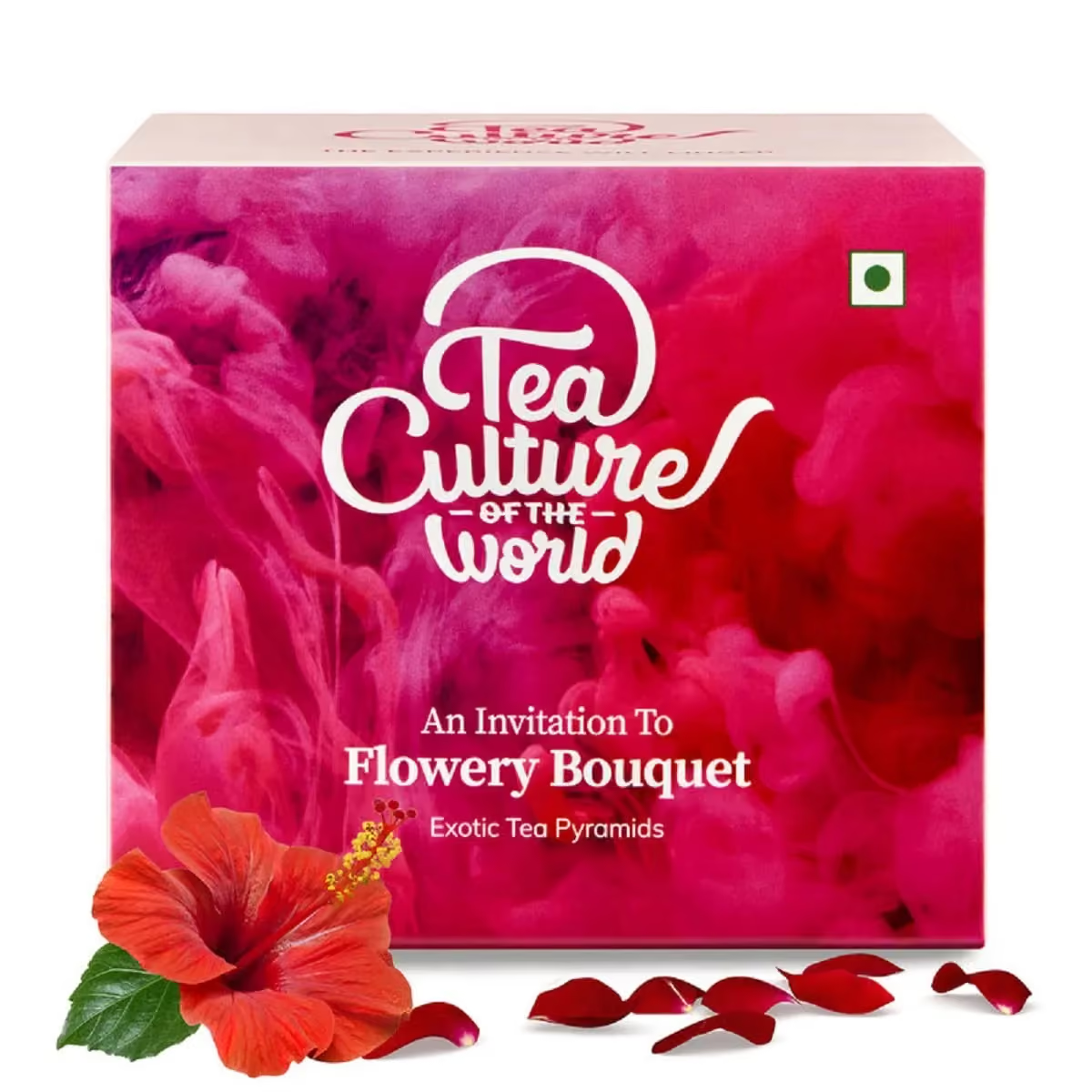
On Tea Culture of the World, Suplex built mood-based navigation ("Energise. Relax. Glow. Cleanse. Focus.") and geographic origin world-building into the site architecture, a discovery approach no pre-built theme provides.
When catalogue complexity and brand depth need custom navigation logic or bespoke product page hierarchy, a semi-custom build on a clean theme base is the right investment.
Subscription Model Complexity:
When bundle customisation, flexible delivery schedules, or loyalty architecture goes beyond what ReCharge or Skio handle natively, custom development removes the multi-app layer that slows load time and adds operational cost.
Halal certification and dietary filtering as primary navigation:
For UAE and Gulf brands where halal status, vegan status, and allergen information are primary category filters rather than secondary attributes, building these into navigation natively produces a better experience than app overlays.
Revenue Threshold:
A 0.5% conversion rate improvement at $1M annual revenue is worth $5,000 a year. A semi-custom build costing $8,000–$20,000 breaks even in 2–4 years from that improvement alone, before counting operational savings.
Below $500K, put the money into photography and marketing first. Above $1M with a confirmed conversion constraint, semi-custom becomes commercially viable.
The most impactful design decision on Tea Culture of the World was moving primary navigation away from the product category (green tea, herbal tea, black tea) toward emotional state and use case.
"How do you want to feel?" is a fundamentally different question than "which tea category are you looking for?" and it changed how every visitor experienced a 120-product catalogue. No theme provides that kind of navigation out of the box.
For food brands with real depth in their range and sourcing story, that kind of bespoke discovery architecture produces results template configuration can't match.
Shopify Themes for Food and Beverage Brands in the UAE and Gulf
UAE food ecommerce has regulatory, trust, and UX requirements that most guides to this topic never mention.
Halal Certification as a Design System Requirement
In the UAE and broader GCC, halal certification isn't a niche trust signal, it's a purchase prerequisite for most of the market. Close to 63% of UAE and Saudi consumers expressed interest in halal-certified food and personal care products in recent research.
A food brand selling in the UAE without visibly displaying halal certification on the product page is failing a baseline requirement, not missing a nice-to-have.
The badge should sit adjacent to the product title, the same position a Western brand would use for "certified organic" or "vegan."
Themes that support Shopify metafields for product attributes (most OS 2.0 themes do) can display this as a structured attribute cleanly. Check your chosen theme's product page section flexibility before committing.
Arabic RTL Navigation for Food Catalogues
Food brands typically use sensory category labels like "Fresh," "Natural," "Spiced," and "Sweet" that carry different connotations in Arabic than a direct translation would.
A bilingual UAE brand should invest in native Arabic category naming and confirm the navigation flows correctly right to left.
Filter direction is the most commonly broken element on UAE food ecommerce sites. A filter sidebar on the left, correct for English, reads as disconnected from the product grid for an Arabic-preferring shopper whose eye starts on the right. In RTL mode, the sidebar needs to sit on the right.
Delivery Expectations on the Product Page
UAE consumers are conditioned by noon.com, Amazon UAE, Talabat, and Careem Now to expect specific delivery communication before checkout.
A product page that only says "shipping calculated at checkout" without a delivery estimate loses UAE shoppers at a noticeably higher rate than in markets without this expectation.
Themes with prominent delivery estimate display near the CTA, or layouts flexible enough to add one, suit the UAE market better than themes that bury this information.
COD, BNPL and Payment Visibility
For premium food and gifting brands in the UAE, BNPL through Tabby or Tamara is increasingly relevant, particularly for gift hampers and premium subscription launches.
Themes that display payment method logos prominently on product pages and place BNPL widgets cleanly at checkout handle this better than themes with rigid checkout layouts.
COD still matters for food-delivery-adjacent brands. A theme that can communicate COD availability on the product page itself, rather than only revealing it at checkout, reduces hesitation before a shopper even reaches payment.
For a wider look at what changes for regional stores, see Suplex's international ecommerce setup service.
How Suplex Designs Shopify Stores for Food and Beverage Brands
Food and beverage is one of our most active work areas, and the commercial challenges here are specific.
Food sells on sensory experience that a screen can't directly replicate, so every design decision has to work harder to build purchase confidence than in categories where the customer can fully evaluate the product from a photo.
Our most developed work in this space is Tea Culture of the World, a Shopify build for a 120-blend global tea brand serving Hyatt, Air India, and Four Seasons alongside its consumer audience. The challenge was holding two very different buyer types in one experience without the site feeling split.
The solution: mood-based navigation at the entry point, geographic origin world-building as the discovery journey, and editorial product pages built as confidence-building experiences rather than standard listings. Conversions went up, engagement went up, drop-off went down, across both the D2C and B2B sides.
We've also worked on Great Lakes, a full-stack website for a Midwest tequila brand, with production storytelling and conversion optimisation built around alcohol D2C and lifetime value.
What we consistently find across food and beverage builds: the theme is the least important variable. Photography investment, information architecture and the product page's ability to resolve a buyer's specific anxieties (ingredient transparency, origin credibility, dietary suitability, delivery confidence) matter more. Themes are containers. The design decisions inside them are what drive conversion.
If you're building or redesigning a Shopify store for a food or beverage brand, whether that's picking the right theme, weighing premium against semi-custom, or fixing a store that isn't converting the way your product deserves, Suplex's platform consultation starts with the commercial objective, not the visual brief.
Frequently Asked Questions
Which Shopify theme is best for food and beverage brands?
It depends on your brand archetype. Crave (free) or Foodie (~$340) suit bold, promotional food brands. Taste (free) or Editions (~$350) suit premium and artisan food. Refresh (free) suits subscription models. Craft (free) suits small-batch artisan brands. Canopy suits high-volume catalogues. There's no universal best; the theme matching your conversion model outperforms whatever's popular.
What is the best free Shopify theme for food products?
Shopify offers four strong free options: Crave for bold, visual food and beverage brands; Taste for premium and editorial brands running content alongside their store; Refresh for subscription models thanks to its native recurring purchase layout; and Craft for small-batch artisan producers. Dawn is the fastest free theme overall and works well as a photography-first starting point.
Is Shopify good for food businesses?
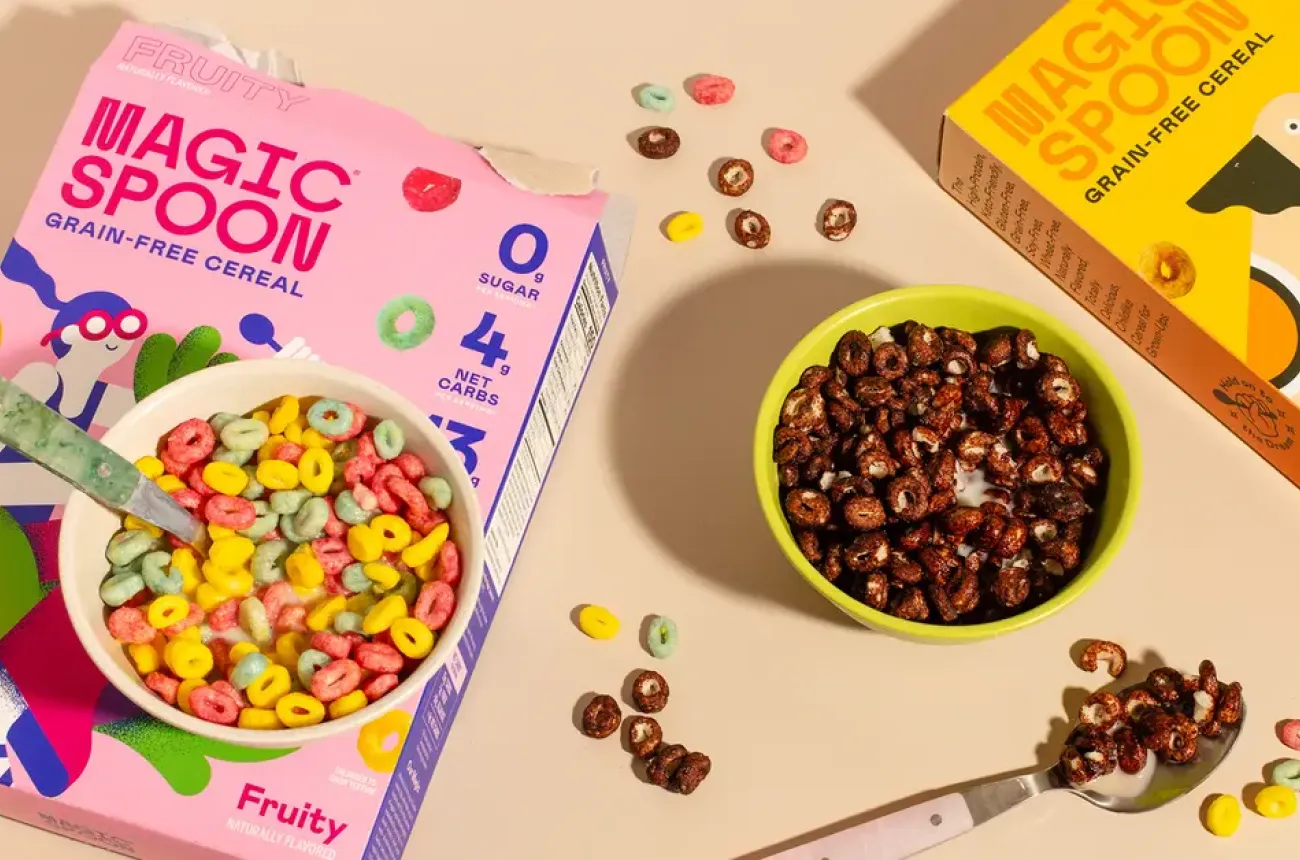
Yes. Food and beverage is Shopify's highest-converting category at a 6.22% average conversion rate, the highest of any vertical on the platform. Major food D2C brands including Magic Spoon, Liquid Death, and Chomps run on Shopify. The platform supports subscription apps, fulfilment integrations, flexible shipping profiles for perishables, and allergen filtering through native metafields.
What features should a food ecommerce website theme have?
Six features matter most: native ingredients and nutritional information display, allergen and dietary filtering via metafields, age verification for alcohol and restricted products, subscription and recurring purchase layout support, high-resolution image and video handling, and promotional infrastructure for brands running frequent campaigns.
What is the Foodie Shopify theme and is it worth it?
Foodie by We Are Underground (~$340) is the only premium Shopify theme built specifically for food businesses. It includes an age verifier, native ingredient and nutritional display, popup cross-selling, homepage menus with pre-order, promo banners, countdown timers, and a slide-out cart. With 96% positive reviews from 48 customers, it's the highest-rated purpose-built food theme in the Shopify Theme Store. It's worth it for promotional food brands, less so for premium editorial brands needing a more restrained look.
Hi, I’m Rishabh Jain
I believe great digital experiences have the power to shape perception, build trust, and move businesses forward. That belief led me to found Suplex Design Studio, a global digital design and development studio helping FMCG and D2C brands build websites and digital experiences that are strategic, thoughtful, and commercially meaningful.
I started Suplex at 25 with a clear intent, to create digital experiences that look appealing, work seamlessly, and help D2C businesses grow. By 28, the studio had scaled globally, guided by a strong foundation in integrated design that I developed during my academic journey in London, where I was honoured with the Dean’s Award.
Over the years, I’ve had the opportunity to work with 100+ brands, from Fortune 500 organisations to family-run businesses, helping them build websites, e-commerce experiences, and digital products that create clarity, credibility, and long-term value.
Our work has been recognised internationally, including the Manifest Award (2024), the Clutch Global Award (2025), and features across platforms such as The Dieline, Packaging of the World, and the World Brand Design Society.
None of this would be possible without the people behind the work. I’m deeply grateful to the Suplex team, whose commitment, creativity, and attention to detail turn ideas into meaningful digital experiences every day.
At the heart of our work is a simple philosophy, digital design should be intentional, functional, and built to create real business value. That continues to guide everything we create at Suplex.



















Let’s Make It Happen
E-Commerce Success Stories
%201.avif)





.avif)
.avif)
Build Your D2C Business The Right Way
Build It With Suplex.


