Ecommerce Website Development for Smart Home Brands in the UAE

Ecommerce Website Development for Smart Home Brands in the UAE
Smart home brands in the UAE can attract traffic but still lose sales when buyers can’t find answers about compatibility, installation or privacy.
As the market grows, e-commerce websites must remove buying doubts and turn visits into orders.
With deep expertise in building ecommerce websites in the UAE, here’s our guide that explores what smart home stores need, what to prioritise, how much development costs in AED, and when to bring in specialist help.
Why a UAE Smart Home Store Needs a Different E-commerce Build
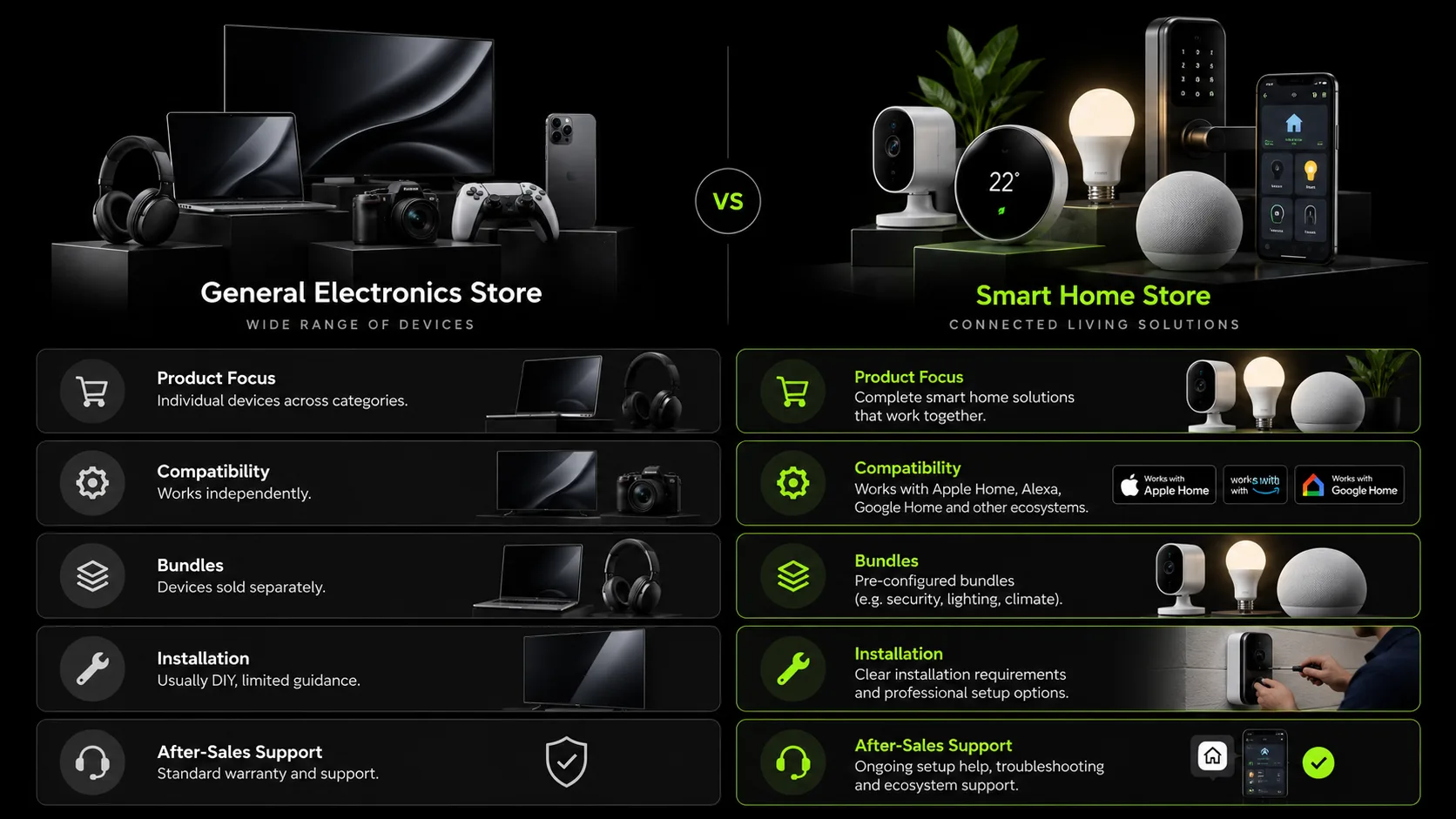
A general electronics store sells products based on price, features and specifications. A smart home store must also help customers confirm that devices will work with their existing ecosystem, network, hub and home setup.
That changes how the catalogue, product pages and checkout should work.
What makes the UAE market different?
Different Housing Needs: Villa owners may need whole-home lighting, climate control and security systems. Apartment residents may prefer wireless, renter-friendly devices. Product filters should help both groups find suitable options.
Arabic Voice Control. Buyers may want to know whether a device supports Arabic voice commands and which assistants or ecosystems it works with. These details should be easy to find on product pages.
Installation Requirements: Hardwired devices may require professional installation, making installation options, service areas and booking information important parts of the shopping journey.
Trade and Bulk Purchases: Developers, installers and integrators may need bulk pricing, project quotes, technical documents and business purchasing options alongside the standard consumer checkout.
Build The Catalogue Around Compatibility
The most important requirement is structured product data. Each relevant product should clearly identify its supported protocols, hub requirements, app dependencies, regional compatibility and installation type.
That information can power filters, comparison tables and compatibility notes before checkout. Without it, customers may buy devices that cannot work together, increasing support requests and avoidable returns. Plan the navigation and product hierarchy around these decision points. Suplex’s information architecture service can help structure complex catalogues.
Trust also matters. Display clear warranty, delivery, payment and return information, and ensure product information and checkout meet applicable UAE requirements.
When A Simpler Store Is Enough
Not every smart home business needs a custom e-commerce build. A brand selling a small range of plug-and-play devices through one ecosystem may do well with a suitable Shopify theme and complete product information.
A more advanced store becomes worthwhile when compatibility rules, installation services, complex product bundles or trade purchasing create needs that a standard setup cannot handle efficiently. Start with those requirements, then choose the platform and build scope around them.
Make Compatibility the First Answer on Every Product Page
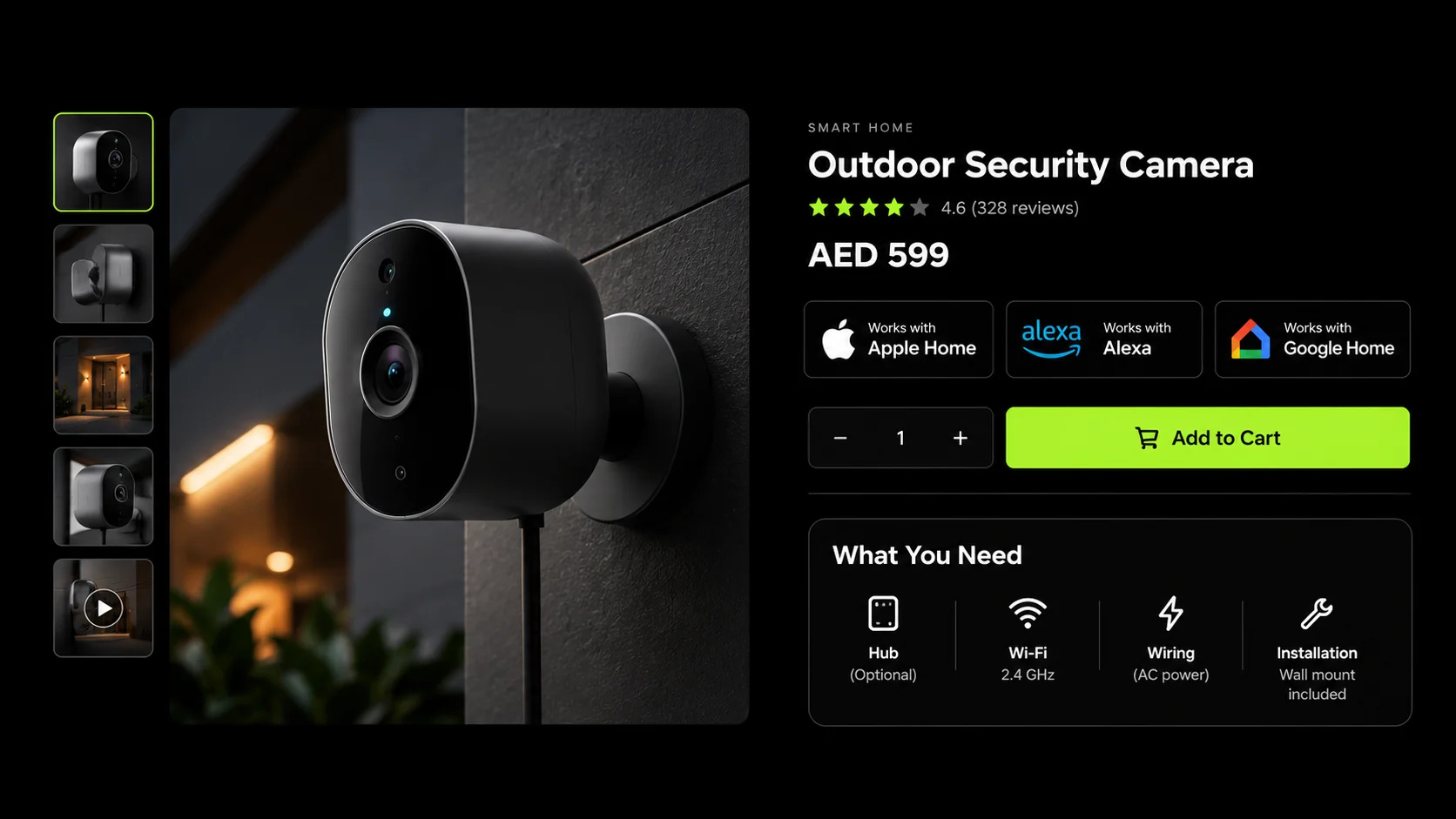
For a smart home product, customers want to know one thing before buying: will it work with the devices they already own?
Put compatibility details near the product title and price, rather than hiding them in a specifications tab or PDF.
The Product Data Every SKU Needs
For UAE stores, check that each model is suitable for the local market and meets applicable TDRA type-approval requirements for radio-enabled devices.
Shopify metafields let you store these details against each product and display them across product pages, filters, comparison tables and compatibility checkers. This also avoids maintaining the same information separately in multiple places.
When to Add a Compatibility Checker
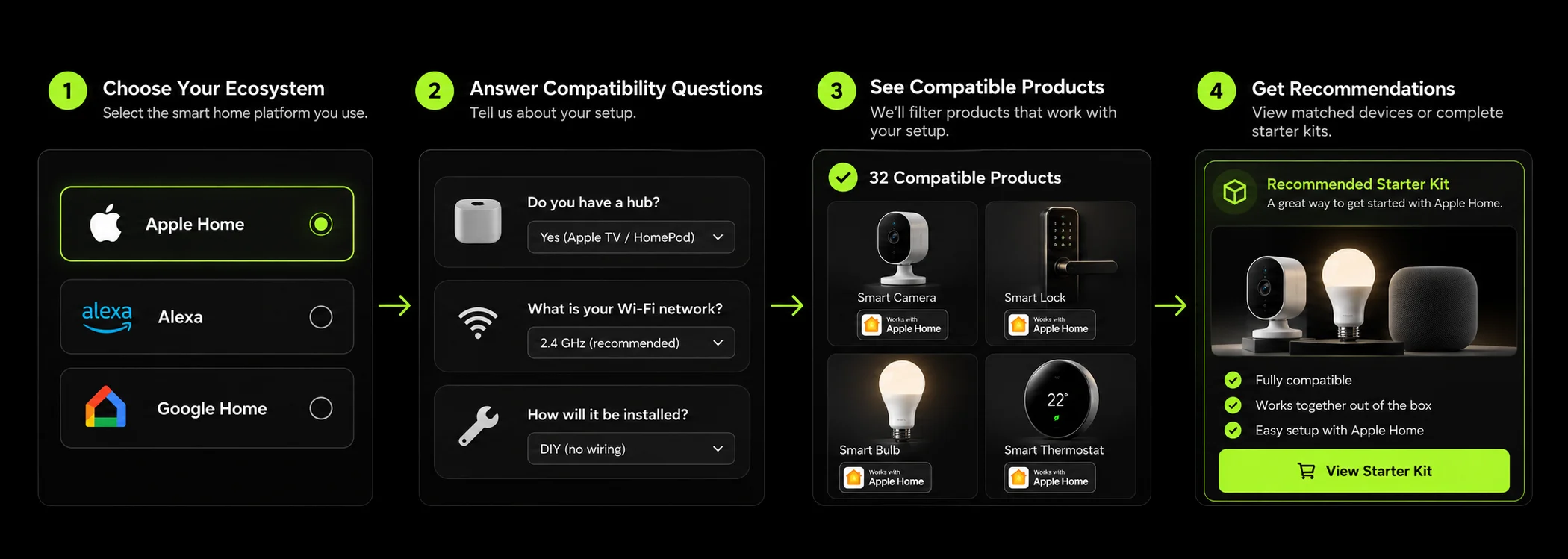
If your catalogue includes devices that use different protocols, hubs and installation methods, a guided checker can help customers find suitable products.
Ask which ecosystem they use, whether they already have a hub, how many rooms they want to equip, whether they rent or own their home, and if they need professional installation. Use their answers to recommend compatible devices or starter kits.
For a small range built around one ecosystem, compatibility labels and filters may be enough. A separate checker is more useful when customers have several requirements to consider.
Keep Compatibility Data Up to Date
Assign responsibility for checking product information when new models arrive or specifications change. Firmware updates can also affect how devices work together, so compatibility claims should be reviewed rather than left untouched.
Accurate information helps customers choose the right equipment and reduces avoidable setup problems, returns and support requests. Before committing to a new store, review your current product data, navigation and buying journey. Suplex’s Shopify audit can help identify what needs fixing and what can stay.
On Your Smart Home Website, Sell Systems, Not Single Devices
Smart home customers often start with one device and add more later. Your store should help them choose products that work together, whether they are setting up a single room or automating an entire villa.
1. Curated Starter Kits : Group products around a specific need, such as home security, smart lighting or energy management.
Show what each kit includes, whether a hub is required and how much it costs compared with buying the products separately.
In the UAE, consider separate options for renters in apartments and villa owners who may need wiring changes or professional installation.
CTA
2. Compatible Add-ons : Recommend products that work with the customer's existing setup. Someone buying a smart doorbell, for example, might also need a compatible indoor camera or smart lock.
If you don't have reliable data on the devices a customer owns, start by recommending products based on the item they are viewing or buying. Personalised recommendations need accurate compatibility data.
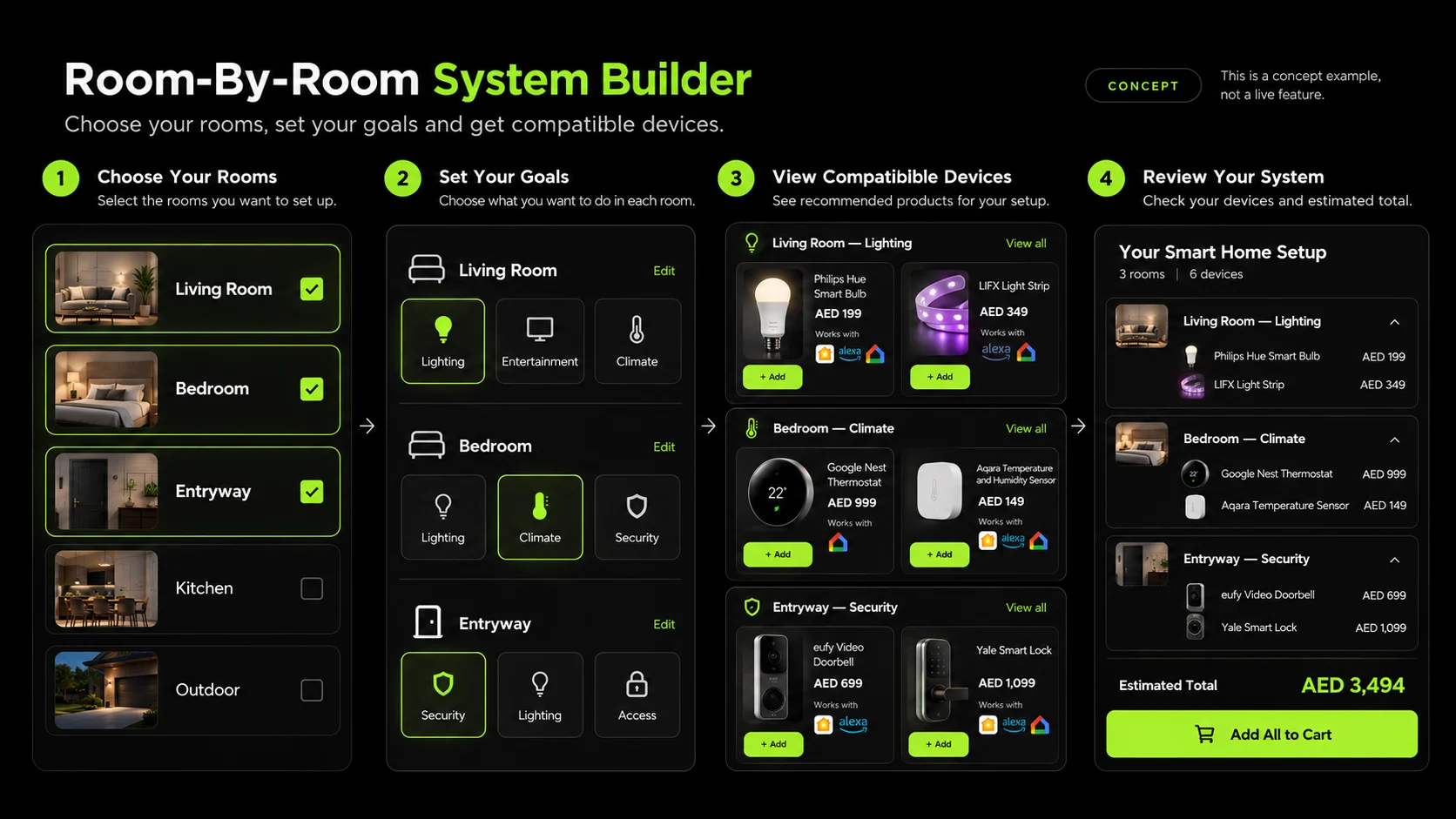
3. A Room-by-Room System Builder: Let customers select rooms, choose what they want to automate and specify their requirements. The store can then suggest suitable devices and quantities.
This is useful for larger homes and multi-room projects, but it takes more development and ongoing product-data maintenance than a standard bundle setup.
Which Approach Fits Your Store?
Shopify bundles can help you sell starter kits. A more advanced configurator may need an app or custom web development. If you plan to sell subscriptions alongside bundles, check that your chosen tools work together before building the setup.
Show the Ongoing Costs
Some smart home devices need paid cloud storage, monitoring or app subscriptions. State what is included in the price, which services cost extra and when recurring charges apply.
Make it clear whether a subscription is optional and what happens if it is cancelled. This helps customers understand the full cost of a smart home setup before they buy.
Remove Setup and Installation Doubt Before Checkout
Customers may hesitate to buy a smart home device if they aren't sure how to install it or whether it will work in their home. Answer these questions before checkout, not after the order arrives.
Include four essentials:
- Setup Time and Steps: Explain what's involved, how long installation usually takes and whether tools or app permissions are needed.
- Visual Instructions: Add a short setup video, app screenshots and a link to the manual.
- Installation Requirements: Label each product as DIY, professional installation recommended or professional installation required.
- Pre-Purchase Support: Provide compatibility FAQs and a WhatsApp contact or other support channel your team can manage reliably.
Let Customers Arrange Installation
For hardwired switches, thermostats, smart locks and similar products, explain how installation works before checkout.
Only list service areas and appointment slots your team or installation partners can reliably cover.
Check Requirements Before Payment
Remind customers to check for a required hub, compatible app and suitable Wi-Fi network. If a product needs a separate hub, recommend the compatible model and explain why it's necessary.
Show delivery estimates by location where available. For same-day or next-day delivery, state the eligible areas and order cut-off times.
Provide Support After Delivery
Send setup instructions when the order is dispatched or delivered. A QR code on the packaging can link to a mobile-friendly page with videos, troubleshooting steps and support details. Include the same link in the order confirmation or delivery email.
Explain the returns policy for installed products before purchase, including any conditions that apply.
Clear setup instructions, realistic delivery promises and accessible support help customers know what to expect before they place an order.
Subscriptions and Privacy: Questions That Stall High-Value Carts
Before buying a smart camera, video doorbell or alarm system, customers may want to know whether they’ll need a monthly subscription and how the device handles their data. Answer both questions on the product page.
Show Subscription Costs Before Checkout
Some devices need a paid plan for cloud recordings, longer video history or professional monitoring. Make it clear what customers get with the hardware and what requires an ongoing payment.
- Features Without a Subscription: List the features available without a paid plan.
- Subscription Pricing: Show plan prices in AED and explain renewal charges.
- Cancellation Terms: State how customers can cancel and what happens to device features when a plan ends.
- Subscription-Free Claims: Use a “Works Without a Subscription” label only if the device genuinely supports the advertised functions without one.
If you offer subscriptions through Shopify, check that your payment gateway supports recurring billing and that the setup is available for your business and region.
Explain How Devices Handle Personal Data
Cameras, speakers and sensors can collect information about people's homes and daily routines. Give customers clear answers about how that information is stored and used.
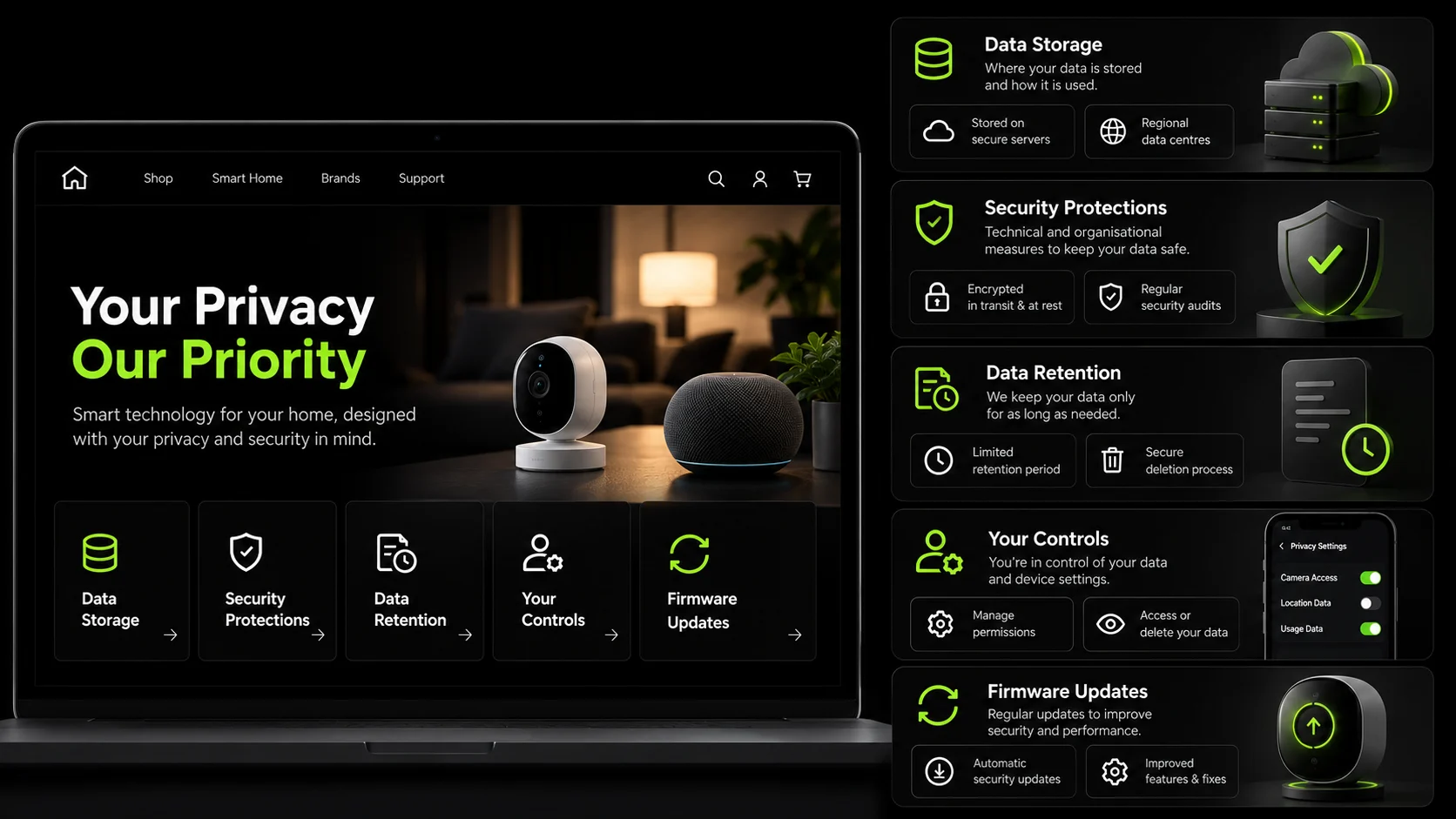
A dedicated privacy and security page should cover:
- Data Storage: What stays on the device, what is uploaded to the cloud and where it is stored.
- Security: Available account protections, encryption and remote access controls.
- Data Retention: How long recordings and other data are kept.
- Customer Control: How to change permissions, delete recordings or close an account.
- Security Updates: How firmware and security updates are delivered.
Link to this information from relevant product pages, particularly those for cameras, doorbells and voice-enabled devices. Mention security certifications only where the product holds them, and describe the protections the manufacturer actually provides.
For UAE stores, review subscription terms and privacy practices against applicable consumer protection and data protection requirements.
Customers should be able to check the ongoing cost and understand how a device handles their data before they buy it.
Trade, Installer and Developer Sales in the UAE
Smart home stores can serve installers, systems integrators, fit-out companies and property developers alongside homeowners.
Trade buyers often need bulk pricing, technical documents and repeat ordering. Requiring an email for every purchase slows the process.
Trade customers also need accurate stock information, lead times and technical support. Large projects may require scheduled deliveries, split shipments and handover documents.
Occasional Trade Orders: A trade enquiry form, downloadable documents and a dedicated sales contact may be enough.
Regular Wholesale Orders: Consider a B2B app or dedicated store section with trade pricing, minimum order quantities and a separate catalogue.
Large Projects or High Trade Volumes: Look at company accounts, customer-specific pricing, payment terms, quote workflows and ERP integration. Shopify Plus offers B2B features, but check that they meet your ordering and pricing requirements. Review Suplex’s Shopify Plus service if your trade model needs more advanced account and pricing workflows.
Use One Catalogue for Trade and Retail
Homeowners need compatibility and installation guidance, while trade buyers often need technical specifications, bulk quantities and project documents. Both should draw from the same product data to avoid inconsistent information.
For UAE projects, check which approvals and certificates apply to each product. Keep relevant documents, stock details, delivery schedules and warranty terms easy to find.
Start with the trade features your current sales volume requires, then expand as wholesale and project orders grow.
UAE Compliance, Payments and Logistics Your E-commerce Build Must Account For
For smart home stores in the UAE, compliance, payments and shipping affect product listings, checkout and delivery. Plan for them before development begins.
Product Approvals and Arabic Information
Wireless devices may require approval under TDRA equipment type-approval requirements, while regulated products may need conformity certificates from MoIAT. Confirm requirements for each product before listing it for sale.
UAE consumer protection rules also cover Arabic product information, business details, payment terms, warranties and invoices. Build these into product pages and checkout. See the UAE government's consumer protection guidance.
Payments and Checkout
Support cards and familiar digital wallets. Eligible UAE stores can use Shopify Payments, while options such as Tabby and Tamara may require separate integrations. Compare processing charges, Shopify transaction fees, settlement terms and recurring-payment support. Display prices in AED and test the full checkout flow.
Shipping, Batteries and Cross-Border Orders
Smart home devices containing lithium batteries may face transport restrictions, particularly for air freight. Confirm carrier requirements before configuring shipping profiles.
The UAE's standard VAT rate is 5%. Cross-border orders may also incur import duties and clearance charges. Dubai Customs raised its customs-duty exemption threshold for e-commerce shipments to AED 1,000 in 2026; this does not automatically exempt shipments from VAT or other requirements. Check the Federal Tax Authority and Dubai Customs for current rules.
Show delivery estimates and applicable charges clearly to reduce unexpected costs and checkout friction.
What a Smart Home E-commerce Store Costs in AED and How Long It Takes
Smart home e-commerce costs depend on catalogue complexity, compatibility tools, installation services and trade requirements.
A store selling 30 plug-and-play devices needs a different build from one with system configurators and B2B accounts.
Typical UAE Development Costs
These estimates reflect published Dubai e-commerce development prices and custom Shopify project estimates. Actual costs vary by scope and integrations.
Which Tier Does Your Store Need?
Structured Catalogue: Start with accurate compatibility data, product badges, filters and starter kits. A suitable theme may cover these needs.
Complete Systems: Budget for compatibility checkers, bundle logic, installation booking and recommendations where required.
Consumer and Trade Sales: Company accounts, trade pricing, quotation workflows and ERP integration add complexity. Include them when your sales model requires them.
Budget for Ongoing Costs
Shopify's official UAE pricing lists annual-billing rates of approximately AED 88 per month for Basic, AED 253 for Grow, AED 1,098 for Advanced and AED 8,450 for Plus. Actual charges depend on billing terms and the applicable agreement.
Budget separately for apps, payment processing, maintenance, shipping integrations and product-data updates. Ask agencies to itemise development fees, recurring charges and VAT.
Allow Time for Product Data
E-commerce store setup service typically takes four to six weeks, depending on catalogue size, markets and customisation. Compatibility tools and trade workflows can extend timelines.
Confirm who supplies product specifications, compatibility data and technical documents before development begins. Compare proposals using the three-year cost of ownership, not just the initial build price. For a broader platform comparison, see our guide to the best e-commerce platforms for luxury brands; use it as a starting point for platform trade-offs, then assess your smart home-specific requirements separately.
Why Choose Suplex for Your Smart Home Brand and What to Expect
Suplex is a Dubai-based e-commerce agency specialising in Shopify development, custom e-commerce, UX/UI design and conversion optimisation for D2C and consumer brands.
For smart home brands, we focus on how customers compare devices, check compatibility and understand installation requirements before buying.
1. Discovery and Requirements: We review your catalogue, target markets, customer types, compatibility needs and installation model before recommending a suitable setup.
2. Catalogue and Structure: We plan navigation, filters, product templates and structured data for ecosystems, hub requirements, installation types and subscriptions.
3. Design and Development: We build around the buying journey, adding comparison tools, compatible bundles and installation options where needed.
4. Payments and Integrations: We configure suitable payment gateways, tax settings, shipping rules and the integrations your business requires.
5. Testing and Launch: We test checkout, mobile usability, product information, order notifications and shipping settings before launch.
Our Shopify store setup process starts with the commercial requirements, then shapes the design and functionality around them.
Our Dyson website audit examines how a technology brand presents complex features, financing and product information. These are useful areas to assess in a smart home store, where customers need to understand compatibility and setup before purchasing.
If you're launching or rebuilding a smart home store, contact Suplex to discuss your catalogue, target markets and required features. We'll help you prioritise the functionality your store needs now and identify what can wait.
A custom configurator or advanced B2B portal may not be necessary at launch. The right setup depends on your products, customers and budget.
FAQs
Is Shopify Suitable for Smart Home Brands in the UAE?
Yes. Shopify supports product compatibility data through metafields, filters, starter-kit bundles, Arabic storefronts and multi-currency selling. Shopify Plus also offers B2B features for trade buyers. Check current UAE eligibility and payment gateway support before relying on Shopify Payments or planning subscription billing.
Do Smart Home Products Need Approval to Be Sold Online in the UAE?
Some products require regulatory approval before sale. Wireless devices may need TDRA type approval, while products covered by technical regulations may require conformity certification from MoIAT. Requirements depend on the product and its specifications. Confirm the applicable approvals with the relevant authorities before listing products, and keep required certificates accessible to trade buyers.
What Features Should a Smart Home E-commerce Website Include?
Key features include compatibility filters, ecosystem badges, product comparison, starter kits, clear installation requirements and detailed product specifications. Stores selling connected systems may also need compatibility checkers, installation booking and information about subscription fees. The right features depend on the product range and how customers buy.
Should a Smart Home Store Offer Installation Booking Online?
If products require professional installation, online booking can simplify the buying process. Display service areas, installation charges, available time slots and any additional requirements before checkout. For simpler devices, clear setup guides and links to technical support may be sufficient.
What Ongoing Costs Should Smart Home E-commerce Businesses Budget For?
Beyond development, budget for Shopify or hosting fees, paid apps, payment processing, maintenance, shipping integrations and product-data updates. Compatibility tools and B2B features may require additional development or recurring app fees. Smart home brands offering connected services should also account for subscription management and customer support costs.
Hi, I’m Rishabh Jain
I believe great digital experiences have the power to shape perception, build trust, and move businesses forward. That belief led me to found Suplex Design Studio, a global digital design and development studio helping FMCG and D2C brands build websites and digital experiences that are strategic, thoughtful, and commercially meaningful.
I started Suplex at 25 with a clear intent, to create digital experiences that look appealing, work seamlessly, and help D2C businesses grow. By 28, the studio had scaled globally, guided by a strong foundation in integrated design that I developed during my academic journey in London, where I was honoured with the Dean’s Award.
Over the years, I’ve had the opportunity to work with 100+ brands, from Fortune 500 organisations to family-run businesses, helping them build websites, e-commerce experiences, and digital products that create clarity, credibility, and long-term value.
Our work has been recognised internationally, including the Manifest Award (2024), the Clutch Global Award (2025), and features across platforms such as The Dieline, Packaging of the World, and the World Brand Design Society.
None of this would be possible without the people behind the work. I’m deeply grateful to the Suplex team, whose commitment, creativity, and attention to detail turn ideas into meaningful digital experiences every day.
At the heart of our work is a simple philosophy, digital design should be intentional, functional, and built to create real business value. That continues to guide everything we create at Suplex.


































Let’s Make It Happen
E-Commerce Success Stories








Build Your D2C Business The Right Way
Build It With Suplex.


