Shopify Subscription Setup for UAE Skincare Brands: A Step-by-Step Guide for 2027

Shopify Subscription Setup for UAE Skincare Brands: A Step-by-Step Guide for 2027
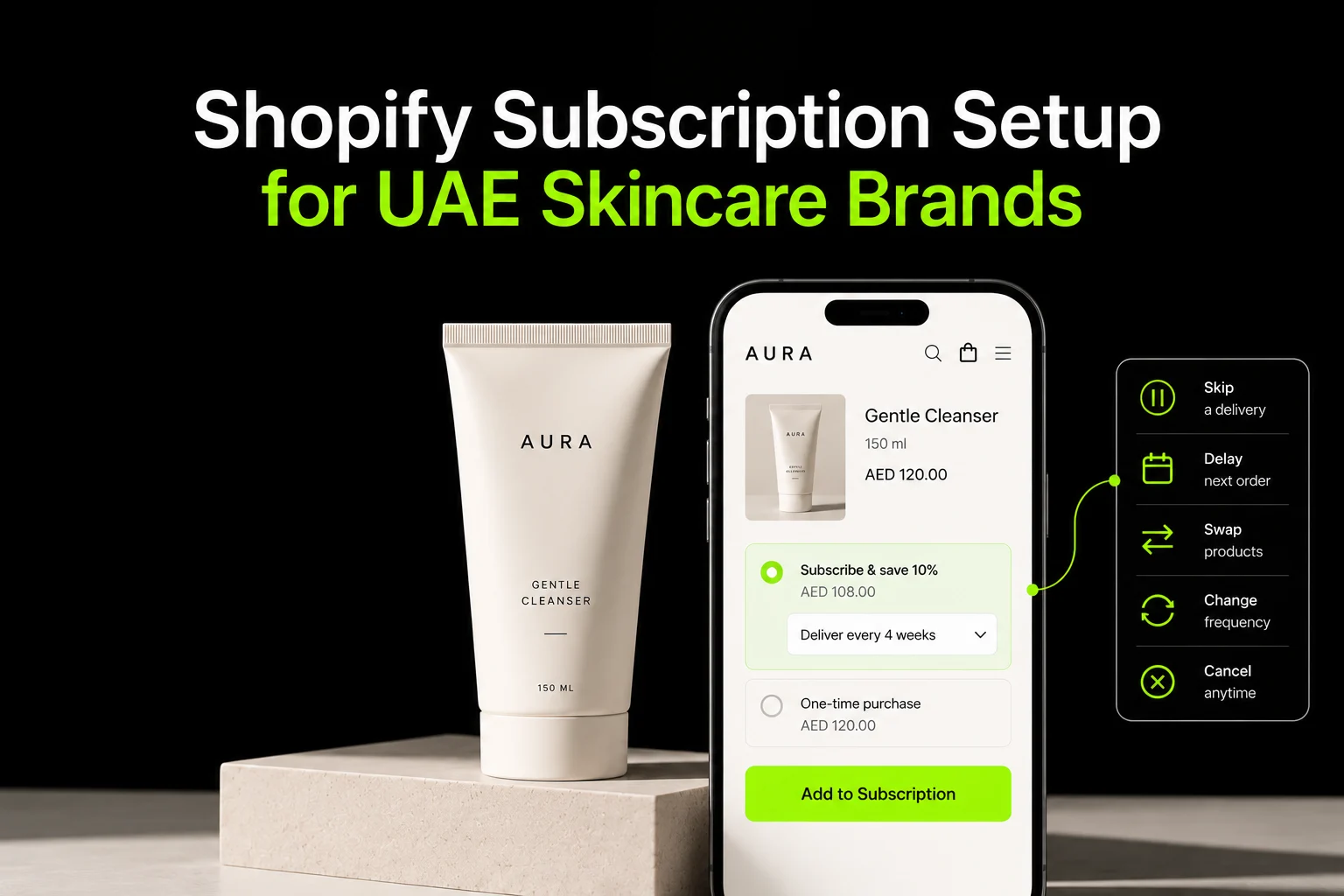
Shopify subscriptions help UAE skincare brands generate recurring revenue from products customers regularly replenish, such as cleansers, serums, moisturisers and SPF.
However, success depends on choosing the right subscription model, delivery frequency and payment gateway that supports recurring billing.
With our experience in Dubai’s ecommerce market, here’s our guide covering nine essential setup steps, from checking payment eligibility to implementing retention features that reduce cancellations and encourage repeat orders.
Which Skincare Products Suit Subscriptions (and Which Do Not)
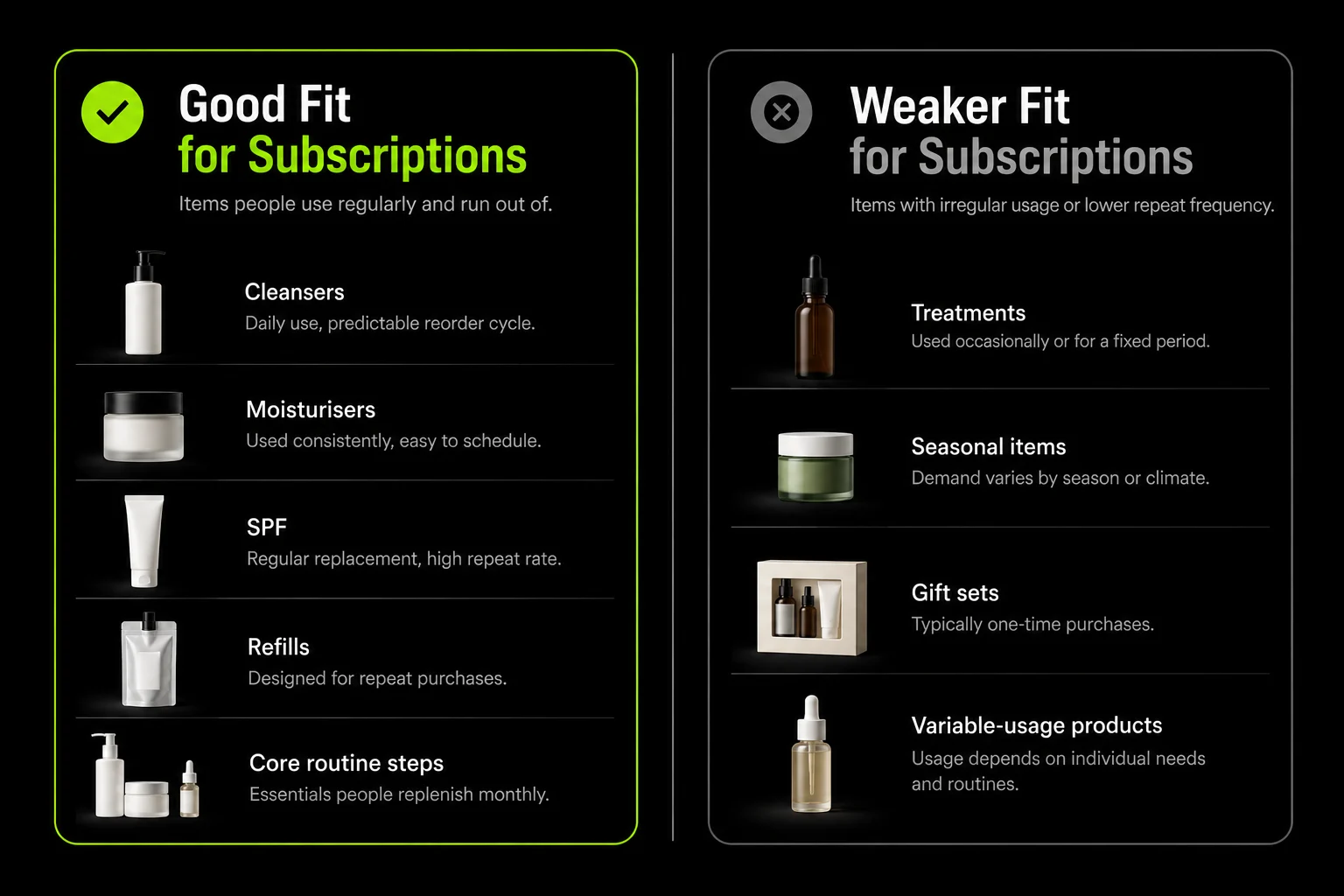
Not every skincare product belongs in a subscription plan. Focus on products customers use regularly and replenish at predictable intervals.
The right product selection helps customers maintain their routines without accumulating excess stock.
Good Fit For Subscriptions:
- Cleansers and Moisturisers: Everyday essentials that customers typically repurchase when they run out.
- Daily SPF and Body Care: Products used consistently and replenished throughout the year.
- Refills: A convenient way to reorder products while reducing packaging waste.
- Core Routine Products: Essential steps customers follow as part of their daily skincare routine.
- Suitable Supplements: Products with consistent usage patterns and appropriate replenishment schedules.
Weaker Fit For Subscriptions:
- Short-Course Treatments: Retinoids introduced gradually and acid peels may require specific usage schedules.
- Seasonal or One-off Products: These are better offered as optional purchases or subscription swaps.
- Gift Sets: Prepaid gift subscriptions can work better than standard recurring deliveries.
- Products With Unpredictable Usage: Customers may finish these at different rates, making fixed delivery schedules less practical.
The key is to match delivery frequency to actual product consumption. Customers who receive new products before finishing existing ones may accumulate unopened bottles and cancel their subscriptions.
Instead, let subscribers add occasional products to their next delivery without committing to recurring orders.
This keeps subscriptions flexible, reduces unnecessary deliveries and helps customers maintain routines that suit their needs.
Step 1: Check Payment Eligibility Before Anything Else
Before setting up subscriptions, confirm that your payment gateway supports recurring billing.
Shopify's Subscriptions app works with Shopify Payments, PayPal Express, Authorize.net, Adyen and Stripe for eligible merchants, subject to regional availability and gateway requirements.
What This Means for UAE Skincare Brands
Shopify Payments availability depends on your plan and current UAE eligibility rules. Local gateways such as Telr, Tap, PayTabs and Network International may support recurring payments independently, but that does not automatically make them compatible with Shopify's subscription apps.
If your gateway is incompatible, check whether PayPal Express, Stripe or a third-party subscription app meets your requirements. Verify compatibility before choosing an app, as supported payment methods vary.
COD and BNPL options such as Tabby generally cannot process automatic recurring subscription charges. If your store cannot support auto-billing, consider a replenishment programme that reminds customers to reorder manually.
Confirm your Shopify plan, payment gateway and subscription app compatibility first. These determine which subscription model your UAE skincare brand can offer.

Step 2: Choose Your Skincare Subscription Model
Choose a subscription model that matches your product range and fulfilment capacity.
For most skincare brands, single-product replenishment is the best starting point. Launch with your top two or three products, track retention and cancellations, and expand once you understand customer behaviour.
Routine subscriptions can increase order value, but check your app's bundle capabilities before implementation.
Shopify Subscriptions has limitations around subscription bundles, so combining multiple products may require separate subscriptions or a compatible third-party app.
Step 3: Set Delivery Frequency Based on Product Usage
Set subscription delivery intervals based on how quickly customers use each product, rather than defaulting to a 30-day billing cycle.
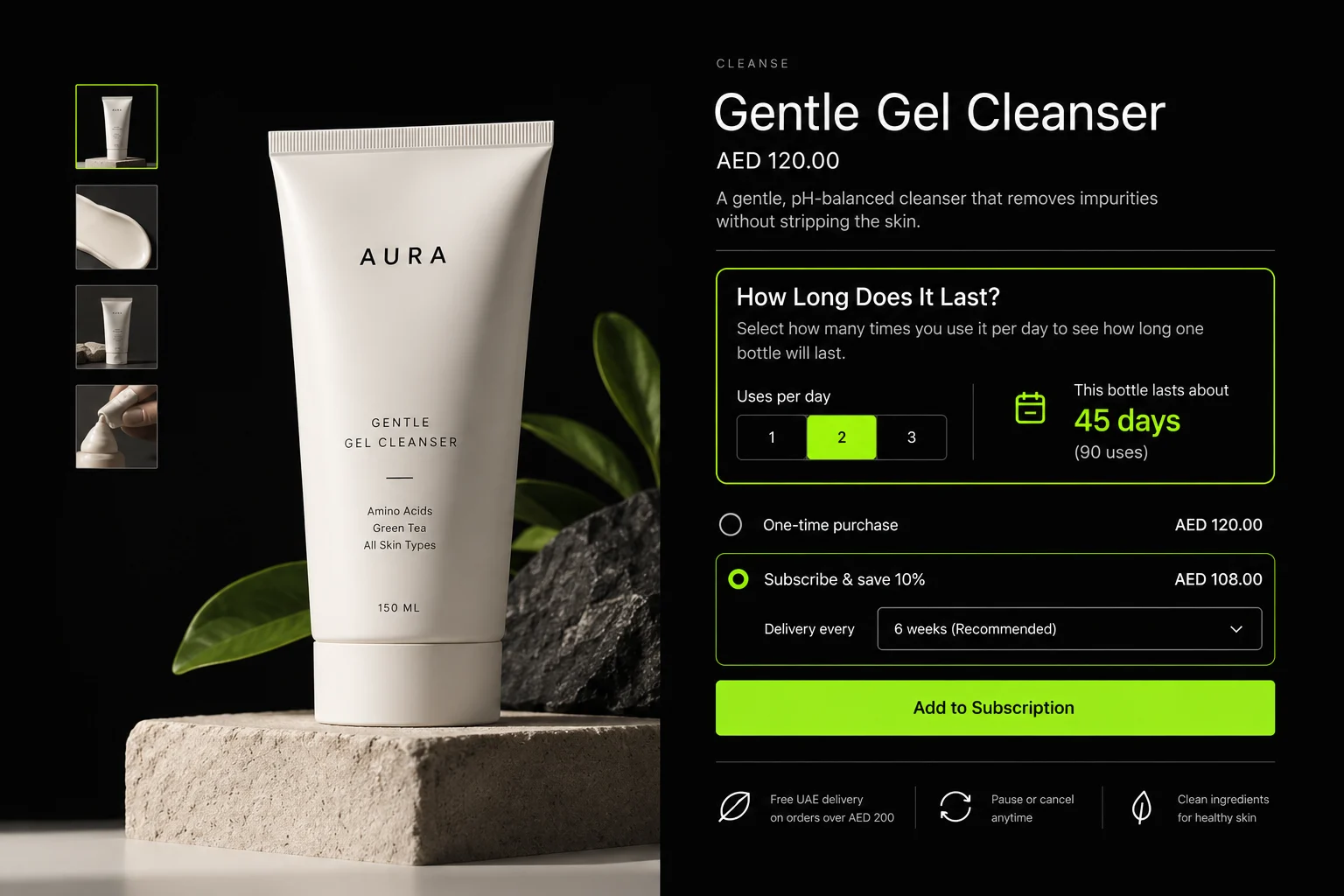
Calculate Days of Supply: by dividing product size by the amount used per application, then dividing by applications per day. Use your brand's recommended application amounts to estimate realistic intervals.
For example, a 30ml serum may last 60–90 days, depending on usage, while a 100ml cleanser may last around 60 days. These are estimates, so validate them against product instructions.
Follow three rules when setting frequencies:
- Offer the calculated interval alongside shorter and longer delivery options.
- Set schedules for individual products, or use a compatible app's combined-shipping feature for routines.
- Allow customers to delay deliveries when seasonal changes or lighter usage affect consumption.
Different skincare products run out at different rates. Aligning deliveries with actual usage helps prevent surplus stock, avoid product shortages and reduce subscription cancellations.
Step 4: Pick the Right Subscription App
Choose your subscription app based on your payment gateway, subscription model and retention requirements.
Shopify Subscriptions vs Third-Party Apps
Shopify's free Subscriptions app supports basic subscribe-and-save plans, including weekly, monthly and yearly billing.
It offers subscription discounts, a storefront widget, customer self-management, email notifications and subscription analytics.
However, its limitations may affect brands offering routine bundles, build-a-box subscriptions or advanced retention features.
Third-party apps such as Recharge, Loop, Skio, Appstle and Seal may offer additional capabilities, depending on their plans.
How to Compare Subscription Apps
For a simple launch, Shopify Subscriptions may be sufficient. Consider a third-party app when you need advanced bundles, flexible customer controls or more detailed retention analytics.
Before committing, verify current pricing, gateway compatibility and features against your requirements.
Step 5: Design the Offer, Not Just a Discount
A successful skincare subscription offers more than a lower price. While discounts can encourage sign-ups, customers need ongoing value to stay subscribed. If price is the only benefit, they may cancel when a better offer appears elsewhere.
Start by setting a modest, sustainable discount based on your product margins. Then add benefits that improve the customer experience without weakening your brand's premium positioning.
Consider These Subscription Perks:
- Free Shipping: Remove delivery costs from recurring orders to make replenishment more convenient.
- Product Samples: Introduce customers to new products with each delivery and encourage future purchases.
- Early Access: Let subscribers try new launches before they become available to everyone.
- Exclusive Products: Offer subscriber-only sets, limited editions or special sizes.
- Seasonal Swaps: Allow customers to replace products based on changing skincare needs.
For new customers, consider offering a sample or trial-size product before introducing a full-size subscription.
Follow up with a clear upgrade offer that explains the benefits of subscribing, including delivery frequency, savings and flexibility.
The goal is to make subscriptions valuable beyond the initial purchase. Exclusive access, useful samples and convenient replenishment can strengthen customer loyalty while protecting your margins.
Step 6: Build the Product Page Widget and Customer Portal
Your subscription widget helps customers understand the offer and subscribe confidently, while the customer portal gives them control over recurring orders. Both are essential for reducing confusion and improving retention.
Product Page Widget :Make subscription options easy to find and understand. Include a one-time purchase versus subscribe toggle, savings displayed in AED and a frequency selector with a recommended default.
Place renewal terms beside the purchase button so customers understand the recurring charges before subscribing.
Where possible, display the next delivery date and explain how customers can manage their subscriptions. Clear information helps customers make informed decisions and reduces unexpected cancellations.
Cart and Checkout: Display subscription details throughout the buying journey, including the product page, cart and order confirmation.
Clearly communicate the recurring price, billing frequency and delivery schedule. Customers should never discover unexpected recurring charges after completing their purchase.
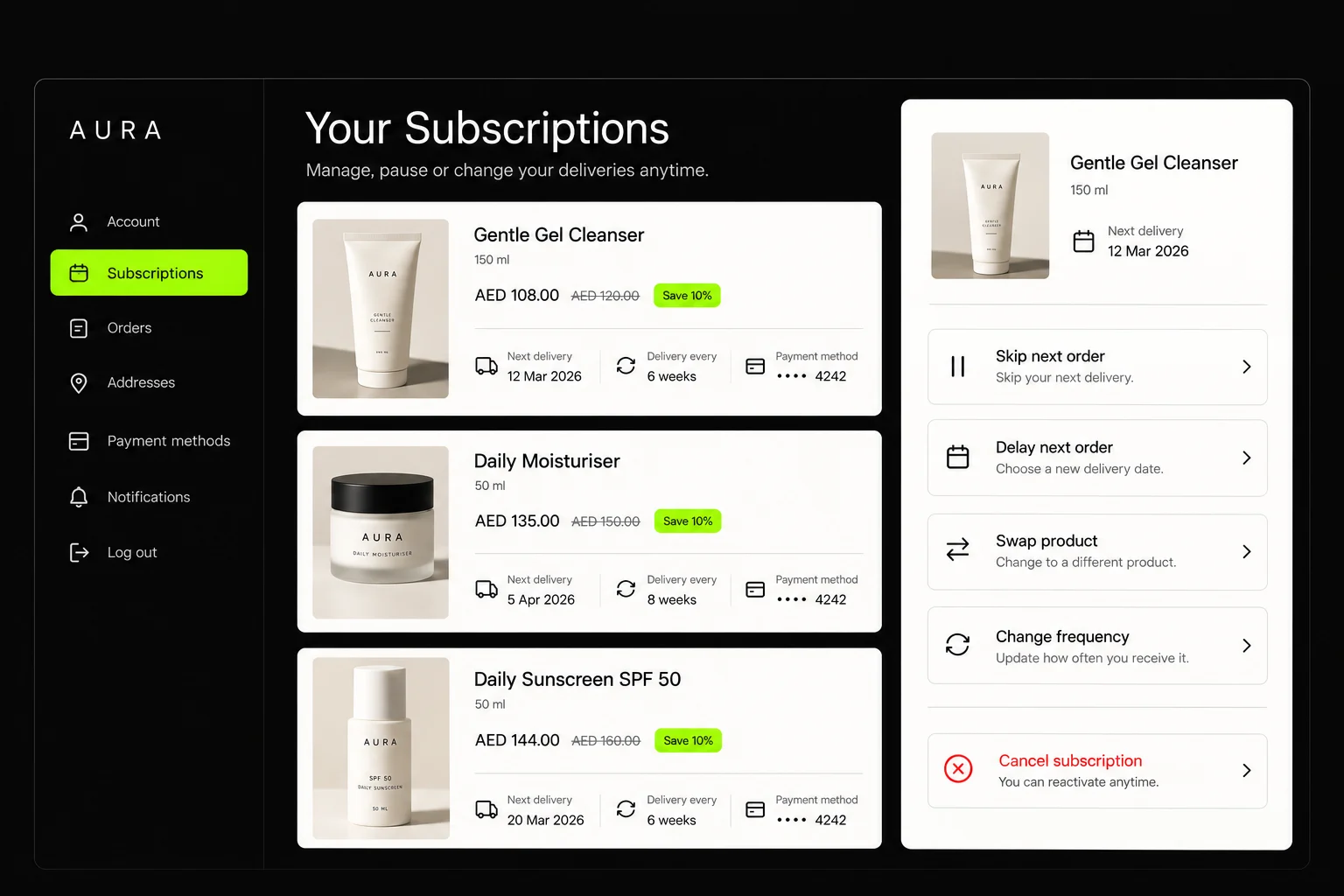
Customer Portal: Give subscribers the flexibility to manage their orders without contacting support. Essential features include:
- Skip or delay upcoming deliveries.
- Swap products and change delivery frequency.
- Add one-time products to upcoming orders.
- Update payment methods and delivery addresses.
- Cancel subscriptions online without unnecessary steps.
Before cancellation, offer alternatives such as skipping a delivery or changing the frequency. However, keep cancellation straightforward and avoid forcing customers to contact support.
Theme Compatibility: Check that your Shopify theme supports the subscription widget and required sections and blocks before development begins.
Older themes may require additional customisation to display subscription options correctly.
If your existing theme needs updating, a custom Shopify theme development service can help you build a seamless subscription experience across product pages, checkout and customer accounts.
Step 7: Retention Features That Matter for Skincare
Acquiring subscribers is only the beginning. Long-term success depends on helping customers maintain their skincare routines, use products correctly and receive replenishments when needed.
Pre-Charge Reminders: Send reminders three to five days before each order, with options to skip or delay delivery. This gives customers time to adjust upcoming orders and reduces unwanted charges.
Seasonal Swaps : Let subscribers switch products as their skincare needs change. Options might include a richer moisturiser during colder months or a different SPF for changing routines.
Skin Check-Ins : Invite subscribers to retake a skin quiz every three to six months. Use their responses to suggest suitable product swaps instead of automatically sending the same products indefinitely.
Cancellation Save Flow :Before cancellation, offer alternatives such as delaying delivery, changing frequency, swapping products or downgrading the subscription. Keep cancellation simple and never make customers contact support to leave.
Subscriber Content: Share usage tips, ingredient education and routine guidance. Helping customers understand how to use products correctly can improve their experience and encourage repeat orders.
Measure Retention Performance :Track subscription renewal rates, cancellations, skipped deliveries and customer feedback to identify where subscribers disengage. Use these insights to improve delivery schedules, product recommendations and subscriber benefits.
The goal is to make subscriptions useful beyond automatic replenishment. When customers receive products at the right time, understand how to use them and can adapt their routines, they have more reasons to stay subscribed.
For inspiration, explore the subscription and replenishment experience in D2C food and beverage ecommerce and consider which elements could work for skincare brands.
Step 8: Failed Payments and Operations
Failed payments and inventory issues can lead to avoidable subscription cancellations. A reliable process helps recover payments, maintain stock availability and deliver a consistent customer experience.
Failed Payments :Set up a payment recovery process that includes:
- Automatic payment retries, with the first retry scheduled within 24 hours where supported.
- Email reminders explaining failed payments and how to update card details.
- Automatic card updates were supported by the payment gateway.
- A simple, mobile-friendly link for customers to update payment information manually.
Payment recovery options vary by gateway, so confirm which features your subscription app supports before implementation.
Inventory and Fulfilment :Subscription businesses can forecast upcoming orders using scheduled renewals. Use this information to plan purchasing, manage stock levels and avoid running out of popular products.
For skincare brands, operational priorities include:
- Forecast inventory using upcoming subscription renewals, not just historical sales.
- Track batches and expiry dates, particularly for products containing active ingredients.
- Maintain consistent packaging and product quality across deliveries.
- Establish clear support procedures for damaged items, returns and reported allergic reactions.
Inventory forecasting is especially important because recurring orders provide advance visibility into expected demand. Use renewal data to inform purchasing decisions and prepare stock before orders are due.
Step 9: Disclosures, Consent and Claims
Clear subscription terms build customer trust and help your store meet applicable requirements. Before checkout, display the subscription price, billing frequency, renewal terms and cancellation process.
Send pre-charge reminders and make subscription management accessible.
Requirements vary by market. Some US states have specific rules for automatic renewals, disclosures and online cancellations, so check the regulations that apply to each market you serve.
For skincare products, ensure that product descriptions and marketing claims match the wording permitted for the product. Avoid unsupported claims about ingredients, results or treatment benefits.
UAE skincare brands should also check applicable cosmetics registration and labelling requirements, including Dubai Municipality's Montaji system where relevant. For platform-specific considerations, Shopify versus WooCommerce for UAE cosmetics brands.
Metrics to Track
Tracking the right metrics from the first month helps you understand subscription performance, identify retention issues and make informed decisions about your Shopify store.
Monitor these key indicators:
- Active subscribers and subscription revenue: Measure the size of your subscriber base and the revenue it generates.
- Churn by cohort: Track cancellations in months one, two and three to identify when customers are most likely to leave.
- Skip and swap rates: Understand how frequently customers delay deliveries or change products.
- Failed payment rate: Identify payment issues that prevent successful renewals.
- Average subscription lifetime and customer lifetime value: Estimate how long subscribers stay and how much revenue they generate.
- Subscription revenue share: Measure the contribution of subscriptions to total store revenue.
- Conversion rate and revenue per session: Compare subscription performance with one-time purchases.
Cohort analysis is particularly useful because it shows how customer retention changes over time. If many subscribers cancel after their second delivery, review product consumption estimates, delivery frequency and the value of your subscription offer.
Our D2C data analytics service can help you build reports to monitor these metrics and identify opportunities for improvement.
Subscriptions for UAE Skincare Brands
Your payment gateway determines whether you can offer automatic subscriptions or need an alternative replenishment model.
Before choosing your setup, confirm that your Shopify plan, gateway and subscription app support recurring billing.
If Your Gateway Supports Recurring Payments
Use Shopify Payments where eligible, PayPal Express or Stripe if your store qualifies. Configure your subscription experience for UAE customers with:
- Arabic-language customer portal and notifications, where supported
- Clear AED pricing and applicable VAT information
- Delivery estimates tailored to each emirate
- WhatsApp and email reminders to help customers manage upcoming orders
A bilingual experience makes subscription terms and renewal details easier for Arabic- and English-speaking customers to understand.
If Your Gateway Does Not Support Recurring Payments
Consider a replenishment programme that encourages customers to reorder without automatic billing. Send WhatsApp and email reminders based on estimated product usage and include one-click reorder links to simplify repeat purchases.
You can also introduce loyalty rewards, such as complimentary samples after several reorders, and prepaid bundles sold as regular products with clearly stated delivery schedules.
This approach requires customers to place each order manually, but it avoids dependence on an incompatible recurring-payment setup. COD and BNPL may remain available for eligible one-time purchases, subject to provider terms.
Compare suitable options using our UAE ecommerce payment gateway comparison and Shopify store launch guide for the broader implementation process.
Start with a payment setup that works for your store, track subscriber behaviour and expand your subscription features as demand grows.
How Suplex Sets Up Subscriptions for Skincare Brands
At Suplex, we build Shopify subscription experiences around your products, payment gateway and customer needs. Our process covers six key stages:
- Payment Eligibility: Check gateway compatibility before selecting a subscription solution.
- Subscription Strategy: Choose the right model and delivery frequencies for your products.
- App Selection: Compare subscription apps based on features, pricing and gateway support.
- Store Design: Build subscription product pages and customer portals that simplify sign-ups and account management.
- Retention Flows: Set up reminders, product swaps and flexible delivery options.
- Analytics: Track subscriber behaviour, recurring revenue and cancellations.
Based in Dubai, we account for local requirements, including Arabic-language experiences, WhatsApp reminders, AED pricing and applicable VAT information.
Our work includes Celesti, a premium skincare brand, and Miduty, a nutraceutical brand. We have not published subscription-specific results for either project.
A Shopify audit can help identify payment gateway limitations, subscription app compatibility issues and improvements needed before implementation. Learn more about our Shopify audit process.
Frequently Asked Questions
Can You Sell Skincare Subscriptions on Shopify?
Yes. Shopify Subscriptions supports recurring plans for individual products, with discounts and a customer portal for managing deliveries. Third-party apps offer additional features, including routine bundles and advanced retention tools. Your payment gateway must support recurring billing.
Which Payment Gateways Support Shopify Subscriptions?
Shopify lists Shopify Payments, PayPal Express, Authorize.net, Adyen and Stripe for eligible merchants, subject to regional availability and gateway requirements. Confirm current compatibility before choosing your subscription app.
Can UAE Shopify Stores Offer Subscriptions?
Yes, if they can access a supported payment gateway. If their gateway is incompatible, brands can use a replenishment programme with WhatsApp or email reminders and one-click reorder links instead of automatic billing.
What Is the Best Shopify Subscription App for Skincare Brands?
Shopify Subscriptions suits simple subscribe-and-save plans. Third-party apps may be better for routine bundles, build-a-box subscriptions, cancellation offers and advanced analytics. Compare gateway compatibility, customer portal features and pricing before deciding.
How Often Should a Skincare Subscription Ship?
Base delivery frequency on product usage. Divide product size by the amount used per application, then divide by applications per day. Offer shorter and longer intervals, and let customers delay deliveries when needed.
Can Customers Subscribe to a Full Skincare Routine?
Yes, but the setup depends on your app. Shopify Subscriptions has limitations around bundles, so combining multiple products may require separate subscriptions or a compatible third-party app. Different products may also need different delivery schedules.
How Do I Reduce Churn on a Skincare Subscription?
Match delivery schedules to actual usage, send pre-charge reminders and make skipping, delaying and swapping easy. Offer useful perks, share skincare guidance and suggest product changes when customers' needs evolve. Keep cancellation straightforward and accessible.
Hi, I’m Rishabh Jain
I believe great digital experiences have the power to shape perception, build trust, and move businesses forward. That belief led me to found Suplex Design Studio, a global digital design and development studio helping FMCG and D2C brands build websites and digital experiences that are strategic, thoughtful, and commercially meaningful.
I started Suplex at 25 with a clear intent, to create digital experiences that look appealing, work seamlessly, and help D2C businesses grow. By 28, the studio had scaled globally, guided by a strong foundation in integrated design that I developed during my academic journey in London, where I was honoured with the Dean’s Award.
Over the years, I’ve had the opportunity to work with 100+ brands, from Fortune 500 organisations to family-run businesses, helping them build websites, e-commerce experiences, and digital products that create clarity, credibility, and long-term value.
Our work has been recognised internationally, including the Manifest Award (2024), the Clutch Global Award (2025), and features across platforms such as The Dieline, Packaging of the World, and the World Brand Design Society.
None of this would be possible without the people behind the work. I’m deeply grateful to the Suplex team, whose commitment, creativity, and attention to detail turn ideas into meaningful digital experiences every day.
At the heart of our work is a simple philosophy, digital design should be intentional, functional, and built to create real business value. That continues to guide everything we create at Suplex.



























Let’s Make It Happen
E-Commerce Success Stories









Build Your D2C Business The Right Way
Build It With Suplex.


