Best Shopify Templates for Clothing Brands: Honest Reviews + When to Go Custom
.avif)
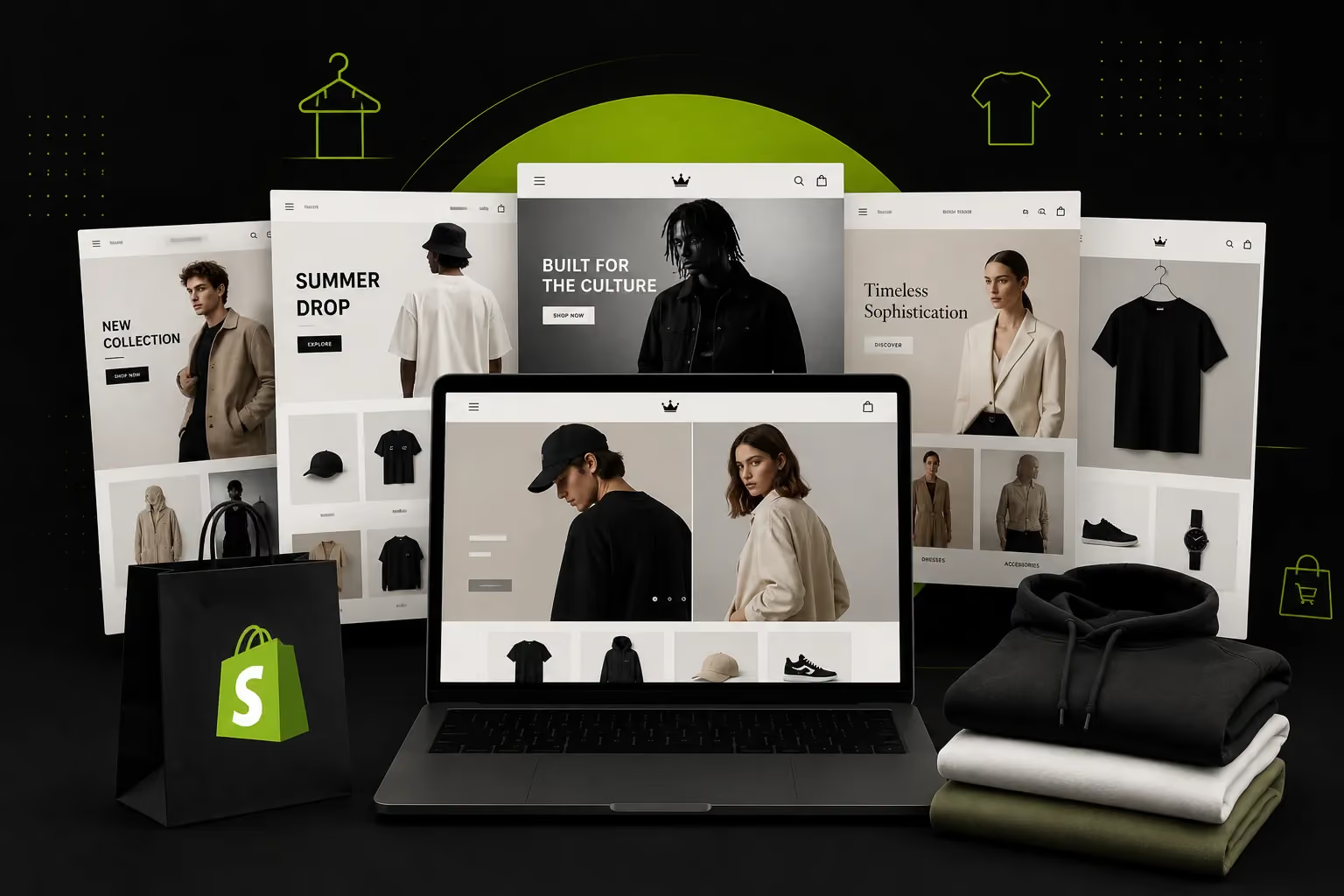
Best Shopify Templates for Clothing Brands: Honest Reviews + When to Go Custom
The best Shopify templates for clothing brands are not a single theme and any blog that tells you otherwise is guessing.
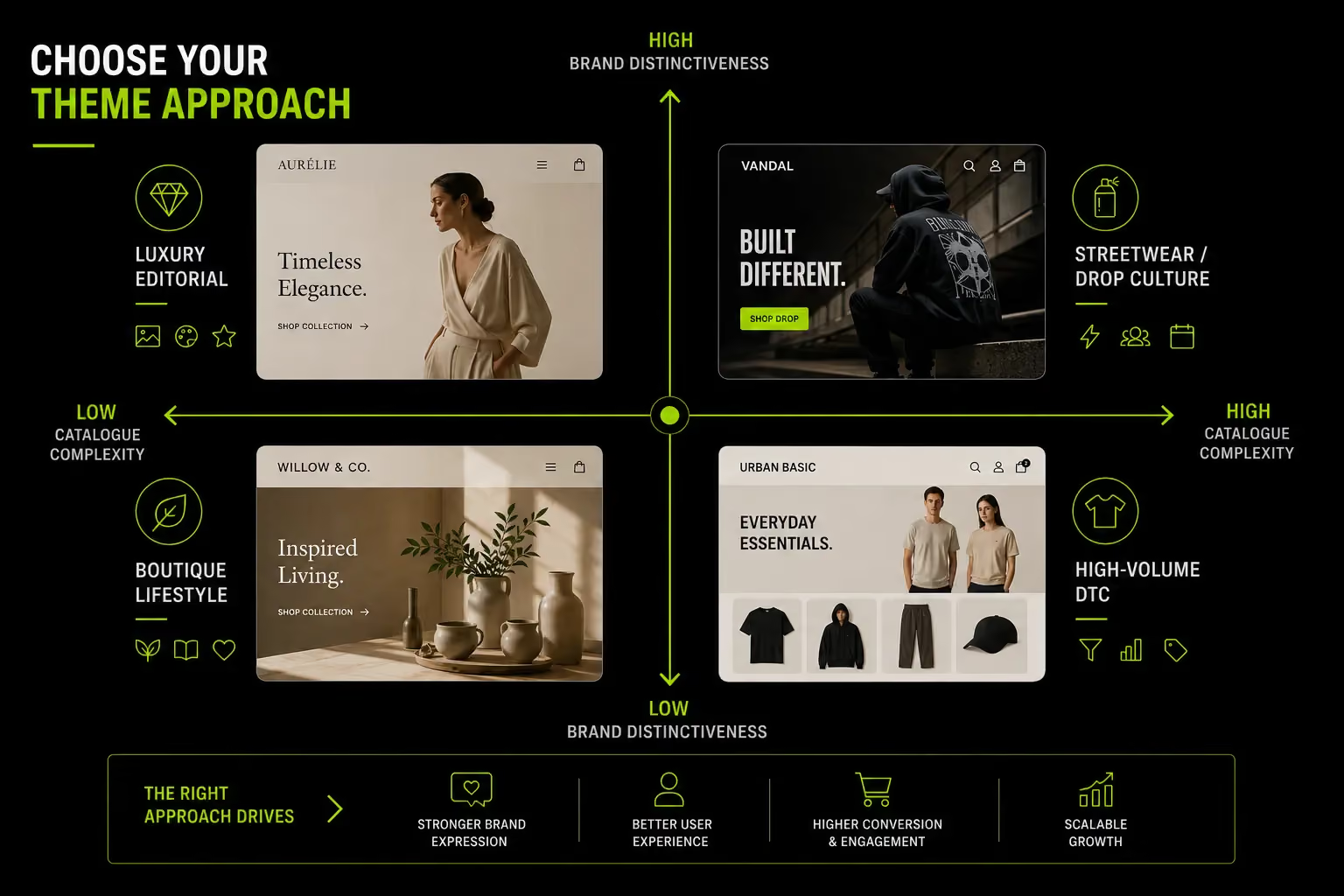
Every high-performing clothing brand on Shopify uses a different one. A luxury ready-to-wear label, a streetwear brand running limited drops, a boutique modest fashion brand and a high-volume athleisure operation.
All have fundamentally different requirements. The right theme starts with knowing what type of brand you are.
What to Look for in a Shopify Theme for Clothing Before Reviewing Any Specific Themes
Most guides go straight to the list. That is the wrong place to start. A theme that looks exceptional in a demo can perform poorly against your catalogue's actual requirements. Before choosing, you need to know what to evaluate.
The Five Features That Actually Matter for Clothing Brands
These are not decorative considerations. Each one directly affects conversion rate, returns, and discoverability of your catalogue.
1. Collection Filtering and Navigation Depth
Clothing has the most complex filtering requirements of any ecommerce category. Size, colour, fit, material, occasion, style, price, availability all simultaneously on a catalogue that may run to hundreds of SKUs.
What to look for in a Shopify clothing theme:
- Multi-attribute filtering (not single-dimension)
- Persistent filter state across pagination
- AJAX filtering (no page reload on filter selection)
- Filter options displayed with result counts
A theme that collapses to a single "Filter" button on mobile with no visible options is not a clothing theme. It is a theme that will cost you catalogue discoverability.
2. Variant Swatch Display and Colour Visualisation
Colour is a primary purchase variable. How a theme handles colour variants as small circles, large swatches, thumbnail images, or text directly affects shade selection confidence and conversion rate.
Strong colour swatch implementation in a Shopify fashion theme means:
- Swatches large enough to read on mobile
- Product image updates when a colour is selected
- Unavailable variants shown with a clear visual treatment (strikethrough or greyed out), not hidden
3. Size Guide and Fit Information Architecture
Size anxiety is the primary driver of clothing returns. A theme that buries size guide access in a popup or in the product description is contributing to that problem.
High-performing clothing themes surface size guide access directly adjacent to the size selector not one click away, not at the bottom of the page.
4. Lookbook and Editorial Layout Sections
Clothing sells lifestyle as much as garment. A theme's lookbook capability full-width lifestyle imagery, shoppable image hotspots, "shop the look" cross-selling and brand story sections determine how well it communicates brand positioning alongside product function.
This matters more for luxury and lifestyle brands than high-volume functional athleisure, but it is worth evaluating regardless.
5. Speed on Product Pages With Multiple High-Resolution Images
A clothing product page typically carries 6–10 images (multiple angles, on-model, lifestyle, colour variants).
Image-heavy pages are the primary speed challenge for clothing themes. A theme that mishandles lazy loading and image resolution scaling will fail Core Web Vitals even with excellent photography because the problem is in the theme code, not the images.
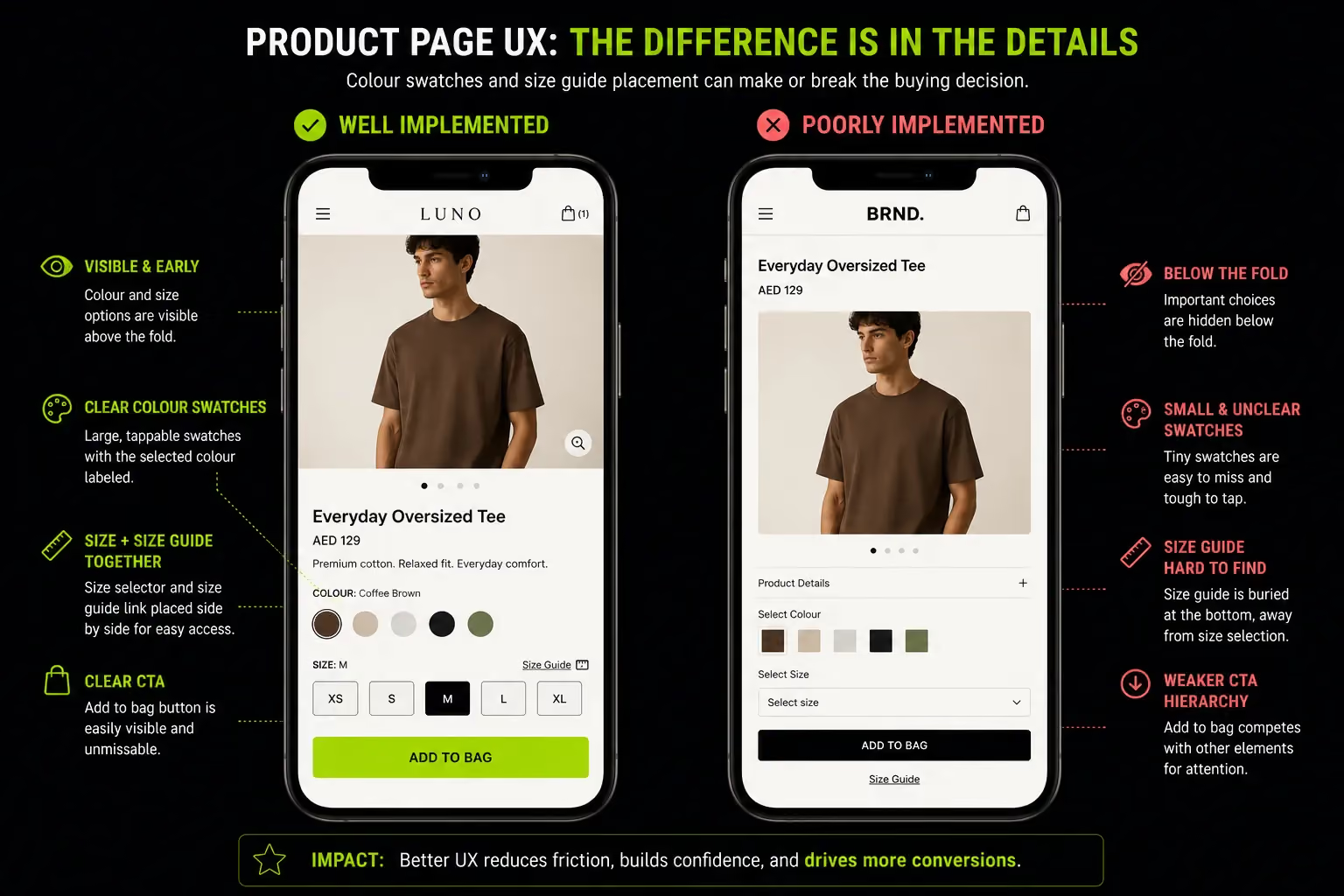
The Evaluation Most Brands Skip: The majority of clothing brands choose themes based on how the demo looks. The correct evaluation is whether the filter behaviour, variant display, size guide placement, and image gallery implementation match your specific catalogue.
A beautiful demo built on a poorly architected filter system will underperform a less visually striking theme with robust multi-attribute filtering.
The Best Shopify Themes for Clothing Brands Reviewed by Brand Type
These reviews are organised by brand archetype, not arbitrary ranking. The reason is practical, a theme suited for luxury editorial positions will actively work against a promotional DTC brand, and vice versa.
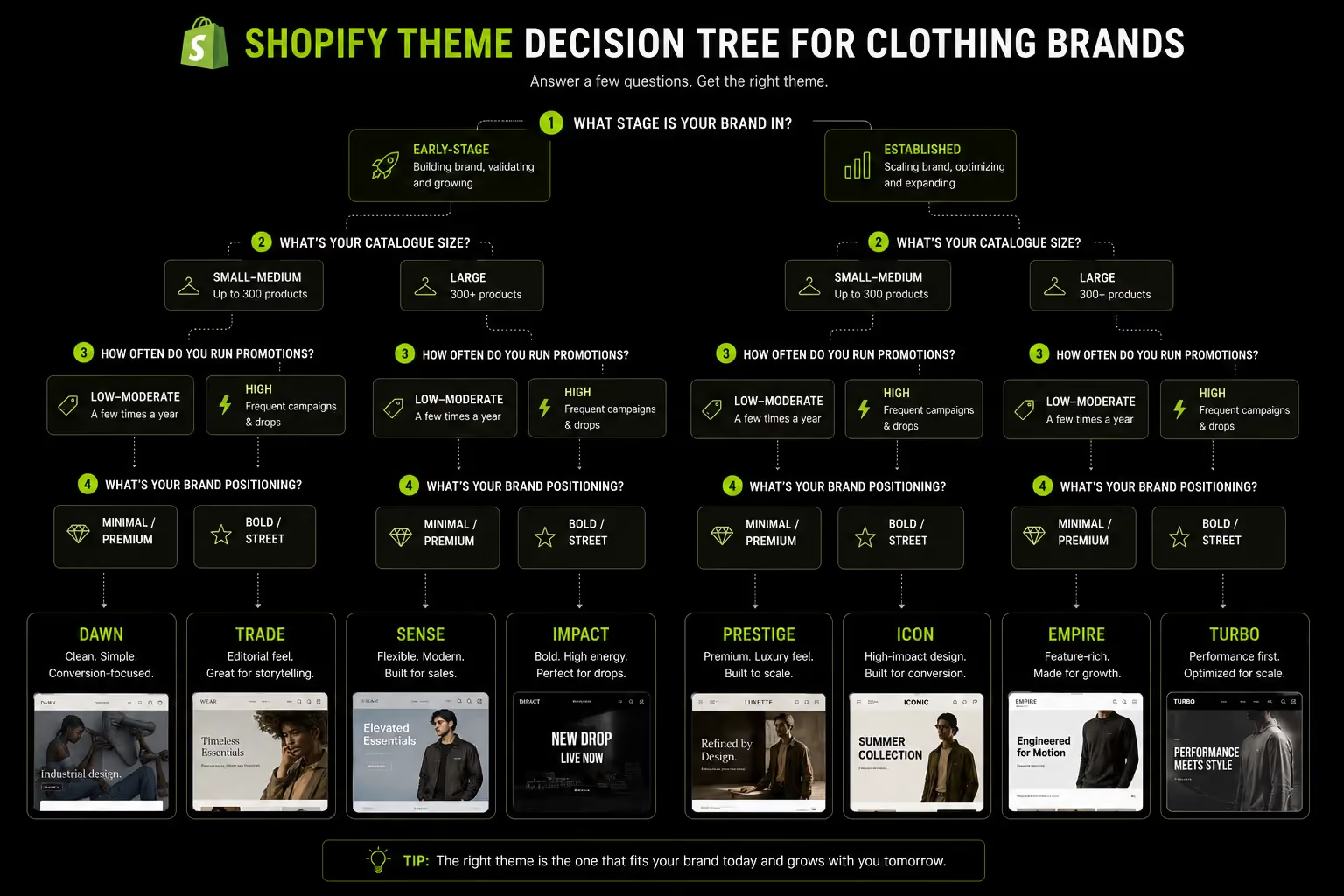
Prestige (~$350–$400) For Luxury and High-End Fashion
Developer: Maestrooo | Lighthouse score: 82+ (real stores hitting 98 PageSpeed) | Price: ~$350–$400
Prestige is the established benchmark for luxury fashion on Shopify. Its editorial product pages, lookbook layouts, image hotspot sections and mega menu are built for brands where the shopping experience must communicate premium positioning before the customer has looked at a price.
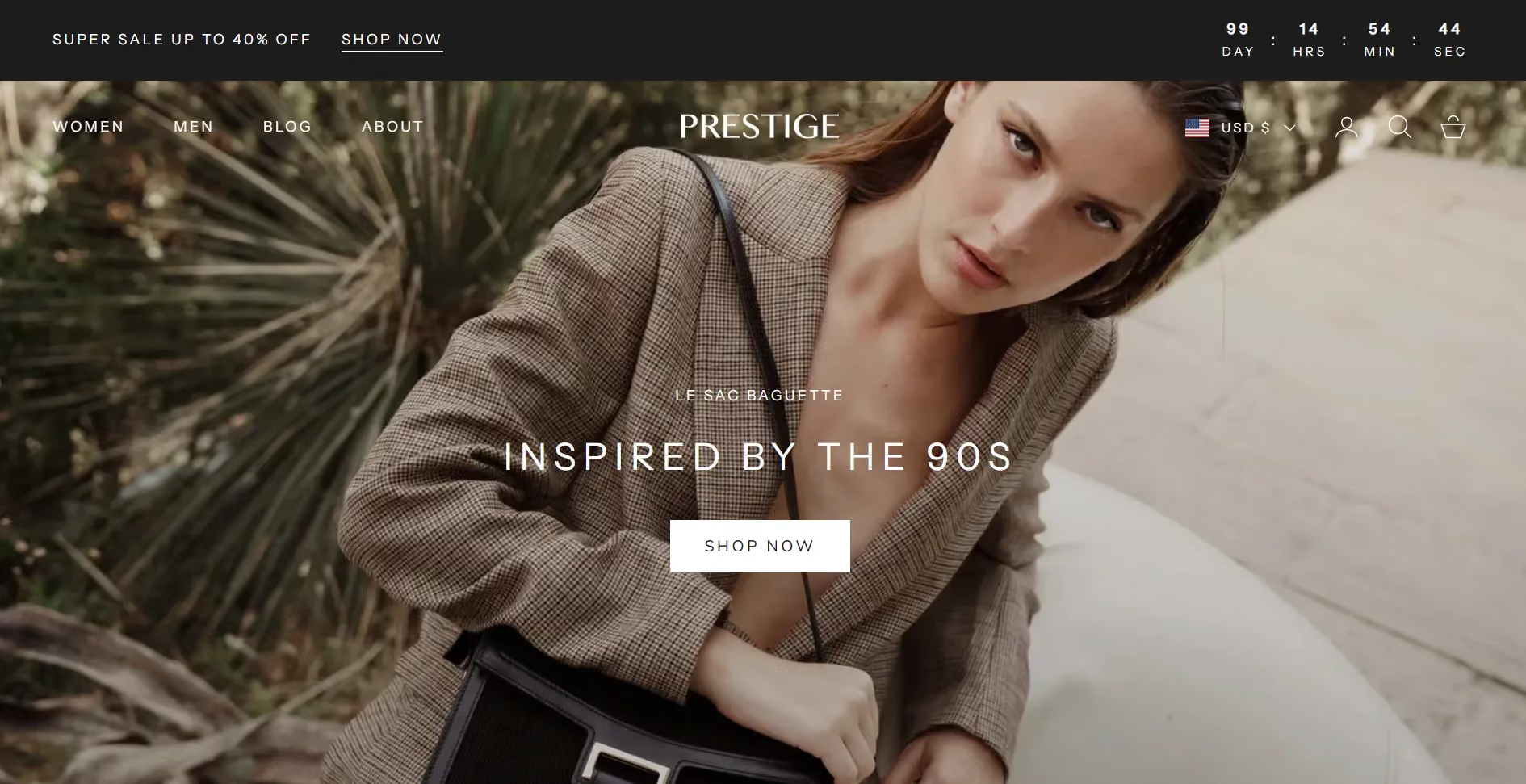
The performance fact worth noting: real stores built on Prestige have reached 98 PageSpeed scores. This matters because the common assumption that luxury-level visual design requires performance trade-offs is false here.
Maestrooo's build quality is consistently the most cited positive among the major Shopify theme developers.
Best For: Established luxury ready-to-wear labels, designer boutiques, premium accessories brands, any clothing brand where the price point requires visual credibility from the first impression.
Not Ideal For: High-volume promotional brands with large catalogues and active discount activity. Prestige's editorial aesthetic works against the pace and density of a sale-driven store.
Key Clothing Features: Lookbook sections with shoppable products, editorial product page layouts, image hotspots, in-menu promotional blocks, video backgrounds, sophisticated mega menu for collections navigation.
Impulse (~$380) For Campaign-Driven and Promotional Fashion
Developer: Archetype Themes | PageSpeed: 78 desktop / 59 mobile | Reviews: 1,000+ customers, 95% positive | Price: ~$380
Impulse is the most reviewed and commercially proven fashion theme in the Shopify Theme Store.
Its defining characteristic is conversion-focused promotion infrastructure countdown timers, sale badges, promotional banners, and campaign sections that do not require additional apps.
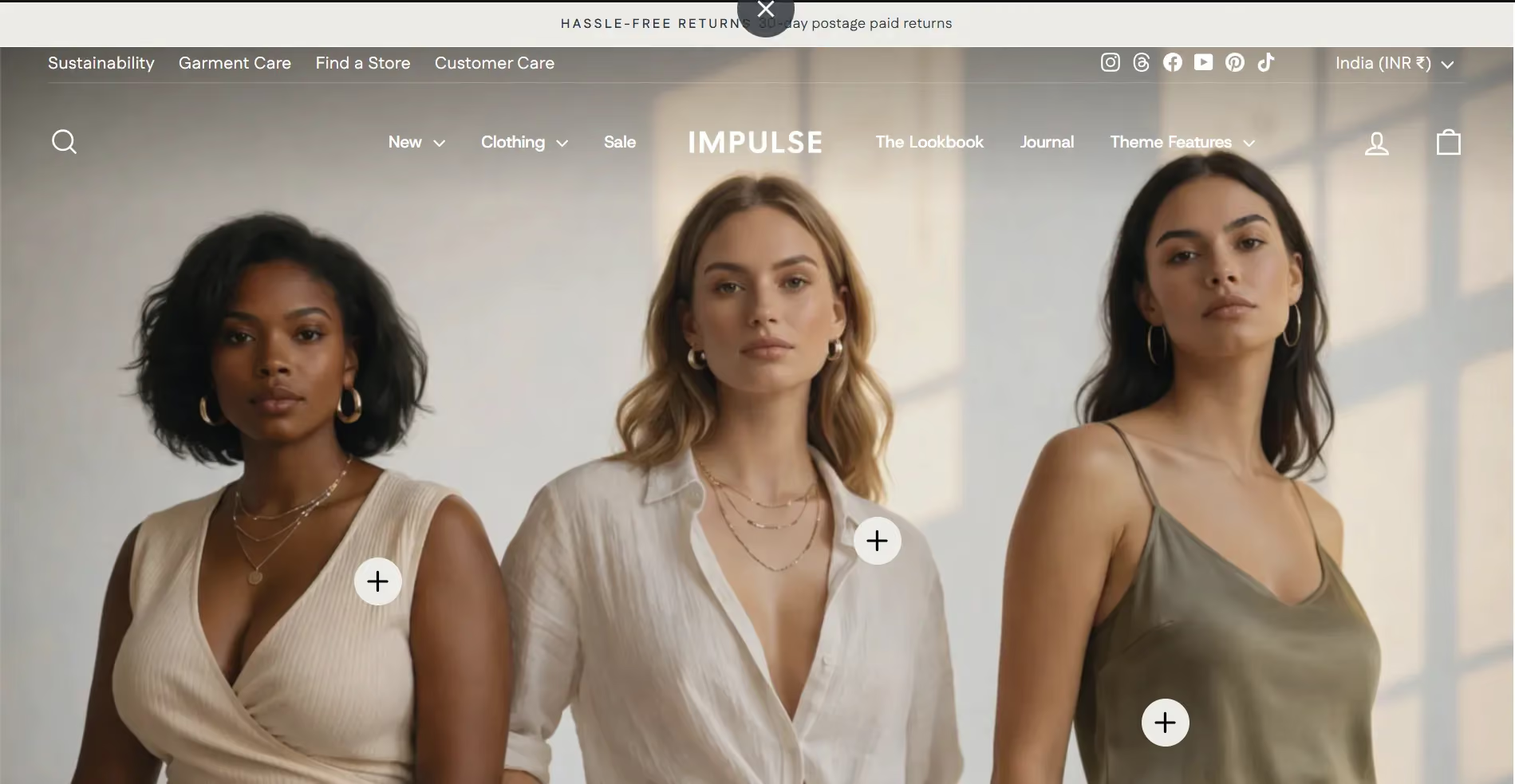
For clothing brands with active promotional calendars, those built-in features are a meaningful cost and complexity saving.
The honest performance note: Impulse's mobile PageSpeed of 59 is the weakest figure among the themes reviewed here.
For most clothing brands in 2026, where mobile accounts for 70%+ of traffic, this requires attention. A well-configured Impulse store with disciplined image optimisation and a controlled app stack performs significantly better than the default benchmark.
If you want help optimising your existing store, a Shopify audit is the fastest way to identify what is slowing you down.
Best For: Mid-to-premium fashion brands with active promotional calendars, seasonal collections, limited drops, flash sales. Growing DTC clothing brands running regular marketing campaigns.
Not Ideal For: Brands where mobile performance is a documented constraint, or brands where the primary aesthetic is minimalist and editorial.
Key Clothing Features: Countdown timers, promotional banners, strong collection filtering, lookbook layouts, variant swatches, broad promotional section library.
Stiletto (~$390) For Editorial and Storytelling Fashion
Developer: Fluorescent | PageSpeed: 87 desktop / 71 mobile | Reviews: 139 reviews, 91% positive | Price: ~$390
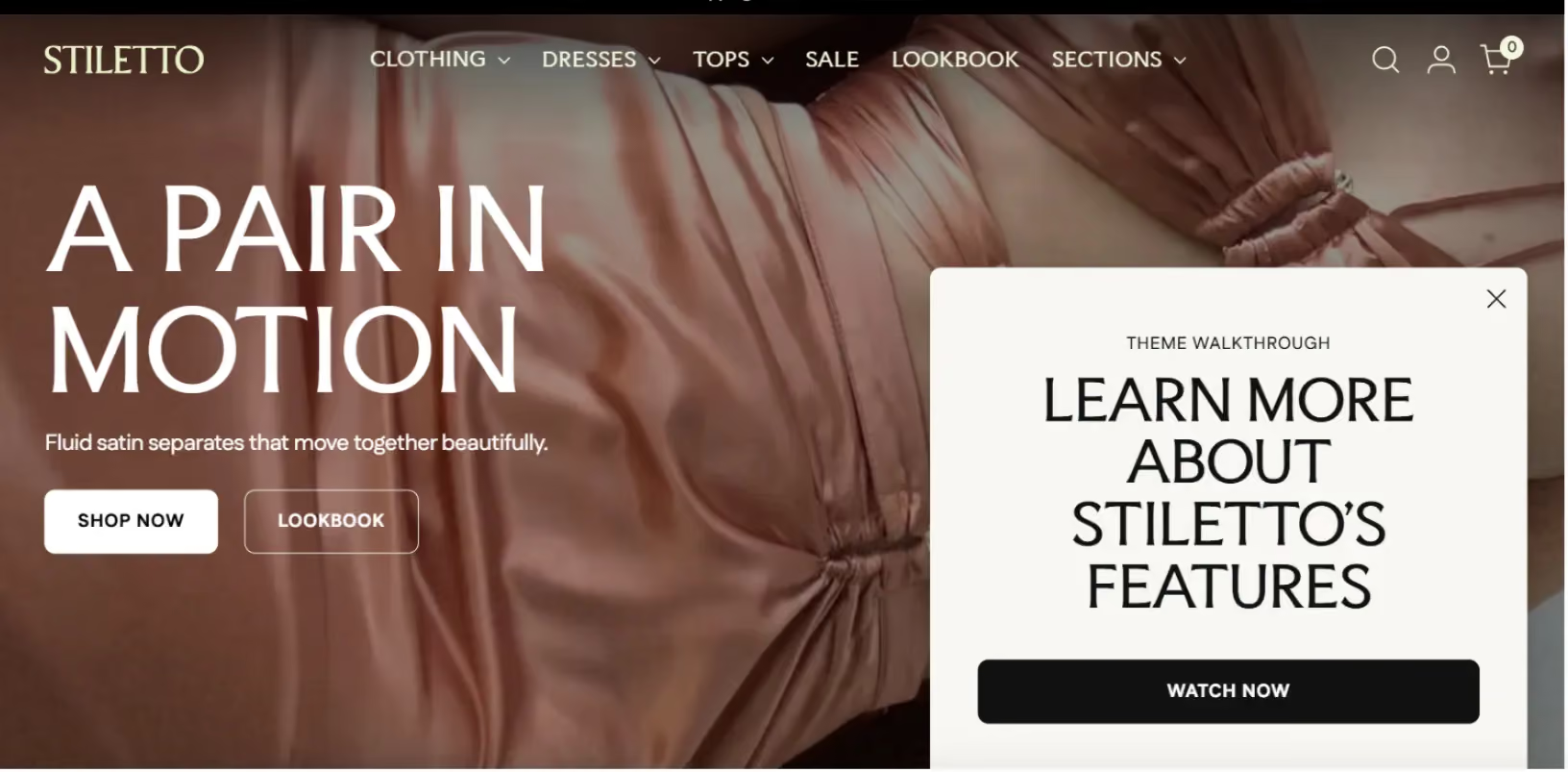
Stiletto is built specifically for fashion not adapted for it. Its features address fashion-specific requirements that general-purpose themes handle poorly: timed product drops, flash sale mechanics,.
"Complete the Look" cross-selling and cinematic imagery layouts for brands where visual presentation is the primary conversion mechanism.
The review pool is smaller than Impulse or Prestige (139 vs 1,000+), but the feedback is consistent.
Multiple merchants report using Stiletto across 10+ stores a reliable signal of operational stability and developer investment in ongoing maintenance.
Best For: Fashion brands where editorial storytelling is central to brand identity, brands running timed product drops and limited editions, luxury swimwear, ready-to-wear brands with curated seasonal collections.
Not Ideal For: Large catalogue brands needing robust multi-attribute filtering and faceted navigation. Stiletto's grid styles work best for curated inventories.
Key Clothing Features: Timed drop mechanics, flash sale features, "Complete the Look" cross-selling, editorial product page layouts, four polished presets (Vogue, Chic, Organic, Craft), cinematic animation sections.
Symmetry (~$380) For Multi-Collection Fashion Brands
Developer: Archetype Themes | Performance: Solid | Price: ~$380
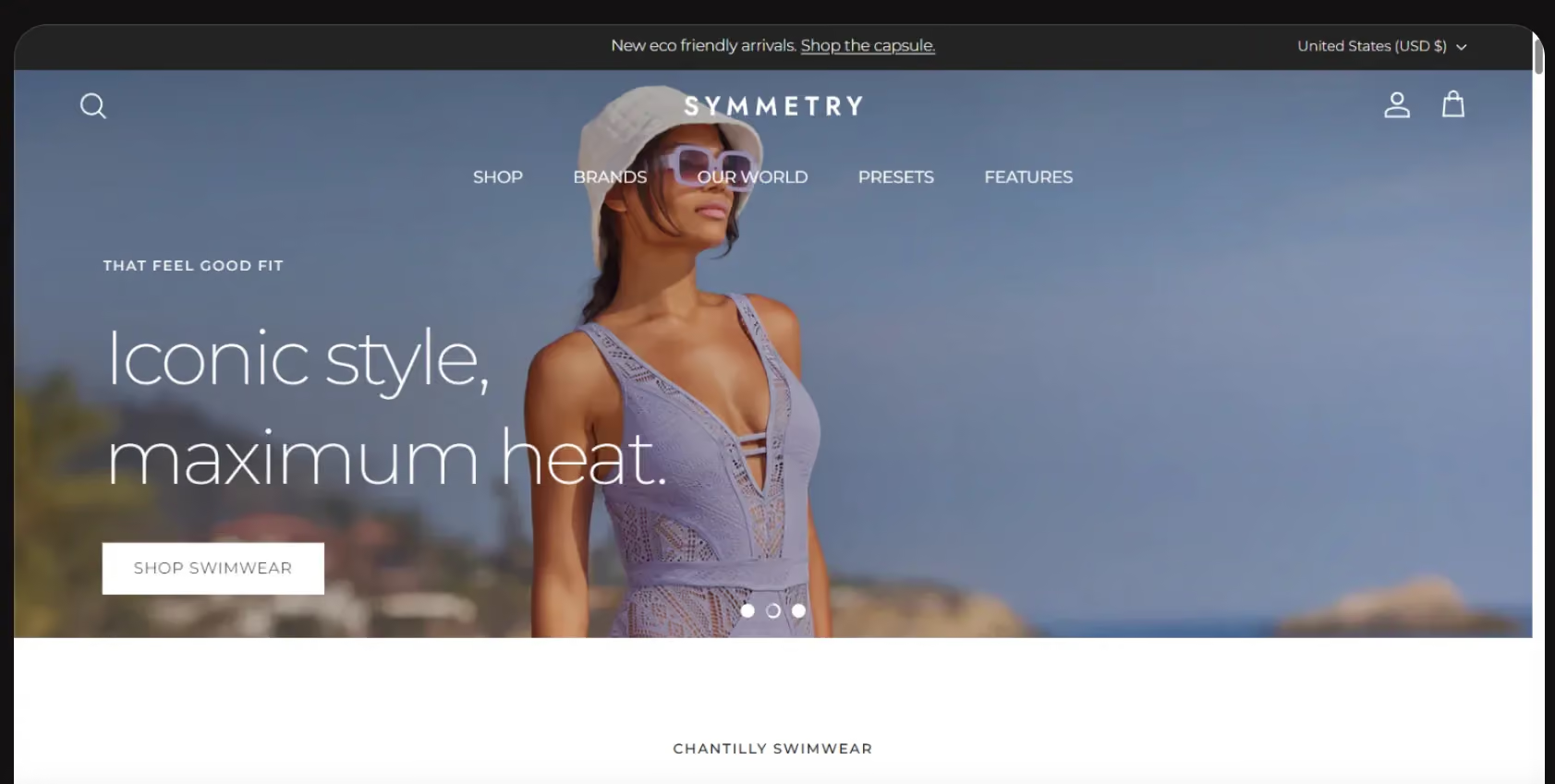
Symmetry is built for clothing brands with large but curated catalogues requiring structured navigation.
Its multi-level mega menu is among the best navigation implementations in the Shopify theme ecosystem handling complex collection structures without overwhelming the visitor.
For multi-season or multi-category brands (women's, men's, accessories, collections, collaborations), Symmetry's navigation architecture manages category complexity that simpler themes cannot.
Best For: Mid-market fashion brands with multiple collections and gender categories, boutique brands with seasonal ranges that need both editorial structure and practical navigation.
Key Clothing Features: Multi-level mega menu, strong collection filtering, editorial grid options, promotional sections. Pair this with solid Shopify navigation design practices and it handles most mid-market catalogues cleanly.
Crave (Free) For Streetwear and Trend-Forward Brands
Developer: Shopify | Lighthouse score: 88+ | Price: Free
Crave is Shopify's newest free theme, built for bold, trend-forward brands. Dramatic typography, full-bleed imagery and a mobile-first navigation pattern make it the best free option for streetwear, athleisure and lifestyle clothing brands that need a high-impact visual presence without the $380 premium theme investment.
Being free does not mean inferior for the right brand. Crave is well-built and fast. The limitation is customisation depth and the absence of advanced features like lookbook sections and built-in drop mechanics.
For an early-stage brand validating product-market fit, Crave is the right choice. For an established streetwear brand with a defined visual identity, the limitation will surface within 6–12 months.
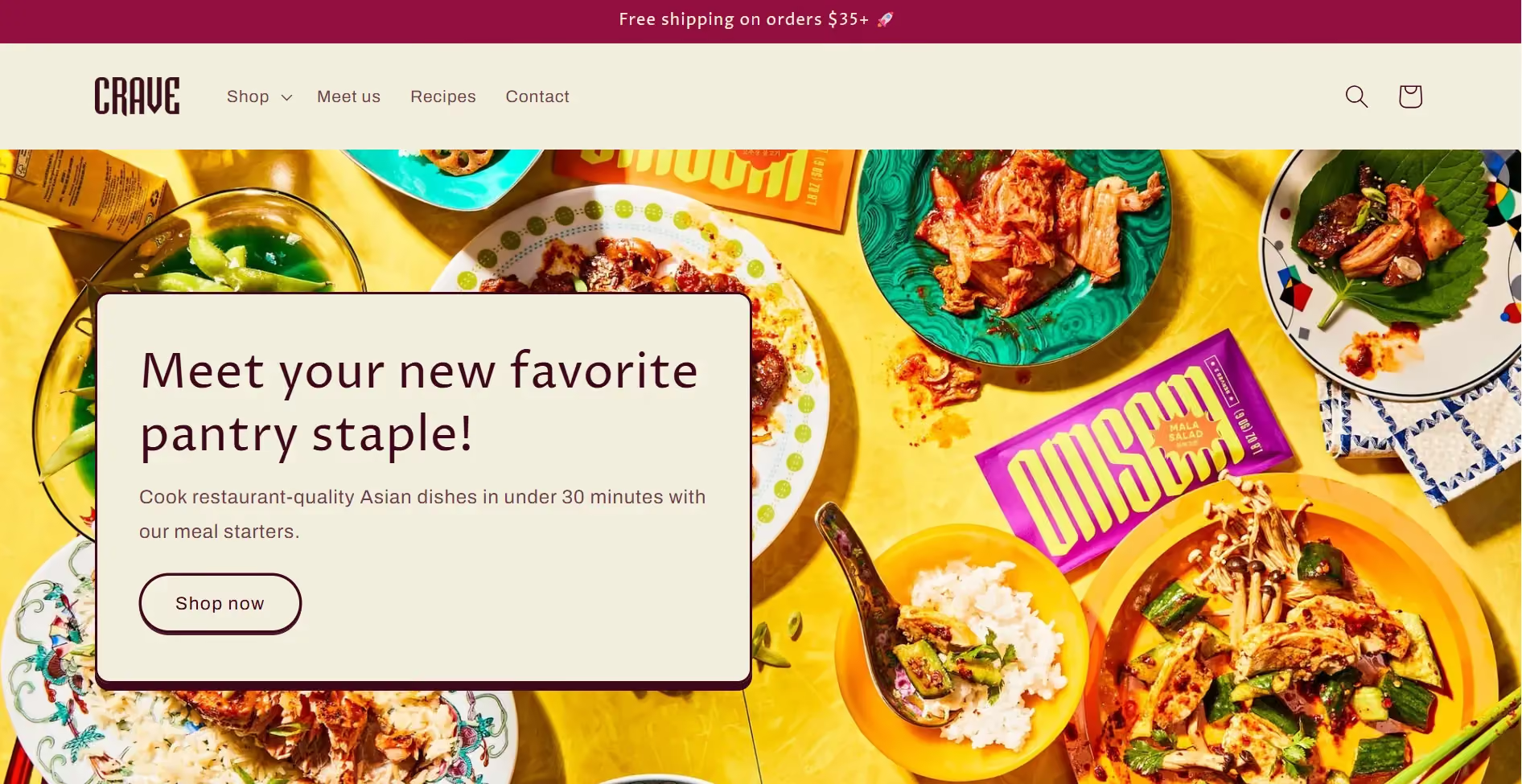
Best For: Early-stage streetwear and trend-forward brands, lifestyle clothing brands, brands validating product-market fit without a premium theme investment.
Key Clothing Features: Bold typography, full-bleed imagery, mobile-first navigation, fast Lighthouse scores, Shopify OS 2.0 native.
Dawn (Free) For Early-Stage Brands or Custom Build Base
Developer: Shopify | PageSpeed: 92 (fastest free Shopify theme) | Price: Free
Dawn is Shopify's flagship free theme and the fastest-performing free option. It is intentionally minimalist: clean code, fast load times, and flexible enough to function as a starting point for custom development.
For clothing brands, Dawn is the correct choice in two specific situations: early-stage brands with limited budget who prioritise speed to market and core performance over visual differentiation, and brands using it as a clean base for custom Liquid and JavaScript development on top.
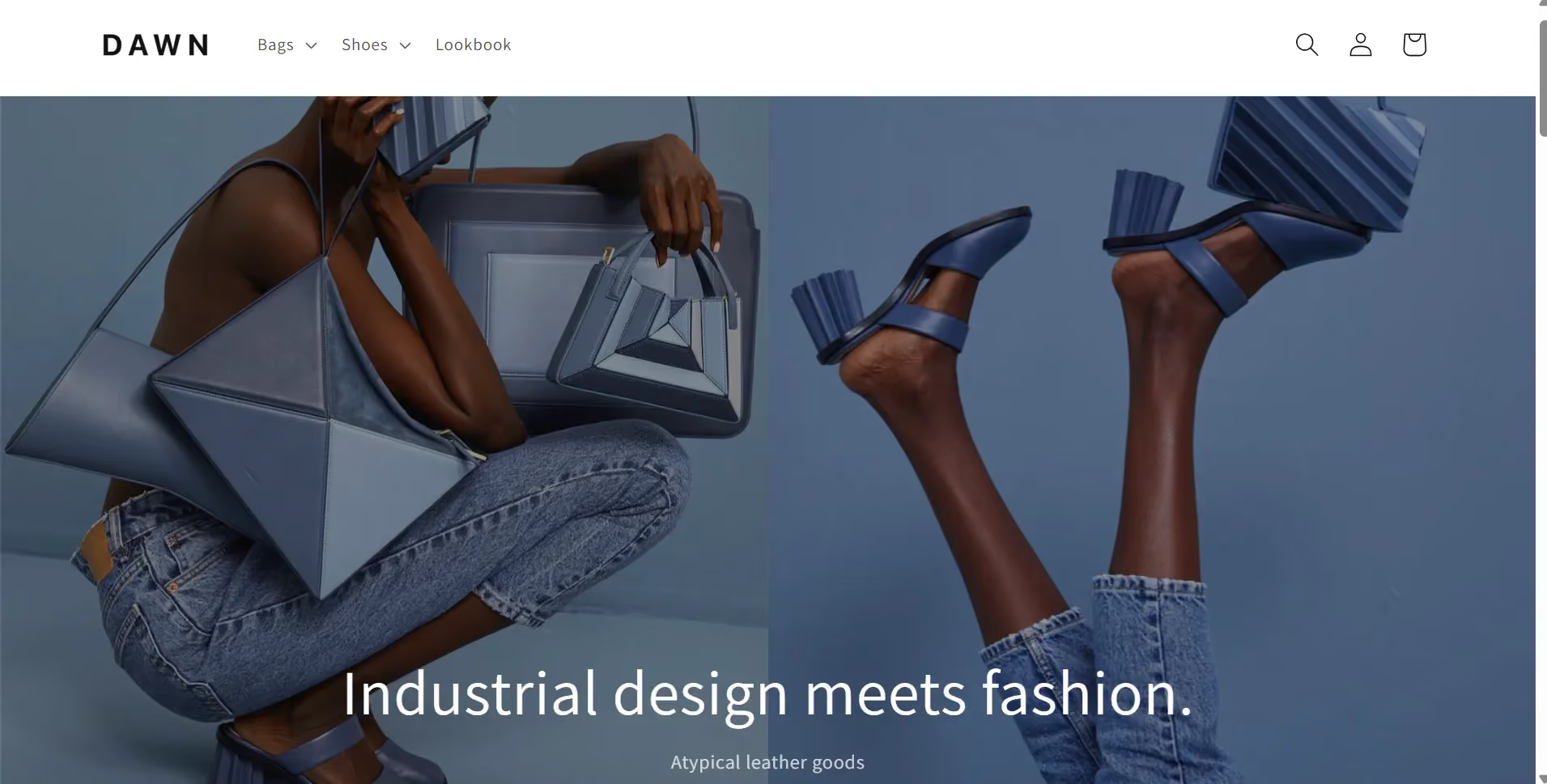
At Suplex, we have used Dawn as a custom build foundation for brands that needed performance and developer flexibility as their primary constraints. You can read more about that approach in our guide on how to build a Shopify store.
Best For: Early-stage clothing brands on tight budgets, custom development projects using Dawn as a base, brands whose visual identity requires custom design work.
Key Clothing Features: Fastest free theme, clean code base, OS 2.0 native, highly customisable by developers, strong mobile performance.
Shopify Themes for Clothing Brands Quick Reference Table
Use this table if you have already read the detailed reviews and need a fast reference point.
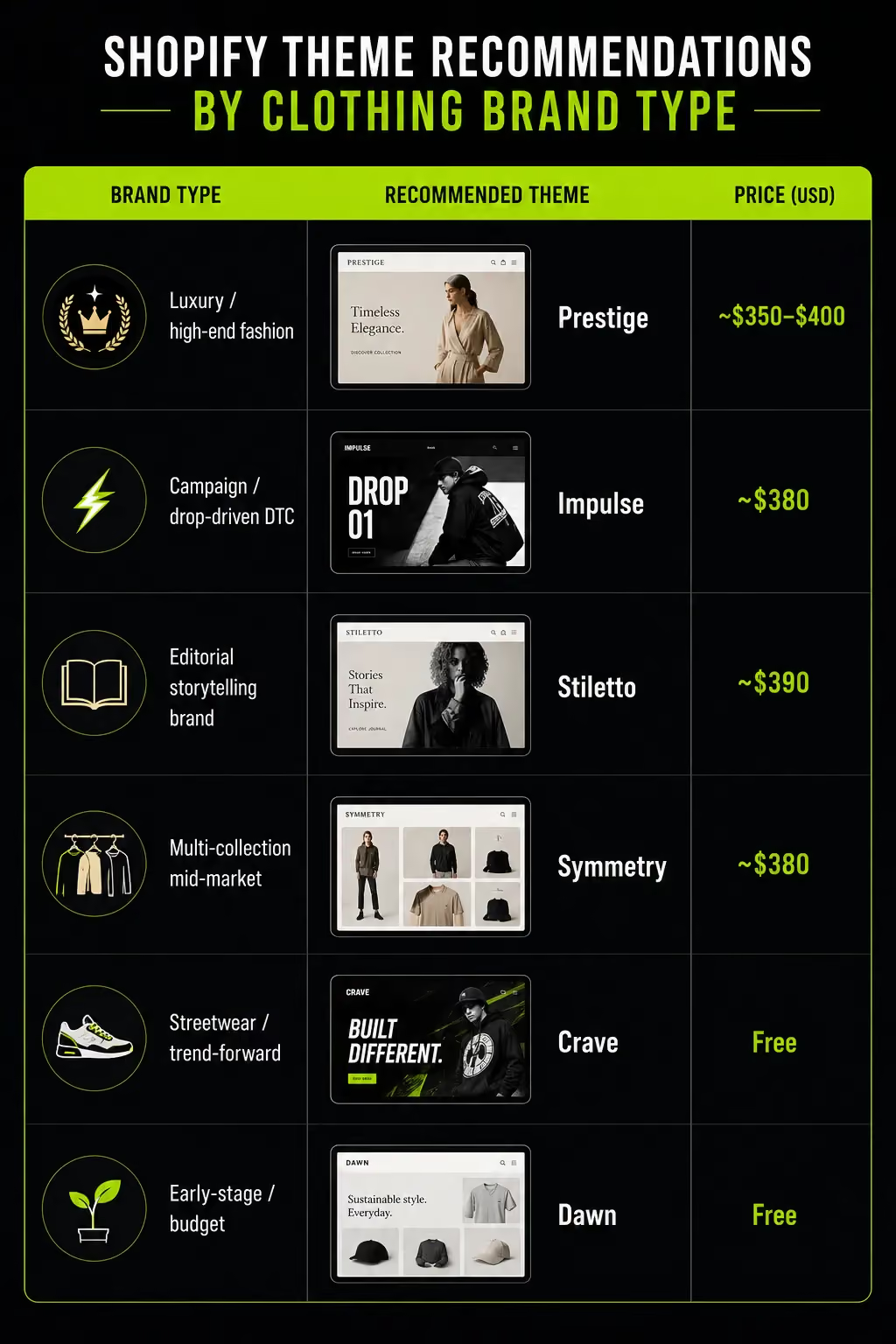
The most important column is not the theme, it is matching the brand type correctly. A luxury brand choosing Impulse because it has "the most reviews" will underperform a DTC brand that chose Impulse specifically because promotional infrastructure is its primary design requirement. The match is the decision.
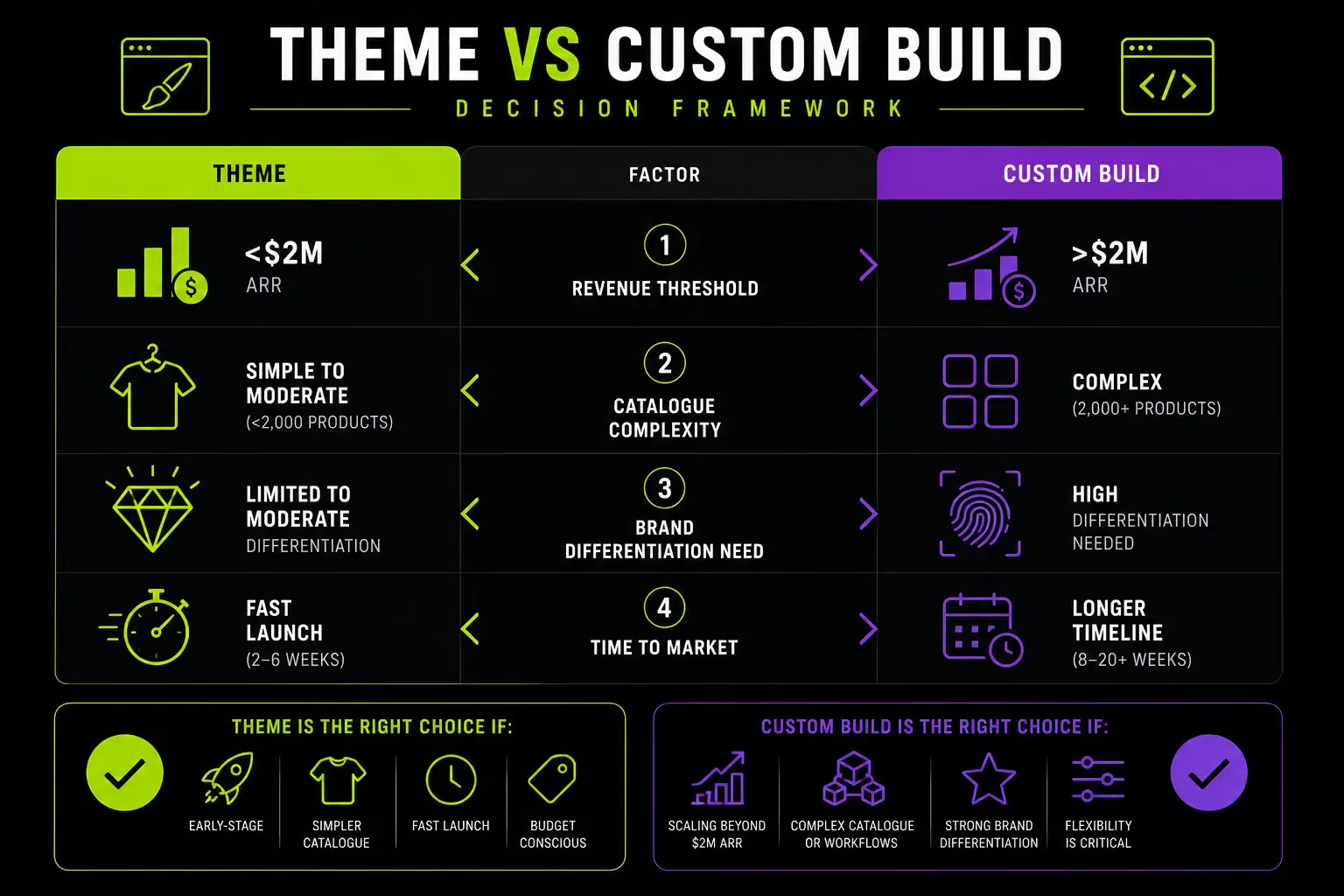
Theme vs. Custom Shopify Theme: The Question Every Clothing Brand Should Ask First
No other guide in this space addresses this question. Every competing piece assumes you are choosing between themes. That is the wrong starting point for many clothing brands.
What a Pre-Built Theme Can and Cannot Do
A pre-built Shopify theme is designed to serve thousands of stores across multiple brand types. Its design decisions are made to satisfy the widest range of merchants, not to optimise for any specific brand's requirements.
A well-chosen, well-configured theme can deliver:
- Professional visual design without custom development cost
- Solid mobile performance when not overloaded with apps
- Standard clothing ecommerce features: filtering, swatches, lookbook sections
- A fast path to a functional, commercially viable store
A pre-built theme structurally cannot deliver:
- A truly unique brand experience (thousands of stores share the same template)
- A product page architecture designed for your catalogue's specific complexity
- Performance optimised for your actual feature usage (themes load code for features you do not use)
- Integrations engineered to your specific ERP, CRM, or operational workflow
The gap between these two has narrowed significantly in 2026. Shopify's OS 2.0 architecture sections everywhere, JSON templates, metafields, app blocks means 80%+ of experiences most brands describe as "requiring a custom build" can now be achieved with a well-configured premium theme or a theme combined with a page builder like GemPages or PageFly, for $3K–$8K total.
The question is whether your brand sits in that 80% or the 20% where custom development is genuinely necessary.
When a Theme Is the Right Choice
Early-Stage Brands Validating Product-Market Fit:
The goal is speed to market and commercial validation. A $380 premium theme launched in four weeks is commercially correct over a $60K custom build launched in four months.
Validate demand, generate revenue, then invest in differentiation. Our Shopify store setup service is built around this principle.
Brands With Standard Catalogue Structures:
A clothing brand with two genders, five to eight category types, and standard size/colour variants is well-served by any well-chosen premium theme.
The complexity threshold where themes struggle: 1,000+ SKUs across 20+ collections with non-standard filtering requirements.
Brands Below $1M–$2M Annual Revenue:
At this revenue level, a 0.2–0.5% CVR improvement from a custom theme moves small absolute revenue. A $60K custom build may not pay back within 24 months. At $5M+, that same CVR improvement moves $100K+ annually and the build cost becomes justifiable.
Brands Using a Theme as a Base For Targeted Custom Development:
Dawn or Crave with 40–60 hours of custom Liquid development to add specific sections achieves 90% of what most brands need from a custom theme, at $3K–$8K.
This is a common approach at Suplex when clients come in wanting custom builds for requirements that a configured theme can handle.
See our work on conversion rate optimisation for how targeted development improves results without full custom builds.
When Custom Shopify Theme Development Is the Right Choice
Brand Differentiation is a Primary Commercial Requirement.
If your brand's visual identity is a meaningful competitive advantage if customers choose you partly because of how your store looks and feels, a theme used by thousands of other stores will dilute that advantage.
A custom theme built to your visual system is an owned asset that no competitor can replicate by purchasing the same template.
Your Catalogue or Business Logic Significantly Deviates From Standard DTC Architecture.
Custom sizing systems, complex product configuration (made-to-order, bundle builder, custom embroidery), B2B pricing layers, or multi-market operational requirements often exceed what any theme can handle without expensive app overlays.
Custom development eliminates those overlays with code built specifically for your use case. This is the kind of complexity our custom Shopify themes service addresses directly.
You are at the Revenue Level Where CVR Improvement Pays For Itself:
The investment threshold typically becomes commercially justified when average monthly revenue exceeds $150K–$200K and there is evidence that conversion rate is being limited by current design or architecture. A 0.5% CVR improvement on a $2M annual revenue store is $10K+ annually.
Performance is a Documented Revenue Constraint:
If your Core Web Vitals are failing and standard theme optimisation (image compression, app audit, script deferral) has not resolved it, custom theme architecture loading only the code your store actually needs is the structurally correct solution.
Our performance optimisation service can diagnose whether you are facing a theme architecture problem or an optimisation problem before committing to a rebuild.
Our Honest Position on This:
At Suplex, when a client comes in asking for a custom build, we ask them to show us where the theme is limiting them specifically.
Not aesthetically architecturally. If the answer is "we want it to look different," we typically recommend a well-configured premium theme with targeted custom sections.
If the answer is "our size guide logic needs to respond to fit data from our ERP," or "our product configurator requires 12 interdependent variant dimensions," or "our Shopify Markets setup is generating navigation conflicts the theme cannot resolve" that is a custom build conversation.
The right build is the least complex one that solves the specific problem.
How to Evaluate a Shopify Theme Before Buying A Practical Checklist
Most brands skip this step and experience post-purchase disappointment. These six steps prevent that.
Step 1: Test the demo on mobile, not desktop: 70%+ of clothing ecommerce traffic arrives on mobile. Test on an actual phone. How fast does the product page load on a cellular connection? How does the filter system work on a small screen? How many taps to reach the colour swatch for a specific variant?
Step 2: Test the specific features your catalogue requires: Do not evaluate on the homepage hero. Evaluate on the collection filter page (for your catalogue size), the product page (for your variant complexity), and the cart flow (for your cross-selling requirements). Every theme looks good on its homepage demo. The difference shows in the features.
Step 3: Check review count and recency: 500+ reviews with a consistent rating above 90% over the past 12 months signals a developer maintaining and supporting their theme seriously. Check whether negative reviews are recent (declining support quality) or historical (resolved issues).
Step 4: Verify Shopify OS 2.0 compatibility: All themes released after 2022 should be OS 2.0 compatible but verify specifically. OS 2.0 (sections on every page, JSON templates, app blocks) is the architecture that enables Shopify's ongoing platform improvements without manual theme updates. A non-OS 2.0 theme will require more maintenance as Shopify evolves. The Shopify Online Store 2.0 documentation explains exactly what to look for.
Step 5: Review actual stores using the theme: The Shopify Theme Store includes example stores for many themes, real merchant stores, not curated demos. These show how the theme performs without professional photography enhancements.
Step 6: Evaluate the developer's support record: A developer releasing updates twice yearly, responding to support requests within 48 hours, and maintaining an active changelog is a long-term partner. A developer who last updated the theme in 2023 is a reliability risk.
Shopify Themes for Clothing Brands in the UAE and Gulf What Is Different
This section is absent from every competing guide because their audiences are primarily Western markets where these requirements do not exist.
If your clothing brand operates in the UAE or GCC, the following factors are functional requirements, not optional considerations.
Arabic RTL Theme Compatibility
For clothing brands targeting Arabic-speaking consumers, the theme must support RTL (right-to-left) layout natively or with minimal custom CSS.
This means more than text direction navigation menus that flow right to left, image carousels that advance in the RTL direction, form field alignment, and icon direction.
Themes with strong RTL support include Crave and Prestige. Themes that require extensive custom CSS for RTL (many popular Western-market themes) add development overhead that a RTL-native theme eliminates from the start.
For brands setting up bilingual or international stores, our international ecommerce setup service covers the full technical and UX requirements for Shopify stores operating across language markets.
Modest Fashion Category Architecture
A significant segment of UAE clothing ecommerce serves the modest fashion market abayas, modest dresses, hijab-friendly styles, full-coverage activewear.
These products need specific product page architecture: detailed coverage information (length, coverage level, opacity), styling guidance for layering and collection structures that organise by occasion and coverage rather than standard Western clothing categories.
A theme that handles these category structures cleanly reduces the custom development needed to serve this segment.
Our Loomsona case study shows how we approached bilingual theme architecture and modest fashion category structure for a UAE fashion brand specifically.
Size Guide Localisation
UAE clothing brands serve an extremely diverse customer base UAE nationals, Arab expatriates, South Asian expatriates, Western expatriates and tourists. Size conventions differ significantly (UK vs US vs EU vs Middle Eastern sizing).
A theme's size guide architecture, specifically whether it supports multiple sizing systems on a single product and displays charts in both Arabic and English is a functional requirement, not a cosmetic one.
Colour Swatch Language Support
Colour names displayed alongside swatches must be bilingual for a properly localised UAE clothing store.
A theme that supports multilingual swatch labels natively via Shopify's translation infrastructure reduces the custom development required for bilingual product variant display.
For brands building with a mobile-first design priority which is most UAE fashion brands given the region's smartphone-first shopping behaviour the bilingual swatch and size guide requirements need to work cleanly at mobile viewport sizes too.
How We Approach Shopify Theme Selection at Suplex
At Suplex, theme selection for clothing brands is a commercial question before it is a design one. We are a Shopify Partner agency based in Dubai working with D2C and ecommerce brands across the UAE, Gulf, and globally.
We start with four parameters before we open the theme store:
- The brand's current revenue and growth trajectory
- The catalogue complexity and any non-standard business logic
- The brand's visual identity requirements and how differentiated they need to be from competitor stores
- The operational requirements payment gateways, local carrier integration, bilingual support for UAE stores
For most UAE clothing brands under $2M in annual revenue, a premium Shopify theme with targeted customisation is the smarter choice.
A high-quality store typically costs $5K–$15K, compared to $60K+ for a custom build. It gets you to market faster while preserving budget for marketing, products and customer retention—the investments that ultimately justify a custom theme.
For brands that have established their position above $3M annual revenue, with a differentiated visual identity and specific technical requirements their current theme cannot meet custom Shopify theme development is usually the next logical investment.
We've built custom themes for Gulf clothing brands where Arabic-first design, custom size guides, and ERP integrations made premium themes unsuitable.
For most brands, however, a premium theme is the better starting point. Invest in branding, content, and customer acquisition first, then move to a custom build when growth justifies it.
If you're choosing between a premium theme and a custom build, our consultation starts with your business requirements—not a predetermined recommendation.
Our platform consultation starts with those parameters, not with a theme recommendation.
Frequently Asked Questions
Which Shopify theme is best for clothing brands?
There is no single best Shopify theme for every clothing brand. The right choice depends on your brand, catalogue, and growth stage.
Prestige suits luxury brands, Impulse campaign-driven DTC, Stiletto editorial storytelling, Symmetry large catalogues, and Dawn or Crave early-stage stores. Choose based on your catalogue, merchandising needs, and brand positioning not the demo.
Is Shopify good for clothing brands?
Yes. Shopify is the leading ecommerce platform for clothing brands, from startups to brands like Gymshark. Its theme ecosystem, variant management, and fashion-focused app integrations make it the default choice for most launches.
For UAE and Gulf brands, Shopify also offers Arabic language support and Shopify Payments UAE, making it well suited to the regional market.
How much does a Shopify theme for a clothing brand cost?
Free Shopify themes for clothing (Dawn, Crave) are fully functional for early-stage brands. Premium themes Prestige, Impulse, Stiletto, Symmetry cost $290–$400 as a one-time licence fee, including future updates and 6–12 months of developer support.
Custom Shopify theme development typically ranges from $30K–$80K, with targeted theme customisation (a premium theme with custom sections) available for $3K–$15K depending on scope.
How do I design a Shopify store for a clothing brand?
Start by choosing a theme that matches your brand and growth stage. Set up your collection structure before designing product pages.
Use high-quality lifestyle photography, clear size guides beside the size selector, colour swatches, guest checkout, and express payments.
Finally, test the mobile experience on a real device before launch. For a complete pre-launch process, follow the Shopify store launch checklist.
What features should a clothing brand look for in a Shopify theme?
Prioritise themes with multi-attribute filtering, image-based colour swatches, size guides beside the size selector, editorial sections, "Complete the Look" cross-selling, strong mobile performance, and OS 2.0 compatibility.
Don't choose a theme based on its homepage demo. Filtering, swatches, and size guide functionality have a far greater impact on a clothing brand's performance.
Hi, I’m Rishabh Jain
I believe great design has the power to shape perception, build trust, and move businesses forward. That belief is what led me to found Suplex Design Studio, a global branding and packaging studio working with FMCG and D2C brands across markets.I started suplex at 25 with a clear intent, to create design that is strategic, thoughtful, and commercially meaningful. By 28, the studio had scaled globally, guided by a strong foundation in Integrated Design that I developed during my academic journey in London, where I was honoured with the Dean’s Award.
Over the years, I’ve had the opportunity to work with 100+ brands, from Fortune 500 organizations to family-run businesses, helping them build packaging and brand systems that create recall, relevance, and long-term value.
Suplex’s work has been recognized internationally, including the Manifest Award (2024), the Clutch Global Award (2025), and features on platforms such as Packaging of the World, The Dieline, and the World Brand Design Society.
None of this would be possible without the people behind the work. I’m deeply grateful to the suplex team, whose commitment, creativity, and attention to detail turn ideas into meaningful brand experiences every day.
At the heart of my work is a simple philosophy, design should be intentional, honest, and built to last, and that continues to guide everything we create at suplex.











Let’s Make It Happen
E-Commerce Success Stories
%201.avif)





.avif)
.avif)
Build Your D2C Business The Right Way
Build It With Suplex.


